Lughnasa Eclipse Moon
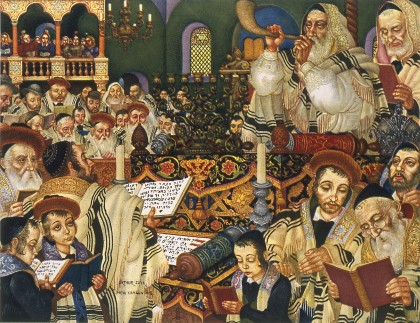
Judaism as a civilization, a culture, appeals to me on several levels. As practiced at Beth Evergreen it focuses on ethical living through character development, mussar, offers solace to mourners through kaddish at regular services, nourishes a vibrant community where folks actually care for each other and their daily lives, and punctuates the year with the celebration of meaningful holidays. There are also multiple opportunities for learning. This fall I will participate in the adult education series Words, Words, Words, take Hebrew and later the second kabbalah class.
Mussar yesterday focused on forgiveness. It was timely. Forgiveness couples with the energy of a new year during the high holidays, Rosh Hashanah and Yom Kippur. Giving and seeking forgiveness for wrongs committed in the past year is on the hearts of everyone in Jewish communities around the world. There are of course more involved theological reasons for both holidays, but at its humanist level Yom Kippur, the day of atonement, underscores the impulse to punish others in ways great and small for their actions that hurt us. And reminds us forcefully to resist it by forgiving those actions in others and seeking forgiveness for the wrongs we have done to them. In a small community where relationships really matter, like Beth Evergreen, like your extended family, forgiveness makes ongoing community life possible, reducing rancor and hostility while opening relationships up for movement into the next, new year.
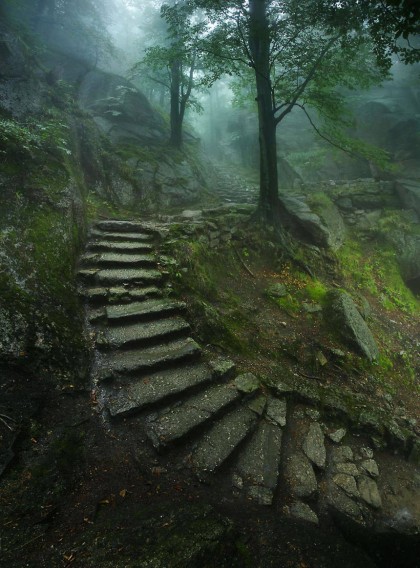 Paths. The trait of watchfulness, of being aware, is not only about self-awareness. It is, in itself, a tool, one to use to notice which direction you’re headed. Did this action, that motivation, move me in a positive direction in my life or a negative one? Did it move me toward selfishness or toward being of service?
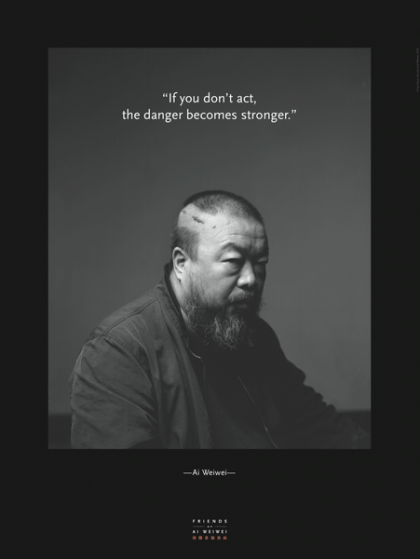 It also requires, very interestingly, prayers for God to forgive the wicked, or the unjust. It’s not up to us to forgive them, but we must plead with God to do it. As I took it, this means that we stand against Trump and the white supremacists, for example, opposing them in the streets, in conversation, at the ballot box, in whatever way we can, and it’s up to God to forgive them for what they’re doing. Not us. I interpret God here, the Great Other as Rabbi Jamie sometimes says, as the collective us, our generation perhaps, or history. Or, perhaps, the very sensibility that inspires us to move into the breach on behalf of the vulnerable other.
 Be aware. Working with mussar practice now, decided to use focus phrases and journaling to work on the trait of watchfulness, seeing my path, owning my journey. The journal part will recount, as I can recall them, those moments when I was aware of my journey.