Category Archives: Travel

The Sun, The Sun!

Spring                                                                Bee Hiving Moon

Fog over the Platte, now being disbursed by a rising yellow star, one invisible all day yesterday as we drove in the gray and drear. Breakfast here overlooking the sloping front lawn, watching the birds come and go.  Mahoney is not very lively on an April midweek, which is just fine as far we’re concerned. That meant we ate breakfast in an empty dining room, a big one, reminiscent of our first breakfast at the Station Hotel in Inverness 24 years ago. Their tables were set up in an old ballroom and we were the only diners. I had blood pudding that morning.

It’s good to be traveling with Kate. We travel well together.

Today on to Denver. On my first trip out to Denver, over 10 years ago, I took Jon to his new home on High Street near Cheesman Park. He had just obtained a position teaching art in the Aurora School District, in fact in the very school where he still teaches today. On that trip I realized the Rocky Mountains were the boundary to my homeland, for me the Midwest ends at the Front Range.  The Upper Midwest ends somewhere in or at the Iowa border, but Colorado feels like it fits in with it, Colorado, Minnesota, Wisconsin, Michigan.

Well, the bus is leaving.  See you in Denver.

Night. The Plains.

Spring                                                                               Bee Hiving Moon

Night on the plains. The Platte River, wide and shallow even now, runs not a quarter of a mile from here. I’ve seen it much higher, filling out its broad bed, roiling with the muddy redness of its banks and bottom. The big noise here comes from the trains, coal trains, I imagine, headed from the Powder River Basin coalfields in Wyoming to the hungry generating plants in the east.

Even with the whistles and the low rumble of cars moving over metal rails the night manages a sense of isolation.  We are after all in a state park, well off the highway and out of metropolitan Omaha.

The big restaurant here has huge plate glass windows that overlook the Platte. Bird feeders dot the wooden walkway just outside the windows. Kate and I watched redwing blackbirds, grackles, rose-breasted grosbeaks, sparrows and goldfinches swoop down, dine together for a moment, then fly off. We dined on the inside, the birds on the outside. Just creatures, needing to eat.

After breakfast tomorrow, Kate and I will pack up and head out for Denver, arriving sometime in the afternoon. More later.

In Nebraska

Spring                                                                   Bee Hiving Moon

We have landed at Mahoney State Park about 10 miles outside Omaha. This is a favorite place of mine to stay since it’s cheap, $60, has a restaurant and the rooms come with balconies overlooking the Platte River.

The drive was uneventful, which is good.  We drove from dry to wet, then wet to dry and back again. That’s the cool, humid east. Soon we’ll be in the arid west where any rain is a blessing.  Fortunately, the Rockies had a great snow pack this year, so problems for some states will diminish.  But not vanish. The drought in the southwest is brutal and continuing.

Kate drove the whole way. It helps her back. She got out and was not in too much pain.

I’m writing this entry on my new Lenovo laptop, the first time in 8 or 9 years that I have not used my netbook.  It ran windows XP and since Microsoft shut down securities releases for XP this month I decided to get a more up to date laptop.  This one runs Windows 8.1. I’m not a touch screen guy but we’re living in a touch screen world now. Fortunately, for those of us retro folk who still use mouse and keyboard, it’s possible to revert to the former connection methods.

I had no trouble getting the wifi connection here and, as I usually do, I have my own keyboard and mouse with me. That makes typing so much easier.

Plain

Spring                                                                    Bee Hiving Moon

The dogs have gone to the kennel, a place they enjoy.  Vega, though, our biggest and 07 10 10_Vega in the holesweetest, was hurt when we left them for 40 days and 40 nights while the good ship Veendam cruised around South America. It took her a few days to warm back up to us. Since you can’t tell a dog how long you’re going to be gone, she might expect equally long stays each time she goes now. I hope not because hurting her hurts me, too.

I stayed behind while Kate handled the dogs because I had to bring all the bee hive woodenware into the garage. I didn’t have the heart to do it when I investigated on Monday. So all we have left is loading the truck when Kate gets back, then its scenic Iowa and Nebraska. Be still my wanderer’s heart.

The flipside of the flat and somewhat monotonous nature of the plains is the ease with which they’re driven. I feel a bit traitorous calling them monotonous anyhow. Yes, south of here, down into Iowa, the land evens out.  And, yes, it stretches flat for a long enough time to be called a plain. But its beauty opens itself only slowly and to one willing to look for it instead of just wanting to be done with it.

Especially in the fall, when the grains have not yet been harvested and the fields are golden against the blue skies and especially in the summer when the fields are green and the thunderheads mount the horizon like bulls about to ride the cowboy, the plains can reach the deepest levels of beauty. Winter is not their best season when the fields are brown, the trees leafless and the livestock huddles around water and food stores. Then, they look forlorn, abandoned, perhaps a place best gotten through quickly. In early spring, now, when the field have just been plowed, there is a furrowed beauty, too. In spite of what I know about traditional agriculture.

Well, soon. We’ll be in it ourselves, headed toward the outer limits of our great Midwest, the Rocky Mountains.

Carlsbad, Saguaro and Chaco Canyon Belated Photo Gallery (&Ruth)

Spring                                                              Bee Hiving Moon

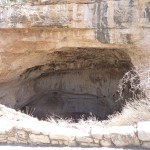
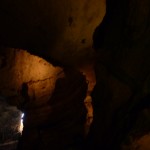
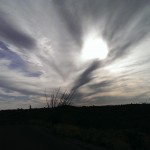
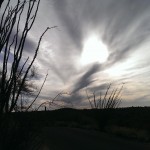
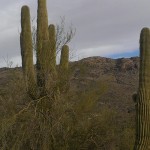
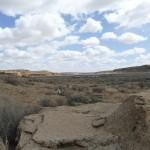
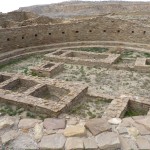
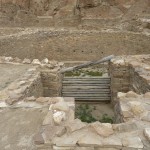
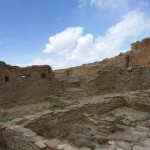
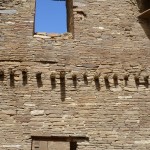
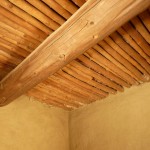
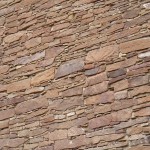
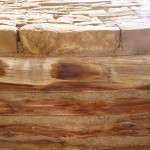
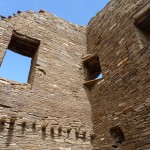
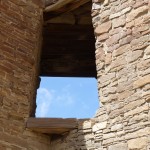
Due to technical difficulties (I lost the dongle that connected my camera to the computer.) I’ve only this week gotten pictures from the Tucson trip loaded.  Here a few just to give you a flavor of the journey.  Click on the photograph to see the whole, this presentation crops them a bit.


A Firefly Lit Lane

Spring                                                         Bee Hiving Moon

Down the well this morning, tapping into the underground stream.  Still searching for an image.  Something to coalesce the third lifetime, the third phase of this body/mind’s adventure here on earth.

One came to me.  Suddenly.  But it feels apt.  I’ll have to let it set for awhile.  Work with it itself in the imagery extension section of the workbook, but it feels pretty good.

The image is of a lane headed back into a woods where the lane continues but with tree branches creating a leafy roof over it.  The time is late twilight, the season late summer.  The air is cool but humid.  And the lane, where it enters the woods, is lit by thousands of fireflies, blinking on and off, shifting locations, providing a weak but real luminescence so I can follow the path into the woods.  Because the fireflies are spread out along the path’s length, they also give the lane a feel of depth, as if it proceeds quite a long way into the woods.

This is not a mind birthed image, but a memory.  I saw this lane and these fireflies several years ago during a trip to New Harmony, Indiana.  I’ve written here about New Harmony before, but just as a reminder, it was founded by the Rappites who created a very successful religious community there in the mid-19th century.  Much of New Harmony’s built environment has its roots it that era.

When they moved to Old Economy Village in Pennsylvania, the Welsh industrialist Robert Owen bought the whole town for his utopian community, a quasi-socialist endeavor.  He brought with him from Britain a number of scientists and engineers committed to his scheme on a ship dubbed the Boatload of Knowledge.  The community didn’t last long, but the U.S. Geological Survey among other things grew out of the efforts of the people who came to New Harmony.

Since that time, New Harmony has continued to have a religious and intellectual bent.  In fact, as I looked down the lane into the firefly lit woods, on my left was an open air Episcopal Church designed by famed architect, Philip Johnson and on my right was a small garden marked by tiny drumlins planted with firs and dotted with boulders carved with quotes by Paul Tillich, the Protestant theologian, whose tomb lies there, too, in Paul Tillich Park.

In fact, this aerial photograph shows the spot where I stood between the open air church on the left and Paul Tillich Park on the right, looking north down the lane into what at night was a tree lined bower over an ancientrail leading into an infinite distance.  This feels like a perfect third phase image.

Returning to Normal

Spring                                                          Bee Hiving Moon

Finally beginning to settle back into home life.  Exercise back on track, though not quite up to pre-trip standards, but close enough.  It will get there.  Concentrating on Latin and then Kate’s pacemaker maintenance on Thursday kept me from getting back into my usual rhythm, but I did get substantial work done in Ovid.

We had our business meeting this morning and our finances are on track, as they have been, but it’s nice to see they are still after a long trip.  Travel is the budget buster in our house and we have to keep close watch over it.

So, a couple of deep breaths, the weekend and back to it.  Then we leave on the 23rd for Gabe’s birthday weekend.  Kate and I are going together, driving this time.  As I said the other day, I’m hopeful the soil will be workable enough to plant the cool weather crops before we go.


Now That I’m Here; Was I Really There?

Spring                                                          Bee Hiving Moon

The snow has come, as predicted. Heavy since around 2 pm.  April?

As it falls, so has the night and with the night the quiet.  While on my trip, no matter where I was the rooms were noisy: traffic outside, television leaking from the room next door, the heaters and air conditioners working in agony, basketballs thumping on the court next to my room at the Resident’s Inn.  I have become used to, dependent on the silence here.  It’s absence grates, draws my attention and focus away.

Of course, there are the noises here, familiar ones that I incorporate.  The train whistles far in the distance.  The occasional great gray owl hoots.  The metal clicking, contracting and expanding as my gas heater responds to changes in the room’s temperature.  But these are gentle noises, not so much intrusive as atmospheric.  At least to me.

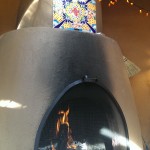
It’s interesting though how, once back in the familiar, the far away can come to seem dreamlike, maybe not real.  Were those great kiva’s built of stone, yet curved into perfect circles?  How could that be?  Are there vast expanses of land filled with catci and other desert adapted plants?  Did I walk through a hole in the earth, past a twilit zone where light from the sun vanished forever?  Did I keep going then, deeper?  Were there those others who gathered to listen intently to their own inner life?  Was it hot there? Did I visit a city where many of the buildings, businesses and homes alike were made of adobe and had fireplaces built into an interior wall?

Bishop Berkeley, the English idealist, is famous for his dictum, Esse est percipi. That is, to be is to be perceived. Once I’ve stopped seeing something, touching it, smelling it, hearing it, tasting it it’s reality, for me, begins to fade.  In fact, Berkeley would go so far as to say that I have no way of proving Santa Fe exists apart from my mental idea of it.  The same for Chaco Canyon, the Saguaro, the Intensive Journal Workshop.  And he would be right.

Yet there is, too, David Hume’s equally famous response.  He kicked a table or a door frame and said, “I refute it thus.”

So, though I can not convince you of the desert’s reality with my words about it, I do expect it to be there the next time I visit the southwest.  That’s how stubborn our minds can be.

What Is My Life Reaching For?

Spring                                                              Bee Hiving Moon

On the last afternoon of the Intensive Journal Workshop we had an exercise focused on what our life is reaching for.  In the first morning we had defined the current period of our life: in my case the time after Kate’s retirement.  By the last afternoon we had worked ourselves into the next period of our lives.  Since we were newly in this next period, this exercise asked us to feel, below the conscious level, where our lives wanted to go.

Here is my sense of what my life is reaching for in this next period:

1. a bountiful, sustainable nutrient dense harvest of fruit and vegetables.

2. a way to use the Great Wheel website to advance the Great Work through literature, science and political activism.

3. a third phase (third lifetime) writing portfolio with short story writing credits as a floor for selling novels.

4. a schedule for translating and commenting on at least several books of the Metamorphoses

5. still more of a stable, wonderful marriage, regular visits and communication with kids and grandkids and friends.

6. more mutual travel opportunities with Kate.

As I work in the inner movement of my life, I can feel a quieting, a confidence that who I am and what I do is enough-no matter the outcomes.  This feeling has grown stronger since Kate retired and continues to strengthen with time.

In my third lifetime I will be calm, steady, productive.


Goodbye From Acova, Iowa

Spring                                           New Bee Hiving Moon

Last report from the road.  Acova, Iowa.  Acova Motor Inn.

Long ago read a travel writer commenting on America.  He said one of our great boons to travelers is cheap, good lodging.  He’s right.  I’m in the Acova Inn, $45 a night.  It’s a clean, independent motel with working heat, internet connection, cable tv, coffee maker, microwave and refrigerator.

And in this he reveals a component of the American character.  We go.  Ever since the days of the pioneers (and, yes, I stipulate the dark side of the frontier, but also recognize the bravery of those folks on foot, horseback or covered wagon.), we have wandered across this great land, sometimes with a purpose:  new job, visit family, find land, get away from crowds, but just as often with a large dash of whimsy, journey for the sake of journey.

In many other parts of the world, for thousands of years, people have been born and died close to their village, often without going very far from home.  Nomads are not an exception because they followed food, either for themselves or their live stock.  Over the last 100 years or so there has been a giant sucking sound as cities hoover up those former villages into themselves, but there the travel, if there is much, is between village and city and back again.

And, yes, I stipulate the deadly effect of the internal combustion engine and the predatory nature of the railroad builders.  It occurred to me often on this trip that our travel urges have burned a lot of gasoline.

Maybe the road is a siren, her beautiful voice luring us to our doom, but I find her a book opening page after page of wonders, a picture book for adults.  There the pump jack bobbing up and down, up and down.  There a jack rabbit with those big heat radiating ears.  A sunset against the saguaro that calls to mind dime novels by Zane Grey.  Pine covered mountains that remind us of the land that will be in a million years.  Waters running from state to state, from ocean to ocean as snowmelt crosses continental divides. Even the highway signs warning of dangerous sand storms, no visibility, pull out of the traffic lane to stop.

Too, there are the depths of Carlsbad Caverns, the tall saguaro gathered in assembly along the valley floor and the abandoned architecture of the Chaco Canyon culture.  The low flat houses of Tucson and the adobe houses of Santa Fe show up as do the octagonal hogans of the dine people and the swallow like residences of the pueblos.

Later in the year thunderheads will build over the plains and splash down water on fields of wheat where the arid west gives way to the humid east.  All this and never leaving the nation.

I will have traveled almost 4,000 miles and missed the whole deep south, the eastern seaboard and the western one.  I will miss most of the midwest, too, only brushing it in Iowa before I enter the upper midwest, my home.  That happens today.

Goodbye from Acova, Iowa where all the motels are above average.