Category Archives: Our Land and Home

Shorter, More Intense

Lughnasa                                                          Lughnasa Moon

Did some climatological research yesterday about the Idaho Springs area. This is life a 7,500 feet +. It’s cooler when Minnesota is hotter and warmer when Minnesota is colder. So far, perfect. Still winter, but not so brutal. The gardening zone, based on winter low temps is 5a. That’s roughly what Andover is said to be these days though I find it more like 4b. Still, let’s call it equivalent.

The big differences are in rainfall, about half of Andover’s in Idaho Springs, and growing season. The first frost in Idaho Springs is between September 1st and September 10 over against October 5-10 for Andover. The last frost was the big surprise to me-between June 21 and June 31. An early last frost would come on the Summer Solstice!

So. This will be a far different gardening environment from Andover, one requiring either starting of plants  or protecting plants planted outside or both. One factor I haven’t researched because I’m not sure how to is the strength of the sun. Elevation both thins the air and puts the garden closer physically to the sun. This results in a higher UV index overall and I imagine (and stepson Jon says it’s so) this will result in accelerated plant growth. If I can prevent the sun from burning the plants.

This will all require a lot of new learning, but it will be that learning that will eventually marry me to a new spot on the planet. I’m looking forward to it.

Among the Gooseberries

Lughnasa                                                                     Lughnasa Moon

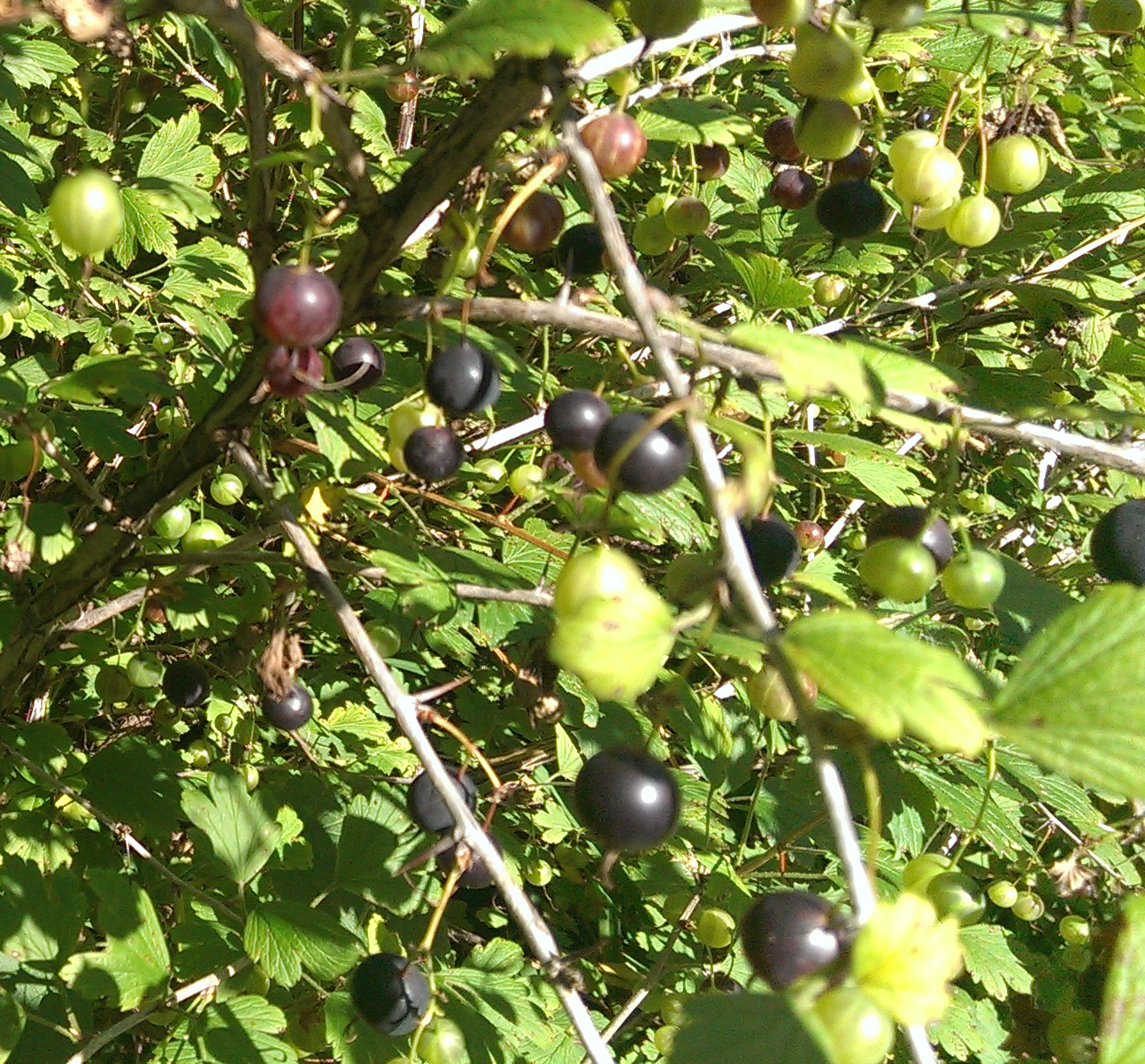
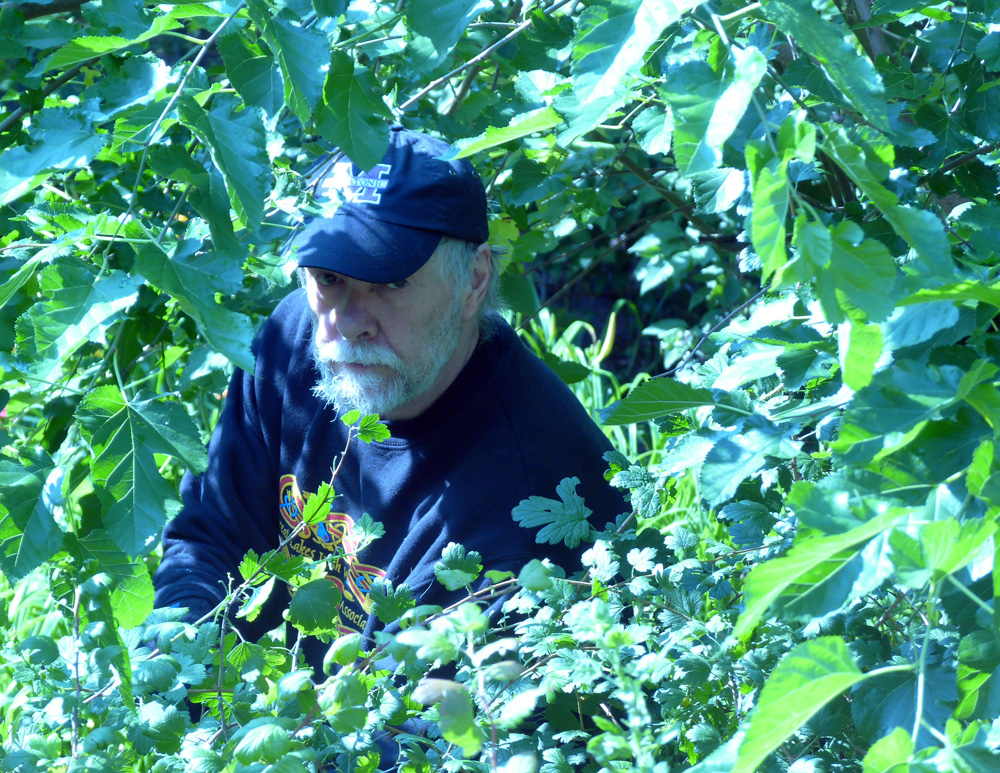
1000P1030763Gooseberries favor the small animal, especially birds, who can either land on the stem among their thorns or reach up with small paws to retrieve the prize. The larger animal like the one seen here must carefully grasp the branches where the thorns are not, wear protective clothing for vulnerable skin and have on gloves to guard the even more sensitive fingers and palms, the hand as a whole. Having done that, though, the gooseberry rewards all of them with a tart sweet berry that might make the body of a clever purple or green goblin, especially if he were fitted with an acorn head carrying its jaunty cap.

Oh, and the smart gardener (not me) would plant them with sufficient room around each bush to easily access the branches. This cramped planting requires perilous maneuvers.

On the other hand this gardener (smarter in this instance) did move all these gooseberry bushes. They languished in the shade during the day and he dug them up and replanted them in this sunny spot where they thrive. This is about learning the language of plants. They speak with leaf color, insect infestations, poor fruit production, spindly branches. The gardener must listen intently as the plant communicates its needs, then do what is necessary to meet them. If a plant can be placed in a location right for its health and provided with adequate nutrition and water, then it will produce and produce and produce without much care.

Lughnasa 2014

Lughnasa                                                                      Lughnasa Moon

In times before the pagan revival this holiday had the name Lammas, even among witches. Lammas, a modern English transliteration of an Anglo-Saxon word for loaf-mass, was celebrated on August 1st. The Roman Catholic imperial strategy of subjugating, then eliminating rival religions moved forward in part by absorbing and renaming other faith’s holidays.

It is not so easy, though, to stamp out folk religions. The old ways were held tight in rural areas and those doing so were called heathens (on the heath) or pagans, from the Late Latin paganus, or country-dweller.

Here’s an example. On Lammas parishioners would grind the first of the wheat harvest, then bake loaves of bread and take them to the church for blessing. According to this wikipedia site, many would then take the bread home, break it into four pieces and put them at the four corners of the grain storage building for protection against spoilage and rodents. So Lammas remained a first-fruits harvest festival, even under the Roman Catholics, but they replaced celebration of the grain itself with incorporation of the grain into the Catholic eucharistic symbology.

(a welsh corn dolly)

As the wheel turns, so does the nature of belief and faith. In this more pagan friendly world most neo-pagans, though not all, have returned to the original Celtic, Lughnasa. While I don’t align myself with any of the contemporary pagan splinters like Wicca, neo-paganism or Asatru, I do align myself with the impetus for the Great Wheel, the changing seasons themselves, and with the value of holidays to celebrate those changes. The Celtic holidays come from within my genetic heritage, so they make sense for me.

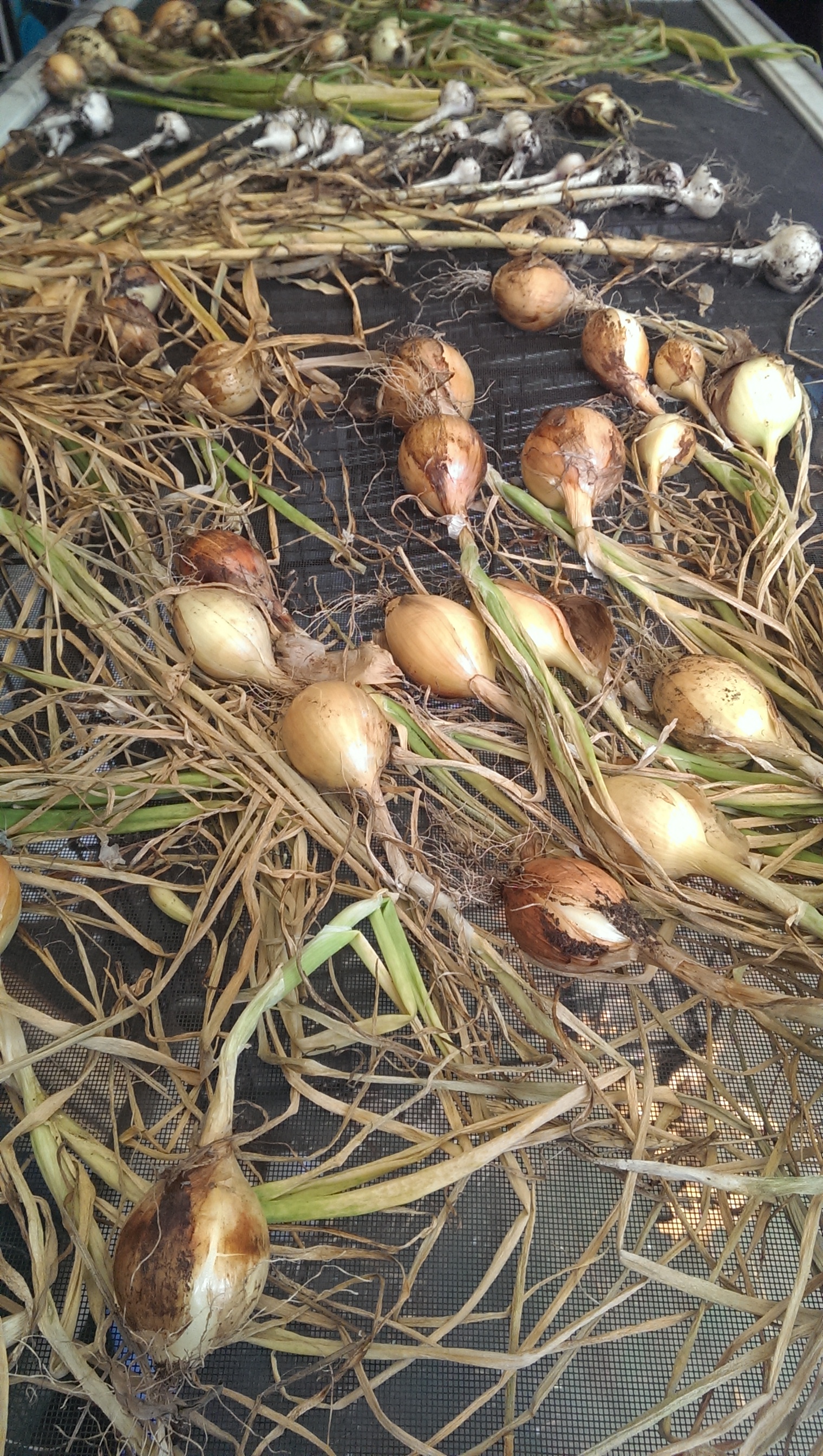
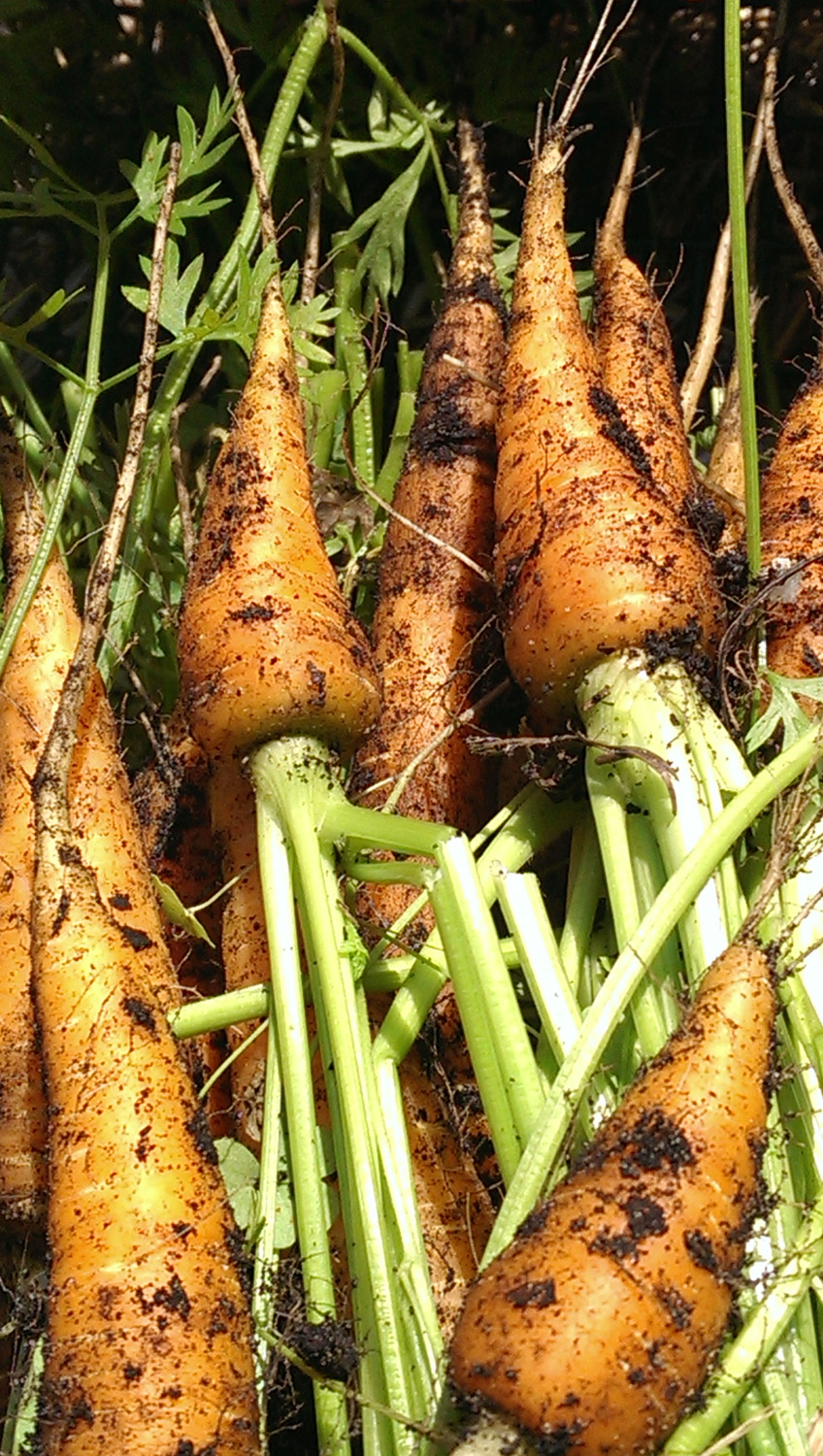
Sitting on the counter upstairs is a large laundry basket, the plastic kind that can be IMAG0382carried on the hip, filled with collard greens and chard. In the shed, drying, are yellow onions and garlic of different varieties. Downstairs, in the pantry, Kate has already stored bright orange jars of carrots, blood red jars of beets and jars the solid green of green beans. We have, too, eaten onions, chard, carrots, beets, green beans and collard greens already, so this is a good time to thank the land and the weather and the plants for the food they’ve already produced.

(onions and garlic, 2014)

In Celtic lands Lughnasa would have seen a corn maiden brought in from the fields in the first grain cart holding harvested wheat. (corn, in the British use, being wheat) And corn dollies would represent this symbol of the land’s fertility throughout the long, fallow months.

These holidays were not a single day (as we tend to celebrate them now, if we celebrate them at all), but were market weeks, when produce and crafts would come into a town and villagers and farmers would shop. Games were played, dances held, and marriages, of a 3-month or a year-and-a-day length could be entered. Both were considered trial marriages, the 3-month trial up at Samhain or Summer’s End.

Since these markets enjoyed the first fruits of many harvests, they were occasions tied to the rural life. In the United States Celtic peoples continued the Lughnasa heritage with county fairs and state fairs. Though the Minnesota State Fair is a much more expansive event than the typical Lughnasa festival, the Anoka County fair held recently or the 4-H fair held annually in my hometown of Alexandria, Indiana were probably similar.

In my world Lughnasa is much as it always was in terms of intention, a moment to stop and consider the strong bond between our land and our stomachs, our land and our survival. If nothing else these holidays make us pause and reflect on what’s happening in a world, the plant and animal world, that we might otherwise ignore. It’s for this reason chiefly that I think broad awareness of the Great Wheel and celebrations of its holidays could be a balm for an overheated world.


Mid-Season Slump

Summer                                                             Lughnasa Moon

I’ve slipped into a late summer pensive mode, obvious from the posts lately. It’s not far off from melancholy, a land I can see from this spot in my inner landscape.

It comes, in part anyhow, from being fed up with garden work, tired of the responsibility. At first this year I described this as pulling away from the land, a pulling away occasioned by our pending move. And, yes, there is that element to it, but then I recalled other late July, early August feelings. Similar ones.

Around the time of Lughnasa, the Celtic festival of first fruits, we’ve been at the garden since April. That’s 4 months and my emotional response to it follows a predictable pattern. There is, first, eagerness. This often comes in January with the arrival of the seed catalogs. Paging through these girly magazines of the horticultural world, flashing pictures of mature vegetables and gorgeous flowers draw the eye and stimulate the imagination. A new year’s garden begins to take shape with scribbled plant lists, drawings of the beds, conversations about what went well last year, what might be fun this year. This is around Imbolc, the Celtic festival of lambs-in-the-belly.

Then, the grip of winter loosens and the soil can be worked. This is the time for planting cool weather crops. Now there’s a mild fever, a feeling that the weather is holding things up. Last year’s mulch gets pulled off, the beds for cool weather plants get worked a bit and seeds go in the ground.

Waiting for seeds to germinate is a sweet time, part concern, part withheld joy. Then the shoots begin to pierce the earth. Often here in Minnesota this is around the Celtic festival of Beltane, the beginning of the growing season, May Day.

Another period of impatience occurs. Frost sensitive plants can’t be planted with confidence until after May 15th, some even after Memorial Day, though each year there’s a temptation to test the weather in order to benefit from a longer growing season.

All of May is garden intensive with clean-up, planting, weeding, bed preparation, dead-heading of perennial flowers. May might be the best garden month because it combines the restless anticipation of the frost sensitive plantings with thinning and weeding of the cool weather crops.

With the gradual climb of the sun toward the Summer Solstice the plants accelerate their growth. All the plants. Including weeds. By the Solstice insects have begun to have their way with some of the growing plants and weeds become a constant. Mulch goes back down to hold in moisture and keep the ground cooler. June sees the full garden, the vegetable garden, growing. The cool weather plants are racing to maturity and the frost sensitive plants gain height and leaves, some fruits.

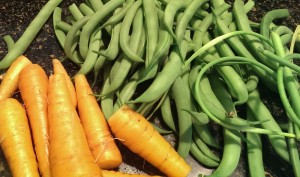
In late June and July beets and carrots of the cool weather plantings, green beans and sugar snaps, chard and collard greens are ready. Harvests begin and second plantings go in. The sun’s height, though now in recession, continues high and solar energy strong.

July is the peak of the garden with most plants high, green and bearing fruit. Harvests croppedIMAG0327already begun continue and often tomatoes are ripe, peppers, too. The first of these. By now the eagerness has waned, replaced by a steady rhythm of spray, weed, thin, pick.
Yes, it’s true that the harvest is the point of it and, yes, it’s true that harvesting is a satisfying work. But sometime around Lughnasa, right now this year, the garden’s grip on my imagination and heart begins to weaken. I begin to resent its hold on my time, on having to be present to it. Also, plants begin to die back, this is the end of maturation, senescence.

This feeling lasts a couple of weeks, until a hint of coolness hits the nights. It might come from my sensitivity to the changing light, a signal that the more thought-focused, inner world seasons have already begun to assert themselves. I am a child of the dark fallow months, a time when the world outside demands nothing, leaving me alone with my books, my Latin, my writing.

In another week or so I’ll get another boost for garden work. Anticipation will grow for the raspberry ripening and the triumphal weeks of tomato, egg plant, pepper, cucumber harvests. By September the garden will demand less time. I’ll put in a new crop of garlic later in the month, possible early October. Clean up and memories will dominate then.

All this is to say that I’m not really pulling away, not quite yet. This is mid-season weariness, a regular event. Part of the gardening year.

The Song of the Earth, Herself

Summer                                                            New (Lughnasa) Moon

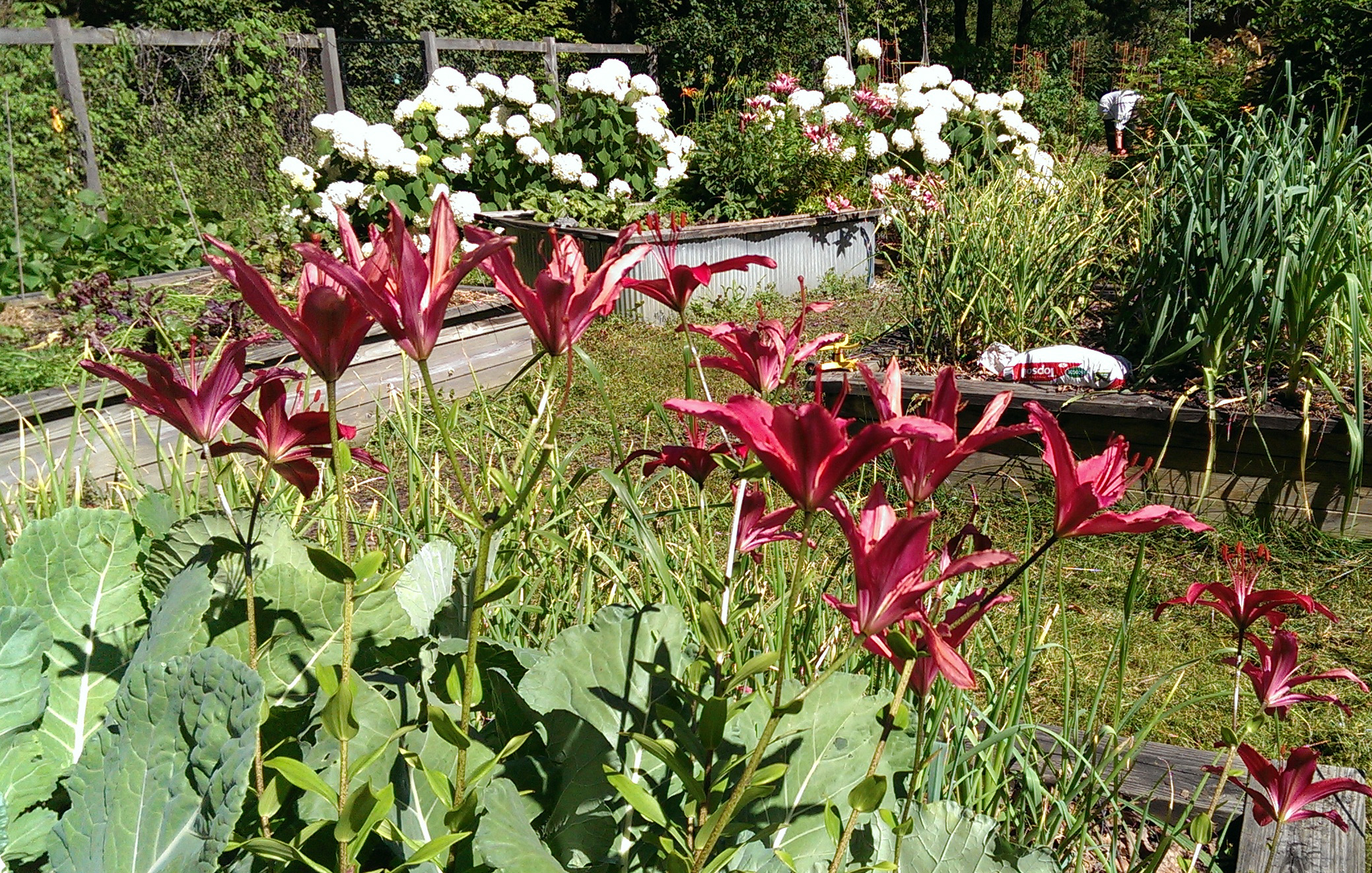
croppedZOE_0022At first, as I dug my way into a new faith, it was about a symphony: the early crocus, snowdrops, grape hyacinths followed by tulips, then iris and hosta and bleeding hearts, giving way in July to a the bold notes of the asiatic lilies until the daylilies and clematis, both bushy and climbing, the liguria and the snakeroot began to dominate followed by the soft crescendo of asters and chrysanthemums. This literal rising and falling, in palates of color always framed by many shades of green, played out in my mind, a curious analog to the mental images inspired by listening to Mozart or Haydn or Pachibel.

Then, with Kate’s guidance vegetables came to have more and more importance. They too come in their own season, following their own melodic lines, as do the fruits and the nuts. Even, I would later learn, so did honey and the concerto of the honey bee.

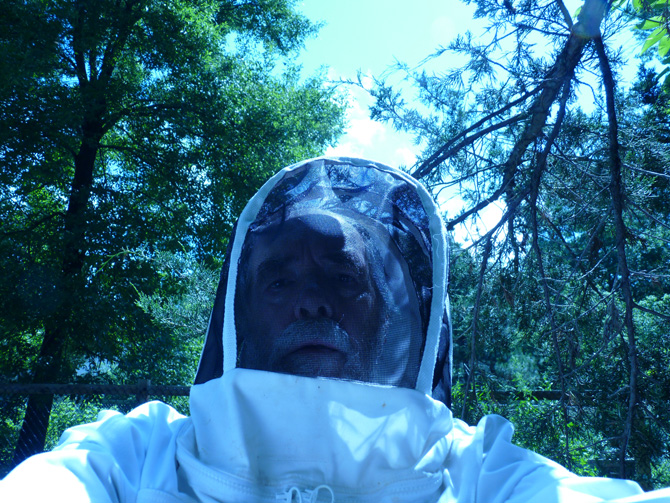
Amending the soil with compost and peat moss and decayed leaves and hay, finding the 06 27 10_beekeeperastronautheirloom seeds for the vegetables we grow and the beautiful varieties of perennials like the iris and the lily, made the whole a process laced with memory and filled with change.

It is no surprise that the Great Wheel, the ancient calendar of a people whose blood runs in my veins, came into this earthy process as a celebration, as a sacred abstraction of a very real lived experience. This was not systematic theology. This was neither dogma nor holy book. No, this was and is the song of the earth herself, composed in her own medium, the plants whom her body supplies with nutrients and her body which receives their dead bodies to replenish herself.

So this is a material spirituality, a spirituality that lives in the praxis between human awareness and the earth’s ordinary wonders, a paradoxical sacredness created by the essential, the necessary bond between the human body and the plant body and the earth’s body. It may be, probably is, that paradox exists here only when seen against the various gnosticisms of the world’s many religions. In fact, a faith rethought and reimagined without religion entering into the mix needs no spirituality other than that mysterious, miraculous link that binds the entire web of life into one interdependent whole.

Gratitude

Summer                                                                        Most Heat Moon

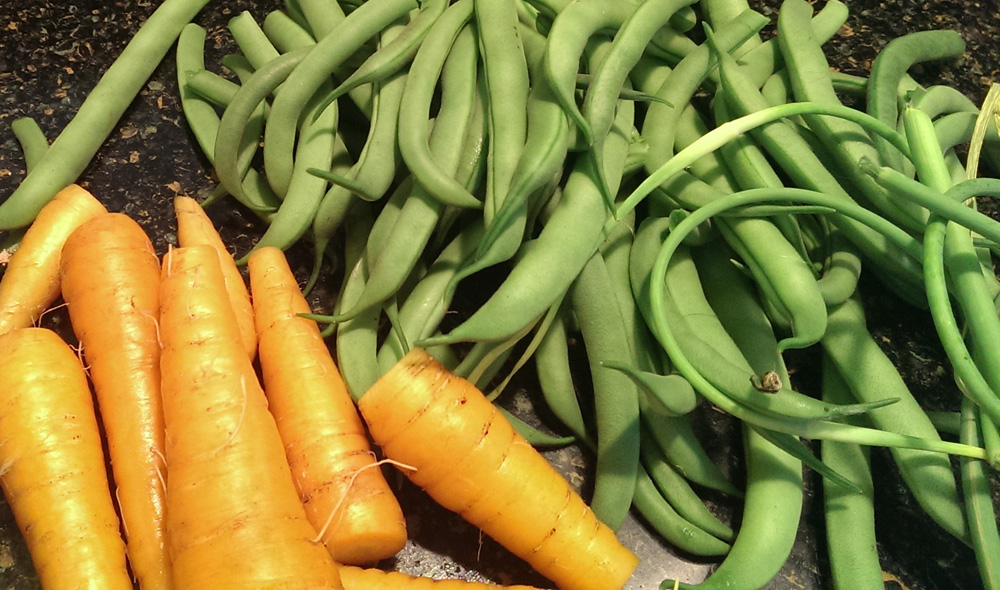
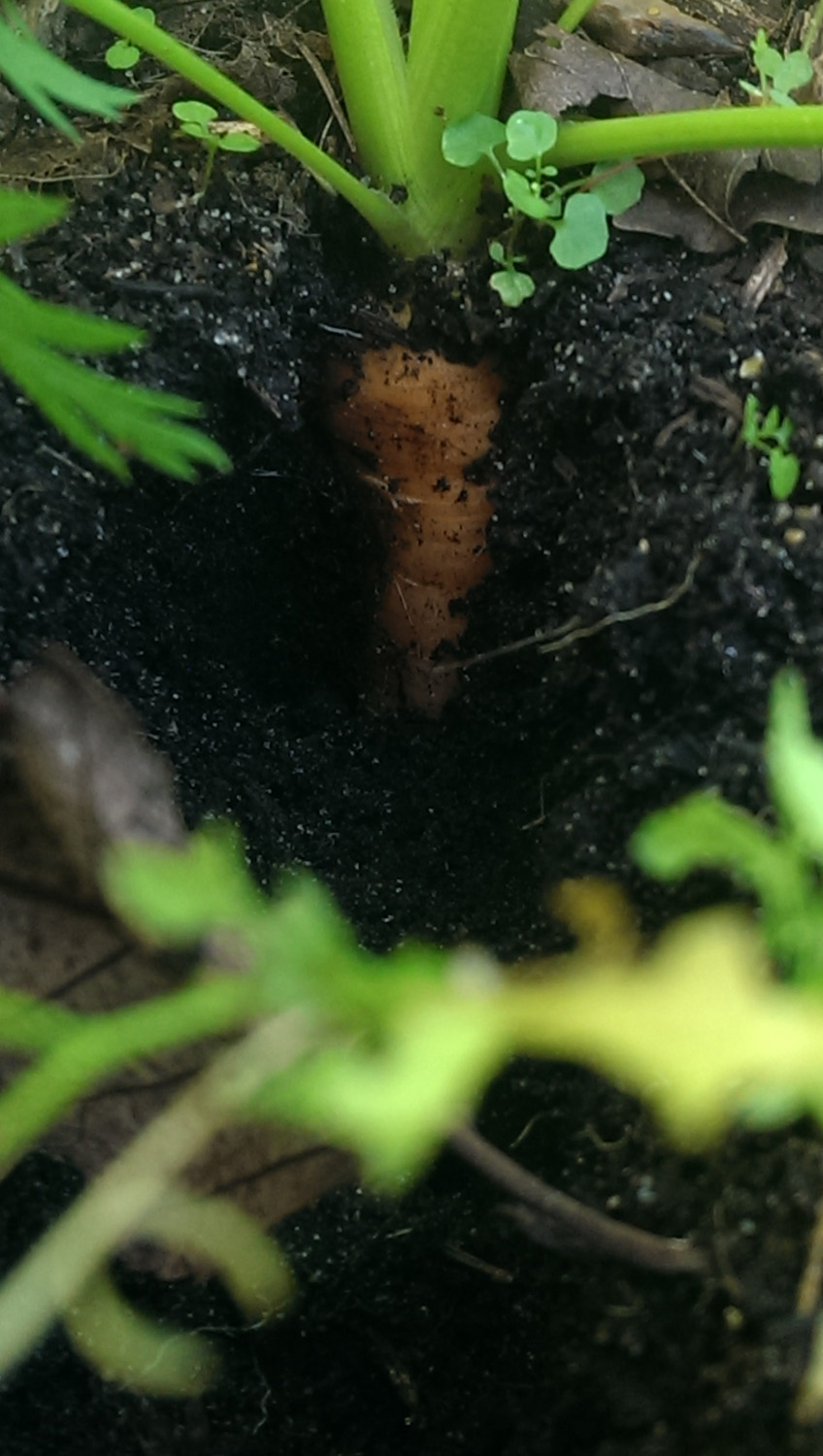
The mid-summer harvest has well begun with the first crop of beets now almost all picked,cropped1500IMAG0368 about a half of the first carrot crop and early green beans. The garlic, though late, is getting close and several of my onion stems were lying down yesterday, a sign they want to come out of the ground for drying.

I have a second crop of beets and carrots already on their way to maturity and a third planting in some places sporting two or three leaves. The tomatoes have begun to flesh out and I expect, with some heat, that we’ll begin to see ripe tomatoes in the next week. Kate picked a large batch of blueberries yesterday and I had some for breakfast this morning.

The fruit trees are disappointing. Almost no apples, cherries and no plums and very few pears. Kate may have the right croppedIMAG0360diagnosis (her real gift in the art of medicine). No bees. There are, as always, many many currants and our crop of gooseberries is as big as it’s ever been. I’m going to pick them tomorrow. We also have a sizable hazelnut crop this year.

As usual the garden’s bounty varies, but as far as the vegetables go, this is as good a year as I’ve seen in our 20 years here.

(gooseberries)

Itchy Palm? Too much odonatology?

Summer                                                                  Most Heat Moon

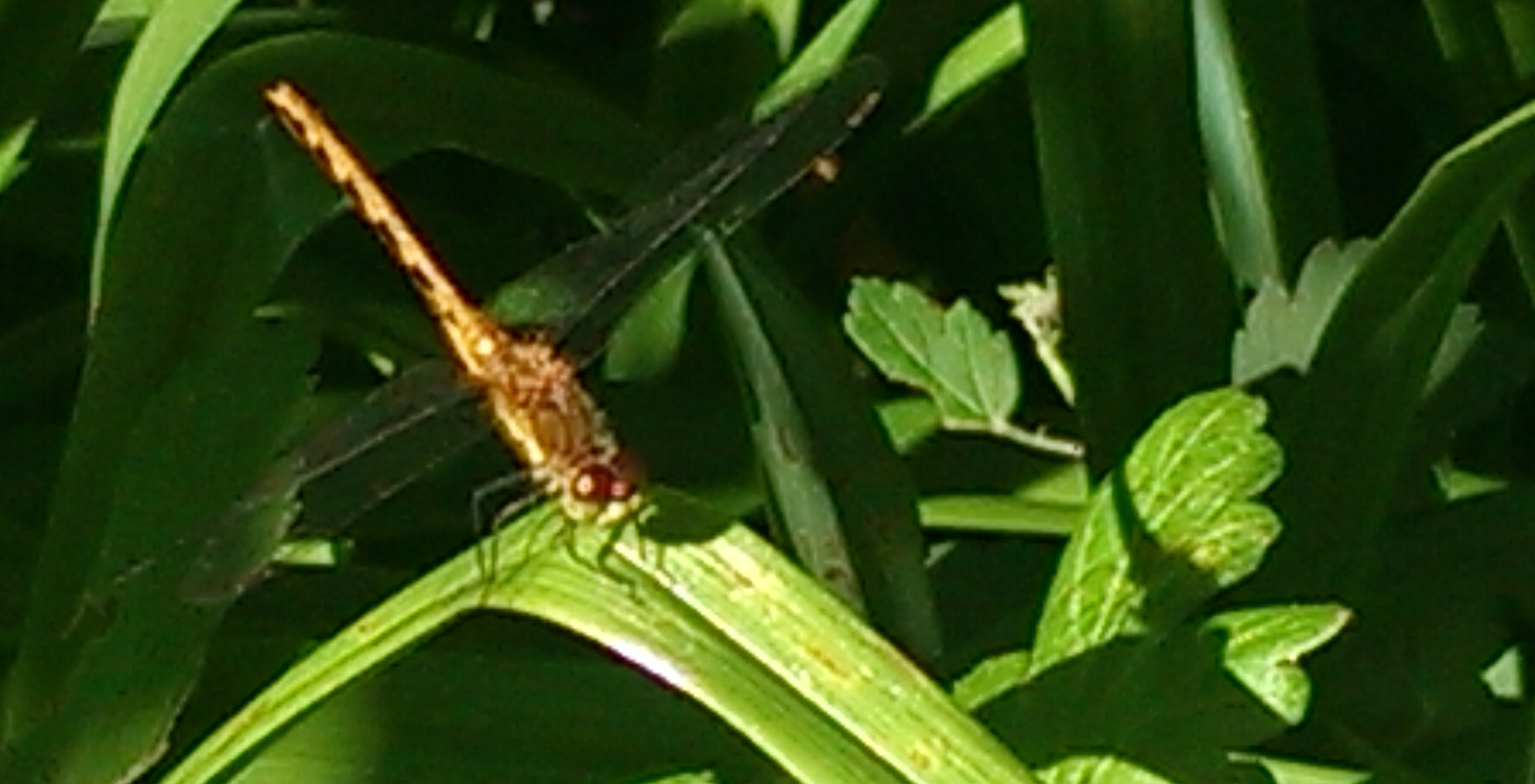
The dragonfly came up in conversation yesterday because I saw one outside the window at Running Aces and remarked I’d read they hadn’t changed in 300,000,000 years. A remarkable fact to me and one I confirmed in some quick internet research this morning.

Tom then added that they were unique in their ability to vector their prey, that is, calculate the prey’s path and their own so they would intersect. All other apex predators chase their prey. Very interesting. (see video below)

A little more poking around found a few more interesting facts about the dragonfly, but I put the most remarkable one (to me) last.


1. The study of dragonflies, and sometimes damselflies, is called Odonatology. Dragonflies are referred to as Odonates.

2. About 5000 species of dragonflies and damselflies are known

3. Top speed for a dragonfly is between 30 and 60 km/h (19 to 38 m.p.h.)

4. A dragonfly needs warmth to fly and you will notice they will often land when
the sun goes behind a cloud.

5. Because of their compound eyes, dragonflies can see in many directions at once

6. Fact: They Calculate Velocity For A Perfect Kill

The dynamics of capturing an object in mid-air are staggeringly complex, so much so that it’s usually something that’s only done by animals with complex nervous systems, like seagulls, or humans. To intercept something moving with its own velocity, you have to be able to predict where it will be in the future. When researchers began studying dragonflies in 1999, they found that rather than “track” their prey—follow it through the air until they caught up with it—they would actually intercept it. In other words, dragonflies ensure a kill by flying to where their prey is going to be.

That indicates that dragonflies calculate three things during a hunt: the distance of their prey, the direction it’s moving, and the speed it’s flying. In the space of milliseconds, the dragonfly calculates its angle of approach and, like a horror movie monster, it’s already waiting while the hapless fly stumbles right into its clutches.

7. Most of a dragonfly’s life is spent in the naiad form beneath the water’s surface…They breathe through gills in their rectum, and can rapidly propel themselves by suddenly expelling water through the anus.[6

Growing Things, Snowing Things

Summer                                                               Most Heat Moon

Another estimate. This time for yard work. We’ll get three. Two in now. This is for thinning, pruning, getting the front ready for visitors, potential buyers in February. With 650 raised beds late summer 2010_0187the gardens in the back, flowers and vegetables, and the orchard, we’ve lost focus on the front, letting it become overgrown. Now it’s going to take some effort to put it back in neat, suburban form. (about which I care very little, but which buyers will. sigh.)

Our caring has focused on tomatoes, beets and carrots, iris, lilies and snakeroot, plums, cherries and apples, not on the appearance of our front. I’ve always thought the Chinese have the best idea here. Some Chinese let the front entrance to their homes become disheveled, run down. It’s not until you’re inside, beyond the outward appearance that you see the beauty of the home.

Kate will return today, her Western scout phase over for now. She’s driven many miles in the Rockies west of Denver. Yesterday she and Granddaughter Ruth drove from Golden to Boulder and then back to Idaho Springs. Kate reported that, as you know, it’s very important to see houses in situ. Each one she saw yesterday looked great, but had one thing or another that ruled them out. One had the 2 acres we feel we need, except they were vertical, not horizontal. Another had beautiful views, a great house, but was back 10 miles of dirt road. And so on. That’s all to be expected and we only need one house.

(left flank of St. Mary’s Glacier, 2007.  St Mary’s Glacier is located 9.2 miles north of Idaho Springs in the Clear Creek Ranger District of the Arapaho National Forest. The glacier – technically a large perennial snowfield – is a popular year-round destination open to hiking, skiing, glissading, climbing and sledding.)

She has settled on St. Mary’s Glacier as the key area on which we should focus our search. That’s helpful because it narrows the field and makes paying attention much easier.

I’ll be glad to have her back home. We all miss her.

Needful Things

Summer                                                                Most Heat Moon

After coming back from the hardware and grocery stores, I cleaned our air conditioning unit coils. They get clogged up with cottonwood fluff. The fan pulling the air over the coils sucks the gray-white seed bearing plant matter onto the coils. If left on, it reduces the efficiency of the air conditioning unit considerably and can cause other problems.

Put the oil in the lawnmower, tried again to start it. Nope. Checked the manual. It goes into Beisswinger’s tomorrow. I’ll get woodchips to finish off the deck while I’m there. Those sort of things that need to get done.

I’ve been reading the Mysterious Benedict Society, volume 1, recommended by Ruth Olson. It’s not scintillating, but I can see why it’s an excellent kid’s book. It presents children as agents, effective in their own right. It also puts them into several different moral dilemmas, each difficult. The Society also captures a 10-12 year olds view of the adult world and in that serves as a good reminder to those of on the far, the very far side, of 12.

Oh, and our tunneling crew has been active. This time they’re digging right in front of the shed, a hole deep enough that when I saw Rigel in it her front shoulders were below ground. Why do they do it? No idea.