Category Archives: Our Land and Home

It’s Beginning in Earnest

Spring                                                                         Bee Hiving Moon

Scraping the mulch off the bulbs today, that scent, you know the one, decayed leaf matter mixed with the soil came up.  It says life is at work here, even in the midst of death. That smell alone brings me out in the early days of gardening. It was there when I raked off the mulch over the beds where I planted the carrots and the beets.

Then, under the leaves are pale green stalks emerging, starved for direct sun, happy to have their cover removed.  They’ll get a deeper green in just a day or two. We’re past the time for freezes of any serious sort now though frost is not only still possible, it’s still likely until around May 10, May 15.

The whole garden will gradually come back into full life.  The spring ephemerals shoot up now and will bloom soon. The carrots and beets will germinate and then in mid-May we’ll drop in the tomatoes, peppers, beans, chard, kale, melons, cucumbers and eggplants.  Meanwhile the fruit trees will bud, then flower, as will the currants and the elderberries and the gooseberries and the blueberries.

If the bees are alive, and I hope they are, they’ll be getting busy.  I’ll have a divide this year instead of a package, which means I’ll have to buy a queen for the divide. If they’re really going.  I’ll find out tomorrow.

A Night

Spring                                                                    Bee Hiving Moon

As I wrote a week or so ago, motel rooms are noisy:  the fans, the heaters, the coolers, television from other rooms, showers and toilets, even, at the Residence Inn, people playing basketball until 10 pm.  I’m sure if you stay at places better constructed than the ones I frequent, this may not be a problem, but for me it has made returning home to the exurban night a real blessing.

After 11:00 pm, 10 pm most nights, the silence here is noticeable.  No cars.  No motorcycles.  No loud music.  The dogs might snore a bit, but that’s a soothing sound.

I remember reading about a silent room in someone’s studio here in the Twin Cities, a place so quiet that it’s used for testing acoustical equipment.  The guy who runs the room said people couldn’t stand to be in the room for very long.  Apparently some level of ambient sound is necessary for us, or at least so expected that its absence suggests something’s gone wrong.  I wouldn’t mind spending time in that room, just to see.

Right now there is no thunder.  No wind.  No hail.  No arcosanti bell ringing in the storm. No Great Gray Owl hooting or wolf howling.  No lightning.  No fireworks from the neighbors across the street.  Only the sounds, what are they?, that fill the ear during times of silence.  A faint buzzing, a not unpleasant attempt by the ear to hear even when the stimulus is close to non-existent.  Silence.


Returning to Normal

Spring                                                          Bee Hiving Moon

Finally beginning to settle back into home life.  Exercise back on track, though not quite up to pre-trip standards, but close enough.  It will get there.  Concentrating on Latin and then Kate’s pacemaker maintenance on Thursday kept me from getting back into my usual rhythm, but I did get substantial work done in Ovid.

We had our business meeting this morning and our finances are on track, as they have been, but it’s nice to see they are still after a long trip.  Travel is the budget buster in our house and we have to keep close watch over it.

So, a couple of deep breaths, the weekend and back to it.  Then we leave on the 23rd for Gabe’s birthday weekend.  Kate and I are going together, driving this time.  As I said the other day, I’m hopeful the soil will be workable enough to plant the cool weather crops before we go.


An Attack of the Stupids

Spring                                                     New Bee Hiving Moon

At around 10 this morning I called home to report a serious attack of the stupids.  Kate immediately said, “You left your pillow behind.”  Smacking the forehead.  Two attacks of the stupids.

Yes, I had left my pillow behind, after all these stops.  But that wasn’t the reason I was calling.  I had set the garmin aside, reasoning that this is a trip I’ve made many, many times.  I knew the way.

So I set off toward the airport on Highway 70.  As I often do when leaving Denver, I watched the mountains recede in the rear view mirror, switched on the cruise control, stuck a new mystery novel in the cd slot and sat back for a mornings drive, headed home.

Well, sort of.  I kept waiting for the road to turn north, for the town where I often stop for lunch coming into Denver, it’s just in Colorado, not long at all after the turn south from Nebraska.

There was the sign ahead, leaving Colorado.  Ah.  Then. Oops.  Because there was the sign, welcome to Kansas. Sigh.  It’s Highway 76 that leads out of Denver toward Highway 80 in Nebraska.  70 goes through Kansas.  Oh.

I pulled out the atlas, thanks again Tom, and scouted a route north and east first through Kansas then a route east in Nebraska as I headed toward a southern dip in Highway 80.  Finally, at Lexington, Nebraska I rejoined the federal highway system.

Part of what occupied my time as I left Colorado, before I turned on the book, was thinking about the difference between the southern and western states through which I’d passed and the level plains on which I would now drive well into Minnesota.  In this thought process I was not navigating but pondering.

The arid lands beginning in Oklahoma, continuing in west Texas and southern New Mexico and into Arizona are areas which offer little in the way of useful habitation for humans.  They’re dry, with vegetation not of much use for food, and water sources distant.  When you get into the mountains of northern Arizona and New Mexico, there is more vegetation, but the soils are poor and the land often sloping and rocky.

These are areas with great natural beauty, but also severe challenges for contemporary living.  The plains, in contrast, have a beauty that is horizon and sky, fertile fields, grain elevators and small towns with white Protestant churches and brick Catholic ones.  In the plains there is a dominant occupation, farming, and, in the not so distant, a larger number of farmers.  Though the number of farmers has declined, farming still dominates the plains economy.

In the arid south and west, whether desert or mountain, there is no dominant occupation, no similar fixed anchors to an economy headed by oil and tourism and the federal government.

This was running through my head as I drove on Highway 70 headed toward Kansas instead of Nebraska.  Then I thought of our home in Andover, in Anoka county.  In the northern part of Anoka County where we live the forests and lakes, the high water table land is the southern reach of the great peat bogs that stretch right up to the beginnings of the boreal forest.

So I realized that I do not live in either the economically and resource poor south and south west, but neither do I live in the agriculturally dominant plains.  Instead I live where a different kind of economically and resource poor region begins.  If you subtract logging and mining from the lands north of us, there is only land not much good for agriculture, but rich, like the northern portions of Arizona and New Mexico in natural beauty.

Yes, I admit it.  That thinking distracted from proper navigation.

Daughter-in-law Jen got my pillow.  So all the consequences of this dreamy episode are now erased.  Do you imagine I can find Minnesota?



On the Way

Spring                                                New Bee Hiving Moon

Ruth has gone home.  Gabe has gone home.  Jon has gone home.  Jen has gone home.  The last of the trip’s intentions are now over.  All that remains is for me to go home.

Tomorrow morning, breakfast, then in the car for the next to last day.  This Ford Focus is a good car.  It’s set up well for a road trip.  I’ve gotten 35 mpg on average.

Trips have their own rhythms and this one has begun to turn toward home and away from traveling; now it’s a return.  Returns do not have the anticipation of new adventures, new sights, but they do have something better. Returns take us home.  It is only with home in mind that we can set off with confidence into the unknown. Home is the known, the safe place, the refuge.

It’s where Kate is.  Where Vega, Rigel and Gertie are.  Where the gardens and the orchard are.  Where the study is.  Where most of life happens.  I’m ready to get home.

What Is Your Kiva?

Spring                                          Hare Moon

Santa Fe.  Staying in a reasonably priced motel right in the heart of adobe filled Santa Fe.  The cathedral featured in Death Comes for the Archbishop is only a block or two away.  I came to Santa Fe after seeing Chaco Canyon.

Due to a weird late night mix up I checked into a motel-cheap-no phone, no wi-fi she said.  I didn’t mind.  She forgot to add no heat.  This in Holbrook, AZ high up just past the Mogollon Rim.  49 when I pulled in. I was too tired to hassle it so I went to sleep.

Fortunately, years of living with Kate have taught me cold sleeping skills.  It was fine until I woke up 4 am. I’d never shifting my bed time from home, nor my rising, so the 6 am Minnesota equivalent had me awake.  I decided to get in the warm car and drive to Chaco Canyon.  Which I did.

This is a haunting place, difficult to get to now as it must have been difficult to get to in the period between 850 a.d and 1150 a.d. when it flourished.  It was, for that time period the ceremonial for the pueblo peoples.  The architecture of Chaco County shows up in many other pueblo peoples sites, though much more modest in scale.

The Chaco folks built big.  And they built stone on stone, with a mud mortar.  The construction technique reminded me of dry stone fences in the East.

The part of each person’s inner life that reaches out to a particular patch of mother earth has created thousands of small kivas, I’ll call them.  The pueblo people go into the below ground circular stone structures called kiva’s as if returning to the womb. Each time they come out, they’re reborn.  So a kiva is a patch of earth where you feel reborn.  For me it’s our gardens and woods and orchard, for the pueblo people its Chaco Canyon and the Four Sacred Mountains.

Each patch of earth needs a kiva that holds it dear and feels responsible for its care.  And who, in turn, are reborn in the giving of that care by the earth.  This is a faith with so many worship sites and the worship is different for each kiva.  What kiva do you belong to?

Ugly

Imbolc                                                                      Hare Moon

Out to lunch celebrating the submission of Missing.

An often unremarked aspect of the thaw is how ugly things become.  The pristine whiteness that softened and reshaped the landscape becomes gritty, pocked with an icy crust.  Then, when it recedes, like a glacier retreating up a mountain valley, there is a debris field.  The difference of course is that in this case the debris is cigarette butts, condom wrappers, rubber bands, bottle tops and other objects discarded, perhaps back in November near the spot where they resurface.

This is why an early public services task here is street sweeping, since no one likes the looks of our road sides filled with the litter of three plus months.  Then in the lawns there are small tunnels and nests of dead grass where the voles have lived under the snowpack. Too, there is often a mold on the faded lawn, as if Miss Haversham had taken over in the neglect occasioned by winter.

All this though gets swept aside and forgotten as the lawns green, the trees bud and the first flowers begin to emerge.  The streets are clean, the lawns growing.  Soon it will time to get into the garden.

Seed Orders

Imbolc                                                                Hare Moon

The Great Wheel has been nudged forward, beginning to turn toward spring: the light in the sky today and the moisture in the air, the sudden grittiness of the once pristine snow. The temperature, even now is 36 degrees.  Above freezing.

The seed orders, filled out a couple of weeks ago, went into Harris Seeds and the Seed Savers Exchange.  Plant orders too.  The garden map for 2014 came out and I figured the square footage for certain kinds of vegetables.  This information went out to Luke Lemmers of HighBrix Gardens.  He’ll send me nitrogen specific to the various beds.

Each one of these steps is gardening.  Gardening is not only hoe and rake, seeds and soil. It’s planning and knowing, sourcing.  This is the gardening work that can be done while the snow is still on the ground.

We did start our own seeds for a few years with a hydroponic set up, but the space it requires and the fussy of it didn’t appeal to me.  So now we buy transplants.  A bit more expensive, but much less hassle.

An important next step comes when the soil becomes workable and we can put in those hardy vegetables that like the cold.  Then, after May 15th or so, the usual last frost date for Andover, we’ll plant the tomatoes and peppers and egg plants and kale and chard and collard greens.  After that, it’s caring for the plants as they grow.

Look for our Beltane bonfire, May 1st, the official opening of the growing season.

Quiet

Imbolc                                                                      Valentine Moon

Again, I know it’s a common thread for these later night posts, but the stillness.  The quiet of a late February night with thigh-high snow in the yard and temperatures headed into the minus teens below zero again.  It is like living far further north where sometimes the winters bump into the beginning of summer and pick up again before the growing season is over.

Yes, and I know it’s crazy, but I like it.  Am I tired of the cold and the snow?  A bit.  Would I live somewhere that couldn’t deliver this kind of season?  No.  These outliers define us, show the edge of the world toward which we are closest.  And it’s not Louisiana and the Gulf of Mexico.  No, we align with the pole, the north pole. This year we even shared the polar vortex with it.

I’m hoping we hit #8 on the coldest winters since the Civil War.  Remember the winter of 2013-2014?

Winter Time Archaeology

Imbolc                                                                   Valentine Moon

Finished first draft of my query letter.  It includes a synopsis of Missing, about 1,500 IMAG0365words, and the first five pages.  Missing itself, after revision 5.5, is at 103,000 or so.  I want to get some feedback on the query letter, then start sending it out to agents.  My plan is to get it out to 10 agents before I leave for Tucson and other points south west.

(June 5th, 2013)

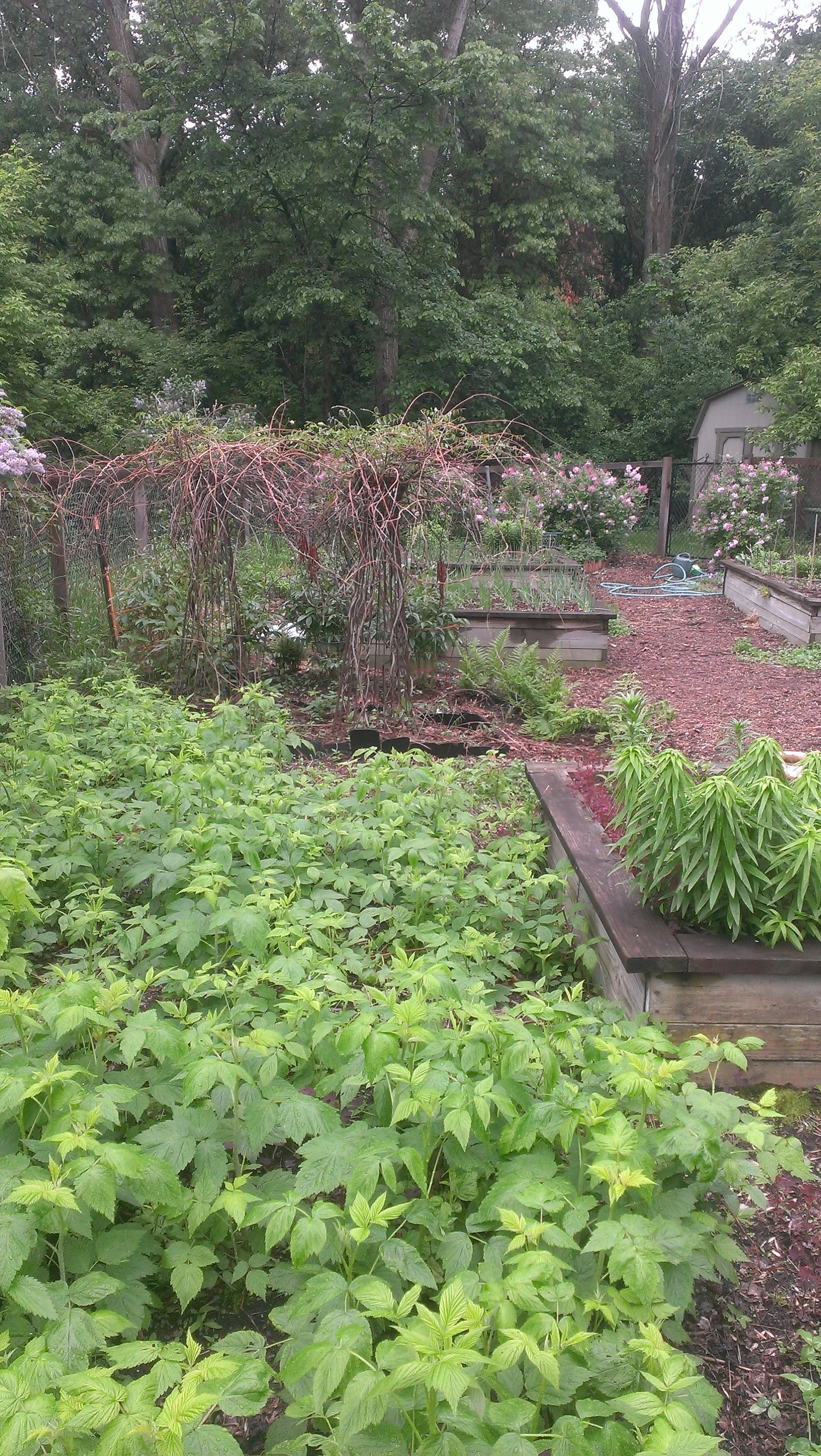
That took the morning.  Tomorrow I’m putting together our seed and plant orders, calculating the kinds of nitrogen they will need based on the bed sizes for specific vegetables and getting an order for the nitrogen off to Luke Lemmer in Plato, Minnesota.  This is in plenty of time since our vegetable beds, raised about 18 inches off the ground, are invisible now.  It would require winter time archaeology to find them.

The Vegetable Garden

This is part of why I like four distinct seasons.   Planning a garden while 3 feet of snow lie in our yard and the temperature is in the teens headed toward the teens below makes the full cycle of life an experience rather than abstraction.

(February 21, 2014)