Category Archives: The Move

Out of place. Then, not.

Fall                                                                                       Falling Leaves Moon
soil test
soil test

A primary text in my rethinking, reimagining my faith is Becoming Native to This Place by Wes Jackson of the Land Institute. It’s not the content of the book-though it has useful material about new ways of agriculture-but the gerund phrase it has as its title.

Becoming native. What an idea. The very notion of native is that you can’t be native unless you’re born to it. So what can this mean, becoming native? In my understanding it’s about a process, a careful listening and seeing. Casey Reams, a soil scientist, was notable for saying, “See what you’re looking at.” So often we don’t.

We will never be native to a place where we were not born, but we might enter a state of grace with the land, a “becoming native” state, an ongoing increased intimacy and sense of co-creation. When Kate and I landed here in Andover 20 years ago, I was far from what I understood then as my native turf, the streets and inner city neighborhoods of Minneapolis and St. Paul. But, as I wrote here a few days ago, I’ve actually spent most of my life in small and medium sized towns of the midwest, 47 of 67 years. So, I became native, or entered into a state of becoming native to the city.

Becoming native is not achievable from the couch or from books or from yearning. It 07 10 10_ahabegins when, as the New Testament says of Jesus’ disciples, you shake the dust off your sandals and finally leave the other place behind. Whatever it is. Becoming native begins when you commit, often unconsciously, to the new place.

After 19 years in Indiana, where I was raised; I lived in Wisconsin for a year, Appleton, and never felt like I landed. By the time 20 years of residency in Minneapolis/St. Paul came and went, its streets were my streets, its future my future. Becoming native happened gradually and unconsciously.

Here in Andover, where I initially felt out of place (a cliche I use deliberately here), becoming native followed a somewhat more conscious path. We decided to put landscaping work into the mortgage and added terrain features such as boulder walls, a tiered perennial garden and several plantings of trees and perennial flowers and shrubs. Initially, the gardening work was bulbs and annuals, almost exclusively in the tiered bulbs above our brick patio.

There were though, several black locust trees in a grove about 40 feet off our back deck. That area, sort of a backyard, had weeds and these trees. Black locust is a dense wood and one often used for fence posts in the 19th and early 20th century. They also have thick, wicked thorns. It was the work of a couple of years, with chain-saw and step-son, before those trees were gone and the stumps had been ground away.

After the bulbs and the annuals, the felling of the black locust grove, attended by sweat and days of heavy labor, including sessions with a rented industrial quality wood-chipper, began to reel me into this place. The soil and manual labor, outdoors work, gave me an intimacy with the grounds I’d never had anyplace else.

Add in the dogs of those years, the planting of this garden and that, the eventual creation of the raised beds, the orchard, the fire-pit and we began to become one with the land here. The bees provided a collegial work force from the insect world.

The house hosted birthday parties, holiday meals, meetings with the Woolly Mammoths, the Sierra Club and parties for Paul Wellstone’s first campaign. Over time this land became home.

Then, becoming native to this place could truly begin. I would mark the moment of crossing the threshold late one fall night, perhaps in November when I heard a scratching outside the study window. Turning off the light in the room I moved closer to the window and looked out at a bird feeder then set up nearby. There, scratching among the fallen seeds was an adult opossum. This was the first opossum I had ever seen live outside of a zoo. He came back several nights, then disappeared, perhaps eaten, perhaps gone into hibernation.

In thinking about the possibility of hibernation I began to see this property in a new way. According to the Minnesota Extension Service and the DNR, there were likely thousands of animals: chipmunks, voles, opossums among them hibernating here in our woods. An image, a vision really, of our land with many, many lives lying below ground or in tree hollows came to me.

It was that vision that awoke me to the fact that we shared this property with so many others. It was not our property anymore than it was theirs. We were cohabitants. And not only with animals. The jack-in-pulpit, the columbine, the wild grape and wild cucumber, virginia creeper, the lilies and the iris, the tulips and the daffodils, the garlic and the asparagus, they all rested here over the winter waiting springs touch to come out into the sun.

An anthropocentric notion of ownership, amplified by deeds and by the very process we go through now, selling this property, creates an illusion of our habitation here as the only significant one. Many people would, without much thought, identify humans as the only inhabitant of the land. And it is not so.

Here there are whistle pigs, raccoons, squirrels, chipmunks, voles, the occasional wandering muskrat and rat, salamanders great and small, newts, garter snakes, toads and frogs, snapping turtles at certain seasons, pileated woodpeckers, great horned owls, crows and geese. There are millions, probably billions, of microscopic flora and fauna that keep our soil vital and nourishing for the larger plants that live within it.

This is a hectare of land, 2.5 acres. It has oak, ash, poplar, ironwood, elm, cedar, buckthorn (grrr), snowberry, river birch, maple, pine and spruce. There are many native and many domesticated plants and six domesticated animals, four dogs and two humans.

Once this umwelt settled into my conscious and unconscious awareness I knew I was 500P1030676becoming native to this place. I will never be as native to it as the generations of rabbits that have lived and died here. Nor will I be as native as any of the other animals or the native flora. Perhaps I have become as native here as the daffodils in our gardens and the lilies, both flowers that thrive on this land just as Kate and I have.
And now we are selling. What does that mean? Really? A certain sum of money, often transferred from one mortgage bank to another, changes hands. Legal documents get signed. Keys handed over. On some day we see our goods loaded onto a truck, we get in our Rav4 and pull out of the driveway never to return. But our cohabitants will remain, snugged into their tree cavity, their underground burrow, their nests beneath the shed. The major natural character of this place will remain largely intact. Sales are about humans, mostly, unless new “owners” abuse their trust.

We will, I think, go through a process of denativizing in which we gradually let go of the sensibilities shaped by these woods, these plants, these animals, these cohabitants. Even if we visit someday, just to see how the old place is getting on, we will return not as natives but as travelers, historical tourists.

We will, I hope, be becoming native to a new place, one with hard rock and high peaks, faraway vistas and remarkable spring snows. But it will not be easy. We will have to earn our place there, just as we have here. Frankly, it’s the part of this journey that most excites me. Yes, the grandchildren. Of course. Yes, Jon and Jen and Barb. Of course. But as to my life and its daily turn, becoming native to the Rocky Mountains is the big joy ahead of me.
 

Milestones

Fall                                                                                Falling Leaves Moon

Explanatory signs along the way west. This is the meeting with the realtors and their stager. In this meeting the homeowner learns the best way to present their home, a symbol of their uniqueness, in as bland a way as possible so that others can project their own uniqueness upon it. When imagined as one’s own, a home is sold.

Tomorrow we get guidance on the interior work from a person whose expertise lies in arranging homes for sale. We’ve now done as much as we intend to do with the outside, have packed maybe 60% of the things that will go with us, decumulated (yes, that’s a word. Surprisingly, I rediscovered in a much older post, one from October 2005) multiple items of furniture, art and objets d’art, books, files through sale, discarding and donating.

There are, too, the many other matters, financial and insurance matters in particular, that need attention, some of which we can do now and some of which have to wait until we change residence.

Each one of these milestones could have its own little sign, like the text next to an art object in a museum or a plant in an arboretum. Here the mover learns the art of letting go. Here the mover often tears out individual hairs one by one. Or, here a look of glee often passes over the mover.

Chain Saws

Fall                                                                                          Falling Leaves Moon

And the sound of chain saws was heard on the land. The landscaping work has begun. A bobcat, pulled by a truck filled with mulch sits just ahead of a white pick-up with an enclosed trailer. The dogs announce, over and over again, that there are strangers here. Strangers here. Strangers here.

The steady rate of work toward Colorado goes on. We’ve been at this now since late April. It can feel like we’ve always been moving. Always will be moving. But an end exists and it’s much closer now than it was when we first decided to give the whole process two years. As we grabbed hold of this project, various aspects of it have conspired to make moving early next year the best plan.

Though not eager to leave Minnesota, we are eager to start establishing a new life in the mountains. We’ve lived here over well over 40 years, both of us, and our Western life will take time to flourish, just as this one did.

We will have the grandkids, Jon and Jen, and Barb (Tennessee grandma) to help us ease in. Kate says there’s a top 10 quilt shop (in the U.S.) within 40 miles of Idaho Springs so that will give her a place to make new friends. The Sierra Club and other environmental advocacy groups are strong in Colorado, as are certain brands of progressive politics, so I’ll have some places to meet new people, too.

But none of this until after the landscaping is done.


For Whom the Bell Curves (i found this phrase at a website of the same name.)

Fall                                                                                    Falling Leaves Moon

A bit more cleaning up, decluttering, then a walk through to agree on work we’re going to do tomorrow when Kate’s sister Anne comes up.  This is outside work, harvesting the last of the vegetables, cleaning up the beds and putting down the broadcast fertilizer. There’s pruning and hose retrieving, wheel barrows and garden art to come in for the move.

Dehn’s landscaping comes on Monday at 8 a.m. to do front yard work. This is for curb appeal for the most part.

Then on Wednesday the realtor’s and the stager come. Once we settle on what we need to do inside, we’ll figure out when to do it, probably as late as possible, then find someone.

We’re definitely on the downward slope of the curve, but even as we near the bottom there are still many tasks that remain. It’s important now to recall all we’ve done to get to this point. And how daunting the move would look if we had done nothing.

This illustration shows the true nature of the task. The darker orange curve represents packing, arranging details like a second mortgage and movers, all those things that are Minnesota focused and aimed at getting our portable items from here to Colorado. That’s the curve on which we’ve reached the downward slope.

The lighter orange curve represents finding a new home in Colorado, moving in, getting our life altogether shifted from Minnesota to Colorado: buying, updating and moving into a new home, health insurance, driver’s license, estate plan plus all the smaller things like identifying a car dealership, a pharmacy, a grocery store, utilities. On that curve we’ve barely begun to climb the upward slope.

My guess is that the time it takes to extricate ourselves from Andover will match the amount of time it will take us to get the new life begun. How long it will take to have a new, Colorado life? Years, I imagine.


Surreal

Fall                                                                                  Falling Leaves Moon

Kate said this morning that she had surreal moments with the move. Me, too. We both work along, packing, getting other matters taken care of but the move itself feels unreal, as if a mirage. Why did I pack all of my books in boxes? Why did she clear out the guest room, let all the bedroom furniture be carted away? We’re going to do all this and still be living here.

The present, with its weight of 20 years, has far more heft than an imagined place in the mountains, far across the plains. Impossible to see, even in the mind’s eye. So there is only this illusion, this planned, hoped for thing over against the 20 winters, the 20 growing seasons, the 20 birthdays and anniversaries. Against the bringing in of groceries, of feeding the dogs, of doing laundry and writing novels. All here. In this place. Where we still are.

Though I’ve said before that the move makes me feel both here and there, here has more power, the now has more power, than the not yet, the there. Which is good. I want to be here until I’m not, just as I want to live until I die.

Yet we have to have the not yet to pull us forward, to give meaning to those stacks of boxes, the plastic bins, the discarded furniture, all the work we’re having done. Without the not yet our actions, though still surreal, would also be mad. Just as without death, it seems to me, life would lose its uniqueness and become merely being.

We cannot outwait the move. That is, we cannot do nothing and expect to end up living in Colorado next year. No, we have to take action now, find our Conestoga, pack up the hoop skirts, the anvil and plow. Get the oxen ready.

And so we are. But I imagine those pioneers probably looked at the wagon and felt as we do. We’re still here in Pennsylvania or Ohio or Virginia and though we’ve got our goods packed and ready to load, we remain here. As we always have. And always will.

Until wood on wood begins to creak and cry out, until the whip cracks over broad shoulders and with a lurch the wagon is no longer still, until then, we live here.


Liminal consciousness

Fall                                                                               Falling Leaves Moon

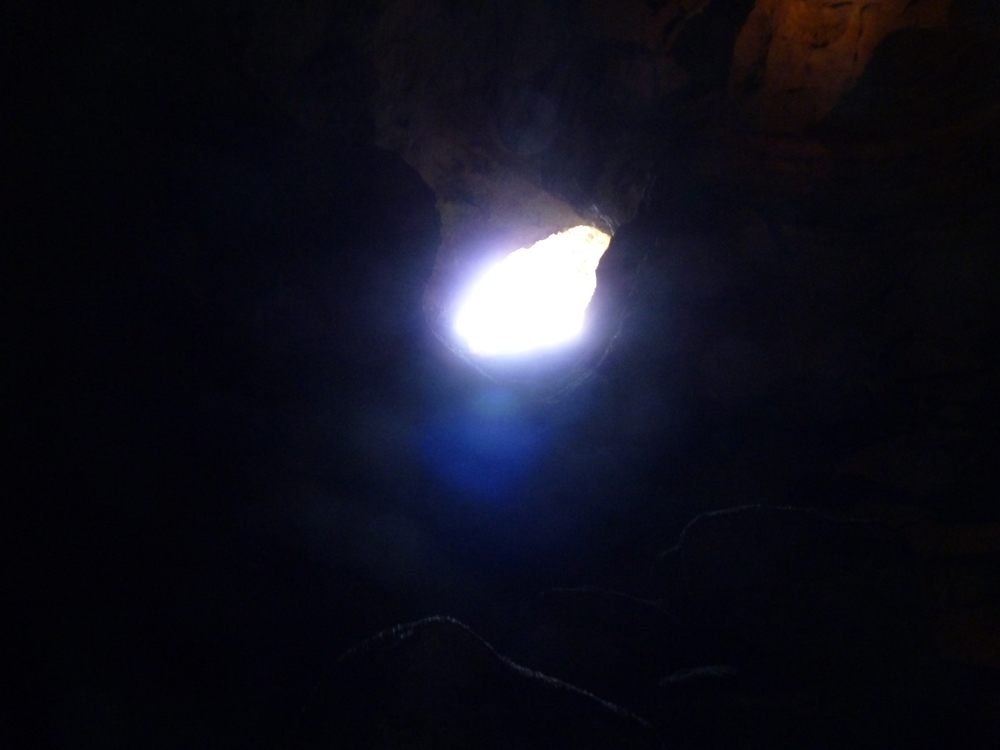
Carlsbad Entrance from the twilight zone. Beyond this point there is no natural light.

Stood tonight, arms on our mantel place, a fire crackling below me, wondering. What will I lean against this time next year? Will I hear wind coming down the mountain, the bugling of elks, the cough of a mountain lion? There might be frost on the plants outside and a chilly night ahead.

This is not I wish I would still be here kind of wondering, nor is it I wish I knew where we’ll be next year. It’s just curiosity, a sort of advance scouting. If all goes well, by this time next year-in the Great Wheel season of Mabon, a bit more than a week after the fall equinox-we should have been in our new place for over half a year. Strange to consider that.

Liminal consciousness. It arises when we know a transition is upon us, a time when we are no longer where we were, nor are we where we’re going. The weeks before a marriage. The summer after graduating from high school. Pregnancy. Interviewing for a new job. Getting ready to move to another place. In the broadest and most ultimate sense of course life is a liminal moment between birth and death. Liminal consciousness arises when we wake up to our condition.

Tonight, on our fire place mantel, I woke up again to the physical sense of moving and of

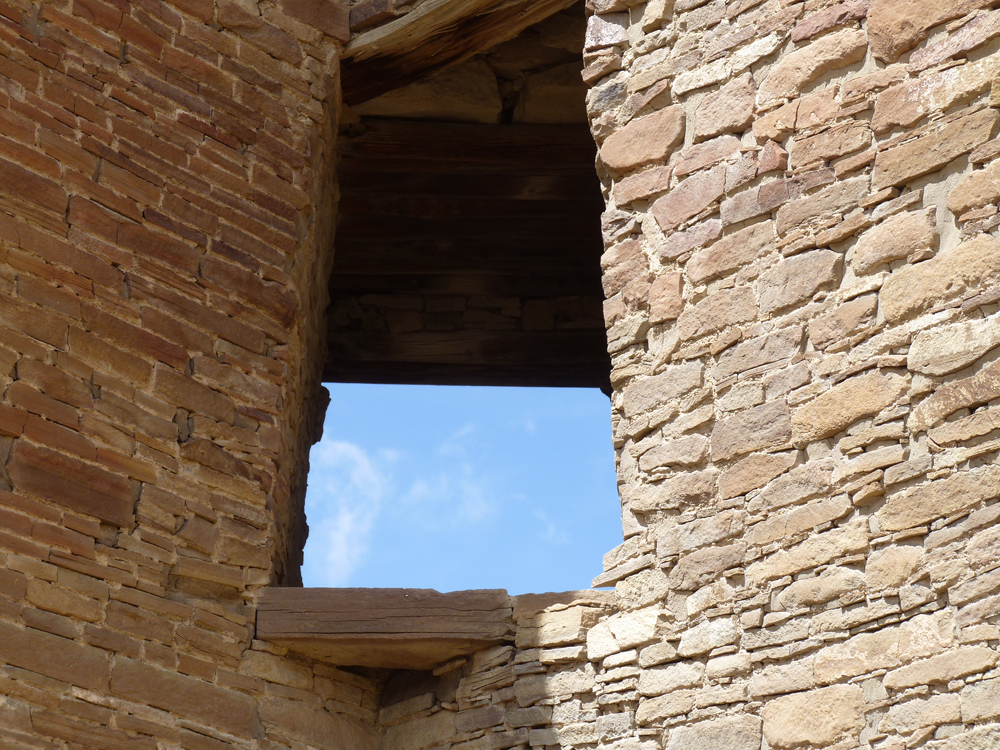
Angled window close up Chaco Canyon
Angled window close up
Chaco Canyon

having been moved. That awareness gripped me and I lived in it fully, not for long, not in a wistful way, but I was in it. Now that moment is in the past and I’m in Minnesota, with moving tasks and daily life here capturing and holding my attention. As is appropriate.

But stay aware for those moments of liminal consciousness. When they come, they have learnings for you.


Slowed

Fall                                                                            Falling Leaves Moon

Been moving at a reduced pace the last four days. Latin each day, getting further into Caesar’s Gallic Wars. Today he set out on a characteristic fast march from Rome to protect “our province”, a part of which is now Provence, from marauding Helvetians. Whom he’d set up with a betrayal by a wealthy leader of their people, Orgetorix. This is the war when Caesar, in the ever expanding effort of Rome to secure its borders, bleeds himself into world history. He speaks of himself in the third person.

Beyond the Latin, not so much else. Picked a few raspberries. Electrified the visible fence. (Kate says I should call it the invisible fence, except I didn’t bury it, I strung it on an existing fence line.)

Finished up the Southern Reach trilogy. Not sure how I felt about it. I wouldn’t recommend it, but it might have been good. In essence it presents an alien invasion that is so alien we can’t even be sure we’ve been invaded. Its central idea, that an alien might come to earth in a way so outside our experience that we would have difficulty recognizing it, seems valid to me. Anyhow. Check it out or not.

Watching the news, picking up positive threads about the environment. Bill McKibben’s 350 organization’s 400,000 person march in NYC was good news. Increasing public disapproval of the Polymet mine project is another. Coal seems to have been knocked back on its heels, at least here in Minnesota and by Obama’s actions, in the rest of the country. Little El Hierro has gone 100% renewable as did the Danish island of Samsø. Even the President’s decision to reach out to a smaller club of wealthy countries for action on carbon emissions is a positive sign, maybe the most positive of all these.

Still, as a Sierra Club staffer said when I gave her the same list, “Yeah, but doesn’t it make you nervous?” She’s right. Gaining ground would be so unfamiliar to us that we might make mistakes. But we have to take the risk that our message might finally be gaining in both public and political circles.

Feeling like I might get back to the packing side tomorrow. Clean up some clutter left behind after the SortTossPack push. Vet yet more files. Pack photographs, office supplies. There’s still more to go.


Oh, Yeah, Can You See

Fall                                                                                              Falling Leaves Moon

The temperature, the political temperature, of Colorado can be taken in the gubernatorial race between Democrat John Hickenlooper and conservative Republican Bob Beauprez, scrambling over who will control fracking in western Colorado counties, but my favorite is Jefferson County high school students protesting against a conservative school board.

Here’s a couple of paragraphs from the Denver Post that show what the students are mad about. Denver Post, 9/25/2014

“The curriculum proposal, crafted by board member Julie Williams, calls for a nine-member panel to “review curricular choices for conformity to JeffCo academic standards, accuracy and omissions,” and present information accurately and objectively.

Williams’ proposal calls for instructional material presenting “positive aspects” of U.S. heritage that “promote citizenship, patriotism, essentials and benefits of the free enterprise system, respect for authority and respect for individual rights.”

Materials should not, it says, “encourage or condone civil disorder, social strife or disregard of the law.””

Interesting definition of accuracy and objectivity.

Jefferson County is a western suburban county that runs from near Boulder in the north through western, affluent suburbs of Denver to an area not far north of Colorado Springs.

“Jefferson County’s electorate is Colorado in miniature, with roughly equal parts registered Democrats, Republicans and unaffiliated voters.  The geography ranges from close-in suburbs with many students poor enough to qualify for discounted lunches to wealthier areas and mountain towns. Jefferson County is more than 90 percent white but has a growing Hispanic population.” Denver Post, 9/28/2014

I love it that these student have taken the essence of U.S. outsider politics like civil disorder and social strife, utilizing the mildest of these strategies, peaceful protest, and flung it back in the face of a school board attempting to rewrite history. My kinda people.

Jefferson County borders both Clear Creek County and Boulder County. We’ll almost surely land in one of those or even Jefferson County itself. I’ll unpack ready to help.

Time to Exhale

Fall                                                                                Falling Leaves Moon

Two campers here glad to see the last week in the rear view. Kate’s got a headache and I’ve got a large dose of avoidance to around the house work.

We went off for our family business meeting at Key’s Cafe. Coffee good. Food good. The bustle and energy of folks waking up, the wait staff fully engaged, dishes and silver ware clanking and clicking good.

Planning some museum immersion this next week, to fill in a spot left empty with all the hithering and thithering. Some time with old favorites like Blind Man’s Buff, the Chinese collection and the ukiyo-e prints. Then some time at the Walker, the art of the present and recent past.

Time to exhale for a bit.

A Big Hand to Kate

Fall                                                                         Falling Leaves Moon

Our second SortTossPack day is done. Our walls and shelves are bare of art, which now rests in plastic tublike containers or in narrow boxes designed for the safe transport of framed works. They work hard. Removed two chest of drawers, a desk, a file cabinet and two bookshelves, plus the second and last large pile of red-tape book boxes.

The steps we’re taking now seem to cover more ground, move us closer to the reality. We’re going to take a rest the next couple days, maybe more, then do another round of decluttering and packing on our own. Next week the landscape contractors.

On October 8 the realtors and the stager comes. After them the movers for bids. Still a lot of work to go, but we’ve done the bulk of the move readiness part.

A big hand today to Kate, who managed the process while I was away being a political animal.