Category Archives: Garden

A Good Year for the Crops

Fall                                                                       Harvest Moon

Got my soil tests back and the recommendations for next year’s garden.  This time I asked IMAG0650cropped for specific information about beets, allium crops (onion, garlic, leeks) and tomatoes.  I will use a broadcast for all the beds but use special supplements for these three crops.  That way I can keep them in the same beds year after year unless some kind of disease problem occurs.

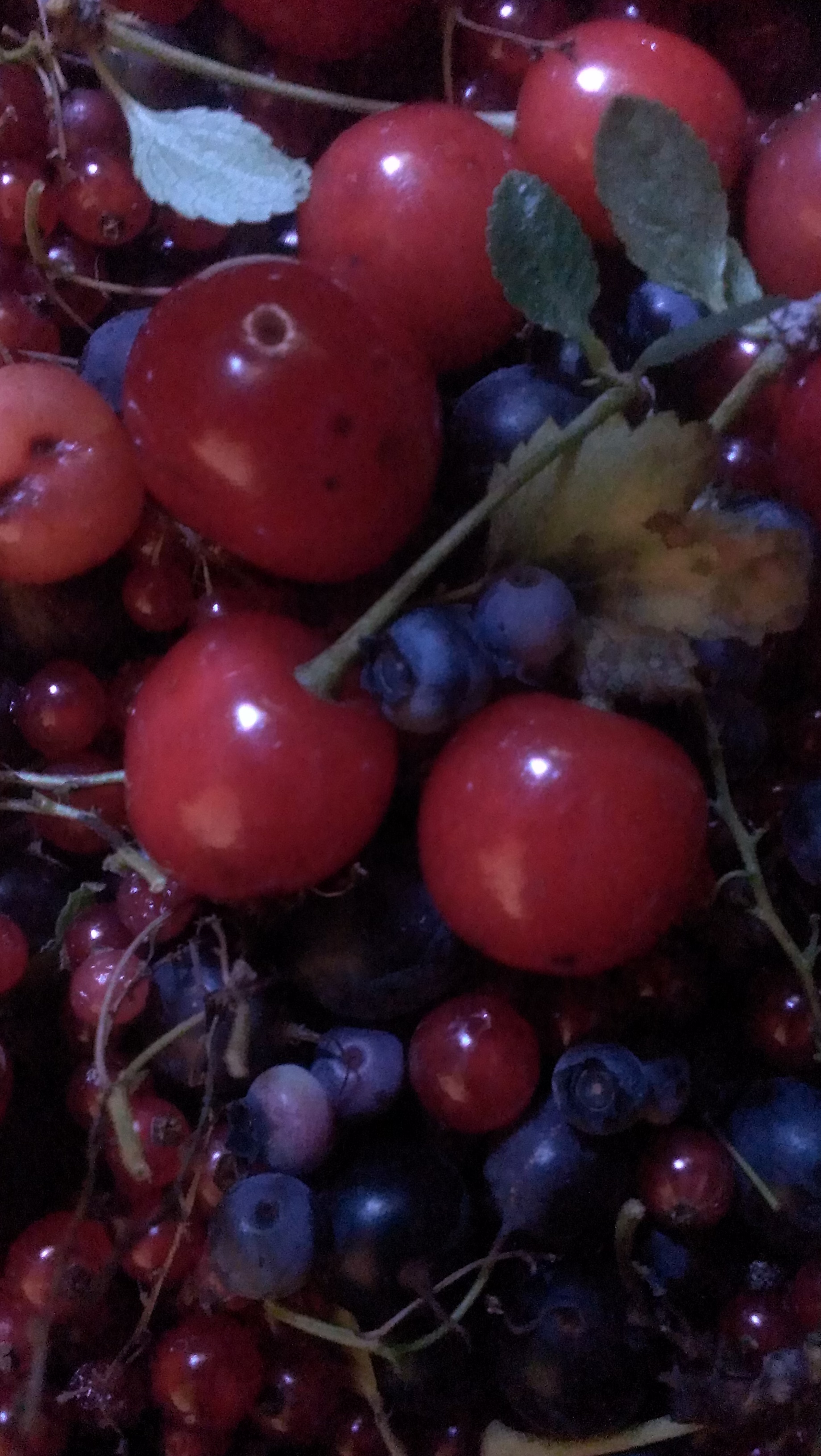
This time I included soil samples from the orchard, so I have recommendations for broadcast and sprays for it, too.  With a winter pruning that Javier and company will do we should have a better and more consistent fruit crop next year.  This year the cherries, currants, honey crisp and sweet tango were good.  Plums and pears and blueberries not so much.

Since I decided a couple of years ago to get more and better crops from our limited space, I’d rate this last year a definite step in that direction.  It was IMAG0689a weird year weatherwise and I have no way of knowing how that helped or hurt us, but the International Ag Labs feeding program did help.

A key aspect of the International Ag Labs program is its movement toward biosustainability so as I use their products my soil becomes better and better, not poorer and poorer as happens in much of U.S. agriculture.  There are two primary goals here: soil made better by our growing and the production of higher nutrient quality produce.  That’s a solid win for us and the planet at the same time.  It is the Great Work in miniature, right here in Andover.

Given the outsized (for us) honey crop this year I’ve also decided to scale back my bee plans.  Provided this colony survives the winter, and I think IMAG0873it will, I’ll just divide it next year and not buy another package in 2014.  Maybe in 2015.  2015…geez.  That still seems like flying cars, shuttles to the moon and computer created meals at home.  Guess I’m now the 20th century, second millennium guy anachronistically positioned in the future.

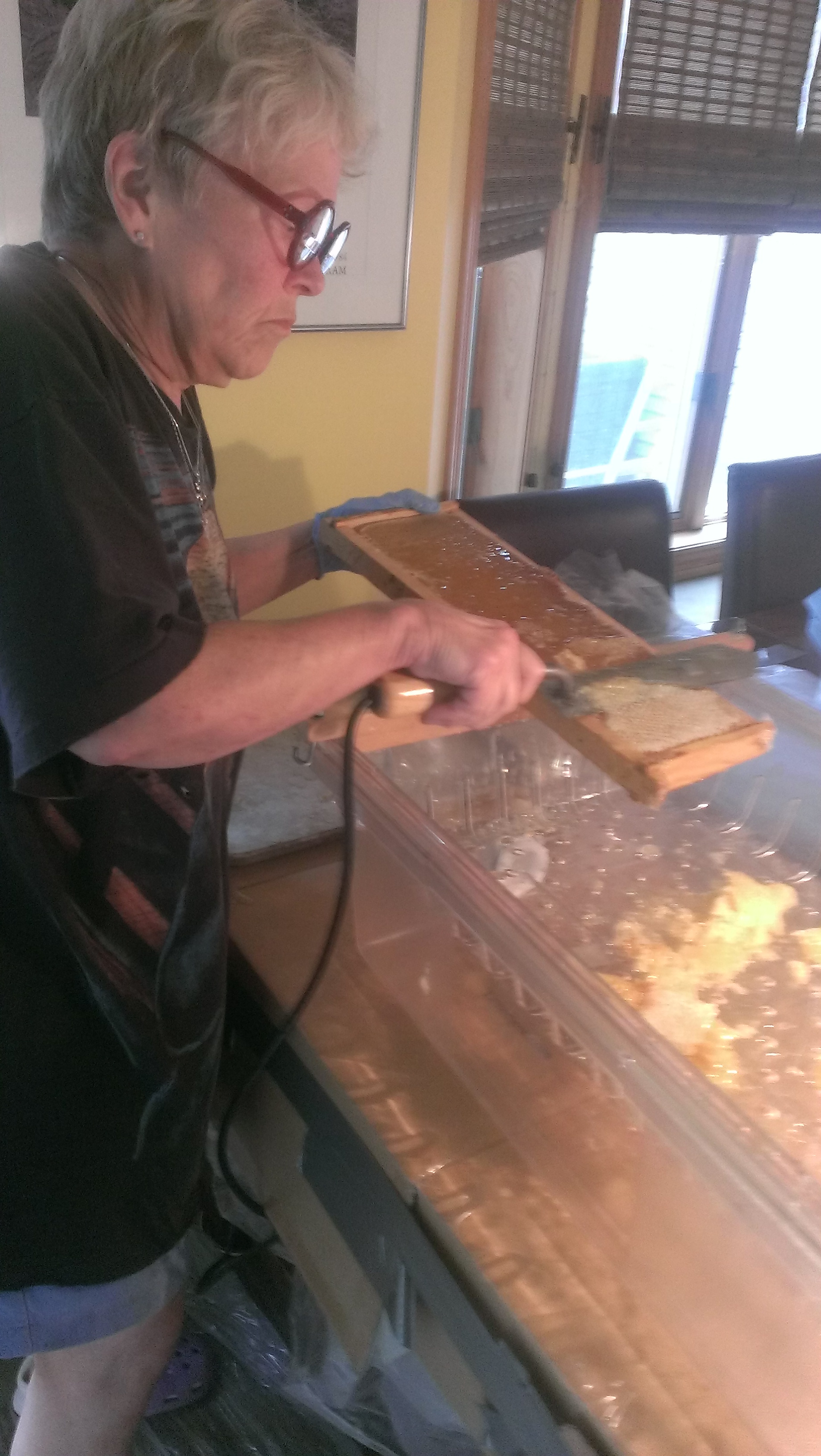
Kate uncapping the honey.  We’ve developed a rhythm, a working partnership when it comes to caring for the land and our plants.  We share the space and the work with bees, the living organisms of the first six inches of the soil and the dogs who keep critters out of our garden and orchards.

A Perfect Day

Fall                                                                     Harvest Moon

If there is a perfect day, it falls in September with a light breeze, a blue sky with a few clouds and a slight chill in the air.  Over our 20 years I’ve come to associate those days, and today is such a day, with the planting of bulbs.  Sometimes the days fall in October, too, and I’m grateful for them then, too.

To celebrate this bulb planting weather I took to the brick patio and the three-tiered perennial garden we have there, digging out the hardy hemerocallis so I can have space for my bulbs.  In late summer I usually have an Allan Greenspan moment, you know, irrational exuberance, and order far more bulbs than I have room in which to plant them.

Each year I have to remove plants that have overgrown, often they are hemerocallis, so that I can find the space for the bulbs soon to arrive.  This year my exuberance was more irrational that ever, so I’m doing my space clearing a bit earlier and more comprehensively.

When I’m doing this work, I turn on FolkAlley.com and listen to folk music streamed from Kent State in Ohio.  Seems to fit.

Wholeness

Lughnasa                                                                  Harvest Moon

Mabon eve.  The night before the fall equinox.  Tomorrow the light loses its struggle to own more than half of the day, a gain achieved back at the Summer Solstice in June.  From this point on the light diminishes and the darkness increases to its zenith at the Winter Solstice.

Been meaning to report on an interesting feeling I had at the Woolly meeting on Monday night.  I took two pies Kate had baked:  ground cherry and raspberry, both of fruit from our garden.  I also took a box of honey from our  hive, Artemis Honey with the label made by Mark Odegard.

When I left, after having sold 18 pounds of honey, I had a feeling of wholeness, that’s the best way I can describe it.  I had worked all season on the garden, the orchard and with the bees and somehow that evening I felt one with it all.

When I told Kate how I felt, I said it felt like something private was made public, that those two worlds knit together in one moment.  She said she got a similar feeling when she took food for a group, as she did so often for work and as she does now for her sewing days.

It was a good feeling, however understood.

A Coarse, Tactile Spirituality

Lughnasa                                                                    Harvest Moon

While out preparing beds for bulb planting later this fall, I thought over the post I’d made below.  Spirituality is not the best word for describing what I was talking about, I realized. At least it’s not in metaphysical terms.  I’m talking about a here and now, sensory delivered experience.

In a broader sense, and as I think it is often used, spirituality refers to a mode, event, ritual that makes present, even if momentarily, our connectedness.  In traditional religious circles that connectedness links up to what Kant would have called the noumenal realm, the realm beyond our senses.  Nietzsche put a stop sign to philosophical consideration of the noumenal, a problem for Western philosophy since the Platonic ideal forms, when he said God is dead.  That is, the noumenal realm is not and never was accessible.  If it ever was at all.

Using spirituality in this latter sense–the revelation of connectedness however it comes–then my use of it was just fine.

Just now I looked out my study window and to the north the sky was black and to the east a sickly green cast hoovered near the horizon.  When my eyes read that green, my stomach sank, just a bit, the fear engendered by growing up in tornado alley struggling to assert itself, demand my attention.  Survival at stake!   Red alert.  This was a moment of awe, a reminder of the power nature can bring to bear.  It was a spiritual moment in its sense of immediate connectedness between my deepest inner self and the world within range of my vision.

These are small epiphanies, yes, but they are available. This coarse, material spirituality, tactile in its immediacy reminds me, in definitive manner, of who I am and of what I am a part.  Do I need more?

A Coarse Spirituality

Lughnasa                                                                   Harvest Moon

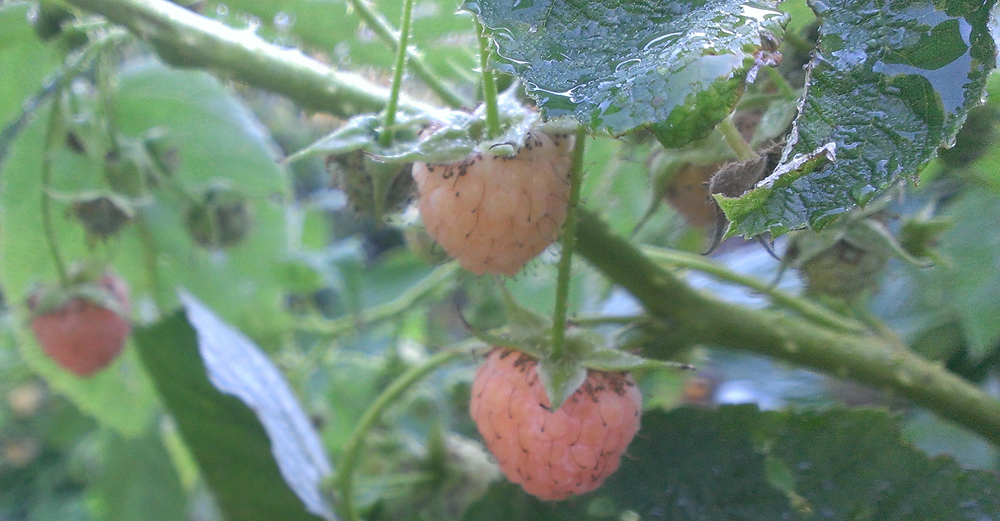
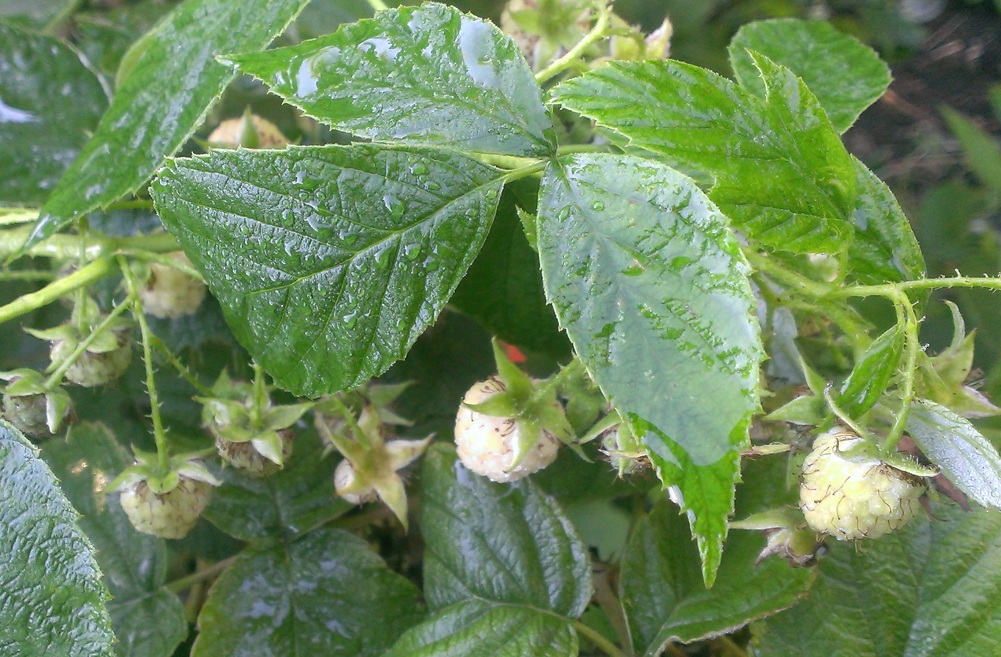
Yesterday in the midst of wet raspberry canes, plucking fruit from thorny yet fragile IMAG0955cropped1000branches, the spirituality of the moment grasped me.  The canes stuck to my sweatshirt sleeve; the water soaked into my jeans.  This was the real in all its obstinate presence.

Last February Kate and I did some winter pruning and I cut last year’s canes down to the ground.  We were late getting this done, but the timing was alright.  Now, eight months later, those same plants had burst up, some over my head and drooping with golden and red-purple berries.

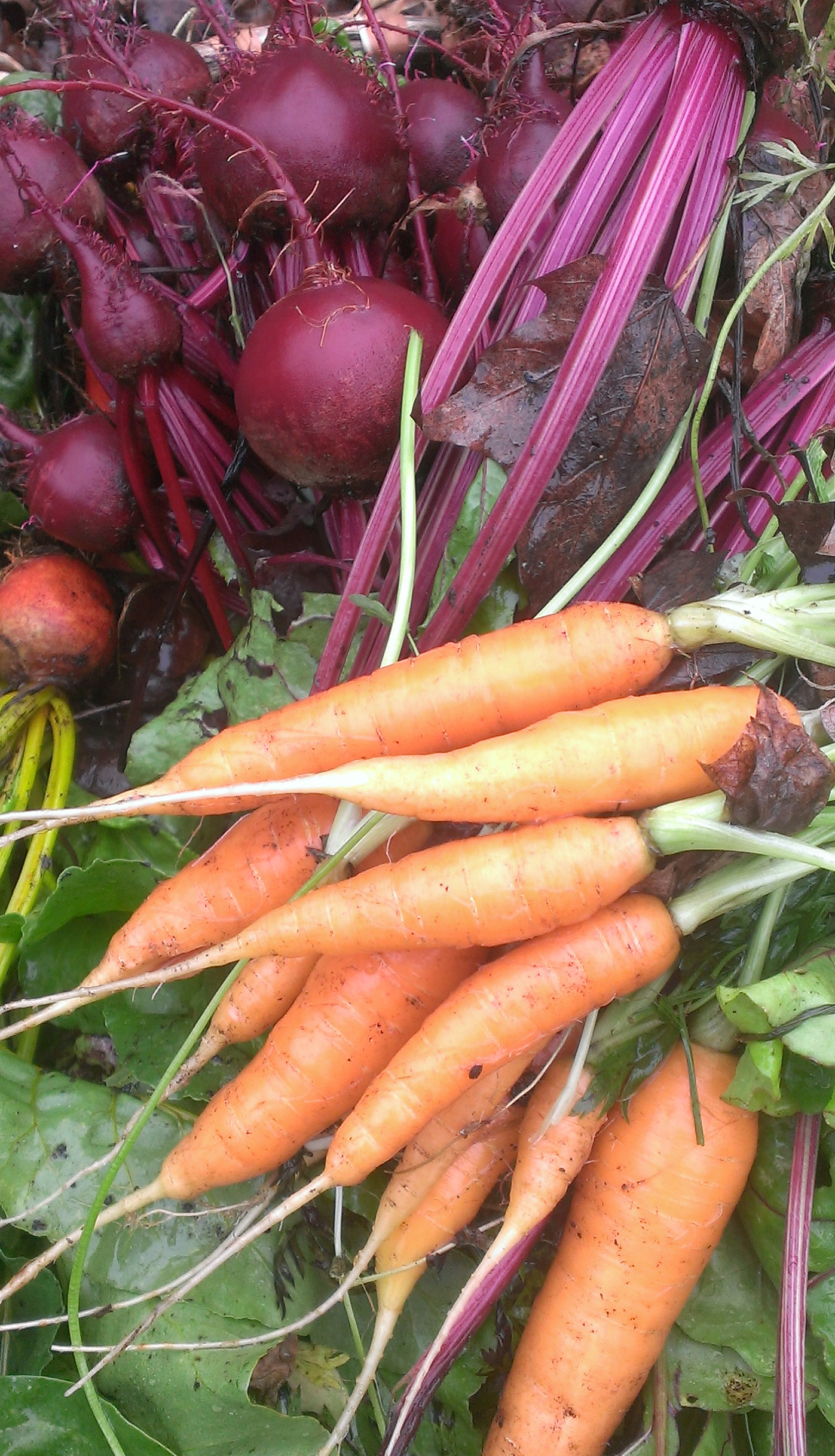
The garden, the orchard, the bees each reward us: tomatoes, carrots, onions, apples, cherries, pears, honey.  A virtuous circle, we care for the soil and the plants and the trees and the hives, they in turn offer something we can eat.  Eat.  Think of that.  This is the true and definitive instance of transubstantiation.   Eat this cherry and remember me.  Eat this IMAG0956cropped1000carrot; it becomes me.  It becomes me to eat this carrot.  The soil and the plants here give of themselves that I may not perish.

Thus, to be among them, feeling them pluck at me, rain water dripping off them onto me is a coarse prayer, a baptism by holy water made clean and pure in the clouds then delivered unto us by the morning rain.

Amen.

The Sweet Scent of…Bugbane?

Lughnasa                                                          Harvest Moon

Bet you’ve never heard of a perfume called bugbane.  It’s no name for a fragrance and IMAG0960probably not a familiar plant, but it is one of the joys of early fall.  It’s fluffy white racemes give off a scent that brings to mind gardenia and jasmine, scents of a late night drive along the Kona coast with the top down, coming back from a day exploring Hilo and Volcanoes National Park.  Yet here they grace a plant named like a weed.  If you see one somewhere, stop a moment.  The bugbane will transport you somewhere, somewhere pleasant.

One more run at the creeping charlie this morning, utilizing that fall plant habit of storing food in the roots.

To be outside in the morning, a cool morning, in the dying garden, rejuvenates me.  The deaths of the plants follows a long and, should I say it, fruitful life, so no unusual grief, just the bracing sense death gives to those of us who continue to live.

The Springtime of the Soul

Lughnasa                                                               Harvest Moon

This northern soul breathes easier when the mornings are cooler, even cold.  The bright blue Canadian skies or the dark gray roof of low cumulus clouds make me happy, too.  As we tilt toward September 29th, Michaelmas, the springtime of the soul holiday in my sacred calendar, my inner life revs up, or perhaps better, cycles down.  The humus built up over the growing season sees the first shoots of ideas sowed either long ago or just yesterday.

Right now I’m in the grip of Loki, trying to wrestle a believable and exciting villain from his myth and legend.  He and his kids get their own book, this next one, Loki’s Children, so Dad is important.  He’ll come clearer to me as the fall progresses.  (Death of Balder)


Friends

Lughnasa                                                                  Harvest Moon

Woolly meeting tonight.  Kate baked a ground cherry pie and a raspberry pie.  Big hits.  “All hail, Kate!”  There was applause near the end for the desert.  Yin served her wonderful variations on Chinese originals, tonight a noodle and pork and vegetable dish.

Scott introduced the topic of the Singularity and we talked about technology and change for the rest of the evening.  Mark Odegard brought up a good point about advances in technology contributing to a digital divide with digital haves and digital have nots.  This divide will tend to reinforce class and racial divisions.  He said this in reaction to me saying I wasn’t particularly worried about the Singularity.  His point was that the rapid advances in technology can and will have unintended social consequences.  He’s right.

In this argument I find myself on the conservative side, that is, I believe there are so many fundamental activities that make us human from painting to poetry, music to novels, athletics and theatre.  They are not reducible to code nor products artificial intelligence can reasonably be expected to create. There are also the incredible complexities of life itself, human relationships, the intricate interlocking webs of ecology systems that will always, I believe, outstrip any technological advance.

And I love technology, gadgets, the new.  Just don’t see them hanging out with me at a Woolly meeting as full participants.  Ever.


Tea Making, Merchandising

Lughnasa                                                              Harvest Moon

I set the timer for the Zojirushi water boiler for 6 hours last night.  When I came downstairs this morning, it had heated the water to boiling and allowed the temperature to descend to the holding temperature I selected, 175 degrees.  This allows me to take water from it at that temperature all day, filling my pitcher, my teapot as many times as I wish.

Earlier this morning I made a pot of Yunnan White Jasmine Tea and am now on my second pot.  Each pot brews about 8 ounces which I drink from a tiny Chinese style teacup my sister purchased for me as part of a set.  I use the pitcher and water table from that set, too.  I can make 4 more pots of tea before I have to switch tea leaves.

Did a spray of brixblaster this morning (reproductive plants):  raspberries, tomatoes, IMAG0876ground cherries, broccoli and carrots.  The vegetative plants left are leeks, beets and greens, but not enough to mix up a batch of qualify.  After the spraying, I picked ground cherries.  They will fill out the amount Kate needs for the pie she’s baking for the Woollies tonight.  She’s also making a raspberry pie.

Tonight I’m taking as well a box of Artemis Honey for sale.  The first time I’ve actively marketed our honey.  I feel strange doing it since I have an almost Confucian attitude toward merchants, but I’m trying to learn to honor my labor.  Marketing Missing is the next, similar, activity.


Herbicides

Lughnasa                                                                     Harvest Moon

I use herbicides sparingly, for problems I can’t eliminate by hand.  Those problems include an invasion of rhizomatous creeping charlie, poison ivy and the stumps of felled trees.  The creeping charlie (no relation) was a mistake on my part.  I didn’t recognize it and advised Kate not to pull it when it could have been controlled.  Somehow it got over a large section of ground.  I sprayed it this morning.

Poison ivy.   My earliest adventures with industrial strength herbicides (triclopyr) began soon after IMAG0944our purchase of this property.   Doing research I discovered Rhus radicans likes the ground around oaks.  We have lots of oaks in our woods.

My first efforts with roundup (glyphosate) had no effect.  Ha, ha.  Like rain water to me.

The first time I used triclopyr, as brush-be-gone, a dilute solution sold for ornery shrubs and could-be-tried as adult weeds, failed, too.  Back to the research.  Ah.  The best time to spray them is in the fall when the plant stores energy in its roots for the coming winter season.

(Gog and Magog)

Today (it’s fall, you may notice) I sprayed the creeping charlie because of this information.  I also went hunting poison ivy. I’ve been after it off and on for 15 years.  This year I had trouble finding any.  A good sign.  The ones I did find I coated leaves and stems.  The word on triclopyr is that it vanishes after three months in the soil.  You don’t want to use it around things you want because it’s effective.

Last I’ll use it on stumps.  The problem with stumps, especially ash and black locust is IMAG0949that the tree immediately sends up new treelets to replace the missing one.  Unless you grind the stumps, which I no longer do, you’ll have a clump of new trees instead of an eliminated old one.  I don’t cut down many trees, but when I do it means I have a specific purpose in mind:  more sun for a growing area, more space for the bees, an area for our fire pit.  New trees are not part of the plan.  Using a paint brush to coat the stumps with triclopyr, a less dilute version than brush-be-gone, solves the problem.

(in our woods near the big oaks, Gog and Magog)

In all cases I use integrated pest management to reduce and/or eliminate the need for pesticides.  I use hand removal, physical barriers like landscape cloth and careful selection of plants to reduce the need for herbicides.  I don’t like using them, but in some cases I’ve not been able to come up with other solutions.