Samhain Moon of the First Snow
For Tom
To what shall
I liken the world?
Moonlight, reflected
In dewdrops.
Shaken from a crane’s bill.
– Dogen, 1200-1253, The Zen Poetry of Dogen

Samhain Moon of the First Snow
For Tom
To what shall
I liken the world?
Moonlight, reflected
In dewdrops.
Shaken from a crane’s bill.
– Dogen, 1200-1253, The Zen Poetry of Dogen
Samhain Moon of the First Snow
The moon hung right between Orion’s shoulder blades when I got up this morning, a quiet wonder. Now it sits, a daytime moon, above the peak of Black Mountain, a ghost of its luminous night time presence.
Filled up with gas today and with our King Sooper discount bought gas for $1.69 a gallon. $1.69. A long time ago when I saw those numbers flash by on the gas pump. People are joyous about this, economists say it portends well for the Christmas shopping season.
I say bah, humbug. Cheap gas is something we don’t need. Dearer gas, gas the price of which includes the externalities of its destructive extractors and processors, pricey gas, that’s what we need. Just like we need costly coal and kerosene. Even natural gas should cost more. The methane leaks from shale oil fields are contributing a distressing amount to global warming, making natural gas a less friendly transition fuel.
Word from our solar folks that the panels may go on as soon as the week before Thanksgiving. That’s good news because it means we’ll have less chance of not getting our net meter installed before January 1st, the cutoff for the onerous demand charges about to be instituted by our friendly mountain electric company.
Today, like Saturdays across this land, has been and continues to be one of errands and small projects. Groceries gotten. Light bulbs replaced. Boxes moved.
Kate’s painting the pony wall in her sewing space because it’s something she can do one handed. Not being able annoys her, makes her mad at her green casted hand. Only three more weeks.
Mabon Moon of the First Snow
 Two more trees down yesterday morning. Much easier without the snow load. My slash piles near the driveway are part of the process. Last year when I came out for the closing on October 31st there were signs for slash collection. What was slash, I wondered? Now, almost a year later, I have created substantial piles of it myself. It’s tree tops, branches and the occasional thinner or split portion of the tree trunk. It gets collected because removing trees for fire mitigation and leaving slash on the ground makes a greater fire hazard than the one you had before.
(slash in the upper right portion of this photograph)
My current plan is to have the slash chipped by Splintered Forest, but I might move it myself with some help. I’m close to having the southeast sector of our woods thinned. As we drove out yesterday, I noticed a black X marking a tree I need to cut for the solar panels. When it’s down, I’ll move on to the southwest, both in the front.
Mabon Moon of the First Snow
It has snowed all morning, a heavy wet snow. It clings to the lodgepole branches, their burdens bowing the green needles toward the ground. The sky creates submission to the earth.
This is even truer than I imagined. Fire mitigation requires cutting down many trees and I’m doing them a few at a time. Today two. The first one I felled, using the chainsaw this time (a lot easier than with the axe but not as satisfying), did not go where I planned. Usually I’m accurate with placement, but the snow laden branches overweighted the tree at the top while a burl at the bottom broke in a way I hadn’t anticipated. Instead of landing to the left of the basketball goal, it swayed, crossed over the backdrop (to my, oh, no. then, oh, good.) and dropped instead just to the right of the goal. (see picture above)
I’m no pro, but I am an experienced amateur so I don’t like it when luck determines a fortunate placement. Right was as good as left, thank goodness. The second tree fell right 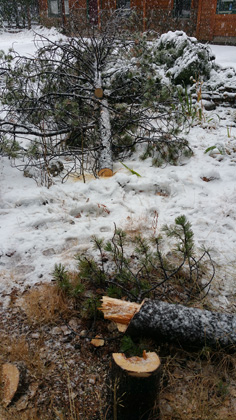 where I wanted it.
Another factor I hadn’t considered when felling the trees during a heavy snow was the additional weight on the branches. Trees have to be limbed before the trunks can be moved and each limb had an added amount of water. That made moving each branch more difficult.
Felt good though to keep advancing toward a culled woods. Splintered Forest will come out and chip my slash once I get it to that point. Over the weekend I’ll cut up the downed trunks into firewood sized logs, stack them between a couple of trees well over 30 feet from the house and let them season until next winter.
Mabon Moon of the First Snow
Kate’s progressing in her recovery. Her right thumb seems more and more usable. It got the platelet injection. Her soft bandage gets replaced today with a harder cast. Her ability to maneuver with one good hand and four fingers amazes me. She’s making curtains for the loft right now, for example.
The generator got installed last week. John the plumber came over yesterday and ran the natural gas to it. It needs tweaking since it’s now living at 8,800 feet rather than 900 feet, something like a 3% loss in efficiency for each thousand feet above sea level. You engineers who read this understand.
 The kitchen remodel proceeds apace. The cabinets are chosen. The appliances purchased. Custom cabinets are under construction. I’m most excited about better light. My rods and my cones they fail me. Not gathering illumination like they used to.
Granddaughter Ruth will be here Friday, Saturday, Sunday while her parents attend a school conference. Jon and Jen now work in the same school district so they can go to these things together.
Slowly, slowly the new place is coming together. By the Winter Solstice we should have solar generation of electricity, a new kitchen, a working generator and a mostly finished loft. Too, the fire mitigation and solar panel shading necessitated tree cutting should be well along, or finished.
Mabon Moon of the First Snow
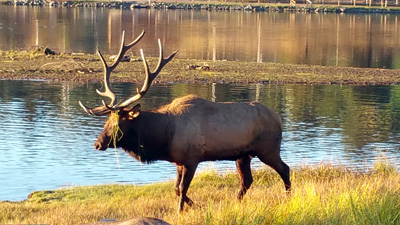 When I went into Evergreen yesterday, just after turning off Brook Forest Drive I went past a house that had a bull elk and his harem resting in their front yard, maybe 15 does. A stream runs between the highway and this house. The trees gave shade from the brutal morning sun. A domestic scene with wild animals. It came to my attention when a large bulk moving caught my peripheral vision. That’s the paleolithic helping in the here and now.
It amuses me, when I go to Evergreen, to see the number of people who gather at the lake. All these wonderful mountains and the locals come to look at the water. I imagine only a former native of a water rich state would notice the irony.
 Vertical and flat. Humid and arid. Those are the big differences between our new home and our old one. Here I drive through canyons, over high passes, around stands of rock with the view often limited to a few hundred feet on either side, sometimes less than that. When we leave Conifer and go into Denver though, we immediately return to the far horizons common to the midwest. We frequently transit between the great plains and the mountain west, living as we do in the borderlands between the two.
Though we have had a wet summer and somewhat wet fall, when the rains cease, things dry out fast. We can go from low fire danger to high in a day. That’s why fire mitigation is constantly on my mind.

When verticality and aridity intersect, as they do at 8,800 feet and above, a genuinely unfamiliar biosphere is the result. Unfamiliar to those from the rainy flatlands of middle America, that is. On Shadow Mountain we have two trees: lodgepole and aspen. Along streams there are more species of tree and shrub and there are microclimates that might support greater diversity, but on the bulk of the land that can grow anything, lodgepole and aspen. There are grasses, flowers, a few shrubs as understory, but just as often the rocky ground is bare. The mountains have strict limitations for plants.
The plant limits determine the fauna, too. Grass eaters like mule deer and elk do well, as do predators who eat them. There are small mammals that are prey for foxes and coyotes, but there are surprisingly few insects. That limits the birds. We have raven, crow, Canada and blue jays, the occasional robin, birds of prey that feed off food similar to that preferred by foxes and coyotes and other game birds. There are, as well, black bears. We’ve seen all of these save the bear.
Still learning about the mountains. Will not stop.
Mabon Moon of the First Snow
Hey, it’s national fossil day!
And look what I got in the mail last night. Just in time to celebrate!

Mabon Moon of the First Snow
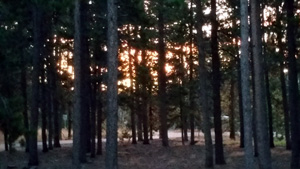
Fire mitigation means removing some trees. Putting solar panels on the roof means removing some trees. Turns out removing trees is something I know how to do. So, every day or so until I’m finished, I’m cutting down one tree, limbing it, cutting the trunk into firewood, stacking the firewood and putting the branches out for chipping.
A complication here that I never faced in Andover is that slash is bad. That means I can’t make brush/slash piles for the critters like I did in Minnesota. Each limb removed from the tree has to be moved into a location accessible by a chipper. That’s a lot of extra work. But it’s good work and I’m looking forward to it.
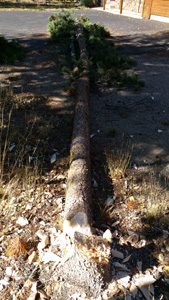 Got started yesterday. The first lodgepole I cut down stood directly in the way of backing out of the garage. It doesn’t now. I know, this may seem callous, cutting trees down, but in actuality I’m thinning a garden bed, leaving more room and therefore more nourishment for the trees that remain.
Removing shadows from our solar panels is important, too. Shade has an outsized impact on electrical solar generation due to an unusual characteristic of silicon panels. Just a bit of shade shuts down the entire panel.
Most significant of all is fire mitigation. Lodgepoles are a pioneer species, that is, they come in after a fire, grow up, shade other species, then die back. They tend to grow close together and many get spindly, unhealthy. 30 feet from the house all trees have to have branches cut off to ten feet above the ground. This helps prevent fire from reaching the tree through ladder fuels like shrubs and tall grasses, slash. Within the 30 feet defensible space perimeter, the trees also to have adequate space between clumps to ward off crown fires.
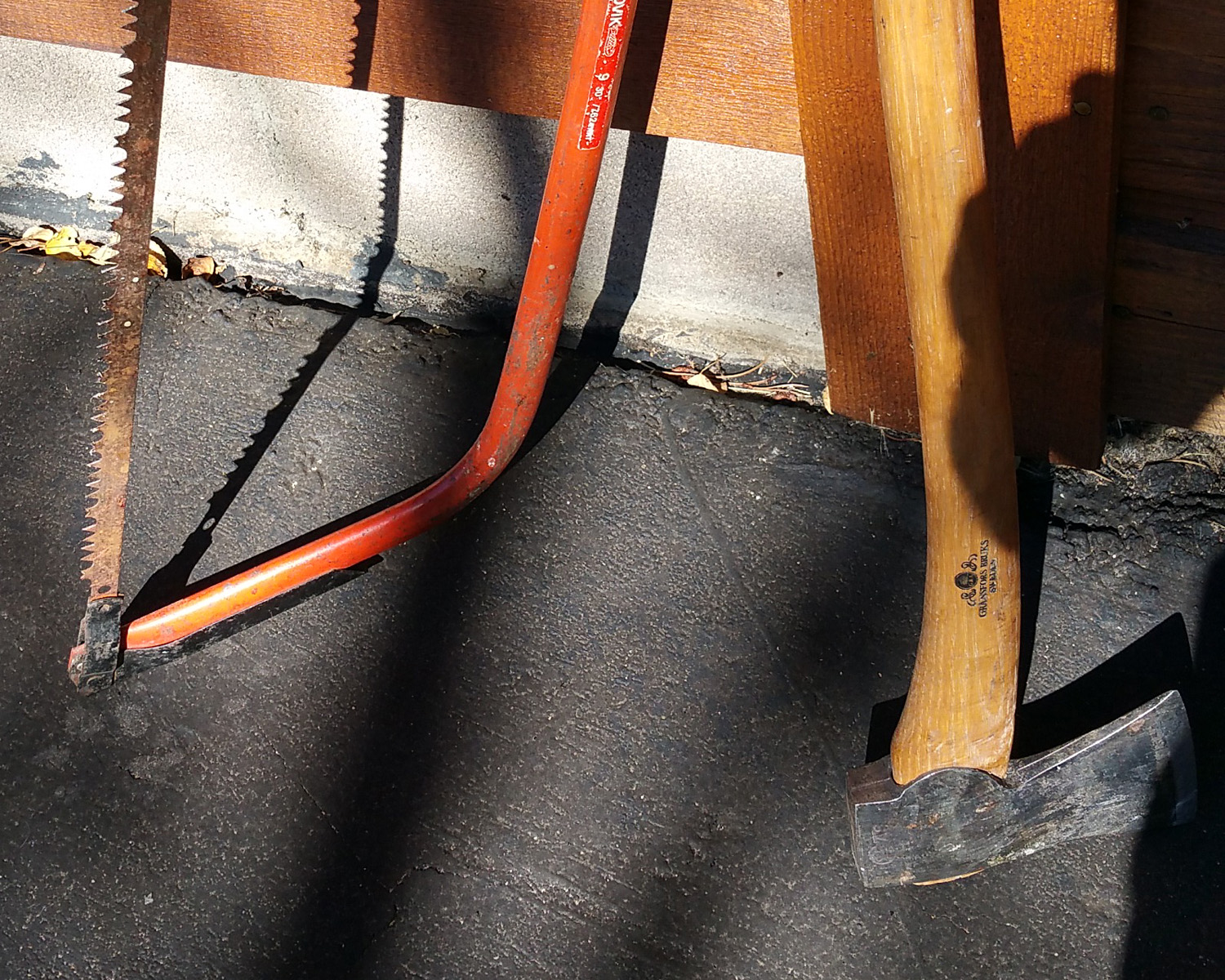
The Splintered Forest guy taught me that lodgepoles need to be in clumps for their own health so the ten foot between crowns rule applies to small clusters of lodgepoles, not independent trees. Weaker lodgepoles will blow over easily due to their shallow root structure unless they have friends to break the wind.
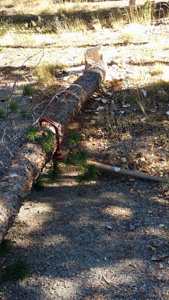
Late fall, early winter work outside. Good aerobics. Especially when I cut the trees down with an axe like I did yesterday. With a lot of huffing and puffing. I’ll use the axe when I can because I like the handwork aspect, but the chainsaw will allow me to finish the task in a timely manner.
My limbing axe works great. With most of the branches on a lodgepole I can stand on the opposite side of the trunk and flick them off one handed. Standing on the opposite side of the trunk makes it much less likely that the axe will find its way into my leg.
Mabon Elk Rut Moon
Mabon Elk Rut Moon