Category Archives: Our Land and Home

A House With A History

Summer                                                         Summer Moon

IMAG0531Why not write a history of this spot, this hectare? An ecological history. It can start with the glaciations, consider the flora and fauna since then, focusing in more tightly once the first nations began to arrive, then even more tightly as Minnesota began to emerge.

Another starting spot would be today, or from Kate and mine’s presence here. How we decided to be here, why. Go over decisions we made early on like hiring a landscape designer at the beginning. Recount our twenty years, the good decisions and the bad ones, the easy ones and the hard ones. The other historical and geological material could be worked in as backstory.

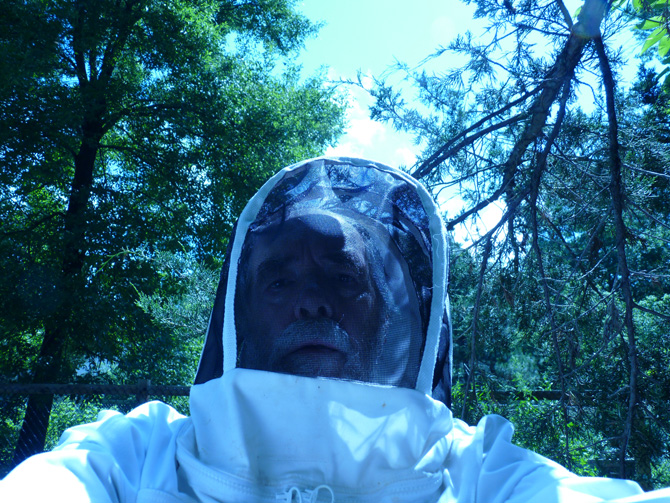
It would be good for people to view an average approach to the land, one which changed over time (though its roots were indeed in the back to the land movement) and which took advantage not of a particular approach, but of many. An approach that is dynamic, 06 27 10_beekeeperastronautchanging with new knowledge, the seasons, aging, new plants and new desire.

The flavor of “Return of the Secaucus 7” with some Scott and Helen Nearing, Wes Jackson and Wendell Berry thrown in, too. Ah, perhaps it could be a sort of third phase update of the movement years, an upper middle class idyll moving against the grain of upper middle class lifestyles.

Not sure whether to pursue this or not, but it could be interesting. Might even help sell the house. A house with a history.

A structure based on the Great Wheel might be interesting.

Sustainable, Nutrient Focused Horticulture

Beltane                                                         Summer Moon


The purpose of our company is to
make soil better as we grow quality crops

Planted the 3 blueberry plants I abandoned in the orchard. Forgot about them when I planted the egg plant, collard greens and chard in the vegetable garden. Then, I sprayed the orchard for the first time, brixblaster, an international ag labs concoction that feeds plants focused on reproduction: fruits including tomatoes, peppers, egg plants, beans and peas. This feeding program for the orchard goes on twice weekly, ideally before 8 am or after 4 pm. Before is the best for me but I couldn’t make it happen today, so I settled for the good over the best.

On June 20th the spraying program begins in the vegetable garden. Lest you have an organic twinge here, let me explain the philosophy behind the (International Ag Labs) I.A.L. recommendation. The goal is to produce the highest quality foods (measured by nutrients, not ease of picking and processing) while supporting a soil chemistry that is sustainable over time. This is very different from traditional ags NPK focus which takes out nitrogen, phosphorus and potassium from the soil each year, then pumps them back in the following year.

NPK farming misses the critical elements of soil chemistry that supports microbial plant and animal life, as well as the critical trace minerals that make for healthy plants. Healthy plants = healthy food. There’s a reason for the plough and fertilize model. It produces high quantities of food, but over time the plants become modified not for nutrition but for their capacity to be easily harvested and stored, then optimally usable for food processing. In the past three decades or so the plants have also been modified to contain herbicides and insecticides as part of their genetic material.

Again, the emphasis is not on the nutrient quality of the food, but on the ease of growing and harvesting. This story is not new to me. Michael Pollan is probably its most gifted narrator right now. I remember a 1974 book, Hard Tomatoes, Hard Times, that told the story of the unfortunate collaboration between land grant universities (like the Ag campus in St. Paul, Purdue in Indiana) and farmers/food processors. It’s titular story involved the problem of tomatoes. They were thin skinned and had to be harvested by expensive manual labor. The solution? A tomato with a hard skin, pluckable by mechanical arms. That’s the source of the tough hide you get on store bought tomatoes.

Criticizing the system is easy and the push back predictable. How would you grow sufficient quantities of food for all America and the other peoples of the world to whom we sell produce? It’s a fair question and one that has to be answered.

There are many competing solutions, often followed with dogmatic zeal, the cults and sects of the horticultural opposition: Permaculture, organic farming, bio-dynamic farming, no till agriculture, the long term project at the Land Institute to develop perennial grains, among others. While of all these organic has created the most scale, it has a huge flaw that should have been obvious from the beginning, but zeal blinded most of us to it.

Its whole focus is on a negative, the removal of chemicals and their replacement with organic/natural products used to grow food. A good thing, in many ways, but it leaves the more important question unanswered: is organic food better to eat? Well, in that it is grown in a minimalist insecticide/herbicide environment, yes. But. Is organic food more nutritious than NPK farming? Oddly, the answer is not so much.

That’s where the I.A.L. idea comes in. Improve the soil so that it can sustain its own chemistry and create a healthy environment for microbial life. Recognize that inputs to the food growing process move toward that goal. Make clear that the purpose of this program is not the creation of food for the food industry, but of good food for all. This strikes me as a balanced solution, accessible to individuals and growers for local markets alike.

I don’t know how the I.A.L. ideas work on the large scale though I know their primary customers are farmers and not gardeners.

Think about this. The path to a sustainable human future on this planet must start with agriculture that can continue indefinitely. I.A.L. is one approach that focuses on that goal. It’s worth a look.

Surprises

Beltane                                                              New (Summer) Moon

Marketing my manuscripts has always come hard.  I read today about a poet, Patricia 500P1030645Lockwood, whose husband sent out her work in what he called a blitz. The New Yorker published submission number 240 after Poetry had published submission number 179. I’m still in the low 20’s in my submissions. Of course, novels are not poems and blitzing poems is easier than novels, but the energy level required is, I imagine, the same.

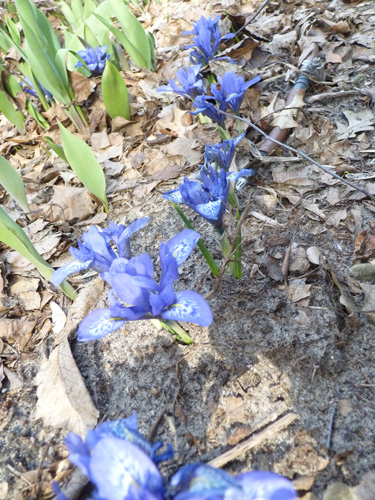
Marketing our house, however, seems like it will be easier. I hope. When I think of our house from an outsider’s perspective, I think of it as full of pleasant surprises. They start when the cristata and the star crocus bloom and proceed through the daffodils, the tulips, the iris, the lilies, the clematis, the monkshood, the bug bane and liguria. Early, too, is the magnolia, a white pillar of fire for a week or two. In their own time the fruit trees blossom, the lilacs and the peonies. Later on the 500P1030693daylilies will come in. If vegetables are planted, they provide interest over the growing season, too.

Then we have the firepit area and the magical shed for grandchildren, two tool sheds and a contained 1.5 acres with woods, a wonderland for dogs and kids. Downstairs we have a steambath, upstairs a grill in the counter. We have a professional Viking stove and a fully insulated garage with gas already plumbed in for a heater.

Within the last five years we’ve replaced the air conditioner, furnace and well pressure tank. Within the last eight we renovated the living room and kitchen, installing new flooring, counters and removing a wall between the kitchen and the living area. We’ve also 500P1030676installed new lighting fixtures. In the same time frame we put on a new roof and new siding.

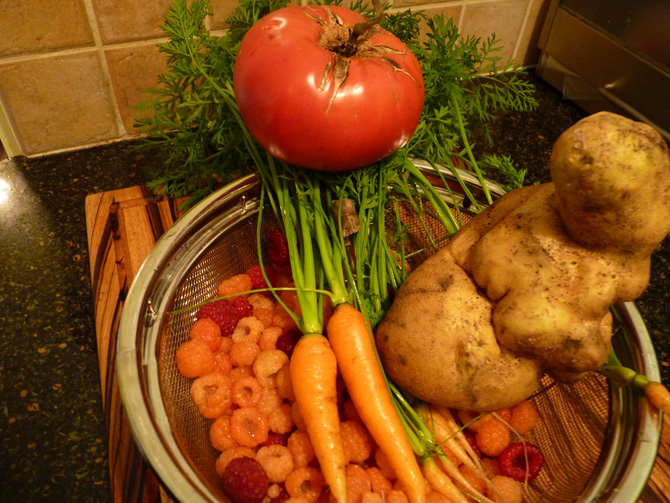
(photograph in our woods this week)

But here’s the clincher surprise, if it were me. Yep, we have a morel patch in our woods. We just had a steak and morel meal on Sunday. Finding them was a highlight of the first year we lived here.

Oh, did I mention that our land was a hemp farm during WWII? Look up hemp if you don’t understand why that’s interesting. We’re no Colorado on this point. Yet.

Water, Water, Not Everywhere A Drop To Drink

Beltane                                                             New (Summer) Moon

Some rain. Glad to see it. Our irrigation system gets started today, my attempt to do it proved futile. Irrigation smooths out the rain here in Minnesota, covers the droughty patches in midsummer. Thankfully we have our own well in an aquifer that gets recharged quickly by groundwater thanks to the sandy soil here on the Great Anoka Sand Plain.

Water has a very different profile in Colorado and the western states. Learning water ways will require attention and persistence, one of the more difficult transitions. Out there it’s not only rainfall, but snowpack that determines water availability and the law that determines how it can be used.

Now, back to deconstructing the dog feeding stall.

Learning’s Limits

Beltane                                                                    Emergence Moon

In the basement, next to the softwater tank, is a blue pressure cylinder that holds water from our well as it waits distribution to the rest of the house. Coming out of it is a copper pipe that goes straight up for about six feet, has an elbow, then penetrates the envelope of the house to connect our well to the irrigation system. This pipe has a small butterfly valve, often locked with a lead seal though not this year. After screwing in a bolt that prevents water from bypassing the irrigation system and landing in our orchard, used for fall blow out, I hopefully opened both blue butterfly valves.

Then I plugged in the irrigation clock and hit run on an overhead water zone for our one half of our vegetable garden, the north half where I’ve planted tomatoes, bush beans, egg plants, swiss chard, cucumbers, collard greens and peppers. Waiting expectantly, my contrarian thrill ready to exult, I. Waited. Nothing. Hmmm. Let’s see, water on. Yes. Clock running. Yes. What was I missing?

I went to the valve outside and turned one butterfly valve in the opposite direction, imagining I had turned them off instead of on. Water gushed out against the siding. So. The water has gotten from the well to the valve itself. I turned that off and noted that it meant I had in fact turned the water to the system off with the other valve that gates the water from the well to the system itself. This must be it. I turned that one to the open position and went back to the clock.

Punched manual start on zone 1 which is in the front. Waited for the spume of water to arc out. Nope. OK. RTFM. I got on the web and discovered I’d missed pressurizing the lines. Sigh. At that point I decided my self-education in all things sprinkler start-up had exceeded my willingness to learn.

sprinklerThat was when the hose came out, three hoses really, and, connected to a house spigot, the yellow, three-armed irrigation spinner began to twirl in the vegetable beds. I have no need to learn how to start up the irrigation system, I just wanted my plants to get water and I thought the startup would be simpler than it was. Something I could learn, no doubt, but with probably only one more spring to practice my knowledge, I’d rather spend the time on my Latin.

Home Alone?

Beltane                                                           Emergence Moon

Yesterday morning, while planting cucumbers in hills, making rows of bush beans to cover their base, fanning the collard greens out along the north side of the bed, the swiss chard to the east and the eggplants to the west, leaving room for marigolds in the center where it’s hard to reach, I called Mickman’s, our irrigation company.

We pay Mickman’s a yearly fee to come out and start up our irrigation system, checking for heads damaged over the winter and making sure everything works correctly. They also close it down in the fall, bringing an air compressor to blow out the lines so no water remains in them to freeze and burst the pcv pipes and the plastic heads. This year I realized I had had no word from them about the spring service.

When I called them, yes they had my service contract, yes they would get to me, no they hadn’t tried to contact me yet because they were far behind due to the cold weather. When I told them I had plants (vegetables just planted) that needed water, the earliest they could get out here was next Wednesday. With full sun and some heat projected for today and tomorrow I pressed them. “What are you asking for?” Water for my plants.

After I hung up, settling for a late Tuesday appointment, a strain of contrarian thought streaked through my head. Who needs them? I’ll start it up myself. I’ve never done it, still haven’t, but I’m going to try today because my vegetables need to be watered in. We’ve had them do this start up for the last 20 years and in all that time starting up the system never occurred to me. Strange. It made me wonder how much else I have done for me that I could do myself.

This loops me back to a thought that comes to me, often about this time of year, that I am lord of the manor. In an odd way we have replaced the old English manor house. No baize doors. No downstairs and upstairs. Yet we have a cleaning lady, lawn care service, irrigation specialists, arborists, electricians, septic cleaners, window washers, a handyman, roof and siding replacers, generator maintenance guy, painters and a contractor for home remodeling.

This list does not include, but can, the washing machine and the dryer, the refrigerator, the television, the fitness equipment, a lawn tractor, the microwave, the electric sewing machine, several computers, cell phones, a landline, a freezer and a horseless carriage. These last are all labor saving devices. Yes, they replace actual laborers who at one time would have been employed for laundry, bringing in ice, cooking, lawn care, message delivery and transportation outside the home.

This means that though we have the patina of a single family living in their own home, alone, the reality is much more complex and all of it requires management of one sort or another. Relationships have to be built, skills assessed, work evaluated, checks written, needs for service monitored. None of this is, in itself, remarkable, but when looked at in the aggregate it shows how a family serves as the nexus of a complex web of services, some engaged by humans who live outside the home in their own home, some by machines, but often machines far too complicated for a home owner to service, which requires appliance repair and/or replacement people.

I guess it’s not odd that starting up the irrigation system never occurred to me.

 

On Us

Beltane                                                             Emergence Moon

Planting finished. Next comes weeding, watering and thinning. Then mulching.


Gentle Transitions was a bit disappointing, though I think that’s on me rather than them. I imagined them as helping us set up a process for moving, a schedule with milestones, things like that, but instead they handle the moving chores right up to loading the truck. If we were moving in state, they would also help unpack. They’re a good service to know about but it leaves us with the (daunting) task of downsizing our stuff. Their service can help us donate items and we got a list of folks who do estate sales, so there are pre-move services, but not quite what I wanted.

So. We do it ourselves. That means a schedule, room by room in some cases, by items (in the matter of things to sell or donate). I’ll start putting one together over the next couple of days.

Tender Planting

Beltane                                                                   Emergence Moon

Finally the temperature regime has begun to warm, making it safe for the tomatoes, peppers, egg plant, beans, cucumber and tomatillos. We drove to Green Barn this morning to pick up egg plant, tomatillos, blue berry plants, chard and collard greens. They’re already out of kale.

After getting my head straight about the international ag labs recommendations, I put together a batch of transplant water, 3 gallons. Then I poured Jubilate, a microbial inoculant into an old dog dish, tossed the urea in its jar on top and carried all this out to the vegetable garden. To get into the garden I had to step over the copper bird feeder pole I inserted just below the gate’s bottom to keep Rigel out.

Setting those things down I retrieved the tomato and pepper plants from the deck where they have been sitting since coming last Tuesday. Kate’s been taking them out and bringing them in at night since the weather was too chilly for them. Now it’s all good.

Putting two tablespoons of urea (small white pellets) and two tablespoons of Jubilate (a 670_0299brownish thick powder) into each hole, I put the midgets, the romas and the Cherokee Purples in their places atop the sun trap. Then, using an old Tide measuring cap, I spooned a pint of transplant water onto each tomato plant.

The peppers went into a raised bed and they received identical treatment except the amounts were one and a half tablespoons instead of two. Then the transplant water.

By that time the sun had come out. It was noon. Having just seen the dermatologist yesterday I decided to stop and return later in the afternoon, when the sun’s angle is more gentle. I want to get all the tender plants, including the beans and peas, planted today. Then we’ll be into maintenance mode for the next two and a half to three months.

Of course, with the international ag lab’s system, maintenance is more intensive than in the past, but that’s fine. The results are worth it.

Colorado Diary: First Steps

Beltane                                                                 Emergence Moon

1000P1030648


Kate sorts through the first batch of items from the Jon-built shed. Keeps (move) went in the white plastic bucket. Discard was in two piles: trash and donate/sell. It’s a beginning. Just have to keep at it now.

1000P1030650

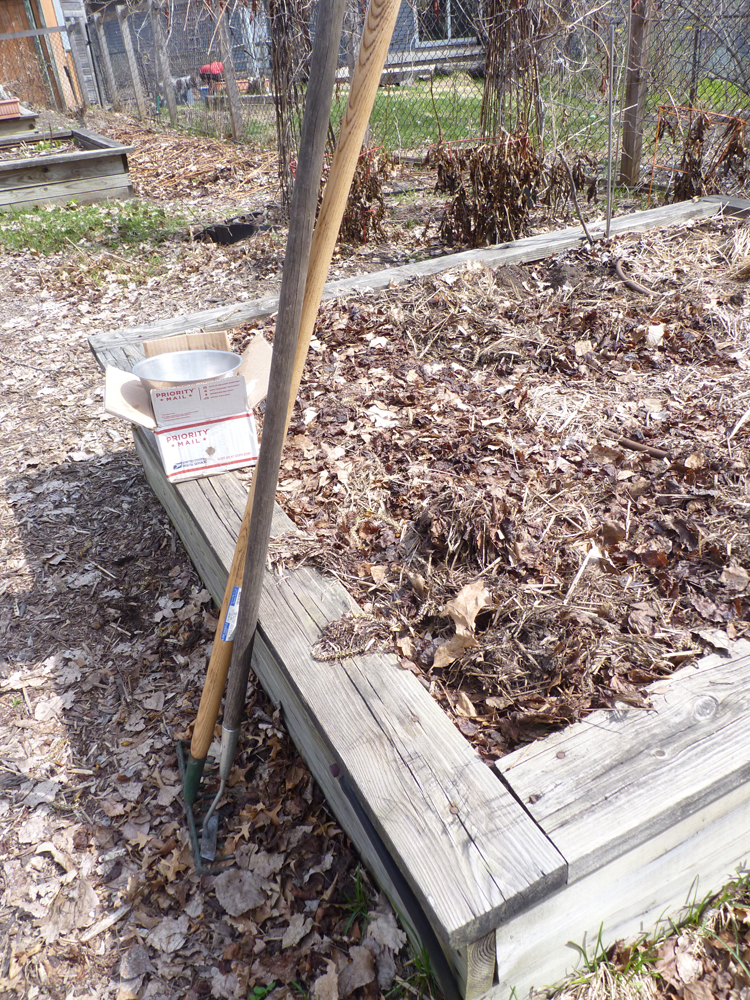
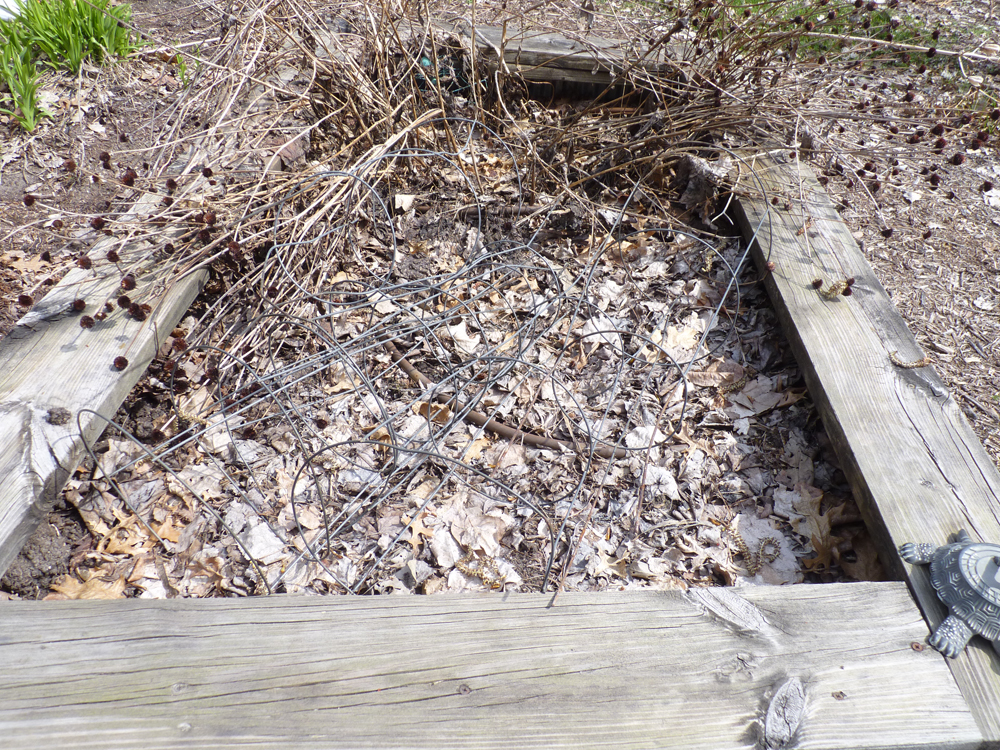
When we sold the house on Edgcumbe Road in St. Paul, our Realtor told us that our pictures of the property in bloom were instrumental in the sale. The one above and the one below are before pictures for the 2014 vegetable garden.

1000P1030655

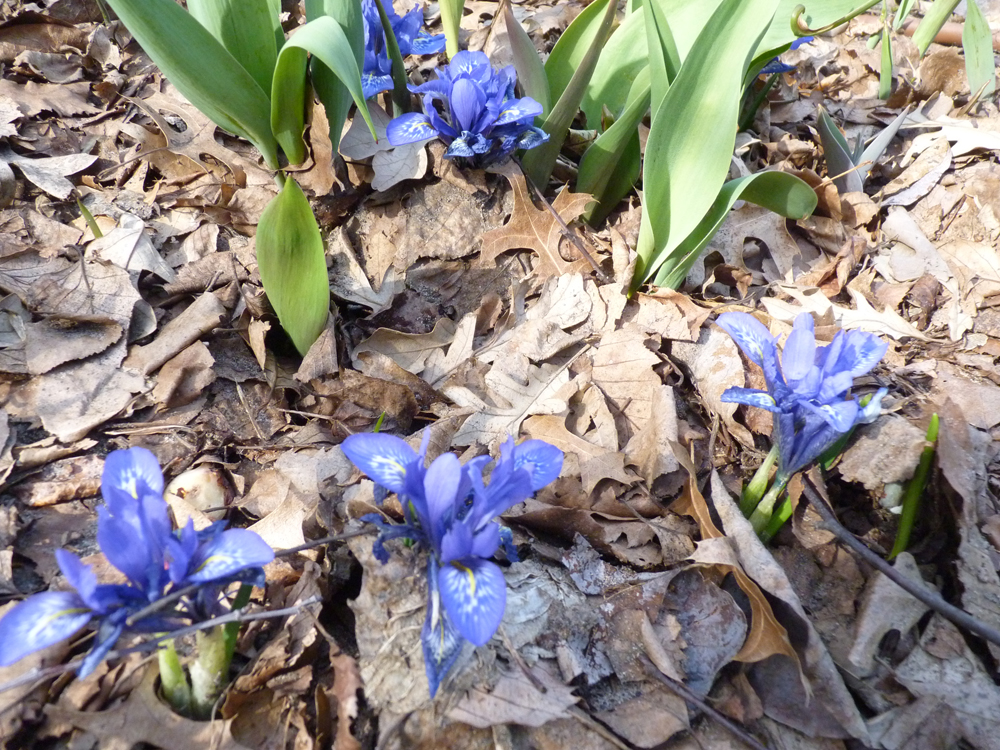
This one of the cristata is the first of a sequence of photographs that will show our perennial flowers as they bloom over the season.
1000P1030647

Get It Sorted

Beltane                                                        Emergence

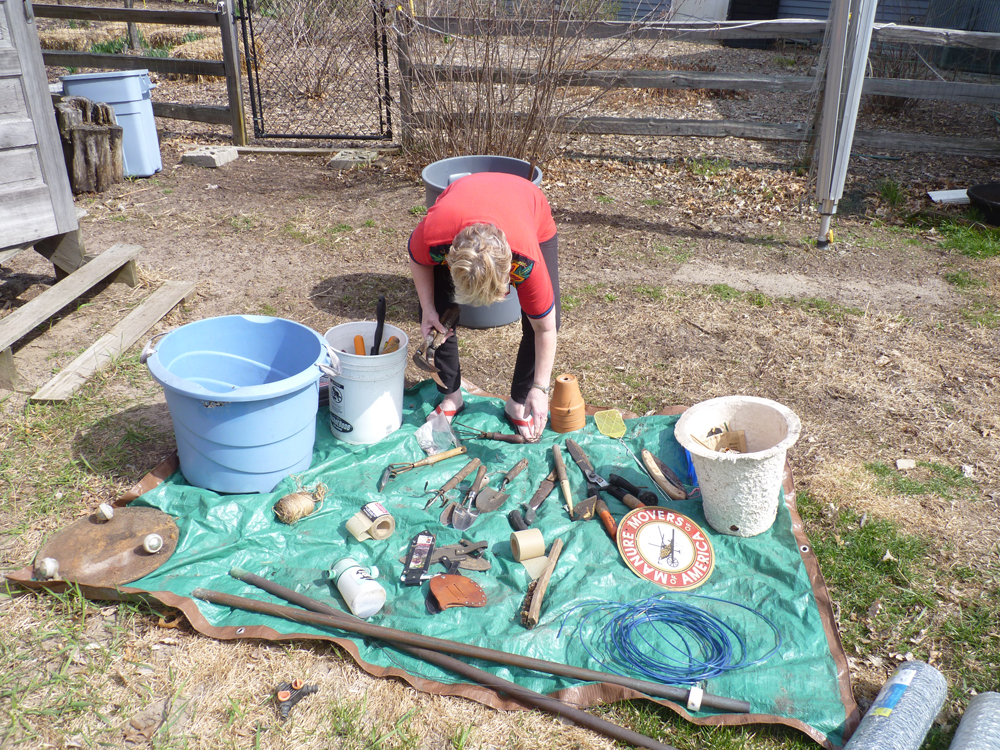
Let the sorting begin. Today, the Jon-built garden shed. A book suggested removing every object from its place, then sorting them into keep (move) and discard. Discard can be sell, donate, trash. Gonna start that process with the motley collection of garden tools we have acquired over many years of trying out this one and that one, while never eliminating any. Well, not only garden tools. There are old tarps, flower pots, wire, chemicals, and other things, lots of things.

And the planting, too. A wonderful day for getting those onions and leeks in the ground, fertilizing the bulbs. We’re going to put less emphasis on putting food by over the next couple of growing seasons. Just more things. To move.

Decluttering twenty plus years of accumulation will take us several months at a reasonable pace. I want this move to feel good, so I don’t want us to wear out at any point. This is a long distance hike, not a walk down for the newspaper. I also want it to build good feelings as we molt much of our carapace, not so that we can build a bigger shell, but so we can build a better one.