Category Archives: Humanities

What I Learned in Seminary

Fall                                                                         Harvest Moon

A fascinating journey into Loki scholarship and through it into international scholarship on folklore has made me blink more than once in its equivalency to the methods of biblical scholarship I learned in seminary.  First, there is textual criticism.  That is, did this instance of a Loki tale originate in an Old Norse tale or a broader European context?  If it originated in an Old Norse tale we imagine it may accurately reflect the actual sentiment toward Loki held by those who followed the old Norse faith.

However.  Even if it originated in an Old Norse folktale, does it have antecedents in either nearby folkloric material, especially Celtic since the Norsemen conquered and occupied Ireland, or in traditions from a larger ambit, say Greek or Roman mythology?  To the extent the story reflects Greco-Roman or Celtic material it cannot be said with confidence to reflect the view of the ancient Norse.

Here’s an example.  There is, in a tale in which Loki, traveling, takes a staff to a large eagle, really a giant named Thjassi in animal form.  The staff sticks to Thjassi and Loki to the staff through the giant’s magic.  In return for his release Loki agrees to get Idunna and her apples for the giant.

(Edward Burne Jones the_garden_of_hesperides_1870)

Once released Loki goes to Idunna and tells her he’s seen better apples in the forest.  She wonders at this, gathers her apples for comparison and leaves Asgard with Loki.  When she does, Thjassi in his eagle form swoops down and gathers her up.

Without Idunna’s apples the gods and goddesses of Asgard wrinkle and turn gray, beginning to grow old.

There’s more, but there’s enough here to make the point.  Here’s a paragraph from Wiki on the Garden of the Hesperides:

The Garden of the Hesperides, Atlas’ daughters, was Hera‘s orchard in the far western corner of the world, where either a single tree or a grove of trees bearing immortality-giving golden apples grew. Hera placed in the garden a never-sleeping, hundred-headed dragon (named Ladon) as an additional safeguard. The 11th Labor of Hercules was to steal the golden apples from the garden. He stole the apples by asking Atlas to steal the apples and in return he would hold up the sky for him. After Atlas picked the apples Hercules asked Atlas to hold up the sky for him while he made a pad of the lion skin. He never took back his job of holding up the sky and ran away.

So this Loki story recapitulates a Greek story about the hero Hercules.  Not likely to be a source of good information about Loki and the ancient Norse faith.

Here’s one other thing I’ve relearned in this foray.  Folklorists have a numbered system for the appearance of story types.  In the myth of Baldr, after he dies from an arrow made of mistletoe, an attempt is made to bring him back from Niflheim, the realm of Hel, Loki’s monstrous daughter.   In the Aarne-Thompson system of folklore classification this is a 931, in essence a variation on the story of Orpheus.

I Like Getting Old. Patti Smith

Fall                                                                     Harvest Moon

Something’s happening here.  What it is is not exactly clear.  At the end of this gardening year I feel like I’ve finally gotten it.  That is, I believe I now understand how to grow fruits and vegetables in quantity and of high food value. As Kate said, moving her hand in a low but upward swoop,  “Sometimes the learning curve is long.”  And it has been.  Over 20+ years.  Today though I feel good about my gardening skill.

On the writing front I’ve rounded up several agents to query when Missing comes back from its beta readers and has gone through the copy editing process.  I’m deep in the research phase for Loki’s Children, focused right now on the text, Loki in Scandinavian Mythology.  No matter how all this turns out in the matter of publication, I’ve let the inner and outer censors go.  I don’t know how or why, but I freed them and they left.  So now the process is all good.  Research.  Critique.  Feedback.  Submission.  Writing.  All good.

The MOOC’s have retaught me a valuable lesson.  When I’m engaged in scholarship, I’m happy, in my element.  I hit flow most often while learning.  That means the work with Ovid, which begins again on October 4th, is another chunk of the same.  Happiness is a warm book.

Last night I had a dream in which a person ridiculed me for not being spontaneous, being disciplined to a fault.  It bothered me as I slowly rose to consciousness this morning.  Am I so focused on a few things that I’m missing life?  Has my willingness to change directions, chart a new path receded?  Been suppressed by all this?

No.  I don’t think so.  But I’m open to other perspectives.  To me my life is full, rich.  There are friends and family whom I see or communicate with regularly.  There is a creative life partnership with Kate here.  The dogs alone provide many spontaneous moments because dogs live only in the now.  In the past I have initiated change in the world through political action.  Now the action is more at home and in the family.  Seems just right for the third phase.


Oh, Dear

Lughnasa                                                                       Honey Moon

“Go into yourself and see how deep the place is from which your life flows.”
Rainer Maria RilkeLetters to a Young Poet

Here’s some distressing reading.  And not for the reason that it indicates.  You can find other low-paying majors at: 20 Majors That Wont Make You Money.  There is, today, a sense that all higher education should be vocational education, only with more money at the end.  As we skid slowly out of the recent Great Recession and several million baby boomers slide toward retirement with little in the way of savings, it’s not hard to grasp the zeitgeist for all this.

But it’s a mistake.  The emphasis on lifetime earnings comes down very hard beside the point of education.  There’s an even more distressing list:  15 Majors that Will Make You Rich.   If you set out with the only goal in mind the accumulation of wealth, you will make wealth your lodestone.  That means your decision making compass will always swing toward the main chance, the lucrative deal, the high salary, the big payoff.

Another way of describing this is that wealth will become your center of value.  You will value other things in proportion to their capacity to make you wealthy.  Think then about spouse and children.  Think about the dog or the cat you love.  Think about the sport you play with passion.  Think about the music or art or literature that gives your life richness, texture.  Where do these things stand relative to your value center?

The compass needle does not turn toward them.  At best they are on the periphery of what you value most.  I’m not saying that you can’t make a lot of money and not have all these things.  Of course, you can.  Some do.

But let’s look at it another way.  What if you started out with the goal of a good life, a life of friends, family, learning, joy and service?  What if that rich life was your goal rather than a life of riches?  How would your decision making needle twitch now?  How would spouse, children, pets, sports, arts stand in relation to your value center?

Notice, too, that if the good life included wealth, wealth would be at the service of the good life rather than life at the service of wealth.  This is a world-defining difference.  And, of course, just the kind of thing you might expect from a philosophy and anthropology double major.

The material below comes from the 20 majors what won’t make you money weblink.

#2 Anthropology

Anthropology has the unfortunate distinction of being just about the worst major for your career. Recent graduates earn just $28,000 a year. That’s less than many people make with just high school diplomas.

And those anthropologists consider themselves lucky. They’ve managed to beat the odds of 10.5% unemployment rate in their field.

What’s the best you can hope for with an anthropology degree? A 7% unemployment rate and roughly $40,000 a year, on average. Those are some of the lowest grad earnings in human history.

#13 Philosophy and Religious Studies

Looking to expand your mind with Philosophy or Religious studies? We hope you count your wealth in terms of knowledge. Graduates make just around $42,000 a year on average.

That doesn’t sound too terrible, but it’s 20% less than the grads in the top 100 majors make. And that’s not the starting salary. New grads make $30,000 a year and must overcome 7% unemployment.

That’s probably why these majors are twice as likely as their peers to end up working retail. But it won’t be too bad. You’ll have a lot of time to ponder the nature of the universe while you fold shirts.


#1 So What Should You Major In?

This all amounts to a lot of bad news. So is going to college really worth it at all? Sure, but to earn more than a high school dropout, you have to pick the right major. The best earning majors are those in the science, technology, engineering and math fields.

And you don’t necessarily have to rethink your passion to earn more. Look for branches within these fields that satisfy your particular yen for knowledge.

If you’re worried about your earning potential, it pays to do the research. A few minutes of investigation now can save you from a lifetime of low wages.
How Much Learning Can I Stand?

8/14/2013     Lughnasa                                                     Honey Moon

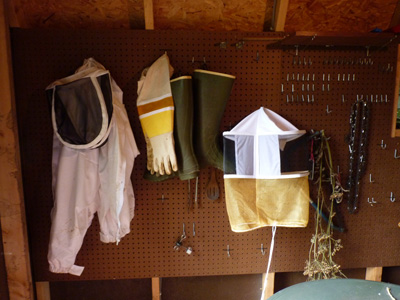
The upside is that, under all circumstances, I only have one more iteration of the hopguard, remove all honey supers task.  I hope that we can extract next Wednesday so I 400_Honey Extraction_0225will only have to remove the supers and then not replace them.  That would make the whole process easier.  The first two hopguard events left me, well, hopping and the bees buzzing.

I’ve decided I’m going to answer the Mod/Post-Mod question about Kant and then see how many I have to grade.  Writing answers to essay questions always clarified learning for me, so I’ll put the effort in on all 8 of them, just don’t know whether I want to spend the time grading.

P.S. written on 8/15.  In fact I’ve decided against answering the question.  I’m going to take the course as an audit.  I feel a little guilty about this because I know the way to integrate the material best is to write about it, but I’ve got too much else happening right now to do a good job.  There will be other courses and other chances to write.

MOOC moment

8/13/2013  Lughnasa                                                                  Honey Moon

How did Kant define Enlightenment? Use Kant’s definition to discuss whether either Rousseau or Marx is an Enlightenment figure.  In other words, choose one of the following comparisons to write about: Kant compared to Rousseau, OR Kant compared to Marx.

This is the writing assignment for my MOOC on Modernity.  Haven’t decided whether I’m going to answer it or just audit.  There are 8 writing assignments, plus grading peer papers.  It’s actually the grading that feels onerous to me.

Sapere aude

Lughnasa                                                        Moon of the First Harvests

A slower day today.  We both needed a little less activity.  Nice to be able to ratchet back and not worry about it.

Did spend an hour plugging the new credit card number into those accounts that need it. Our card got stolen by someone who bought a hotel room and flowers.  A romantic thief. A bit of a hassle but not too bad.

I’ve also been reading Jean Jacque Rousseau for the Modern and the Post Modern MOOC.  Kant, too.  Kant’s essay What is Enlightenment began the course.  It contains his Dare to know idea.  That is, trust your own reason and act on it.

The two Rousseau essays are very interesting, one on the arts and sciences which I plan to give more time here at some point, argues that the arts and sciences represent culture at its most decadent, at its furthest remove from the state of nature.  It’s a very interesting argument.

The second, which I’m reading right now is on the origin of inequality.  Here a couple of quotes from it:

Nature speaks to all animals, and beasts obey her voice. Man feels the same impression, but he at the same time perceives that he is free to resist or to acquiesce; and it is in the consciousness of this liberty, that the spirituality of his soul chiefly appears…

(Henri not Jacques)

It is by the activity of our passions, that our reason improves…and it is impossible to conceive why a man exempt from fears and desires should take the trouble to reason.

The first language of man…was the cry of nature.

…as to adjectives, great difficulties must have attended the development of the idea that represents them, since every adjective is an abstract word, and abstraction is an unnatural and very painful operation.

Surprise!

Summer                                                                   Solstice Moon

Several readers of my book have expressed surprise at its almost young adult focus and the fantasy elements.  I suppose this comes from two sources; that is,  people don’t know all of my interests or fascinations and there’s probably an expectation that my writing would be as cerebral as my public persona.

(The Musician and the Hermit – Moritz von Schwind)

Awhile back I read an interview with Phillip Pullman author of the fantasy trilogy, His Dark Materials.  In it he said he’d like to write serious, literary fare, but whatever subject matter comes to him, comes in the form of fantasy.  Same with me.  In a way I don’t think it’s surprising since the religious and philosophical and folk tale/fairy tale/folk lore world has been my constant companion since I came to a conscious awareness of myself.  That’s just the way the world makes sense to me, through the mythic and the archetypal.

The life of the mind, learning and knowledge, also captivates me, and I find a lot of fun there, too, but the core for me, the essence is in the world of the imagination.  So when I sit down to write, well that’s the clothing that drapes itself over my stories.

Latinum

Summer                                                                     Solstice Moon

Latin today.  Two weeks ago I got dejected about it, feeling less than able, starting to talk to myself about letting it go.  Then I got into the material on plateaus that I wrote about a week or so ago.  Learning to love the plateau, that’s a real key, so I adjusted my attitude.  Result?  A very good session today where we went into two particular verses that I had had a lot of trouble with.

Greg helped me untangle them.  Find the whole, first.  That is, Subject-Verb-Object.  Then work on the pieces.  That’s not always so easy when the verses grow long and convoluted, but it is the method that has helped me move up in my understanding.  Now I need to apply it with even more rigor and consistency.

On Tuesday I got Livy’s De Rerum Natura, a three volume treatment with Latin text and commentary and aids.  He’s next for me, or, in addition to, Ovid.

Latin keeps on challenging me on the one hand and giving me rewards on the other.  Today, in the mode of Solstice extravagance, I’m glad I’ve given it so much time over the last 3 1/2 years.  It has enriched my life in many ways.

Outside, Inside. Again.

Beltane                                                                          Solstice Moon

Summer is its own creature, a season apart from the others, especially here in the north.  Things grow.  Outside has only insect barriers, no cold or ice or snow or chill.  Yes, rain and thunder and tornadoes and derechos. Yes.  But only occasionally.  Usually the sun shines, heat climbs, jackets and boots stay in the closet.

It is now, finally, summer.  In three days the summer solstice will arrive, midsommer as celebrated in Scandinavia.  Here, this year, it will almost mark the beginning of our actual summer.

With the bees and the flowers, the vegetables and the woods, now the fire pit and visiting kin you would think I might love the summer.  And I do, in my way.  I appreciate it, look forward to it, enjoy it.  In particular I like working outside, planting, tending, harvesting.  Having the self expand out into the world beyond the house feels good, extends my understanding of who I am and of those whom I love.

Still, I will celebrate not the light on the day of the summer solstice, but its opposite, the beginning of night’s gradual increase.  I don’t know whether it’s my northern European DNA, or the mysterious lure that drew me north ever since reading Jack London, or a tendency toward melancholy, or a more general sense that my most vital activity occurs when the nights grow long and the temperature falls.

What I do know is that as the shadows lengthen and twilight comes sooner, my inner life begins to deepen, ideas bubble out of my interior.  My creative self flourishes.  It just occurred to me as I wrote this that attention outside draws me away from myself and from the inner work, undoubtedly a good thing, but as I sense the need for outside attention wane, my inner world grows more demanding.

If this is in fact the way it is, then I’m glad, for it means my inner life and the progression of the seasons have begun to synchronize in a powerful, subconscious way.