Climbing the Cliff to the Final Plateau

Beltane                                                           Summer Moon

On Friday I had a hard Latin session with my tutor Greg. And I’m glad. When we finished, he said, “You need to go back to basics, gender and number.” Oh, I thought. By god, he’s right. I’ve been pushing myself, trying to get faster so I can get this work started in earnest, thinking it’s maybe time, maybe past time for having gotten to this point. Doesn’t matter.

I am where I am. But. What I need to do to advance, to start climbing the cliff which leads, I’m pretty sure, to the last plateau, is slow down, pay exquisitely close attention to grammatical detail.  That means not entering my conclusion about a word’s grammatical identifiers until I’m sure. That often means holding all or most of the words in a sentence in my head while I try out different combinations.

Then, and I started doing this today, I translate the sentence. At that point I go to Anderson and Lee and Guanci (commentators) and Giles, a literal translation, to check my translation. After I take in that information, I go back over my translation, checking what each word means in the very best literal translation I can muster. Then, I enter the grammatical detail under the words.

Here’s what I mean. We’ll take Book I: v. 452 and v. 453 as a for instance.

Primus amor Phoebi Daphne Peneia, quem non
fors ignara dedit, sed saeva Cupidinis ira.

Under primus I wrote, adj. s. m. nom. (adjective, singular, masculine, nominative). Under fors I wrote s. f. nom. (female, singular, nominative).  Dedit got 3. perf. (perfect tense, 3rd person). And so on. When I wrote these descriptors under the word (I print out the Latin text using 5 spaces between lines and write the descriptors under the word and the translation over it.), I already had a translation done and knew that in it these words had to have these descriptors. Before this change in my process, I’d been trying to get pretty close, not worrying about being exact. Not good enough anymore.

When this comes naturally, I’ll be a Latinist on my own terms.  I can see this not very far ahead, just as, when I was deconstructing the dog crates, I knew I would get them done the next day though it didn’t look like I’d made much progress. I could see the whole and what to do next then to make it come apart. With the Latin it’s the reverse, now I’ll see the parts and make them whole.
Dog Escape Diary: Epsiode # unknown

Beltane                                                               Summer Moon

Walked the perimeter, checking for holes under the fence line, about 2,500 feet (.5 mile). Nothing. My guess is that the neighbor across the street returned Gertie, our German shorthair, and inadvertently left the orchard gates undone. Gertie can jump in the orchard on her own, Rigel has to dig in (Vega always follows). Over the last 5 years however I have laid down barriers to digging that now extend all along the orchard fence line. Rigel did not enter the orchard under the fence, nor did she dig out under the chain link (the perimeter).

The only other exit is the gate on the deck. It was closed though unlocked. It swings onto the deck making a dog’s exit one requiring pawing. Not impossible, though less likely, I think, than the neighbor scenario. Anyhow Rigel goes to the pet groomer’s at 12:30 pm for a wash. She needs to smell better. Probably better put, we need her to smell better

Wet and Smelly

Beltane                                                                    Summer Moon

While Kate and I investigated green options for our new home, our dogs got out. In the rain they explored the neighborhood, discovering, somewhere (could be on our property) something really smelly. Perhaps dead. A neighbor corralled them and brought them home, so we were notified of their wanderings by phone and their discovery by smell.

Rigel, chief escapist and (literally) dogged hunter, is the smelly one. Whatever she got, it was rank. They all slept late this morning, tired out from an exhausting day of freedom.

These guys differ from our other packs in that they typically leave, then come to the front door to be let in. Our Wolfhounds, if liberated, took full advantage. At one point several years ago, back when the dog feeding stalls were in full use, all five of our Wolfhounds escaped and were discovered by a dog lover over 2 miles from home. She called the vet and got our phone number. Turns out she was the mother of a patient of Kate’s.

I feel like I have a Ph.D. in dog containment, but this just goes to show that even the experts can exceed their knowledge base. Shouldn’t have left them outside so long. Convicts have all day every day to decide their escape strategies. As long as we let them in on a regular basis, this pack won’t escape, but if left in the rain for too long. Well…


Sustainable, Nutrient Focused Horticulture

Beltane                                                         Summer Moon


The purpose of our company is to
make soil better as we grow quality crops

Planted the 3 blueberry plants I abandoned in the orchard. Forgot about them when I planted the egg plant, collard greens and chard in the vegetable garden. Then, I sprayed the orchard for the first time, brixblaster, an international ag labs concoction that feeds plants focused on reproduction: fruits including tomatoes, peppers, egg plants, beans and peas. This feeding program for the orchard goes on twice weekly, ideally before 8 am or after 4 pm. Before is the best for me but I couldn’t make it happen today, so I settled for the good over the best.

On June 20th the spraying program begins in the vegetable garden. Lest you have an organic twinge here, let me explain the philosophy behind the (International Ag Labs) I.A.L. recommendation. The goal is to produce the highest quality foods (measured by nutrients, not ease of picking and processing) while supporting a soil chemistry that is sustainable over time. This is very different from traditional ags NPK focus which takes out nitrogen, phosphorus and potassium from the soil each year, then pumps them back in the following year.

NPK farming misses the critical elements of soil chemistry that supports microbial plant and animal life, as well as the critical trace minerals that make for healthy plants. Healthy plants = healthy food. There’s a reason for the plough and fertilize model. It produces high quantities of food, but over time the plants become modified not for nutrition but for their capacity to be easily harvested and stored, then optimally usable for food processing. In the past three decades or so the plants have also been modified to contain herbicides and insecticides as part of their genetic material.

Again, the emphasis is not on the nutrient quality of the food, but on the ease of growing and harvesting. This story is not new to me. Michael Pollan is probably its most gifted narrator right now. I remember a 1974 book, Hard Tomatoes, Hard Times, that told the story of the unfortunate collaboration between land grant universities (like the Ag campus in St. Paul, Purdue in Indiana) and farmers/food processors. It’s titular story involved the problem of tomatoes. They were thin skinned and had to be harvested by expensive manual labor. The solution? A tomato with a hard skin, pluckable by mechanical arms. That’s the source of the tough hide you get on store bought tomatoes.

Criticizing the system is easy and the push back predictable. How would you grow sufficient quantities of food for all America and the other peoples of the world to whom we sell produce? It’s a fair question and one that has to be answered.

There are many competing solutions, often followed with dogmatic zeal, the cults and sects of the horticultural opposition: Permaculture, organic farming, bio-dynamic farming, no till agriculture, the long term project at the Land Institute to develop perennial grains, among others. While of all these organic has created the most scale, it has a huge flaw that should have been obvious from the beginning, but zeal blinded most of us to it.

Its whole focus is on a negative, the removal of chemicals and their replacement with organic/natural products used to grow food. A good thing, in many ways, but it leaves the more important question unanswered: is organic food better to eat? Well, in that it is grown in a minimalist insecticide/herbicide environment, yes. But. Is organic food more nutritious than NPK farming? Oddly, the answer is not so much.

That’s where the I.A.L. idea comes in. Improve the soil so that it can sustain its own chemistry and create a healthy environment for microbial life. Recognize that inputs to the food growing process move toward that goal. Make clear that the purpose of this program is not the creation of food for the food industry, but of good food for all. This strikes me as a balanced solution, accessible to individuals and growers for local markets alike.

I don’t know how the I.A.L. ideas work on the large scale though I know their primary customers are farmers and not gardeners.

Think about this. The path to a sustainable human future on this planet must start with agriculture that can continue indefinitely. I.A.L. is one approach that focuses on that goal. It’s worth a look.

Surprises

Beltane                                                              New (Summer) Moon

Marketing my manuscripts has always come hard.  I read today about a poet, Patricia 500P1030645Lockwood, whose husband sent out her work in what he called a blitz. The New Yorker published submission number 240 after Poetry had published submission number 179. I’m still in the low 20’s in my submissions. Of course, novels are not poems and blitzing poems is easier than novels, but the energy level required is, I imagine, the same.

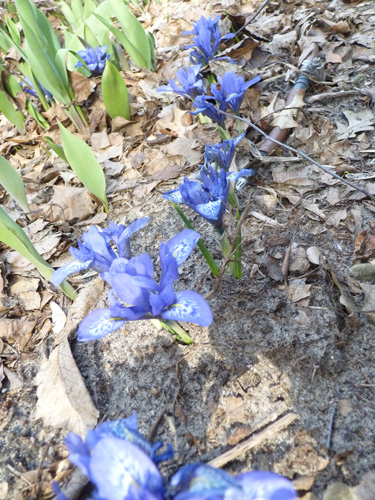
Marketing our house, however, seems like it will be easier. I hope. When I think of our house from an outsider’s perspective, I think of it as full of pleasant surprises. They start when the cristata and the star crocus bloom and proceed through the daffodils, the tulips, the iris, the lilies, the clematis, the monkshood, the bug bane and liguria. Early, too, is the magnolia, a white pillar of fire for a week or two. In their own time the fruit trees blossom, the lilacs and the peonies. Later on the 500P1030693daylilies will come in. If vegetables are planted, they provide interest over the growing season, too.

Then we have the firepit area and the magical shed for grandchildren, two tool sheds and a contained 1.5 acres with woods, a wonderland for dogs and kids. Downstairs we have a steambath, upstairs a grill in the counter. We have a professional Viking stove and a fully insulated garage with gas already plumbed in for a heater.

Within the last five years we’ve replaced the air conditioner, furnace and well pressure tank. Within the last eight we renovated the living room and kitchen, installing new flooring, counters and removing a wall between the kitchen and the living area. We’ve also 500P1030676installed new lighting fixtures. In the same time frame we put on a new roof and new siding.

(photograph in our woods this week)

But here’s the clincher surprise, if it were me. Yep, we have a morel patch in our woods. We just had a steak and morel meal on Sunday. Finding them was a highlight of the first year we lived here.

Oh, did I mention that our land was a hemp farm during WWII? Look up hemp if you don’t understand why that’s interesting. We’re no Colorado on this point. Yet.

Today is a Latin day. Work with Greg at 11:00 am on the story of the killing of the Python by Apollo. That’s Book I:416-450. I’ve finished translating it and since I began this round of translating at Book I:1 that’s as far as I’ve gotten. By the time I hit Book II at verse 779, and perhaps before, I’ll be able to translate on my own. Then I’ll rely on occasional consultation with Greg, Perseus, my collection of commentaries, Wheelock, dictionaries, other English translations and, of course, the Latin text, most often the one mounted on Perseus, but I have other manuscripts, too, especially the Oxford Classical Text, considered the current scholarly consensus.

Litter Mates

Beltane                                                           New (Summer Moon)

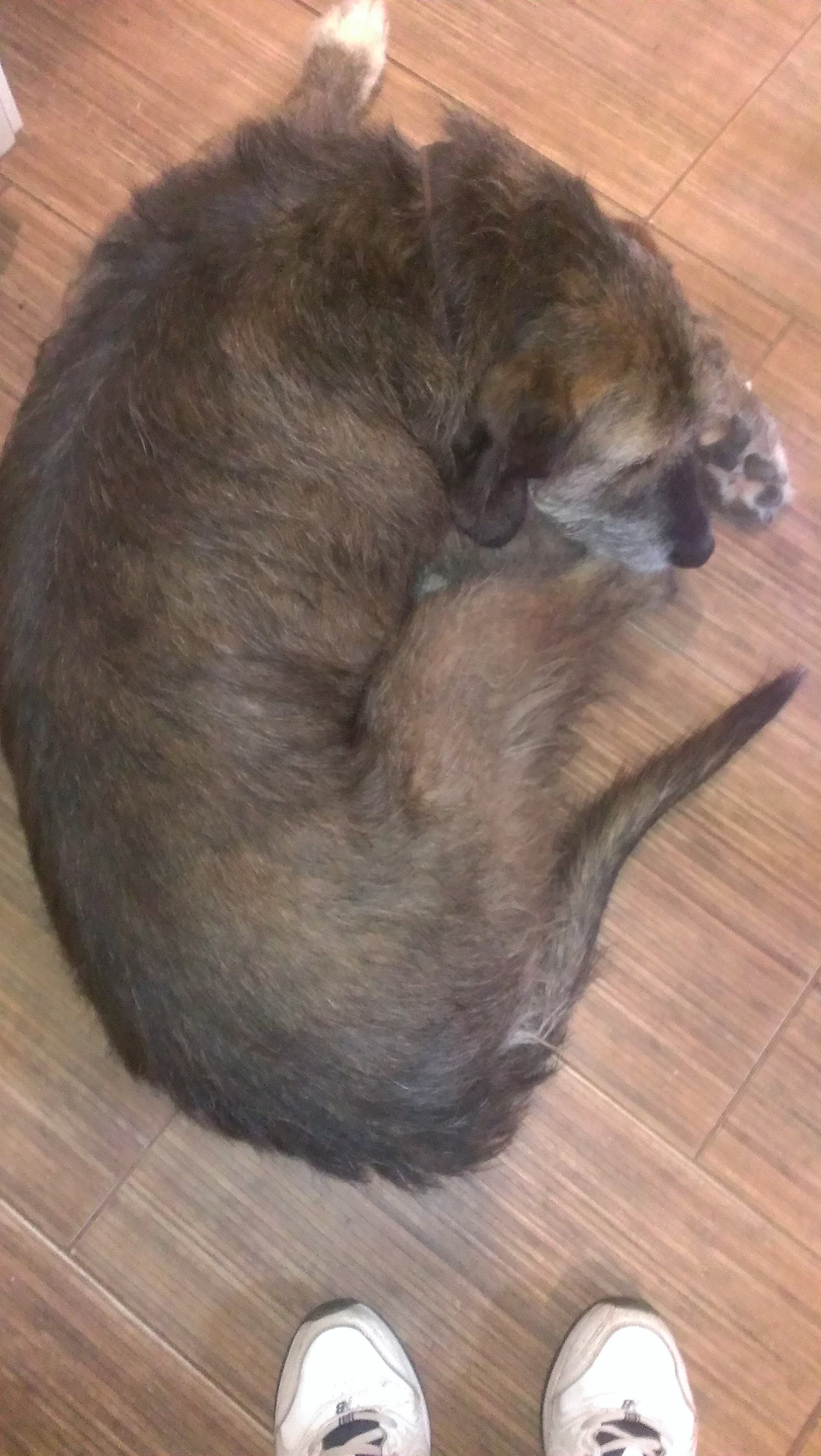
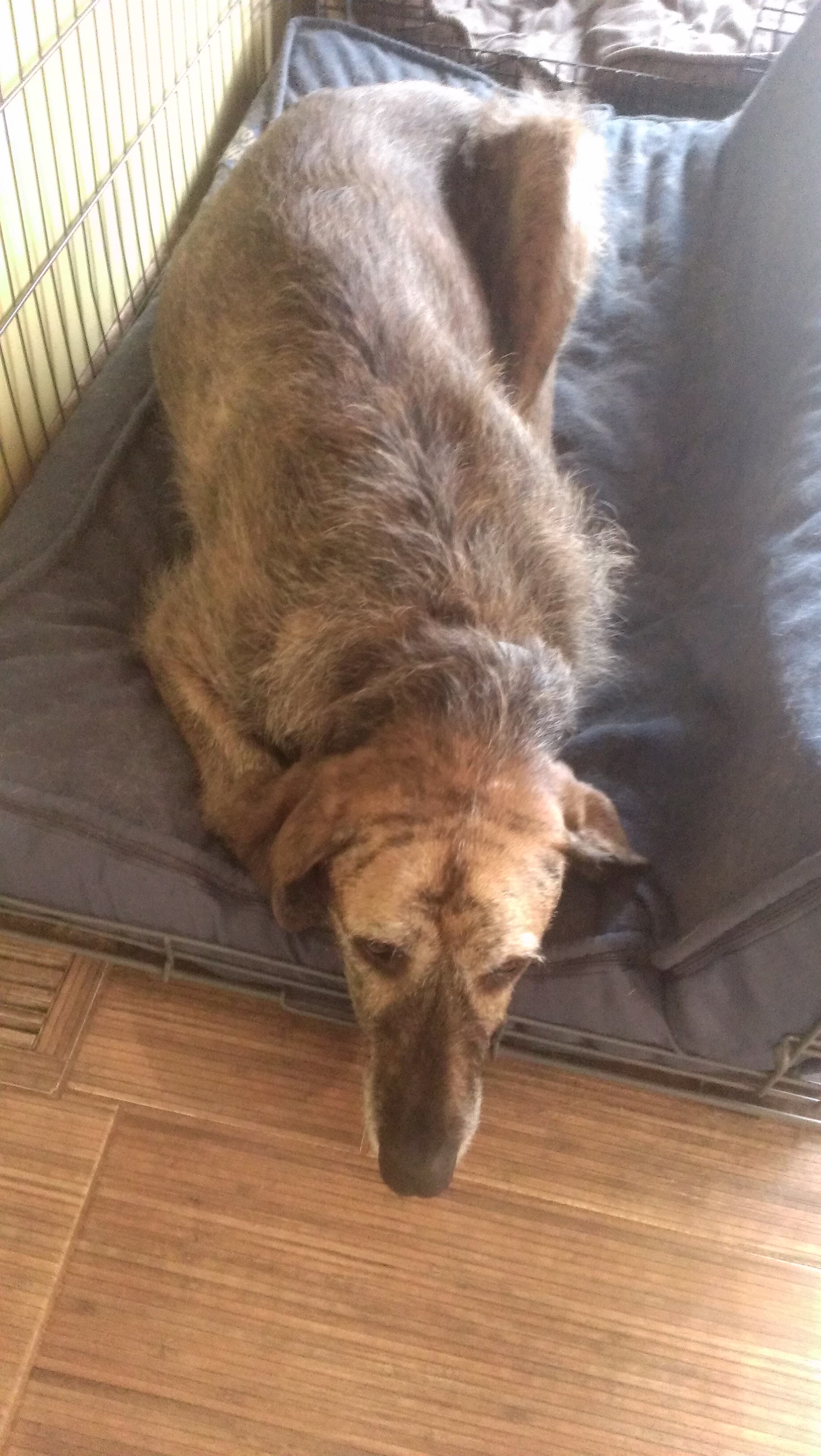
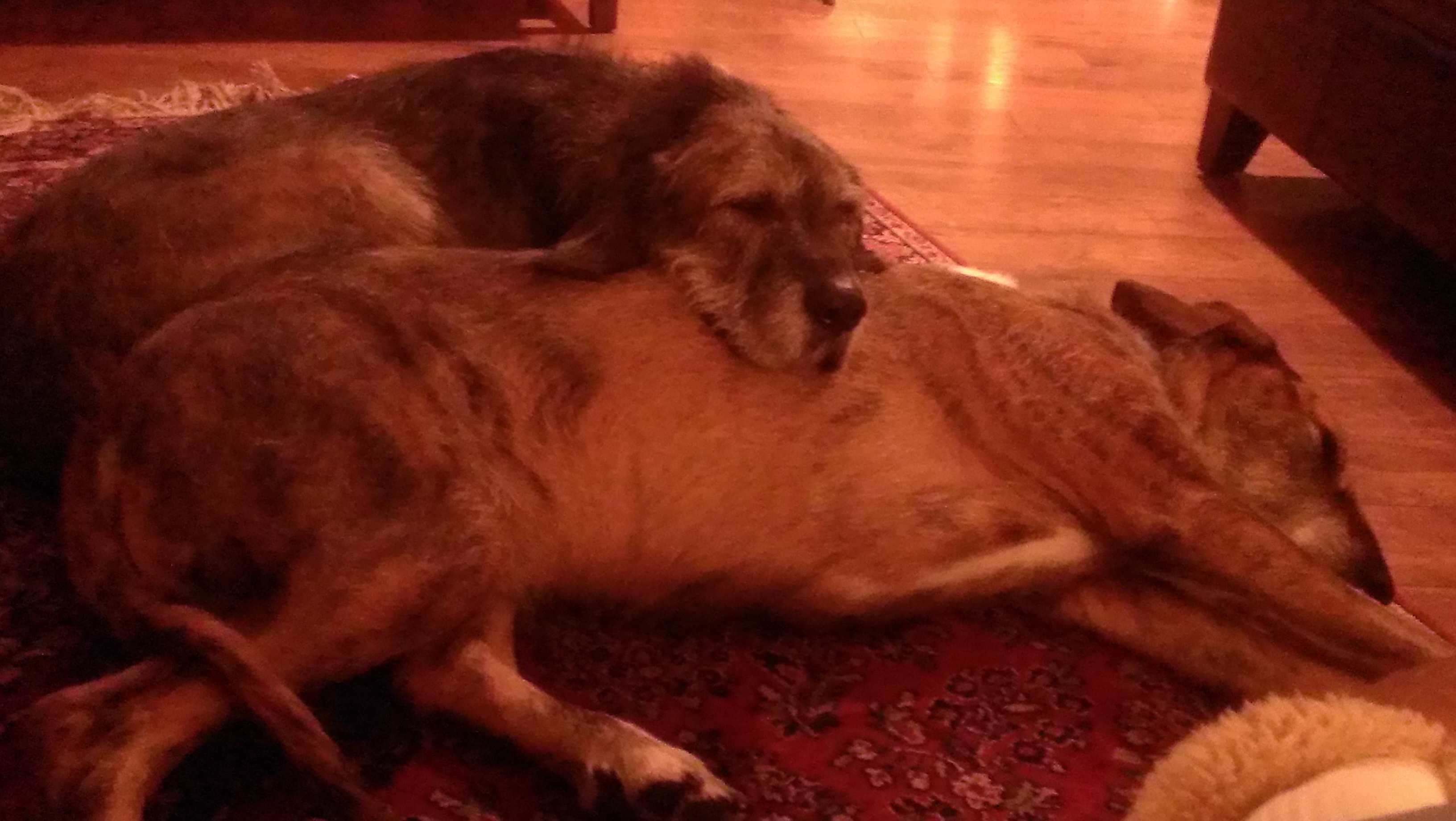
Took the dogs in for their annual physical. This process has some elements of farce. Our dogs, who never leave the property, are not leash trained. We put them on leashes to take them to the vet. The two big girls, Vega and Rigel, pull like sled dogs only with three times IMAG1193the weight. Then, in the examining room, we sit, Kate, Gertie, Vega, Rigel and me. The dogs pant and stir around anxiously, going from here to there, coming to our knees for reassurance one minute, then exploring, excited, the next.

(Rigel)

Vega and Rigel are litter mates, sisters, and have never been apart. Since birth. When Rigel left for her exam, Vega was upset but stolid. When Vega left for her exam, Rigel gave a pitiful cry, several times, lay on the floor with her head in a dejected posture, ears flopped down. She kept this up for a couple of minutes, then wandered around a bit, later slumping to the floor again. Quiet this time. When Vega returned, Rigel didn’t jump and clap her paws together, she walked over and stood beside Vega for a moment, then returned to her usual way. Life’s balance had returned and that was enough. Could be a lesson here for us humans.

Roger Barr, our vet, had pictures of dogs he calls cold bloods, which, he said are the same IMAG1194as stag hounds. You may remember our interest in stag hounds from our recent Denver trip. Roger’s pictures come from a breeder in Abilene, Kansas, where Eisenhower’s library is and more important, across the road from the library is the National Greyhound Hall of Fame. I’ve been there and met Queenie, the Greyhound ambassador of the day, a former racer. Roger says they usually have dogs as ambassadors who were well known champions in dog racing. The cold bloods are beautiful, rangy animals with a look somewhere between a Scottish Deerhound and a Greyhound.

(Vega)

Roger says the breeder has a truck with boxes on the back and a pull bar in the cab. They drive over canyons and in difficult terrain hunting for coyote. When the dogs, with their superior eye sight (these are sight hounds) spot prey, the pull bar goes down, the dogs spring out IMAG1304and give chase. They have a speed dog to run the coyote down and a kill dog to finish the hunt though I imagine they hunt in threes or fours as most sight hounds do.

(Vega and Rigel)

Next year in Colorado. Maybe we’ll be hunting coyotes, driving over difficult terrain and howling at the moon.

And, They’re Off

Beltane                                                                   New (Summer) Moon

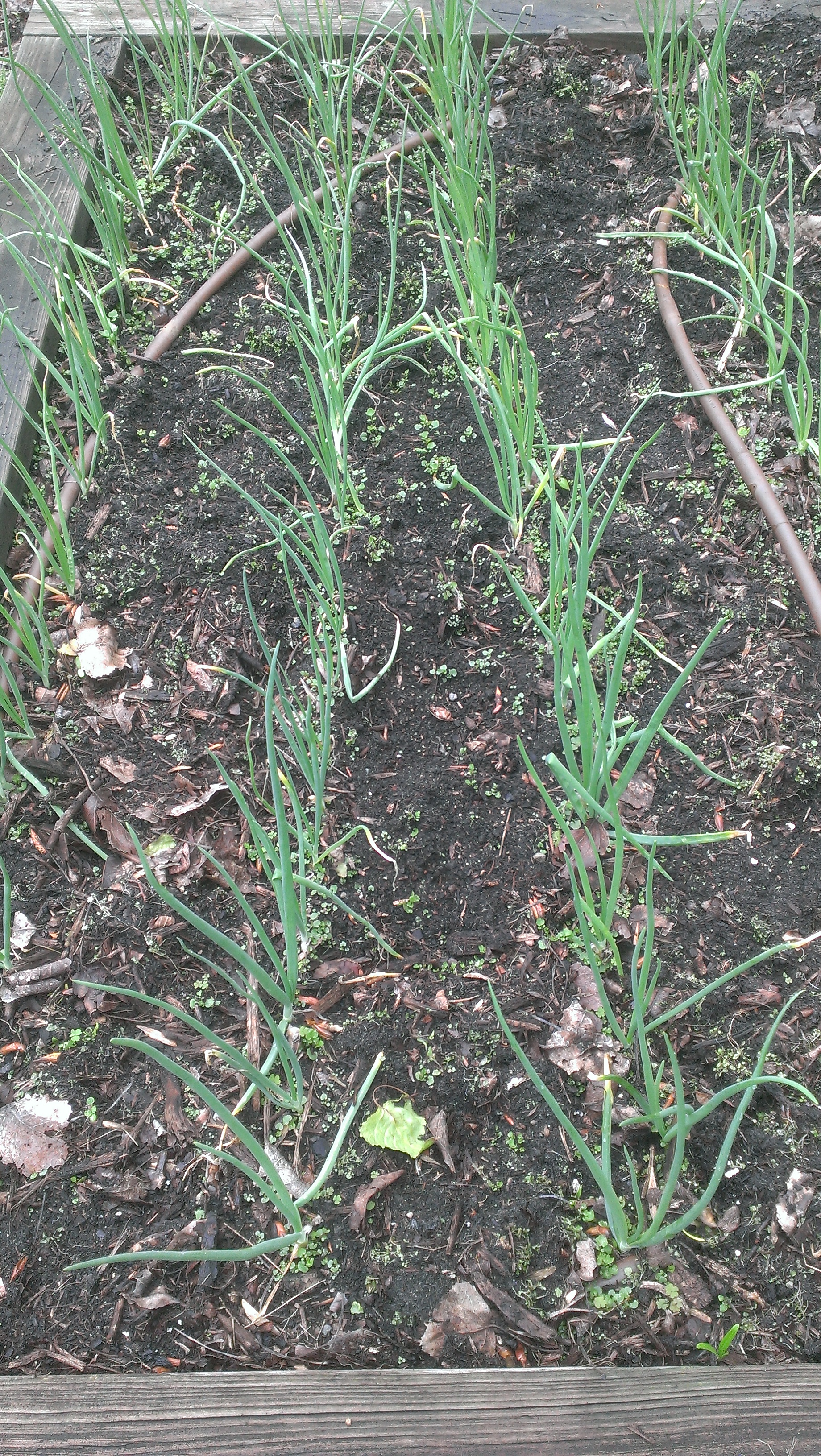
The heat has returned. As has our irrigation. That combination plus the International Ag IMAG0357Labs program seems to have gotten us off to a good start. I was afraid I’d burned the tomatoes and peppers (too much nitrogen), but they seem to be coping.

(2013 garlic)

The tomatoes, with one exception, look strong and so do the peppers. The collard greens, chard and egg plant have put on a growth spurt with that vivid color which signals good health in a plant. The onions, garlic and leeks have made good progress, too, though they’re a bit slower in general than the others. Beans and cucumbers have sprouted, except for one row which has just begin to push up, sugar snaps if I remember correctly.

The tomatillos, planted a week or so ago, have done poorly, and I don’t know why, but we’ll have to replant them. The beets and carrots, planted before we left for Denver, have sprouted, too, the carrots looking as good any I’ve had. The golden beets, beautiful on the plate, just don’t germinate well, at least the variety I’ve planted for three years. Which should be a signal to me. The bull’s blood variety grows with the kind of vigor you might associate with, well, a bull.

Kate went out today and weeded, weeded, weeded. The garden looks neat and organized. Tomorrow afternoon or Saturday morning I have to lay down mulch, seems awful close to planting, but the heat and the cold brushed against each other this year.


Deconstruction

Beltane                                                                            New (Emergence) Moon

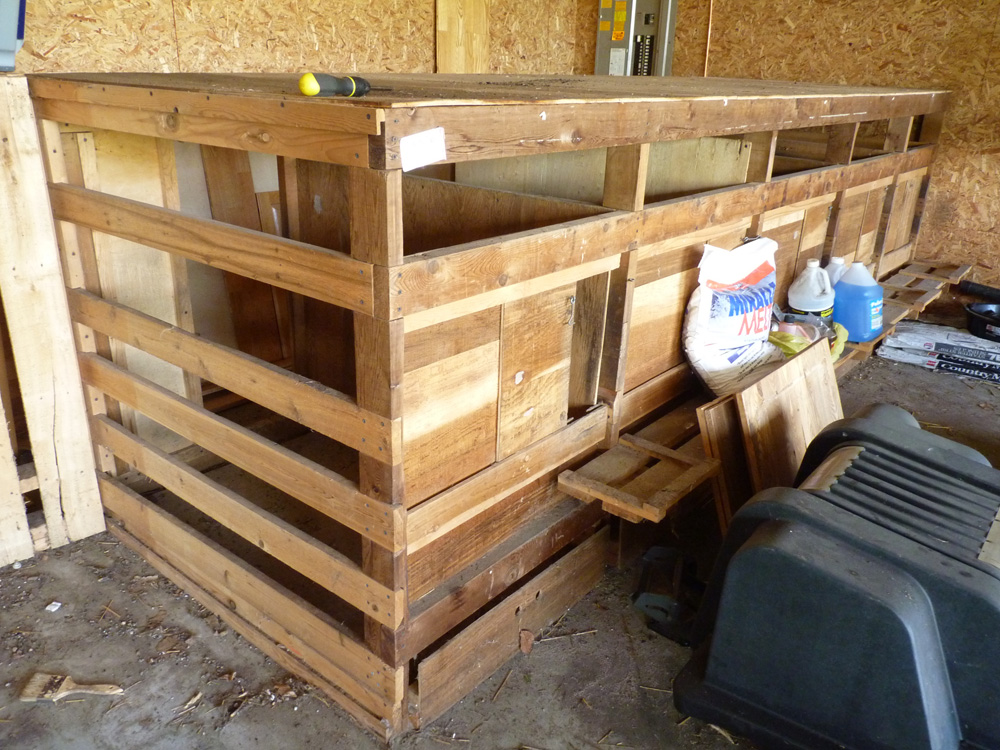
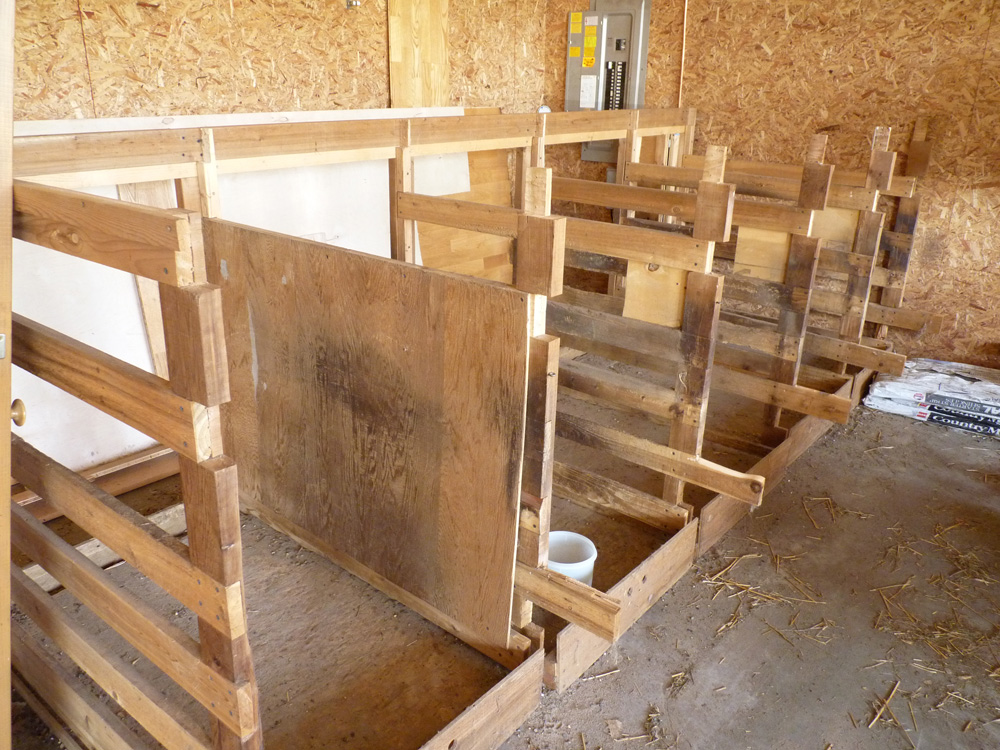
Deconstructing a life. The circus tent metaphor with its stakes, ropes and main canvas 1000P1030696describes the physical and emotional act of moving well. But it doesn’t speak much to the time before moving. As I worked on the dog stalls, taking them apart screw by screw and with pry bar and small sledge when necessary, another metaphor came to me. Deconstruction.

To move permanently to a new place hundreds (or thousands) of miles from the old one requires several acts of deconstruction much like the dog stalls in our third garage bay. The obvious physical ones require utilities to be stopped, a home to be vacated and perhaps sold, a neighborhood left behind, friendships must be changed to accommodate a new situation, memories stored on city streets, in restaurants and parks must be given up or purposely recalled through writing or story or photograph.

What’s really going is that the life carefully built, or, perhaps not so carefully, now has to 1000P1030719be dismantled, packed up and moved. At least all that is movable. To go back to the dog crates, the wood no longer has their shape. It has already lost the memory of what it once was. But I have photographs and Kate and I have many stories about the dogs who fed there and the young man who built them.

There will be no more Minnesota life when we finally follow the moving van west. Its pieces and parts will stacked up and stored. The integral experience of living in a place will have shifted locations, this time to Colorado.

This transition will be much more intentional than my flight from Indiana. That time Judy and I packed our stuff in a trailer,1000P1030725 pulled away from Connersville and never looked back. That was annihilation rather than deconstruction.

Several years of analysis, a good marriage and a circle of excellent friends has convinced me that leave taking, deconstruction in this case, is important for all parties. We plan to do it as well as possible.

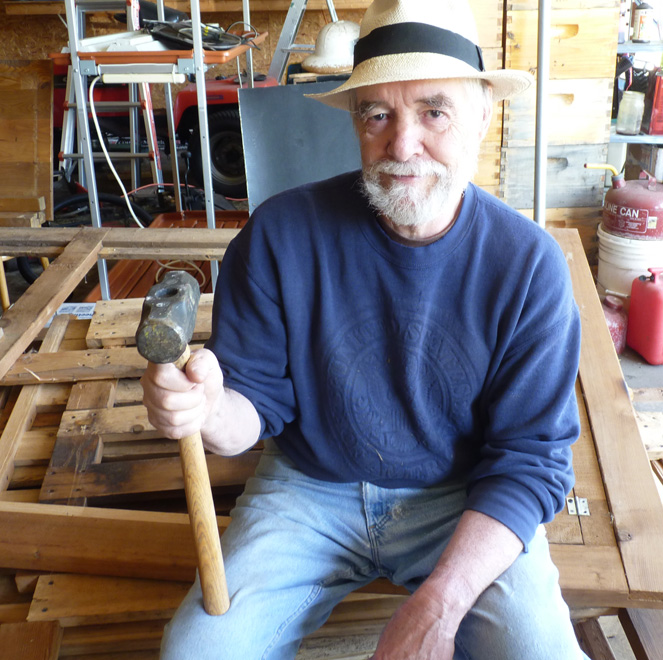
(man with tool)

Old Dogs

Beltane                                                   New (Summer) Moon

With the work in the garage I’ve tipped myself a bit more toward out door work, a struggle I get into at this time of year anyhow. My best working hours are in the morning, so I tend to use them for the work that seems most pressing. When the fallow season has dominance, coming down stairs to my computer and my books draws me. Once the growing season begins, and even more so with the International Ag Labs program which finds me up and spraying well before 8 am, I find a tug and pull begins to happen.

Life always comes first for me and when the plants need my attention, they get it. That allows avoidance patterns, like the ones around submitting my work, for instance, to flourish. Time to spray the plants. Time to thin the vegetables, plant new bulbs, amend the soil. That sort of thing. In fact, I have plenty of time in my day to get all this work done.

Over the last couple of years I’ve developed better patterns (old dogs can learn…), so I don’t expect this growing season to be quite so disruptive. As I’m writing this, another voice tickles me, in the move and just after it will be a good time to develop new habits. Yes, an advantage of leaving an old milieux.