Samain Closing Moon
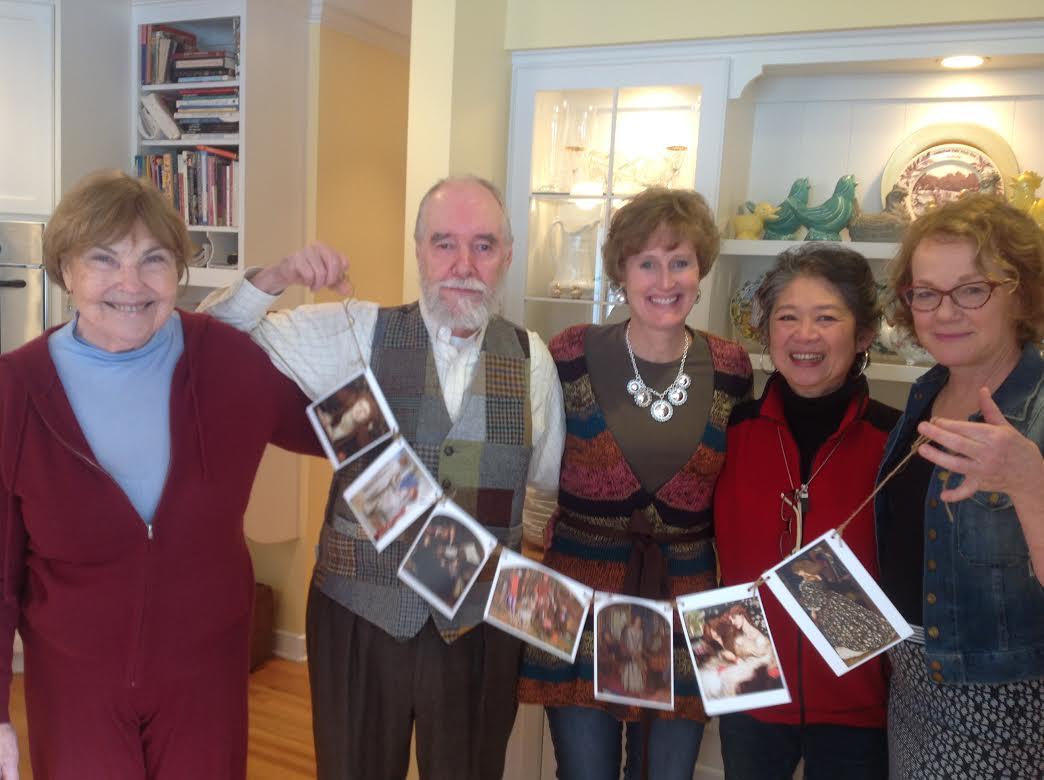
A going away party this noon at Allison’s. This is the docent class of 2005 gathering.
A recent Washington Post article about the Hirshhorn eliminating their docent program had a flurry of e-mails among the docent corps. Is this a trend? Is the MIA headed this way? The consensus seemed to be no, the MIA still wants its docents. At least right now.
It’s been eighteen months or so since I left the Docent program, pulling back to finish my novel, Missing, and to cut down on the number of trips I made each week into the city. Maybe an insider, now outsider’s reflections, would be useful. (I did finish the novel, though it’s unsold and I did cut down considerably on the number of trips into the city.)
Over the time period from 2001 to 2013 I volunteered at the MIA, first as a Collection in 2005. Initially, there were two wonderful fringe benefits draw to volunteering at the MIA. First, the continuing education was substantive. It featured art historians, curators from other museums, visiting lecturers for special exhibitions and overviews of upcoming exhibitions by the curators who designed and mounted them. A four inch thick notebook is filled with notes from the first five years or so.
The second was that these continuing educations were held on Mondays. The museum was otherwise closed on Mondays, so this meant we could come in for an excellent lecture, then stay and wander the museum, the empty museum. This time alone with the art was, for me, sacred. The quiet galleries contained the long, powerful conversation that is art over the ages. It was possible to enter into the stream of that conversation by walking only from, say, Doryphoros to the Jade Mountain, or from Goya’s Dr. Arrieta to Beckman’s Blind Man’s Buff.
The loss of these two fringe benefits grew, for me, into a longstanding malaise, not yet dissipated after 18 months. It was the altering of the felt relationship between the museum and its volunteers, reflected in these changes, but not limited to them, that made me feel the time exchange was no longer balanced. I felt I was giving far more, in hours, in study, in tours than the museum was giving back to me in education or support.
In retrospect I wonder if the changes that I felt were part of this larger reconsidering of the role of the volunteer in museum life, a devaluing of the volunteer role. In the Hirshhorn’s case they continue tours, but with interns and paid staff. This suggests to me that the trend is not away from tours and other museum interactions with visitors, but toward a more substantive one, a role they feel only more educated individuals can fulfill.
Here then is the peculiar intersection that seems to loom just ahead. Volunteers, largely a well-educated group, but mostly amateurs when it comes to art history, may seem to offer too low a quality of knowledge and interaction, thus not presenting either the museum or the collection in the way staff and boards now believe necessary. What’s peculiar about this is that the old continuing education model offered a vehicle for raising, quite substantially, the art historical knowledge of volunteers.
Furthermore, I would have been willing to devote a good bit more time to education, both class-room and at home, self-guided, if it had been valued and supported. And, I imagine, many if not most of the docents with whom I worked would, too.
Instead, the museum has pulled back from challenging its docent corps educationally, reducing both quantity and quality of continuing education. It has also been moved to a much less desirable afternoon time slot during the touring week.
While the MIA may not be moving explicitly toward the Hirshhorn model, it has said in many ways over the last 5-8 years that the volunteer simply doesn’t have as much value. That’s dispiriting to those who remain.