
Imbolc New Maiden Moon
The post below introduces the MIA as a place I go to distract my monkey mind, to sooth myself as I try to sleep. It doesn’t sound like it should help, I know, but it does. Over various times through the collection, diverse sets of objects have presented themselves to me. This first set was a surprise, as they would not have been objects I would have used all together on a tour. I imagine that’s why they work for me. There are others and we’ll get to those eventually.
This first sleep tour emphasizes objects that would be satisfying to hold, that express their beauty through shape and material, through the finish applied. As I drift off to sleep, I imagine these objects in my hands.
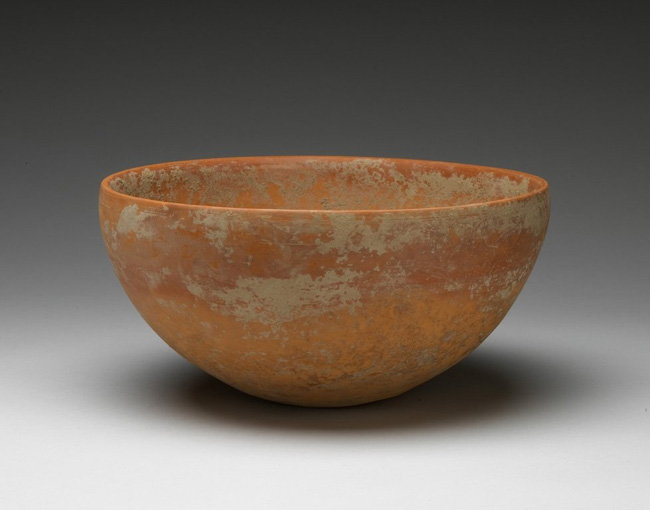
The first object, the one that started this set, gave it a theme, is this bowl. Over 6,500 years old it comes from the Yang shao culture along the Yellow River in what is now China. The theme here is sensual, beauty of form, grace, objects that would please the hand as well as the eye. I imagine holding it, tracing its edges and its sides. I imagine it filled with corn or grapes or berries. Mostly I see it as a pleasing shape, something of the earth that gets its beauty from the clay and its maker’s skill.
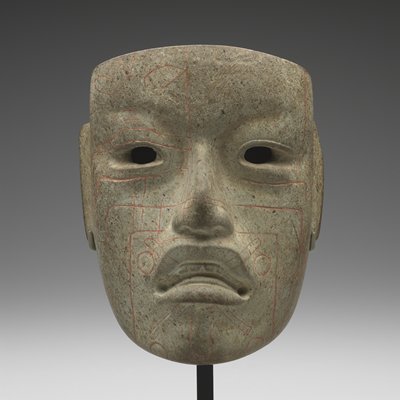
This tea cup comes from the Song Dynasty, the 12th or 13th century. It has long been my favorite object in the entire collection. “In the heat of the kiln, the natural chemicals in the leaf react with the glaze, rendering it nearly transparent.” Its aesthetic drew me in before I knew its origin. When I learned that these were favorites of Chan Buddhist monks, a movement peculiar to China that combined Taoist and Buddhist thought, it was a clue to me about my own reimagining project. Chan Buddhism became Zen when Japanese monks came to China in the 12th century and learned both about Chan Buddhism and tea drinking to stay awake during long meditation sessions.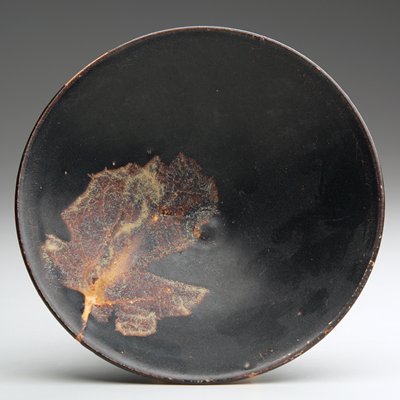 This Olmec mask is 3,000 years old. The outline of a were jaguar in cinnabar lines covers the face carved from jadeite. It was once owned by the movie director John Huston.
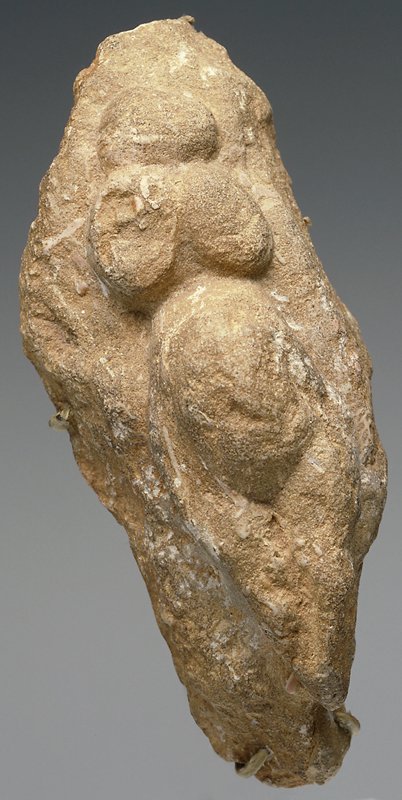
The oldest object in the museum’s collection, this image of a fertile woman, commonly called a venus figurine, has a creation date between 201 and 200 BCE, over 20,000 years ago. What I’ve always found remarkable about this object is how easy it is to tell what the artist made. We may not know precisely what it means, but that this is an image of a human woman transcends the thousands of years from its making.
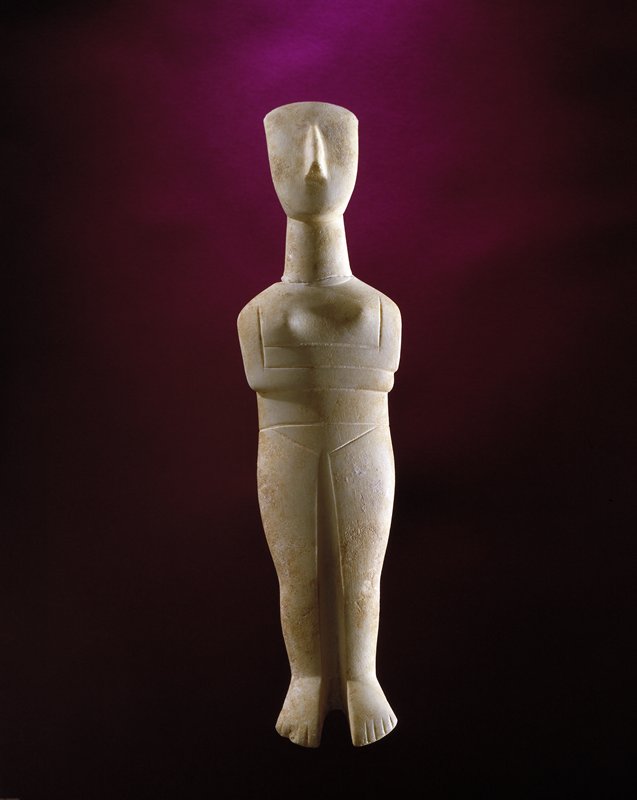
A Cyladic figure from either Naxos or Keros, two of the Cyclades’ Islands in the Aegean, this sculpture dates from 2,300 to 2,400 BCE. Maybe 4,400 years old. These abstract pieces share with the Venus figurine an instantly recognizable female form rendered in minimalist presentation.
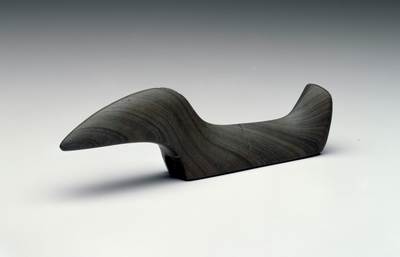
This birdstone was an object featured in a native American exhibition several years ago. It is an atlatl, a spear thrower. It comes from the Mississippian culture somewhere between the 26th and 25th centuries BCE.
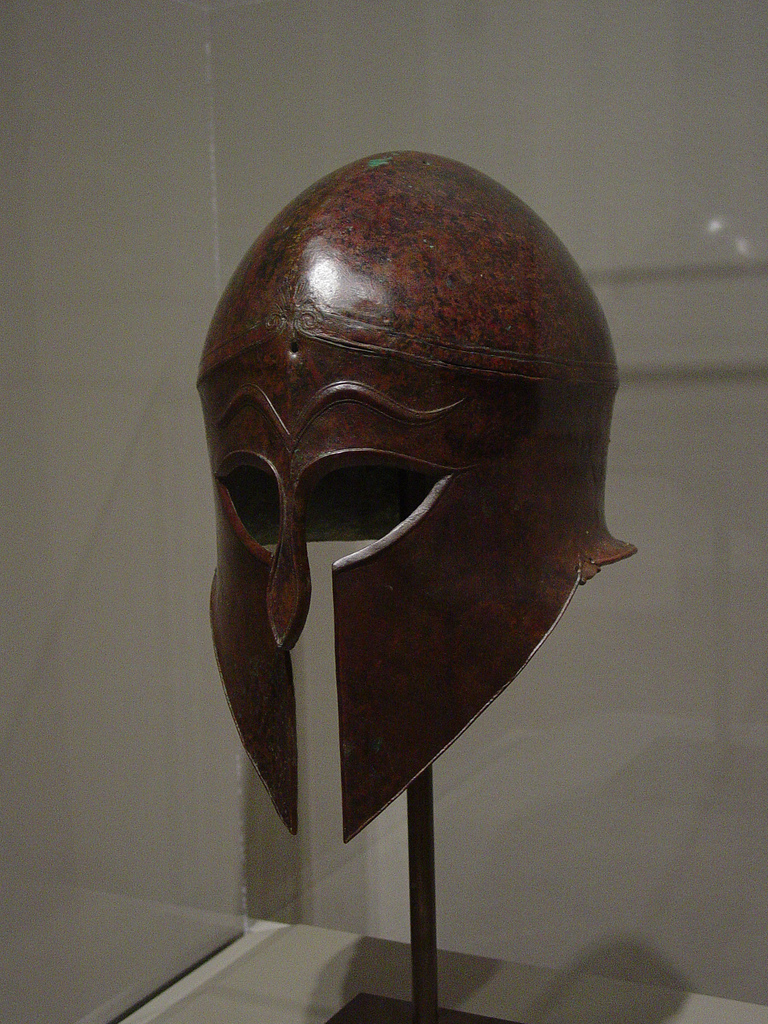
Corinthian helmet from 540 BCE. An elegant way to go to war, especially with the eyebrows. Seemed like it would be hot. Maybe pretty uncomfortable to wear, but that’s fashion.
Each of these are of a handheld scale, making them perfect as talismans for Morpheus. As I go through them, counting 1,2,3,4 and 5,6,7,8, they place me in a positive environment, occupy my senses and connect me to ancient artists.