I’m finding myself dry today. Starting and restarting topics, not settling into flow. Yesterday was busy and I missed my post. I also didn’t get my 750 words in on Superior Wolf though I did get my workout in at 6 am. Missed my newly started Latin work, too. Rhythm, for me, is critical to long term projects and rhythm needs consistency, even missing a day can disrupt a hitherto productive schedule.
Ruth in the hat
There are matters more important than productivity. Quite a few of them. Two of them showed up here on Friday night: Ruth and Gabe. Yesterday morning saw me at Beth Evergreen twice, once earlier and once for a wonderful seder for Tu B’shevat. After that, it was nap time.
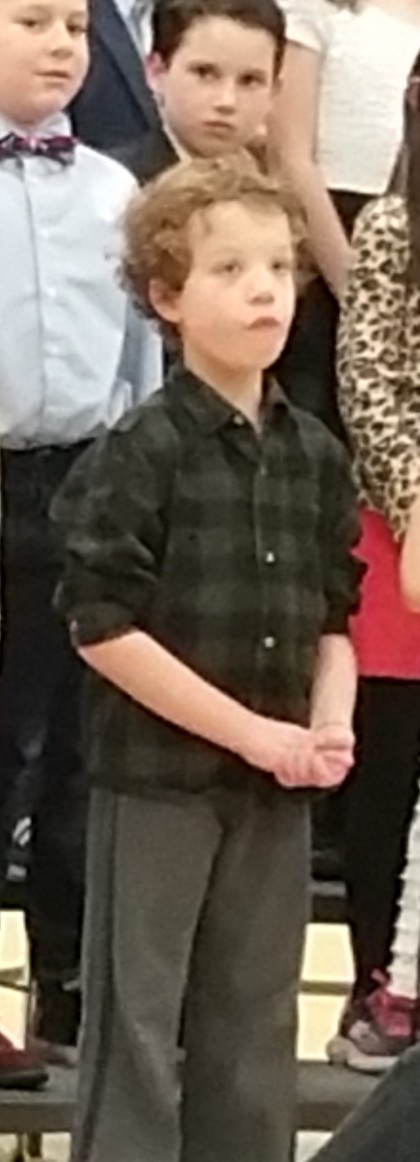
Gabe at his concert
Following the nap Kate and I took Ruth into Denver for a birthday party for her buddy, Augie. They did parkour. Before taking her to the party, however, she and Ruth went shopping at Joann Fabrics. They found material to complete her costume for her Destination Imagination play. She’s the main character, a dragon. They also found cloth for Renaissance Festival costumes. Kate, Ruth, Gabe and I are going to dress up and go. Ruth wants to be a wealthy medieval woman. Gabe will be a version of Robin Hood. I’m leveraging my sparse white hair and white beard for the role of a wizard. Kate, I’m not sure what she’s going to do.
After dropping Ruth off at Augie’s home in the new urbanism shaped grounds of the former Stapleton Airport, Kate and I went to the New York Deli for supper. Kate had her favorite, chicken noodle soup with a matzo ball and I had the featured dinner, corned beef and cabbage with new potatoes. This place is an authentic Jewish deli and is a mile-high city branch of a deli of the same name in New York. In fact, their baked goods are still made in New York and flown frozen to the Denver location. They believe New York City tap water is the key to good flavor in their bagels and bread.
It was raining in Denver and in the 60’s. By the time we reached Shadow Mountain it was 32 degrees and snowing. It was good to be home.
I’ve been reading a lot. Still. Always. A lot of my recent reading has focused on politics. Surprise! There is no simple analysis, but certain outlines have become clearer to me.
First, the main struggle right now, in both Europe and here, is between globalists, people like me, and blood and soil nationalists, like Trump’s America First. It’s not an either/or, of course, but most of us tend to lean toward one end of a continuum, more concerned about home or more concerned about the world as a whole.
This split has a geographic manifestation. Globalists tend to live in highly populated metropolitan areas while nationalists tend to live in rural or small town settings. If you can recall the red and blue maps of the recent election, you saw this phenomena in color, lots and lots of red, not so much blue. But, if you put population numbers on the map, the blues exceed the red.
Second, this election and its current aftermath has laid bare a disturbing reality of contemporary America. There are former middle class and working class whites whose lives have been upended by globalization and automation and union busting. When today’s world is seen from within their perspective, it looks both bleak and punishing.
The bleakness is the lack of good-paying jobs for those with less education. The punishment comes from seeing others getting in line ahead of you for the American Dream. This line-jumping (Hochschild’s analysis), as it is perceived by white working class folks, has been created by the left’s very successful focus on identity politics: women’s rights, LGBT rights, civil rights. Put these two together, the bleakness and the punishment, and it’s no wonder we have a reactionary revolt underway, just look at your Facebook feed for proof.
Third, there is an abysmal chasm between the 1% and the 99% and the former methods for upward mobility, especially education, seem to be failing. I say this because much of the asset and income gap can be explained by examining the economic situations of those with college degrees and those without them. This education gap reinforces and sustains the growing imbalance in a world where 5 men have as much wealth as 50% of the world’s population.
Fourth, after reading Hochschild’s book, I’m no longer convinced that a focus on economic policies will adequately address the working class movement toward nationalism. I say this because Strangers in Their Own Land opened my eyes to the cultural values of much of the working class and the huge barrier they present to any kind of political conciliation. The barrier is large enough that Marilyn Saltzman, of Beth Evergreen, and I, discussing the book, wondered if this might lead to civil war.
If you can see the interlocking dynamics among all these points, then you understand the depth of the problem we face as a nation. How will all this playout? I don’t know. In the immediate future, at least four years, much of the work will of necessity be tactical, resisting the most egregious moves of Trump and his gang of mediocres; but, it cannot be only that or the electoral political situation will remain the same or worsen.
Sessions confirmed. DeVos confirmed. Price is up next. Pruitt at some point will be up.
Elizabeth Warren is a symbol of the resistance. Her voice is my voice and I’m glad she’s in the congress to represent me. Bernie, too. And Senator Kirsten Gillibrand. Michael Bennet, my actual senator, needs to get more vocal. And Corey Gardner? He thinks all the people who call his office are paid protesters.
Even though I find Minnesota Senator Amy Klobuchar too centrist, still, I think we can count on her to resist Trump, too. Al Franken, Paul Wellstone’s old buddy, has done a remarkable turn in remaking himself from comedian to serious politician. Like Warren, he, too, has persisted. Some people are mentioning him as a 2020 presidential candidate.
The key to resistance is persistence. Fading away as fatigue sets in or as this terrible, no good, horrible presidential term tries to make normal the outrageous and corrupt, will only ensure Trump’s success.
We need to support those congressfolk who are leaders in the fight and we need to fight ourselves. In this case the ancientrail is opposition to bad leaders. It’s an old one, didn’t start with the 2016 election, but each time it becomes the trail on which we must walk, it’s critical to the future. As then, so now.
Woke thinking about the subtitle to the book Strangers in Their Own Land: Anger and Mourning on the Right. I realized I knew this one from personal experience.
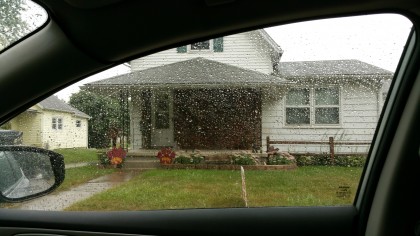
In 1956 my family, then Mary, myself, Mom and Dad lived at 311 E. Monroe Street. I was nine. Diane Bailey lived next door, the Kildow kids and the Meyers kids lived about a block away as did Candace. The Carver boy, whose name I can’t recall, lived at the bottom of the hill, Ronnie Huffman lived a block back toward Lincoln.
311 E. Monroe
These were all modest homes, not Baltic Avenue, but maybe Tennessee, Virginia. Ours had an oil burning stove in the middle of the second room on the ground floor, a grate above it allowed the air to rise to two small bedrooms upstairs. A smallish living room and a kitchen completed the downstairs. In the living room, unusual for this time period, sat a small black and white television, a gift from the owner of the newspaper, The Times-Tribune, for which my Dad was editor.
Summer days and nights found all of us kids out, playing with each other, coming home at supper time or after dark. We had secret forts in the field, empty ground about two blocks away, a baseball diamond in the Carver’s side yard, a hill down which we rode bicycles and sleds, often putting up ramps for jumps. Once it got dark we’d play hide and go seek or kick the can. Sometimes we’d throw rocks up in the air to watch bats swoop down after them. It was not an unusual childhood, not for those times.
I like this frame for the work of the next four years. It’s important to remember that it’s the same work the Tea Party and the Trump have engaged. And they’re doing better right now than we are.
“…recent events, here and elsewhere, revive the worry, expressed by Plato, that populist democracy can readily pave the way to dictatorship. Resisting this threat (and this temptation) is the first duty of today’s patriots.
The Bill of Rights, sometimes taken as a definitive statement of what freedom means, was in fact a hasty appendix to the Constitution and provided only a rough starting point subject to further amendment and continuous interpretive disputes. Instead of a vision of freedom, the founders gave us a framework for an indefinite continuation of their revolutionary struggle over what freedom should mean to Americans.
My proposal is that this endless, rancorous struggle for the soul of America is precisely what we should love about this country. (my emphasis) Patriotism is not sharing with our fellow citizens some anemic idealization of what freedom means. It is a matter of engaging them — with everything short of physical violence, from compelling argument to deft political maneuvers — in the rough-and-tumble of political conflict over how we should understand freedom. This conflict remains our only way of working toward the “life, liberty and pursuit of happiness” our revolution sought. True patriotism now requires not reaching across the aisle; it demands mounting the political barricades.” Rethinking Our Patriotism, Gary Gutting, NYT
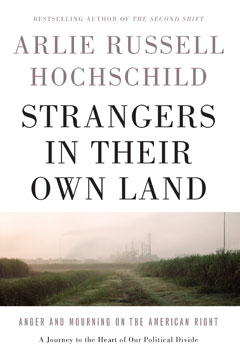
Just finished reading Strangers in their Own Land by Arlie Russell Hochschild. It’s subtitle is: Anger and Mourning on the American Right. I found the book by reading this article, Why We Need Empathy in the Age of Trump. Here’s an excerpt from near the end that points to part of the way forward, according to Hochschild’s research.*
After finishing the book, I’m not so sure there is a way forward for this particular work though I hope I’m wrong.
Here’s why. In my own analysis, shared by many on the left, we failed to address the economic situation of the working class over the last 40 years or so. As a result of that, it was easy for the right to cherry pick them by focusing on so-called “values politics.” Values here meant hot issues like abortion, gay marriage, affirmative action, climate change. By appealing to the baser elements, the fears and anger of the white working class, they were peeled off from their natural political home, the Democratic Party, and inserted, very clumsily, within the big tent of the Republican circus.
lewishine-nationalarchive
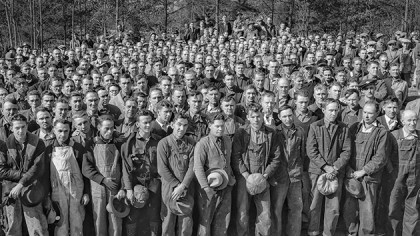
What this simplistic analysis (I’m calling myself out here.) misses is the genuine love of God, church and country that the white working class already had. When the Republicans convinced this constituency that they were the party of Christian (right-wing Christian) values and the only party consistently behind a flag-waving form of patriotism, many (most?) of this demographic switched allegiances, some as early as Nixon’s Moral Majority, some later first as Reagan Democrats, then transforming into Tea Party Republicans.
What I missed, and really shouldn’t have since I grew up in this exact milieux, was the sincerity, the authenticity of the religious and patriotic values of working class whites. These values are more important to them than economic self interest and Hochschild’s book makes this very clear. What happened in the late 20th century was a gradual shift away from economic self-interest voting to voting patterns based on cultural values as well.
The Christian right metaphysics mixed with flag/gun/anti-government passions, honestly held and sincerely believed, makes allying with secular globalists like myself and everyone else in the progressive movement seem most unlikely. I don’t like seeing it this way. It makes me sad and a bit fearful for the immediate future. Perhaps dialogue can help, but when what Hochschild calls the deep stories are so profoundly different, it means the assumptions with which we start the conversation may defeat the effort at its inception.
It still seems to me, however, that policies aimed at working class, high school education or less, Americans must be advanced. As we resist Trump and his gang of mediocres, we also have to stand for something. That something can be economic justice for those left behind by our educational system, by our economy, by big corporations and by automation. It’s important whether or not it convinces the working class white folks of Tea Party/Trump inclinations to shift allegiances. And I fear it won’t.
Still thinking about this, about what might come next. No real good ideas yet. You got any?
* “In fact, they are very friendly toward Bernie Sanders, these people on the far right. Bernie is standing back and asking some big questions. Now, they’ll say, “He’s a socialist. We’re Americans, we can’t be socialists.” But they sense him as a populist. There are possible connections we can make across class—and perhaps re-connect with people we have lost.
We are not looking at that loss. And we feel morally armed to not look at the reasons for that loss, because we are anti-racist, anti-sexist, and so on. Our moralism—our moral convictions—are getting in the way of really understanding people that are making the Democratic Party a shadow of its former self. I think we need to dig deep. That’s the hard thing. It doesn’t mean giving in to it. It’s just the opposite. It means looking at people who feel alien to you, and understanding how they think.
We have to reach out. We need school-to-school crossovers. We need church-to-church crossovers, union crossovers—people on different sides of the political divide learning to listen, and turning their own moral alarm system off, for a little while. They don’t need to turn into somebody else. It’s just listening, and getting smart about what you’ve learned.”
Charlie – The conversation turned towards reality, the nature of human experience, and the essential nature of life as Mystery. I finished this short Stephen King novel this weekend (The Colorado Kid) and really loved the unanswered questions left for the reader at the end of the story. The following is part of King’s afterword which comments on the nature of life and mystery:
“I don’t want to belabor the point, but before I leave you, I ask you to consider the fact that we live in a web of mystery, and have simply gotten so used to the fact that we have crossed out the word and replaced it with one we like better, that one being reality. Where do we come from? Where were we before we were here? Don’t know. Where are we going? Don’t know. A lot of churches have what they assure us are the answers, but most of us have a sneaking suspicion all that might be a con-job laid down to fill the collection plates. In the meantime, we’re in a kind of compulsory dodgeball game as we free-fall from Wherever to Ain’t Got A Clue. Sometimes bombs go off and sometimes the planes land okay and sometimes the blood tests come back clean and sometimes the biopsies come back positive. Most times the bad telephone call doesn’t come in the middle of the night but sometimes it does, and either way we know we’re going to drive pedal-to-the-metal into the mystery eventually.
“It’s crazy to be able to live with that and stay sane, but it’s also beautiful. I write to find out what I think, and what I found out writing The Colorado Kid was that maybe—I just say maybe—it’s the beauty of the mystery that allows us to live sane as we pilot our fragile bodies through this demolition-derby world. We always want to reach for the lights in the sky, and we always want to know where the Colorado Kid (the world is full of Colorado Kids) came from. Wanting might be better than knowing. I don’t say that for sure; I only suggest it. But if you tell me I fell down on the job and didn’t tell all of this story there was to tell, I say you’re all wrong.
This was a weekend without the grandkids, allowing Grandpop and Grandma to decompress, take in some jazz and a movie. We saw La La Land yesterday. I appreciated what it wanted to do, but somehow it came up short for me. The plot seemed thin, the dancing and singing a little flat. A musical about folks trying to make it in Hollywood is not quite a cliche, but very close. On the other hand I like Emma Stone and Ryan Gosling and their acting made the movie for me.
With Saturday night out at Dazzle and Thursday at Gabe’s 3rd grade concert it’s been a big week for us.
Our life has slowly begun to gain traction again after the knee disruption and the divorce. The house on Pontiac closes on February 20th or so and after that Jon will start hunting for a place to buy in Aurora. Final orders for the divorce were finished two months ago and the house is the major remaining marital entanglement. The divorce is on a downward slope now though it will take years to truly finish. Joint custody will ensure that.
The next big event here on Shadow Mountain is my birthday, hitting 70. I’m looking forward to it, feels like I’ve been getting ready for this birthday for a long time. Not sure why. Maybe it means the third phase is now finally and truly begun. No residuals from my early 60’s in this new decade.


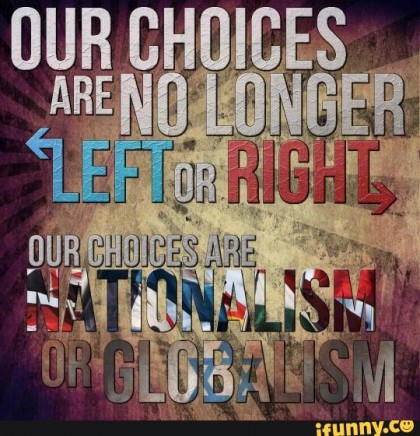 First, the main struggle right now, in both Europe and here, is between globalists, people like me, and blood and soil nationalists, like Trump’s America First. It’s not an either/or, of course, but most of us tend to lean toward one end of a continuum, more concerned about home or more concerned about the world as a whole.
 The bleakness is the lack of good-paying jobs for those with less education. The punishment comes from seeing others getting in line ahead of you for the American Dream. This line-jumping (Hochschild’s analysis), as it is perceived by white working class folks, has been created by the left’s very successful focus on identity politics: women’s rights, LGBT rights, civil rights. Put these two together, the bleakness and the punishment, and it’s no wonder we have a reactionary revolt underway, just look at your Facebook feed for proof.
 Fourth, after reading Hochschild’s book, I’m no longer convinced that a focus on economic policies will adequately address the working class movement toward nationalism. I say this because
 Woke thinking about the subtitle to the book Strangers in Their Own Land: Anger and Mourning on the Right. I realized I knew this one from personal experience.
 Just finished reading
 The Christian right metaphysics mixed with flag/gun/anti-government passions, honestly held and sincerely believed, makes allying with secular globalists like myself and everyone else in the progressive movement seem most unlikely. I don’t like seeing it this way. It makes me sad and a bit fearful for the immediate future. Perhaps dialogue can help, but when what Hochschild calls the deep stories are so profoundly different, it means the assumptions with which we start the conversation may defeat the effort at its inception.

