Category Archives: Politics

Obama’s Prize and Other Thoughts

Fall                                      Waning Blood Moon

See below for big omission**

So Obama got the Peace Prize.  I happen to agree with those who say he got the, “I’m not George Bush.” prize.  Not that that’s a bad thing.  I also agree with those who say that his accomplishments, re: peace, have been underwhelming. Perhaps the prize is prospective.

I am not among those disappointed by Obama’s performance so far, though my reason is general skepticism about the capacity of Presidents to deliver political realities close to my heart.

Specifically, we need universal health coverage with a single payer.  Why?  Oh, c’mon.  Even if you don’t want it for self-interested reasons,  you know why.  We need to pull back from engagement in counter-insurgency warfare.  We don’t know how to conduct these wars without tripping over ourselves.  See Vietnam, Iraq, Afghanistan.  Financial services must get regulation of a type we can and will enforce.  Why?  Again, c’mon. Back to Glass-Steagall at least.

We need sustained and increased funding for higher education since the fate of US prominence in world affairs lies in the realm of technological advancement.  See this article if you disagree.  We also must clean up and shore up Medicare and Social Security.  Again, you already know why.

We also need real and dramatic action vis a vis global warming.  The means are not so important to me though the carbon tax seems to make the most sense.  My only thought about those who disagree with this one is that perhaps they should buy up all that beachfront property.  That would put their money where their mouth is and either they would become fabulously rich or very wet.  Guess which one I think is more probable.

I happen to think, though this is debatable (yes, I really believe the others are not), that a large investment in America’s aging infrastructure is a good idea.

Why are all of these ideas so difficult to realize?  Oh, let me count the whys.  Chief among them is a method of selecting political representatives that got broke long, long ago.  Right up there with this one is the impact of money and interest group politics on the political process after elections.  Another has a corollary in the financial markets:  our cycles of accountability in politics:  2 and 6 years are too short for the magnitude of  these problems.  Thus, solutions experience time-shifting rather than resolution.  And so, ad absurdum.

**Good health may have less to do with our health-care system than you think

I neglected to mention poverty.  The class disparity.  My own recipe here is banks and economic development corporations focused on poor neighborhoods and towns, helping to nurture community-based businesses that provide living wage jobs.  An earned income tax credit–proposed by Richard Nixon–would help, too.

Bachmann makes ‘Worst Person in the World’ list, again

Fall                                                     Waning Blood Moon

Isn’t representative democracy wonderful?

By Ken Ronnan | Published Thu, Oct 8 2009 3:25 pm
michele-bachmann-cuhrazy
Rep. Michele Bachmann, R-Minn., tops MSNBC’s Keith Olbermann’s “Worst Person in the World” list again, this time for comments she made on Fox News Radio about House Speaker Nancy Pelosi getting violent.

The Internet and Personal Exposure

Lughnasa                                 New Moon

Every once in a while the internet jumps out and bites me.  I lost a potential job because I talked about the process on my blog and the congregation thought I had violated their privacy.  Last year on the Sierra Club blog I posted what I thought was obvious information about how our lobbyists planned to work a committee only to discover that it was supposed to be in house.   Monday I posted about the MEP, the Minnesota Environmental Partnership, meeting I attended.  They found it and called Margaret at the Sierra Club.  There was no problem with what I wrote, they said.  Except, they said there was no problem.  Of course, confidential material (which the lobbyist last year felt I had disclosed) is just that, confidential.  In order to retain trust we agree not to break confidence.

This capacity of people to troll the web for whatever they want, especially things that concern them, is a blessing and a curse.  It’s a blessing when it allows a person or organization to track matters of importance to them.  It’s a curse in that it can have a chilling effect on communication.

Margaret has a legitimate issue.  She wonders if I will be quoted or misquoted from my blog and then identified as a Sierra Club leader.  In that sense there is a persona management concern for the organization.  We’ll talk about it tomorrow.

On a related matter, tomorrow I will install an electric fence, a device for making our dogs respect the boundaries we have established for them.  That’s what all this is about:  boundaries.  Boundaries are fluid, shifting from one person’s perception to another’s.  Respect for boundaries is an important aspect of living in community.

Interestingly, it is at just this juncture that liberalism, with its focus on individualism, can run into problems.  Those of us on the bleeding edge of the liberal boundary can tilt toward too much emphasis on liberty, the negative kind that insists only on the right to do what we want, or, contradictorily, toward restrictions on individual liberty to achieve some other virtue, like justice.  This is also the precise intersection where equality, as fundamental an aspect of liberalism as individualism, can create social tension.

In fact if we decide on economic equality as a necessary part of our political program we may move across the line from liberal to socialist, a communitarian model for economic justice.

Actions for or on behalf of the environment demand human action and these demands often create the perception of curtailed liberty.  Why can’t I hunt whales?  Why can’t I build a dam where the salmon run?  Why can’t I shoot the wolf I believe killed my livestock?  Why can’t I drive my Hummer?

Black Swan

Lughnasa                            Waning Harvest Moon

“The deepest definition of youth is life as yet untouched by tragedy.” – Alfred North Whitehead

Whitehead captured my inner sense of reality and did it over and over.  I’ve told many times the story of my mystical experience of the unity of all things after having left a philosophy class studying Whitehead’s process metaphysics.  The sensation moved up inside me, breaking free of an inner barrier and releasing itself into my conscious awareness.  It was as if I had touched, heart to heart, the essence of the universe and learned we shared all this, all of it.

That moment still informs my umvelt, my self-world, and has left me at ease with many variations on the theme of human/universe interrelationships.  I suppose it solves the question of life after life in that the kind of literal interweaving that made tactile sense to me in that one moment suggests the enduring nature of all things, in all things, a sort of value-free ongoingness.  How that would feel or what it could mean for, say, consciousness is not clear to me, nor does it need to be.

This reminds me of my Black Swan story.  A man wrote a book, a management/leadership type book that those groupie CEO’s read and absorb, sort of cotton candy for the narcissist in them all.  In this case a Black Swan is any infrequent, unlikely event that, when it happens, changes everything.  The Great Recession has Black Swan notes.  So does the meteor strike that created the Chicxulub crater and wiped out the dinosaurs.  Anyhow, you get the idea.

I had a Black Swan enter my life with a crash in 1963 when my family visited, as we often did, Stratford, Ontario to attend the Shakespeare Festival.  During some non-theater going time, I had the opportunity to strike out on my own and I chose to go to the Black Swan coffee house, a charming little place alongside the Avon River.  The folk music revival was in full voice and a folk musician was on the Black Swan’s tiny stage that afternoon.

During the performance I heard the first critical remarks about the United States and, in particular, the Vietnam war which had just begun to get noticed.  The actual content does not stick with me, instead what does is the electric shock, outrage in fact, at having my  country criticized.  Of course, we were in Canada, somebody else’s country and they were under no obligation to genuflect at the altar of American exceptionalism.  And they didn’t.

This was a transitional moment for me, a moment when for the first time, I realized the US did things that others found repugnant, even abhorrent.  Those were the still young days of the expanding civil rights movement and the first shock waves that would become the movement.  And it happened for me first at the Black Swan.

Here’s an odd note I found looking up the Black Swan:

The 19th Black Swan Revival at Knox Presbyterian Church in Stratford
“The Black Swan Coffee House Revival pays homage to the original Black Swan event of the 60s and the Perth County Conspiracy (does not exist). All proceeds go directly to Stratford/Perth Shelterlink, the organization responsible for the revival and an active member in supporting and fighting for homeless and at risk youth in Perth county.
Good music, good times, and a worthy cause…a night to remember folks!”

Lughnasa                                       Waning Harvest Moon

Yesterday and today were full of new information, new faces.  Both days challenged my capacity to sit in one place for a long time.  The 40+ Aeron chairs in the Minnesota Foundation’s board room made finding a good chair easy and did make the day more bearable than the plastic backed metal chairs in the Northstar Ballroom.  Both days were long and challenging mentally.  A good thing.  But tiring.

Tomorrow Kate and I go see our financial planners, I call it visiting our money.  We want to discuss how they will generate cash for our payouts and have them run them run our projections using a 4% drawdown rather than the 4.6/4.7% they used.  This will give us a new and hopefully longer time horizon before our money runs out, but it will also shrink the amount of money available each year.  This is a trade-off than another consultant, Ruth Hayden, says is necessary since we’re all living longer.

Unless you are very wealthy, living large and living longer are incompatible.  That’s not to say we will, in any wise, be hurting in retirement; it does mean the cruises, trips to Hawaii and expensive purchases will have to be truncated.  Bearable.  Our life does not revolve around luxury.

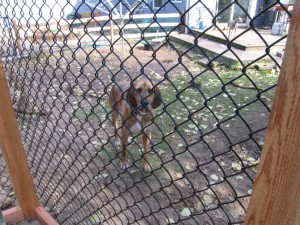
The solution to our fence jumpers, according to Junior Lehman, the breeder and caretaker for a large pack of hounds, is an electrified fence.  I thought this was most likely the cheapest and easiest solution, but until I heard from somebody with some experience I didn’t want to spend money on it.  Now it will be off to Fleet Farm and hopefully we can begin letting Rigel and Vega outside again to romp and play, develop as dogs.

Give Me a Good Balance Sheet

Lughnasa                                    Waning Harvest Moon

Back from a day of hard rock mining,  a lot of rock and little roll.  One of the criticisms of the environmental movement focuses on its obsession with chemistry, geology, climatology and animal living conditions to the exclusion of human concerns.   The session today on Polymet Mining’s proposal to put a copper mine near Minnesota’s Iron Range proved the point, though it would also have applied to the industry representatives who were there as well.

This was a day of law, FeS2 and FeOS2.  A cascade of copper, nickel, palladium and platinum tinkled onto the audience.  This fight, and it is a fight, has clear sides and the sides have been at it long enough that they know each other by first names and recall each others data from meetings in the past.

Not the cozy day, though, that might seem natural in a Minnesota nice crowd like the one gathered at the Northstar Ballroom in the St. Paul Campus Student Center.

The information presented today may have been old news to many in the room, but it was new to me.  This is a complex issue for several reasons, the chemical reactions that lead to sulfuric acid in the groundwater being the cause celebre, but far from the only one.  There is, too, the tendency of mining companies to exhaust a resource, close the mine and go bankrupt after loading the assets onto another corporate entity.  The tax payers get stuck with the clean up bill.

In addition the cyclical nature of metal prices accentuates the boom and bust nature of resource frontiers, giving the employment situation a roller coaster ride of high times segueing into desperation.

In the end the information that impressed me the most came from a Montana economist named Thomas Powers.  He made the point first about benefits always being trotted out and high-fived while the costs associated with mining get set off to the side.  I came away convinced that if we could get a decent balance sheet for the life cycle of the Polymet plant, public costs and public benefits, that we would have a compelling argument for stopping this mine.

Just another day in the education of a neophyte environmentalist.  But a good one.

Hard Rock Mining and Minnesota

Lughnasa                            Waning Harvest Moon

Up for a bit then out of the house to chase down the wandering puppies.  Again.  Sigh.  This is a problem still in search of a solution.  Harnesses help but the one who needs them most, Rigel, slips out of hers with the ease of a banana escaping its peel.  We have other solutions on tap:  fence, microchip, tags, better harnesses, conversations with our vet and the breeder, but until we come up with something that works we have to alternate them inside and out.  That’s a pain and still requires surveillance.  Oh, well.  We wanted puppies.

Today is a forum on non-ferrous mining in Minnesota.  In other parts of the country like Colorado, Montana and Nevada for example it’s called hard-rock mining.  The degradation caused by this mining includes sulfuric acid drainage into the watershed along with heavy metals.  There is no need to wonder about the devastation caused by this kind of mining.  All you have to do is visit sites in Colorado and Montana.  The question now is whether this kind of mining can be made safe and is the risk to Minnesota waters worth testing such a claim.

This issue has a lot of complicated vectors:  geological, industrial, metallurgical, chemical, hydrological, environmental, political and economic.  My learning curve about it is still pretty steep so I’m looking forward to this forum as a place to advance my knowledge.

Politics in Minnesota

Lughnasa                                     Waning Harvest Moon

I’ve now done a good bit of reading for the lay of the land meeting today at the Minneapolis Foundation. Sponsored by the Minnesota Environmental Partnership it will, as I said the other day, try to establish the real world contours influencing the legislature this year.  Politics In Minnesota (their page handicapping the 2010 Governor’s race) is a great resource for up to the minute inside political news.  It has a free newsletter distributed daily and a pay subscription to a weekly digest that goes deeper and does analysis.

There are also twitter aggregators and blog aggregators for Minnesota politics.  I’ll post links to them later in case you have an interest.

Should be a fun day, except I’ll miss my nap.

Impacts on 2010 Legislature. First Draft. Notes.

Lughnasa                           Waning Harvest Moon

Just a few notes so I don’t forget.

Context for this coming session of the legislature:

1.  2010 Governor’s race.

2. Deficit will become larger and impact state budgeting more.  Possibly drive tax increases.

3.  1&2 will make caucus politics chaotic.

4. Legacy $.  Could produce a they got there’s already attitude for env. issues

5. Employment picking up on the range.  Might take some pressure off the mining issue.

6.  Unemployment generally remains high.   Blue-Green Alliance has opportunity.

Water and Politics

Lughnasa                             Waning Harvest Moon

Kate took her ailing sewing machine up to St. Cloud.  She bought it there.  On the way home she brought maid-rites, a taste of Iowa burger.  Maid-rites have a crumbly hamburger instead of a patty, a little bit like sloppy joes without barbecue sauce.  Kate had not been far from home for several days with this illness.  She’s on the mend now.

The new plantings, shrubs and trees, need water these next few weeks, before it gets cold.  Their roots will uncurl and extend into the soil, go deeper and wider.  By next spring they should need no extra care.  That’s part of the idea behind permaculture, a maintenance free or low maintenance landscape.  Permaculture achieves this in several ways.  Plant guilds, plants that complement each other planted together, and plants native to the eco-system are two primary strategies for achieving this goal.  Productive plants, aided by plant guilds, and native to the region make them naturally disease resistant and adapted to the particular moisture and soil requirements of your site.

Even so, they still need to get established, just like all those college freshmen throughout the land, uprooted from home and having to become part of a new place.

All this meant really long hoses since we have now begun to plant beyond the range our irrigation system.  Since these plants won’t require additional water in the future, it doesn’t make sense to provide new irrigation.

A few limbs and one tree also had to come down to make sure some of the new plants thrive.

I checked the bees today, too.  Still little honey.  I’ve provided the hive and the bees have worked all season, so I’m not unhappy.  Even so, I hope next year I can get some honey.  Don’t know right now what I need to do differently, if anything.

A good part of the afternoon I’ve spent reading Politics In Minnesota weekly reports, a subscription service focused on the ins and outs of Minnesota politics, especially at the state level.  On Monday I’ll attend a Minnesota Environmental Partnership meeting that will try to assess the political context for environmental issues at the legislature next year.  I’m reading ahead.  The context is critical when considering electoral and legislative politics.  Not so much when pushing issue campaigns, at least not in the early stages.  To win, though, requires sensitivity to the political context in which the issue must be resolved.