Category Archives: Bees

Oh, Well

Lughnasa                                                                  Moon of the First Harvests

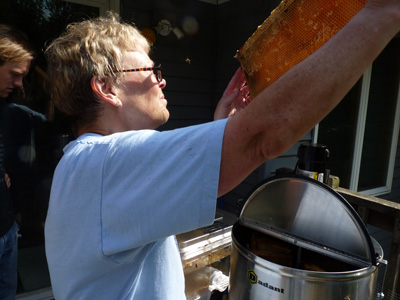
Drove out near Stillwater today to Nature’s Nectar, a bee supply store.  Picked up some miticide and some honey robber.  Also, some knowledge.  Geez, hard to believe I missed in this school.  “Never,” said Jim, proprietor and keeper 0f 75 colonies, “Never do extraction outside.”  Oh.  Well.  I know why.  The bees all come and want some.  But doing it inside never seemed like an option.  Now, all of a sudden, it does.  Cardboard, plastic sheeting and everything inside where there are no bees.  Would be way simpler.

(note:  outside)

On the way out the clear blue sky with cirrus horse tails high and wispy kept firing memories of Canada.  A magical place, in my experience, a place I could live easily.   This sky, wonderful.

The First Harvests Continue

Lughnasa                                                                      Moon of the First Harvests

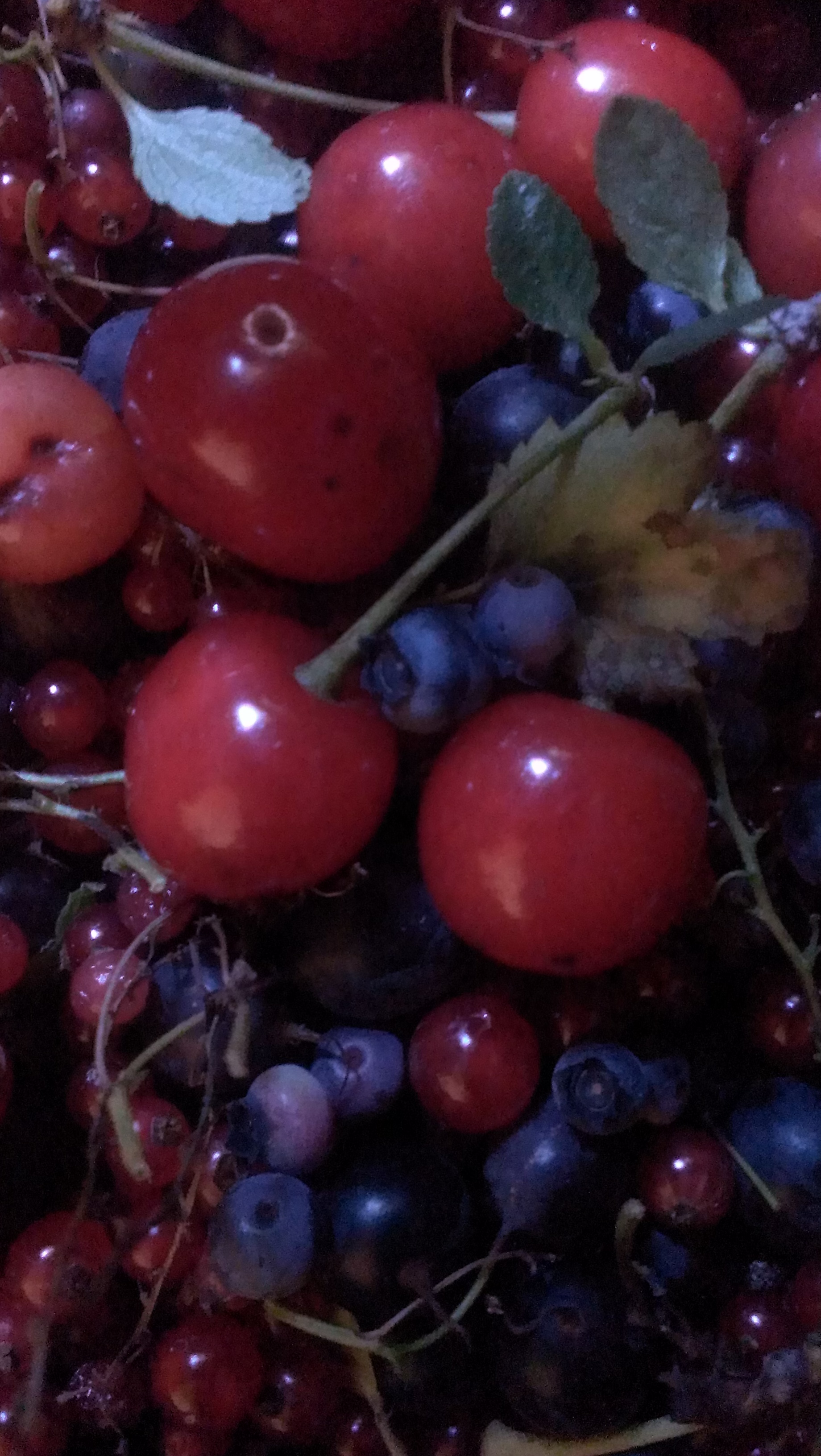
Jobs I would not want to have.  Commercial harvester of either currants or gooseberries. Currants bend you over and twist your arms and legs to get into position.  Gooseberries do all of that, plus the plant fights back with alien-simulating probes.  I’m going to find out what the evolutionary advantage of spines are.  We have raspberries, gooseberries and black locust, all spiny.  The gooseberries and the black locust put off humans and the raspberries are no fun.  What’s the point?  Ha, ha.
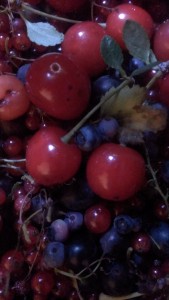
There were enough currants, gooseberries and the last of the cherries and blueberries for Kate to make what she calls tartlets.  These are carb light, much more so than pies and very tasty.

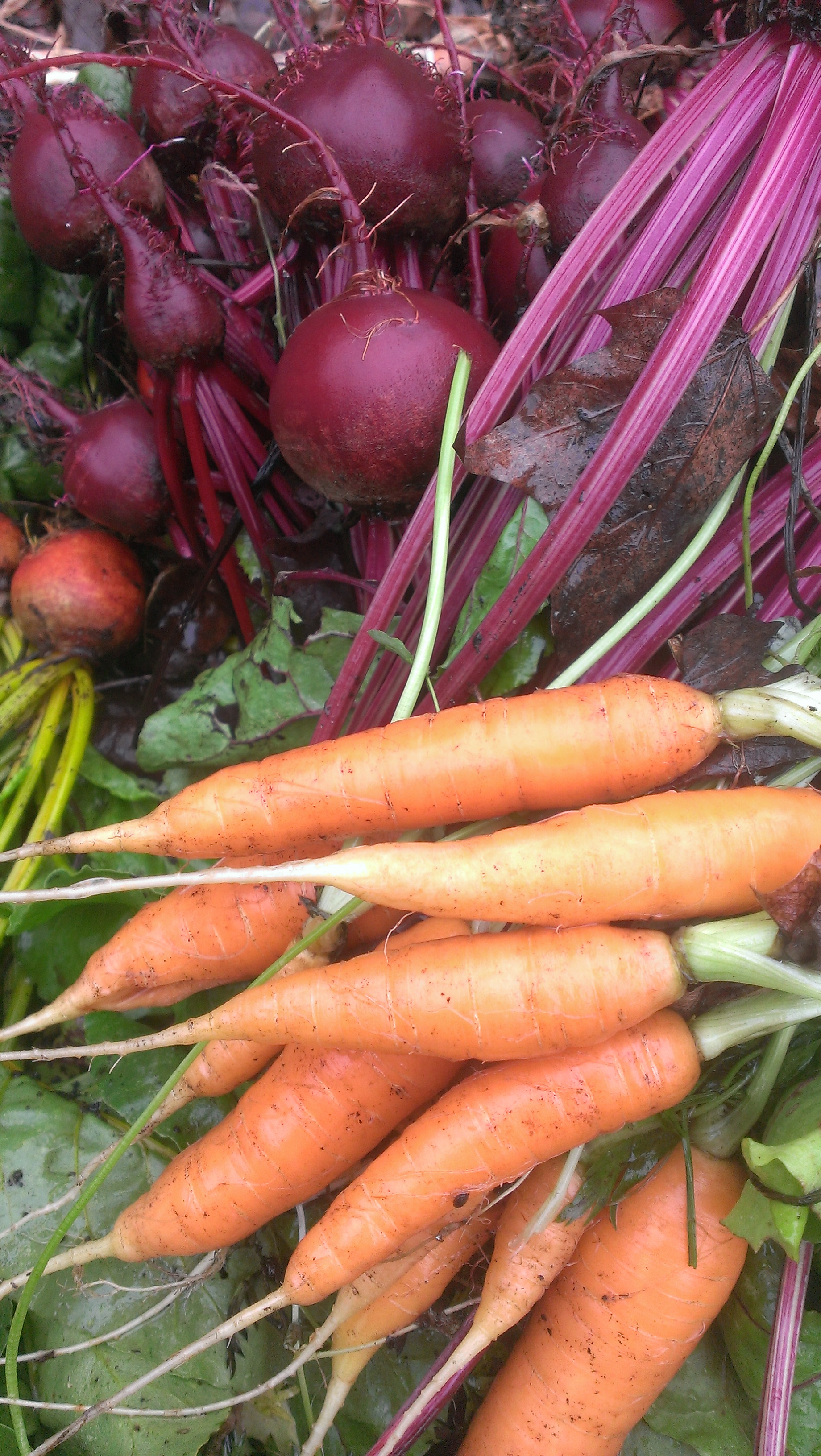
We’ll probably pull more carrots and beets today or tomorrow, too.  Today or tomorrow as well I’m going to check the honey supers, just to see where are and I may head out to Stillwater to get a mite treatment.  This is an organic method that is food quality so there’s no negative effect on the honey.  I’m hoping this will increase my chances of over-wintering this strong colony.

The new bee area will require some chain saw work, creating both space and wood for the fire pit.  I’m thinking, after writing up Lughnasa yesterday, that a harvest bonfire on the fall equinox (Mabon) would be fun.  I’ll talk to Kate and see what she thinks.  Meanwhile we adjust to a smaller house, a leaner pack.

One example, then I’m done.  When Kona was young, we had her tested by a cardiologist who found a heart murmur.  They prescribed vasotec twice a day.  We gave it to her wrapped in sliced turkey.  I’ve mentioned this here before.  Since dogs understand fairness, that means everybody gets a slice of turkey, before bedtime and after the morning feeding.  Kona is dead now so there is no longer a reason to continue the turkey aside from the fact, and a big deal, that all three dogs have never known any bedtime ritual that doesn’t include the turkey.  We’ll keep on with it.  A good example of how traditions get started.
 

Bee Diary: July 25, 2013

Summer                                                                  Moon of the First Harvests

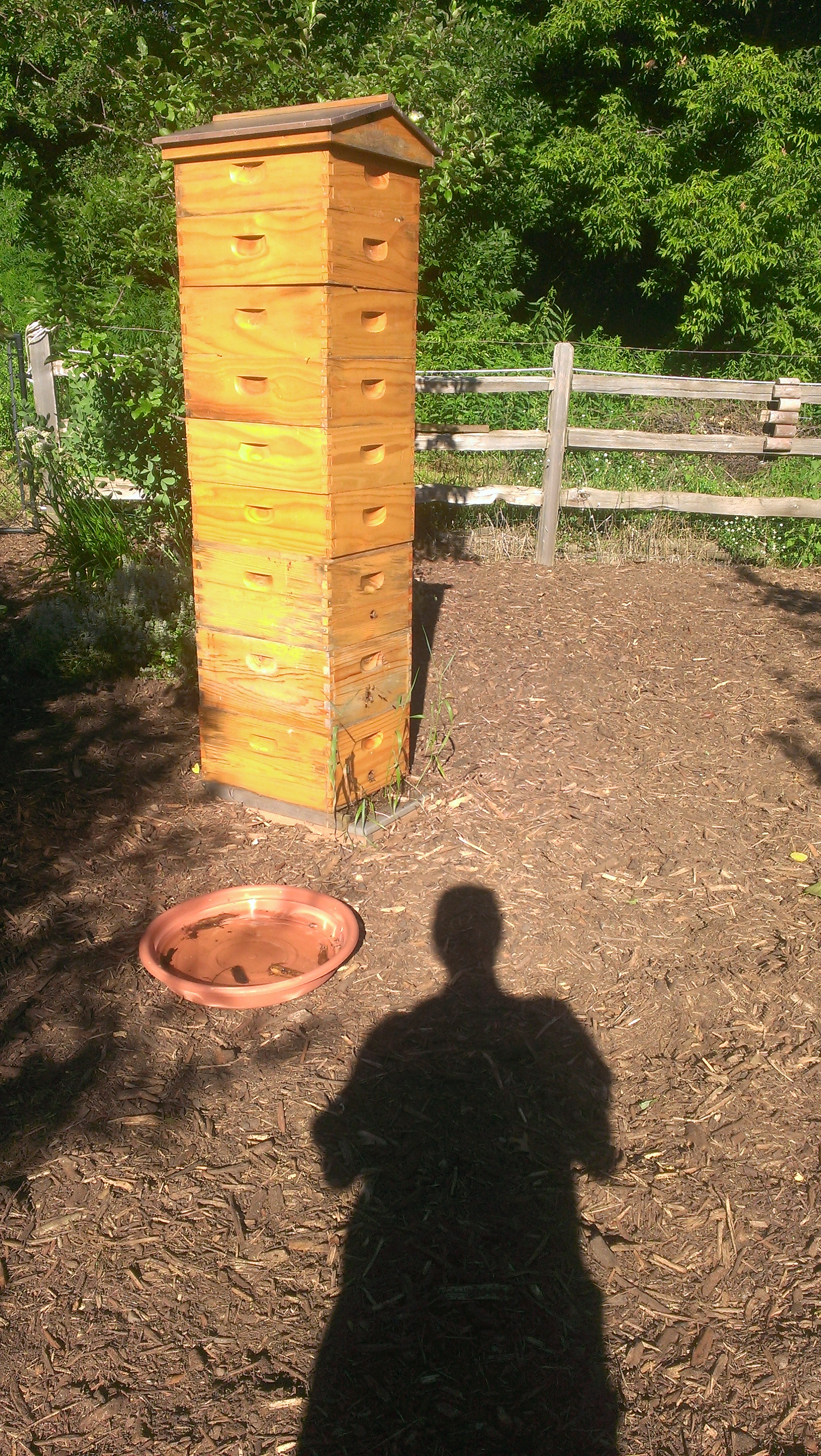
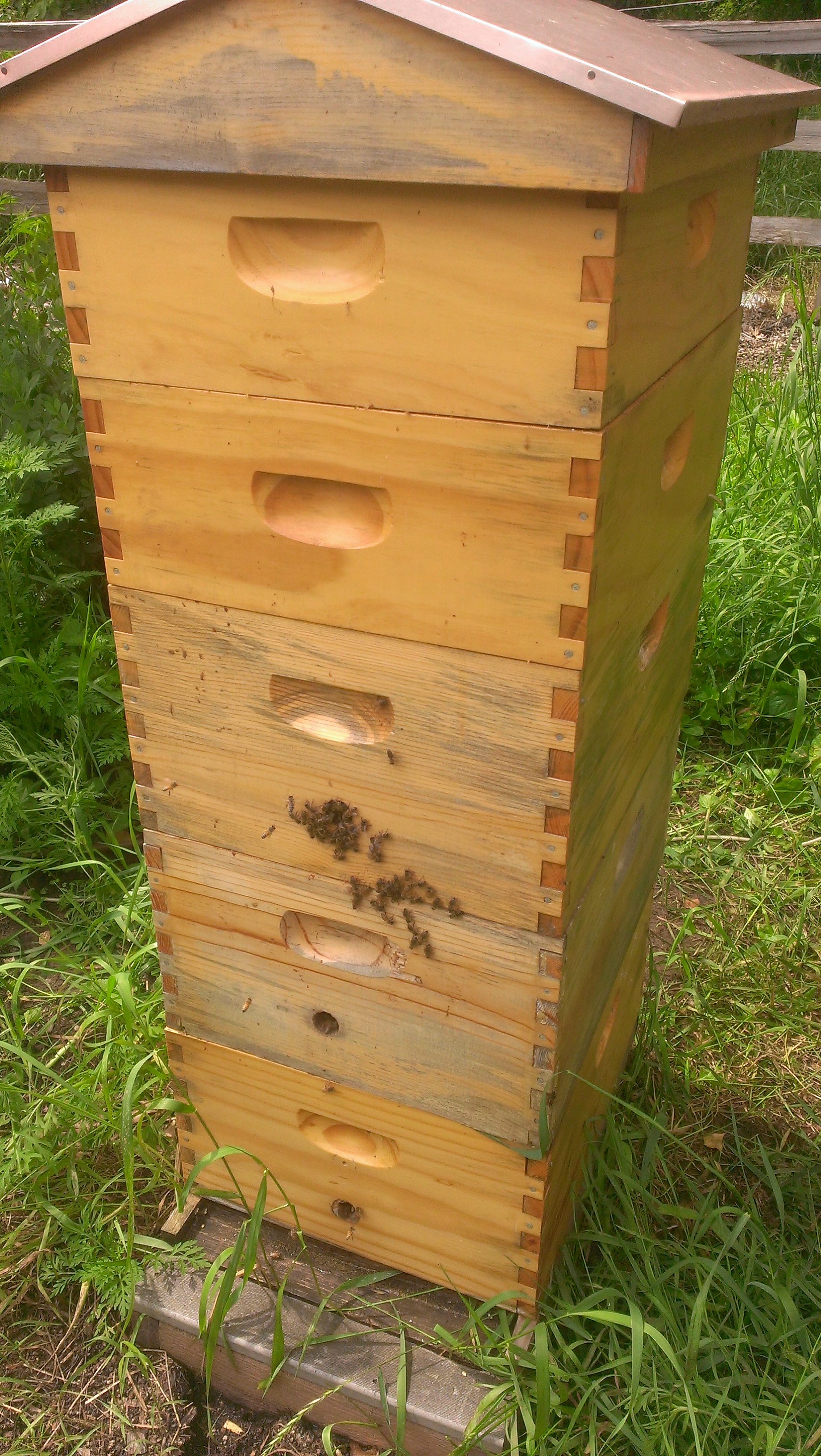
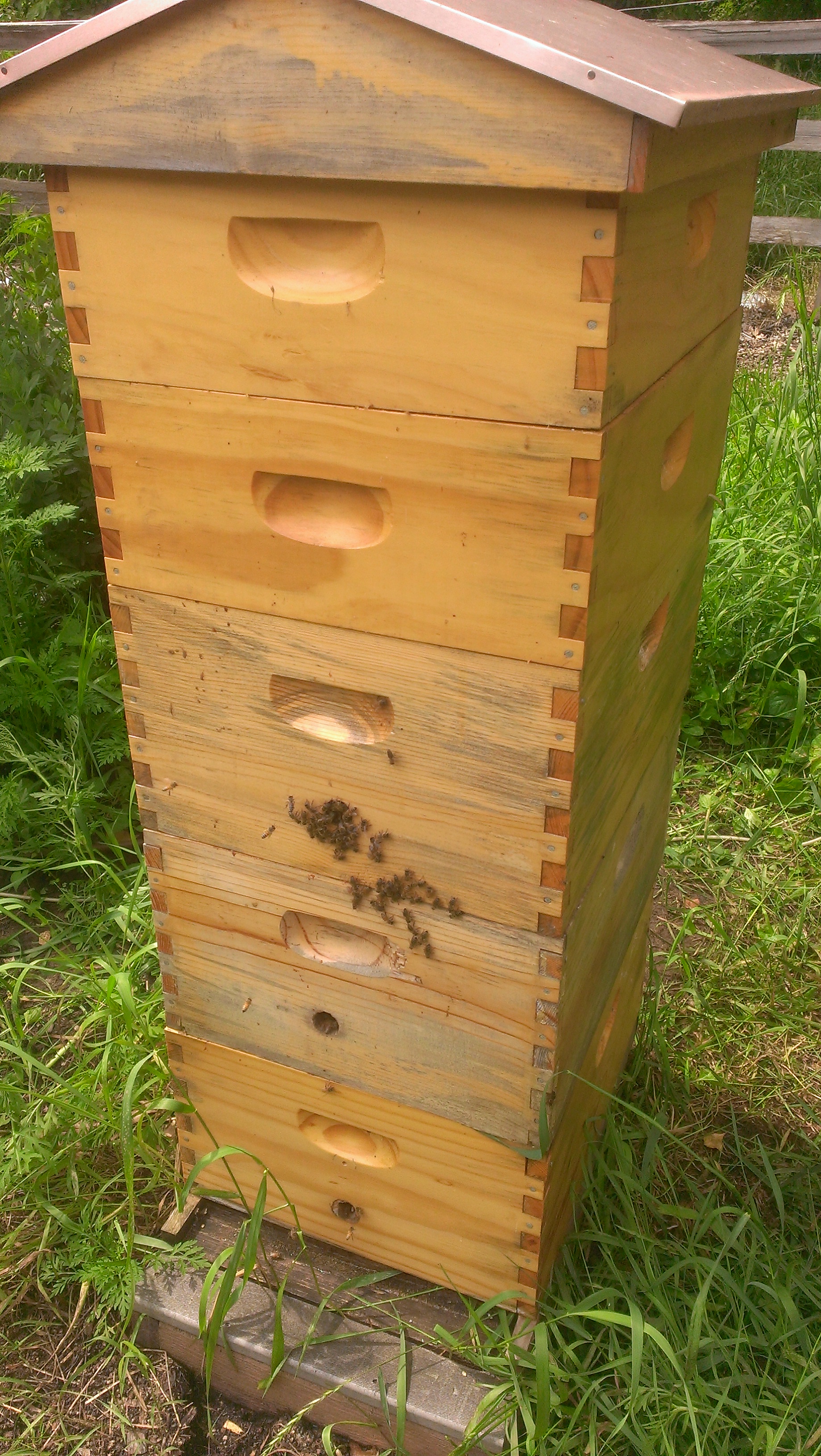
As you will see in the picture below, the colony now has six honey supers. This means beekeeping is over until the honey harvest since I won’t add more supers and I don’t inspect the hives during the nectar flow.

This year we plan to pay close attention to the varroe mites and treat them if necessary.  I hope that will increase the likelihood of this colony surviving the winter, giving me two colonies for next spring.  I have a new site picked out for the bees.  It has southern exposure, protection from the northwest winter winds and is close to the honey house.  I will move the hive in the winter though I plan to prepare the site in the fall.  My goal going forward will be to keep four hives, two parent colonies (honey producers) and two colonies for overwintering, then dividing in the spring.


Bee Diary: Honey

Summer                                                             Moon of the First Harvests

A possibly record honey harvest.  From just one hive.  Not sure how to account for the situation but this plucky little colony has put weight (honey) in all four honey supers, at least one is full, and that meant I had to add a fifth and sixth.  The colony plus supers now exceeds my 5′ 7″ so I had to use a ladder to add the last two boxes.

(Artemis Hives titular deity)

When I went outside today, sweatshirt on (for the long sleeves and bulk), gloves (I am trainable.) and the veil, it was like moving in pea soup.  It was the heat and the humidity. Caring for multiple hives in this kind of weather would be brutal.

BTW:  You’re not considered past the amateur or hobby level beekeeper until your number of colonies passes 50.

Bee Diary: Ouch!

Summer                                                               Moon of the First Harvests

Slow learner.  Yesterday, in the blistering heat, Javier and his brother and another worker dug up grass in our orchard, a job for which they will be well compensated, but still under difficult working conditions. They did choose the day, btw.

But.  In the orchard I have my one bee colony.  I decided to help them by clearing out the grass in front of the hive after smoking the bees.  Smoked the bees, knelt down and began using my Japanese weeding knife to pull out clumps of grass.  Fine.  Then I got closer to the hive where some of the girls were hanging out on the ground, enjoying the cool sand there.  I had put on the veil (all the stings on my head two years ago convinced me that was a good idea.) but no gloves.

This won’t take long.  He thought.  And, yes, soon after I began digging up the grass near the lounging workers, some of them got up from the sand and lanced my left hand.  Ouch.  One sting right on the fleshy part of my thumb hurt like, well, like ouch!  So, this is the way the slow learner gets the message, always always always wear gloves if digging in front of the hive.  In behavioral psychology they call this aversive conditioning.  It works.

Movies

Summer                                                           First Harvest Moon

More Than Honey, a movie by a Markus Imhoff, is a cinematic marvel.  He worked with special cameras and slowed speeds down so bee activity could be seen in a human time frame.  He also followed bees with mini-helicopters and high speed cameras fitted to endoscopic lenses.  As a result, you can clearly see the bee put out a rear leg as a rudder.  You can see the telescoping proboscis that feeds the honey into the cell for storage.  You can see the drone mate with a queen in mid-air, then fall to earth, dead.

Imhoff gives, in my opinion, the right answer to colony collapse disorder:  insecticides, habitat loss, disease, mites, stress and inbreeding.  It’s multi-factorial and therefore difficult to resolve.  He also introduces us to two Americans who show two different sides of bee-keeping, one a North Dakota migratory bee-keeper, who trucks his bees in a circle summering in North Dakota for honey, then, for example, to California for the almond crops and after that Washington for the apples and apricots.  The other is a Tucson bee-keeper who has begun to keep Africanized bees because their immune systems are stronger, they make great honey and they can live in harsh conditions.

Well worth seeing but only at the Lagoon for one week starting today.

When we came home, we watched another movie: Redemption.  This is the story of Stan (Tookie) Williams, founder of the Crips.  It follows his life in prison as he gradually changes from hardened thug to anti-gang activist through the medium, at first, of children’s books.  A good movie, not a great movie.  What it does do well is give a context for the rise of the Crips and the difficulty in reversing a life of unrelenting savagery.

Bee Diary: July 8, 2013

Summer                                                             New (First Harvest) Moon

Checked the bees this morning and to my happy surprise found one honey super full and the second with weight.  I added two more, shifting the full one and the partially full one to the top and the empties to the bottom.  I also added a queen excluder between the three hive boxes and the honey supers.  This prevents the queen, who should still be in the bottom or second from bottom hive box since my reversal, from laying brood in the honey supers.

(pic:  the colony with two honey supers on last week.  I added the second two today)

The nectar flow is running strong right now and the colony is also strong.  The right combination.  “Nectar flow is when one or more major nectar sources are blooming and the weather is cooperating, allowing bees to collect the nectar.”  Sweet clover is blooming now as well as

Bee Diary: June 29, 2013 An entry for Ruth

Summer                                                                          Solstice Moon

A set of photos for Ruth, my bee helper.

Ruth, I was sure glad you and Gabe and your Mom and Dad came to visit.  I’m going to be putting those stones in place for steps in the fire pit as you suggested.  You might also be interested to know that we got the lights working for the playhouse.  A little late, but soon enough that your grandma plans to hang the chandelier crystals.

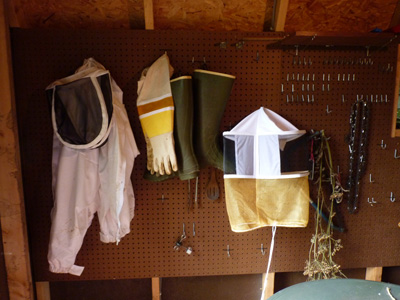
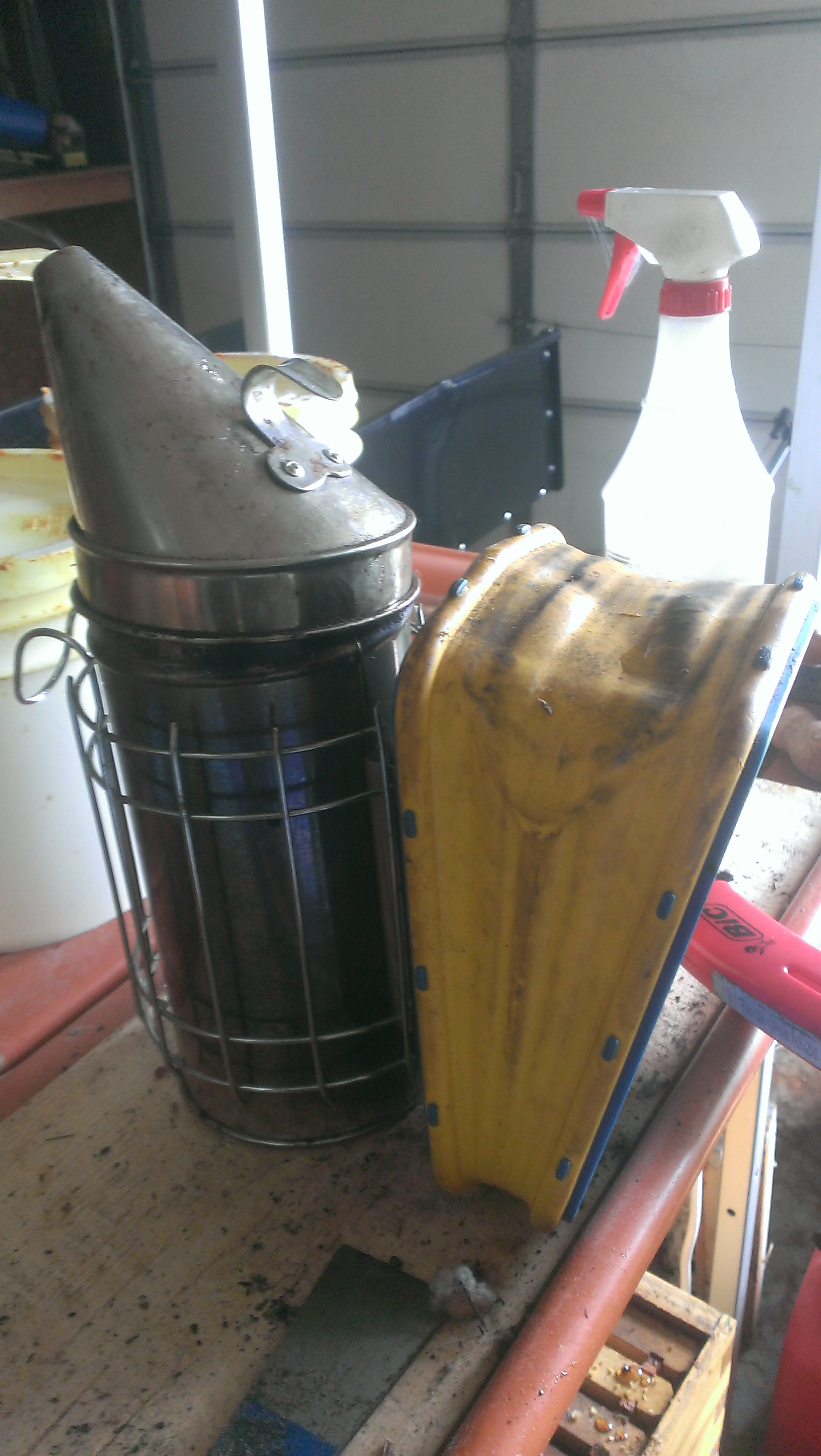
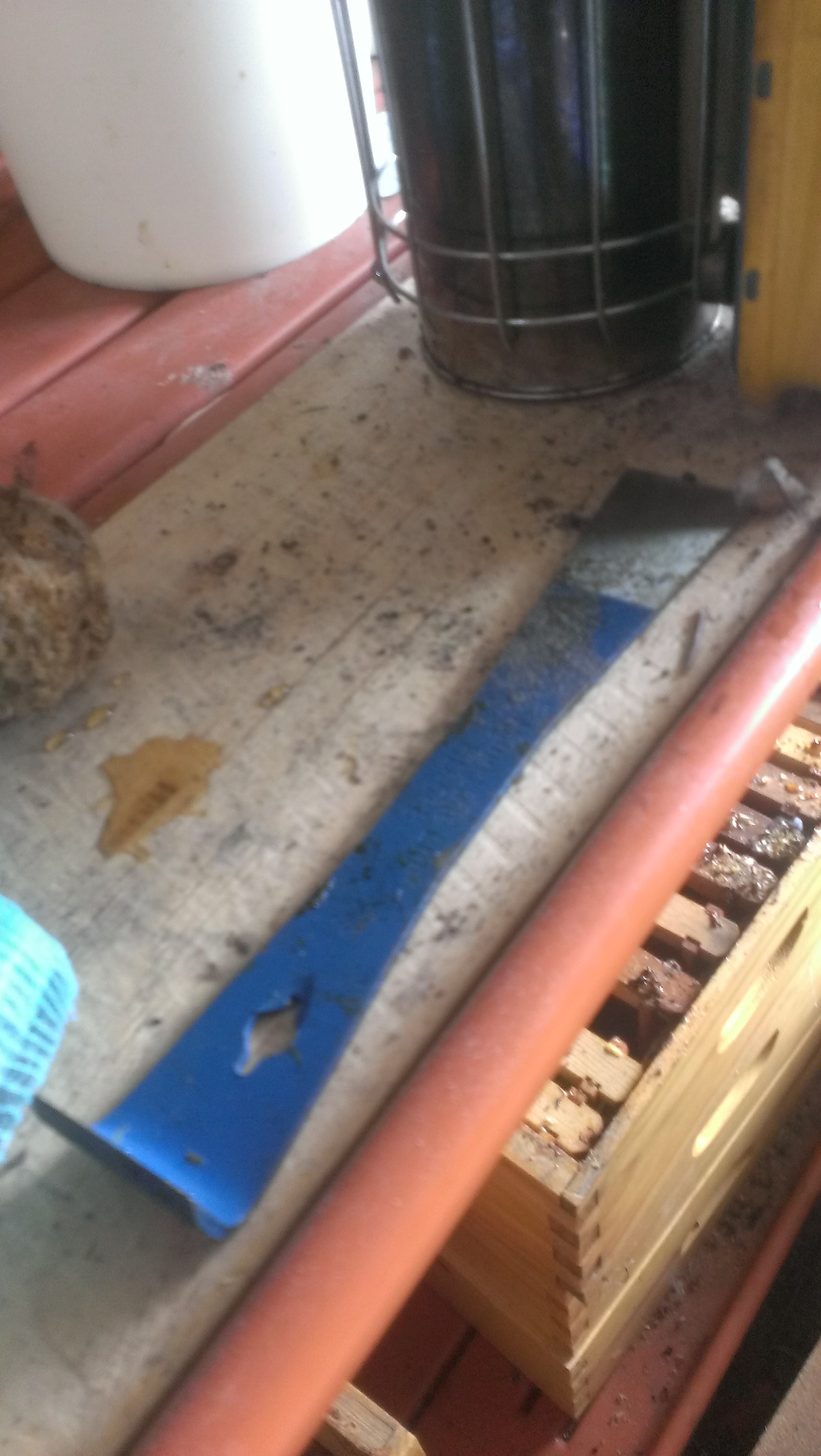
Here’s a few photographs to explain what happens next with the bees.  You might remember we used the smoker, right?  The smoke calms the bees down.

We also used the hive tool to separate the frames and to lift up the hive box to check for swarm cells.

This week, a week after you and I checked the bees (well, a week and a day), the nectar flow is about to start.  That’s when the bees make honey to store over the winter.  Lucky for us they make way more than they need.  That’s why we can harvest honey in September.

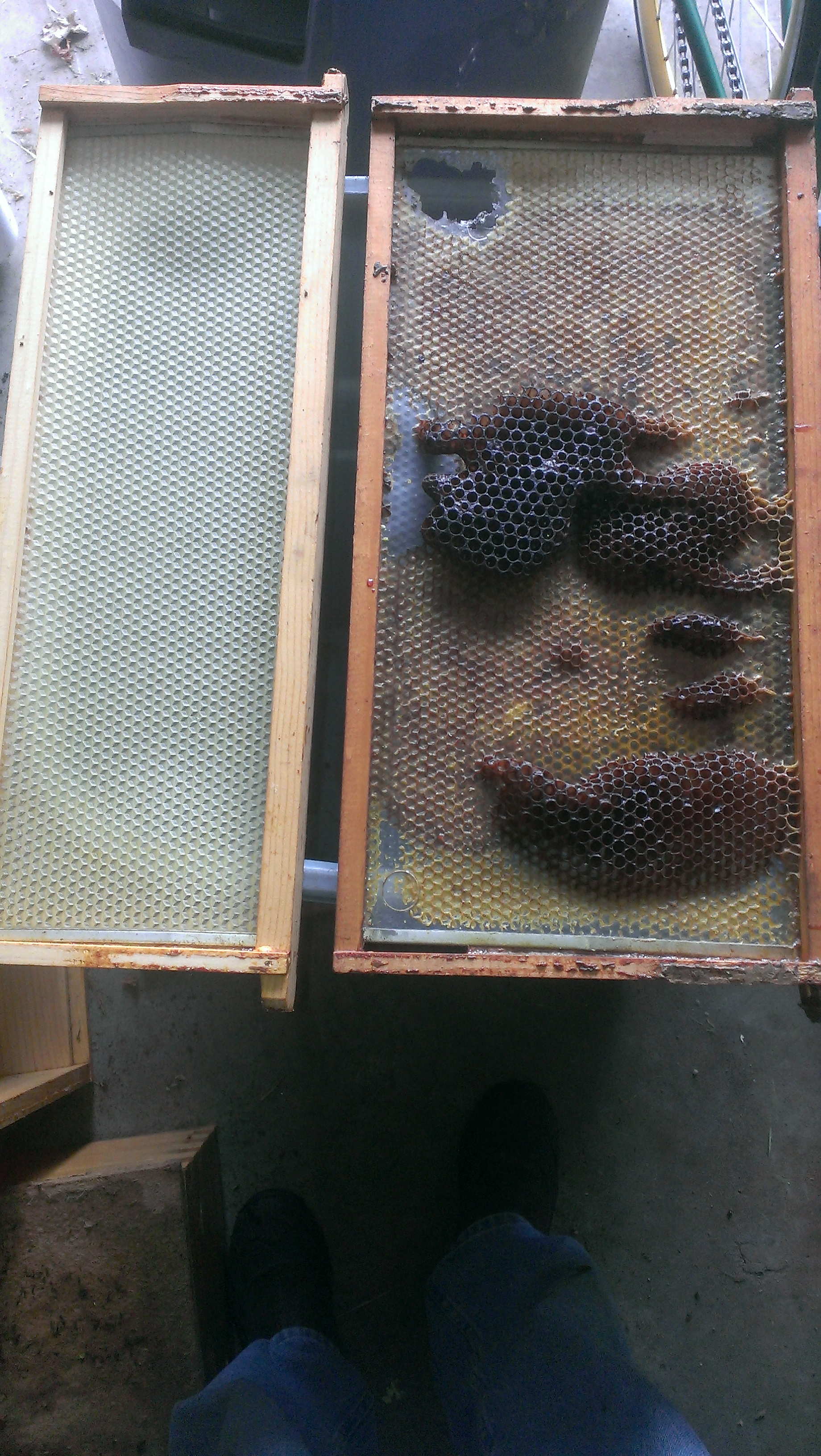
To collect honey to harvest in our honey extractor we first have to put on boxes called honey supers.  They have frames smaller than the hive boxes that you saw.  Here’s a picture of both of them.  Which one is the honey super frame?  The one on the left or the one on the right?

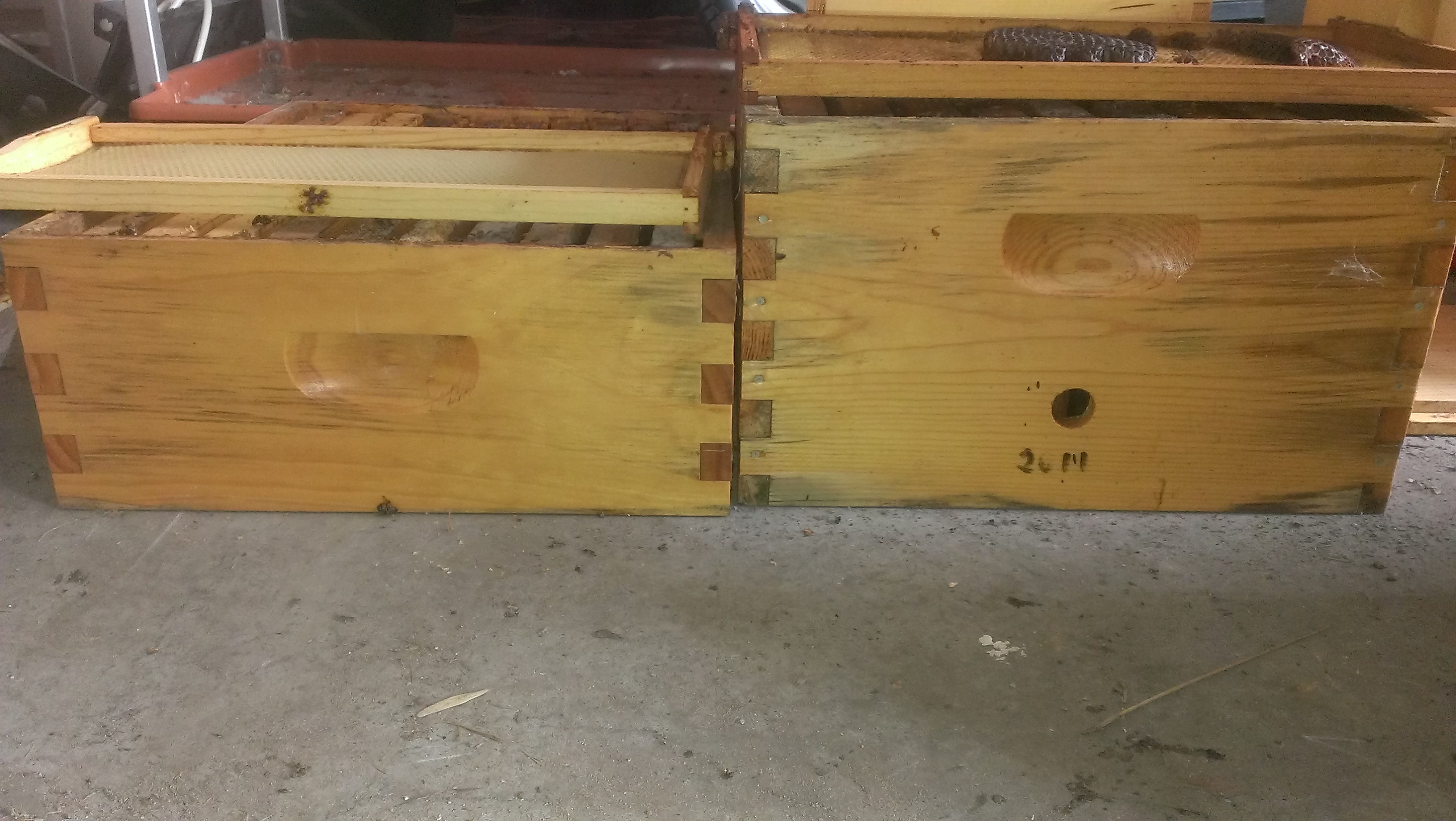
The honey super is smaller than the hive box.  It’s half as big.  How many honey supers would make up one hive box?  Here’s a picture of both of them.  Which is which?

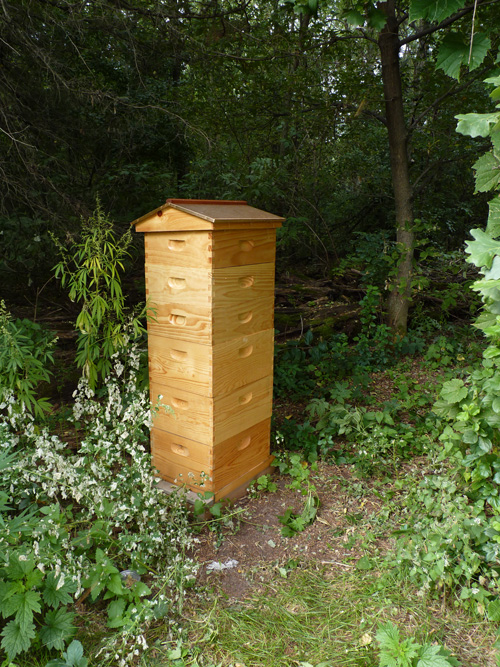
This is a picture of the colony (3 hive boxes) with two honey supers on it.  It’s as tall as you are now!  In some years we can put as many six or eight honey supers on.  Imagine how tall that would be.

Here’s Grandma and Grandpa saying we love you all!!!

More Than Honey

Summer                                                                              Solstice Moon

This movie is coming to the Lagoon on July 12.  I’ve lost 4 colonies in the past two years.  This is not an abstract or faraway issue.  It’s right here.  At home.

More Than Honey

“Over the past 15 years, numerous colonies of bees have been decimated throughout the world, but the causes of this disaster remain unknown. Depending on the world region, 50% to 90% of all local bees have disappeared, and this epidemic is still spreading from beehive to beehive – all over the planet.

In the US, the latest estimates suggest that a total of 1.5 million (out of 2.4 million total beehives) have disappeared across 27 states. In Germany, according to the national beekeepers association, one fourth of all colonies have been destroyed, with losses reaching up to 80% on some farms.

More than Honey – Markus Imhoof (Official Trailer) from CIBER Science on Vimeo.

Scientists have found a name for the phenomenon that matches its scale, “colony collapse disorder,” and they have good reason to be worried: 80% of plant species require bees to be pollinated. Without bees, there is no pollinization, and fruits and vegetables could disappear from the face of the Earth. Apis mellifera (the honey bee), which appeared on Earth 60 million years before man and is as indispensable to the economy as it is to man’s survival.

Should we blame pesticides or even medication used to combat them? Maybe look at parasites such as varroa mites? New viruses? Travelling stress? The multiplication of electromagnetic waves disturbing the magnetite nanoparticles found in the bees’ abdomen? So far, it looks like a combination of all these agents has been responsible for the weakening of the bees’ immune defenses.”

This last position is the one taken by Marla Spivak of the University of Minnesota Bee Lab.  She won a MacArthur Grant for her work.

Bee Diary: June 22, 2013

Summer                                                                           Solstice Moon

After visiting the bees with Ruth yesterday, I got on a couple of websites just to review this time of year.  Discovered that the nectar flow will start in 10-15 days, a bit delayed by the cool spring, which is good news for us beekeepers because it means the hives have had a good length of time to build up a colony.

(the girls in the nursery–brown capped cells–and adding pollen–the cells with yellow deposits in them.)

This year I just have the one colony, but it has energy to burn.  Bees flowing over the tops of the frames, building out frames of honey which I’ve harvested. This colony will almost certainly fill up the third hive box with honey and have plenty of work left over to produce honey in honey supers.  Unusual, but not unheard of for a first year colony.  In a normal year I would have to wait until next year to harvest honey after I divide this colony.

Went back to the hive boxes today to check on swarm cells which I didn’t do with Ruth yesterday.  I tipped up the hive boxes, checked underneath and saw none of the long cells that mean a colony has decided it’s time to find a new place to live.  Whew.

I did a reversal, putting the bottom hive box in the middle, the middle box on the bottom and the third hive box which I put on yesterday, back on top.  In ten days or so I’ll put a queen excluder on the top box, then begin adding honey supers two at a time.

It may be that I hit a learning plateau back in the late winter, no doubt pushed by the thirty to fifty stings I got at the end of the harvest two years ago.  I was ready to give it up, throw in the hive tool, hang up my bee suit.  You know.  Glad I didn’t.  I’m having more fun with it this year than I ever have.