Category Archives: Our Land and Home

Blood Moon Risin’

Fall                                                                                   Falling Leaves Moon


Add blood moon to the adjectives in front of the Falling Leaves Moon for October 8. These lunar eclipses reflect light from sunrise and sunset giving the moon a russet color. Blends in well with the changing leaves. On my weather station I notice a small symbol I’ve not seen for awhile. A snowflake. Means it could snow.

We’re going to make use of the cooler weather with a work outside day today and perhaps a couple of other days this week. First task, start a fire in the firepit so the laborers can warm themselves. Then, the harvest. After that move old aluminum siding to the garage for recycling. Yes, this is stoop labor.

Gotta get out there.

Surreal

Fall                                                                                  Falling Leaves Moon

Kate said this morning that she had surreal moments with the move. Me, too. We both work along, packing, getting other matters taken care of but the move itself feels unreal, as if a mirage. Why did I pack all of my books in boxes? Why did she clear out the guest room, let all the bedroom furniture be carted away? We’re going to do all this and still be living here.

The present, with its weight of 20 years, has far more heft than an imagined place in the mountains, far across the plains. Impossible to see, even in the mind’s eye. So there is only this illusion, this planned, hoped for thing over against the 20 winters, the 20 growing seasons, the 20 birthdays and anniversaries. Against the bringing in of groceries, of feeding the dogs, of doing laundry and writing novels. All here. In this place. Where we still are.

Though I’ve said before that the move makes me feel both here and there, here has more power, the now has more power, than the not yet, the there. Which is good. I want to be here until I’m not, just as I want to live until I die.

Yet we have to have the not yet to pull us forward, to give meaning to those stacks of boxes, the plastic bins, the discarded furniture, all the work we’re having done. Without the not yet our actions, though still surreal, would also be mad. Just as without death, it seems to me, life would lose its uniqueness and become merely being.

We cannot outwait the move. That is, we cannot do nothing and expect to end up living in Colorado next year. No, we have to take action now, find our Conestoga, pack up the hoop skirts, the anvil and plow. Get the oxen ready.

And so we are. But I imagine those pioneers probably looked at the wagon and felt as we do. We’re still here in Pennsylvania or Ohio or Virginia and though we’ve got our goods packed and ready to load, we remain here. As we always have. And always will.

Until wood on wood begins to creak and cry out, until the whip cracks over broad shoulders and with a lurch the wagon is no longer still, until then, we live here.


The Last Planting

Lughnasa                                                                     College Moon

The garden has been less a priority the last month since packing became dominant. It’sIMAG0378 suffered some, the grass in between the beds has gone to seed, the collard greens have been picked apart by beetles and the chard has slowed down its growth. The raspberries though have become to ripen in large numbers and we’re freezing them as they’re picked, bags of frozen raspberries now available for breakfast.

After the next frost, if it’s a killing frost, I’ll harvest the leeks and beets and carrots. A bounty still available there. The carrots and leeks will go into my chicken/leek pies, also to freeze. The beets we’ll roast and can, pickle or make into a soup. Kate’s been perfecting a beet soup we had at the American Swedish Institute’s new restaurant. The last time she made it, it was wonderful.

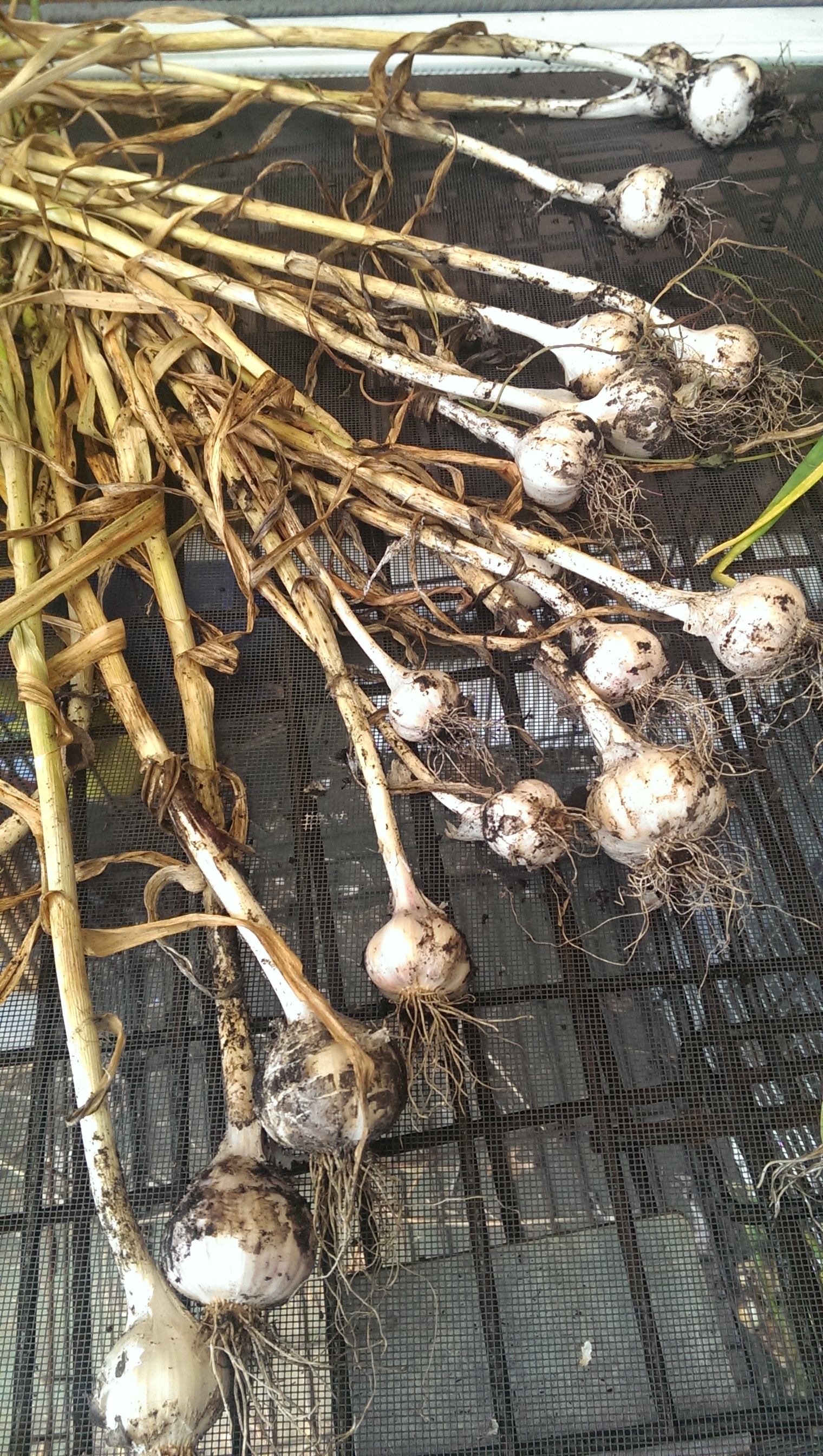
As I’ve written here over the summer, there has been a subtle change in my relationship with the garden. The soil test went into International Ag Labs last week and I’ll do the broadcast fertilizer as recommended this fall. It’s just that after I plant the garlic next month, it will be the last planting I’ll do here. When we cut the raspberry canes, it will be the last time for that task. We’re still stewards, of course, but our stewardship is coming to an end.


Widdershins

Lughnasa                                                                       College Moon

We’ve cleared out the three sheds. This morning the dog barrier on the orchard fence (which never worked) came down, the hardware going in a plastic bucket. The new place will have fence, too. All of the electric fence parts, from the charger to the plastic clips for the fence line and the electrified rope will go with us, too. Bears, mountain lions, mule deer, elk to keep out and dogs to keep in.

It feels like we’re walking widdershins around our property, unwinding twenty years of presence, trying to neutralize the most intimate space of all, home. Doing this now, in the fall when the air is cooler, makes it all seem appropriate. The growing season has begun to walk widdershins around the plants, seeing them revert to their ground level selves or to bare their branches, fatten up roots and otherwise end the time of producing.

We are undoing the enchantment we have created here. This place has become, through vigorous effort and the work of many, a place where we could enjoy life. It has become our home. Fires in the firepit, vegetables in the raised beds, apples and cherries and pears in the orchard, meals on the brick patio or out on the deck. Years of dogs creating paths in the woods and in our hearts. Now this enchantment has to be undone and stored for use in another location.

We will, I have no doubt, do the same in Colorado. It will be a different same of course, the paradox of home being where the heart is, not one physical place. We will have a smaller garden, but we will have one. We will still need to contain dogs. Our new home will be xeriscaped as soon as possible, so flowers, unless native, will not be part of it. We will still need a study and workout room for me, a sewing room with space for the long arm quilter for Kate. And in creating these spaces and functions we will become one with a new place. A new spell will be cast, one with Western themes instead of Northern.


Nocturne

Lughnasa                                                                          College Moon

It has been a full week so far and we’re only to Thursday. The front porch looks so good, painted and new cedar flooring, steps. New windows on the shed and it gets painted, too, probably tomorrow. (note. these were done by our handyman, Dave Scott.) The firepit’s repaired. The bookshelves are empty. The Rav4 had it’s oil changed and tires rotated. Learned that it will not tow much at all, 1,500 pounds, so that’s not gonna work for the live stock trailer. Picked raspberries and tomatoes. Made chicken noodle soup. Worked out a couple of times. Translated several lines of De Bello Gallico. And all this while retaining my status as a retired person.

Glad it’s quiet. Silent night. Silence is holy in my world, so holy night, too.

Boys and their Tractors

Lughnasa                                                            Lughnasa Moon
Into St. Paul this morning for another America Votes meeting at the Minnesota Nurses Association. Solid, information packed as usual.

On the way in I listened to a radio discussion of masculinity and on the way back an Ira Flatow Science Friday story on regenerative farming. NPR is listening to my brain.

Men in America has its main hook in the changes since the 1970’s in men and women’s education status. Women have pushed ahead of men, or girls ahead of boys steadily, until today girls dominate boys in all of the academic disciplines through high school. While in itself this is neither alarming or surprising, when joined to the decline in manual labor and other manufacturing jobs, a disturbing picture emerges. Men begin to look left behind in the contemporary labor market. There are a lot more matters to discuss here. Another time.

Regenerative farming pushes forward the no-till farming movement, moving beyond merely sustainable agriculture to an agriculture that positively enhances the soil. In this show a number from the book The Soil Will Save Us by Kristin Ohlson got my attention. She says that if 11% of the worlds agricultural land were to convert to no-till farming the resulting natural sequestration of carbon dioxide would balance the climate change equation. Don’t know if this is true, but it’s intriguing.

It took me immediately to rain follows the plough which I mentioned here not far back. That was the belief that created the vast agricultural lands of the plains where industrial agriculture has combined with center pivot irrigation to drain the Ogallala aquifer and destroy the once ten foot deep top soil created by prairie plants. If that land were to convert to no-till agriculture, water use would plummet and the plains could begin to heal themselves. Might be the 11% right there.

Wild, Wild Grapes

Lughnasa                                                                 Lughnasa Moon

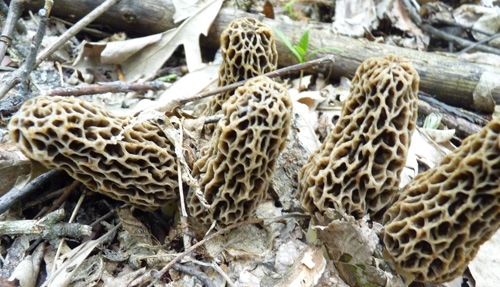
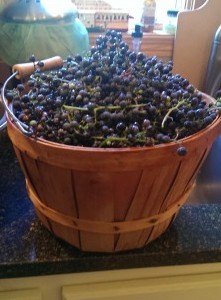
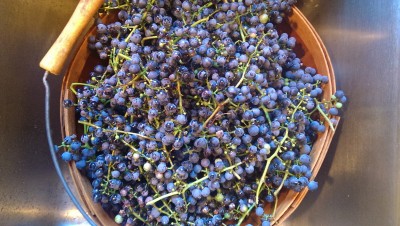
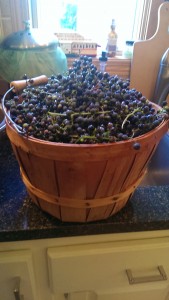
500P1030676A cool breeze predicted autumn as I picked wild grapes this morning . These wild grapes have overgrown our amur maples and will get cut back when the lawn restoration work is done later in the fall. That will hardly diminish their presence though because wild grapes grow all over our woods, some branching out from vines thicker than my upper arm. The woods also provides morels in the spring.

Over the years I’ve highlighted the opossum, the great horned owl, wild turkeys, pileated woodpecker, woodchuck, salamander, newt, toads, frogs, dragon flies, deer, rabbits, chipmunks, squirrels, bumblebees, raccoons and snapping turtles that live on this property, too. A significant aspect of living in the exurbs is the diversity of wild flaura andIMAG0506 fauna, often on the chunk of land on which you live. This is a melding of the human built and the wild.
The Denver Post recounts encounters with bears, mountain lions and rattle snakes. In Minnesota residents encounter bears and wolves, perhaps the occasional lynx. Most of these encounters occur because human habitation encroaches further and further into formerly wild lands.

These predators are certainly part of the wild eco-system, but the bulk of wild life are prey species, amphibians, reptiles and birds. It’s these we humans encounter most often and which we often discount, as if their small size or lack of tools for killing make them less significant. Yet the woodchuck, or land-beaver, that occupied a tree here for a day, is a wild animal just as much as the wolf or bear. So, too, the opossum and all those others that flee when humans arrive, who try to keep their visibility to a minimum.

We are co-habitants, not owners really, of this land. Though we will sell it to other humans, we are not selling the wild life. Their lives will adapt to the new humans just as they adapted to us, either by leaving or hiding or just going on about their day.

The wild flaura includes not only morels and grapes, but ironwood, jack-in-the-pulpit, oaks white, red and burr, elm, ash, black locust, cedar, nine-bark and rhus radicans, or poison ivy. Barring a clear cut of the woods, which I consider unlikely, they, too, will remain.
Flash

Lughnasa                                                               Lughnasa Moon

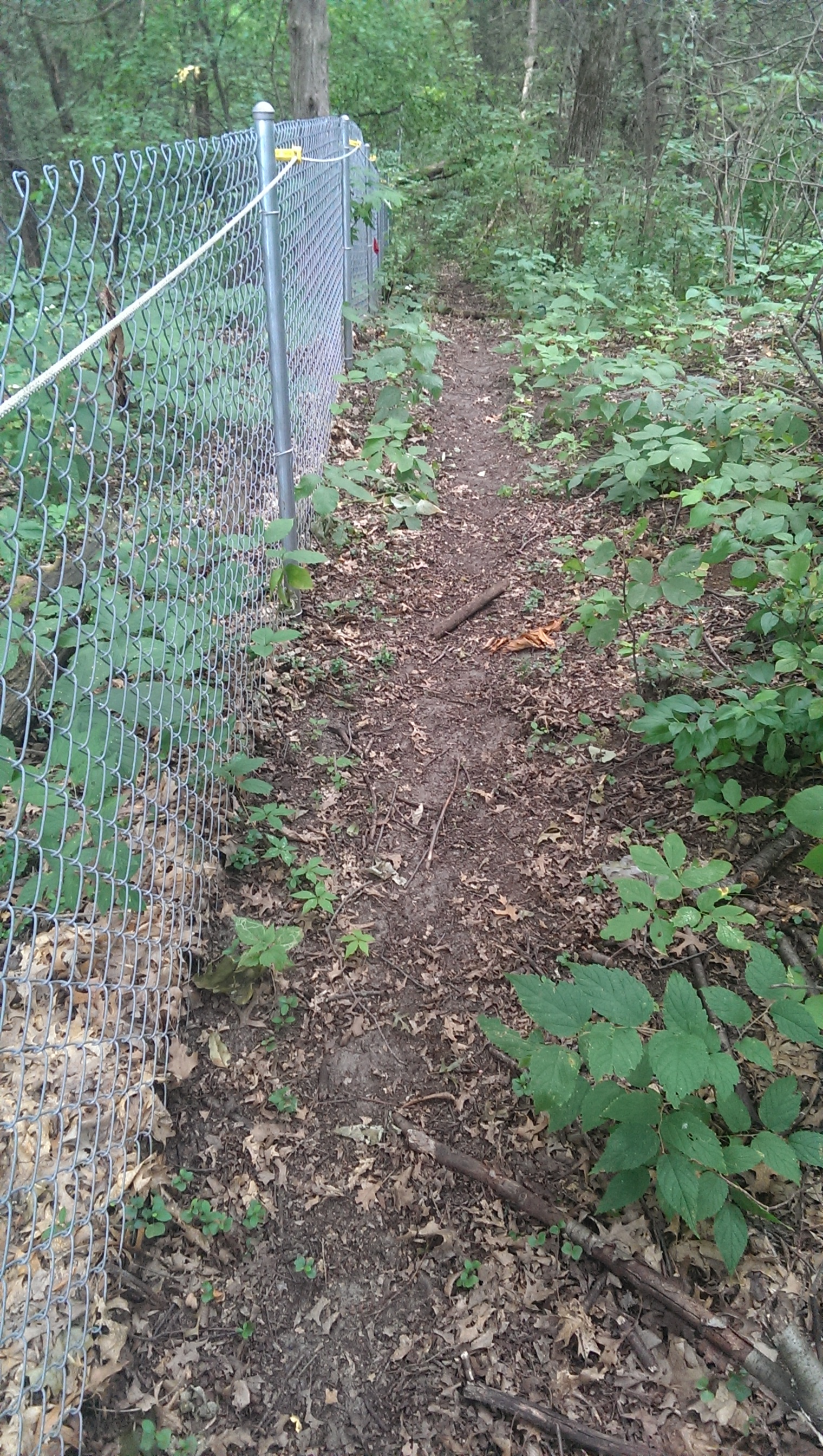
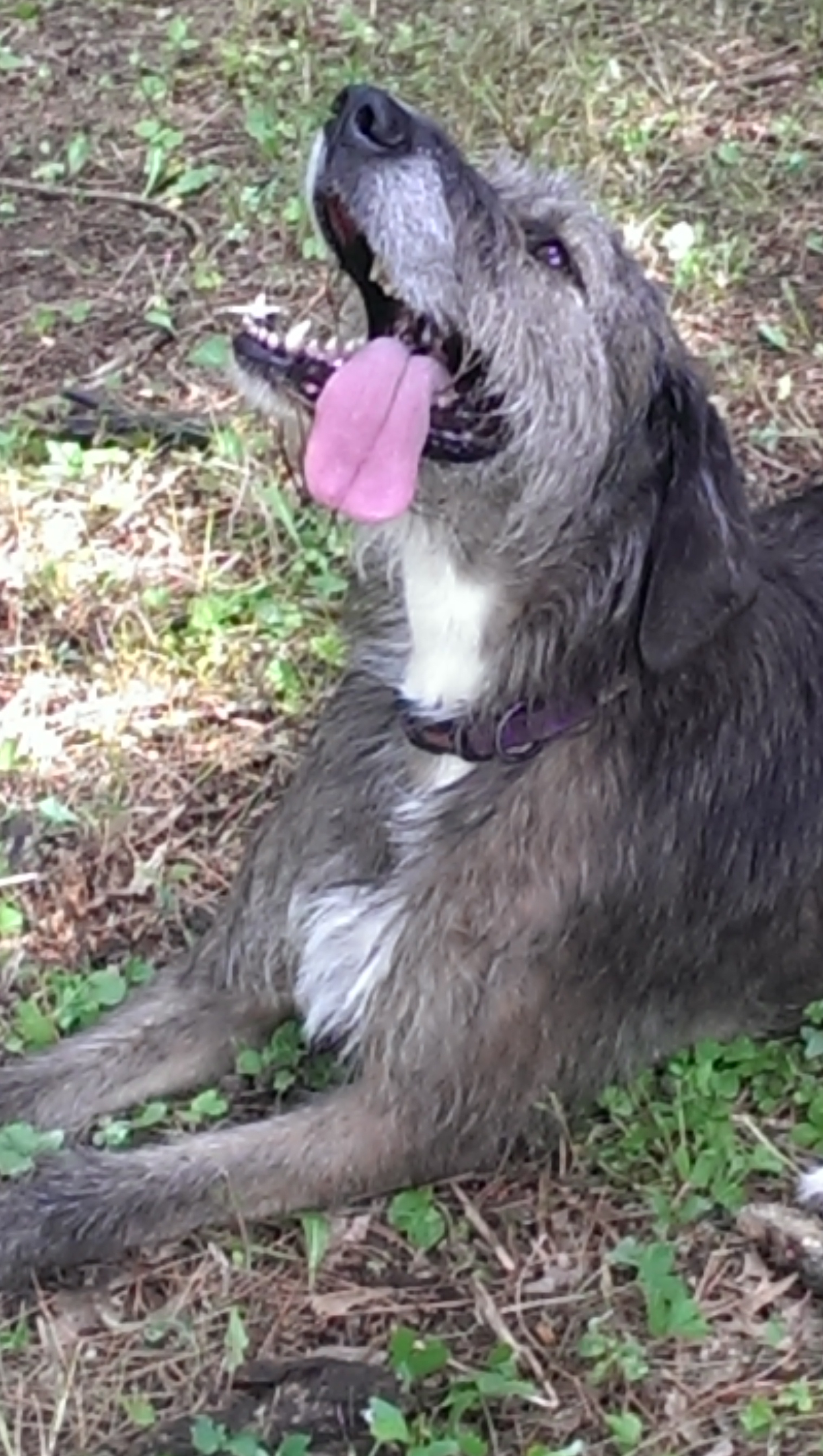
IMAG0486Fast. That’s how life can change. I wired a large fallen branch to the bottom of the fence along our southern property line. The last three points of escape were along the northern fence line so Rigel has begun a systematic (well, sort of) testing of the containment.

While going downhill along the path next to the fence line, the stretch you can see here,  my foot struck a small stump and I fell forward. As gravity reached up to grab me, my body took over, putting my right arm out to cushion the fall. But as I fell, I remembered, in a flash, the sort of things that happen to older folks when they fall. This was not the kind of fall I took as a child or even a younger man. No, it had a brief, but strong undercurrent of dread attached.

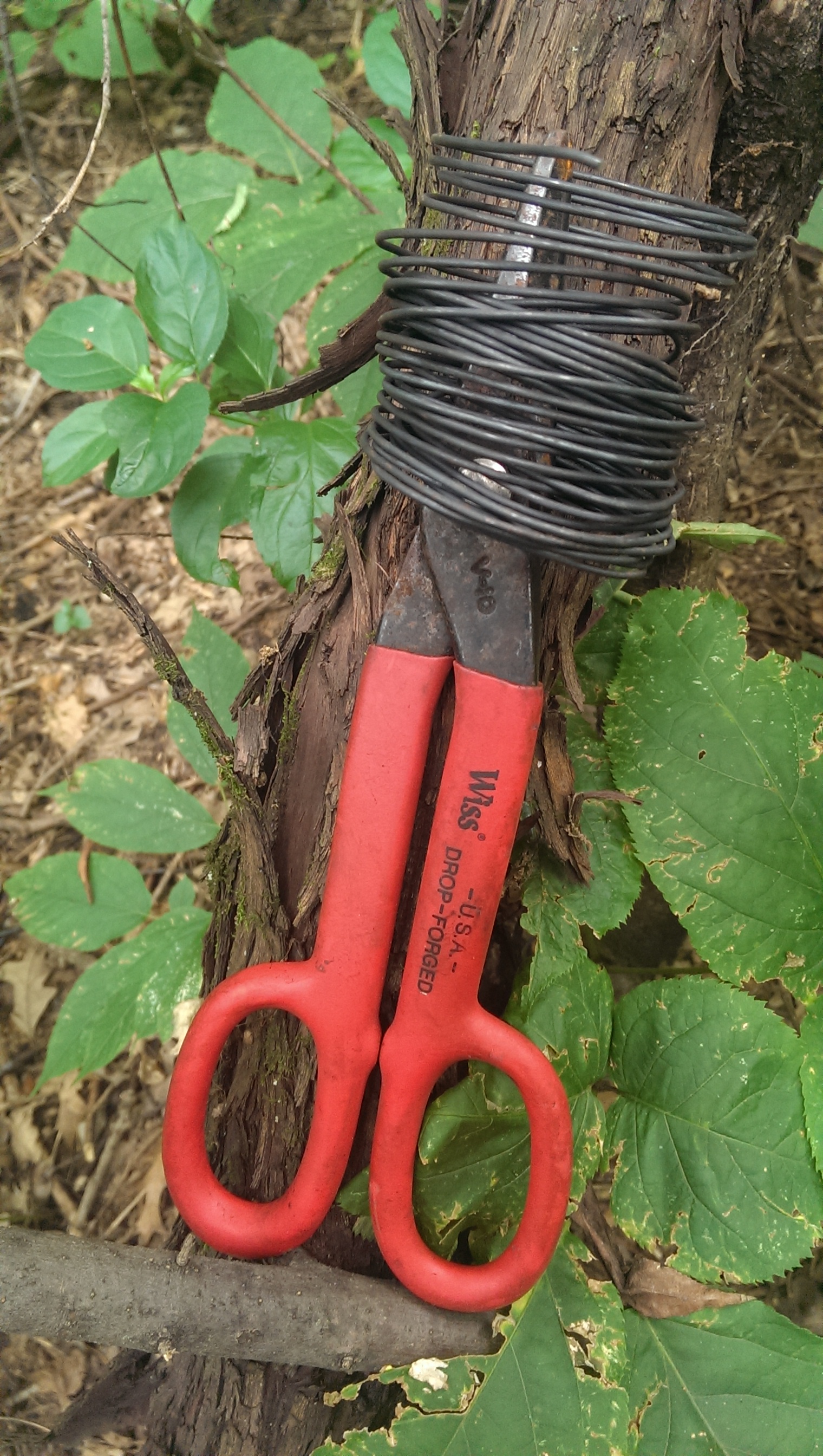
That said, the effects of the fall were unremarkable. My right shoulder ached, a bit of soreness in the right lower back, but no broken bones. No head injuries. The wire snips IMAG0491and the coil of wire, now mostly gone since I had just used it on the fourth fence strengthening of this latest episode, flew out of my hands and I had to find them.

When I went through the business with my left shoulder a year or so ago, the orthopedist remarked on how strong my bones were. Guess so.

(I took this photograph to illustrate the size of the grapevine, but it shows the coil nearing its end. This is before the latest patch.)

This is not a cautionary tale. It is, rather, a reminder that change can come at us fast and hard. It is also a reminder that resilience may be one of our most underrated virtues. I’m seeing that word a lot these days in situations psychological and climatological. It’s a good one. It is not how hard you fall, but how you bounce that counts.

It’s a whistle pig or a land-beaver!

Lughnasa                                                               Lughnasa Moon

Hot times outside this afternoon.

What does Rigel see?

IMAG0454


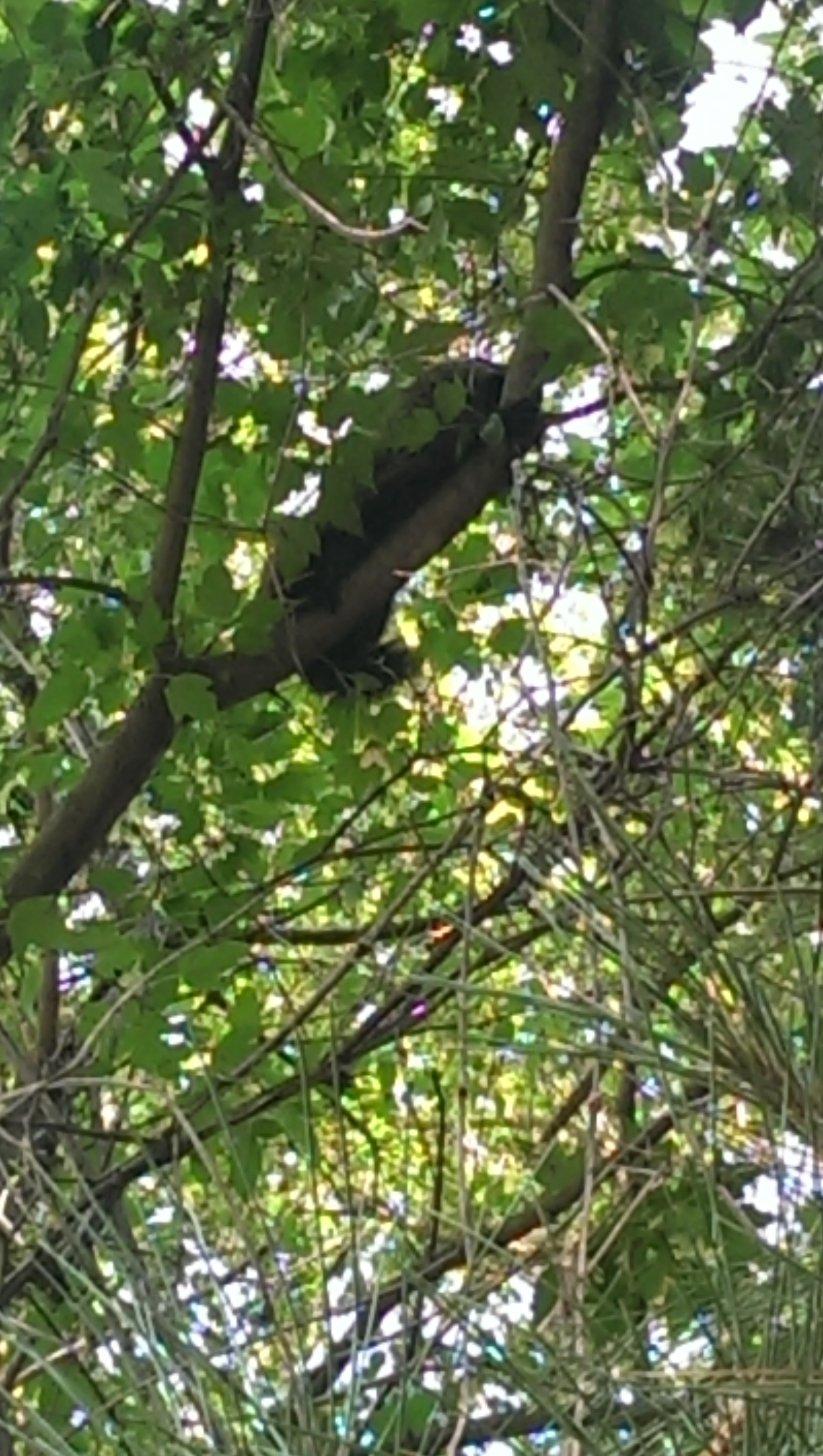
It appears she (and the other three) have treed a woodchuck. Yes, it is, as Wikipedia says a groundhog, a land-beaver, or a whistle pig. They’re a member of the Marmot family.

IMAG0452The dogs seem to think that if they bark loud enough and long enough the land-beaver will drop out of the tree into their mouths. Doubtful.