Category Archives: Poetry

Dogs

Summer                                                                             Solstice Moon

Elizabeth Barrett Browning was born on March 6, 1806, at Coxhoe Hall in Durham, England. She was already prominent in the world of Victorian letters when she married fellow poet Robert Browning in 1846. Barrett Browning died in 1861.
Flush or Faunus

You see this dog. It was but yesterday
I mused, forgetful of his presence here,
Till thought on thought drew downward tear on tear;
When from the pillow, where wet-cheeked I lay,
A head as hairy as Faunus, thrust its way
Right sudden against my face,–two golden-clear
Large eyes astonished mine,–a drooping ear
Did flap me on either cheek, to dry the spray!
I started first, as some Arcadian
Amazed by goatly god in twilight grove:
But as my bearded vision closelier ran
My tears off, I knew Flush, and rose above
Surprise and sadness; thanking the true Pan,
Who, by low creatures, leads to heights of love.

The Howdydoody Season: Winterspringsummerfall

Beltane                                                                          Early Growth Moon

In a long ago time I took a group of youngsters from Brooklyn Center United Methodist Church on an outing.  Wherever it was we ended up, there was a beanbag toss game that featured Howdydoody characters.  The kids, as kids always do, said, “What’s that?”  And I, as unsuspecting aging adults always do, said, “Why, that’s Howdydoody.”  The blank stares gave me my first frisson of growing old though I was only 27 at the time.

On this now very outdated program there was a character whose name describes for me the season we’ve been passing through since, oh, March or so:  Winterspringsummerfall.


This is not a new phenomenon, though, as James Russell Lowell’s poem shows:

Under the Willows [May is a pious fraud of the almanac]

by James Russell Lowell

May is a pious fraud of the almanac,
A ghastly parody of real Spring
Shaped out of snow and breathed with eastern wind;
Or if, o'er-confident, she trust the date,
And, with her handful of anemones,
Herself as shivery, steal into the sun,
The season need but turn his hourglass round,
And Winter suddenly, like crazy Lear,
Reels back, and brings the dead May in his arms,
Her budding breasts and wan dislustred front
With frosty streaks and drifts of his white beard
All overblown. Then, warmly walled with books,
While my wood-fire supplies the sun's defect,
Whispering old forest-sagas in its dreams,
I take my May down from the happy shelf
Where perch the world's rare song-birds in a row,
Waiting my choice to open with full breast,
And beg an alms of springtime, ne'er denied
Indoors by vernal Chaucer, whose fresh woods
Throb thick with merle and mavis all the year.

– See more at: http://www.poets.org/viewmedia.php/prmMID/22956?utm_source=PAD%3A+Spring+Song+by+Sherwood+Anderson&utm_campaign=poemaday_051813&utm_medium=email#sthash.6TuB0x7D.dpuf

My Lady Is Compared To A Young Tree

Spring                                                                                  Planting Moon

Vachel Lindsay was born in Springfield, Illinois on November 10, 1879. He was known as the Prairie Troubadour because he integrated music into his poems and performed them theatrically. He died in 1931

My Lady Is Compared to a Young Tree
by Vachel Lindsay

When I see a young tree
In its white beginning,
With white leaves
And white buds
Barely tipped with green,
In the April weather,
In the weeping sunshine–
Then I see my lady,
My democratic queen,
Standing free and equal
With the youngest woodland sapling
Swaying, singing in the wind,
Delicate and white:
Soul so near to blossom,
Fragile, strong as death;
A kiss from far-off Eden,
A flash of Judgment’s trumpet–
April’s breath.

Rainy, Gray, Blah

Spring                                                                      Planting Moon

Moved books and sorted files.  Finishing up that long study and file reorganization, clean out begun some weeks ago.  Went out for dog food and got a hamburger at Culver’s.  They make a good burger.

Read some more Robert Jordan, now in the second volume of the Wheel of Time.  Watched three Supernaturals and one Danish show, The Eagle.  A lazy Sunday.

Did get started on Book I of Metamorphoses.  Not far.  Verbs pulled out and conjugated.  I checked the Perseus (classics website) text with the most scholarly text available right now and there was one small difference in the first four verses.  Started a word list which will feed into the commentary.

Needed a psychic bump today and Kate provided it.  What would I do without her?  I know it’s a canard; but, with buddy William Schmidt losing his wife Regina last year, it’s no longer something that has happened to others.

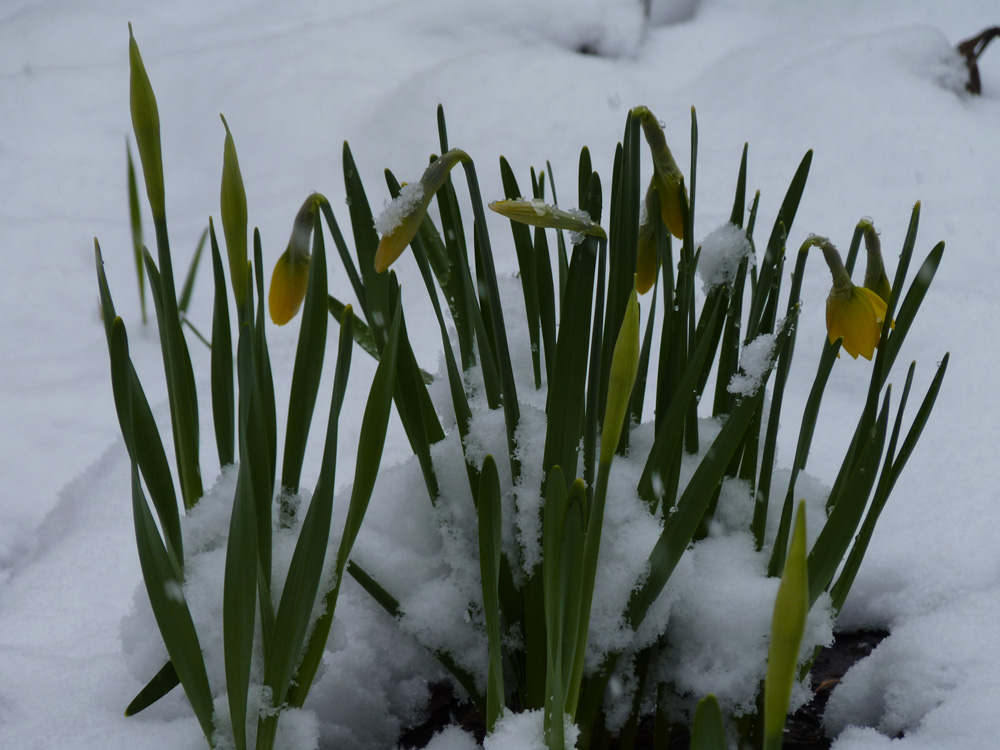
This gray, cold weather has many Minnesotans in a bit of a grumpy place, all of us waiting for daffodils and sun.  As Garrison Keillor said today, “The snow will melt.”  You betcha.

Imaging World Enough. And Times.

Spring                                                                           Planting Moon

World enough, and time.

Andrew Marvell, To His Coy Mistress

Just realized what an apt summary of fantasy this is.  Fantasy creates new world, one which be enough to engage the reader and engage the reader over time.  Just the author invests a lot of time in the development of a world and narratives set within that world, a reader who bothers to learn the intricacies of this alternative world typically wants more than one story, often many more than one story, set there.

It becomes a kind of contract between writer and reader.  I will spend my time imagining this world and what goes on it and, if you like it enough to learn it, then I agree to write more.  It can have a deadening effect, of course, always working in one fictional space, but so far, in the Tailte mythos, I’ve found it liberating and energizing.  It grows bigger as I write, not smaller.  In fact, I have to find ways to limit it so I can tell bounded stories.


Soon, I Imagine

Spring                                                                                                      Bloodroot Moon

The Daffodils
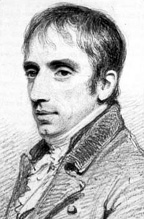
by William Wordsworth

I wandered lonely as a cloud
That floats on high o’er vales and hills,
When all at once I saw a crowd,
A host, of golden daffodils;
Beside the lake, beneath the trees,
Fluttering and dancing in the breeze.

Continuous as the stars that shine
And twinkle on the Milky Way,
They stretched in never-ending line
Along the margin of a bay:
Ten thousand saw I at a glance,
Tossing their heads in sprightly dance.

The waves beside them danced, but they
Out-did the sparkling waves in glee:
A Poet could not but be gay,
In such a jocund company:
I gazed–and gazed–but little thought
What wealth the show to me had brought:

For oft, when on my couch I lie
In vacant or in pensive mood,
They flash upon that inward eye
Which is the bliss of solitude;
And then my heart with pleasure fills,
And dances with the daffodils.

Yet.

Imbolc                                                                   Bloodroot Moon

Snow came in the night.  Maybe 2 inches.  Freshened up the landscape, pushed back the melting time.  Last year today it was 73, ruining my vision of the north, turning it into a slushy Indiana/Ohio/Illinois.  Climate change stealing my home.  It disoriented me, made me feel like a stranger in a strange, yet strangely familiar, land.  Now.  30 degrees.  8 inches of snow.  Home again.

A book on my shelf, important to me:  Becoming Native to This Place.  The idea so powerful.  One so necessary for this nature starved moment, as the pace of the city as refuge lopes toward its own four minute mile.  Cities are energy, buzz, imagination criss-crossing, humans indulging, amplifying, renewing humanness but.  But.

All good.  Yes.  Yet.

That stream you used to walk along.  The meadow where the deer stood.  You remember.  The night the snow came down and you put on your snowshoes and you walked out the backdoor into the woods and walked quietly among the trees, listening to the great horned owl and the wind.  The great dog bounding behind you in the snow, standing on your snowshoes, making you fall over and laugh.  Remember that?

There was, too, that New Year’s Day.  Early morning with the temperature in the 20s below zero and another dog, the feral one, black and sleek, slung low to the ground, went with you on the frozen lake, investigating the ice-fishing shacks, all alone, everyone still in bed from the party the night before but you two walked, just you two and the cold.

Before I go, I also have to mention those potatoes.  The first year.  Reaching underneath the earth, scrabbling around with gloved fingers.  Finding a lump.  There.  Another.  And another.  And another.  The taste.  Straight from the soil.  With leeks and garlic.  Tomatoes, too, and beets.  Red fingers.  The collard greens.  Biscuits spread with honey from the hive.

When the Student is Cold, Winter is the Teacher

Imbolc                                                      Valentine Moon

“When the eyes and ears are open,
even the leaves on the trees teach like
pages from the scriptures.”
Kabir

What then can the winter teach us, when the leaves have fallen and the plants are quiet?  Our gardens fall away, buried by white snow, their shapes changed, smoothed, flowing.  No evidence of their fertility, or, rather, the only evidence is of its end, brown stems above the snow.  A lesson that the same place can be two things.  Green and white.  Fruitful and barren.  Hot and cold.

On very cold days the air has a clarity, a snap to its presence.  It insists on your attention and your care.

The cold and the snow preach purity, the willing of one thing.  Change by lowering the temperature.  Think of the things in the world that could be made better by lowering their temperature.  Winter is witness to the power of such change, its possibility and its possibilities.

Blue sky, clear air, snow shaping the earth and wind driven snow.  Then, low clouds, gray skies, snow falling fast and faster, the onrush of blizzard.  The humbling of the machine.  The reconstructive surgeon of the landscape.  We do not own this place; we’re visitors.  It comes with its own reality, one in which we exist by sufferance.

Winter teaches us humility.

Rumi – A repost

“It is an astonishing fact that, after more than 700 years, Jalaluddin Rumi is the most popular poet in America. This is largely due to American authors, such as the poet Coleman Barks who has rendered literal translations of Rumi into free verse “American spiritual poetry” in a manner which has reached so many different sectors of American society. One finds Rumi quotes following the titles of newsletters, on the bottom lines of e-mails, and in many different kinds of published articles. Many people have memorized their favorite lines — usually those rendered by Coleman Barks, because his versions communicate far more successfully than literal translations. The reasons for such a response are unclear, but it likely has to do with a certain “spiritual hunger” in America (perhaps due to an absence of a mystical and ecstatic dimension in general American spirituality).
Yet this popularization has had a price, and the price is a frequent distortion of Rumi’s words and teachings which permeate such well-selling books. The English “creative versions” rarely sound like Rumi to someone who can read the poems in the original Persian, and they are often shockingly altered— but few know this, and the vast majority of readers cannot but believe that such versions are faithful renderings into English of Rumi’s thoughts and teachings when they are not.
The public has been deceived by the publishers of many of the popular books, who proclaim their authors as “translators” of Rumi— when, in fact, very few of them can read Persian. Coleman Barks, from the very beginning, called his renderings “versions.” And he has consistently clarified, in both his books and poetry readings, that he doesn’t know Persian and works from the literal translations of others […] And he has been (and allows himself to be) promoted as “widely regarded as the world’s premier translator of Rumi’s writings…” Where did the idea come from that poets could “translate” spiritual poetry into English without knowing the original language?”

“Corrections of Popular Versions of Poems from Rumi’s Divan,” author unknown, from the Dar Al-Masnavi website

”[…] the intent of giving examples of defective interpretations (which include some of their most glaring errors) is to show how badly Rumi’s verses have been mangled by well-meaning individuals who tried to make dry, academic, and old-fashioned-sounding literal translations more poetic and attractive.”

Click on the link to read the complete article, which includes examples of poorly “translated” versions of Rumi’s poetry.

On Coleman Barks’ “versions” of Rumi’s poetry, Majid Naficy has notedthat “Barks not only ‘frees’ Rumi from the historical limitations of his time, but he also tries to disconnect Rumi from the Islamic society in which he lived and the Persian language in which he wrote his poetry.”

(via touba)

An early, perhaps the first, female professional writer

Imbolc                                                                       Valentine Moon

material from the academy of american poets:

About this poem:
Virginia Woolf writes of Aphra Behn, in A Room of One’s Own, that: “She made, by working very hard, enough to live on. The importance of that fact outweighs anything that she actually wrote, even the splendid ‘A Thousand Martyrs I have made,’ or ‘Love in Fantastic Triumph sat,’ for here begins the freedom of the mind or rather the possibility that in the course of time the mind will be free to write what it likes.”
(Aphra_Behn_by_Mary_Beale)
Born on December 14, 1640, Aphra Behn was one of the first professional female writers and the author of Oroonoko and The Rover. She died on April 16, 1689.
A Thousand Martyrs I Have Made
by Aphra Behn

A thousand martyrs I have made,
All sacrific’d to my desire;
A thousand beauties have betray’d,
That languish in resistless fire.
The untam’d heart to hand I brought,
And fixed the wild and wandering thought.

I never vow’d nor sigh’d in vain
But both, tho’ false, were well receiv’d.
The fair are pleas’d to give us pain,
And what they wish is soon believ’d.
And tho’ I talk’d of wounds and smart,
Love’s pleasures only touched my heart.

Alone the glory and the spoil
I always laughing bore away;
The triumphs, without pain or toil,
Without the hell, the heav’n of joy.
And while I thus at random rove
Despis’d the fools that whine for love.