Category Archives: Commentary on Religion

Ready to Let Go

Lughnasa                                                              Harvest Moon

Giving a presentation this morning at Groveland UU.  The Third Phase.  I’ll post it later on today.  I find myself surprisingly uninterested.  I forgot several times last night that I was doing it.  Got today planned in my head, then, went, “Oh.  Right!”  Resistance.  This may be the last of it.  There’s no longer the spark of delight I used to get from writing out my thoughts, then presenting them to others out loud.

They say fear of death and public speaking run close together in terms of intensity among most of the population.  Public speaking has never been a fear for me.  I’ve been doing it since I was young, various venues like school politics, church, theatre, classrooms, debate, interpretive reading.  Over the years I’ve come to believe that I have a talent for it, modest, but there.  I’m no Cicero or Richard Burton, but I can get my point across and most of the time make you feel glad you had the chance to listen.

It may not be the public speaking that has soured for me.  I really gave up the ministry years ago with a slight regression in the late 90’s, but I was not sorry when I left the Presbytery in 1992.  The connection with Groveland kept that spark glowing, but the ember has begun to die out, or has died out.  It’s a profession that never did fit me, that I entered through a series of bad choices, like the thug life.  I worked hard to make a place for myself in the church, but the tension and stress made me unhappy.

Now, finally, 20+ years after the fact, I’m ready to let it go all the way.

Is It the End, My Friend?

Lughnasa                                                                         Harvest Moon

The singularity is near.  Can we prevent the takeover of the machines?  Will technology devour us, turning the master-slave relationship upside down in Nietzschean irony?  Life with intelligent machines has become a reality already.  Are we too late, doomed to follow our lemming-like path of one more gadget to disaster?

Doubt it.  First.  Depictions of the apocalypse have been failing since the notion first muscled its way onto the human imaginal stage.  We’re very good at predicting the end and equally talented at forgetting that it never happened.  In the Hebrew scriptures there was only one way to tell a good prophesy from a bad one.  Did it foretell events?  If so, good prophecy.  If not, bad prophecy.  And prophecies of  the end time have, so far at least, been wanting.  As proof, I offer the fact that I’m writing about
them.

Second.  Events do not occur in a vacuum.  That is, even if a singularity event or its near cousin came to pass, it would have been preceded by other advances outside of its ambit and the fact of its occurrence itself would shift matters in ways unpredictable.  These interacting variables would almost certainly create a less dire circumstance than techno-gloomy gusses anticipate.

Third. Remember Malthus?  He had a simple idea about food production and the carrying capacity of the earth.  He bet we would return to subsistence level agriculture once the population outstripped the food supply.  Hasn’t happened.  Why?  Agriculture advances, logistical advances, economic advances.  Simple ideas tend to leave out the complicated world in which we actually live.

Finally, will the end come?  Yep.  It will.  There are astrophysical forces at play in the solar system that will finish off life on earth and after that earth itself will be absorbed as our chief ally, Sol, expands into a red giant.  Will humanity have figured out how to live among the stars by then?  My guess?  Yes.

My sense is that we muddle along more often than anything else.  And the singularity will be a curiosity of our era.  Remember 2012?

Honorary Docent Lost

Lughnasa                                                           Honey Moon

Back in the MIA yesterday morning before my lunch with Tom.  Wandering around, absorbing the images and the galleries, felt good–but unfocused, I was unclear as to my purpose for being there.

(5th century painting, Poet on a Mountain Top by Shen Zhou.  not in MIA collection)

A long segment of a Chinese scroll, a landscape of black and white mountains, exhibited in a narrow corridor beside the Wu reception hall, sent me into a wistful, calm place and a sudden realization why I like Asian art, especially Chinese and Japanese.  Much of it is soothing, contemplative.

As these thoughts and feelings slowly tumbled down the stream of my experience, I came to an explanation of this “spilt ink” and discovered the scroll had been done by a literati artist waiting for his son at a mountain monastery.  His son was overdue and he felt, he said, “Lonely and sad.”

The exhibition, “Sacred”, has pieces scattered around the atrium on the second floor, some mostly installed, others not.  It focuses on surfaces, as an art exhibition must:  clothing, dance, fluids, walking.  This is something I’ve learned recently, that the modern was a turn toward keen appreciation of the surface of things, logical since philosophy from Kant on down has hammered away at our inability to see the thing in itself, the real behind our perceptions, leaving us with what our senses bring to us, the surface of things.

Modern science, Darwin being a keen example, constructs its wonders on observation and recognizes that it cannot explain what it cannot apprehend.  Yes, there is lots of inference, electron fields, quantum action at a distance, the brain/mind link, but about these things we recognize only what we can measure about them, that is, apprehend. There is no other tool.

So, yes, I understand the “Sacred” exhibition’s focus on the surface of things, but it will not, cannot touch what causes a man to wear a chasuble or a yarmulke.  It will not show the Shiva who dances in the heart of the faithful Hindu or the Buddha mind of the adherent inspired by the Thai walking Buddha.  It will, in this regard, I think, fall several measures short of its mark.  Too facile, too straight forward.  A nice try but not bent enough to capture the mysterium tremendum, the awe that comes with the experience of the holy.

Americana

Lughnasa                                                                      Honey Moon

800IMAG0801cropped

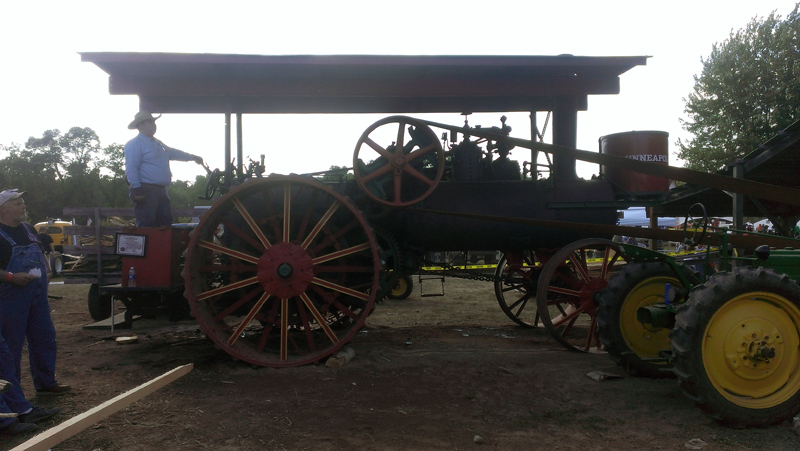
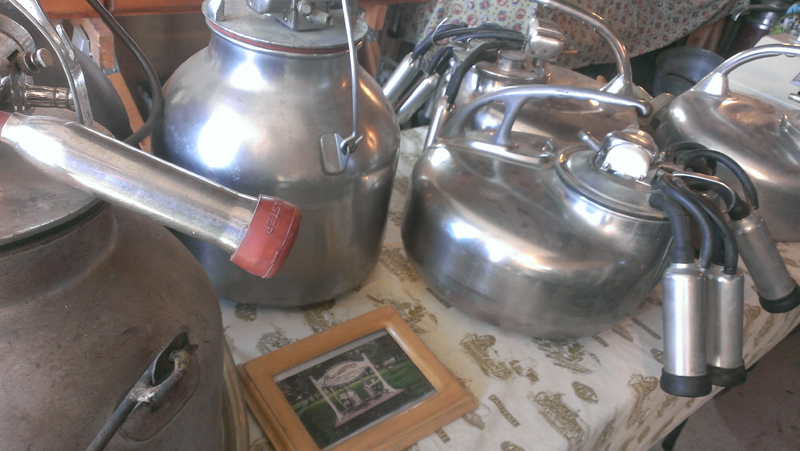
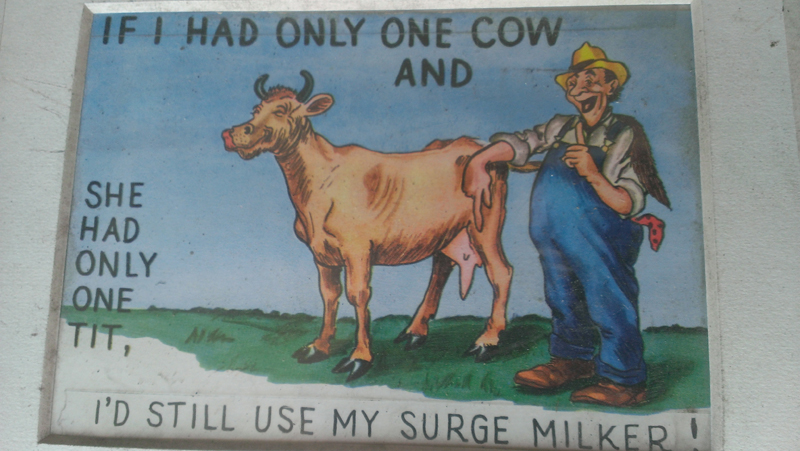
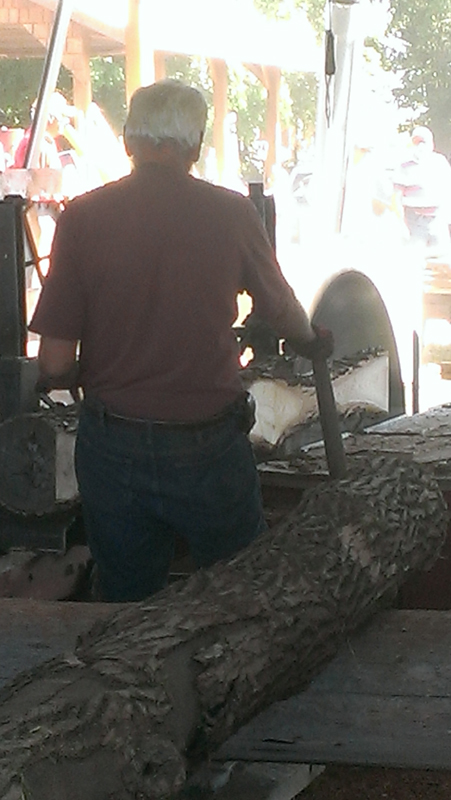
Two slices of Americana, one yesterday and one today.  The first pictures are from the Fabric Outlet Store, a place owned by a funny Jewish guy who liked my hat.  The second are from an event that happens not 6 miles from our home every August, but to which we went for the first time today, the Nowthen Threshing Show.  I’ll let the pictures speak for themselves.

800IMAG0806800IMAG0807800IMAG0839800IMAG0821800IMAG0833800IMAG0813800IMAG0823800IMAG0825800IMAG0835

At The Limit

Ancientrails hit its size limit on my host, 1&1, and has to be moved to a larger venue.  Bill Schmidt is working on that right now.  It took a bit of time to realize what was wrong.  I’ll be back online as soon as possible.  Thanks


Soul

Lughnasa                                                                      State Fair Moon

The soul. As probably understood most of the time (in the West):  a non-material component of the body-mind-soul combination that makes up all human beings.  This third component floats free at death, off to any number of possible outcomes depending on your belief:  heaven, reincarnation, nirvana, Elysian Fields, Valhalla or hell.  Usually the soul’s journey after life is believed to have some correlation with adherence to one moral code or another.  Might be karma, might be sin, might be courage and bravery, might be heroic stature.

If your belief aligns with any of these understandings, then the third phase, as the one we know for certain ends with the terminal phase and the terminal moment, becomes critical, a blessed time when spirituality and spiritual attentiveness prepares you for the afterlife.  Not gonna say how you might do this because it entails too many variables but the menu certainly includes:  retreats, meditation, reading, prayer, perhaps engagement with a community of fellow travelers. It also includes attention to the past if you feel making amends or restitution or penance is part of your journey.

And if you’ve been so engaged prior to the third phase, congratulations.  Now this kind of personal work can become a key thread in your life.

The soul:  As I understand it at the moment.  Roughly equivalent to the Self, a holistic view of the you that is body-mind-soul.  Now.  In this understanding the third phase stands as a blessed time when you can become more of who you already are.  It can mean jettisoning the persona-pack you’ve carried in the world of work for a persona more consonant with the Self.  If you’re lucky enough to come into the third phase with a persona and Self in healthy dialogue, you’re in good shape.  This time can then be an extended exploration of the unique gift you are to this world.

Soul work:  These two perspectives, one tied if loosely to religious tradition, and the other tied closely to the humanist tradition in Western culture are not exclusive of each other.  That is, both ancientrails can overlap in any one individual.

Next time:  what then might we do?

Terminal Phase. Sabbath.

Lughnasa                                                                     Moon of the First Harvests

Some rough ideas, thrown out as thought provokers for now, on the third phase.  In September I’m going to do a presentation to Groveland UU on the third phase and want to start thinking out loud here, maybe draw in some comments from those of you who read Ancientrails.

1st phase:  learning [self, relationships, general skills and particular skills]

2nd phase: praxis [learning put into practice with career, family, personal growth]

3rd phase: soul work [work that only you can do.  inner work.  life review, summing up]

terminal phase:  dying [good-byes, cleaning up, finishing up, endings]

The terminal phase is a new addition to my third phase thinking and it’s based on being with Kona as she died and on the experiences some of you have had, notably Bill Schmidt and Scott Simpson, as loved ones died, but slowly.

NB: the word associated with the phase is that phase’s primary and guiding emphasis, where the inflection of life in our culture comes down.  Certainly we learn in each phase, put our learning into practice in each phase and do soul work in each phase.  It’s the dominant motif that concerns me as I think about phases.

3rd phase as life’s sabbath.  This idea just came to me today.  It segues somewhat with the traditional view of retirement as life’s last vacation, a sort of permanent weekend, but goes well beyond it.  If you agree with me that we might consider the third phase primary emphasis as soul work, then the third phase can be seen as a point when we move more and more often from ordinary time (a favorite Catholic liturgical idea) into extraordinary time, what I would call sacred time.

That means we may want to pay attention to rest, reflection, contemplation, retreats, doing work that more often integrates than fulfills needs.  In my case time in the garden helps.  Time not spent writing or reading, unless it’s poetry or some other reflective material.  Time sitting in the chair, eyes closed, thoughts wandering.  Meditating.  Being with friends.

These are just the nubs of ideas.  Interested in what you think.


Short Takes

Summer                                                                     Moon of the First Harvests

Who am I to judge?  Out of the mouth of a Pope.  Extraordinary and welcome.  Can’t help but wonder what the crabbed mind of our local bishop, The Most Reverend John C. Nienstedt, makes of it.  His diminished understanding of what it means to be human must be scuttling around wondering how things could change in such a short period of time.

Orcas are the largest dolphins?  You probably knew this, but I didn’t.  Killer whale stuck to them because some of their number hunt whales.  They are versatile hunters and can exist on whatever is in plentiful.  The film Blackfish and the book, Death at Seaworld, have added to the increasing criticism of keeping intelligent, social animals in captivity at all:  dolphins, chimps and I imagine elephants, gorillas, orangutans, too.

shaun peterson


Rejecting Ariadne’s Gift

Beltane                                                               Early Growth Moon

I skipped some steps in my life education.  And I did that post-college when I was hungry for intellectual stimulation and found the cheapest source for it in seminary.  Instead of noticing what had my full attention, studying scripture with the tools of higher criticism, I followed my radical political passions into the ordained ministry.

Following the 60’s slogan, if you’re not part of the solution, you’re part of the problem, I embarked on a decades long immersion in political work.  I believed and still do believe that political work is important and necessary, a responsibility  of a citizenry that would remain free as well as a corrective to social injustice cooked into the current culture.

But.  I also believe that when the creative life, the one where the Self you have been granted by the random, but highly particular thrownness you have experienced, finds its highest and best purpose, it equals the level of urgency of political action.  Why?  Because each of us are precious, unusual, unique and as a result need to offer the world what only we can provide.

This is at best a dilemma, at worst it can create paralysis or misdirection.  In my case I followed one path, political action, from college through my early 40’s.  That I did this through the church is only a happenstance, a function of the odd synchronicity of my time in Appleton, Wisconsin and a minister there, Curtis Herron, who knew United was, at the time, a politically engaged seminary.

My rationale for being in seminary, drenched in the zeitgeist of the 60’s, led me to pick up on all the threads that led through the labyrinth toward a political minotaur.  They were bright threads in those years, the early 70’s, and had the additional compelling flavor of righteousness, a dangerous route to follow, but one I pursued anyhow.

The threads I left lying on the ground, less bright and flavored not with righteousness but with tradition and imagination, came to me as I soaked up literary criticism, the history of the Pentateuch, the redactions of the gospels, the tradition criticism and form criticism so useful in the Hebrew scriptures, even the brief exposures to Hebrew and Greek.  Had I stuck with them, followed the literary and creative impulses they roused in me, I might have neglected some political work, but found my way to writing much sooner.

But I didn’t.  Now I’m in my late 60’s and, thanks to another lesson I’ve simply refused out of stubbornness and fear to learn, how to sell my finished work, have nothing to show for having finally picked up the threads less bright, yet the ones more in touch with my full Self.  Although it may sound like it, I’m not whining here, just observing the length of time I spent on one section of the labyrinth, not because I didn’t have help, but because I couldn’t discern the true help I did need.

Now, finally, I have all the threads in my hand, I’m following them to the end, aware that there is still ahead the Minotaur, a last battle.  When will it come?  I don’t know.  The labyrinth still has turns ahead and the way, the ancientrail, is dimly lit.

 

Po-Mo and Kids

Beltane                                                                            Early Growth Moon

Po-mo shows up where you least expect it.  This time post-modernism reared its torqued and twisted head in the form of a children’s movie from Dreamworks, The Rise of the Guardians.  Now, this is old news since this is a 2012 release, but I don’t stay au courant in movies, especially movies for kids.

Still.  I did see it tonight.  It’s quite a head-bender if you look at from a theological point of view.  Two key for instances:  Santa Claus and the Easter Bunny.  In the movie Santa and the Easter Bunny are part of a team of four known as the guardians.  The notion is that they guard childhood as a place of innocence, fun, imaginative thought and belief.  Here’s a theological kicker not unfamiliar in Christmas movies, Santa Claus stands in for Christmas, not the baby Jesus.  That is, it is the consumer driven toy and present extravaganza that gets billed as the reason for the season, not the incarnation.  You’ve seen it before.

But here the Easter Bunny represents Easter.  Which is about, he says, in Hugh Jackman’s Aussie Bunny accent, “Hope, new life.”  Gee, those sound like the themes of the passion without the gory stuff.

OK, at one level this is kid’s fare meant for multi-cultural audiences, many of whom are not Christian, so, maybe.

However, the real dramatic driver in the movie is the addition of a new guardian to the old group of four:  Santa Claus, Easter Bunny, the Tooth Fairy and Sandman.  The Man in the Moon, who picked all of the guardians, has now chosen Jack Frost as a new guardian.  A fifth.

Bear with me here.  The going gets a little theoretical, but I think the pay-off is interesting.

Jack comes into the story when the Boogeyman has gone on a campaign to stamp out belief in first the Tooth Fairy, then the Easter Bunny, aiming to get all four including the sandman who brings sleep and pleasant dreams to children.  Both the Boogeyman and Jack face the same problem, nobody believes in them so they are insubstantial, real but not seen as real because the belief meter doesn’t spike among the younger set at the sound of their names.

So the movie takes on the task of finding Jack a place in the believing hearts of children while simultaneously beating back their belief in fear’s ability to hurt them.  The battleground is children’s hearts.  First the tooth fairy loses her powers as child after child falls victim to the boogeyman’s nightmares, then the Easter Bunny.  Sandman gets disappeared by the boogeyman and eventually even Santa’s sleigh weaves and bobs and crashes to the ground, a no longer believed in Santa barely strong enough to stand.

Jack Frost, as you might expect, wins back the hearts of the children with his joyful, fun loving snowball fights and loop-the-loop kid’s sleds rides.  The children begin to believe again and the guardians grow strong, defeating the boogeyman as the children step forward to defend the guardians.  Jack Frost points at the boy leader’s chest and says, “The real guardians are in here.”

This, in other words, is a movie about the magical thinking of children and their charming, wonder-full beliefs, a movie that equates belief with that world and uses the characters dreamed up by American capitalist culture as the agents of restoring children’s beliefs in their existence.  Po-mo.  In a children’s movie.

Overview Effect

Beltane                                                                                              Early Growth Moon

“There have been household gods and household saints and household fairies. I am not sure that there have yet been any factory gods or factory saints or factory fairies. I may be wrong, as I am no commercial expert, but I have not heard of them as yet.”
G.K. Chesterton

The video below, 20 minutes long, came to me via friend and cybermage Bill Schmidt through his daughter, Moira.  I include the two quotes along with it to emphasize a subtle point.  Chesterton was looking anthropomorphically at the locus of fairies, gods and saints, ok as far it goes, but he neglects the much longer tradition of nymphs, dryads, fairies of the woodlands and fields, holy wells, sacred mountains, places of pilgrimage and, most tellingly underlined in this wonderful video, the dynamic, vital oasis in the midst of the vacuum of space:  Earth.

(John Byam Liston Shaw  angel offering the fruits of eden)

We live already, as Bill likes to point out, in paradise.  We are, unfortunately, working hard, very hard, through the godless, saintless and fairyless world of commerce–Chesterton surely had this right–to expel ourselves from paradise.  There is no east of Eden in space.  If we lose this paradise, there is not another for us to inhabit.

Heat-Trapping Gas Passes Milestone, Raising Fears  The level of the most important heat-trapping gas in the atmosphere, carbon dioxide, has passed a long-feared milestone, scientists reported Friday, reaching a concentration not seen on the earth for millions of years.”   NYT yesterday

I enclose the second, seemingly far out of context, quote which comes from our money manager because it highlights a fall in the prices of copper, platinum and paladium.  This fact, falling commodity prices, rather than science or political will, are the main things that will work in favor of stopping the Polymet mine near the Boundary Waters Wilderness Area and its follow-on mines that await only its successful completion of its environmental impact statements.

(expulsion, Masaccio)

PolyMet expects to mine copper by late 2015   One day after announcing plans to raise $80 million in cash, officials of PolyMet Mining Corp. on Thursday said they are moving headlong toward permitting and, eventually, construction of Minnesota’s first copper-nickel mine.”  Duluth Tribune

We should not, must not, leave these decisions to the whims of the market.  We must develop the political and personal will to say no.  Hard?  Yes.  Necessary?  Listen to the astronauts and look at the thin layer of atmosphere that is all that protects us from the harsh reality of the space we inhabit.

“Commodities markets. It wasn’t all bad in April: natural gas futures rose 9.0%, cocoa futures gained 9.1%, and wheat futures rose 6.3%. Now for the bad news: gold fell 7.8% last month to an April 30 COMEX close of just $1,474.00. Silver cratered 14.6% in April; copper fell 6.4%, platinum 4.3% and palladium 9.2%


OVERVIEW from Planetary Collective on Vimeo.