Category Archives: Great Wheel

Becoming (again) Native To This Place

Imbolc                            Black Mountain Moon

Becoming native to this place is a phrase I’ve borrowed from Wes Jackson of the Land Institute in Salina, Kansas. Wes and his researchers are trying to develop perennial food crops so plowing will become unnecessary. No till agriculture.

As I’ve thought further about reimagining faith and proceeding from the heart or from the Self’s vast interior rather than reason or sacred deposit (holy books, dogma, pronouncements of religious leaders), it has occurred to me that the reimagining process might be described as becoming native to this place.

Here’s what I mean. Until very recently, maybe the last 150 years or so, most of earth’s inhabitants lived much closer to the means of food production, but by 1900 both England and the U.S. had become predominantly urban nations. Since that the time the pace of urbanization has rapidly increased and half of the entire population of the planet lives in cities.

Urbanization added to the mechanization of farming has removed more and more people from the land, distancing far more than the half who now live in cities further and further from the earth as a productive and vital center of life. It’s no accident that the same processes have seen automobiles and roads, trucks and trains, airplanes and ships become both, as the Old Testament said, a blessing and a curse.

Compounding the psychological distancing and the actual physical distancing from the earth is the pernicious effect of the carbon fuel cycle that has been central to global climate change. In this reimagining of faith we can see the carbon loading of the atmosphere and the warming effect it is already having (along with a whole cascade of other negative effects like ocean acidification) as the externalizing, the reification of our estrangement from our home. We are so far removed from the day to day life of other living things that we can harm them-and ourselves-without even noticing.

Thus, to reimagine faith, that is to reimagine how we might discover our true position in the world (again, defined as broadly as you want), must include becoming (again) native to this place, this planet that is our only home. We must experience atonement for our estrangement from the planet. We must become at-one with her again.

Within the urbanized, mechanized, carbon releasing zeitgeist we need not an intellectual assent to the needs of mother earth gathered from books and prophets like Bill McKibben, Wendell Berry or Wes Jackson, for this kind of assent is no different from the scholastic defense of Christianity mounted by St. Anselm or Thomas Aquinas.

No, we must atone, become at-one with her in our own way, in a way that proceeds from within, that follows our heart and not our head alone. We must (again) become native to her rhythms and her cycles, to the way she breathes, the way she distributes water, the way her soil replenishes its own nutrients, the way winter differs from fall and spring from summer. Only in this way will we able to take the necessary actions, not the necessary actions that will save mother earth, she will survive our worst insults, but the necessary actions that will allow human kind to flourish here, to flourish here at least until other, natural forces wipe her clean of all life.

Only in this way can we have the possibility, the hope that our species might perform the miracle of leaving this planet for good, for other places, other planets or moons. But note, even there, wherever there might be, we will, again, have to become native to that place.
fides quaerens intellectum

Imbolc                         Black Mountain Moon

Reimagining faith surfaces, then falls back, behind other projects. Latin, books, art. This surprises me somewhat. I spent 20 years, 5 in seminary and 15 in the full-time ministry, focused on matters of faith. After I retired at 44, there was always some engagement, at times strong, then smaller and smaller though in the liberal religious tradition, not Christianity. All that investment of time suggests a deep commitment to the mystery of faith, one that you would think would keep me engaged.

And it has, if I read the trajectory of my life correctly, (A difficult task to do from inside the life, I grant you.)  but in unusual or atypical ways.

Faith seeking understanding (fides quaerens intellectum) was the motto of St. Anselm of Canterbury the 12th century Catholic who attempted to move beyond scripture and the holy fathers in “proving” Christianity. Anselm, like many in the scholastic tradition, took as certainty that the search proceeded from faith to understanding. That is, faith came first, then human reason sought to understand it.

Reason seeking understanding prior to faith defines the period of the Enlightenment and its deconstruction of the Christian scaffolding built up in the 1600 years that had followed the death of Jesus. As Anselm and others inside the church feared, a search for understanding that does not proceed first from faith can-and did-lead to knowing without need of religion.

There is a third route, one which proceeds from intuition or from inner light. It does not proceed from faith, nor does it rely on reason first, rather the heart leads from inside the human experience.

This is, perhaps, Emerson’s “revelation to us” in his well-known introduction to his essay nature. It means starting with the deeply felt, the unreasoned, perhaps the irrational, pushing aside books and dogmas, theorems and the laws.

Here’s one such thread in my own life. In Madison County, Indiana we had two main economic sectors: farming and manufacturing. We had the remnants of the great pioneer push west, now growing beans (soybeans) and corn, raising cattle and pigs, and producing milk. We also had the American equivalent of England’s “satanic mills”, huge automotive factories that employed thousands working three shifts a day.

So from young childhood the dialectic between agriculture and technology grew within me, not as an intellectual argument, certainly not as a matter involved with religious faith, but as a felt and experienced reality.

Pipe Creek ran through Alexandria. It was the creek (pronounced “crick”) that took a dogleg turn through town. In the rains that came in late summer it often flooded, putting the high school’s football field underwater. Some locals could be counted on to take their fishing boats out and putter along the 50-yard line.

It was, in that sense, wild, literally untamed. Yet its name called up not wilderness, but the factories and their waste. That it may have been named for an Algonquian speaking chief of the Delaware nation, Hopocan, who was also known as Captain Pipe, is a late learning and does not negate the long association I have between factories and the running water near my home.

Pipe Creek runs through my life, carrying in its compromised waters the tension between natural and artifice, a fruitful tension that has spilled out now in my third phase as a deep lake. In that deep lake artifice lies submerged, Atlantis like, civilization that triumphed for a time, then disappeared beneath.

Faith positions us in the world, however widely this term might be applied. Many faiths, including Christianity, posit a world beyond this one, one to which we more properly belong and to which we can retire after the last mystery has visited us. My reimagining of faith is in this regard simple. It positions us as in and of this world, the one in which we participate daily.

Pipe Creek in this reimagined faith fills the lake. Its waters rise over all human endeavor, taking them in as it takes in trees and rocks and sand and skeletons. This is neither an apocalyptic view nor a judgmental one, rather it is descriptive.


Imbolc 2015

Imbolc                                                                          Settling Moon II

Our first full day on Shadow Mountain was the Winter Solstice on December 21st. Now the earth has moved further along its orbit, the Great Wheel come round to Imbolc. Longtime readers of Ancientrails will know that Imbolc=in the belly, a phrase focused on the quickening of ewes around this time and the reintroduction of milk to the Celtic diet. The fallow season, begun on Samhain, October 31st, continues for another six weeks, but the pregnancy of the sheep is a clear and visible sign of the coming spring.

Imbolc also celebrates the triple-goddess Bridgit, who rules the hearth, the smithy and poetry. It is, therefore, a fire festival-the domestic fire, the craftsperson’s fire and the fire of creative inspiration. At Kildare 19 nuns kept a perpetual flame going in honor of St. Brigid, the Roman Catholic appropriation of the Celtic goddess. The assumption is that the 19 nuns continued a practice already in existence, women of the Auld Faith maintaining a perpetual flame for the goddess.

Though in Ireland Imbolc would come as temperatures were in the 40’s and rising (fahrenheit), here in the continental mid-latitudes it often comes in the coldest part of winter. We had about 6 inches of new powder here in Conifer last night and the temperature was 9 degrees, for example.

The message of Imbolc has two basic levels. The pregnant ewe represents earth’s fertility, the natural world’s ongoing creative force. Imbolc sends a declaration that the natural world will not be denied, not by cold nor by a time of barrenness.

In the same way Bridgit’s domains: hearth, smithy and poetry underwrite the human aspect of this natural creative impulse. In our homes we have and raise children, feeding them from the fire of our hearths and hearts. In our work we use the fire of our crafts to adapt to and be part of the natural order. (Yes, we can also use the fire of our crafts to burn fossil fuels, clear cut forests and poison the oceans. But this is not the way we celebrate on Imbolc.) Finally, we can use the fire in our souls to bring poetry, song, painting, literature into the world, manifestations of the human that delight us all.

Imbolc then is a time for considering garden and agricultural plans, planning how you might co-operate with the earth’s creativity. It is, too, a time for considering the new at home, at work and in your own poetry, your own music, your own art. This Imbolc is a time for finding those small seeds that will grow, over the coming growing season, into something substantial.


Non-Fiction

Winter                                                                                    Settling Moon II

My reading goes in spurts of enthusiasm. Right now I’m reading non-fiction, not my normal choice. Ever since the Weekly Reader tests in elementary school, I’ve tended to prefer fiction. In late High School, during and just after college, the books I chose chained together as I would read one author, say Herman Hesse, and wonder about influences on them. Hesse led me to Romain Rolland. Kafka to Borge. Thomas Mann to Goethe.

Last week though, as I unearthed books from their cardboard sleep, Rick Bass’s the Lost Grizzlies of Colorado showed up in my hand. Bought a long time ago I’d never gotten around to reading it, but, hey, I’m living in Colorado. Bass is a wonderful writer, clear prose, intimate, knowledgeable and in love with the natural world. In this book he recounts a several trips he took with Doug Peacock, a friend of Edward Abbey’s, in the San Juan Mountains Wilderness in southern Colorado.

Peacock is a noted grizzly expert and believed there was a remnant tribe of grizzlies in the San Juans who had survived all attempts to wipe them out. The trips into the San Juans, the planning and their results make for exciting reading if you’re a wilderness or nature lover. A direct outgrowth of those trips was the Round River Conservation Project, named after a river in Aldo Leopold’s classic, A Sand County Almanac.

Ever since the Woolly meeting where Mario Odegard rhapsodized about podcasts I’ve taken to listening to them as I set up my loft. (which still has a long way to go) Listening to Science Friday a short teaser for the Science Friday Book Club came on. They were promoting the next book, to be shared on February 6th, The Lost City of Z. That one I had, too. Like Grizzlies I’d bought it a while back and passed it up, probably in favor of some new detective novel.

So, I dug around on my Kindle and found it. Took me two days to read. The Lost City of Z tells the story of Lt. Colonel Percival Harrison Fawcett, probably the most famous Victorian explorer you’ve never heard of, and a contemporary expedition to solve the mystery of his disappearance in the Amazon in 1925. The book is being made into a movie to be released this year.

The story beneath the story is one of academic hubris, the limits of human perseverance and the unlimited power of obsession. The academic hubris occurs in a narrative about the Amazon’s inability to support complex human civilizations, only now being challenged in a way that Fawcett clearly foresaw through his own amateur research in the 1920’s. Fawcett’s legendary ability to find his way through the “green hell” of the Amazon and accomplish complicated surveying and natural observation tasks set for him underscores the mystery of his disappearance with his 21 year old son, Jack, on the last expedition. Obsession applies not only to Fawcett and the many who got caught up in the excitement of Z and tried to find Fawcett, but to the author of this book, David Grann, and his attempt to get closure on Fawcett’s story.

It’s non-fiction right now, then. After finishing the Lost City of Z I’ve started Moon, by Bernd Brunner.

Signs and Portents

Winter                                                   Settling Moon

Signs and portents. While studying the Hebrew scriptures, I learned that a true prophet was one whose prophecies came true. A false prophet? Well…

Reading the signs that come into our lives. Difficult, but inevitable. Three instances. When I first came here on Samain, October 31st, for the closing, I found three large mule deer bucks in the backyard. They looked me, curious. I returned the curiosity. I moved closer and they stayed in place. On later reflection they seemed to be spirits of Shadow Mountain investigating a new resident.

Second. When Tom and I drove out here on December 20th, we encountered heavy fog in Nebraska. Then, the sky was clear and the stars out. The suddenness of the change took both Tom and me by surprise. A physical moment crossing from the humid east into the arid west, a welcome home to our new region.

Third. Shortly after crossing this barrier, a very bright and what appeared close shooting star, perhaps multiple shooting stars gathered together, flashed across the northwestern sky. Again, it took Tom and me by surprise. A confirmation of the second sign and welcome to the clan of those who have traveled this way before.

The wonderful thing about omens is this, they are multivalent, open to multiple interpretations. As our life here becomes more settled, their import might change.

Winter Solstice 2014

Winter                                                       New (Settling In) Moon

A sacred calendar follows a scheme that interprets the flow of the year from within a certain perspective. It is now Hanukkah, for example, a holiday of memory, the annual recollection of rebellion and a small victory offered by a god. Later this week, on December 25th, Christmas, in all its multi-layeredness, descends on children and retailers alike. This holiseason, the period from October 31st to Epiphany has the brave festivals of light as well as Samain, Thanksgiving and the Winter Solstice.

Today, on my sacred calendar, and more significantly, tonight comes the most loved holiday of the year, the Winter Solstice. While, yes, it’s true to observe that axial tilt is the reason for the season, the empirical and scientific reductionism implied manages to the human meaning entirely.

The tilt of the earth’s axis and its orbit around the sun combine to make this the longest night of the year. See this webpage for a helpful animation of day/night length. At 4:03 pm Mountain Time today “… the sun on our sky’s dome reaches its farthest southward point for the year.) earthsky

The sacred moment comes not when earth’s axial tilt darkens our home place longer than at any other point on the orbit, no, the sacred moment comes when we consider the possible meanings, metaphorical, physical, psychological, ritual that longest darkness offers, or perhaps better, stimulates.

The sacred moment comes when the illumination and enlightenment focused Western mind encounters the dark, the quiet. Not all of human significance comes from reason and analytical work, perhaps not the most important in particular.

What does reason have to offer as we contemplate death, for example? Or the deepest human suffering or injustice? How does enlightenment speak to the fecund reality of life beneath the soil, of life beneath conscious thought? It cannot speak there for its realm lies with Demeter and like Demeter cannot reach the Hadean depths of either the earth or the human mind.

Tonight we celebrate the shadow, not the noon day sun. Tonight we embrace, for a moment, the darkness to this life death brings. Tonight we join, just for a while the roots and rhyzomes, the microbes and tiny, burrowing animals as they move and live and have their being out of sight of the sky, creating a richness on which we feed. On which if you consider the food chain we must feed.

Tonight we celebrate the dark and hidden parts of our own psyche, the wounded soldiers and civilians of our inner realm, those who carry in their struggle some of our most profound possibilities. In my inner realm for example a creature, part-boy and part impatient man (a man very much like my father at his most difficult moments), sometimes seizes the day. Quite literally. This short-tempered man-boy rises when the man I am most has not had enough sleep or is physically tired or sick. He’s annoying and rude, someone my daytime persona would  rather not admit as part of his whole being.

He is, yes, annoying and rude, but in him lies a distinct power. He  can and will confront wrong-doing, injustice, abusive behavior. He lifts the metaphorical sword arm of the more timid and conforming daytime persona. He gives daytime the courage and the will to make a stand. This is his power, though most often its expression is inappropriate, unwanted.

So the long Solstice night gives us a chance to bring our shadow in close, to greet it with the welcome and love it deserves. You might be surprised at the power you could find there. Tonight we celebrate the dark.


We’ll Be Home For the Solstice

Samain                                                                             Moving Moon

Closed on Samain and at home for the first full day and night on the Winter Solstice. On my sacred calendar the days and nights could not have lined up better. The Winter Solstice this year is on a new moon, an excellent time for beginnings. The new moon will make even darker that deepest night of the year.

We purchased our new home at the beginning of the Celtic New Year, the time when the fallow season begins. Our first full day and night together in the new house will come at the moment when the night is longest, when dark has triumphed over light as completely as it can. Then, as we become more and more settled on Shadow Mountain, the light will gradually increase.

The new moon, the Winter Moon, will grow and become full in the first weeks of our moving in. Blessed be.

Weather Station Clean Up Day

Samain                                                                    Moving Moon

Took my weather station apart today and cleaned it up. There’s another Davis weather station not very far from our new house and it posts on Weatherunderground as Black Mtn/Shadow Mtn. Once I get mine setup I’m going to go back to posting my weather, too. I moved the display panel away from my broadband hookup into a room where I only use wi-fi here and could no longer post.

The study is done for now. So is the garden study. It was the one with all the files. Tomorrow I’m going to head into the closet under the stairs and the built-in cabinets down here in the basement. That will represent the last of the packing until December 15th or so, moving week. Then, all the computer stuff, all the monitors, this tower, keyboards, mice, cables, power surge strips. Into boxes. Another box for desk supplies, Latin books, remaining stuff.

Next week I plan to go through all of the manuals we have and organize them. I’m also going to work on information about the house itself (where the gfi’s are, filters, that sort of thing) and put together a handbook for the various gardens and the orchard. The new folks will do whatever they want of course, that’s how transfer of property rights work, but I want them to know how and why we did what we did.

There will be a bit in there, too, about cohabitation with the pileated woodpeckers, great horned owl, the moles and the voles and the mice. Those land beavers and whistle pigs. The occasional snapping turtle, small green frogs, salamanders, newts and garter snakes. The odd opossum and raccoon, of course, as well. Chipmunks, squirrels, turkeys and deer. Crows and nuthatches. Chickadees. Hummingbirds. The whole blooming buzzing menagerie.

The Occult Sun

Samain                                                                              Closing Moon

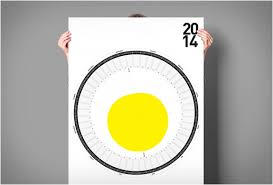
sun calendarOn my circular calendar the large egg yolk in the center has begun to pull further and further away from the inner circle that counts the days in the year. What that means is that the daylight hours have receded considerably since Mabon, the Autumnal Equinox. The season of Samain, now two weeks old, runs from October 31st to the Winter Solstice, falling this year on December 21st.

Over Samain the air grows colder, plants go fully dormant, and the skies become gray, gravid with snow. By the Winter Solstice, the bleak midwinter, cold has come in earnest and the sun spends most of its time in other climes. These are the seasons for those of us acquainted with the night.

No wonder the brave lights of Diwali, Hanukkah, Christmas and New Years try to push back against the darkness. Some find it intolerable, oppressive. Long. In ancient times there was the fear that the sun, once hidden for too long, might forget to rise again, or, even if it did rise again, that it might stay on this diminished course. Fear of darkness lies deep in the human psyche, probably literally at the base of the brain.

Yet some of us welcome the coming of the darkness. Some of us know that underneath the barren fields some plants and animals do not wink out, but merely slumber, gathering themselves for the spring, preserving the hard one fruits of the growing season in roots or through hibernation. Some of us remember that the womb is a dark and liquid place, that in it we were once swimmers, beings of fluid grace and that the light is a surprise, an alien medium to us then. Some of us know that darkness is the realm of the heart and the place where creative acts take place.

Some of us watch the receding yellow on the circular calendar and count down toward our favorite holiday, the Winter Solstice.

Winter Solstice 2014 on Shadow Mountain

Samain                                                                             Closing Moon

This full moon, shining on the early weeks of Samain, illuminates important nights in our life. Already within in this new year we have purchased a new house, contracted a mover, found fence, painting and carpet contractors and readied ourselves for the final push psychically, fiscally and logistically. We will, still in the season of Samain, move into our new home and begin our new life in that house.

Then, only two or three days later, the highnight of my sacred calendar, the winter solstice, will come and we will celebrate our first solstice on Shadow Mountain. This is a potent beginning to a new year and to a new phase of life.