Beltane Mountain Moon
Category Archives: US History
Up in Smoke
Spring Mountain Moon
A cloud crawls down Black Mountain,
Cotton embraces ski runs, blue above.
A light scrim of snow covers our solar panels,
The sky falls toward us, slowly.
 Today is 4/20. In Colorado and elsewhere it’s a pot linked holiday and here’s a brief explanation of its strange origin.* A couple of years ago I was downtown Denver near the National Western Stockshow Grounds on April 20th. Driving to a small taqueria for lunch I passed hundreds of people walking along the road, smoking joints, smiling, lots of dreadlocks under Rastafarian knit saggy caps. Last year the 4/20 crowd made such a mess at a city park that Denver stopped the celebration for this year.
4/20 is also Adolph Hitler’s birthday, my brother Mark reminded me. Hitler is a figure in the childhood dark closet of most Baby Boomers whose parents, like mine, were veterans of WWII. My dad had a beaten up copy of Mein Kampf, Hitler’s autobiography. It always seemed strange to me as a boy; but, as an adult, I came to realize how large Hitler loomed over his life, occasioning several years in the military for both him and my mom.
 Now Hitler is mostly a boogeyman, a perfect example of either evil or the potential power of white supremacy. His Nazi party serves a similar function, offered up in movies if an ultimate villain is needed. Just as the Vietnam War, which dominated my life in the late sixties and early seventies, has faded from the memory of millennials, so even the holocaust has begun to fade from memory. Yes, it’s dangerous to lose sight of this horror; but, it’s also human. As an event moves further away from us, it changes, transforms.
Most, all?, religions are an attempt to hold a historical moment close, to keep it vibrant, vital. Easter and Passover. Even these though show the great difficulty in maintaining the urgency of something that has been covered over by distance and lack of direct experience. Max Weber called this the rationalization of charisma. As the charismatic figure or moment recedes, institutions grow up to protect its memory, but that very fact, the institutionalization of a matter of the heart, encrusts the event and eventually depletes it of its power. It becomes covered over by dogma, by tradition, by the ridigities of too much thought.
 Emerson knew this. “The foregoing generations beheld God and nature face to face; we, through their eyes. Why should not we also enjoy an original relation to the universe? Why should not we have a poetry and philosophy of insight and not of tradition, and a religion by revelation to us, and not the history of theirs?” From the introduction to his essay, Nature.
We need to discern not only, perhaps not even most importantly, the facts of the holocaust, though they are incalculably significant, but we need to look evil in the face in our time, confront it now, name it now. Stop it now. Evil, like good, does not stop in a historical moment, but gains new, contemporary expressions. If we keep looking for revelation about what it means to be human in sacred texts or historical tragedies, we can easily miss the revelation appearing in the neighborhoods and rural areas of our own country.
*In 1971, Steve Capper, Dave Reddix, Jeffrey Noel, Larry Schwartz, and Mark Gravich, five high school students[4] in San Rafael, California,[5][6] calling themselves the Waldos[7][8] because “their chosen hang-out spot was a wall outside the school”,[9] used the term in connection with a fall 1971 plan to search for an abandoned cannabis crop that they had learned about,[7][10] based on a treasure map made by the grower. wiki
Stuff From Out There
Imbolc New Shoulder Moon
A few random finds. The first one sent by sister Mary. It appeared in the Guardian.
Romanian court tells man he is not alive Constantin Reliu, 63, fails to overturn 2003 death certificate because he appealed too late. Read the whole story at Guardian
And, two from Post Secrets. The second because it breaks my heart. The first because I recognized the sentiment of feeling guilty because I did not suffer more. The thing to remember is that ignored mine would have done what all cancers do, take over my body and kill me.


Black Panther
Imbolc New Life Moon
 Kate took one for the team yesterday. She went to see Black Panther with me. I had two reasons for wanting to see it. One, it’s a Marvel Studio movie and, god help me, I really like them. Most of them. Two, it’s become a cultural sensation and I wanted to see why, if I could. Kate gave me a third reason. To lift my spirits.
Nothing like vibranium theft and lots of gratuitous violence in a movie filled with elegant looking black folk, a few Koreans and a couple of supporting white actors to counter the gray veil. Black Panther, with closing and opening scenes in Oakland, home of the Black Panthers, Huey Newton and Bobby Seale, was ok. Not great. Might have been better if I could have heard all the dialogue. Where are my closed captions at the theater?
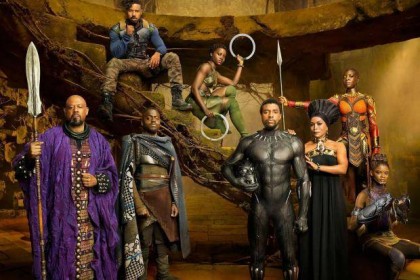 The plot was less important, I think, than the stage settings and the actors. From Chadwick Boseman and Michael B. Jordan to Lupita Nyong’o and Danai Gurira the young black actors were both beautiful and powerful. Forest Whittaker and Angela Basset added gravitas.
It’s an interesting commentary on our global culture when a single movie, made with high production values, can garner so much attention and be hailed as a “defining moment.” For this white male, certainly born to white privilege though of a lesser amount than, say, Donald Trump, it was not a defining moment. It was a decent action movie. It was not, however, blaxploitation, like those 60’s and 70’s movies with mostly black casts. And, I suspect, that contrast gave it some of its power, too.
Did it lift my spirits? Well, it got me to ignore them for a couple of hours. And, I don’t feel as heavy this morning. Maybe it helped. Time, good ol’ time, will tell.
Flash ride for a flash ride
Imbolc Imbolc Moon
Whimsy. Dreams. Finally, a flying car.
First, a before the launch video, then, live streaming of Starman.
And, then. Buck Rogers!
Splitters and lumpers
Imbolc Imbolc Moon
 Last night at Beth Evergreen three presenters, a University of Colorado Regent, a newly hired diversity specialist for Jeffco schools and an Evergreen woman, formerly a philanthropist and LGBT activist, now working in corporate social responsibility spoke about labeling and identity. It was, in some ways, disappointing.
Though the focus was on labeling, someone or something else (like census forms, school boards, the dominant culture) describes you, and identity, you describe yourself, the topic veered rapidly into a mode of doublespeak. It’s difficult to describe, but identity politics has become a minefield of careful positioning, trying not to cause offense, and further and further journeys into talking but not changing. Each person in the room last night, presenters and audience included, brought authentic concern and a willingness to be part of a solution. But, to what?
I kept thinking of the hoary argument in plant classification between lumpers and splitters. The same analytical dynamic plays out in many fields. Lumpers look for commonalities, seek to reduce the number of categories in any particular area of study while splitters look for differences, for nuanced distinctions that allow uniqueness to flourish. Neither approach is right or wrong, it’s almost a psychological tendency, I think, rather than a reasoned stance.
 In identity description the nod now goes to splitters. As one presenter last night said, “I see gender like the stars in the sky, some may be brighter, more prominent, but there are many stars in the sky.” That’s breathtakingly broad.
A key word that emerged last night was fluidity. It basically means that the ground shifts frequently in this conversation, not least because people claiming their own identity often make different distinctions as they learn more about themselves and their community. There are, too, regional differences and age cohort differences. It’s a splitters’ paradise.
Here’s why it was disappointing to me. It felt like conversations from the mid to late sixties, though those were blunter in their focus. They were, at least at first, focused on civil rights for African-Americans, or Blacks, or Black-Americans. The power moves involved in labeling versus identifying were in bold relief. We’re not niggers or coloreds or darkies. We’re Americans with a particular historical background.
Remember Black is beautiful? Afros. Kente cloth. Angela Davis. Malcolm X and Martin Luther King. Last night was the contemporary version: male, female, bisexual, pansexual, transsexual, intersexual, asexual. Gay. Lesbian. It all felt depressingly familiar, as if we’d moved in time away from the sixties, but not in content.
 That’s not to say that “racial” distinctions were absent from the conversation. Not at all. Unfortunately. The strange, weird thing about this is that race is a nonsense category, not supported by genetics at all. So creating a splitters nomenclature for various “races” reinforces a non-existent and damaging conceptual paradigm. Of course, the culture, in diverse ways, uses race as a placeholder for attaching secondary characteristics to others. Of course it does. But how do we move away from that convenient slotting, or lumping of people based on skin color? Does it happen by emphasizing color? It cannot. Does it happen by ignoring the racist who does? No.
And that was the problem I had with evening. There seems to have no movement forward in the land of identity politics, only movement crabwise.
I did not ask my question, because it occurred to me on the way home, naturally. “Has identity politics by the left contributed to, even caused, the rise of populism now roiling our nation?” That is, have we, in slicing and dicing the particulars of personal difference blinded ourselves to the plight of working class Americans? It seems so to me.
A movement against oligarchy, plutocracy and autarchy must be first made of lumpers. These lumpers must find, express and celebrate the commonalities among those who suffer as a result of concentrated wealth, purchased power, dynastic ambition. Right now we have given away our power with a navel-gazing splitter mentality. Of course, we must be able to define and describe ourselves. Yes. But we must not only reach for the unique and particular, but for the broader and more universal. No political change can come without joining hands, so the more difficult, the more necessary task in the Trump era belongs not to the splitters but to the lumpers.
Oops.
Imbolc Imbolc Moon
 Stocks have begun to sink. Good. I hope they go down a full 10% at least, a decent correction and a return to market volatility. This puffed up market, glowing and expanding as if by orange-haired demagogic magic, was never his. It was the tail end of the Obama economy; the one, lest we forget, that he rescued from the worst economic crisis of recent times.
Irrational exuberance. Greenspan may have presided over the last inflation, pumped up by his own Randian version of combover ideology, but he nailed the bubble feeling. How else to explain the glee which has followed the rise and rise and rise of the various indices? And, now, its opposite, irrational anxiety.
 Irrational because the underlying fundamentals are still sound. We’re adding jobs, inflation and interest rates remain low, and international economies began growing together, for the first time in a while. Fluctuations in stock prices are, and I can’t believe I’m agreeing with Mike Pence here, normal. They represent the ebb and tide of sentiment not necessarily anchored, at least in the moment, to any real world economics.
Trump is a blowhard, a hardcore racist, a not disguised at all white supremacist, a misogynist, a cruel man. And somehow, damn it, our President. His approval ratings, already abysmal, may plummet further along with the Dow Jones. May it be so.
Vintage
Winter Moon of the Long Nights
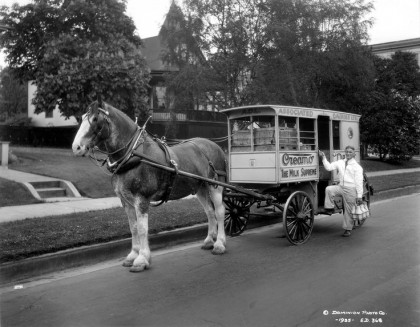
2018 needs to come to mind now if you still write checks. Remember checks? Charming pieces of paper with which old folks used to transfer money from their bank accounts to someone else’s? Dial phones. Black and white TV. Horse drawn milk delivery. Cars with fins. Poodle skirts and doo-wop. Electric typewriters. (my personal obsession) Paper newspapers. Newspapers as delivery vehicles for the news.
Nostalgia? No. In most cases what we have now is an improvement, but it’s interesting to consider the cultural and technological distance between childhood and adulthood in any time period, I imagine. Might be an interesting academic discipline. How does the past look from an adult perspective? The gap between adult’s historical knowledge and their children’s immersion in their own time is always a source of entertainment at least.
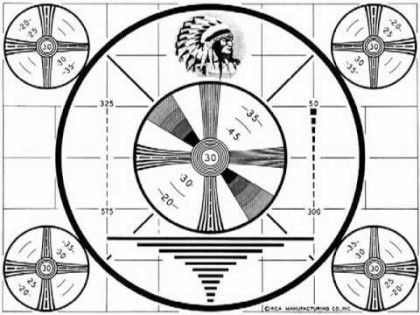 My grandmother called cars the machine. “Dad, would you get the machine and take the kids downtown?” We had Ray Carver whose horse drawn milk wagon survived into the late 1950’s. Television stations used to turn off for the night. Just had a conversation with some old friends about the sign off image with the Indian in an eagle feather headdress.
My childhood is vintage now and I have the images to prove it.
Humans don’t try to dominate. We listen. We adjust.
Winter The Moon of the Long Nights

The full Moon of the Long Nights glows in the west this morning, roughly over Evergreen. Its gentle light blots out many stars, but makes up for that in its own silvery beauty.
The moon is a place alien to us in spite of its ubiquity. We see it most nights, know its facing terrain intimately, most of it visible through good binoculars. We’ve even sent a few humans to walk upon it, twelve all told, but that small number underscores rather than challenges its wildness. Even if humans settle on the moon, its surface will still be no place for unprotected human bodies. We were not made for that place even though it is our closest solar system neighbor. It is the first outpost of the wilderness, the strange and foreign place, that is everything else in the vastness of space.
There are still places on earth where we can experience wildness. High Country News, a magazine that focuses on issues effecting the contemporary West, has become a favorite read of mine; and, in its Christmas issue, featured an article by Outside writer and editor, Christopher Solomon, “In the Home of the Bear.”
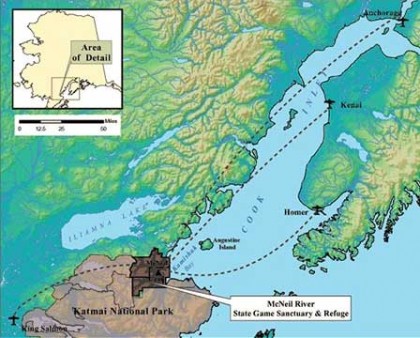 Solomon recounts a visit to the McNeil River Sanctuary. He won a chance to visit this protected spot for the Alaskan brown bear in an annual lottery. The fairly long quote below has rattled around in my mind since I read it a week or so ago. It reveals, at least to me, a path we could walk to accomplish Thomas Berry’s Great Work for our time, creating a sustainable human presence on this planet, our home in the wildness of space.
The he in the first sentence is Larry Aumiller, a manager of the sanctuary for three decades. He “spent three decades studying how humans could live in harmony with Ursus arctos on the landscape.”


“…over time, he learned how humans and bears could reside together.
And what works? First of all, restraint — not bulling into the landscape. Bears don’t like surprises. Moving slow and being predictable are good starts. That’s why humans walk the same trails, about the same times every day, and in the same group size. Over decades of such long and careful practice, the bears here have learned to see humans as another presence on the landscape — neither the source of a meal, nor the cause of pain or fear. They are “neutrally habituated,” in the argot of this place…
Almost everywhere else, the ability for humans and bears to move easily among each other has been lost. What is different at McNeil is that humans don’t try to dominate. We listen. We adjust. We find out how it all fits together, and where we fit in. “Here we learn that we can live among the great bears,” Fair writes. “Here we learn the human behaviors that allow this.”” In the Home of the Bear, High Country News
Humans don’t try to dominate. We listen. We adjust. We find out how it all fits together, and where we fit in. Oh, what a wonderful world it would be…
Jones Wins!
Samain Bare Aspen Moon
Can’t ignore the news today. 51 to 49 is the new Senate math. Really a low, low bar when a victory against a Supreme Court defying pedophile, by only 21,000 votes, is seen as a crushing message. Yes, it’s in the deepest of the deep South and that does matter, but for a party that has trumpeted its family and religious values as core to its purpose, its representative in this race had flaws that should have kept him out of the race in the first place. In other words if the rot in the Republican party were not so pervasive, had they not allowed corruption to rule their primary process, they would have won this seat easily. I’m glad Jones won and I hope the way he won does augur Republican troubles at mid-term elections next year, but I’m not ready to celebrate quite yet.