Spring Recovery Moon

Tom Crane sent me this street poet’s work, found on Maui. I wrote him back after reading it and said we could go for an epic third phase. I meant legendary, but epic appeared anyhow. He wrote back, said he’d like that, too, but didn’t know how. I agreed. Beginner’s Mind, eh? We’d have to redefine epic, Tom replied. Yes.
And, we don’t want to get stuck in the success trap. That trap can consume the second phase, career and family, but it can be set aside in the third. So the question could be, what would a legendary third phase look like? Better than epic. Epic has that Hollywood feel, doesn’t it? Let’s forget I transmuted legendary into epic and go back to the poem.

What does an open spirit look like in the third phase? What risks might we take if we had one? What risks are particular to the third phase? To get an idea of where this might go, I looked up the Hindu sadhu. A sadhu intentionally creates a fourth phase of life.* Of course in a Minnesota winter like the last one the Jain option of wearing nothing would require modification unless the sadhu phase was to be short.
I wonder if other cultures have similar ideas? Don’t know. What I do take from the sadhu is that they have an open spirit, moving toward moksa means getting free from samsara, the worldly enmeshment that the second phase presses upon us with such vigor.
Part of a legendary third phase might involve letting go, leaving the old desires of life, shaped by education, work, and family behind. But, if they’re left behind we might be left wondering, what else is there? Those desires are the ones that motivated us, got us up in the morning, out the door coffee in hand, ready to do. The old finish line model of retirement pretended that this was as easy as buying a set of Pings, selling the house in Kenwood, and moving to a Del Webb village to drive, chip and putt. Or, head out to Margaritaville, collect umbrellas in the sand next to your beach chair. Doesn’t sound like a sadhu approach, does it?

Another image, similar to the sadhu, was the Chinese scholar who would retire from the bureaucratic life, paradigmatic of the second phase in that culture, and move into the mountains to write poetry and live amongst wildlife and forests. This is a Taoist vision, one that took over from the Confucian when either work was over or changes in the political life forced a scholar out of the court. I like this one a little better than the sadhu because I like clothes.
Wu wei: “a state of being in which our actions are…effortlessly in alignment with the ebb and flow of the elemental cycles of the natural world” is the Taoist principle these mountain hermits follow. And, a sound one, though as I’ve written before, I’m also a “take arms against a sea of troubles and by opposing end them” sort of guy. This may be the key attitude that prevents me from fully letting go of success, of my set of Pings, that beach chair.
I’m not talking here about monastics or hermits who take to those lives, as Thomas Merton did, in the midst of their second phase. These are escapist lives, profound in their way of course, but ones that set aside the second phase much earlier. What I want to consider is the legendary third phase possible after the more traditional transition from work and raising a family.
Look forward to any ideas you might have. This preliminary look suggests some things to me. Let go. Seek spiritual liberation. Attune life to the seasons, to the natural world. Live in some seclusion from the old, second phase world.
“The sādhu is solely dedicated to achieving mokṣa (liberation), the fourth and final aśrama (stage of life), through meditation and contemplation of Brahman. Sādhus often wear simple clothing, such saffron-coloured clothing in Hinduism, white or nothing in Jainism, symbolising their sannyāsa (renunciation of worldly possessions).” wiki

 Cardio wise I’m way behind my usual fitness level. Totally detrained. It will take a while to get that back, probably longer than getting my muscles into shape. No other way than through it. This paleolithic body wants to be hunting and gathering, but I’m sitting and coughing. Sigh.
 Example.
 2019. The Blade Runner year. Dystopian time? Match. Authoritarian regime? Match. Police killing those marginalized to society? Match. The cinematography of our era may look different-though Hong Kong, Shanghai, Dubai-but the underlying premise of a dark future catching up with all of us was prescient, if not exactly surprising.
 Dystopian futures, even ours from the perspective of 1982, have this seeming anomaly: Life goes on. Most folks make some accommodation, some compromise, and go on with their daily routines. Short of mass suicide, what other option is there? It is those very accommodations and compromises that are fertile soil for the demagogue and the populist. See Trump, Erdogan, Germany’s alt-right, Hungary’s Viktor Orban, Brazil’s Michel Temer. Movies have to convey dystopian troubles cinematically, so we think if the visuals don’t correlate with ours that the movie doesn’t apply. Wrong. It’s the core cultural themes that are important.
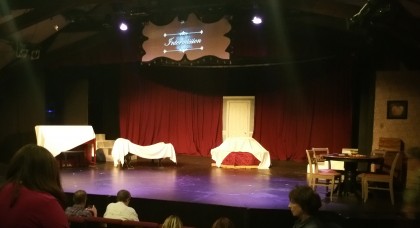
 We knew people in the cast, saw folks we knew in the lobby, and were greeted by the costumer as we left. He remembered us from our visit to the tech rehearsal. In other words this was also a moment of immersion in community, our community. That’s not the same as a visit to the Guthrie or to Broadway, but has lots of other, ancillary benefits.
 OMG! What just happened? It was shocking and I missed the point. Sort of. In a couple of scenes after this a dumpling like son comes home with the same woman who led the dumpling out the door. I took this to mean that the woman had somehow reconciled with the dumpling and he’d grown up. The eating in my understanding was a symbol of the difficulties inherent in the moment children become independent.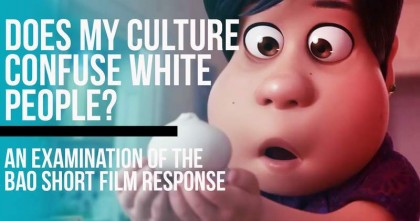
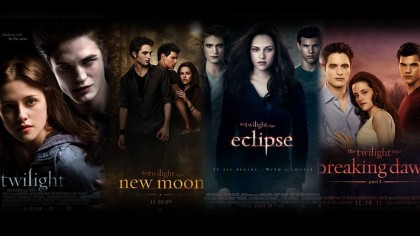 Modern technology is so wonderful. Over the last few days I watched all five of the much maligned Twilight movies. You might ask why, at 71, I would subject myself to all those teen hormones, questionable dialogue, and odd acting. First answer, I’m easily entertained. Second answer, I’m revising Superior Wolf right now. Werewolves from their source. Also, a project I work on from time to time is Rocky Mountain Vampire. So, the Twilight saga is in the same genre as my own work, though aimed more at a young adult, tween to teen audience. Which is, I might add, a very lucrative market. Maybe, it just occurred to me, some of them will be interested in my work as a result of their exposure to the Twilight books and movies.
 The supernatural is a dominant theme in my life, from religion to magic to ancient myths and legends to fairy tales and folklore. My world has enchantment around every bend, every mountain stream, every cloud covered mountain peak. No, I don’t know if there are faeries and elves and Shivas and Lokis and witches who eat children. I don’t know if anyone ever set out on a quest for the golden fleece or angels got thrown out of heaven. Don’t need to. We wonder about what happens after death, a common horror experience often and always. If we’re thoughtful, we wonder about what happened before life. Where were we before?
 Our senses limit us to a particular spectrum of light, a particular range of sounds, a particular grouping of smells and tastes, yet we know about the infrared, low and high frequency sounds, the more nuanced world of smells available to dogs. We’re locked inside our bodies, yet we know that there are multiverses in every person we meet, just like in us. We know we were thrown into a particular moment, yet know very little of the moments the other billions of us got thrown into. My point is that our understanding of the natural is very, very limited, in spite of all the sophisticated scientific and humanistic and technological tools we can bring to bear. Most of what exists is outside our usual understanding of natural, certainly outside our sensory experience.
 Kate took one for the team yesterday. She went to see Black Panther with me. I had two reasons for wanting to see it. One, it’s a Marvel Studio movie and, god help me, I really like them. Most of them. Two, it’s become a cultural sensation and I wanted to see why, if I could. Kate gave me a third reason. To lift my spirits.
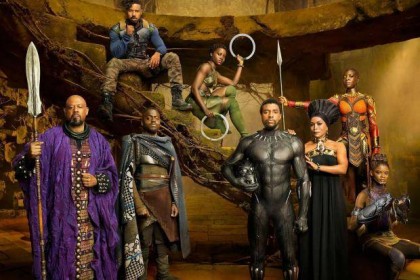 The plot was less important, I think, than the stage settings and the actors. From Chadwick Boseman and Michael B. Jordan to Lupita Nyong’o and Danai Gurira the young black actors were both beautiful and powerful. Forest Whittaker and Angela Basset added gravitas.
 If you have Netflix and Amazon Prime Video, I can recommend three shows: Black Mirror on Netflix, Humans and Phillip K. Dick’s Electric Dreams on Amazon Prime. All three are science fiction, all dystopian to one degree or another, but each is wonderful.