Category Archives: Memories

Folk

Beltane                                                                 Early Growth Moon

Listening to 1960’s folk on Pandora.  Forgot how much folk music figured in the 1960’s.  I remember my first anti-American rhetoric coming in the Black Swan Coffee House in Stratford, Ontario where I was for the Shakespeare Festival.  It was an anti-Vietnam folk song sung in what would have been 1963 or so.  We were had barely begun our operations in Vietnam at that time.

Many of the early protest songs were folk songs, following the long, already established tradition among labor organizers.  There’s something about the acoustic, often with no band, that speaks deeper to me.  Kate and I support Folk Alley, too, which plays contemporary folk along with the occasional older songs.

The Coffee House circuit was big in the 1960’s a type of caffeine bar very different from Starbucks and Caribou.  They are coffee house lite, almost not there as cultural institutions, with their isolated patrons floating on the web while sipping pretentiously named drinks.  The 1960’s coffee house was more in line with the 18th and 19th century versions in England where much of the early scientific and industrial revolutions got their start.  The main difference is that the 1960’s version featured political plotting, resolve boosting through music and plenty of buzz to work on the next protest late into the night.


Place

Beltane                                                                                 Planting Moon


All of us are from somewhere.  We may love that place or hate it or be indifferent to it, but it remains the unspoken standard against which we judge our present condition.  I understand that military brats don’t consider themselves tied to any location and I hope for their sake that that isn’t true, because a person without a place is a terrible thing to contemplate, so called world citizens to the contrary.

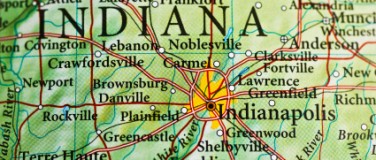
At certain times of the year our old home place gets brought to mind and late May is one of those times for me.  The greatest spectacle in racing, the Indianapolis 500 happens on the Sunday closest to Memorial Day.  It used to be on Memorial Day.

Right now in Indiana everyone’s focused on the time trials, the days preceding the race when pit crews tune the cars and the drivers familiarize themselves with the track and the way their car responds to it.  The Indianapolis Star has an entire section of motor sports and in these weeks it will feature special interest stories leading up to the race itself.

As kids, we would all pour over lap times, engine design decisions, who was driving which car.  We could handicap an upcoming race like old railbirds at the Kentucky Derby. (among whom used to my grandfather, Charlie Keaton)   In the 1950’s the old car design, large tires with a soapbox derby look sported Offenhauser 4-cylinder engines.  It was 1963 when Team Lotus brought in a mid-engine car, which came in second, then dominated until blowing a gasket in 1964 and finally winning in 1965.  That was the first race the Offy’s hadn’t won since their rise to dominance.

It’s hard to describe how radical it was seeing this small car, low to the ground, racing against the older style Indy cars.  This picture shows Jim Graham and the first Lotus entered in the 1963 race.  It looked like a different animal altogether than the old roadsters.  They were almost instantly extinct, along with the Offenhauser engine.

Up until Team Lotus the Indy affair had been a US event, but Jim Graham’s success and the amount of money available to win soon drew many out of the European based Formula 1 racing circuit.  Now the favorite is as likely to be from Brazil as from Noblesville, Indiana.

It’s also a much faster race.  The year I was born, 1947, the Indy was won by Mauri Rose at an average speed of 116.3, a pole qualifying time of 120.0 and a total race time of 4 hours, 15 minutes.  Ten years later, in 1957, Sam Hanks won the race at an average speed of 135.6 and a race time of 3 hours, 41 minutes.  8 years after that in 1965, the year I graduated from high school, Jim Graham won in the car you see above.   Average  speed, 150.7, qualifying speed, 160.7 and a race time of 3 hours and 19 minutes, almost an hour faster than 1947.  In 1990 the average speed was an astonishing 185.9, a qualifying speed of 223.3 and a race time of just 2 hours and 41 minutes.

After that year, as the downdraft devices and the quicker engines began to reach higher and higher speeds, the track began to impose limitations aimed at lowering the overall speeds and reducing the possibility of high-speed, multiple car fatalities.  Safer car designs, cabin designs and suit designs have made the driver risk less now than in the much slower days of the 1950’s, but fatalities still occur.

Dan Wheldon, a two-time Indy winner, and winner in 2011, died that same year in a race in Las Vegas.  (above:  wheldon’s 2011 winning car)

This post is about place, about a place defining event and its embeddedness in my own life.

Yet.

Imbolc                                                                   Bloodroot Moon

Snow came in the night.  Maybe 2 inches.  Freshened up the landscape, pushed back the melting time.  Last year today it was 73, ruining my vision of the north, turning it into a slushy Indiana/Ohio/Illinois.  Climate change stealing my home.  It disoriented me, made me feel like a stranger in a strange, yet strangely familiar, land.  Now.  30 degrees.  8 inches of snow.  Home again.

A book on my shelf, important to me:  Becoming Native to This Place.  The idea so powerful.  One so necessary for this nature starved moment, as the pace of the city as refuge lopes toward its own four minute mile.  Cities are energy, buzz, imagination criss-crossing, humans indulging, amplifying, renewing humanness but.  But.

All good.  Yes.  Yet.

That stream you used to walk along.  The meadow where the deer stood.  You remember.  The night the snow came down and you put on your snowshoes and you walked out the backdoor into the woods and walked quietly among the trees, listening to the great horned owl and the wind.  The great dog bounding behind you in the snow, standing on your snowshoes, making you fall over and laugh.  Remember that?

There was, too, that New Year’s Day.  Early morning with the temperature in the 20s below zero and another dog, the feral one, black and sleek, slung low to the ground, went with you on the frozen lake, investigating the ice-fishing shacks, all alone, everyone still in bed from the party the night before but you two walked, just you two and the cold.

Before I go, I also have to mention those potatoes.  The first year.  Reaching underneath the earth, scrabbling around with gloved fingers.  Finding a lump.  There.  Another.  And another.  And another.  The taste.  Straight from the soil.  With leeks and garlic.  Tomatoes, too, and beets.  Red fingers.  The collard greens.  Biscuits spread with honey from the hive.

The Band

Imbolc                                                                         Valentine Moon

Listening to the Band, The Weight.  One of my favorite bands.  Up on Cripple Creek.  The Night They Drove Old Dixie Down.  I Shall Be Released.  The back up band for Dylan from 1965-1968 when he went on his Electric Tour, they played together until 1976, ending their touring days with the wonderful Martin Scorsese film, The Last Waltz.

Music congeals around it auras and memories, the mental flavors of a time, a moment in personal history.  Our song.  That song they played.  You know the one.  The music now known as psychedelic or acid rock cannot be heard by someone in the Movement during the ’60’s and early 70’s without instant transportation back, old Army jackets, pot, dope.  Looking out for the man.  Gettin’ back to the land.  Stopping the war.  Youth done up in  neon colors and lived to the Jefferson Airplane, Led Zepplin, the Doors.

Think of the Big Band era and World War II.  Glam rock and bubble gum.  Punk.  All have their devotees and their memories.

Magical memory tours.  That’s an important thing music offers.  I don’t go there often enough.

You Must Have One

Samhain                                                               Moon of the Winter Solstice

You must have one of these incidents in your past.  The chestnut from my past was the time I picked up a tube of Brylcreem and proceeded to brush my teeth.  My teeth stood up nice and straight.  And no, I don’t know why I had the Brylcreem.

So now I have another one.  I use soy milk on cereal.  When soy milk sits for a while, it becomes thick, but doesn’t taste bad.  This morning–I should stipulate that I’m not at my most conscious early in the morning–I got up, put cereal in the bowl, blueberries on top, grabbed the soy milk and poured it over them.  It was a little thick, but I thought, oh, hell with it.  I’ll try it.

I ate it.  About half.  It was terrible.  I had to throw out the remaining cereal and blueberries.  When I went in the refrigerator to throw out the curdled soy milk, I discovered I had put eggnog on my cereal.

Yep. It’s my new one.  The morning I put eggnog on my cereal.

Their Grey Eminence

Fall                                                                 Harvest Moon

The Vikings looked good today; good, not great, but hey that’s a hell of lot better than last year.

The look and feel of mid-November outside.  The Norwegian maple across the tree has dropped its skirt, flared down around its ankles and now stands almost naked to the elements.  Trees undress before the coldest weather.  The opposite tact taken by Minnesota humans.

James Whitcomb Riley

Our woods take up the west horizon so we don’t see the sunset, but when I walked down to the mailbox this afternoon, there, across Round Lake, the late setting sun added its burnt orange to the maples and oaks.  Cirrus clouds gathered in waves sat watching it all, grey eminences, quiet and unmoving.

This time of year always pushes me back toward Indiana, a Hoosier boyhood.  In the post above this I’m including a poem Indiana’s Poet Laureate, James Whitcomb Riley.  My mother read him to me when I was a small boy and, in fact, he has some relationship to our family, thought just what it is I don’t recall.  I do know that my Uncle Riley and my cousin Richard’s son, Uncle Riley’s grandson, also bears the name.

The Past Is Not Past

Fall                                                                   Harvest Moon

The internet is forever.  At least for now.  I learn this every so often and right now I’m learning it again in regard to a post of mine from two years ago that has become my most commented upon.  It talks of a difficult time in my life, when my then wife, Judy, and I bought a farm near Nevis, Minnesota, a back to the land moment.

Johnny and Judy, could be a mack the knife sort of tune, left me standing by myself one weekend in September of 1974, standing alone on 80 acres of scrubby land with a house and some outbuildings.  They took off for the Caribbean to spend the winter working boats sailing those waters.  Judy and I were married.

I took a quit claim deed to the farm signed by Judy and an uncontested divorce to the Hubbard County courthouse and legally resolved that episode of my life.  Legal action, of course, is not emotional nor does it shed history, rather it records emotional and historic changes.

As I say in that short piece, written after a day of using the chainsaw on our land here in Andover, I don’t blame Judy.  I don’t.  Three years after this time I acknowledged my alcoholism and started on the long road to recovery.  My behavior toward her in the months and years preceding 1974 would have made me want to run away to the Caribbean.  A bad time in my life that reached its nadir right about then.

Our life, our whole life, remains within us and within the memories of others.  It is not something we can set aside, push out of the way, deny.  We can, with time, place events in our life in context, in the trajectory of a whole life, yet they remain what they were.

I am no longer that young man, just as Judy is no longer that young woman.  We have both aged, gone different ways and had our own futures.  Those were exciting, revolutionary times and much of the revolution happened at the personal level.  Judy, Johnny and I played a part in that change, a small part, yet large in that moment of our lives.


The Terrible Silence

Fall                                                                     Harvest Moon

“I can not image being in Bill’s shoes tonight – trying to accept the finality of her (Regina’s) death and the terrible silence that must be filling the space with the passing of his lover.”    Stefan Helgeson by e-mail

Stefan is a poet and a good one.  His phrase, terrible silence, stuck with me, rattled around. Death causes our friends and lovers to go mute.  They can no longer respond to us.  No more tenderness exchanged at bed time.  No more joint decision making.  No more grocery lists.  Just.  Terrible silence.

This is true and it lasts.  My mother has been deaf to my questions and care for now over 48 years, longer than she was alive.  Death is final and final in a brutal way.  It brooks no second chances, no wait a minutes.  It finishes what life has wrought.

Then we are left with memory.  It is no wonder the ancient Greeks, those of Homer’s era, believed true immortality came only through the poet.  The poet could provide aid to memory, verses hammered out in a form for easy recall.  The poet chose the words and the perspective through which an individual, from Achilles to Paris, would be remembered for all time.  This alone bestowed immortality.

We have more tools.  Cameras.  Voice recordings.  Easily available pen, ink, paper.  Computers and digital storage.  But, I don’t know that we have better tools.  Though a picture may be worth a thousand words, it doesn’t mean as much as a thousand well-chosen words.

So, for all of you who read this and knew Regina, write.  Write about her.  She wrote.  Now take up the pen and write.  In this way Regina can live for a thousand years.


50 Objects

Fall                                                                         Harvest Moon

Right now, I’m not going to order them, just trying to think of objects that might show who I’ve been, what I’m becoming.  This is the first pass.  May need more, more specificity. Some of these may come off and others added.  But, it’s a start.

When I do this fully, like the British Museum did, I’ll provide label copy for each object.

Daisy:  a green Velveteen Rabbited toy of Dagwood and Blondie’s dog.  With eyes resewed and body stitched.

The Red Celica

The doorknob above the third shelf of our first apartment on Lincon Street in Alexandria

The coal augur in the same apartment building

The cave friends and I dug in the backyard of 311 Monroe Street

A stack of comic books

A plastic lunch tray from elementary school

A mat at Miss May’s kindergarten

Mortar boards with tassels moved

A draft card

The Greenwich Hotel in NYC

Angkor Wat

St. Winifred’s Holy Well

Castle Conwy

A dismantled alarm clock

Sodium in water

A beer bottle

A pack of Pall Malls

A deck of cards

A book, let’s say a specific book, The Glass Bead Game

Goya’s Dr. Arrieta

The Henry Moore sculpture honoring Enrique Fermi at the University of Chicago

A bible, the RSV

A contract for deed

3122 153rd ave. NW

A table at D’amico’s Cucina

An auditorium in Toronto

A study carrel in the corner on the third floor at United Theological Seminary

A wicker basket

A blue uniform

A pair of skis

An iron lung

A 1950 Chevy Panel Truck

A Dayton-Hudson Corporation Foundation board room late at night

A bassinet in an office

Stamps from the Vatican Post Office

A jar of Artemis Honey

A bill for an act: M.E.E.D.

An apartment building on the West Bank

A dog collar

A loaded trailer

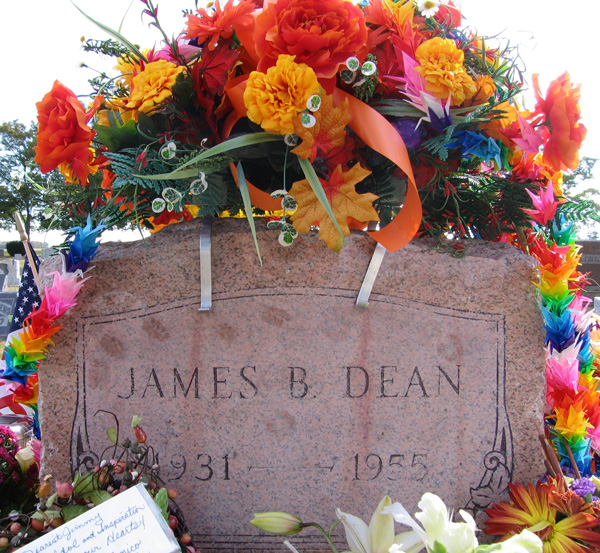
A cemetery

A cut off pony tail

A desk

A computer

Make-up

An All-Saint’s day processional in Colombia, outside Bogota

(Lynch’s Theatrical Makeup)


Down to Here, Down to There…

Fall                                                                       Harvest Moon

Kate went, oooh!  What?  She came into the workshop bearing a foot long hank of hair, still gathered in a small rubber band.  Mine.  From the day I decided to stop wearing my hair long.  The thing is.  This is beautiful, auburn hair.  It still has sheen and highlights.  Boy, that must have been a while ago.

Now.  Would have been fit for the gray pony tail radio hour.  Nothing but Jefferson Airplane, early Stones and Led Zepplin.  And my hair.

So ends the play, Hair! in its local run.

Got out the sledge hammer, carried snow fence stakes to the orchard, dug a small pit, pounded one stake into the ground and put a plastic covered wire round the leaning tree of Zestra, pulled and secured.  Pretty good, but it took a two by four wedged in the earth coming from the other direction to secure the tree upright.  Another stake and more plastic coated wire around another leaning apple tree.

Inside I coarsely chopped onions, potatoes, leeks, carrots and simmered them in homemade vegetable broth with a stick of butter and lots of pepper.  25 minutes later I added 6 pealed tomatoes, quartered, a half pound of mushrooms and simmered 10 minutes more.  Winter vegetable soup.

Kate gathered herbs and the last of the tomatoes.  We’ll have to cover the peppers.  Freeze warning tonight:  25-32 degrees.  She also picked raspberries and the leeks I needed for the winter vegetable soup.

(Minnesota freeze map, Sept. 22, 2012)

She also cleaned and stored our Zestra crop.  60 or 70 apples.  The bagged apples were in much better shape than the non-bagged ones.  That was on purpose to see if bagging really helped.  It’s such a pain I wanted to know for sure.