
Category Archives: Weather +Climate

Toward the New

Summer                                                                Most Heat Moon

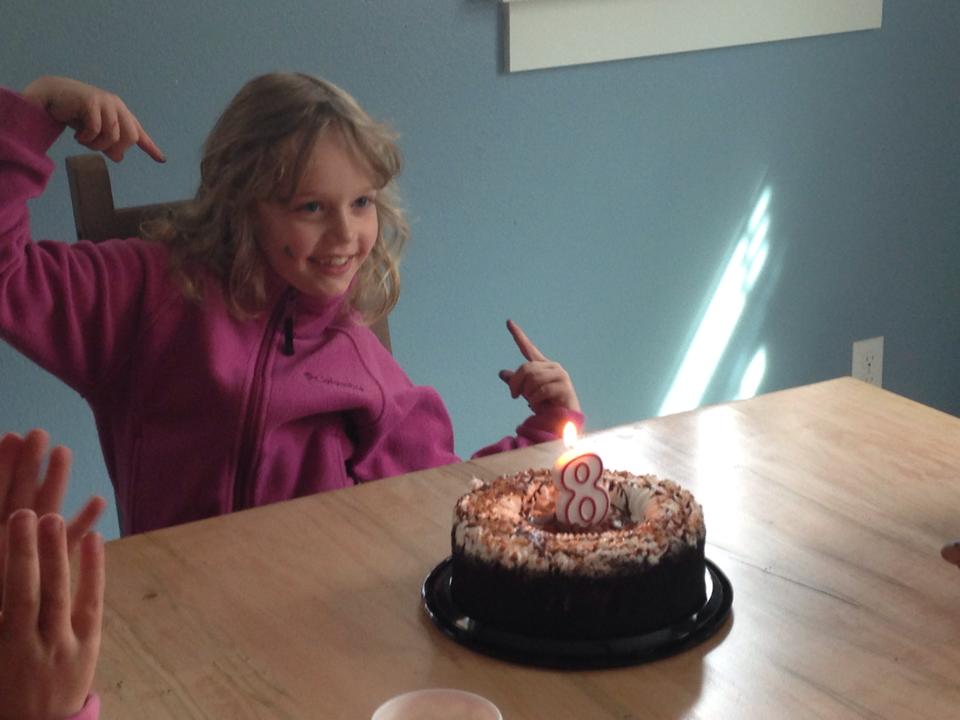
When asked last night if she wanted us to move to Colorado, Ruth nodded her blond head Ruth's 8thand said, “I want you to.” She may go with Grandma to look at property, give the grandchild’s view. We’ll give Ruth and Gabe a chance to have their say since they’ll be very important visitors (V.I.V.s), but Grandpop and Grandma will make the final choice, of course.
The standing in the drive-way, waving as the van pulls away ritual has happened. The three generation of Olson’s Sienna transport to Colorado has left the building.

As Colorado came rushing into the foreground of our lives this week, it’s made me consider what new things I might want to do out there. The first thing that came to mind? Learning to ride a horse. Something I’ve never done and what better place than the west. I don’t want to learn dressage or steeple chasing or barrel racing, but I would like to learn enough to ride on a mountain trail, maybe camp out.

A second thing came while reading an interesting article in this month’s Wired, “How We Can Tame Overlooked Wild Plants to Feed the World.” This article gives a broad brush presentation to how horticulture and agriculture will respond to climate change. It starts by referencing work being done in Ames, Iowa on domesticating new food crops.  The last creative work in domestication of new crop plants ended thousands of years ago.

Here’s the sentence that really jumped out at me: “Today, humans rely on fewer than 150 plants for nourishment, and just three cereal crops—wheat, rice, and corn—make up more than two-thirds of the world’s calories; along with barley, they own three-quarters of the global grain market.” op. cit.

The Land Institute outside Salina, Kansas has had my attention since I read founder Wes Jackson’s book, Becoming Native to This Place. This book along with the Great Work by Thomas Berry, The Sand County Almanac by Aldo Leopold and an excellent climate change conference Kate and I attended in Iowa City changed the direction of my political activism from economic and racial justice issues to environmental policy. They also affected my horticultural practices, turning me from perennial flowers to vegetables and fruit grown in a soil sensitive, heirloom-biased way.

So. When we finally settle down, I want to have a raised bed or two for kitchen vegetables, smaller than what we have here, but I also want to have at least one raised bed or plot devoted to advancing a new food crop. I’m not sure what this would entail, but if something useful can be done on a small plot in the Rocky Mountains, I want to devote the time necessary to it. Given the long time horizons on such projects, I may not hope to get too far; but, any distance toward a broader food palate and one capable of producing in hotter normal temperatures will be useful to my grandchildren and their children.


Almost the 4th

Summer                                                          Most Heat Moon

The last few days have been cool, more late September than early July. Kate worked 2011 06 26_0933early spring 2011outside a long time yesterday, clearing weeds out of the third tier of our garden and it looks great. It’s pleasant to work outside when it’s cool, much less so when it’s hot. I sprayed the orchard and the garden, mounded soil around the leeks to blanch them and moved much of what Kate had thrown over the fence.

Jon and Ruthie are on the road right now, headed toward Kansas City (on purpose), then north to Andover. It will be fun to have them here.

Jon’s going to put in a new deck for us. This was arranged long ago, but it will be good for selling the house.

These nights leading up to the 4th of July and the 4th itself are a problem for our thunderphobic (astraphobic) dogs. They inspire those neighbors who like to shoot off fireworks, one batch (not the usual suspects) who set them off around 10 p.m. each night lately. That’s just enough to launch Gertie (our German shorthair) out of her crate.

Click on the poster for its full effect.


Changing from Chronos to Kairos

Summer                                                         Summer Moon

Bill McKibben’s voice has been raised in anger, in intelligent discourse, in pleading before the public and the government and recently in organizing a mass movement 350.org. He has an article in this week’s New York Review of Books elegaic opening paragraph:

We may be entering the high-stakes endgame on climate change. The pieces—technological and perhaps political—are finally in place for rapid, powerful action to shift us off of fossil fuel. Unfortunately, the players may well decide instead to simply move pawns back and forth for another couple of decades, which would be fatal. Even more unfortunately, the natural world is daily making it more clear that the clock ticks down faster than we feared. The whole game is very nearly in check.” NY Review of Books, July 10, 2014.

This article reviews a book on changes in Antarctica, Antarctica: An Intimate Portrait of a Mysterious Continent, and two reports: What We Know: The Reality, Risks and Response to Climate Change from the American Association for the Advancement of Science and Climate Change Impacts in the United States: The Third National Climate Assessment by the US Global Change Research Program. Both of the reports are available in full at the links.

(Ice cores going back 800,000 years, drilled from Antarctic ice show there has never been a time in earth’s history when the carbon load in the atmosphere was more 290 ppm. The current level, updated monthly from a sensor on Mauna Kea, is above.)

The news is the same as the material I wrote about here while taking the Climate Change MOOC last fall. The Supreme Court today upheld the right of the Federal Government to regulate emissions from stationary sources. In yesterday’s paper Henry Paulson, Secretary of the Treasury under George II, and no Earth Firster proclaimed climate change as the problem of our time and proposed a tax on carbon emissions as a solution. All this does indicate climate change may soon become a matter of real, and painful, policy changes. And not just here, but across the globe.

It is the painful part that gives McKibben his dark tone. Changing over from a carbon fuel based economy will not be easy, cheap, or quick. In other words it’s not politically palatable. Just like social security and medicare reform. Policy makers have Pavlovian resistance to votes that may lose them support in their constituency. It will not be a simple matter to overcome that resistance. And yet it must be done. And it must be done now.

A portion of Paulson’s piece I liked a lot was his opening point “...if there’s one thing I’ve learned throughout my work in finance, government and conservation, it is to act before problems become too big to manage.” He echoes Thomas Berry’s much earlier work when he says, “Climate change is the challenge of our time.

It is our work and one we must do together.

An Underlying Question

Beltane                                                              Summer Moon

As I saw the video and read the article on fire in Colorado, the underlying question became slowly evident to me. Here it was couched in hotshots, firemen, national forests and parks employees and the complex budgetary manipulations of the Forest Service. Along the ocean coasts of the Atlantic, the Gulf of Mexico and the Pacific in this country it will involve underwater construction crews, builders of seawalls and levees and drainage systems, the Coast Guard and numerous other federal and state agencies and their employees. And the underlying question is this: how much money, state or federal, and how many lives will we spend in defense of neighborhoods, businesses, cities built in predictably dangerous environments?

Climate change has begun to push the numbers of such places higher and higher: whole nations like Vanuatu and the Maldives, large portions of heavily populated coastal areas, those spots where humanity, in wealthier and stupider times, has planted itself in defiance of environmental barriers like deserts (the American Southwest and California), wildfire, and many riverine settings.

(from the Phoenix city guide: Phoenix rises from the floor of the northern tip of the great Sonoran Desert)

This is the question of adaptation, how much will we modify our current reality as the climate changes, as opposed to the question of mitigation which the EPA has put on the front pages of America’s newspapers. It is not a question of doing one or the other, we will have to do both. But. How much should we do to defend poor decisions on the parts of others?

(The Waldo Canyon fire in Colorado Springs last year.)

There are, of course, as always, a lot of gray here. It’s one thing to buy a lovely forested home in a Colorado red zone and another to have an apartment built years ago near the Atlantic Ocean. Much of the change will be gradual and the costs to adapt can be made gradually, too. This is true of sea level rise, though the sums of money involved are enormous. But. There are others, like moving into wildfire habitat as its frequency escalates by factors as high as 400%, that are not gray at all.

400%

Beltane                                                                 Summer Moon

New state, new realities. I’m reading the Denver Post online now and there was a story in today’s edition: THE FIRE LINE: WILDFIRE IN COLORADO. The 27 minute video is worth watching, especially if you contemplate purchasing a home in Colorado. Even if you’re not, you might find its underlying argument, made by fire researchers and fire fighters and natural resource professionals alike, intriguing. The oldest of them, John Maclean, draws an analogy between flood plains and fire habitat. If people move into a flood plain and experience a catastrophe, is it the Federal Governments responsibility to take care of them? Well, he goes on, fire habitat is the same.

From 2000 to 2010 100,000 people moved into red zone areas. What are they? Areas with a high likelihood of unmanageable fire. Just like a floodplain. Here’s the big question: how much money and how many firefighters should we risk saving structures willingly built within high likelihood fire habitat? Not much, according to the tone of this video. And it makes sense to me.

It’s an interesting case in the politics of the West where local control and individual choice are part of the political culture. It means state legislatures and even county boards hesitate to control developers and home buyers as they create neighborhoods, beautiful, yes, but also dangerous. Without getting engaged (yet) in these struggles it seems to me that it’s a false libertarianism which champions local control and individual choice on one end of a decision making chain, but then looks for the Federal Government and local firefighters to compensate for the risks on the other end.

Out of all the climate change material I’ve read and learned over the last year one of the standout predictions is that fire incidence will increase by 400% in the West. That’s 400%. I look forward to working with the Rocky Mountain chapter of the Sierra Club on issues like this one.


Sinners in the Hands of an Angry Climate

Beltane                                                                            Emergence Moon

A word about religious language. Though rooted in a metaphysics with which I no longer agree, much of the language developed by Christian theologians has earthly application.

Here are some examples. Atonement describes the process of reconciliation between one estranged and the one from whom they are estranged. Atonement is just what we need for a species estranged from its home, no longer aware of the rich and intimate love only footsteps away from most doors.

(Antonio Palomino. Saint Michael Vanquishing the Devil, 1700-14)

It is, I suppose you could say, the story of the prodigal son, the wastrel who fled parental care and set out wandering far from home. Only atonement, the return of the prodigal to his home, can overcome the estrangement.

But, before atonement comes repentance. That is, the estranged must come awake to the hamartia* that creates their current condition. Most of us know only vaguely (we see through a glass darkly) of our implication in the reduction in Arctic sea ice, the acidification of the oceans, the gradual warming of the temperate latitudes. We are even mostly ignorant of the web of decisions we make daily to draw more oil from the sands of Arabia or the fracking fields of North Dakotas, decisions that also push the coal trains out of the Powder River Coal Fields in Wyoming, snaking like a plague along our nations railroads.

(Peasant family returns home paint by the Belgian artist Eugène Laermans (1864-1940) – Boekarest:National Museum of Art of Romania (Romania)

Hamartia, in its classical understanding, results in tragedy. It is often related to hubris, that overweening pride that causes blindness. There is little doubt that our estrangement from mother earth is reinforced by our hubris and that the result of that hubris is humanity’s fatal flaw. The end will be not a triumphant Christ hurling sinners into hell but the sinners themselves creating hell above ground as temperatures and sea levels and extreme weather events rise.

The Great Work for our generation, as Thomas Berry describes it, is to create a sustainable path for humans on this planet. In religious language this means we must guide each other back home, to a home where we will be received by a loving mother and father (the earth and the sun). We prodigals must prostrate ourselves before our parents and end our estrangement. And, of course, the curious, paradoxical truth is that in doing so we will save ourselves, not the planet.


*Hamartia is a concept used by Aristotle to describe tragedy. Hamartia leads to the fall of a noble man caused by some excess or mistake in behavior, not because of a willful violation of the gods’ laws. Hamartia is related to hubris, which was also more an action than attitude.


10 Feet High and Risin’

Beltane                                                                 Emergence Moon

“A large section of the mighty West Antarctica ice sheet has begun falling apart and its continued melting now appears to be unstoppable…If the findings hold up, they suggest that the melting could destabilize neighboring parts of the ice sheet and a rise in sea level of 10 feet or more may be unavoidable in coming centuries.” NYT

(see this website for a clickable version of the map to the right. It shows, in gray and orange here, states affected at that level of sea rise.)

“WASHINGTON — The accelerating rate of climate change poses a severe risk to national security and acts as a catalyst for global political conflict, a report published Tuesday by a leading government-funded military research organization concluded.”  NYT 

I see these things. I know the road ahead and it is difficult. Yet, there are Ruth and Gabe. And your grandchildren, too. Then, the children they too will have. And imagine the world in which they will have to live.

All this demands a piece of me for as long as I’m able. Some of us have to lean on the horn until folks start coming out of the building to see what’s going on.

Spring Holds Out For a Better Contract

Beltane                                                                         Emergence Moon

Great line from Paul Huttner at MPR’s Updraft blog:  The season formerly known as spring… The plants in our vegetable garden really want to grow. I can tell. But the temperatures aren’t giving them much of a chance.

While at the Woolly retreat this weekend, the transplants from Seed Saver’s Exchange will probably come.  The timing is right; or, at least the timing should be right. But, we may have to shelter the plants awhile until the soil warms up a bit more.

Did my workout this evening, at least the high intensity aerobic part, and my back has calmed down. I’m glad this isn’t a week or week + long event.

And the Winner Is…Bill Schmidt

Beltane                                                                      Emergence Moon

Fortuna rode in from the western suburbs with Bill Schmidt tonight. He got hand after hand and played them well. Congratulations, Bill.

We’ve had a soaking here tonight. As I drove home around 9:30 after the sheepshead card game in St. Paul, the rain began to achieve downpour proportions.  I turned on Highway 10 headed toward Round Lake Boulevard and had the windshield wipers on full phaser.

Driving through the rain, here in the humid east, a background scene rolled past of future drives at night in the arid west. Will these storms be those of memory once we move to Colorado?

Even though we’ve set ourselves two years to make this move, there is a sense of the last time I’ll… in many things I do, including this drive in the rain. To return to the circus image, the stakes have begun to loosen and the ropes have got some slack even though the tents a long way from coming down.

Wet

Spring                                                                       Emergent Moon

Pulled into the garage at 8 p.m. last night.  We were tired, but had had a good trip, our first together driving to Colorado in a very long time. It was rainy during much of the drive though our time in Denver was largely dry.

Minnesota is pushing toward our wettest April on record. Go team rain. Fall today. Many of our spring ephemerals are well out of the ground but only the crystata Iris are blooming so far. We need the warmth to open up leaves and flowers. Sun. We’re ready for the growing season.

My unusually heavy travel time will take on another chapter the third weekend in May with the 26th? annual retreat of the Woolly Mammoths.  This year we’re at Frontenac’s Villa Maria retreat center.

During this retreat, the theme, What is your walk, should bring up conversation about the next few years for each of us. We’ve supported each other for more than a quarter century. That’s really something.