Category Archives: Weather +Climate

When the heat is on

Summer                                                                                 Solstice Moon

Wandered out to the garden, picked a few hot strawberries, felt the Solstice sun on my bare head and retreated.  Dew point is down to 68, but the temperature was at 87 earlier.  Hot for us.

Working on Missing.  Still plugging my way through the revision.  Sometimes it’s fun; sometimes it’s work.  Sometimes it’s just something I’m doing.  Today was the last.  Having to add in some material I fail to expand will be more fun.  Gonna do that now.


A Thinnin’ and A Mulchin’

Summer                                                                        Solstice Moon

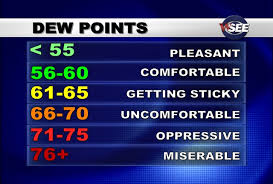
After the cold and the gray comes the bright and the damp.  81 degrees already at 9:30 am with a dewpoint of 75.  That’s well beyond uncomfortable, which begins at 60.  Mulching the new lily and iris bed along with the areas Kate weeded last week followed by thinning the beets on the third tier left me with as much outside exposure as I wanted.

Looks like we’ll get some rain today.  A good thing since the electricity outage in the garage has crippled my irrigation clock.  No clock, no water other than rain.  That’s on the get it fixed list.  Soon.

We’ve entered the rapid growth phase of the growing season, with the nectar flow ready to begin next week.  The compressed season makes for exaggerated rhythms, a feature of the northern garden. Like Chinese cooking, preparation is 90% of the ingredients needed to succeed.

Javier will come by some time in the next few days to price out mulch and weed suppression for the orchard and mulch for the vegetable bed paths.

Moving Toward Optimal

Beltane                                                                       Solstice Moon

In 12 days we will have the summer solstice and it is now 56 degrees and rainy.  A peek at 80’s may come, but until then June will remain like May.

My enthusiasm for various aspects of my life seem to ebb and flow, not so much on tides of the fabled ocean, Inspiration, but more on inner rhythms I do not fully understand.  When I began reading the e-mails from Jon Frank of International Agriculture Labs, he reminded me, again, of the reason I cut down the black locust so we could have space for gardens in the back.  And, again, of the various moments in time when raised beds seemed like something we should have, and which Jon (Olson) built so well.  Then the permaculture river began to run and it turned the water wheel of my energy for a while.

Each one of these impulses has come from deeper roots, seeds sown in the 1960’s back to the land movement, then expressed by the purchase of a farm outside Nevis, Minnesota in northern central Hubbard County.  They have also been nourished by work of an intellectual mentor, Scott Nearing and his wife Helen, who wrote Living the Good Life.

Kate has been there at each of those rhythmic changes, helpful and supportive.  Each one has added a bit to the whole and now I believe we are poised for an optimal garden and orchard, one nurtured by years of steady effort though from episodic sources.  Next year I plan to focus on the orchard in the way I’m focusing this year on vegetables with the High Brix Garden.  My goal is a good quantity of high nutrient food grown in a sustainable way right here at Artemis Gardens and Hives.

My hope is that this is the last piece to the puzzle of vegetable and fruit growing for us.  Then, with the help of Javier and his crew for the heavy lifting and skilled landscaping work, we should be able to stay here and thrive here as long as possible.  Our flower gardens, extensive, we have gradually moved toward very low maintenance and I feel that part of our grounds we understand, have a good to excellent handle on.

With Javier’s removal of the ash tree from our garden area and the addition of the High Brix nutrient program, plus the narrowing of the types of vegetables we will grow and the bagging of our apples, I feel we’re within a growing season or two of being able to say the same for our food crops.

Roots

Beltane                                                                                  Early Growth Moon

“To be rooted is perhaps the most important and least recognized need of the human soul.”
Simone Weil


Not surprising this is an unrecognized need because for most people for most of human history being other than rooted was not an option.  You were born within the sound of a church bell or a muezzin or a farm dinner bell and never got beyond them.

(Jean-Léon GérômeA Muezzin Calling from the Top of a Minaret the Faithful to Prayer (1879)

It is only as the world has begun to urbanize that we have had to consider our roots, or the lack of them.  In the US only 5% of the population lived in cities in 1800, but 50% did by 1920.  80% do now.  This trend is global.  In 2008 for the first time in history over 50% of the world’s population live in cities.  Interestingly one website on urbanization made this point, since no more than 100% of a population can live in cities, urbanization will come to a foreseeable end.

It is, though, this great hollowing of rural areas that underlines our need for roots just at the point when we realize we no longer have them.  Or, rather, it is this realization that makes the need for roots evident.

Let’s stick to the vegetative metaphor.  Roots say where we are planted, where we have pushed organs for receiving nourishment deep into the soil, even into the subsoil of the place where we live.  Yes, you might want to talk about relationships and regular shops and schools and sports teams, yes, those things are part of a broad understanding of the metaphor, but I’m wanting to stay closer to the plant.

(I worked in this factory when I was in high school, 1968.  Johns-Manville)

If we eat local food, our bodies themselves become literally one with the earth in a particular locale.  Knowing where we are, not only in terms of street names and legalities, but also in terms of trees, food crops, fish, game, local meats, birds, flowers, grasses, even the so-called weeds is also part of having roots.  Embracing the weather, the local changes, as in part defining who you are, that’s having roots.

It is, I think, these things that disorient us the most when we move away from our home.  We think it’s the people or the customs or the new boulevards and highways, but in a deeper place, in the place where you know you are, it’s the Indian paintbrush that no longer shows up, the alligator not waiting in the pond,  the summer that fades too soon or lasts too long, these things make us not only feel disconnected from the place where we are; they are in fact the evidence of our disconnection.

(fall harvest, 2011, Andover)

If we have roots, we usually don’t know it; if we’re missing them, well…
 

Ogallala Blue

Beltane                                                                                Early Growth Moon

A post written this time by Woolly Bill Schmidt.  My comment below.

From Bill:

We may be able to ignore the effect that humans have on global warming or even deny that it is happening.  It is difficult to explain away the effect that we humans (farmers in this case) are having on an important earth resource.  And the farmers are crying because they can no longer farm in ways that don’t make sense relative to what they are given.  Maybe it is time to pay attention to our local environments and live/farm within the limits of what is provided by earth environments.  Tapping the aquifers to irrigate farm land is like shooting yourself in the foot.  The aquifer is not infinite and pretty soon you don’t even have enough water to drink.

Here’s a link to a New York Times article about the plight of Kansas (Midwestern) farmers who have robbed the aquifer and now it is drying up.

“And when the groundwater runs out, it is gone for good. Refilling the aquifer would require hundreds, if not thousands, of years of rains.

The irony of using insane amounts of water for fracking to get more oil would be laughable if it were not so sad. Literally hundreds of millions of gallons of water per day are being used for this process, poisoned by who knows what chemicals and with a fraction, if any, of that water being recovered.”


This is the cost of pumping 1,600 gallons per minute to irrigate farm land.  And on page 2 of this article, the same farmer is continuing to drill more wells.  Reminds me of a song:  Pete Seeger “Where have all the flowers gone” —  “When will we ever learn.”


My Willa Cather Moment With This Problem

I’ve told this story to the Woollies and others many times, I imagine, a sort of recurring tale like so many offer to others, unaware of their repetitiveness.  But, it’s worth retelling.

Twice I’ve visited Red Cloud, Nebraska, a small town on the Kansas/Nebraska border, and home to Willa Cather, a favorite American regional author of mine:  Death Comes for the Archbishop, O’ Pioneers, The Professor and many others.

In the Willa Cather Center there I remember, back in 2005 or so, speaking with the folks behind the desk.  It was really hot, 107 or so, and we got to talking about climate change and agriculture.  Since I have a long standing interest in the Ogallala Aquifer, I asked about irrigation.

The conversation became animated because it turned out that in the spring, when the farmers began irrigating their fields, the towns wells would go dry.  It seems they’ve pumped the aquifer out enough that the volume of water available in their area can’t sustain the needs of both town and country.

Here’s a good resource on this issue, which nuances it:  Ogallala Blue.

Root and Branch

Beltane                                                                       Early Growth Moon

Water and heat.  Sun and soil.  Roots, stalks and leaves.  There you have it.  And we’ve got it this week.  Rain, rain, rain.  Then some heat.  Seeds germinating, bursting up, ready to transubstantiate.  All for the great cycle of life, churning, moving, flowing, surging.  I can feel it, smell it at this time of year.  And I love it.

Just finished Dan Brown’s Inferno.  If you read the NYT review, you will discover that Dan has a mundane talent for words.  And that’s true.  The reviews I read didn’t add, but they should, that he throws in potted art history and architectural criticism, not to mention some odd rant on transhumanism.  Yet, did you notice, I finished it.  Why?  Well, reading like a writer, this guy knows how to plot.  He can make you wonder what’s coming next.

He pulls off one big twist in this novel and it’s a dandy, but it feels very contrived even though he sucked me in completely with it.  That’s sort of the thing he’s got going, you can see the holes in his works, where I wondered were the editors who could have easily fixed much of this, but you pass them by to find out what happens next.  That’s story telling and it’s the true game which every writer plays.

(Lucifer, trapped in the 9th circle. Canto 34, lines 20–21  Gustave Dore)

Hey, listen!  Have I got something to tell you.  Clumsy sentences, wooden metaphors, filler pages, yes, they matter, but in the end not as much if you keep me interested.

coda next morning:  I will buy and read your book if you can entertain me.  Whether I remember it or learn from it and, most important, whether I will return to it, however, depends on those skills Dan Brown seems to shunt aside as unnecessary.  No, I won’t be re-reading any of his work.

The Howdydoody Season: Winterspringsummerfall

Beltane                                                                          Early Growth Moon

In a long ago time I took a group of youngsters from Brooklyn Center United Methodist Church on an outing.  Wherever it was we ended up, there was a beanbag toss game that featured Howdydoody characters.  The kids, as kids always do, said, “What’s that?”  And I, as unsuspecting aging adults always do, said, “Why, that’s Howdydoody.”  The blank stares gave me my first frisson of growing old though I was only 27 at the time.

On this now very outdated program there was a character whose name describes for me the season we’ve been passing through since, oh, March or so:  Winterspringsummerfall.


This is not a new phenomenon, though, as James Russell Lowell’s poem shows:

Under the Willows [May is a pious fraud of the almanac]

by James Russell Lowell

May is a pious fraud of the almanac,
A ghastly parody of real Spring
Shaped out of snow and breathed with eastern wind;
Or if, o'er-confident, she trust the date,
And, with her handful of anemones,
Herself as shivery, steal into the sun,
The season need but turn his hourglass round,
And Winter suddenly, like crazy Lear,
Reels back, and brings the dead May in his arms,
Her budding breasts and wan dislustred front
With frosty streaks and drifts of his white beard
All overblown. Then, warmly walled with books,
While my wood-fire supplies the sun's defect,
Whispering old forest-sagas in its dreams,
I take my May down from the happy shelf
Where perch the world's rare song-birds in a row,
Waiting my choice to open with full breast,
And beg an alms of springtime, ne'er denied
Indoors by vernal Chaucer, whose fresh woods
Throb thick with merle and mavis all the year.

– See more at: http://www.poets.org/viewmedia.php/prmMID/22956?utm_source=PAD%3A+Spring+Song+by+Sherwood+Anderson&utm_campaign=poemaday_051813&utm_medium=email#sthash.6TuB0x7D.dpuf

Growing Up

Beltane                                                                   New (Early Growth) Moon

Cold, wet and occasionally sunny the short Minnesota growing season has finally begun.  Our cold weather planting is done, sometime in the next week we’ll put in our tomatoes and peppers.  Then, we wait for the sun to warm the soil, the rain to nourish the roots, carrying nutrients from the soil into the plants, elevatoring it up to the leaves where that true, abundant and necessary miracle photosynthesis will transubstantiate solar energy into the real body and blood.  Each leaf a priest, each plant a diocese.  A garden the whole catholic universe.

It is in here, somewhere, that reimagining faith will finally come home, right down here at that literally elemental level where the chemicals and elements of earth, soldered by sunlight make the essentials for life.  No photosynthesis, no life, at least on the surface of the planet where we live.  I understand there are different processes in the deep sea vents, strange creatures with arsenic in their veins, but up here, in the green world, we depend on–what a weak word–we live or die by this vegetative marvel.

It’s not as if there might not be gods, there may be.  There may be.  But I can think of no god that does more to sustain my life than the least of the leaves.  Here’s the nexus where sin and redemption must occur.  Sin makes our planet less hospitable for these; redemption conserves the planet’s soil, assures the availability of sun light.

(Gods Pantheon.  Ratteau)

Think of the crucifixion each year as soils leach out their nutrients, become so friable that they can blow away in the wind.  Think of the top soil, made fertile over hundreds of years, wasted in a season or two.  Think of the aquifers, draining themselves for our sake with no hope of replenishment in a hundred hundred human lifetimes.

How will we roll away the stone on this deep crime?  Who will stand at the tomb, that fine rising’ up mornin’, when the world cares for its soils and its forests and its lakes and its streams as if life of very life could not do without them?  Someday.  I hope.  Someday.

A Beltane Snow

Beltane                                                                               Planting Moon

So.  If the goddess goes out to meet the horned god for a little whoopy in Minnesota tonight, the pair will freeze.  And possibly end up under a snow drift.  Since their ritual seals the beginning of the growing season, it may not look good for the crops.

Although in our instance the cold weather crops will enjoy this continued blast of chilly air and I imagine the air and the soil will warm up around the usual time for the warm weather crops like tomatoes and green peppers.

Tomorrow we’ll wade into the snow and take off for the North Shore where if the weather maps are right, we might run into a lot of snow near our destination, the Cascade Beach Road area north of Lutsen.  The Woolly’s will gather again, diminished in numbers a bit by the absence of gentlemen Jim Johnson who is in Hawai’i, Charlie Haislet who is enroute to the Twin Cities as I write this from Shanghai, I believe and Mark Odegard, who will come up later like Charlie.

These gatherings have moved from heavily structured to loosely structured to almost no structure, the years and the bonds taking care of the programmatic aspects of our time together.  Mostly we go to catch up, take each other in in those small ways, off to the side, in casual moments that don’t happen during our twice a month meetings during the rest of the year.

This particular retreat finds two of us fairly new to the third phase and retirement, two of us still on the cusp.  It means in some fashion the Woollies will change.  How is not clear.  Perhaps something will become obvious during the retreat, perhaps not.  Part of this third phase journey is the slower pace, the more deliberate decision making, the luxury of time to consider matters with care.

Not sure whether there is wi-fi at the house on Lake Superior, so I don’t know if I’ll be posting over the next few days or not.  If not.  Till Sunday evening.

75!

Spring                                                                              Planting Moon


75.  The temperature outside is 75.  Flick back to Monday and Tuesday.  Snow, blowing snow and hazardous driving conditions.  Minnesota has these occasions, these, oh let’s change seasons for good today moments.  Not my favorite part of Minnesota’s climate, but not a bad one either.

Seasonal whiplash.

The back has gotten better, ouching not quite so much, the trajectory seeming to have tilted in a favorable direction at last.  I miss exercising.

Still feeling a bit submerged since last Sunday when Kona had to go to the emergency vet, as if I’ve not swum quite all the way back to the top.   I can the green filtered light, shafts of yellow reaching me on my way up.

Soon now.  Soon.