Category Archives: Reimagine. Reconstruct. Reenchant.

The Demi-Monde

Summer                                                                   Most Heat Moon

Yesterday I did an experiment in sleep deprivation. Not intentionally, of course. As I gained back an hour to an hour and a half at a time over the day-necessary because of the sleep lost that night-my mind began to lose track of the sleeping/waking distinction. I would wake up, still clinging to the dream state and still tired enough to be only partially awake. Then, tiredness would take over and push me back to bed, the waking state only partially realized while I was up.

Sundowning.  In a strange place like a hospital, how the elderly could enter a state like the one I experienced yesterday, the disoriented state called sundowning, became obvious to me, sleep disrupted and coming in uneven increments over a 24 hour period. Once untethered from the usual clear demarcation between awake and asleep it could be very difficult to find your way back to it.

It was not unpleasant, at least for me, but if the outside world, the world outside my dreamy/semi-awake state, had demanded normal attention, I could easily have become agitated, unable to understand the expectations. Then, others would have become concerned about me. They would have wanted to “help” me return to the usual way of experiencing day and night. The harder they pressed, the more difficult it would become. At least I can see how that might happen.

Remembering my father-in-law Merton as he neared death, he seemed to float in an idiosyncratic demi-monde most of the time. Near the end he reported angels descending, coming for him. This may well have been his reality, rather than a dreamy experience. Once in this place epistemology becomes untethered too and our ways of knowing enter a different metaphysical realm. In other words our reality becomes different from that of the consensus, though we don’t know that. At that moment we have passed through a portal, not to the Otherworld, but to an Otherworld.

It could be that death comes to us, probably does come to many of us, in a demi-monde of our own. It might come, in that case, in the cliched form of a beloved parent or other relative. Or, angels. Or, depending on your inner compass, a demon from the depths of your own hell. Me, I’m hoping for a slow stroll into Arcadian fields where, bounding toward me, are all the dogs I’ve ever loved.


Right Now

Summer                                                               Most Heat Moon

My favorite subscription e-mail is brain pickings. The creator and writer, Maria Popova,crane engineering generates it through intense reading and intelligent choice of materials. Last year she wrote an essay outlining 7 things she’s learned in the 7 years of writing brain pickings. You can find the whole essay on her website, but I wanted to focus on one in particular because it reminds me of a lesson I’m learning from my friend, Tom Crane.

Being present, how he shows up in the moment, from moment to moment, is his top priority. I don’t know whether he would counterpoise it to productivity as Popova does here, but his business success in forensic engineering certainly suggests he’s no stranger to productivity. He is clear that he does not want to be measured by his efficiency, earnings or his ability to do this or that. Which is saying something since his company is very well-regarded, growing and prosperous.

Here’s Popova:

  1. Presence is far more intricate and rewarding an art than productivity. Ours is a culture that measures our worth as human beings by our efficiency, our earnings, our ability to perform this or that. The cult of productivity has its place, but worshiping at its altar daily robs us of the very capacity for joy and wonder that makes life worth living — for, as Annie Dillard memorably put it, “how we spend our days is, of course, how we spend our lives.”

And a bit more from an interview with a talented writer/observer:

“I think productivity, as we define it, is flawed to begin with, because it equates a process with a product. So, our purpose is to produce — as opposed to, our purpose is to understand and have the byproduct of that understanding be the “product.” For me, I read, and I hunger to know… I record, around that, my experience of understanding the world and understanding what it means to live a good life, to live a full life. Anything that I write is a byproduct of that — but that’s not the objective. So, even if it may have the appearance of “producing” something on a regular basis, it’s really about taking in, and what I put out is just … the byproduct.”

The moment and our questing in that moment for connection, for understanding, for clear seeing is all we have. Ever. Placing the moment and our immersion in it first swings us out of the past or the future, if we’re tempted to sojourn there, and back to the now.

I like Tom’s insistence on showing up and Popova’s emphasis on understanding as our purpose, and productivity as a byproduct of that process. When at a farmer’s market, it would be understandable to see the fruits and vegetables as a product of gardening, but in fact they are the byproduct of a person in love with the soil, with plants, with the changing seasons and the interplay of wind and rain and sun.

The main dilemmas of our current approach to agriculture can be tied to productivity oriented thinking.  This way sees the fruits and the vegetables and the grains and the meats and dairy as the product of farming rather than its byproduct. What I mean is this, when we love the world in which we live, when we treat it with care and thoughtfulness, when we understand our needs and its needs, the world will produce what is necessary for our existence. That’s been the successful ongoing contract between living beings and the natural world of which they are apart since the first one-celled organism began to wiggle and move. It is no different today.

That’s what I understand right now.

Summer Solstice 2014

Summer Solstice                                                         Summer Moon

At 5:51 am the sun reached its full height in the sky, full, that is, for the 45th latitude, 69 degrees above the horizon. That means more solar energy per square foot on the ground and rising temperatures to follow in July and August. It also means the rain soaked plants here in Minnesota will finally begin to get the attention they need to grow tall and produce big fruit. Yes, today is the summer solstice.

This day, like the winter solstice, is an ancient holiday, born of fear and hope, awe and wonder, the basic ingredients, according to Rudolf Otto, of the holy. At the summer solstice the hope was for warmth to heal bones chilled by winter’s cold and sunlight to ensure a good harvest, whether food was gathered or grown. The fear, the opposite of that at the winter solstice when many feared the sun might never return, leaving the world to freeze, with food gone, was that the sun would come too close, stay high too long and burn the earth, scorch it with an intensity neither plant nor animal could survive.

In this way these two markers of the solar system’s formative years, when the orbits of the planets stabilized around their mother and father, Sol, could be seen as an early form of output produced by a very basic, but nonetheless real, computer, movement in the heavens. As this difference engine brought new information into the night sky, humans and other animals, too, sighted it and changed their lives according to its data.

If the holidays of Beltane and Samhain mark the human focused seasons, the growing sun calendarseason and the harvest season followed by the long fallow time, then the solstices mark the astronomical seasons, the season of heat and the season of cold. Together these four constitute the liturgical calendar of an earthly religion, one which honors the earth and its treasures, and a solar religion, one which honors the nuclear fusion roaring in the furnace of our star, a basic source of energy which makes the earth’s treasures accessible to our bodies.

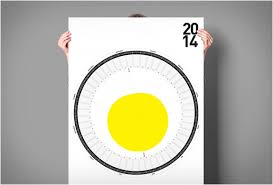
The calendar shown here hangs on my wall, the solstices made evident by the yellow yolk displaying the hours of sunlight on a given day. The point where the yolk lies closest to the inner circle is today, the summer solstice, and the one furthest away, its polar opposite, near the top, the winter solstice.


This is a day to celebrate the majesty and wonder of photosynthesis, that essential transubstantiation which converts the love of the sun into foods that our bodies can consume. When you look outside today and see green, the color not absorbed by plant leaves and so left over for our eyes as a signal of the miracle, bless them. Bless the leaves and their photosynthetic work, bless the sun which powers it and the plants themselves which mediate between that work and our life. Their work is the sine qua non of our existence. And worthy of our thanks and our praise.

Between

Beltane                                                                            Summer Moon

Janus. The two faced god, one face looking to the past, the other toward the future. Hence, January. “…the god of beginnings and transitions,[1] and thereby of gates, doors, passages, endings and time.” Wiki  The door to Janus’ temple stood open during war and closed to indicate peace.

Got to thinking about Janus this morning in light of  Bill Schmidt’s comment about liminal spaces. Janus is presented as the god of liminality, of the time between war and peace, beginning and ending, inside and outside. But. As I thought about the image of Janus, he looks back into the past where lie regrets and failures and loss. At the same time he looks into the future where there is anxiety and hope and maybe despair. The one thing he is not is the god of liminal spaces. No, he’s the god of regret and worry. That thing that he cannot do is see the present, be in the now, for he is eternally fixated on the flow of time past or the onrush of time future.

More. As Bill suggested, to live is to be in liminality, between life and death, yesterday and tomorrow, this project and the next one. We can define, interestingly, liminality as the now since the now we inhabit has a position after a moment and before the next one.

The Celts reserved a special place for the liminal, seeing it as a magical time. So Celtic magic often happened at dawn or as evening fell. But in the understanding I’m presenting we can work our magic in the liminal space we inhabit. Right now. This is not an idle metaphor, but an expression of the magical reality of the now, of inhabiting liminal space always.

Whatever it is, we can bear it for this moment. At least for this moment. We may not have been able to bear it a moment ago and we don’t know whether we will be able to bear it in moment, but, right now, in this fleeting doorway where we stand poised between then and the future, right now, we can marshal our resources and get through the moment. With practice our capacity to live in this space between becomes usual, ordinary and we know in our body that regret is gone, in the past, and that anxiety is of the future, not yet.

As Stewart Brand puts it so nicely, we live in the long now.


Sustainable, Nutrient Focused Horticulture

Beltane                                                         Summer Moon


The purpose of our company is to
make soil better as we grow quality crops

Planted the 3 blueberry plants I abandoned in the orchard. Forgot about them when I planted the egg plant, collard greens and chard in the vegetable garden. Then, I sprayed the orchard for the first time, brixblaster, an international ag labs concoction that feeds plants focused on reproduction: fruits including tomatoes, peppers, egg plants, beans and peas. This feeding program for the orchard goes on twice weekly, ideally before 8 am or after 4 pm. Before is the best for me but I couldn’t make it happen today, so I settled for the good over the best.

On June 20th the spraying program begins in the vegetable garden. Lest you have an organic twinge here, let me explain the philosophy behind the (International Ag Labs) I.A.L. recommendation. The goal is to produce the highest quality foods (measured by nutrients, not ease of picking and processing) while supporting a soil chemistry that is sustainable over time. This is very different from traditional ags NPK focus which takes out nitrogen, phosphorus and potassium from the soil each year, then pumps them back in the following year.

NPK farming misses the critical elements of soil chemistry that supports microbial plant and animal life, as well as the critical trace minerals that make for healthy plants. Healthy plants = healthy food. There’s a reason for the plough and fertilize model. It produces high quantities of food, but over time the plants become modified not for nutrition but for their capacity to be easily harvested and stored, then optimally usable for food processing. In the past three decades or so the plants have also been modified to contain herbicides and insecticides as part of their genetic material.

Again, the emphasis is not on the nutrient quality of the food, but on the ease of growing and harvesting. This story is not new to me. Michael Pollan is probably its most gifted narrator right now. I remember a 1974 book, Hard Tomatoes, Hard Times, that told the story of the unfortunate collaboration between land grant universities (like the Ag campus in St. Paul, Purdue in Indiana) and farmers/food processors. It’s titular story involved the problem of tomatoes. They were thin skinned and had to be harvested by expensive manual labor. The solution? A tomato with a hard skin, pluckable by mechanical arms. That’s the source of the tough hide you get on store bought tomatoes.

Criticizing the system is easy and the push back predictable. How would you grow sufficient quantities of food for all America and the other peoples of the world to whom we sell produce? It’s a fair question and one that has to be answered.

There are many competing solutions, often followed with dogmatic zeal, the cults and sects of the horticultural opposition: Permaculture, organic farming, bio-dynamic farming, no till agriculture, the long term project at the Land Institute to develop perennial grains, among others. While of all these organic has created the most scale, it has a huge flaw that should have been obvious from the beginning, but zeal blinded most of us to it.

Its whole focus is on a negative, the removal of chemicals and their replacement with organic/natural products used to grow food. A good thing, in many ways, but it leaves the more important question unanswered: is organic food better to eat? Well, in that it is grown in a minimalist insecticide/herbicide environment, yes. But. Is organic food more nutritious than NPK farming? Oddly, the answer is not so much.

That’s where the I.A.L. idea comes in. Improve the soil so that it can sustain its own chemistry and create a healthy environment for microbial life. Recognize that inputs to the food growing process move toward that goal. Make clear that the purpose of this program is not the creation of food for the food industry, but of good food for all. This strikes me as a balanced solution, accessible to individuals and growers for local markets alike.

I don’t know how the I.A.L. ideas work on the large scale though I know their primary customers are farmers and not gardeners.

Think about this. The path to a sustainable human future on this planet must start with agriculture that can continue indefinitely. I.A.L. is one approach that focuses on that goal. It’s worth a look.

Sinners in the Hands of an Angry Climate

Beltane                                                                            Emergence Moon

A word about religious language. Though rooted in a metaphysics with which I no longer agree, much of the language developed by Christian theologians has earthly application.

Here are some examples. Atonement describes the process of reconciliation between one estranged and the one from whom they are estranged. Atonement is just what we need for a species estranged from its home, no longer aware of the rich and intimate love only footsteps away from most doors.

(Antonio Palomino. Saint Michael Vanquishing the Devil, 1700-14)

It is, I suppose you could say, the story of the prodigal son, the wastrel who fled parental care and set out wandering far from home. Only atonement, the return of the prodigal to his home, can overcome the estrangement.

But, before atonement comes repentance. That is, the estranged must come awake to the hamartia* that creates their current condition. Most of us know only vaguely (we see through a glass darkly) of our implication in the reduction in Arctic sea ice, the acidification of the oceans, the gradual warming of the temperate latitudes. We are even mostly ignorant of the web of decisions we make daily to draw more oil from the sands of Arabia or the fracking fields of North Dakotas, decisions that also push the coal trains out of the Powder River Coal Fields in Wyoming, snaking like a plague along our nations railroads.

(Peasant family returns home paint by the Belgian artist Eugène Laermans (1864-1940) – Boekarest:National Museum of Art of Romania (Romania)

Hamartia, in its classical understanding, results in tragedy. It is often related to hubris, that overweening pride that causes blindness. There is little doubt that our estrangement from mother earth is reinforced by our hubris and that the result of that hubris is humanity’s fatal flaw. The end will be not a triumphant Christ hurling sinners into hell but the sinners themselves creating hell above ground as temperatures and sea levels and extreme weather events rise.

The Great Work for our generation, as Thomas Berry describes it, is to create a sustainable path for humans on this planet. In religious language this means we must guide each other back home, to a home where we will be received by a loving mother and father (the earth and the sun). We prodigals must prostrate ourselves before our parents and end our estrangement. And, of course, the curious, paradoxical truth is that in doing so we will save ourselves, not the planet.


*Hamartia is a concept used by Aristotle to describe tragedy. Hamartia leads to the fall of a noble man caused by some excess or mistake in behavior, not because of a willful violation of the gods’ laws. Hamartia is related to hubris, which was also more an action than attitude.


The Leaf In Place of The Cross

Spring                                                                      Bee Hiving Moon

Final post on this series.  If you need a symbol of eternal life, let me refer you to the tree leaf and not the cross.  In this 74 degree day I just finished scraping the mulch from bulbs I planted last fall.  The mulch is tree leaves gathered in the same season.

The leaf works hard from early spring until fall capturing sunlight, drawing up water from the tree’s roots and combining them with CO2 in a true transubstantiation, photosynthesis. When the seasonal change indicates to the tree that conditions will no longer be good for photosynthesis, the leaf detaches from the tree’s vascular system and in so doing, its chlorophyll returns to the tree. This is the moment when the leaf changes color, revealing its other pigments.

As it withers from loss of water, the leaf changes color again and eventually detaches from the tree itself. That’s when I pick it up as a mulch. When I apply the leaf to the newly planted beds, the leaves perform two functions.  First, they insulate the bed, retaining the cold into the early days of spring so the earth won’t heave and throw the newly planted bulbs out. Second, they begin to decay and transfer their remaining stores of nutrients and fiber into the soil itself.

In this way the engine of transubstantiation, the leaf, even after it produces oxygen for us to breathe and glucose for the plant to use in its growth, gives up all of itself to the plant community in general, enriching the soil for the next generation.

So the leaf, a most ordinary miracle doer, does in fact what Christian’s claim Jesus can do, that is, give life through their death. You might say that in focusing on the cross Christian’s chose the wrong part of the tree.

All It Requires Is Some Love

Spring                                                             Bee Hiving Moon

Having said all that. (see post below) Reclaiming, celebrating the power of spring’s wonder is an important part of the Great Wheel’s message.  What the motif of the dying and rising god suggests (there is legitimate debate around this idea, but it’s not critical to my point here.) is the obvious. Death is a central fact of the human experience, yet it is a fact shrouded in mystery and pain. What exactly is death?  Not physiologically, but psychologically, spiritually. What does it mean? If anything. What happens after death to the person who dies?

We just don’t know the answers.  This black box characteristic of death makes it so upsetting. Without further knowledge we have to assume that extinction is the basic result. Having had a man die and come to back life with the message that, hey, you, too, can die and still have everlasting life is compelling.  The story alone has carried itself into millions, probably billions of heart, easing the mystery for them.

As I said earlier, I can’t see that it matters much.  Look at it another way, either Jesus did or did not rise from the dead. If he didn’t, well, we’re back where we started. If he did, and it’s the true sign of a loving God, then that same God will not build a doctrinal fence around the afterlife.  It’ll more likely be a heavenly version of y’all come.  We did say he/she was a loving god, didn’t we?

So, I’ll pass on all the paperwork and skip straight to the flowers emerging in my garden. Or, perhaps more germane to the story of rising from the dead, I’ll also tend to what I believe is a living bee colony.  Yes, I went out today and bees were buzzing all around the hive I thought was dead.  Surprised the hell out of me.

Could be honey robbers, but I don’t think so.  I’ll have to suit up tomorrow morning and see. Afternoons are not a great time to check bees.  They’re coming home and pretty protective.

Yes, I claim in my own soul the emergent joy of each daffodil, each tulip, each crocus, each lily, each iris, each fern, each hosta, each pachysandra, each apple, cherry, plum and pear tree, the magnolia, the gooseberries, the elderberries, the currants, the quince, the strawberries and the garlic, all those members of our family here at Artemis Gardens and Hives. I will rise with each of them, spreading out, greeting the sun, creating new energy from the sun, the soil and the water, bursting with a new season’s vitality.

The virtue for me in this celebration is that it requires no dusty tomes of medieval logic, no interminable meetings to decide the color of the altar banners, no envelopes chucked in a metal plate, no weighty hands pressing down in ordination.  All it requires is some love.  Shoulda been enough for the church, too.

Apostasy

Spring                                                                         Bee Hiving Moon

There are certain holidays when a former minister’s thoughts turn to apostasy. Easter is chief among them.  This is the true high holiday of the Christian liturgical year and it is such because it is the resurrection that marks Christianity off from other faiths.  And, yes, I know about the dying and rising gods and how Jesus fits that paradigm. I agree it matters.  Nonetheless, when you put Christianity on the stage with Islam, Judaism, Buddhism, Taoism, Shintoism, the various faiths counted as the Hindu religion, Sikhism, Jainism and whatever I might have forgotten, Christianity distinguishes itself by claiming a man/god who died, then rose from the dead.

It is that unique characteristic that Christians all over the world celebrate on Easter.  The resurrection is not only distinctive, it is central theologically to the Christian claim. Christianity moves on from Judaism at the empty tomb.  But not before.  Until the risen Jesus, Christianity’s story was not remarkable.  There were other would-be messiahs.  Others had followers and claimed miracles.  The teachings of Jesus largely conform to Jewish thought. Even the crucifixion was not remarkable. Other Jews died on the cross, too. This was a common form of capital punishment for the occupying Roman empire.

(George Frederick Watts – Orphée et Eurydice)

No, it is the dying and rising that makes Jesus unique and transformed him into Jesus the Messiah, Jesus Christ.  So, to set this claim aside, at least in its ontological sense, is the worst of apostasies.  And yet that is what I have done. Am I sure it never happened? No. That’s as impossible as being certain that it did. The shift for me came when I realized whether it had happened or not no longer mattered to me.

What do I mean by that? As one trained in Christian history, biblical scholarship, ethics and theology, I began to find Christianity, in all its forms, even its most liberal, simply too narrow. In my years in the Presbyterian Church I had many good friends, participated in many activities that moved justice forward, but I also struggled with church members and congregations over gay lifestyles and rights, the Vietnam War, income inequality and the privileges of white america.

In itself, of course, that back and forth is not unusual.  There were, at the time of my ministry, some 75,000 Presbyterians in the Presbytery of the Twin Cities for which I worked.  The Presbytery went as far north as Pine City, as far west as Buffalo, south to the Minnesota border and east a county or so into Wisconsin.  That there would be widespreads on matters of public policy is not at all surprising.  There were urban/rural differences, liberal/conservative differences, evangelical and liberal theological differences.  All quite normal sociologically.

What became clear over time, at least to me, was that the conversation and disputes happened in a sealed dome, a sort of osmotic barrier that surrounded those 75,000 people when they gathered as the church.  The barrier filtered out those who could not believe in the resurrection, yes, but it also filtered out, and this is more crucial to me, those who would not conform to the various ideological accretions adhering to denominational institutional life.

(Frederic Leighton-The Return of Perspephone (1891))

Here’s an example.  Presbyterians, as Calvinists, were long known for their adherence to predestination, even double predestination. Predestination is a theological form of materialist determinism (a current favorite among some practitioners of hard science) that posits God has determined every thing that happens.  Double predestination so-called took this belief to its logical, yet absurd conclusion. God had determined in advance who would be saved and who would not. This particular barnacle had been unstuck from the goodship Presbyterianism by liberal theologians quite a while back though certain branches of the denomination continue to hold the view.

My former boss, Bob Lucas, a great and good man, often warned against “majoring in the minors.” Within the ambit of the church this means don’t fuss with matters not essential, don’t get into conflict over things that are incidental to salvation, the primary purpose of the church. I think another version of this idea goes: In essentials unity, in all else, tolerance.

My position became that Christianity itself, as a movement, was majoring in the minors. It focused on conforming belief, ethics, morality and culture to the idiosyncrasies of a long gone time.  That is the effect of seeing biblical material as inspired and the church’s early days as somehow foundational, like the American Constitution.  Christianity has expended so much time, wealth, intellectual power and even violence to achieve this conformity, yet a casual step outside that dome, outside the osmotic barrier shows us that the great majority of people need food, medicine, work, public health.  Those are the majors.

(The Osiris-bed, where he renews the harvest cycle in Egypt.)

The minors are matters like the crucifixion and the resurrection.  Why? Not least because their truth or falsity get trapped within human institutions that use them not for the intrinsic wonder and awe they represent, but as chits in the distribution of power.  They simply are not the world altering events they claim to be.

(inanna sumerian goddess annunaki   clawed feet is an ancient way to depict the fact she visited the Underworld.)


Emergence, Complexity and Augustan Rome

Spring                                                                 Bee Hiving Moon

Two projects are pushing themselves forward, aspects of work already underway.  After reading a recent batch of articles arguing against a crass materialism and insisting on looking at the world not only through reductionist goggles, I have decided now is a good time to reimmerse myself in the world of emergence.  Emergence is a concept that identifies emergent properties, things not predictable by the sum of a thing or processes immediately preceding a particular phenomena.

(Garni_Gorge Symphony of the Stones carved by Goght River at Garni Gorge in Armenia is an example of an emergent natural structure.)  wiki, emergence

The example that is most familiar to me is culture.  Culture is that society based phenomenon that weaves language, place, kinship, food choice, divisions of work, art, music and play into a whole that shapes the individual, makes them part of something, a culture, larger than themselves.  Culture does not follow from an examination of an individual or even a small group of individuals, it only begins to emerge in a larger group over a period of time.

Another and easier to grasp emergent phenomenon is the transition of a caterpillar to a butterfly.  Am I a butterfly or am I a caterpillar dreaming I’m a butterfly?

This also relates to the complexity movement in science.  Science proceeds by breaking things down to their most basic components, then discerning law-like behaviors.  Physics is the paradigmatic science in this respect.  But there are many phenomena, like emergence, that appear not as things are reduced to their simplest parts, but as things combine to create more and more complex materials and organisms.  Science has historically ignored those areas because they are difficult to quantify and/or difficult to study using usual scientific methods.

I’ve flirted with learning these two areas:  emergence and complexity theory, but have never devoted the necessary time to it.  It’s time.  This fits in my reimagining my faith project.

The second is broadening the scope of my learning about Ovid, his time, the Augustan period, other tellings of the same myths Ovid works with, and Augustan poetry more generally.  This is in service of the commentary/translation I plan to begin in earnest after this growing season ends and of a big novel still forming itself.