Category Archives: Great Work

The Everyday Wonderful

Lughnasa                                                                    Honey Moon

The environmental community has a new addition, Arthur Levi Neilsen, born today.  8.5 pounds, 21.5 inches to Greg Neilsen and Margaret Levin.  Margaret is the executive director of the Northstar Chapter of the Sierra Club.  Congratulations to Greg and Margaret!

Grocery shopping today for the first time in a long time.  Kate’s been handling that for a while, seeking deals quite successfully and saving us money.

It’s been a domestic week for team Olson-Ellis with the honey extracted and partially bottled, excess books taken to Half-Price books and sold and multiple cans of paint and other hazardous waste accumulated over many years taken to the Anoka County hazardous waste pickup.

Now kicking back and enjoying the slow ride toward misplaced heat.  The heat has, however, made rendering the wax from our cappings a breeze.  We have a tupperware container full of bright yellow, clear, wonderful smelling wax.  A treat.


Medicating Mother Nature

Lughnasa                                                                         Honey Moon

Quiet has fallen here, though the temperature has not.  9 pm in late August and the temp outside is 75, the dewpoint 65.  And we’re heading into a week of high dewpoints and temps above 90, Friday right now comes in at 96.  This is the time when we start to cool down, head toward fall, this year, no.  As Paul Douglas, local meteorologist said in a recent column, “Mother nature needs to be medicated.”

As things calm down and drift back toward normal, I’ll look at the edits the copy editor made on my sample pages.  He charges $20 an hour and estimates 50 hours for the book, so that’s $1,000.  That’s a lot, yes, but to put the final polish on the manuscript before it goes to agents and publishers, probably worth it.  But I have to believe he’ll deliver.  That’s why I want to check the edits carefully.

After the nap today, I began to feel rested again.  The bee vacation has begun to recede though I did spend some time today looking at candle making videos.  The candle mold I purchased makes 8 tapers.  I also bought 100 feet of wick, so I’m ready to go as soon as the wax rendering is complete.

A Co-op

Lughnasa                                                       Honey Moon

On a few occasions yesterday bees who had not left the supers buzzed about the kitchen as the extractor whirred and Kate ran the capping knife over the frames.  Each time I encouraged these bees to exit through an opened door and in all but five cases they found the way out.  In those others we caught them in plastic containers and freed them.  Two died, one caught in the door and one I don’t know why.  These bees are our partners in Artemis Hives and deserve respect and kind treatment.  Even if they don’t always show me the same.

It’s a repeated observation, but it’s unusual enough that I’ll make it again.  Kate and I share this property with a whole host of other animals who make their home here.  Chipmunks are the most visible mammals, but we also have gophers, rabbits, opossum, raccoons, squirrels, woodchucks, mice, voles and I have seen at least one marten though I realize he was far from his range.  I mentioned the other day snapping turtles transiting our woods, but we have other amphibians like frogs of least two kinds and toads.  Snakes, salamanders, and skinks live here too.  Many birds are at least here occasionally:  great-horned owls, crows, pileated woodpeckers, red-headed woodpeckers, chickadees, cardinals, blue jays, rose-breasted nuthatches and wild turkeys.  Deer and coyote come through our land from time to time, though it’s been awhile since I’ve seen deer.

This list doesn’t include other very important organisms in the top six inches of the soil and the other plants, from perennial flowers to vegetables.  Our woods has many oak, ash (so far), elm, ironwood, cedar, black locust, poplar and, of course, buckthorn.

It is so easy to imagine that we own the land, but it just isn’t true.  We have a temporary use permit, a years long pass to erect a human dwelling on already inhabited premises.  This permit comes from other humans who might want to do the same; it’s a rule of exclusion, keeping other humans away, but it has no effect on these other tenants.  They come and go as they will, choosing their homes in the ages honored way of finding a good nest site, an excellent burrow, a place to raise young under the shelter of a shed.

All we humans can do is enhance or destroy those options.  We don’t create them, maintain them or put them up for rent.  They are the last and true commons, that portion of the earth still used as it was long ago before the scourge of private property.  We only imagine we own it.


Visiting the North

Lughnasa                                                         Honey Moon

The full Honey Moon has an amber cast tonight, appropriate for our work tomorrow and Wednesday.  Driving back from Wayzata it hung high in the sky, clouds passing before it.  It was warm, 80 degrees when I left the retreat center and the Woolly meeting there.

Tom showed a DVD from his trip to Svalbard.  It was a stark but beautiful land and sea and ice scape populated with curious polar bears, blubbery walrus and ring seals.  The ring seals only show up on this DVD as the meal of a large male bear.  The video of a polar bear suckling her cub was, according to a Swedish polar bear researcher, unique.  He’d never seen it before and, interestingly, said he never expected to see it again.

There was, too, the story of ocean open months earlier than normal, of the pack ice decline separating the polar bears from their main, almost exclusive food source, the ring seals and the staggering potential of upsetting the theromhaline cycle if Greenland melts. This could shut down the Gulf Stream with a cascade of unknown effects.

We went on from there to discuss superstitions and masculinity.  I had a sense that the conversation about masculinity per se, oddly a subject only lightly discussed among the Woollies over the years, might hold more for us at some other point.

It was, as always, good.


Prairie on my Mind

Lughnasa                                                              Honey Moon

I have an itch that I’ve waited now some twenty years to scratch and it may be about to happen.  When we moved in, I wanted to nix the lawn and sow prairie grass instead.  Now Kate is open to replacing most of our lawn with prairie grass and perhaps some new tree plantings as well.  I say open because she’s agreed to think about it.

We already have two large swatches of prairie on either side of our lawn, our compromise as we did the initial landscaping.  This notion came to me again while I walked in the eastern side of prairie grass and realized how at home and comfortable it felt: insects buzzing around, wildflowers blooming, a few trees popping up, milkweed ready to burst its pods.


Frogs and Lichen, a success story

Lughnasa                                                          Honey Moon

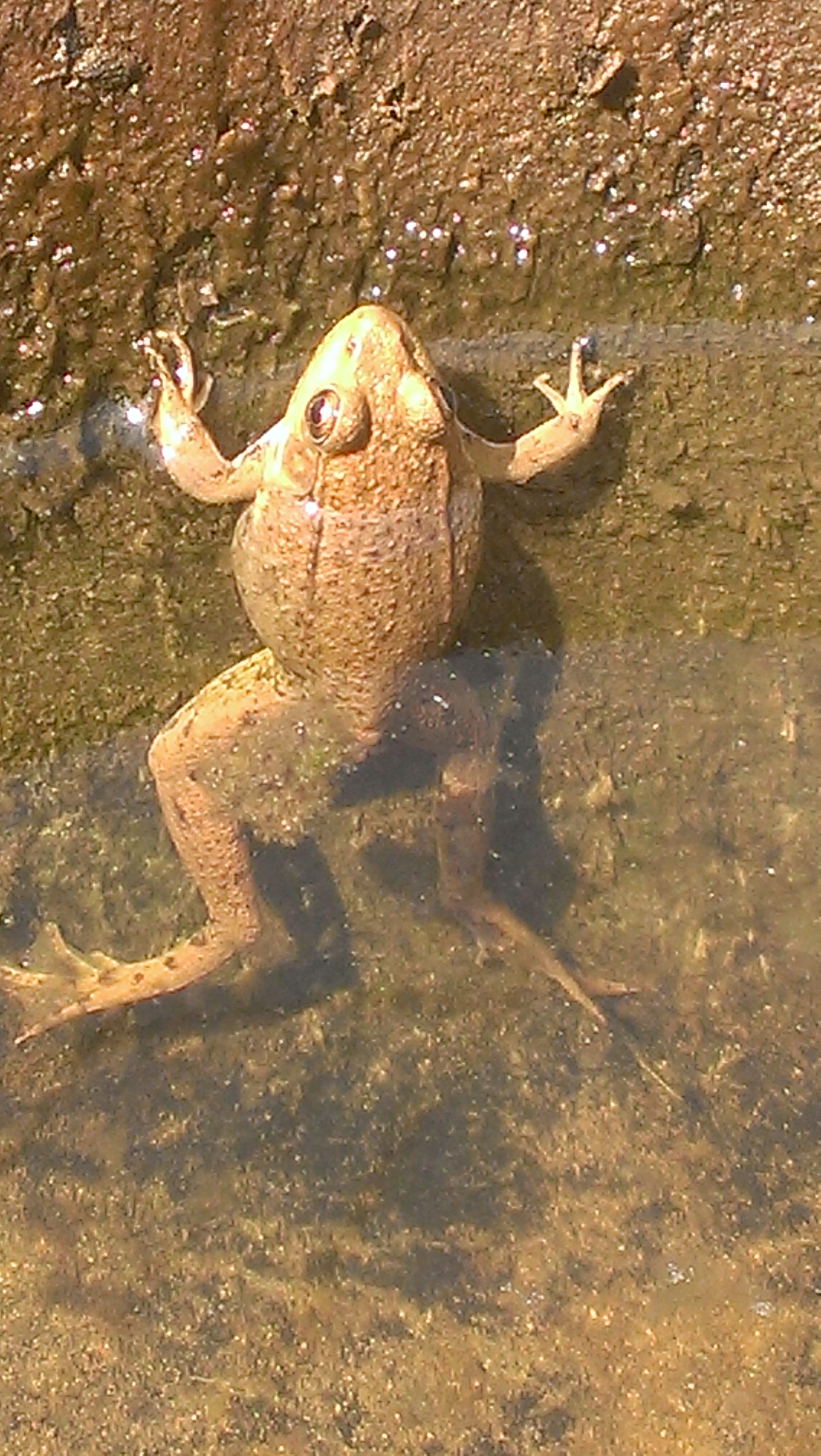
Here are two pictures that make me happy.  This one is a wood frog.  They are the IMAG0790only frog found north of the Arctic Circle and, in the dog watering tub in Andover.  This makes me happy because I also regularly see skinks and toads and on occasion salamanders and various snakes.  The presence especially of amphibians means we have a very low level of toxicity on our property.  We don’t use pesticides and keep herbicide use to a minimum.

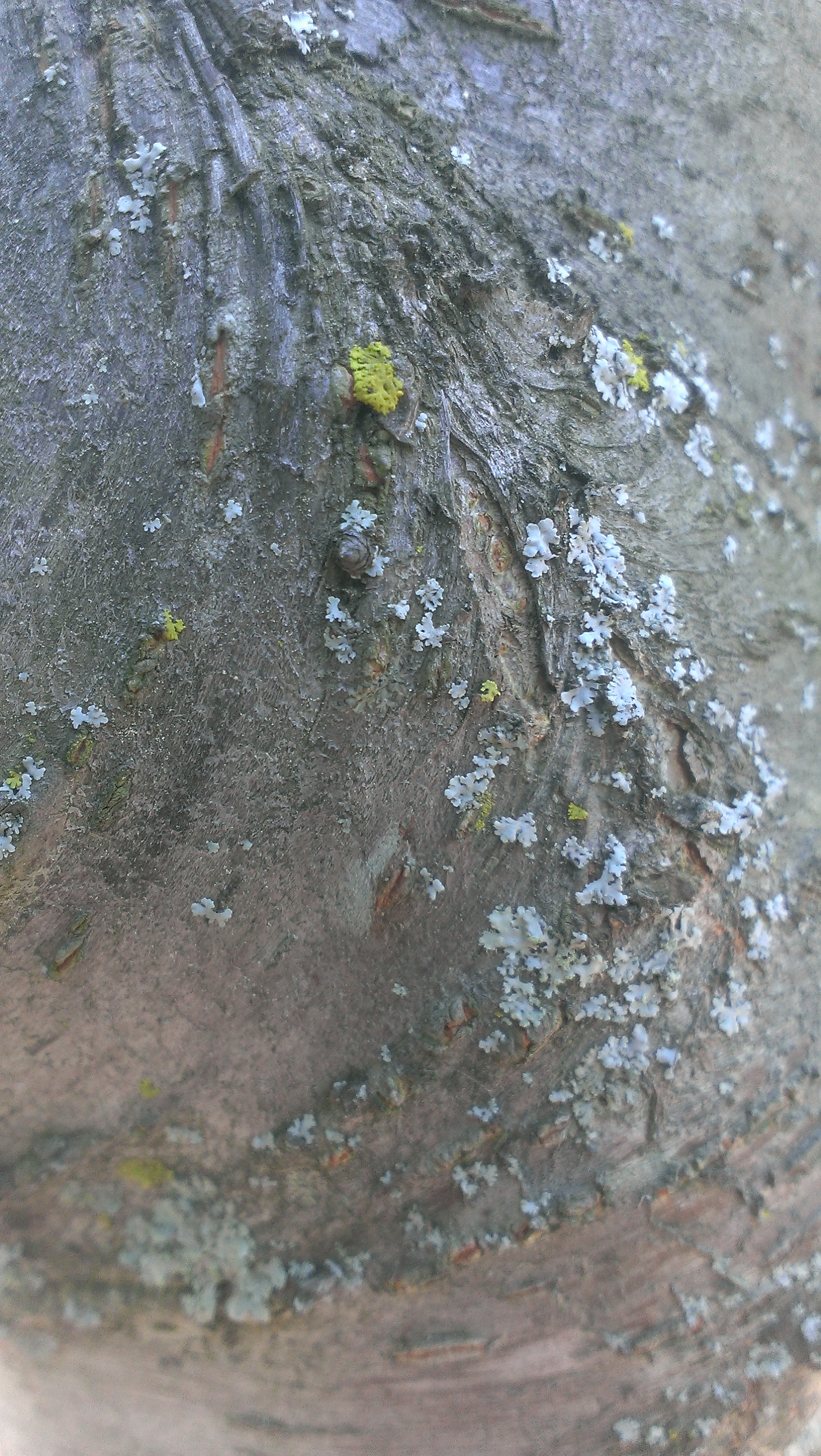
This picture shows one of our two plum trees.  Up close.  You probably recognize IMAG0795the lichen growing there.  Lichen are very sensitive to air pollution and will not grow in the city, for example.


How Can We Let This Happen?

8/13/2013  Lughnasa                                                                       Honey Moon

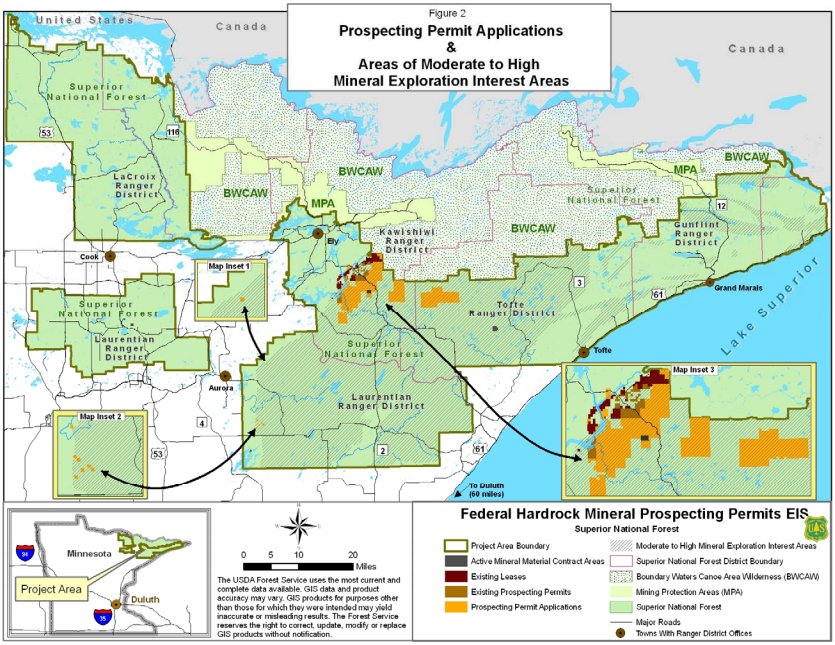
To the EPA meeting in Chicago to discuss sulfide mining in the BWCA:

mining_exploration_map

You may not have been to the Boundary Waters, a magical part of America the Beautiful, filled with lakes and rocks and fish and silence.  If not, I hope you get the chance to go sometime in the future.  There you will find rest as well as a place to celebrate the wonder that is our planet.

Would you locate a landfill so that it drains its waters into the baptismal fount of a Catholic cathedral?  Would you site a noisy factory with its emissions of smoke and toxins next to a spot dedicated to meditation?  Of course not.

The argument from Polymet and other would be miners of copper and nickel and magnesium locked in sulfides near the Boundary Waters is that their technology will not pollute the three watersheds that send water from its site to Hudson’s Bay, the Pacific and the Atlantic.  The trouble is that there has never, NEVER, been a technology that prevented sulfuric acid runoff from these kinds of mines.  Never.

Can we trust them when the EPA says this claim is suspect?

Bee Diary: 8/7/2013

Lughnasa                                                                State Fair Moon

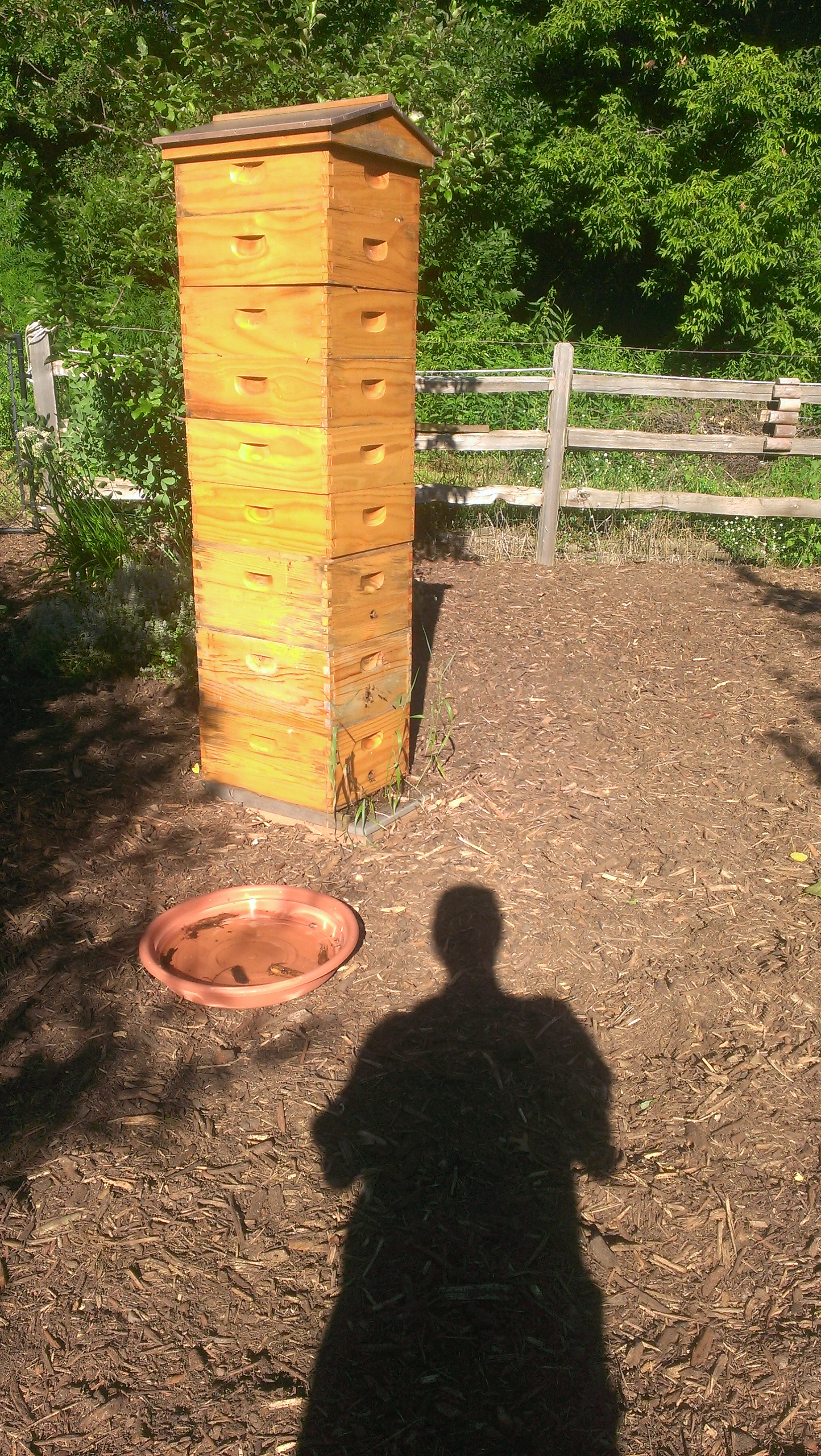
Oh.  My.  Just came back from a wrestling match with an angry superorganism.  Bill Schmidt noticed the height of my tower ‘a honey and wondered about wind knocking it over, but the height produces another kind of problem as well.  A happy problem in the end, but a sweat inducing, sting evoking problem in the here and now.
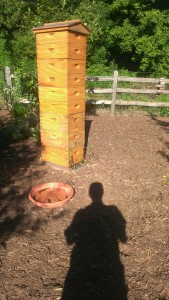
Out of 6 honey supers on top of the three hive boxes, four are full.  Honey, basically water, weighs more than 8.5 pounds per gallon.  Each of these full supers weighs in close to 50 pounds. Therein the happy and the sad of it.

The happy is 200 pounds of honey!  The sad is lifting 200 pounds of honey!  Plus some.

Here’s the deal.  The recommendation is to treat for mites and to do it now in August, with the honey supers on.  That means using a food grade miticide, one that won’t harm the honey in any way.  Which means less potent.  Which is good as far as I’m concerned.  The idea is that we rid the colony of mites in August, then the brood turns over after the nectar flow and produces mite free bees for overwintering.  Mites reduce the bees capacity to overwinter.  By a lot.

So.  O.K.  I decided yes. I’ll do that.  When I went to buy the one treatment and done product, miteaway, my dealer was out.  He had instead hopguard.  Hopguard requires two strips in each of three hiveboxes (the big ones on the bottom that hold the colony and its honey stores for the winter).  That’s one week’s treatment and the full treatment requires three weeks.
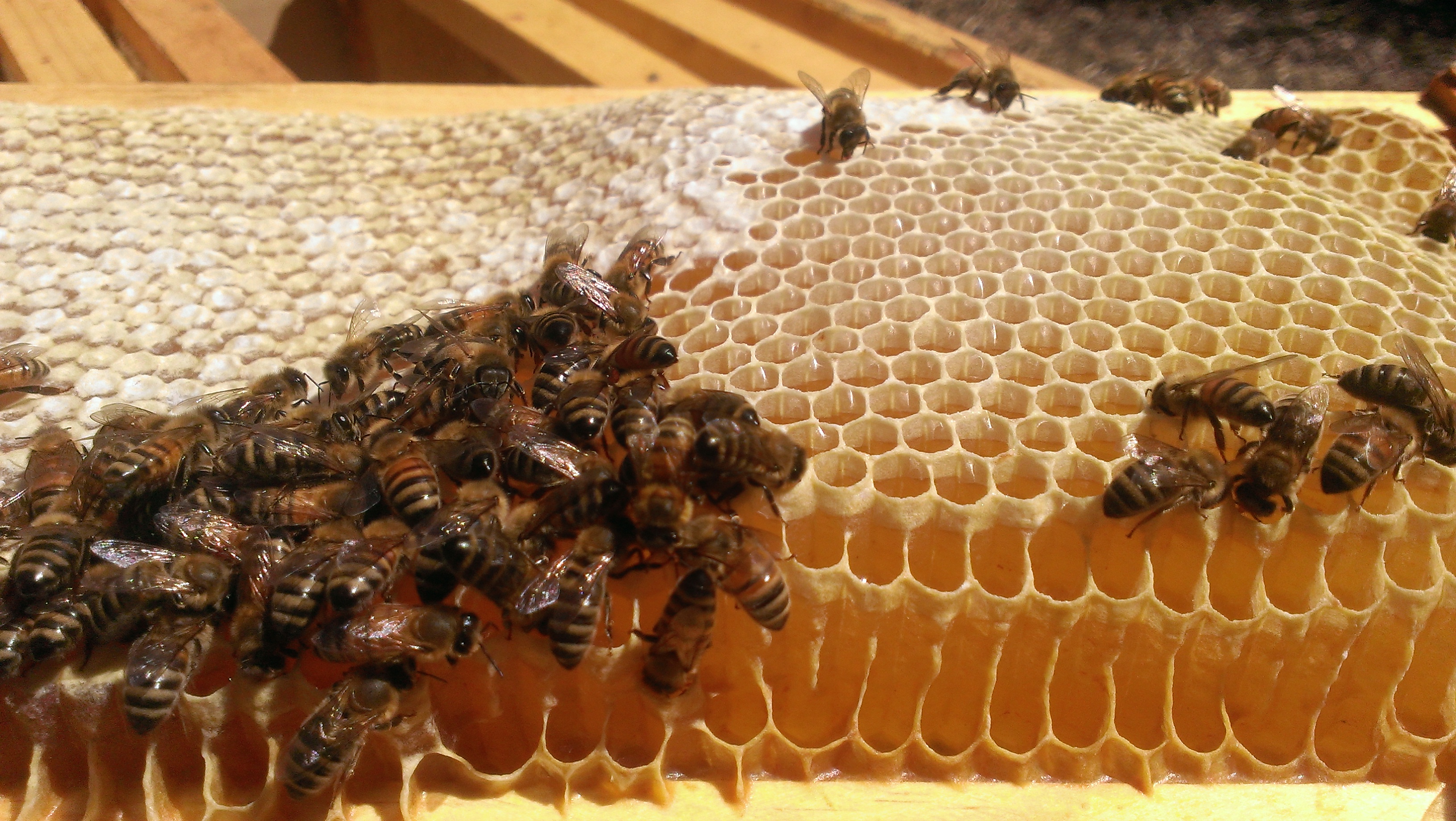
(taken today and the point of all this hooha)

Now we get to the problem.  Each of those honey supers has to come off and sit somewhere while I put the hopguard strips in the hiveboxes.  So, that’s 200+ pounds off and set aside.  It also means moving two of the three hiveboxes off and back on.  They weigh substantially more than a full honey super.

Thanks to the Canadian leakage as Paul Douglas calls it the weather is about as good as it’s reasonable to expect:  70 degrees with a dewpoint of 50.  But.  By the time I finished schlepping honey supers the sweat had begun to run.  Down into my eyes.

Physically moving these boxes is right at or a bit more than I can do easily.  That’s ok, for the most part, but it does mean that I can’t make the slow, deliberate motions that keep the bees calm. So, by the time I got to the hiveboxes I couldn’t see out of one eye and had to squat and lift with my legs to budge them.  I’m not even going to mention the slippery hopguard strips that would not slide easily between the frames.
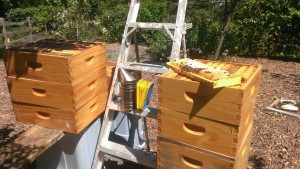
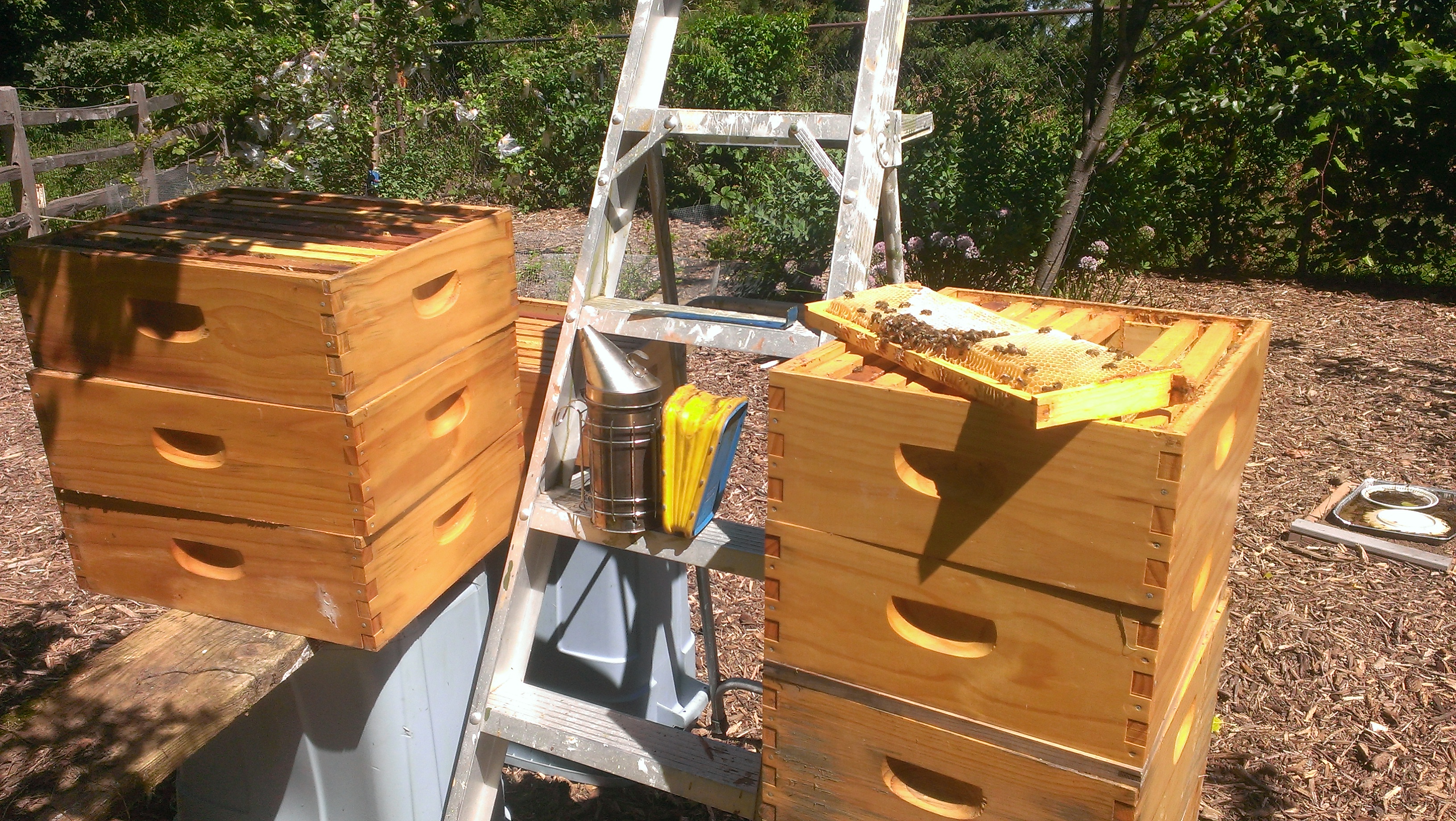
(an improvised super holding device.  also taken today)

Anyhow, I got all that done, got the honey supers back on and was feeling good.  Until I saw the queen excluder resting on the hiveboxes.  The queen excluder goes between the hiveboxes and the honey supers to prevent the queen from laying eggs in the supers.  Oh. My.  You can insert here words you use when you realize you have shot yourself in your own foot.

That’s right.  I now had to remove the supers a second time, put on the queen excluder and put them all back on again.  Well, that’s all done and finished until next Wednesday.  When I do it all over again.  Except, I hope, for that queen excluder part.
Dancing in the Garden

Lughnasa                                                         Moon of the First Harvests

We’ve settled into a rhythm that will continue until the last substantial harvest.  I go out in the mornings and harvest.  Kate then pickles, cans or freezes.  I helped with the garlic drying, but otherwise she’s done all the work.  We’ve had to clear the detritus out of the food storage room, gathered there over the winter and spring, because now trips down there for empty canning jars or to deliver full ones have become frequent.

Kate said she needed a calico dress and a gingham (Gangham?) apron.   I suggested a bonnet.  This work for her, right now, is primary in her life and she reports getting energy from doing it.  She must because she stands long hours in the kitchen.  Of course, she’s one tuckered out gal at the end, but the pantry has more stores and she feels good.

This whole garden is a dance with each of us playing different roles over the course of the season.  I have overall responsibility for the gardens and their health.  I do most, but not all, of the planting, all of the international ag labs supplementing and survey the various beds for plant health over the course of the growing season.  If there’s corrective action to be taken, that’s my job.  I bag the apples and take care of the fruit trees, also harvesting. (but not pruning.)

Kate weeds and that is one huge job.  One I don’t like.  She says it brings her satisfaction. I can’t get no satisfaction there so I’m glad she can.  At harvest time Kate takes the lead and chooses what kind of recipes to use and what methods of preservation to employ.  Near the end, when the leeks come in, I’ll make pot pies for freezing.  We both do fall clean-up and I plant bulbs.  Then the garden takes its long late fall and winter nap.

Short Takes

Summer                                                                     Moon of the First Harvests

Who am I to judge?  Out of the mouth of a Pope.  Extraordinary and welcome.  Can’t help but wonder what the crabbed mind of our local bishop, The Most Reverend John C. Nienstedt, makes of it.  His diminished understanding of what it means to be human must be scuttling around wondering how things could change in such a short period of time.

Orcas are the largest dolphins?  You probably knew this, but I didn’t.  Killer whale stuck to them because some of their number hunt whales.  They are versatile hunters and can exist on whatever is in plentiful.  The film Blackfish and the book, Death at Seaworld, have added to the increasing criticism of keeping intelligent, social animals in captivity at all:  dolphins, chimps and I imagine elephants, gorillas, orangutans, too.

shaun peterson