Mabon Moon of the First Snow
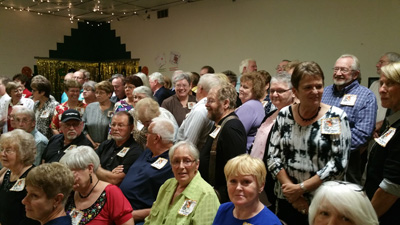
The 50th high school reunion. Friend Tom Crane sent me an article by a historian who graduated from Hopkins High School in 1964. Tom’s sister was in that class and he was in the class of 1966 which has its 50th next year.
John H. Johnson, a U.S. historian who teaches a class every year at Northern Iowa University on recent American history, saw several themes of the recent past reflected in his class. Overwhelmingly white. So was mine, just look at the picture. Located in a well-to-do suburb of Minneapolis. Mine, a small town of 5,000, mostly factory workers, about 60 miles east of Indianapolis.
Like Tom and Johnson’s classes, my class of 1965 had little direct experience with the politics of the early 1960’s with the exception of the strong UAW presence in town. The latter meant that fundamental economic/political issues like fair wages, good benefits and retirement packages got attention.
Alexandria, Indiana’s class of 1965 came before the rise of Betty Friedan and Gloria Steinem feminism and unlike Johnson’s classmates its women did not go on to break glass ceilings. Most married, had children. Some worked, of course. A few, a handful, went on to college and developed careers, but they were the exceptions. Alexandria was a town where many parents had not graduated from high school; or, if they had, the high school diploma was a terminal degree. Also unlike the Hopkins experience.
There was, as Johnson described, a historical rift between male classmates who had served in Vietnam and those who fought against the war, but unlike the Hopkins instance the vast majority of military age men went into the service and most saw active duty in Vietnam. As far as I know, I was the only visible anti-Vietnam war protester in my class. We did not, as Johnson talks about happening at his reunion, discuss the war and its stateside opponents.
There was, though, the exchange of concern among myself and many of my Vietnam Vet classmates over my recent bout with prostate cancer. And, I did say at the reunion that I believed our presence there together showed the futility and stupidity of America’s currently polarized politics. We cared about each other because we knew each other from childhood, our politics did not interfere with that sense of community.
I imagine there’s a good book to be written about early baby boomer’s 50th reunions. They represent the coming together of people who were both together before the 1960’s turned U.S. history on its head and who left high school to become agents of that very change.

 What a pragmatic, busy day. Generator installed! Yes. High fives all round. Vega groomed. She did not like having her nails cut. No big news there. Seeing the truck made her very happy. Groceries bought. Two more trees cut down. Still using the axe. Gonna get the chainsaw fueled and oiled tomorrow. I may use it. I may not.