Category Archives: Woolly Mammoths

We’re Baaaaaaccckkk

Lughnasa                                                              Honey Moon

As you can see, we’re back.  I entered the posts I wrote in Word so they would OLYMPUS DIGITAL CAMERAcorrespond, mostly, to the chronology here, that is most recent first.  The new posts extend backward to August 9th (in the heading of the Word entries) but after them are the two posts made just after Ancientrails went back online, one by Bill and one by me.

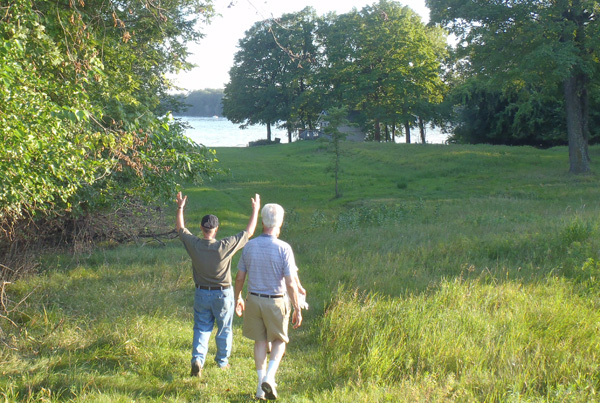
(Bill and Me on Big Island in Lake Minnetonka)

If you don’t scroll back to see them, I’ll just say again a major thanks to cybermage Bill Schmidt, and his perseverance and good humor through it all.  Bill has a unique and helpful world view which was in evidence throughout this project.

Gratitude

Lughnasa                                                               Honey Moon

In the now long ago a spiritual director told me that the key component of spirituality is gratitude.

Let this first post after our hiatus be one of gratitude.  Bill Schmidt, thank you!  This wasn’t easy as it turned out and I’m grateful for the perseverance and skill.

I’ve known Bill for over 25 years as Woolly Mammoth and friend.

Aw, Mom

Summer                                                           Moon of the First Harvests

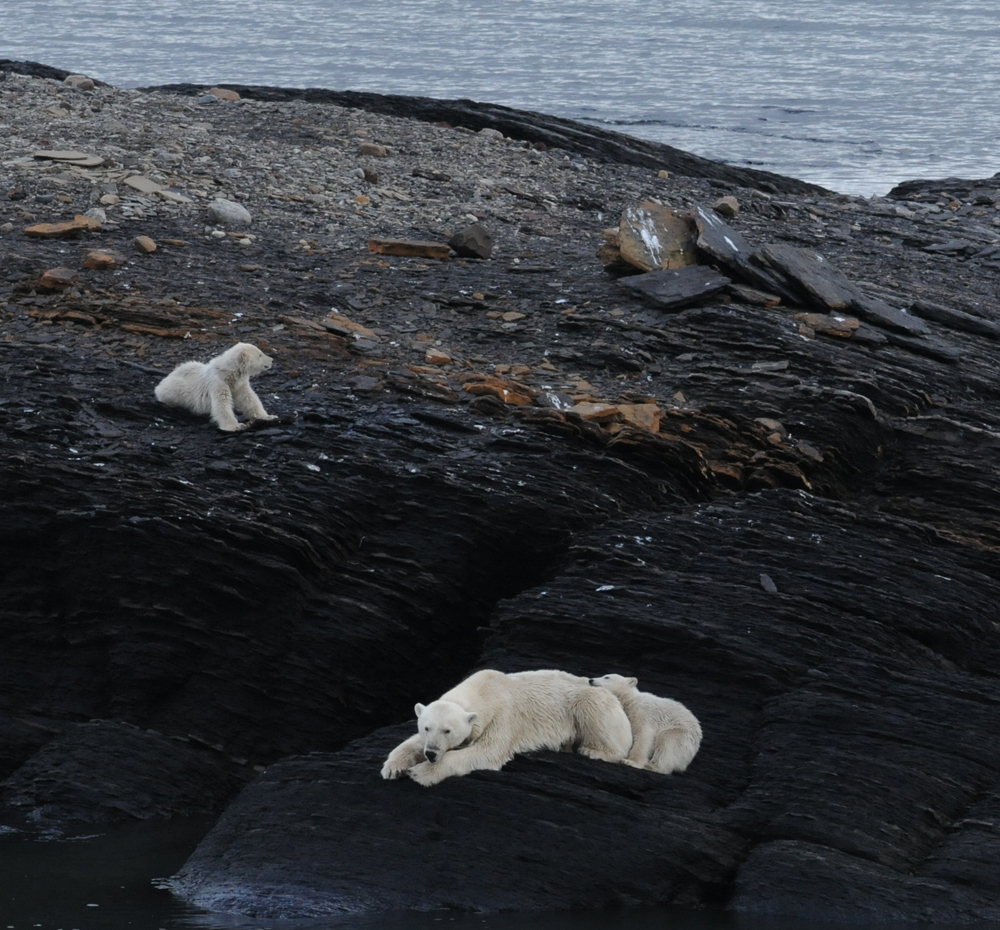
Friend and polar plunger Tom Crane took this on his recent trip to Svalbard, Norway.

(I did crop his original to fit Ancientrails.)

Being Human

Summer                                                             Moon of First Harvests

The morning after.  The Woolly feeling lingers here, a gentle mantle over the back, around the fire pit where we gathered.  A primary, perhaps the primary, purpose of the Woollies is to see and be seen.  No invisible men allowed.  We have bum knees, wonky shoulders, weak legs, poor eyes and sore backs.  These are acknowledged, not for sympathy, but for recognition that we are each the sore back, the poor eyes, the weak leg, the wonky shoulder, the bum knee.  And that we are none of us only or even mostly our ailments, more and mostly we are the ones who have spent this 25 year+ journey together, time that included wholeness, able-bodiedness and now includes physical decline.

We’re not exactly a support group.  We don’t try to fix each others problems (usually).  We do go in for empathy, but not too much because too much focuses the group on one while the whole has been and is the most important.  We’re not a group of friends, or, at least, not only a group of friends, rather we are fellow pilgrims, traveling our ancientrails in sight of each other, calling out from our journey and hearing the other call out from theirs.

Though our ancientrails intersected less in times past, as we move into third phase life they intersect more and more.  How to make this transition.  How to create a life anew when work is no longer the primary lodestar.  How to look death in the face, unafraid, even welcoming.  No, not suicidal welcoming, but unafraid of what is common, ordinary, part of the path.  We look at each others hearts, hear the pulse of each other’s blood.  This is what it means to be human.


The Woollies At Our Home

Summer                                                      Moon of First Harvests

The Woollies came.  Stefan, Tom, Scott, Bill, Charlie H., Warren, Frank, Mark and me.  We sat around the fire pit, ate Kate’s tasty and thoughtfully prepared food, told stories of our lives as we almost always do.  Relationship trouble.  A son’s successful, so far, focus on alcohol.  A journey to see children and grandchildren.  A good experience in home repair.  Painting, the fine art kind.  Plein air even.  A cousin who drunk himself to death.  A trip to the polar regions with walrus and polar bears and knowledge.  A sister-in-law with Alzheimer’s, early.  Consulting with a group, helping them become creative.

The woods were there as witness.  The sun set and the moon rose.  We talked about home, my question, wondering why we want to stay home rather than go to a nursing home, why we want to die at home.  What is this home idea that is so powerful that it can penetrate even the fog of Alzheimer’s?  How do we know home?  How do we make a home?  When does a house become a home?  We only got started, stories and poems and few notions, but there is so much more here.  And it will only become more and more important as we live further into the third phase.

A conversation not yet finished.

Home Olympics

Summer                                                        Moon of the First Harvests

Noticed as I did my second round of foliar spray today, vegetative and reproductive plants separately, that we have tomatillos, eggplant, many tomatoes and green peppers.  None ready for harvest, but they’re on the way and it’s only mid-July.

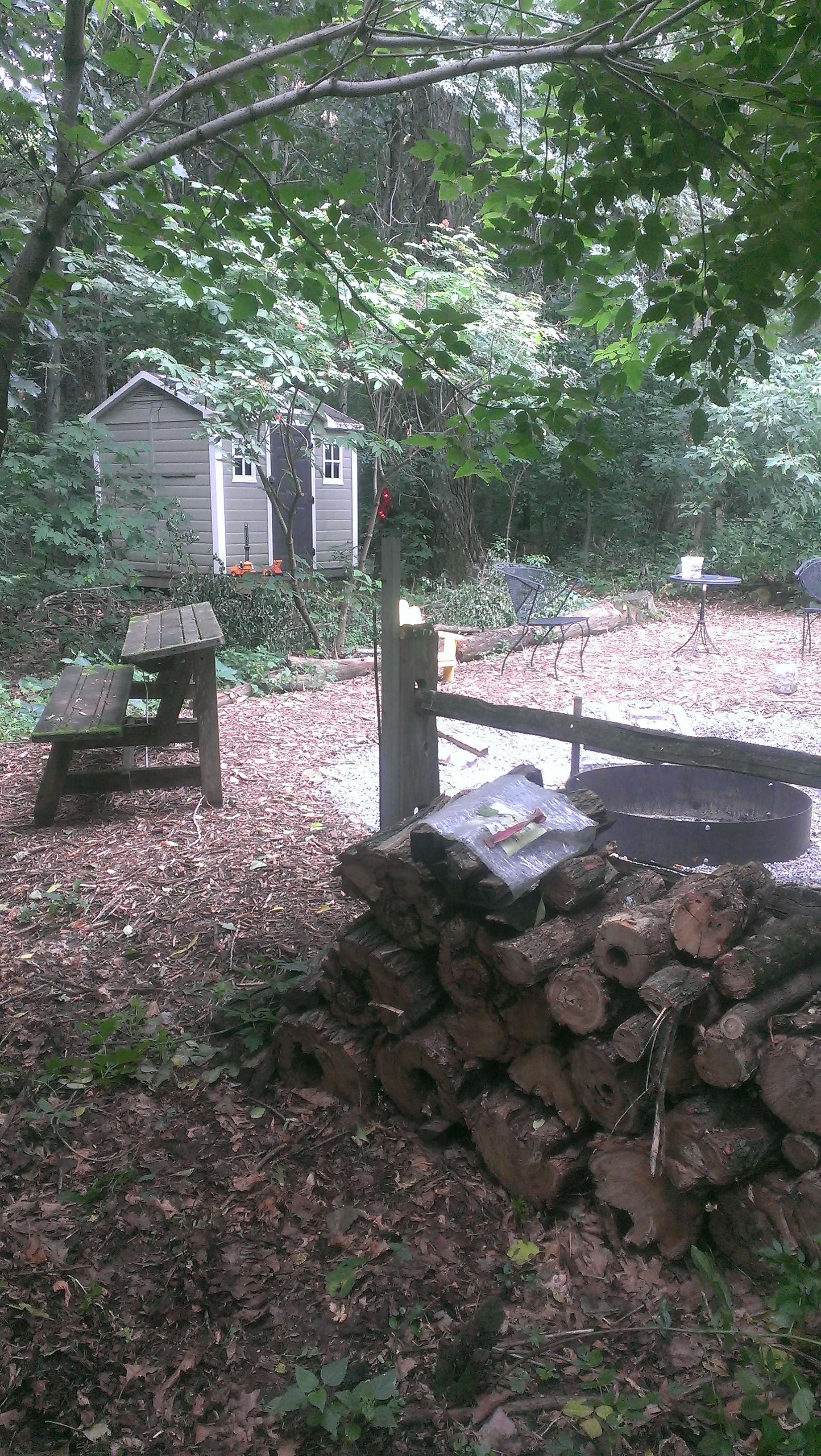
A few last minute things for the Woollies.  Have to move more ash sections to serve as seats and go over the fire pit area one more time.  Kate began prepping for today over two weeks ago.  Between the Woollies and the kids plus Mark in June, we’ve done a lot of spiffing up and getting things ready, things that will last past the events that triggered them.

Sort of the home equivalent of the Olympics.  No bird’s nest auditorium, no fancy velodrome or natatorium, but the fire pit and the cleaned up orchard (which didn’t get scheduled until after the Woollies, but we planned it before), the hung chandelier, Kate’s familiarity with certain recipes and her finely-tuned entertainment acumen, the cut firewood, the lights in the fire pit, not to mention all the reflections on home I anticipate and the memories from June and tonight will vibrate here long after everyone goes to their home while we remain behind, here, in our own.


Waiting for Woollies

Summer                                                      Moon of the First Harvests

Picked cherries this morning, then went out to assist Kate in stringing lights.  She ran the lights along the old cedar fence.  I helped string across the gate well above head level.  Wire, that all purpose garden tool.  Handy stuff.

While she put the lights in place, I moved tree limbs, uprooted buckthorns and smaller wood clearing debris from an area near the kid’s playhouse, which, by the way, now has a wonderful crystal chandelier.  It will be lit in the background.

Then the rain began to fall.

Lilies, Leeks and Lumber

Summer                                                       First Harvest Moon

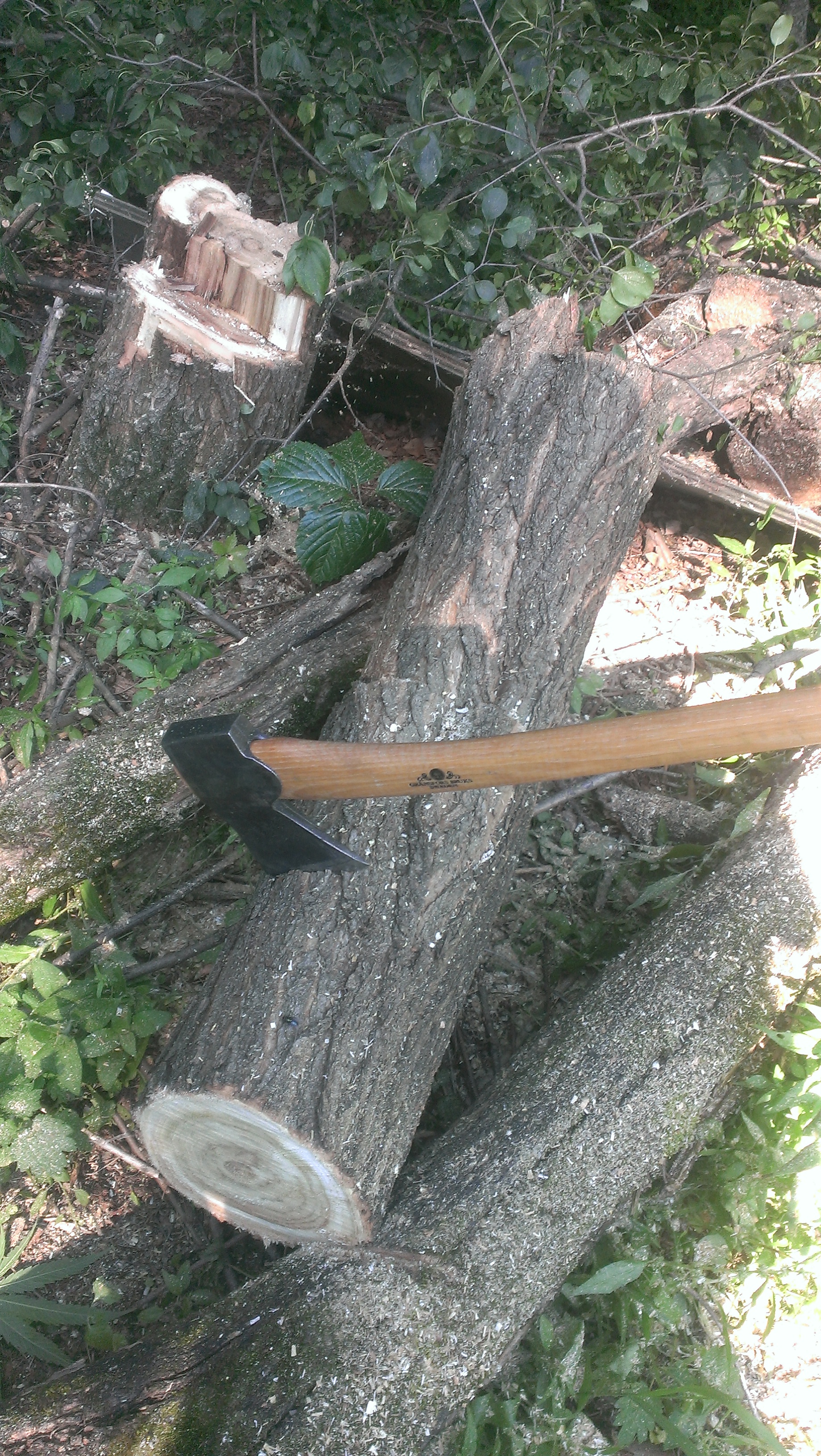
Today, again, harvesting trees.  This time black locust, a thorny tree that grows fast and germinates easily.  In olden days fence posts, foundation posts, anything requiring a sturdy rot-resistant wood were common uses of the black locust.  This tree will get used as firewood for the great Woolly ingathering here on Monday.

Other hardwood trees like oak, in particular, but ash and maple and others as well, require a year or two of drying to get their moisture content below 20%.  Black locust is a low moisture wood even when it’s alive.

In felling this tree my directional cut was at a slight angle and the tree came down on our vegetable garden fence.  But.  Fortuna was with me.  The main branch that hit the fence landed right on top of a fence post, square cedar. It didn’t mind at all.  May have sunk a bit lower in the earth. A slight dent in the gate where a smaller top branch made impact, otherwise, the fence came through fine.  Whew.  Felling trees is art as well as science and I mishandled this one.

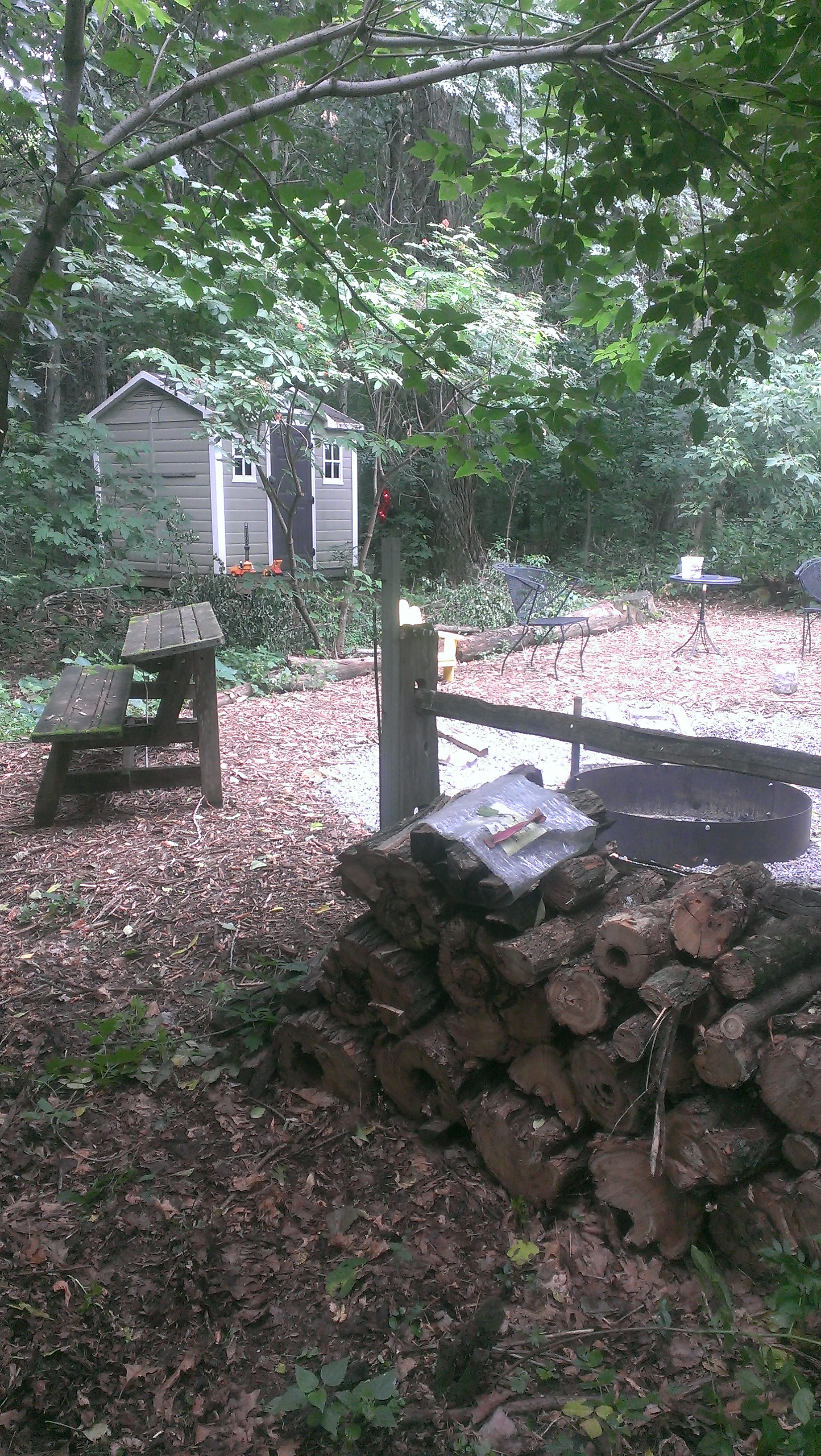
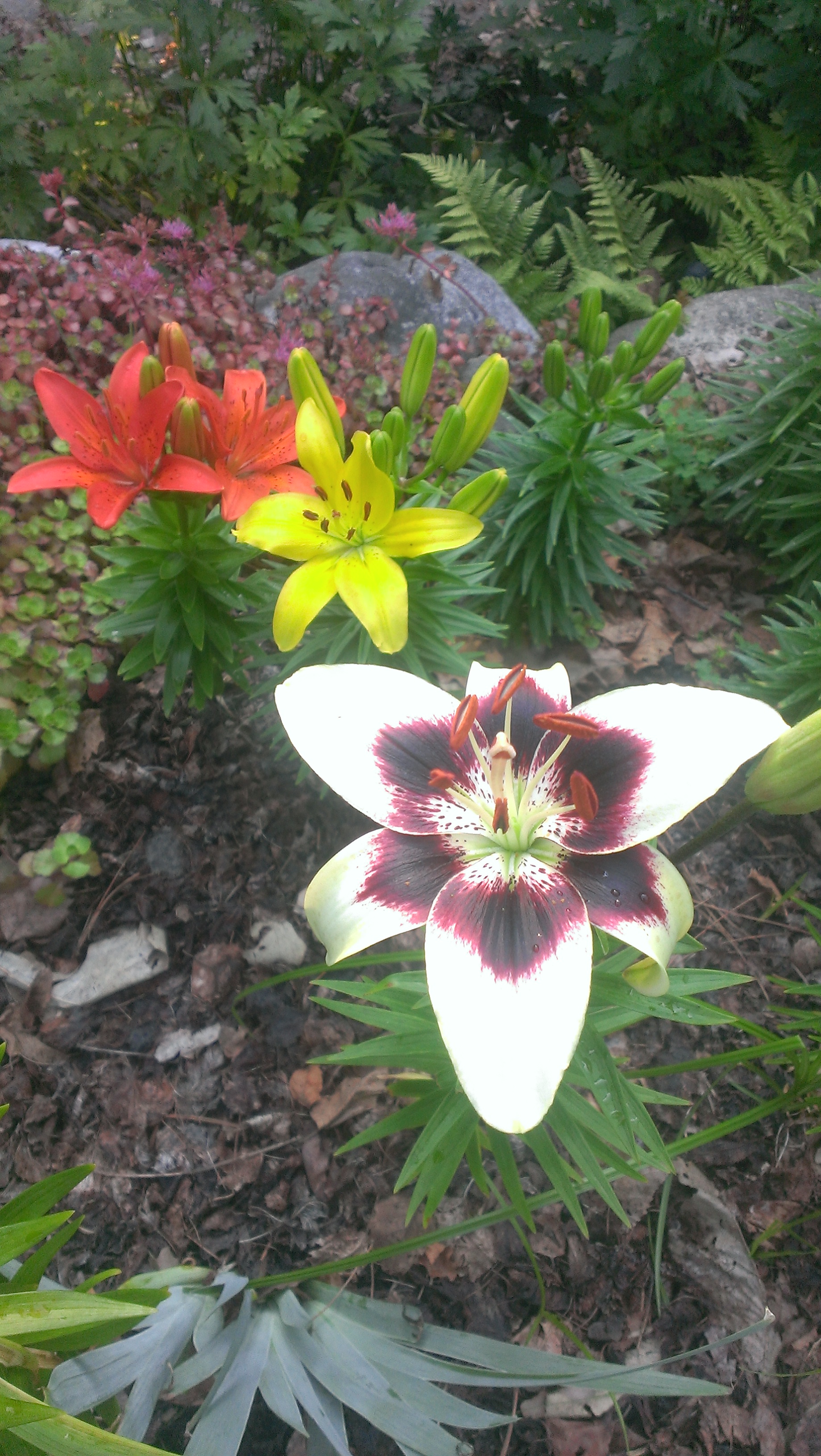
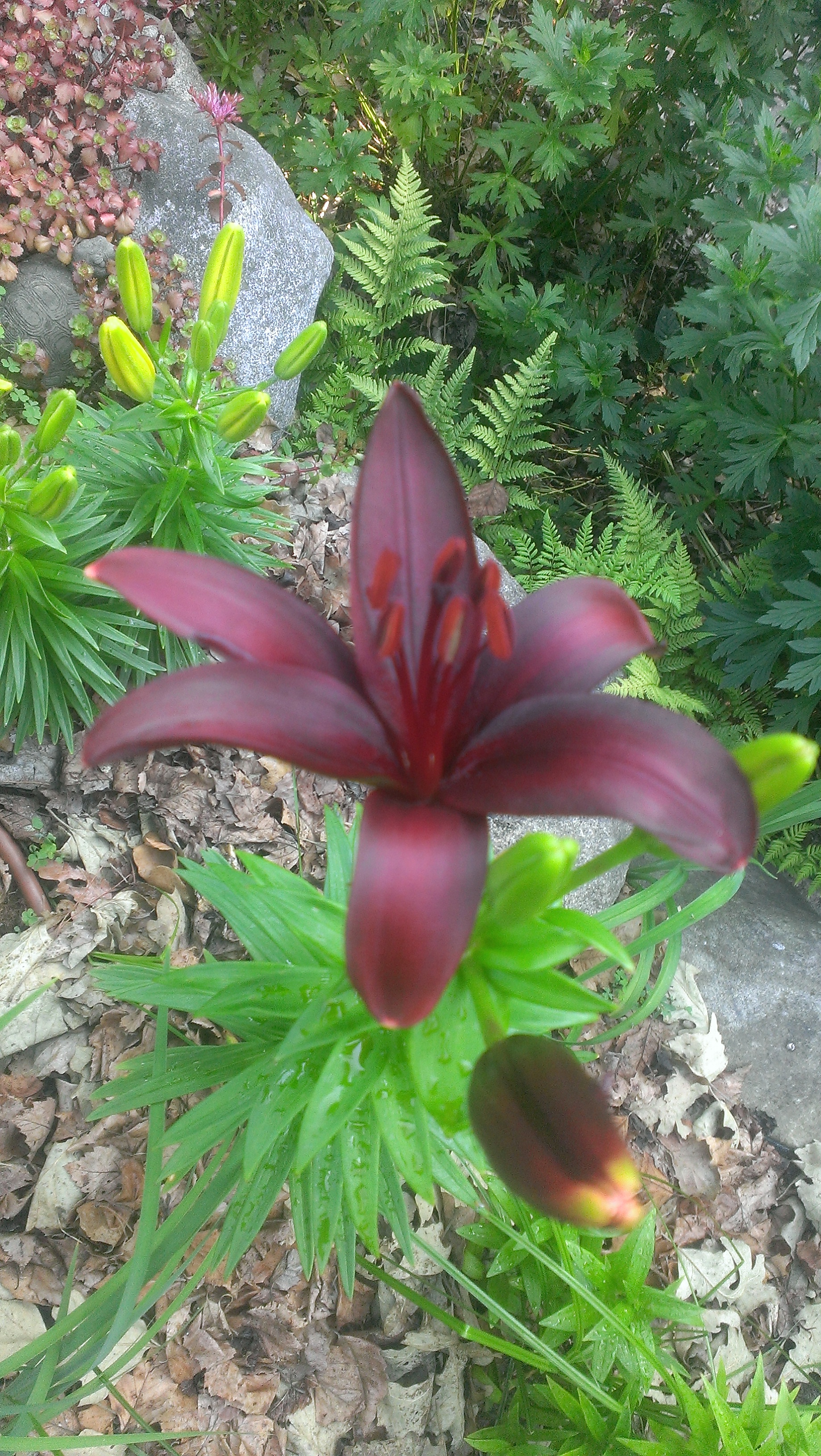
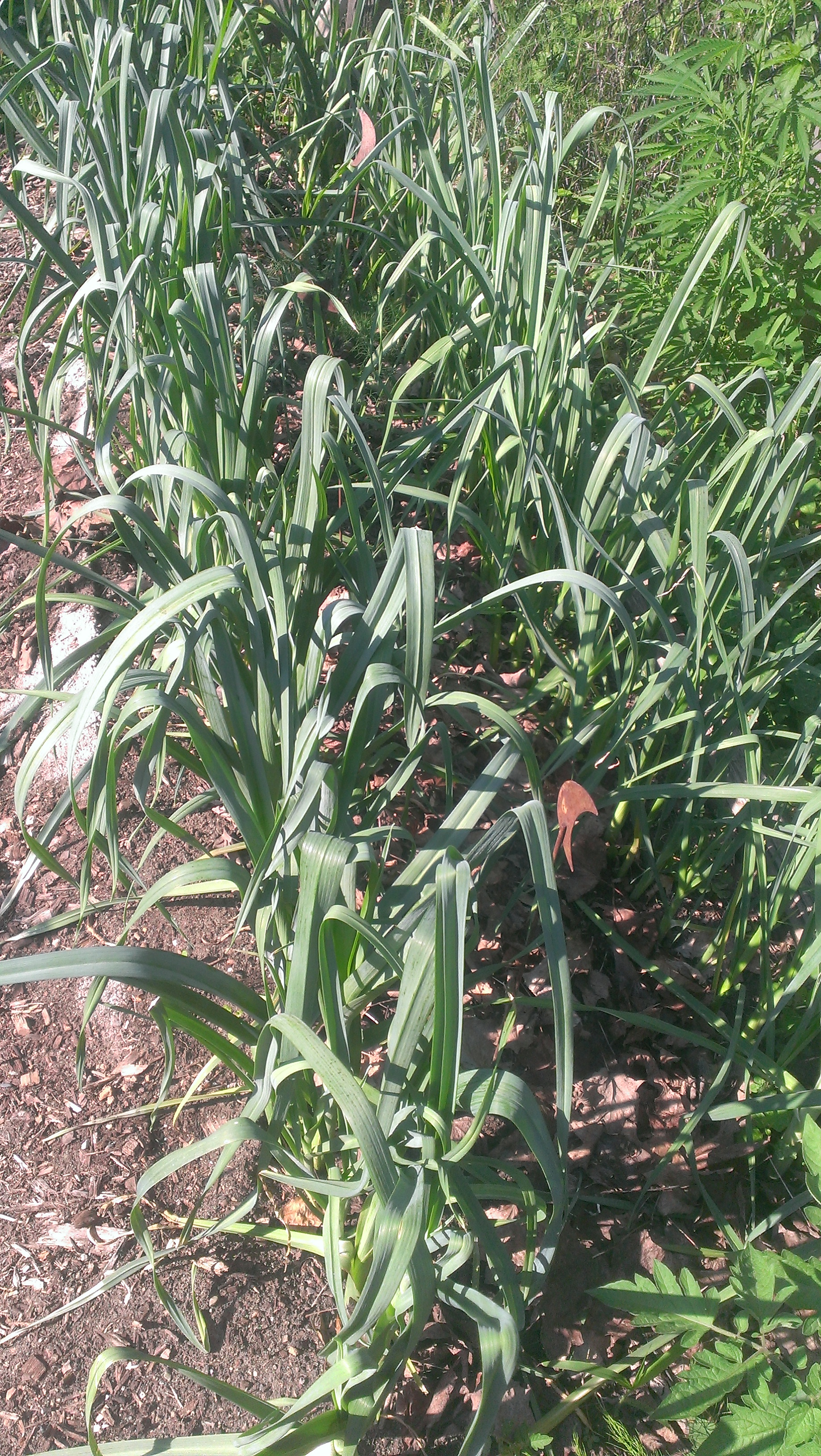
Early this morning I sprayed Enthuse, a product to generally spiff plants, give them an energy boost.  That was over all the vegetables and the blooming lilies.  The lilies are my favorite flowers by far and almost all of the varieties that I have I purchased at the North Star lily sale last spring.  These are lilies grown here, hardy for our winters.  Here are pictures of the current state of the gardens and preparations for the Woolly homecoming.

Third Phase Work: Wit

Summer                                                            New (First Harvest) Moon

An HBO movie that went DVD on Sept. 11, 2001, Wit, directed by Mike Nichols, is many things.  It is first a fine drama showcasing the talents of Emma Thompson and Audra McDonald with a very touching and important moment featuring Eileen Watkins.  Wit is the story of a middle aged (48) professor of English literature, Thompson, and an expert in the metaphysical poetry of John Donne, diagnosed with stage 4 metastatic ovarian cancer.

The storyline takes her from the moment of the diagnosis through all her 8 cycles of full dose chemotherapy to death.  She only has one visitor, Watkins, her Ph.D. advisor, who is with her when she dies.

There is a fine and I suspect very tight interplay between the poetry of John Donne, especially his well known work, Death Be Not Proud, and the dramatic arc of the movie.  There is also a damning portrait of professionals so focused on their work, saving humans, that they can’t see the humans in front of them:  Thompson’s two oncologists and, ironically, Thompson herself.  Another storyline depicts with damning specificity the increasing powerlessness and dehumanizing of hospital patients.

(Marble funeral effigy of John Donne, 1631,
at St. Paul’s Cathedral, London, where he
is buried)

The poignant, and they are heart wrenching, moments come in the interaction between Audra McDonald, an oncology nurse, and Thompson.  It is not maudlin even in its build up, but the nurse sees Thompson, listens to her, empathizes with her, touches her compassionately and finally initiates a conversation about whether she wants to be a DNR, that is, do not resuscitate.

This is third phase work, viewing this movie.  Relative to the theme that I’ve given for my Woolly meeting on July 15th, home and what does that mean to you, it shows the hospital as the anti-home:  a place cleansed of personal belongings, choice, simple comforts like, as Thompson says at one point, “…shoes.”

However it may come to us, “gluttonous death” (a Donne phrase) will come and I hope that it can come for each of us surrounded by loved ones, in a place we choose to be.
Watching As the Lights Go Out

Summer                                                                        Solstice Moon

When we gathered last night at the Woodfire Grill, five of us Woollies talked, catching up on family, discussing current events, laughing.  Then, the talk turned serious and deep, as the fly fisherman said, “existential.”

A sister-in-law, a chiropractor, called one of us and told him she was retiring.  “Because,” she said, “I’ve been diagnosed with early Alzheimer’s.” That brought silence around this table where the youngest was 64 and the oldest 80.  As is his way, this one wondered how to be present to her, not to fix her, but to aid her in her present situation.  How might he stay present to her over time, perhaps learning enough to alert her children, who live far away when things become dire?

I pointed him to a website I recently added here, under the link’s title, Third Phase, called Watching the Lights Go Out.  Here’s this 68 year old retired physician’s description of its purpose:

“In September of 2012 I was diagnosed with Alzheimer’s disease. This blog is the story of my day-to-day life with this illness and my reflections upon it. We tend to be scared of Alzheimer’s or embarrassed by it. We see it as the end of life rather than a phase of life with all its attendant opportunities for growth, learning, and relationships. We see only the suffering and miss the joy. We experience only the disappearing cognitive abilities and ignore the beautiful things that can appear.”

One of us has an obvious anxiety about this since he has a mother with Alzheimer’s and definitely does not want to place that kind of burden on those who would be his caretakers. What will I do, he asked, if this becomes me?

We turned to the writer who cared for his mother-in-law, Ruby, who tipped over into Alzheimer’s after open-heart surgery.  He has interviewed many Alzheimer’s sufferers and said that after a couple of years of sometimes intense existential dread, there comes a peace with the disease.

“But I don’t want to not care!” said the one of us who was anxious.  “That leaves my caretakers with the burden.”

This conversation continued, all of us trying to put ourselves in the situation of watching the lights go out.  It was not pleasant, but neither was it hopeless, because we had friends around the table.

A primary inflection of this whole conversation was readying ourselves to live into this and other dark realities that loom not far down the stair case of aging.