Category Archives: Great Wheel

Feel the Rain On Our Face

Lughnasa                                                                    Recovery Moon

There are many ways of becoming native to this place. The one that worked for me involved a combination of following an ancient liturgical calendar based on seasonal changes in temperate latitudes: the Great Wheel and gardening. There are many other paths. Chado: the Way of Tea integrates the tea ceremony with a finely divided sensibility to Japanese seasons, some only two weeks long. Hunter/gatherers have to be native to the place where they are or they will not survive. Followers of the Tao, the way, lean into the rhythms of the natural world rather than away from them, flowing through the world as water does in a stream. Hiking and camping and canoeing. Forestry with an emphasis on forest health. Conservation biology.

Oddly though practitioners of modern agriculture are often as estranged from their place as residents of vast urban enclaves. And I recently read, in Foreign Policy magazine’s July/August edition, an intriguing explanation as to what lead current, often corporate, agriculture astray. When the population explosion gained prominence in the mid-1960’s, think Paul Ehrlich’s “The Population Bomb,” a concentrated focus on methods of improving agricultural productivity resulted. And it worked. More acres went under the plow, more chemicals went into the soil and onto crops, antibiotics filled food animals, food production became more sophisticated though not more nutritious, fast cheap restaurants bought and sold fast cheap food. There are real dangers in letting ourselves become strangers to our home world.

Becoming native to this place is analogous to being born again, revivified for the act of belonging to, being part of this planet. Second naiveté, Paul Ricoeur’s wonderful notion, can follow a state of critical distance:

“According to Ricoeur, the rational forces brought to our civilization through modernity have made it difficult to accept religion or scripture in the “first naïveté” sense. Once subjected to rational inspection, the literal meanings of religion really do not hold up…”  exploring spiritual development

Modernity has put the fruits of enlightenment reason and modern technology forward as more significant, more important than the growth of a tomato, than the beauty of a wilderness lake. It has substituted the grace of a soaring condor with the stiff, hard brilliance of an airplane. That tomato, grown soft and juicy on the plant, got replaced by a hard-skinned, pre-ripe picked fruit designed for machine harvesting and long distance transport. Distances that used to require human feet and legs, or the same of horses, now demand only that we sit and wait.

Before you resist this. This is not a screed against airplanes, cars, computers, telephones or grocery stores. It is a recognition of the rupture, the critical distance, modernity has created between our lives and the world that sustains them. Food comes from soil and plants and the animals that eat the plants. Oxygen from the plants at work. Water used to be purified by the very wetlands we fill in or drain to build subdivisions or to plant more acreage of chemically injected crops.

Life, in other words, exists in a delicate balance with the inanimate; that balance is literally billions of years old and one we cannot afford to ignore. Yet we do. And so we must make an effort to again become native to this place, this place which in its wonder gave life a chance.

Following the seasons as they change and following within those changes emergence, growth, life and death became easier for me when I overlaid on spring/summer/fall/winter the four big solar events of equinoxes and solstices, then put between those the cross-quarter holidays of my Celtic ancestors:  Samhain (summer’s end), Imbolc (in the belly), Beltane (the beginning of the growing season) and Lughnasa (the first harvest holiday). When I write the season at the top of this blog, I remember, for example, that we are now in the season of first harvests. And sure enough Kate brought home some wonderful heirloom tomatoes today.

The extensive gardens, both flower and vegetable, plus the orchard that Kate and I installed and nurtured in Andover reinforced the lessons of the Great Wheel. At Halloween, Samhain’s paler descendant, our garden would be finished, the beds covered, foods in jars in the basement, garlic hanging from rafters, onions and apples spread out. We were part of the turning wheel and the turning wheel shaped what we could and could not do. We lived then with the rhythms of the temperate latitudes, in some harmony with them.

Now we are in a new place, a more arid, less fertile place and the way of becoming native to it is still in process. But it will come.

We cannot all go back to the land. Cities dominate the living patterns for most of the world. But we must find ways, whether through community supported agriculture or urban hydroponics or organized trips to the countryside, to help us all feel the rain on our face. We all need to wonder at the slender green shoots that brave their way through the late snows of winter. Or, at the tropical lushness of equatorial jungles. Or the marvel of lives lived fully in the world ocean. Our lives and the lives of our grandchildren depend on our becoming, again, native to this place. To know our spot with a second naiveté so that we will care for, love this rocky, watery wonderful earth.



Becoming Native to This Place

Lughnasa                                                                Recovery Moon

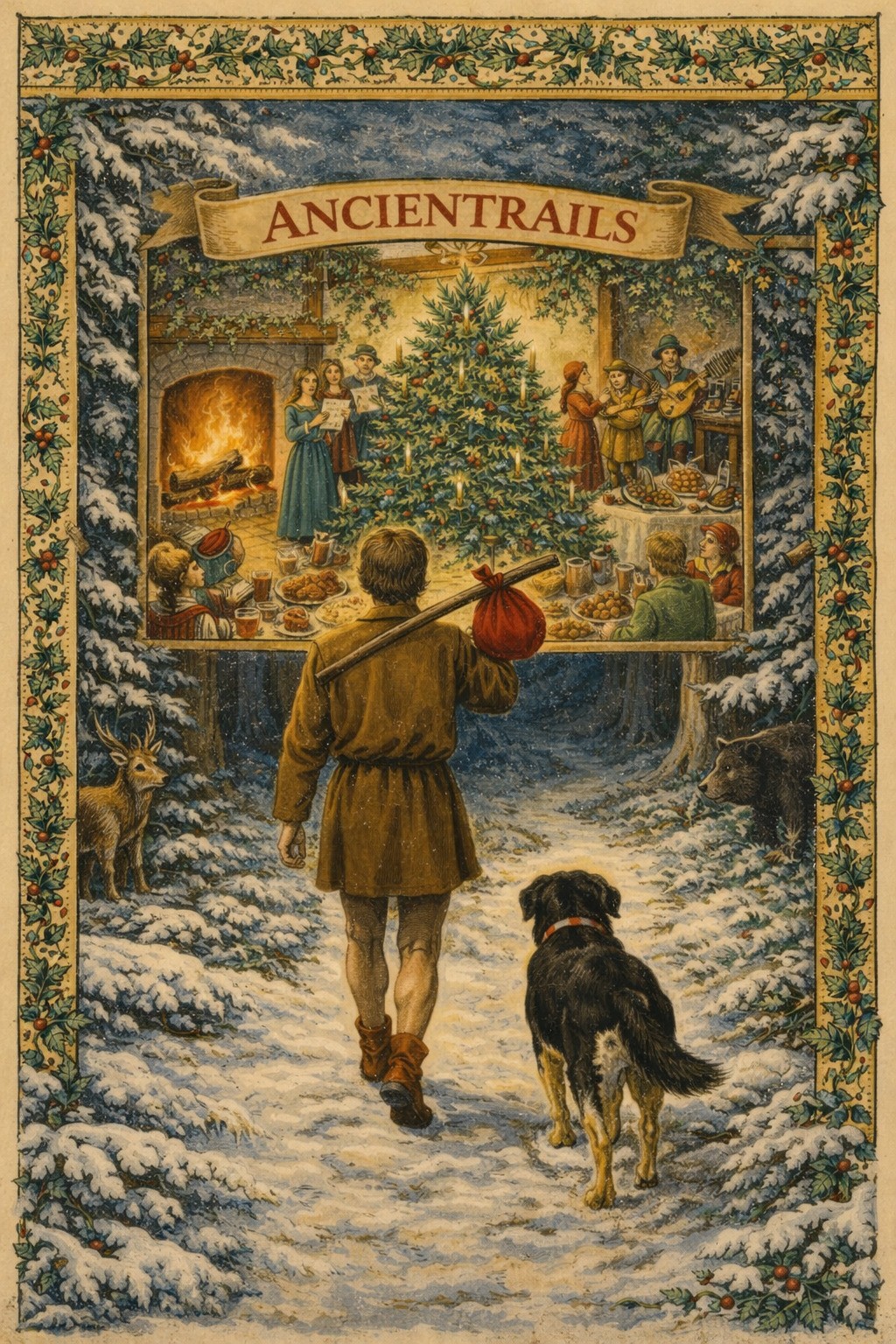
The most ancientrail of all is becoming native to this place.

But, why must we become native to mother Earth? Aren’t we native simply because we are thrown onto the planet’s surface at birth? Yes and no. Yes, in that we are an organism designed to live in this gravity, breathe this concentration of oxygen, use plant matter and other animals as food. No, in that those of us thrown into a complex industrial/technology culture are native not to the planet itself, but to adaptations made over centuries by economies and governments. This includes the U.S., Europe, most of Asia, the Middle East and Latin America, as well as residents of urban areas on every continent.

In the U.S.A. we are native to electricity as Kate and I learned just this Monday.  Our typical life ground to a halt along with 4600 others when the power went out. We are native to a night lit not by fire, but by bulbs. We are native to warm houses in winter, cool ones in summer. Our hunting and gathering takes place at King Sooper, Safeway, Lunds, Byerlys. We are native to antibiotics, surgery, dental care.

When we climb the additional 3,600 feet in altitude from Denver to our home on Black Mountain Drive, we sit comfortably in a moving chair powered by the ancient remains of dinosaurs and forests. We are native to telephones, computers, text messages. We are native to machines and carpenters and plumbers. We are, in short, native to almost anything but this planet where we live.

You could reasonably ask whether this matters. Our future lies in the stars anyhow, doesn’t it? Maybe so. Especially if we render the earth uninhabitable for humans. Which, with climate changing drivers still dominant in our world economies, we’re working hard to accomplish.

I believe it matters. Why? The short answer is that becoming native to this planet, again, is our best hope for throttling back those climate change drivers. We can escape to the stars while having a beautiful homeworld as our base of exploration.

The longer answer has to do with the nature of our humanity. Technological and industrial estrangement from the rhythms of the natural world is almost a canard, a cliche. We expect tomatoes in winter. We expect access to any part of the planet within hours. Even the colors of our sunrises and sunsets often have chemical pollutants to thank for their vibrancy.

We need to awaken ourselves to the essential, everyday miracles: photosynthetic conversion of sunlight into food, the transpiration of that same process, oxygen, being a gas we need to survive. And this consciousness that we have. How about that. Or the intricate and interdependent web of living things. The changing of seasons in the temperate zones. Water’s strange characteristics.

In the next post I’ll suggest one way of becoming native to this place.

Lughnasa 2015

Lughnasa                                                           The Blue Recovery Moon

The first of the three harvest seasons begins today. Lughnasa, the festival of first fruits, or Lammas, as the Catholic appropriation of this Celtic holy day came to be known. On Lammas peasants would bring loaves of bread made from the first of the corn (wheat) harvest and place them on the altar.

Here is an intriguing account of Lughnasa’s mythic origin from Kathleen Jenks’ website:

“Lugh dedicated this festival to his foster-mother, Tailtiu, the last queen of the Fir Bolg, who died from exhaustion after clearing a great forest so that the land could be cultivated.  When the men of Ireland gathered at her death-bed, she told them to hold funeral games in her honor. As long as they were held, she prophesied Ireland would not be without song.  Tailtiu’s name is from Old Celtic Talantiu, “The Great One of the Earth,” suggesting she may originally have been a personification of the land itself, like so many Irish goddesses.  In fact, Lughnasadh has an older name, Brón Trogain, which refers to the painful labor of childbirth. For at this time of year, the earth gives birth to her first fruits so that her children might live….”

This year, my first Lughnasa in the west, I’m aware of the contrast between the humid and agriculturally focused Great Wheel holidays and the rocky, desert, arid region which I now call home. On Shadow Mountain we have no harvest, no fields retrieved from ancient forests. We have stony cliffs, lodgepole and ponderosa pine, aspen. At the base of Shadow Mountain in Shadow Creek Valley there is a stand of alfalfa that was cut last week and baled this week. But the rationale is more fire mitigation, reducing the fuel load, than an agricultural one, though I imagine some happy horses will get those bales.

This year Lughnasa still has that Midwest feel for me. The vegetable stands are full of produce, farmer’s markets tables groan with the increasing yield of gardens all round the region. In fact, the week-long market holiday that began at Lughnasa in the Celtic lands inspired our agriculturally focused county and state fairs. The Great Minnesota Get-Together starts later this month on August 27th. No better latter day Lughnasa festival.

Adapting the Great Wheel with a western inflection may take a couple of years. I have no clear idea, for example, how to talk about Lughnasa on Shadow Mountain. An intriguing piece of work that lies ahead.


Summer Solstice: 2015

Summer                                                                 Healing Moon

The longest day. The summer solstice. Is here.

Black Mountain Drive is a Great Wheel home. We closed on Samain, moved in on the Winter Solstice and celebrate our half year anniversary as Coloradans on the Summer Solstice.

While Beltane, the season just passed which began on May 1, begins the growing season, the Summer Solstice, with its abundant sun and gathering heat, is its zenith. Now the vegetables have taken root and begun to flourish, the corn and the wheat and the soybeans fill farmer’s fields, flowers brighten fields and gardens. Food is abundant for all living creatures.

Mother earth shows off her power to nourish and sustain. The shades of green become infinite, vibrant grasses shading to chartreuse aspens, light green iris blades shoot up next to gray green sage. The true transubstantiation on display everywhere, chlorophyll dominant in the landscape.

Spring fawns, calves, piglets, squirrels, fox kits, wolf pups all play and roll on the green. It is a season for life, for new life and old. This is the time when the Great Wheel reminds us that life, this one wild amazing life as Mary Oliver says, is a gift freely given and freely supported. Life is not always in its summer season, but when it is, rejoice!

It is in this season of life, of growth, of nourishment, of color that I will have my prostate surgery. Fitting, I think. Its purpose is to remove a multiplying threat to my life and what better season to excise it than the season of life at its most vibrant. My healing will gain from the sunshine, the flowers, the fresh foods available in this, the season of midsummer.

Midsommar Comes

Beltane                                                       Healing Moon

circular calendarThe wonderful circular calendar I have, the one which shows the amount of daylight with a large yellow ovoid, has that yellow closest to the calendar’s inner rim on Sunday. That means the Summer Solstice. On that day we will have been in Colorado for 6 months, having moved in on the Winter Solstice. Also on that day, for lovers of the night like me, we can celebrate the gradual withdrawal of the sun, shown in the increasing white around the yellow as the circular calendar moves toward the 2015 Winter Solstice.

The numbers that move from the center of the yellow to the circular margin represent hours, 1 thru 17. This is, of course, a temperate latitude phenomenon, so living north or south of the equator by some way is necessary to experience the changes. They will be less dramatic here on Shadow Mountain, at 39.5211° N, than at Andover, 45.2333° N, but still quite evident.

The coming of Midsummer shows itself here each evening as I go to bed. Our bedroom window faces north and at 9:00 pm, my current bedtime, the sky is a fuschia color through the ponderosa pines.

Here’s an image from Swedish Midsommar:


For Millions of Years

Beltane                                                      Closing MoonUpper Maxwell Falls Trail350


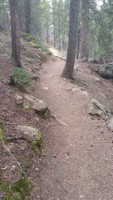
A mile or so from our driveway is the trailhead for Upper Maxwell Falls trail. I went once in the winter and didn’t take my yak-traks with me. It was too icy to navigate the altitude gain.

Today, as the gloom began to settle in late afternoon, and as my own mood began to mimic the gray overhead, I set out for Maxwell Falls.

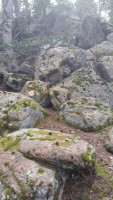
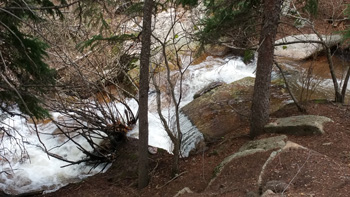
Upper Maxwell Falls Trail1350The trail is not long, about a mile and a third round trip, but it does climb, then decline through ponderosa forest. Piles of large boulders, weathered and jumbled together, cling to the side of Shadow Mountain above and the trail, while Maxwell Creek flows with equal parts power and grace, going white over rocks in its way, curling around them, too, in gentle embrace.

The falls themselves are modest in height, but there are several, one after another, giving more speed to the already rapid water. This is the way it’s been here for millions of years after the snow melt and when rains come. The water starts up high and finds these channels that allow it to collect and be the chisel. Later, it will grow calm after having taken a fast ride, perhaps pooling behind a beaver dam or a spillway or flowing into a lake or pond.Upper Maxwell Falls1350

It is a privilege to live so close to this magic. It dispelled the gathering gloom in my Self, allowed me entrance to the Otherworld, the place where humans are still one among many and not more important than any other.

Pulses

Spring                                               Mountain Spring Moon

Under the mountain spring moon various shades of green have slowly, slowly begun to appear. The ponderosa pines have been green all winter but they’ve greened up some. The first ground cover green to appear was the bearberry when the snow melted back. This evergreen ground cover was green all along, just hidden. A shaded patch of moss has gone from a muted pale green to emerald over the last couple of weeks. There are, too, even here at 8,800 feet, dandelions. Some grass, too. Crab grass for sure, another hardy perennial. Tufts of grass that look like prairie drop seed, but are not, I’m sure, remain their winter tan.

Too, the dogs have begun to sniff through the deck, smelling, I suppose, new rodents of some kind. Along with that has come Rigel digging. With the advent of warmer soil Rigel and Vega may begin creating holes in the rest of the yard as well. Another harbinger of spring.

Birds chirp happily around 5:30-5:45 am as the sun begins to rise.

Driving along Highway 78 (Shadow Mountain Drive, Black Mountain Drive (our segment) and Brook Forest Road) the only snow that remains is on the north side of the road or in shaded spots. A pond not far from our house still has ice, but the ice has a shallow layer of water over it. The mountain streams run, burble, ice now long melted and turned into stream. Willows along the streams look fire tipped as their branches turn a green gold. “Like dusted with gold,” Kate said.

The mountain spring is a slow arriver, coming in pulses, alternated with sometimes heavy snows. We have the potential, for example, for a huge snow storm Wednesday through Friday.

While on a drive Sunday, not far from our home, on top of a large outcropping of rock where the sun penetrated the trees, lay a fox, curled up and enjoying a quiet Sunday nap. The fox was a tan spot against the gray of the rock. Mule deer have begun to return as well, we see them at various places along the slopes and valleys. Kate just called and said, for example, that we have four deer in our front yard and “the dogs are levitating.” Sure enough, there they are, finding the green just as I have been.

A Mountain Spring

Spring                                         Mountain Spring Moon

This morning, as I walked up the stairs to the loft, the full Mountain Spring Moon sat atop Black Mountain. It’s silvered white contrasted with the bulky green of the mountain. Birds chirruped, a cool breeze blew through the Ponderosas. And it was otherwise quiet here on Shadow Mountain.

The snow has uncovered emerald patches of moss against the tan-pink rocky soil underneath the pines. Small tufts of grass have begun to green and the Bearberry, an evergreen groundcover, has toned up its color. All around us the Rockies announce, in ways still subtle and nuanced, that wonder of the temperate zones, spring.

Yes, there are the more metaphorical announcements, pesach (Friday and Saturday) and Easter (today), and they do remind us, in their convoluted way, of new life, life saved by the turning of the Great Wheel and the power of the true god, Sol.

This is the moment promised in the barren days of deep cold when the Winter Solstice gave notice that once again light would triumph over darkness. Then the days began their gradual lengthening, a process about halfway done at the equinox, but done enough that Sol’s waxing power shakes the slumbering plants and animals. Grow, move, live.

The Great Wheel turns, turns, turns. It will keep on rolling through the sky until at the Summer Solstice, when light reaches its moment of greatest advance, the balance will change again, the days growing shorter, the night beginning to expand.

Seasonal Visitation

Spring                                            Mountain Spring Moon


Drive down the mountain to Aspen Park, get on Hwy 285 to Denver, get just past the ring road, Highway 470, and suddenly you’ve located spring. Pastures in the horse enclosures are green. Lawns on the houses tucked into the eastern facing slope of the foothills. Green.

In Denver itself, on residential streets, gay daffodils and colored hyacinths add yellows and pinks and blues and whites to the green. Nature’s most festive season is underway. At 5280 feet. Not so much at 8,800. Here the snow lingers, what lawns there are, not many, remain brown. There is not the earth shaking itself awake after a long winter’s slumber here. Not yet. No mountain spring for now. But the season can be visited not far away.

Spring, 2015

Spring                                   Mountain Spring Moon

The sun hits the celestial equator today at 4:45 pm. It also rises due East and sets due West. This is the day the serpent crawls up Chichen Itza. Though meteorological spring, the three months between the coldest and warmest months, began on March 1st, today is the old holiday, one celebrated in cultures across many lands.

Here, for example, is an interesting paragraph about spring from the perspective of wu xing: “In Chinese thought, spring is associated with the color green, the sound of shouting, the wood element, the climate of wind, things sprouting, your eyes, your liver, your anger, patience and altruism– and a green dragon. Not surprisingly, spring is also associated with the direction east, the sunrise direction as Earth spins us toward the beginning of each new day.”  earth and sky

Spring sees the early evidence of winter’s end, celebrated at Imbolc, when the lambs are in the belly, brought forward. The lambs are born. The grass is plentiful so the ewes can give milk and nourish their babies. The gradual loosening of winter’s cold and snow and ice continues, accelerates until the days have warmth as their usual state.

The warmth and the sun climbing toward the north signal plants and animals both. Hibernation ends so the visible population of critters increases rapidly, coming out for the food the new season promises. Spring ephemerals burst out of the snow: snowdrops, crocus, aconites. Later, the daffodils will come, too. The strategy of the spring ephemerals is an interesting one. They emerge, bloom and die back before whatever is in the surrounding vicinity can leaf out, thus capturing all the available sunlight before shade covers their spot.

If Michaelmas is the springtime of the soul, then the vernal equinox is the springtime of the body, of the material and animate world. No surprise then that it serves as the proximate marker for the Christian easter, focused as it is on the resurrection, the new life of the body. Both Christmas and the Easter, the two key Christian holidays, one marking the incarnation and the other the death and regained life of Jesus, focus on the body and its possibilities. In the first instance the body is seen as a vessel for the divine and in the second the body is seen as no longer bound by the strict laws of the animal world. Death is no longer the end.

The Great Wheel suggests a similar, but profoundly different way of viewing these two most profound mysteries: birth and death. The Great Wheel focuses on the rhythms of the natural world and on their sequence, their repetitiveness. Taken most literally it adds nothing to these rhythms, nor does it subtract from them. Birth and death occur as the great wheel turns, as the earth revolves around the sun, source of the vital energy that maintains life between these antipodes.

This intricate interdependence between animals and plants in their life cycles, the sun and the earth’s orbit around it, is common, literally mundane. Profane, too, I suppose. Yet the miraculous is here, too and we need no sacred text to see it. Out of the stuff born in the birth of the stars themselves, stuff borne later on the solar wind and in the cataclysmic explosions at the deaths of these same stars, came the material that created our sun and our home, this planet, this earth.

Then, consider what happens next. That same stuff, now reordered and shaped into this planet, somehow reconfigured itself so that it could move, so that develop intention and instinct, so that it could replicate itself rather than having to wait for the violent processes more usual for the distribution of matter. And that that stuff, the same from the heart of the stars, so reconfigured, grew in complexity and capability until human babies began to born. Babies that could, probably for the first time here on earth, perhaps for the first time in the whole of the universe, see that which gave them the potential for life, the universe in its particularity here on earth and its dizzying universality in the cosmos.

The birth of the universe’s own eyes and ears and poets and composers and painters and dancers came and as miracles. And still do. In the same way the death of these same poets and artists does not end the births. No, the births keep coming and the deaths do not end them. In my mind this is the true resurrection, the actual reincarnation, the exact moment of rebirth. Death does not end us. We continue. And Spring is just the season to bless and hold this true miracle close to our hearts.