Category Archives: Great Wheel

Nocturne

Summer                                                          Most Heat Moon

The increasing pace of the harvest is plant life telling us that the seasons that matter are cropped0017changing. What seems like the height of summer to us presages not more summer, but fall and the big harvests of September and October. That’s what the plants know and in their distinct and ancient language they’re reminding us the time to gather in foodstuffs is now. Right now.

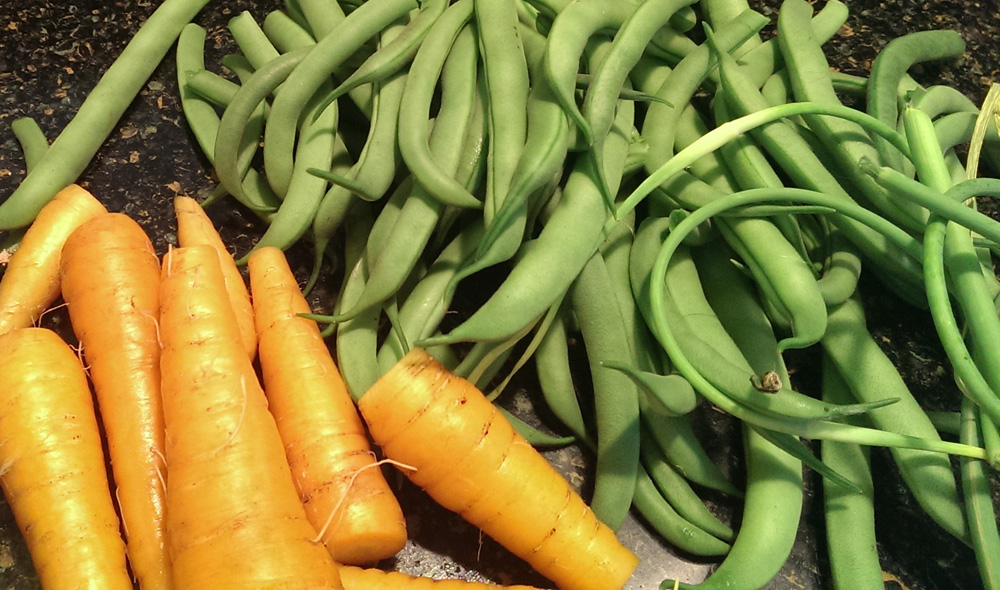
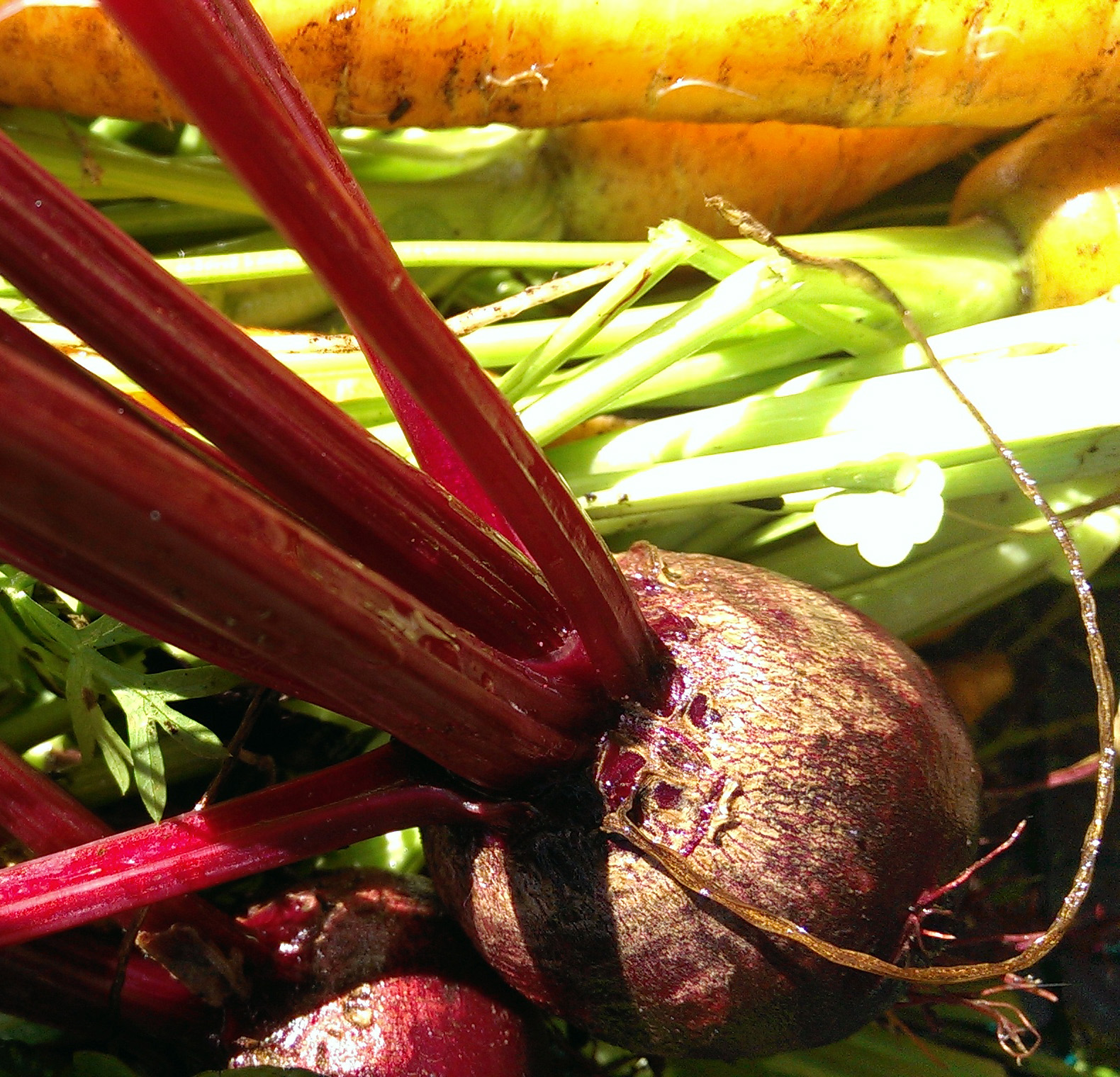
Pressure cookers and canning kettles across the Midwest have begun to heat up, too. That’s another sign. 5 pints of carrots went into the jars today and beets go in tomorrow, green beans as well. In a less complex economy this work would decide whether some of us would live or die through the long winter. Even with our garden I’m grateful for grocery stores. We would have to devote so much more of our time and energy to growing food if it were not for them.

Still, it’s not bad to have a reminder that the complex market system that brings vegetablescroppedIMAG0327 and fruits and meats and processed foods of all kind into our grocery stores is just that, a human system. That means it can be disrupted by war, by natural disaster, by disease, by insects, by normal seasonal fluctuations in temperature and by climate change.

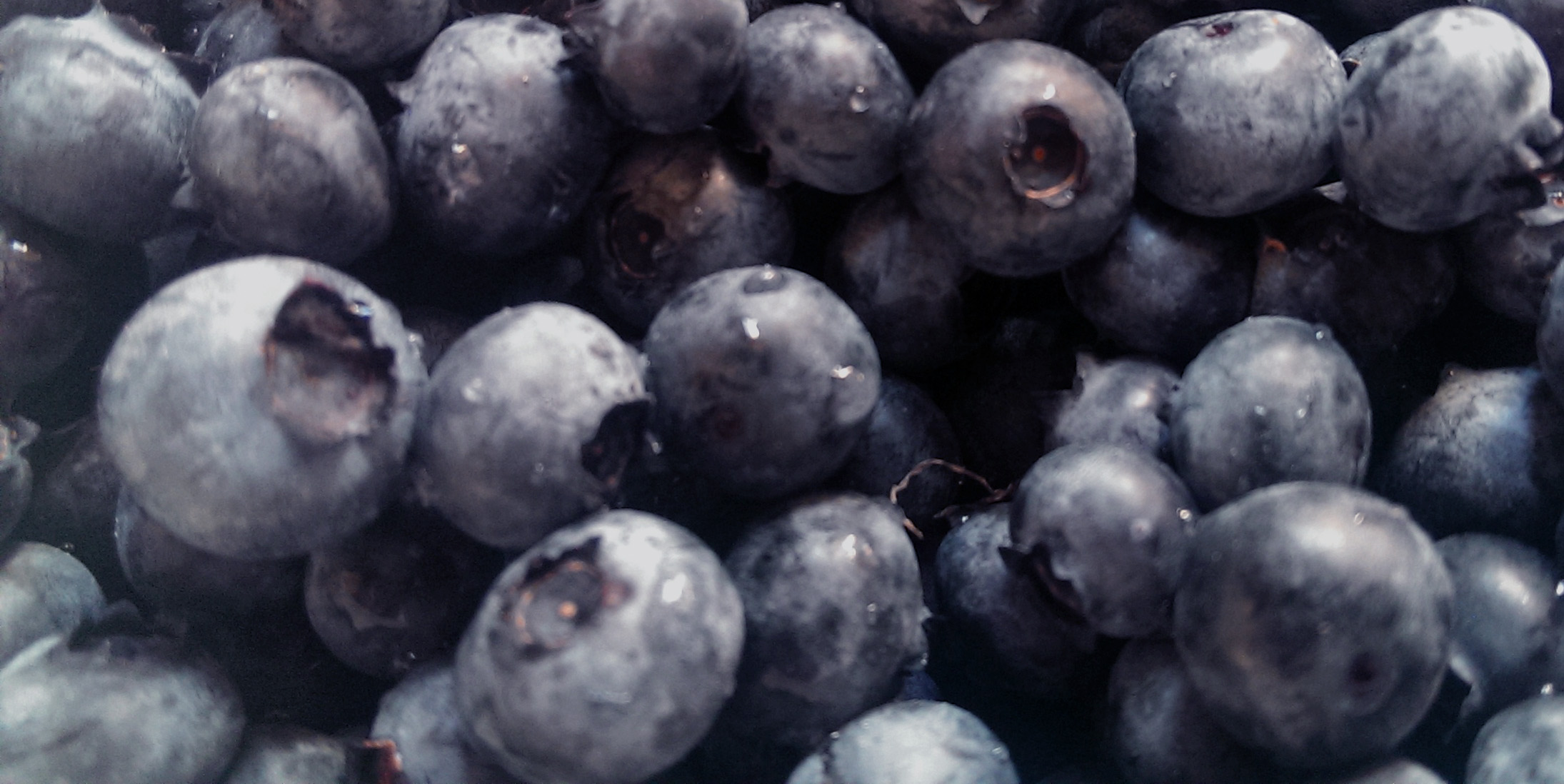
It feels good to have those chicken-leek pies in the freezer. Those red glass jars of pickled beets and the golden ones of carrots. The jarscroppedIMAG0347 of honey and pints of green beans, tomatoes and sauces. Frozen greens and peppers. Dried onions and garlic. Grape jam, currant and gooseberry pies. All the various herbs dried. And last year all the apples and cherries, plums and pears. Next year, probably, too, with the help of bees. (but we won’t be here, most likely, to make that happen.)

Summer Solstice 2014

Summer Solstice                                                         Summer Moon

At 5:51 am the sun reached its full height in the sky, full, that is, for the 45th latitude, 69 degrees above the horizon. That means more solar energy per square foot on the ground and rising temperatures to follow in July and August. It also means the rain soaked plants here in Minnesota will finally begin to get the attention they need to grow tall and produce big fruit. Yes, today is the summer solstice.

This day, like the winter solstice, is an ancient holiday, born of fear and hope, awe and wonder, the basic ingredients, according to Rudolf Otto, of the holy. At the summer solstice the hope was for warmth to heal bones chilled by winter’s cold and sunlight to ensure a good harvest, whether food was gathered or grown. The fear, the opposite of that at the winter solstice when many feared the sun might never return, leaving the world to freeze, with food gone, was that the sun would come too close, stay high too long and burn the earth, scorch it with an intensity neither plant nor animal could survive.

In this way these two markers of the solar system’s formative years, when the orbits of the planets stabilized around their mother and father, Sol, could be seen as an early form of output produced by a very basic, but nonetheless real, computer, movement in the heavens. As this difference engine brought new information into the night sky, humans and other animals, too, sighted it and changed their lives according to its data.

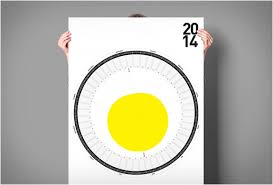
If the holidays of Beltane and Samhain mark the human focused seasons, the growing sun calendarseason and the harvest season followed by the long fallow time, then the solstices mark the astronomical seasons, the season of heat and the season of cold. Together these four constitute the liturgical calendar of an earthly religion, one which honors the earth and its treasures, and a solar religion, one which honors the nuclear fusion roaring in the furnace of our star, a basic source of energy which makes the earth’s treasures accessible to our bodies.

The calendar shown here hangs on my wall, the solstices made evident by the yellow yolk displaying the hours of sunlight on a given day. The point where the yolk lies closest to the inner circle is today, the summer solstice, and the one furthest away, its polar opposite, near the top, the winter solstice.


This is a day to celebrate the majesty and wonder of photosynthesis, that essential transubstantiation which converts the love of the sun into foods that our bodies can consume. When you look outside today and see green, the color not absorbed by plant leaves and so left over for our eyes as a signal of the miracle, bless them. Bless the leaves and their photosynthetic work, bless the sun which powers it and the plants themselves which mediate between that work and our life. Their work is the sine qua non of our existence. And worthy of our thanks and our praise.

Beltane’s Last Day

Beltane                                                            Summer Moon

The last day of Beltane. The growing season comes reliably during Beltane, if not by the more ancient date of May 1. We’ve had a weird Beltane this year with rains and more rains. Wet. Drought out. Water in. I’m not unhappy with the amount of wet yet since no fungus or other wet related diseases have shown up.

The peppers still look a bit peaked, but I anticipate both they and the tomatoes will pick up once the heat starts to come in earnest. The garlic has thrown up scapes, so we’ll have a nice dish with garlic scapes and greens, the first harvest of the new gardening year. Some strawberries, too. They dot the ground and the raised bed with their bright red.


Light’s Victory, Dark’s Begun

Beltane                                                                      Summer Moon

We’re close to the Summer Solstice. Those crazy Scandinavians are getting ready to get naked and dance around bonfires. I figure it’s all those long cold dark days in winter. I wouldn’t want to try it here. Imagine all those mosquitoes biting you in places no mosquito had ever found on you before. Still. I admire the abandon, the ecstasy these rites release. Dancing sky clad (as the Wiccans have it) honors the bond between earth and fire, person and sun, light and dark.

The Solstice celebration is an astronomical holiday, not one legislated in the halls of Congress or Parliament or the Diet, nor is it a day celebrated solely for a religious or cultural reason. No, it marks an actual celestial event, one with consequences here on earth. Since the Solstice marks the moment when the sun is at its highest (69 degrees here) and therefore pouring down more energy on a given square yard of earth than at any other time, this is the moment of greatest solar strength throughout the year. Due to a lag in warming, June is the coolest of the summer months, but the increased solar energy will begin to demonstrate itself in July and early August.

I’ll comment more on the Solstice on Saturday, but here I want to note my contrary reaction to it. The signal moment of the Solstice for me is the beginning of the sun’s decline in height, heading toward its nadir on December 21st. Just as the Winter Solstice can be seen as the moment when the light begins to return after long months of increasing dark, so the Summer Solstice can be seen as the moment darkness begins to return after long months of increasing light.

If you’re a child of the dark half of the year, finding the cold and solitude of the winter months, especially on that sacred night, the Winter Solstice, inviting and nourishing to your soul, then you might join me in rejoicing at its return.


Beltane: 2014

Beltane                                                                   Emergence Moon


Turn. The Wheel has turned again and Beltane is at the top. Beltane, a fire festival, was one of the two original demarcations of the Celtic year. It marks the beginning of the growing season and Samhain, the other, marks the end of Summer, or the growing season.

In the Celtic year Beltane and Samhain are equivalent in significance to Christmas and Easter.  At Beltane fertility plays the central role in the festivities while at Samhain both the final physical harvest and the already harvested dead are the focus.

Beltane has had a long half life in American culture though it has faded away considerably in recent years, unlike Samhain which seems firmly rooted with its faint echo in Halloween. I don’t know about you, but I remember making May baskets out of construction paper and Maypoles were still occasionally present in my youth in the late 1950’s.

The Maypole in particular hearkens directly back to Beltane. It was some sort of fertility dance, likely an opportunity for young maidens to display themselves in a vigorous manner to watching young men. There is another, more Germanic explanation for the Maypole, which sees an axis mundi, a world tree, as its symbolism. Whatever is behind the Maypole, it has now winked out for the most part in the U.S., but the tradition lives on in Great Britain and Europe.

In the Celtic world bonfires were important to this celebration of the return of the power of the sun. Two bonfires were lit and cattle driven through it to ensure their health. Cattle were the indicators of wealth to the early Celts. Young women would leap over bonfires to increase their fertility. Other bonfires were lit for dances, often done today in the nude.

There is, especially in Scotland, a vibrant revival of the Beltane and Samhain festivities, managed now by the Beltanefiresociety based in Edinburgh. Click on their website to see many photographs of their work. I find the free and joyful expressions of the dancers, both the choreographed and attendee, moving. They stir something deep in me, like an ancestral memory, a thrill. On the surface it comes out like, “These are my people.”

The body can express what sings in the heart often better than the mind or mouth. Beltane’s spontaneous, eager, fiery essence jumps out of the arms and legs, breasts and heads in these photographs.

I have no interest in resurrecting the ancient faith of a pastoral people now long dead. None at all. But I respect it and honor its impulse. I believe that its reverence to the rhythms of the year need to be included in our time. The particulars of their time can inform us, certainly, but the more important point is to let those rhythms have their song among us today.

As we wait here in a cold, wet Minnesota, I have no trouble accessing the anticipation of the growing season evident in Beltane. It is a dance, too, one done around the bonfire of the sun, which heats us all, which gives us the energy we need to live. Yes, it gives us the energy to live. Think about that. No, better yet, when there is sunshine again, go spread your arms outside, absorb the warmth and feel it. Then go into the kitchen and have a slice of bread, a tomato, perhaps a slice of salami. That same heat goes into your body, transformed initially by a plant, then perhaps again by an animal and now of use to the mitochrondria, ancient and mysterious, that fuel our cells.

Yes, Beltane is a rite right down to the cellular level. Embrace the sun and glory in your chance to live. It comes but once.
The Dance of The Seasons

Spring                                                               Bee Hiving Moon

Coon Rapids has 9.0 inches and Ramsey has 8.0.  We’re between them so our snowfall must be somewhere in that range.  Minnesota’s weather always surprises.  I know many people live in areas where the weather changes only from dry to wet, never from hot to cold, but I find that sort of climate just as difficult to imagine as I figure they do ours.

It’s not like I haven’t experienced the sub-tropical, tropical climates.  I have.  What I can’t imagine is a whole year where the temperature doesn’t change and where one season is dry and the other wet.  Living in it, I mean.  From my vantage point it appears boring, but I know people adapt to it.  Brother Mark and sister Mary both live in climates very different from ours here in Minnesota:  Arabia and Singapore respectively.

I don’t know how much of the world’s food production occurs in the temperate latitudes…stopped to look it up.  “Most food is produced in the temperate Northern hemisphere, with the US by far the largest total and surplus food producer.”  IPCC, 2007 So, while we humans are by body a tropical to sub-tropical species, we are now fed by those regions that have a fallow season as well as a growing season.

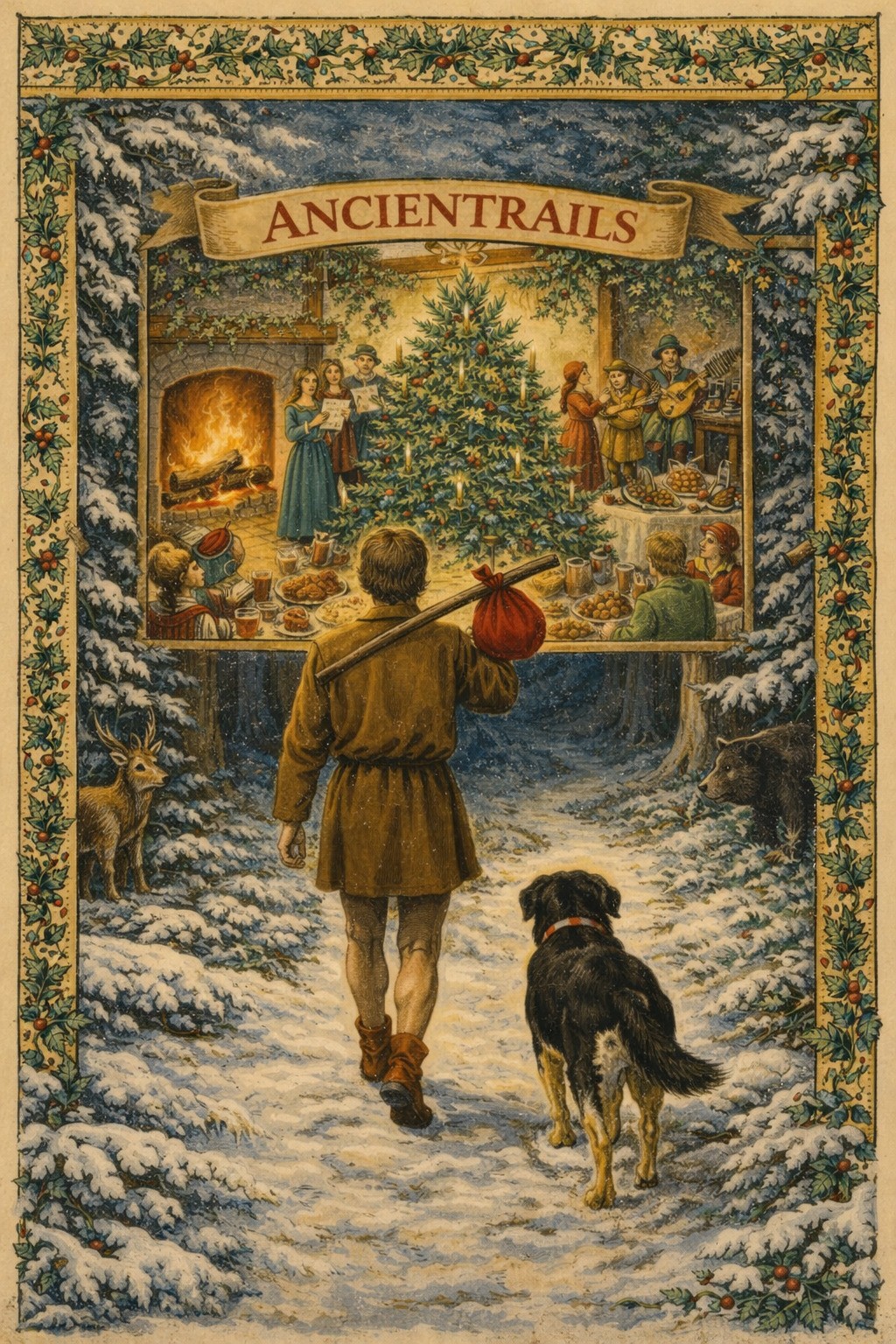
This is the world I know best, being a midwesterner by birth and continued residence, changing location only slightly (by global standards) from the lower to the upper midwest. This agricultural area-the heartland of U.S. as well as world food production-is my home.  It is no surprise then that the Great Wheel has come into prominence in my way of viewing the world.  It is a temperate latitude agriculturally focused calendar, one that weaves together the rhythm of spring emergence, summer growth, fall harvests and the winter’s cold, growthless time into a whole.  With the Great Wheel we understand the necessary interlocking components of seasonal change for food production and more, how those components also serve as metaphor for our own lives.

The best thing about the Great Wheel is its insistence on the whole, celebrating the distinct seasonal changes as elements in a cycle, all required.  We cannot become summer people, or winter people because we know the summer as the hot, growth enhancing aspect of vegetative growth, not just the time of swimming suits and summer vacation.  I suppose this underlies my inability to imagine those other climates.  One season, extended, made permanent, upsets the dance.  At least from the perspective of those between 30 degrees and 50 degrees north latitude.

The True Apocalypse

Spring                                                     Hare Moon

Tucson.  The Horse Latitudes.

The second of the three workshops, this one focusing on depth work, finished this afternoon.  Again, because of the nature of the workshops, they’re hard to summarize and its difficult to convey their spirit except to say its most like a contemplative secular retreat.  Which is, come to think of it, just what it is.

I can convey the spirit of this workshop by transcribing here the results of the next to last exercise. This one was to create a spontaneous statement, a testament, of what we believe to be true right now.  This was written following a long meditation, with no forethought.

Here are the things I know to be true:

Love forms the cross on which we all live.  The soil is the foundation of life. Our ancestors hold us up, have our backs. (FYI: those of you at Frank’s will know how this came to mind.)

The sun is a god who gives of himself wholly.  The light of the sun is holy and blesses what it touches.

The soil embraces the sun, marries the sun, goes into throes of ecstasy with the sun producing, producing, producing.

As the earth turns the soils embrace of the sun weakens and strengthens, weakens and strengthens and from these rhythms we get life eternal, abundant, gracious and undeserved.

We celebrate each other as moving, loving sons and daughters borne of the sun and the soils embrace-nothing more and nothing less.  We owe ourselves fealty to these two, our parents, our true god and our true goddess without whom we are nothing-brittle, cold, frozen, shattered.

We need no other religion, no other philosophy, no other politics than fealty to sun and soil.  They have given us what we need, they will give us what we need-unless we change their marriage to one which can no longer include the human family.  If we do, it will be the final anathema, the true apocalypse and the end of a long love affair.

No Saint on This Soil

Imbolc                                                                 Hare Moon

Patrick is a saint in Ireland, but not one very dear to those of us fond of the old Celtic religion.  The snakes that Patrick drove out of Ireland were purportedly the Druids, priests of the ancient Celtic faith.  On his side, from Kate and mine’s point of view, is that he good taste in dogs, taking several Irish Wolfhounds with him when he went back to Rome to report.

The Catholic church literally imposed itself on the old religion, adopting certain Celtic goddesses as saints, St. Bridgit, for example.  In addition the Catholics frequently build churches over wells holy to the ancient Celts.  Or, in the instance of Winifred’s Well in Holywell, mentioned below, they collected the local figures featured in the story, Bueno and Winnifred, and sanctified them.  Thus, it became St. Winifred’s Well and Bueno became St. Bueno.

In that sense St. Patrick’s day is anathema.  As a man with Celtic blood though, both Irish and Welsh, I enjoy the celebration of things Irish and would have tilted a glass of green beer in times past.  Now, I go to Frank Broderick’s home, eat corned beef and cabbage and have the fellowship of the Woolly Mammoths.

Keep Time the Way Nature Intended It

Imbolc                                                                    Hare Moon

It’s a scourge.  It’s unnatural.  It’s Daylight Savings Time.  Aside from being an obvious oxymoron, this idea forces us to change our sleep patterns every six months.  Sleep is important and habits are important to sleep.  Ergo.

(Plus, trees don’t change time.)

Here’s a link to a NYT room for debate piece on the subject:

“For days after “springing forward,” many of us feel a little jet-lagged and cranky. And the research is piling up to show that the time change affects more than our mood. It changes energy use, health, worker productivity and even traffic safety.

Does daylight saving time do more harm than good?”

Imbolc                                                                 Valentine Moon

Not feeling down exactly, but restless, a bit aimless.  I imagine it’s a mild cabin fever, with the delightful elements of Latin, writing and taking classes losing some of their joy.  Leaves me without the push I need to finish things.

P90X helps.  It provides a new body work routine, mixing up that regular portion of my day, but it can’t replace the garden chores and work with the bees.  I’ve not got outside much at all during the time of the polar vortex and in the past during such cold snaps I have.

This will lift.