Category Archives: Writing

At It

Spring                                                             Bloodroot Moon

Still reading through Missing, making notes, trying to integrate beta reader observations and questions.  It’s slower right now because I’m also trying to integrate lessons about description and pacing from Robert Jordan’s amazing The Eye of the World.

The general plan for revision III has begun to take shape.  Some shifting of certain narrative threads to book II or to a book of their own, expanding the ending, putting the climax in earlier, making descriptions beefier, more lush and adding narrative in sections where what I wrote was, as Judy observed, outline like.

How long will it take?  I have no idea.  As soon as I can finish it, but just how long that is, I don’t know.  Why?  Partly the removal of certain narrative lines will create disruption as well as clarification.  Partly because the climax I have doesn’t satisfy me and I’m not clear what it should be.  Partly because adding descriptive material is a whole manuscript task and a personal style changer, too, since I tend to be spare.  There will be a learning curve.

Closing in on the last few verses of the Jason and Medea early story.  When I’m done with it, before Friday, and have checked and revised my work, also before Friday, I’m ready to go to Book I and begin the work I first decided I wanted to do back in 2008 or 2009.  That’s exciting.

It’s exciting for more than the obvious reason; that is, that I can now do it.  It’s exciting in addition because it will feed a new work, one I will not start until all three of the Tailte novels are finished; but, a work I hope will utilize all I’m learning about writing and about mythology and Latin and Ovid and Rome.  Working title:  Changes.
 

The Dark Edge of Fiction

Spring                                                                               Bloodroot Moon

“As our circle of knowledge expands, so does the circumference of darkness surrounding it.”  A. Einstein

In one part of my life I chomp down on facts, ideas, connections, linkages.  Known and knowable things.  Stuffing them in, sometimes sideways, cramming them into the remaining nooks and crannies, or, rather growing dendrites and increasing those neuronal connections.  The Connectome.  My Connectome.

But.  When I write, instead of pouncing on the learning.  Trying to take it out for a spin in, say, an essay or a short non-fiction book.  I don’t.  My fiction comes from the darkness, from the circumference surrounding the knowledge, the place where the knowledge cannot go and would be of little help.

Fiction has its coherence with reality in spite of the definition, say on a continuum from realism to fantasy.  Even in fantasy, even one based on a world not this one, the characters are recognizable, they have to be, otherwise the fiction would not be communication but gibberish.

So, yes, there is that leash, but it’s a long one.  Often in fantasy long enough to lie useless on the sidewalk next to an orange lawn under an azure sun.  Oh, if you wanted, you could pick it up and follow it back to a Dairy Queen and ocean-going shipping, but why would you want to?  I mean, the action is at the other end of the leash.  That’s where I’d want to go.

And that’s the edge of fiction that lies alongside, shares a border with, the darkness.  Out there the leash no longer matters.  Except as a reminder that we’re all in this together somehow.  Somehow.


Rewriting

Spring                                                                     Bloodroot Moon

Up early and down to the western burbs to the beautiful home of Lonnie and Stefan Helgeson on the banks of Minnehaha Creek.  Stefan expanded on his written critiques of Missing, all helpful.  Each beta reader has had a different perspective, offering me a valuable look at the manuscript, that of the reader.

Here’s an example.  Each time I had a clearing in the forest, it had a stream.  Trouble is, as Stefan points out, streams don’t often flow through clearings since trees and shrubs tend to grow up along their banks.  What I had done, invisible to me, was provide a stream with a clearing each time the horses needed to stop for water.  In solving one problem I created another.  This kind of thing does not become obvious without help.

Others found the frequent use of the first person distracting from the story; Stefan found it engaging for exactly the reasons I had wanted to use it.  Perhaps the best solution lies somewhere in between.

This is the last but one of the beta readers to check in and I’m almost finished with my read through.  Probably this week.  Then, I begin revising in earnest, going back over everyone’s comments one more time, getting a preliminary strategy and starting the rewrite.

With five other novels written I know this revision process is the piece that has stood between me and publication.  Well, I can hear Kate say, there is that marketing piece, too.  And she’s right.  But the two together.  Then I can start working the various markets.  With the short stories, too.


Exciting

Spring                                                                      Bloodroot Moon

Been reading through beta reader #5’s comments in preparation for a face to face on Saturday.  At the same time I’m well into the last third of my own read through of the manuscript.  I’ve taken many notes, lots of ideas, some drastic, many substantial, some cosmetic churning around in my head.

Reentering the fictive dream for Missing will not be hard.  It feels like the Tailte mythos (the world on which almost all of  Missing occurs) has only begun to breathe.  It stretches and spreads its presence out in my thoughts.  I imagine the gods playing more active roles, Asian deities and Middle Eastern, in another set of stories.  The gods will begin to take on more important roles in Loki’s Children and the Unmaking, the two other volumes in this trilogy.

I took a look at short story markets today.  I want to polish up some of mine and get them in circulation.  The energy in the writing and translating has increased markedly, not only over the last couple of years, but even over the last couple of months.  Something exciting is happening and in part I’m just along for the ride.

My Left Shoulder and How It Communicates

Spring                                                                       Bloodroot Moon

On Saturday the class with Scott Edelstein on marketing and selling books happened in a typical classroom setting, a meeting room of the Loft at their space at Open Book on Washington Avenue.  The room had a blackboard, a white board, exposed beams and brick walls, the usual rectangular tables and plastic chairs with backs.

In the morning, fresh and eager, I leaned in or sat up, entranced by Scott’s revelation of a new world, publishing in the high electronic age.  At breaks I stretched and at lunch I visited the small deli cum coffee shop downstairs for lunch.  Another plastic chair.

The time after lunch was long.  My nap went missing as the clock hit 1, then 2, then 3.  By 4 my shoulder had begun to ping me.  I don’t like this anymore.  Let’s leave.  Get outta here. Scram.

Since the last part of the class involved romancing the agent, my intentions overrode my bodies urgent signals.  I stayed through the last word.  But I left immediately after it, went downstairs and headed home.

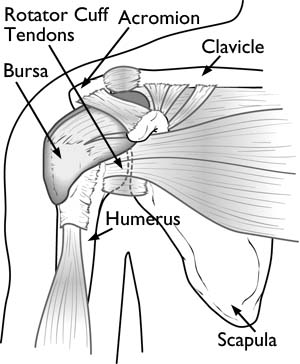
Back home the shoulder felt like a small knife had been inserted just below the clavicle, nestling up next to the shoulder joint and pressed through all the way through to my back. It didn’t hurt in  sharp, glancing away sort of pain, but more in a subdued ache with–small flames like you used to use to decorate the model cars of your youth– flickering around the knife.  It’s agony, a soft agony, spread throughout the body, inviting other muscles to tense up, join in the attempt to isolate the pain, make it stay up there.  Having, of course, the opposite effect.

Not fun.  Kate heated up a neck wrap and after two applications my shoulder settled down, rejoined the rest of the body and allowed as how I might go on with the rest of the evening.

Revise

Spring                                                                         Bloodroot Moon

Revising today.  Reading Missing, gathering in the story again, marking sections where it lags.  Comparing it mentally to the Terry Brooks and Rick Riordan books, trying to figure out what works in Missing, what doesn’t.  Also trying to keep in mind the same things from the Sword of Shannara and the Percy Jackson books, seeing where I can polish up my craft from two very successful series.  After I finish the third of the Brooks books, I’m going to read either Lord of the Rings or the Robert Jordan Wheel of Times series.

It’s important to know what other folks have done to avoid repetitive ideas or plot lines, learn what’s working for them and in general read what readers enjoy.

This is taxing work, much like translating in its demands.

Leaving Circe’s Island

Spring                                                                            Bloodroot Moon

Scott Edelstein says every writer should have a sign near their desk that reads:  Book Publishing Is Crazy.  He told us we could call him up and ask him questions, but he advised us that if what we had to ask was something like “Why is this weird thing happening?” he’ll say, “Look at the sign.”

A cousin-in-law, an ex-navy specialist welder turned metal sculptor, told me about another  sign, one that I had up for a while:  I’m an artist; I will not quit.  Related thoughts for sure.

In most areas of my life persistence has been a real strong suit, doggedly pursuing things even if they seem like long shots.  I did, however, make a fundamental mistake relative to writing.

A book I had written made it through the editorial process to the editorial board of Bantam Publishing. This was several years ago.  On this board sit the publisher’s sales and marketing executive, their subsidiary rights executive, publicity person and the editor who pitches your book, the business people plus the editor who champions your book.  4 out of 5 books don’t make it past this meeting.  Mine didn’t.  They had, I was informed, already bought too much Celtic fiction.

Listening to Scott today I realize I took the wrong message from this.  It was really a sign that the stars hadn’t lined up for this book at this publisher.  The smart move would have been to recognize that it spoke well of my writing; then, to take the book back and get it out, right away, to other publishers.  I didn’t.  I moved on, started writing another book.

In retrospect I put my persistence into writing, not into marketing.  I know that, but especially in this instance I could have taken a different route and I didn’t.  Not long after that I got discouraged and went on a long dry spell.

A year, maybe two years ago, I woke up again, as if I’d finally left Circe’s island.  That was when Missing began to take shape.  Once it’s revised I now know how to get it in the hand of agents.  If that doesn’t work, I know how to get it in the hands of publishers.  If that doesn’t work, I have learned the rudiments of self-publishing, a very viable option in the rapidly changing publishing world.  Scott called it the wild west because nobody really knows where publishing will end up, but a lot of different things have conspired to give writers many more options than used to be available.

Hawking Books

Spring                                                                       Bloodroot Moon

56 today.  At this rate we might see the bloodroot bloom under this moon.

Class today from Scott Edelstein on marketing and selling books.  Very good.  Lots of good information.  Publishing had gone and is undergoing major changes.  Made me feel hopeful, always a good thing.

A Solid Day

Imbolc                                                                                 Bloodroot Moon

Missing in the a.m.  About 1/6th done.  As I read, it’s hard not to jump in, start line editing, but getting the story and the transitions and the big picture clear is necessary.  I have to reenter the story when I begin this 3rd rewrite, reenter the story in order to change it.  Only by having it again in mind will I be able to do that.  I can already see the value of this approach.

I have a list of characters, things and places that I’m writing down as I read.  The first time a character appears or a place gets mentioned or a thing like a particular sword gets used.  A long list and I’m only a little ways in.

Translating today went well, two sentences, about 6 verses.

The mechanical inspector came to examine our new furnace.  A cursory look.  “Fine.”  And he was on his way out.  To show though the things you do not know.  He stopped at Kate’s long arm quilter.  “My wife just died.  She was a quilter, left me with a lot of quilting things.”  Then, he buttoned up and left.

Still reading the competition.  Percy Jackson and the Olympians.

And, hey!  How about that Pope.  Argentina, eh?  But, from a good Italian family.  And a Jesuit?  Interesting though.  Look at a graphic  that shows Catholic strength by world region and you will see that it has bulged for some time in the Southern Hemisphere.  As the West has gotten more secular, Africa and Latin America have grown more Christian.  And more conservative.  It will be a while before we can see what this means.

Revising: A Process

Imbolc                                                                  New (Bloodroot) Moon

All morning reading Missing.  I’ve taken the Finding Your Writer’s Voice advice and decided to read through the whole thing, not revising, just taking in the story, marking spots where the pace/action sags, taking notes on characters and places, but mostly getting the story firmly in mind before I begin revising.

As I read, I have the thoughts of my beta readers present to me and the ideas those thoughts have generated.  When I get to the end of the reading, it should be clear what I need to do for this third, and I hope final, revision.  Final before a line-editing one, I mean.

Reading my own work is peculiar.  Sort of like a mechanic working on a car she built.  At each point I think, gee, I could have designed that differently, better.  The desire to tinker can get in the way of reviewing the overall design.  Feels good to make progress.