Lughnasa Waning Summer Moon
If you haven’t seen Incredibles 2, and you probably haven’t if you don’t have children or grandchildren in the right age range, I’d encourage you to give it a shot. It’s actually a pretty good movie. But not my emphasis here. Rather, the short before it, Bao.
Controversial. Here’s a story about it, complete with spoilers that in this case I think are fine. I’d forgotten about the controversy. I read about it shortly after Incredibles 2 came out in the middle of June, and was intrigued, as I always am by cultural disjunction, cultural difficulties. But it went into the forget pile near some neuron or another.
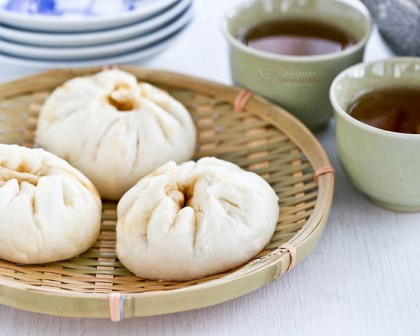
Then I saw it yesterday with Gabe. It features a Chinese mother who makes dumplings. One of the dumplings comes to life and she raises him as her child. It’s a sweet story at first, then the dumpling becomes obstinate, wants to make his own choices. Finally, in the controversial moment, the dumpling has come home with a blond white woman. He packs his bags and starts to go out the door following his woman friend. The mother grabs him, pulls him back inside. You expect some kind of tearful resolution, hugs, then the mature dumpling goes away with his woman friend. Nope. She eats him.
 OMG! What just happened? It was shocking and I missed the point. Sort of. In a couple of scenes after this a dumpling like son comes home with the same woman who led the dumpling out the door. I took this to mean that the woman had somehow reconciled with the dumpling and he’d grown up. The eating in my understanding was a symbol of the difficulties inherent in the moment children become independent.
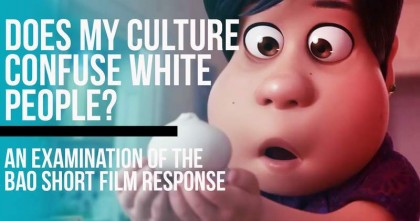
Turns out I was sort of right. But sort of not. As I now understand it, the mother actually ate the anthropomorphized dumpling. This expressed a mutual feeling of distress that Chinese mothers and their children have in U.S. culture. U.S. culture says leave at 18 and make your way in the world. Chinese culture says, live at home until you’re married and then, don’t go too far away. Though the leaving at age 18 in American mainstream culture (or, what used to be American mainstream culture), is fraught with similar issues, independence pushing away from interdependence, the expectation is that independence becomes a vehicle from which a new form of interdependence will arise. In Bao the dumpling eating shows the powerful rejection of that possibility in traditional Chinese culture, though I imagine the one-child policy in China has forced a new way of thinking in the home country.
Anyhow. Worth seeing. Always worth reflecting on cultural differences, worth learning from them. No rights or wrongs. Just differences that express the many possible responses to the ancientrail of humans in community and family and in ourselves.
 Yesterday was a big day. Up early to write, workout. Lunch with Alan Rubin to start planning for the 6th and 7th grade religious school at Beth Evergreen. Home for a fitful nap. Left at 5:30 pm with Ruth for Boulder. We had a reservation at Japango on the Pearl Street Mall before seeing the Fiske Planetarium show on black holes. Driving home under the waxing gibbous moon with Jupiter below it, Mercury and Venus visible, too, as well as Mars and Saturn. A planetary moment. No twinkling please.
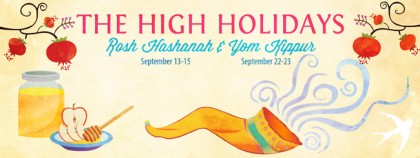 We want to reframe the high holidays, Rosh Hashanah through Yom Kippur, in a reconstructionist way, then help the kids come to their own way of reframing. In the traditional understanding, taken here from the
 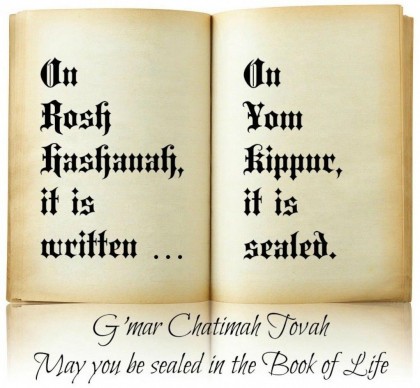 The tradition implies a white bearded, Santa Claus like God who checks on the naughty and the nice. He takes out his celestial quill pen and starts scratching. He pauses, waiting to see what you have to say for yourself, then after a reasonable interval (the ten days), he writes fini.
 In my peculiar little world this is great fun. Looking forward to engaging similar research throughout the upcoming liturgical year.
 After the dinner we drove back up Broadway to the Boulder campus of the University of Colorado, about 5 minutes. At the planetarium, where we’ve gone many times, we saw a presentation on black holes. It covered the usual topics of star death, neutron stars, supernovas and the formation of black holes with their extraordinarily deep gravity wells. It also covered recent observation of the long pursued gravity waves at the
 Here’s the key idea, from Mordecai Kaplan: the past gets a vote, but not a veto. That is, when considering tradition, in Kaplan’s case of course Jewish tradition, the tradition itself informs the present, but we are not required to obey it. Instead we can change it, or negate it, or choose to accept, for now, its lesson.
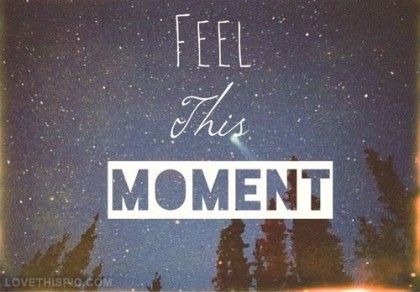 Which brings me to another realization I had this week. Just like environmental action is not about saving the planet, the planet will be fine, it’s about saving humanity’s spot on the planet; the idea of living in the moment is not about living in the moment, it’s about remembering we can do no other thing than live in the moment.
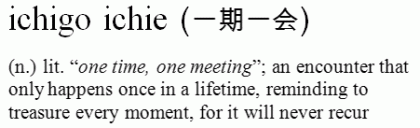 The past is gone, the future is not yet. Always. We can be sure, confident, only of this instance, for the next may not come. To be aware of the moment is to be aware of both the tenuousness of life, and its vitality, which also occurs only in the moment. To know this, really know it in our bones, means we must have faith that the next moment will arrive, because it is not given. Not only is it not given, it will, someday, not arrive for us. That’s where faith comes in, living in spite of that knowledge, living as if the next moment is on its way.
 Odd things. First, a small group of folks at Beth Evergreen, mostly qabbalah students like myself, report seeing me as an artist. A visual artist. This is based on my last two presentations, the first being Hebrew letters with quotes relating to their deeper meanings and the second, last Wednesday, that used the sumi-e zen practice of enso creation. Now I’m far from a visual artist, I have two very good ones in my immediate family, Jeremiah Miller and Jon Olson, but to be seen even modestly in their company is a real treat.
 Second. Damned mower wouldn’t start. As I said earlier. Put in fresh gas. No joy. Hmmm. You Tube. You Tube, that Chinese patron saint of the do it yourselfer. Looked up mower won’t start. Found a video of a guy. One with a small wrench who showed how to take apart the carburetor, poke wire into various holes and then, voila, vrrooom. Didn’t look too hard.
 Best of all, when I yanked the starter cord after closing the carburetor back up, the mower started. To those of you with a mechanical gene this no doubt sounds trivial, probably very trivial, but to me. Wow. I fixed it myself.
 I’m not an athlete, not a Latin scholar, not a very good visual artist and definitely not much of a mechanic, but I have an amateur’s capacity. Trying these things makes my heart sing, keeps life vital. I suppose, going back to yesterday’s post, you could say I have faith in myself. Not faith that I can do anything I try, that’s just silly, but faith that if I try I can learn something new, maybe introduce something important to my life.
 On the ground in South Korea a vital and energetic economy has created a vibrant country with feet both in the world of Samsung and the past. Riding on buses or trains through the country side, ancient tombs dot the hillsides. We visited this palace/fort in a city near Seoul. The procession of women in hanbuk at the international airport in Incheon, with the Bottega Veneta and a moving walkway in the foreground brings the two worlds together.
 After sledging and searing the meat and softening the vegetables in the fat, I put a three or four pound hunk of chuck roast in the slow cooker along with potatoes, carrots, onions and celery. It cooked all day, coming out fork tender. An easy meal. Jon and the kids got stuck in traffic so they ate later.
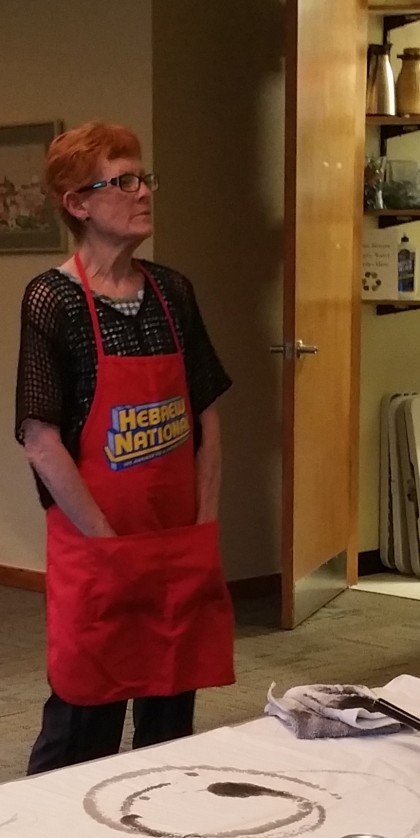
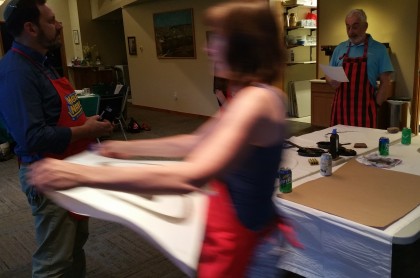
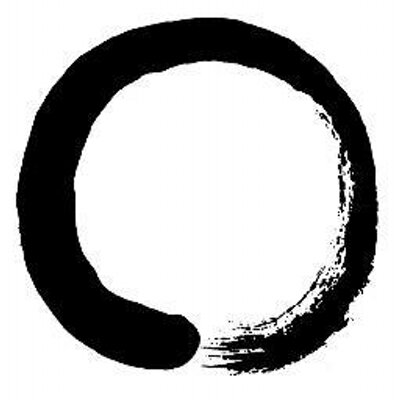 My presentation on time falls under the sumi-e moon and I plan to use sumi-e. I’m taking my brushes, ink, ink stones, red ink pad, Kraft paper, and rice paper. As well as my hourglasses. I will do Shakespeare’s soliloquy from Macbeth as a counter point. Each person will first practice an enso on the Kraft paper, then do one on rice paper.
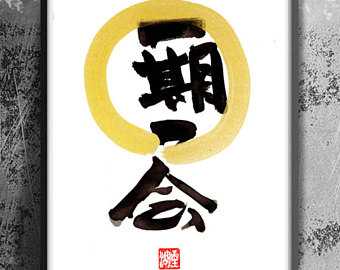 What is an enso? The word means circle in Japanese. In Zen it has a much more expansive meaning.* Zen is, of course, Chan Buddhism, a curious blend of Taoism and Buddhism created in China. Monks from Japan went to China to learn about Chan and brought it back to Japan. They also brought back the practice of drinking tea, which initially was a stimulant to help with long meditation sessions. It later transmogrified into the Japanese tea ceremony with its beautiful idea of ichi go ichi e, or once in a lifetime.


 Slowly autumn comes to an end.