Category Archives: Reimagine. Reconstruct. Reenchant.

Winter Solstice 2014

Winter                                                       New (Settling In) Moon

A sacred calendar follows a scheme that interprets the flow of the year from within a certain perspective. It is now Hanukkah, for example, a holiday of memory, the annual recollection of rebellion and a small victory offered by a god. Later this week, on December 25th, Christmas, in all its multi-layeredness, descends on children and retailers alike. This holiseason, the period from October 31st to Epiphany has the brave festivals of light as well as Samain, Thanksgiving and the Winter Solstice.

Today, on my sacred calendar, and more significantly, tonight comes the most loved holiday of the year, the Winter Solstice. While, yes, it’s true to observe that axial tilt is the reason for the season, the empirical and scientific reductionism implied manages to the human meaning entirely.

The tilt of the earth’s axis and its orbit around the sun combine to make this the longest night of the year. See this webpage for a helpful animation of day/night length. At 4:03 pm Mountain Time today “… the sun on our sky’s dome reaches its farthest southward point for the year.) earthsky

The sacred moment comes not when earth’s axial tilt darkens our home place longer than at any other point on the orbit, no, the sacred moment comes when we consider the possible meanings, metaphorical, physical, psychological, ritual that longest darkness offers, or perhaps better, stimulates.

The sacred moment comes when the illumination and enlightenment focused Western mind encounters the dark, the quiet. Not all of human significance comes from reason and analytical work, perhaps not the most important in particular.

What does reason have to offer as we contemplate death, for example? Or the deepest human suffering or injustice? How does enlightenment speak to the fecund reality of life beneath the soil, of life beneath conscious thought? It cannot speak there for its realm lies with Demeter and like Demeter cannot reach the Hadean depths of either the earth or the human mind.

Tonight we celebrate the shadow, not the noon day sun. Tonight we embrace, for a moment, the darkness to this life death brings. Tonight we join, just for a while the roots and rhyzomes, the microbes and tiny, burrowing animals as they move and live and have their being out of sight of the sky, creating a richness on which we feed. On which if you consider the food chain we must feed.

Tonight we celebrate the dark and hidden parts of our own psyche, the wounded soldiers and civilians of our inner realm, those who carry in their struggle some of our most profound possibilities. In my inner realm for example a creature, part-boy and part impatient man (a man very much like my father at his most difficult moments), sometimes seizes the day. Quite literally. This short-tempered man-boy rises when the man I am most has not had enough sleep or is physically tired or sick. He’s annoying and rude, someone my daytime persona would  rather not admit as part of his whole being.

He is, yes, annoying and rude, but in him lies a distinct power. He  can and will confront wrong-doing, injustice, abusive behavior. He lifts the metaphorical sword arm of the more timid and conforming daytime persona. He gives daytime the courage and the will to make a stand. This is his power, though most often its expression is inappropriate, unwanted.

So the long Solstice night gives us a chance to bring our shadow in close, to greet it with the welcome and love it deserves. You might be surprised at the power you could find there. Tonight we celebrate the dark.


At One Ment

Samain                                                                                      Moving Moon

A continuing conversation. Purity of heart. Scott asked Sunday if he could not will one thing was his heart impure? Took me some thought but I realized the answer. No, not impure, divided.

A divided heart is the normal human condition, a heart pulled among family, self, ambition, beauty, money, any of the sundry things which can seem urgent, central to us. Kierkegaard is, of course, holding out an ideal, an instance in which we can bring all of who we are into one focus, on one central value. Kierkegaard saw that one thing as love of God, all else falling short.

Back to the U curve graph I talked about a while back, the one where life satisfaction goes down as we reach mid-career then heads up as we age. I proposed that we get happier because aging imposes limits on us: financial, physical and temporal. Another way to think about it might involve the divided heart. Perhaps as we age, we become (or can become) less divided in our will.

This could relate to my desire to do only those things that only I can do. Once we get clearer on who we are, what our Self is, we become (or, again, can become) more focused. This may be the process of our heart becoming less and less divided.

It may be that the third phase is a whittling down of the divided loyalties at our center, a purging of the now understood to be less critical, less urgent, less central. As that U nears the top of the right hand, it may reflect the heart yearning toward, perhaps achieving unity. It is a consoling idea to me to think that we might be able, near the close of our life, to will one thing, even if for only a short period. We might call it at-one-ment.


Reflections on Purity of Heart

Samain                                                                                      Moving Moon

Reflections after presenting Purity of Heart.

First, its origin lies as much in H. Richard Niebuhr’s essay, “Radical Monotheism and Western Culture“, as it does in Kierkegaard. Both press forward a key idea, that a center of value is critical to human flourishing, and, both, too, suggest God (Yahweh) as that center of value. With God at the center of a human life, Niebuhr the natural human tendency toward polytheism is checked at its source.

He identifies polytheism as allegiance to multiple values that compete for centrality, e.g. greed, patriotism, race, historical precedence, but that distort the human character if placed in a position like God’s. God, in other word, pushes out the hubris of race-based living, of a life focused on money and success, of a nationalist’s unhumble pride in country, of tradition’s right to determine behavior. With God in the center life focuses on love, justice and compassion, away, in other words, from the cruel lenses other god’s put on us.

Though not the same, Kierkegaard’s purity of heart aims in the same direction, putting God at the center, the relationship with God as the one thing willed, means the individual can live out of their own center rather than a socially determined one.

I think, with Niebuhr and Kierkegaard, that we have to choose with great care that value we put in the center of our lives, that one thing that we will. We can learn from them that certain choices lead to contorted lives that often wreak great harm on the individual and the culture in which they live their lives. Not hard to see the examples. Bernie Madoff. The KKK. The Tea Party. Most bankers and folks who live their lives in pursuit of money. You can add to the list with ease, I’m sure.

Where I part company with Kierkegaard and Niebuhr lies, I think, in the area first of metaphysics. I’m simply not convinced of the existence of God. Many of my friends are comfortable with a spiritual realm beyond or next to or interpenetrating this world, I’m not convinced of its existence either. So to put God or some other God-equivalent at the center of my life just makes no sense to me.

Are there, though, centers of value, the one-willed thing, that can produce eudaimonic lives? I believe there are and furthermore I believe they are multiple, not singular. Let me suggest a few: justice, compassion, love, beauty, art, children, the elderly, the mid-career adult, a healthy eco-system for human beings, even a particular place or people or culture.

Second, to the question of what if we cannot will one thing? What if we cannot have a single center of value? I believe these conditions are the norm and that the willing of one thing, for instance, is the exception. We can still hold ourselves to the goal of a single center of value, of willing one thing. Does that mean we’re bad if we don’t achieve it?

Of course not. It probably does mean though that there is an aspect of your flourishing that goes wanting because your energy and attention is diverted in multiple directions. Note that this is true even if all the multiple directions are the kind of focii referred to above.


Purity of Heart is To Will One Thing

Samain                                                                           Moving Moon

presented for Groveland Unitarian-Universalist Fellowship

12/14/2014

Purity of Heart is To Will One Thing


Will Steger sat on the couch in the living room, clicking through slides on a presentation. This was a month ago in Roseville at a gathering of the Woolly Mammoths, many of whom are present this morning. We had eaten supper with Will and listened as he talked casually about almost dying when they couldn’t find a food cache on the way to the South Pole.

A regular guy in a lot of ways, a regular guy made special by what Soren Kierkegaard would have called the purity of heart to will one thing. He had, from a young age, a clear vision. He wanted to live in the wilderness where there was no road. And become self-sufficient. He achieved that goal by buying a piece of property two lakes away from the nearest road outside Ely, Minnesota.

Wildness and wilderness became home. Expeditions to the North Pole, to the South Pole, always with some educational outcome followed from that vision. So did the development of the Steger Foundation which focuses on educating school age kids about global climate change.

Climate change became a focus when he witnessed personally the melting of the arctic ice cap and the disruption it occurs in that fragile eco-system. Now he’s building the Steger Center on that same property two lakes away from the nearest road. There he hopes to engage leaders of the business and non-profit and governmental worlds.

Will shows up at the boundary between the wilderness and human habitation. He shows up as a prophet and a seer, a quiet prophet and a clear-eyed seer. Like Janus, the Roman god of beginnings and transitions, he looks toward the wilderness and toward our species, seeing both at the same time.


Purity of heart is to will one thing is the title of a short work by Soren Kierkegaard. In it he takes the focus from living by and for the expectations of others-rigid social roles, often determined by class distinctions, were still the norm in his 18th century Europe-and places the focus on the individual. The individual, Kierkegaard says, has the responsibility to choose how he or she will live and in that living what will be the aim, the purpose, the vision of that life. Will’s vision had to do with living in the wilderness and from that clarity of purpose flowed the rest: the expeditions, the education of kids, the focus on leadership.

Albert Camus, the French existentialist, said life is a river, a river that flows into one sea: death. All of us humans are in this river and we all flow with it toward the same end. We owe it to each other, he said, each of us facing the same fate, to make the journey to death as pain free and pleasant as possible. To hold Camus’ insight at the center of a life would be a way of willing one thing.

Existentialism and its bare aesthetic, its unrelenting turn toward reality as it is rather than as we would wish it to be, insists on choice as the defining characteristic of a well-lived life. There are certain things, however, that we cannot choose. We do not choose our parents, our siblings, the place where we grow up nor, importantly, do we choose the time, the geist into which we are thrown. This concept of thrown-ness comes from the work of the German philosopher Martin Heidegger. It reminds us of the limits to our ability to choose.

Why, as the British would say, bang on about Will Steger and choice and existentialism? Because a commitment to social justice is just such a choice. Because Will’s example shows that the choice to pursue social justice may flow from a seemingly unrelated decision. You might have decided that healing was at the core of your life’s purpose. You may have chosen children, or the labor movement, or family, or truth. Or beauty. Perhaps social work or engineering or music or financial planning lies at the heart of your life.

In the purity of your heart what is the one thing that you will? Or, if, like most of us, your will divides, forking say at the intersection of family and children, or financial planning and music, or art and community, then what would you, if you stripped yourself down and focused on what really matters most, what would you will with all your heart? What would be your equivalent to Will’s decision to live in the wilderness with no road?

Perhaps you’ve always had, like Will, that center to your life, that pure, bright beacon that has called you forward. Perhaps not. In either case, let’s focus on a critical element of Will’s story and see if your choices have led you to a similar spot.

Will moved to the wilderness. He engaged in outdoor education as a job, then went on expeditions of discovery and adventure. As he did this, his face turned constantly toward the wilderness and back toward the school children or the funders or the source of changes he found in the wilderness, he slowly realized that to live in the wilderness and be self-sufficient, he could not ignore the choices others were making.

The use of fossil fuels fouled the atmosphere. Lead and mercury and acid literally rained down into the Boundary Waters and onto the arctic and Antarctic and Greenland ice sheets. A lover of the wilderness, one who would live there, had to see these realities and act.

A person close to me cared for children for the last 40 years of her professional life. She did that within a medical delivery system increasingly designed by corporate and bureaucratic logic-with those ends dominant, not healing. Is it any wonder that as she looked in toward her patients and then out toward the society in which she lived that she became a stubborn advocate for a single-payer health system?

A woman I knew, a lawyer, became involved with the rights of persons in state institutions. Over the course of her involvement with them is it any wonder that she filed the lawsuits that deinstitutionalized Minnesota’s state hospitals?

Or, there was the guy, thrown, in the Heidegerrian sense, into a small bedroom community for workers in the automobile industry, who grew up with the labor movement and organizing against wealth and concentrated power. Is it any wonder he spent a lifetime organizing on behalf of working class and poor families?

No, it does not always happen that willing one thing will turn you toward acts of social justice, but it is significant that affecting a Janus-like position toward that which you put at the center of your life and the world context in which it exists, will so often carry you there.

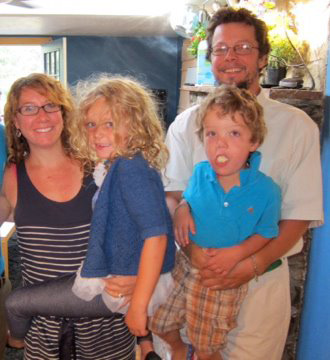
We’ll end with another instance, perhaps a change that has already come into your life as it has in mine. Grandchildren. I don’t want to say that grandchildren are at the center of my life because they’re not, though they’re pretty damned important. I do want to say that being with our grandchildren, Ruth and Gabe, 8 and 6, gives me a clear focus on the future, that is, the world in which Ruth and Gabe will grow up, in which they will have children and in which they will grow old.

I know, as you probably do, that it will be a much warmer world and one with more erratic weather and changed food production systems-even if we do alter our carbon emissions. It will be a world in which the current gap between the 99% and the 1% will get wider-if nothing changes. Just taking these two instances, as I look at Ruth and Gabe and, at the same time, at that future, those gazes will inform the political choices I make now. Perhaps that’s true for you, too.


Enough

Samain                                                                   Moving Moon

Back from Groveland. A period put now to ministry. The Woollies showed up en masse thanks to Ode’s organizing. The conversation after Purity of Heart Is to Will One Thing was solid, engaging. Interesting. And deep.

Told Kate that with the docents, the Woollies and the Groveland send-offs I feel affirmed. She said I could gloat if I wanted. No, I said. Affirmation is adequate. More than adequate, she said. Yes. Affirmation is enough.

It means that somehow the sum of how I’ve shown up in the world has been a positive for some people. Enough.

No Chaos Like Move Chaos

Samain                                                                       Moving Moon

11 seasons and 3 episodes of Midsomer Murders. We made a valiant effort to complete the full 15 seasons while still in Minnesota, but we have failed. It will be a thread of continuity from our recent time here.

Pack, Pack, Pack. Watch the British kill each other. Watch Chief Inspector Barnaby figure out who did what to whom. It’s been a good segue to sleep since, as I understand it, the mystery novel is all about restoring order to a chaotic world. In the life of the well-mannered Midwesterner there is no chaos like move chaos. Barnaby gave us hope.

At Groveland tomorrow I’m ending my ministerial career, begun in 1971 at United Theological Seminary in New Brighton, continued with my ordination in 1976 to the Presbyterian Ministry and redirected when I was accepted as a UU clergy 20 years later in 1996. I’ve done little since 1991 but preach occasionally (though there was that rouge attempt to re-enter the ministry full time in the late 1990’s) and this will be the last of that. It feels like time to close off this chapter of my life.

This is the dogs next to last night here since they head off to the kennel on Monday. They don’t seem nostalgic. At least not so far.

Mid-Holiseason: Advent

Samain                                                                           Moving Moon

Holiseason now looks back a month to October 31st and still forward to January 6th, Epiphany. Over a month of the season lies ahead. Advent, Hanukkah, Posada, Winter Solstice, Christmas Eve and Christmas. That odd week at the end of the year, then New Year’s: 2015.

2015 will bring not only our first full year in Colorado, but my 50th high school reunion. Remember not being able to imagine how old you’d have to be to have a 50th high school reunion? Now I know.

I’ll go by train, as I have in the past, though this time from the Denver Union Station east not from St. Paul’s Union Depot south. The Denver train is the California Zephyr and runs daily between San Francisco and Chicago. On the Empire Builder the service was pretty good, by Amtrak standards (a low bar, I admit), and I don’t know about the Zephyr. Whatever it is, it beats air travel for me.

The Last Presentation

Samain                                                                                     Moving Moon

A piece on social justice I’ve been writing , a presentation for Groveland U-U on December 14th, has been harder than usual. Usually such presentations form over a period of time, I write them, present them and forget them. This has been my pattern for the 22 years of occasional presentations there.

Two key elements have made this one more difficult. It will be my last, probably my last such presentation anywhere and certainly my last to Groveland. And, it was originally to be reflections of my years of social justice work, mostly in the Twin Cities.

When I tried to do a summing up, a sort of lessons learned, failures and successes as examples, it came out wooden. Too focused on me, too summary, not really coherent. Then, I thought, ah. What is it that creates a need in some of us to work for social justice, to attempt to move the levers of power in such a way that they benefit others?

That one felt too psychologized, too small.

What I ended up writing is no valedictory speech. It’s neither summing up nor 360 205370_10150977727553020_150695969_npsychologizing. It is, rather, about choice, about existentialist living.

It finishes with this:

We’ll end with another instance, perhaps a change that will come into your life as it already has in mine. Grandchildren.

I don’t want to say that grandchildren are at the center of my life because they’re not, though they’re pretty damned important. I do want to say that being with our grandchildren, Ruth and Gabe, 8 and 6, gives me a clear focus on the future, that is, the world in which Ruth and Gabe will grow up, in which they will have children and in which they will grow old.

I know, as you probably do, that it will be a much warmer world and one with more erratic weather and changed food production systems. It will be a world in which the current gap between the 99% and the 1% will get wider. Just taking these two instances, as I look at Ruth and Gabe and, at the same time, at that future, those gazes will inform the political choices I make now. Perhaps that’s true for you, too.


Business and Writing

Samain                                                                              Moving Moon

Out to Keys for our weekly business meeting. Kate gets decaf, having been up since 5:15 with the dogs. I get caff, having gotten up at 7:00. We go over the weekly numbers, our financial situation and the calendar. Talk about the move while silverware clinks against ceramics and Pam, our waitress in a sequined red t-shirt with Disney characters and her name outlined in the shiny stuff, fills our cups with a two-fisted maneuver, a pot of decaf and one of regular.

Across from us sat a couple, cute trollish in type, older with white hair, jowls. Her with a scowl and him with Coke bottle thick black glasses. They didn’t talk.

Back home after that where we went over our lists of things to do. Mine included deploying the bagster, a final check of closets, sheds, drawers, cabinets, packing the downstairs bath and remaining art. Kate had on hers checks to the painters and the stager among other things.

Downstairs I wrote a second version of my presentation for Groveland on December 14th. It’s title and theme now comes from a short work by Kierkegaard, Purity of heart is to will one thing. A complete refocus.

Now. A nap.


Hmmm.

Samain                                                                             Moving Moon

Here is an interesting conundrum. Should I let my Colorado self emerge out of the casual interactions inherent in moving to a new location: talking to mechanics, visiting the grocery store, dining at the 285 cafe? Or, should I try to shape it, finding like minded folks through obvious clusterings such Sierra Club, the Denver Art Museum, the Democratic party? Sure, it will be a bit of both, I know, but where I should place my emphasis?

As I have been discussing the move, I’ve emphasized the loss of the Woollies, my docent friends, the sheepshead guys and the thick web of history here after 40 plus years. One straight line of thinking is to investigate the sociology of Denver for nodes of persons whom I might meet with similar tastes and interests. That’s why I’ve mentioned politics and the Sierra Club as likely sources for new friends.

And yet. Another part of me, reinforced by some reading in Kierkegaard and an article by a professor on why he has left politics behind (politics or productivity in his mind), have given me pause. Not to mention the onrushing reality of the move. No, I don’t have to make a decision soon, or ever for that matter, but I want to.

Why? Because I don’t want to create a sticky fly trap for my self. I don’t want to make commitments in order to meet people that will result in my needing to pull back later. Right now I’m thinking that politics, though a strong and thrumming wire wound throughout my life, is just such a fly trap. As would be volunteering at one of the museums. Long drives. Winter weather. I dropped both Sierra Club and the MIA for those reasons and, to underscore the professor’s logic, to enable my productivity.

A Colorado, a mountain, a western, a grandpop self will come into being if I live my life, flowing from here to there as events take me. I want the productivity that I find so dependent on having my own time and my own space. Guess that’s my answer for right now.