Category Archives: Third Phase

A House With A History

Summer                                                         Summer Moon

IMAG0531Why not write a history of this spot, this hectare? An ecological history. It can start with the glaciations, consider the flora and fauna since then, focusing in more tightly once the first nations began to arrive, then even more tightly as Minnesota began to emerge.

Another starting spot would be today, or from Kate and mine’s presence here. How we decided to be here, why. Go over decisions we made early on like hiring a landscape designer at the beginning. Recount our twenty years, the good decisions and the bad ones, the easy ones and the hard ones. The other historical and geological material could be worked in as backstory.

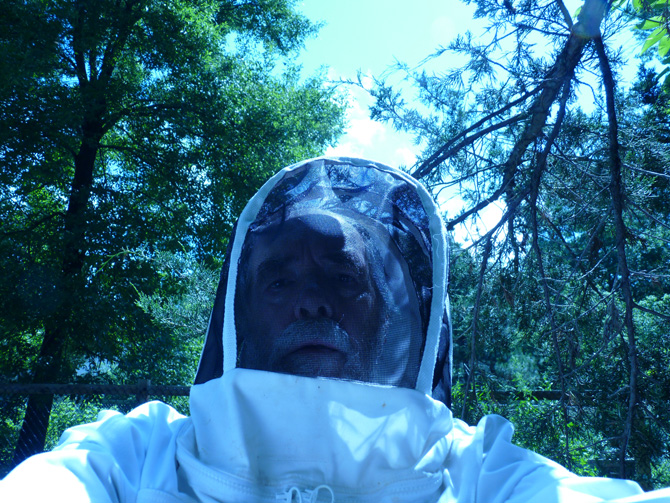
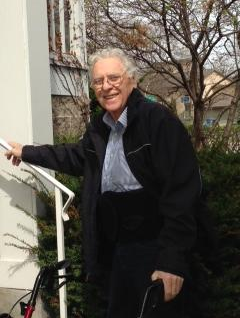
It would be good for people to view an average approach to the land, one which changed over time (though its roots were indeed in the back to the land movement) and which took advantage not of a particular approach, but of many. An approach that is dynamic, 06 27 10_beekeeperastronautchanging with new knowledge, the seasons, aging, new plants and new desire.

The flavor of “Return of the Secaucus 7” with some Scott and Helen Nearing, Wes Jackson and Wendell Berry thrown in, too. Ah, perhaps it could be a sort of third phase update of the movement years, an upper middle class idyll moving against the grain of upper middle class lifestyles.

Not sure whether to pursue this or not, but it could be interesting. Might even help sell the house. A house with a history.

A structure based on the Great Wheel might be interesting.

Young

Beltane                                                               Summer Moon

How do they get so young? Had my meeting with the organizer for the Franken campaign. She graduated this spring from American University. 20 years old if that. She wanted to know how I got involved in politics. So I told her my story, watching the Stevenson-Eisenhower returns in 1952. She was born in 1994 or 1993. The time difference would be the same for me for an event in 1906/1907. Hmmm.

We chatted for about 45 minutes. She was energetic, hopeful, trying to be realistic and tough, yet still eager. A hard combination to pull off. She’ll get there though, I imagine.

The interaction taught me something. Probably something I’ve learned several times, but I’m learning it again. It was fun and revitalizing to meet someone new, to talk about stuff I care about, to get out of the house in the evening.

One real downside of living up here all these years, with few places where folks just go to hangout (none, really) and with no folks to go hangout with anyhow, is the tendency to get in a rut. Stay home, watch tv in the evening. I love Kate and watching tv, winding down in the evening, is a pleasant and even important part of our time together. Our lives during the day have the garden or sewing or writing or Latin or the dogs, never boring, fulfilling.

But. What I’m reminded of is the need to engage others, new folks, on a regular basis. When we move to Colorado, I’ll see to it. Politics. Art. Gardening. It does highlight a criteria for our new home (a favorite parlor game for us these days. Oh, and it should have…) I came up with a couple of weeks ago. A community where we want to be.

Andover’s not bad, it’s just not much at all. And politically it’s very conservative. Political leanings are not everything, of course not, but they do speak to a wider range of compatibility and I’d like to have at least some of that where we live next.

Between

Beltane                                                                            Summer Moon

Janus. The two faced god, one face looking to the past, the other toward the future. Hence, January. “…the god of beginnings and transitions,[1] and thereby of gates, doors, passages, endings and time.” Wiki  The door to Janus’ temple stood open during war and closed to indicate peace.

Got to thinking about Janus this morning in light of  Bill Schmidt’s comment about liminal spaces. Janus is presented as the god of liminality, of the time between war and peace, beginning and ending, inside and outside. But. As I thought about the image of Janus, he looks back into the past where lie regrets and failures and loss. At the same time he looks into the future where there is anxiety and hope and maybe despair. The one thing he is not is the god of liminal spaces. No, he’s the god of regret and worry. That thing that he cannot do is see the present, be in the now, for he is eternally fixated on the flow of time past or the onrush of time future.

More. As Bill suggested, to live is to be in liminality, between life and death, yesterday and tomorrow, this project and the next one. We can define, interestingly, liminality as the now since the now we inhabit has a position after a moment and before the next one.

The Celts reserved a special place for the liminal, seeing it as a magical time. So Celtic magic often happened at dawn or as evening fell. But in the understanding I’m presenting we can work our magic in the liminal space we inhabit. Right now. This is not an idle metaphor, but an expression of the magical reality of the now, of inhabiting liminal space always.

Whatever it is, we can bear it for this moment. At least for this moment. We may not have been able to bear it a moment ago and we don’t know whether we will be able to bear it in moment, but, right now, in this fleeting doorway where we stand poised between then and the future, right now, we can marshal our resources and get through the moment. With practice our capacity to live in this space between becomes usual, ordinary and we know in our body that regret is gone, in the past, and that anxiety is of the future, not yet.

As Stewart Brand puts it so nicely, we live in the long now.


Cutting Back

Beltane                                                               Summer Moon

Dug out a yew that created a beautiful blue-green pattern against our east facing boulder wall. 15 years ago. Since then, cruel winter sun bounced back from the yard as the sun rose 5002011 08 14_1015burned it, then burned it again and again. The blue-green became conifer death bronze mixed with blue-green. Might sound interesting on paper, but it’s not.
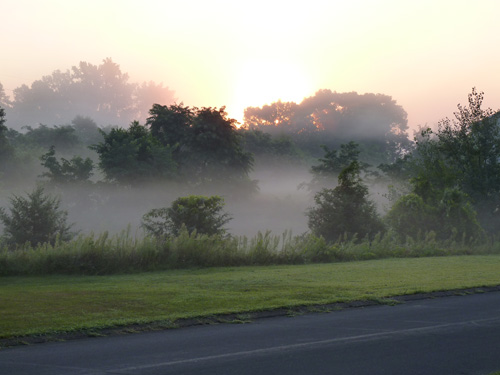
The yew will not be the only long term planting here to get excised or significantly reshaped this year. Like not getting a haircut on the day of the job interview, preparing our front landscape is better done now, so some of it can grow out, look natural. We want to land that job. Yes we do.

Continues to feel strange while I work in the garden beds, among the orchard’s trees and shrubs knowing that perhaps by this time next year, I will no longer be responsible for them. Wendell Berry had been my lodestar, taking over a family farm, staying on it, learning it, working it for the future, not the present only. Now it’s clear that I am what I really always was, a temporary custodian.

We have done right by the land here. Soil amendments with organic matter like manure, compost, top soil mixed with the natural Great Anoka Sand Plain to create healthy, productive perennial beds, vegetable beds and orchard. We planted for the long term 5002012 05 01_4097when we bought the house in 1994, using a landscape architect from Otten Brothers and laying in river birch, amur maple, a bur oak, spruce and Norwegian pine. We put in several boulder walls and created a three-tiered perennial garden with a brick patio in its midst, just off glass doors leading into a bedroom sized space I used as a study for a long time.
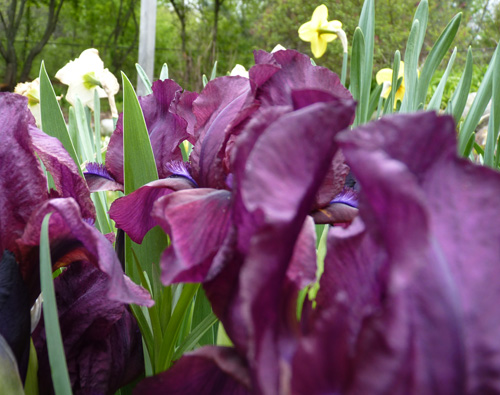
Over the next couple of years we amended the soil even more than Otten Brothers had done in all the flower beds. Jon and I cut down the black locust trees that dotted the area occupied now by the orchard and the vegetable garden. We chipped the trees and used them for mulch. Jon built raised beds and they’re still in use. The orchard came later, but began to bear fruit three years ago and had an excellent year last year.

With the exception of the sheds and the fire pit we’ve largely left the woods alone, letting 7002011 09 04_1250them be habitat for wild critters and a place for our dogs to roam.
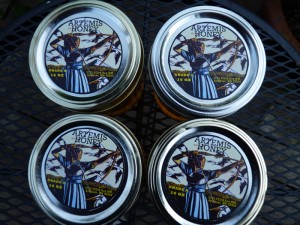
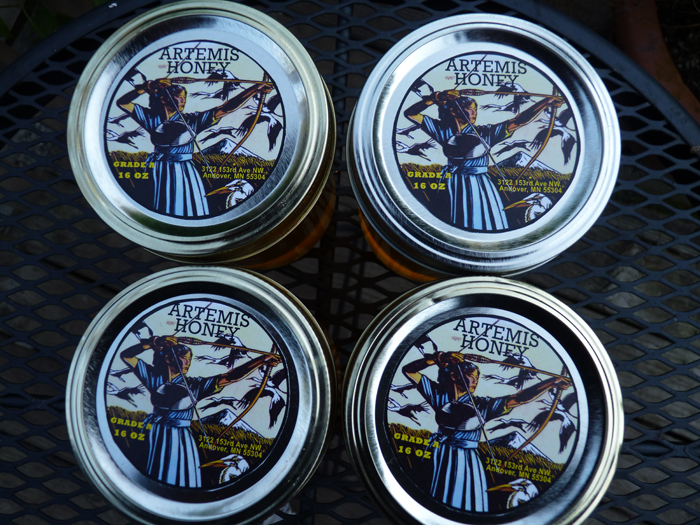
We raised bees here as Artemis Honey. Our pantry downstairs has honey from our hives, canned vegetables from many years in clear jars. There is there, too, a wooden tray system for onions, garlic, apples and pears. It’s empty because those pantry residents go first as we eat through the year’s crops. Some of it is frozen, greens for example, ground cherry and raspberry pies, chicken-leek pies. We just had a chicken-leek pie yesterday for lunch.

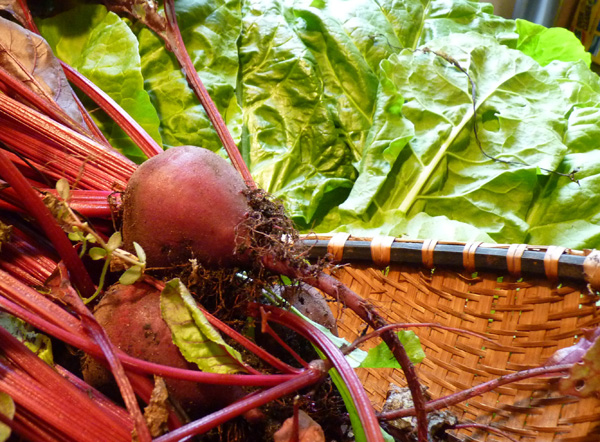
This will be the third year of the International Ag Labs program aimed at growing optimal crops of healthy food while improving the soil rather than depleting it. We also have permaculture touches like plant guilds, an herb spiral, a suntrap, flowers planted among beets chard 7 6 12R600the vegetables.
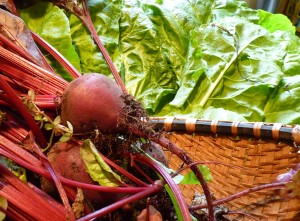
All this might be overwhelming to a potential buyer, but I have plant lists, soil tests, names of suppliers and assistants. We will also have photographs of our property throughout the year since this kind of work goes on all during the growing season, typically from late March through the middle of October.

It is my hope that whoever buys this property will love the land and its potential. They won’t do just what we did, but horticulture is a flexible art, open to the values and desires of many sorts of people.
 

Sustainable, Nutrient Focused Horticulture

Beltane                                                         Summer Moon


The purpose of our company is to
make soil better as we grow quality crops

Planted the 3 blueberry plants I abandoned in the orchard. Forgot about them when I planted the egg plant, collard greens and chard in the vegetable garden. Then, I sprayed the orchard for the first time, brixblaster, an international ag labs concoction that feeds plants focused on reproduction: fruits including tomatoes, peppers, egg plants, beans and peas. This feeding program for the orchard goes on twice weekly, ideally before 8 am or after 4 pm. Before is the best for me but I couldn’t make it happen today, so I settled for the good over the best.

On June 20th the spraying program begins in the vegetable garden. Lest you have an organic twinge here, let me explain the philosophy behind the (International Ag Labs) I.A.L. recommendation. The goal is to produce the highest quality foods (measured by nutrients, not ease of picking and processing) while supporting a soil chemistry that is sustainable over time. This is very different from traditional ags NPK focus which takes out nitrogen, phosphorus and potassium from the soil each year, then pumps them back in the following year.

NPK farming misses the critical elements of soil chemistry that supports microbial plant and animal life, as well as the critical trace minerals that make for healthy plants. Healthy plants = healthy food. There’s a reason for the plough and fertilize model. It produces high quantities of food, but over time the plants become modified not for nutrition but for their capacity to be easily harvested and stored, then optimally usable for food processing. In the past three decades or so the plants have also been modified to contain herbicides and insecticides as part of their genetic material.

Again, the emphasis is not on the nutrient quality of the food, but on the ease of growing and harvesting. This story is not new to me. Michael Pollan is probably its most gifted narrator right now. I remember a 1974 book, Hard Tomatoes, Hard Times, that told the story of the unfortunate collaboration between land grant universities (like the Ag campus in St. Paul, Purdue in Indiana) and farmers/food processors. It’s titular story involved the problem of tomatoes. They were thin skinned and had to be harvested by expensive manual labor. The solution? A tomato with a hard skin, pluckable by mechanical arms. That’s the source of the tough hide you get on store bought tomatoes.

Criticizing the system is easy and the push back predictable. How would you grow sufficient quantities of food for all America and the other peoples of the world to whom we sell produce? It’s a fair question and one that has to be answered.

There are many competing solutions, often followed with dogmatic zeal, the cults and sects of the horticultural opposition: Permaculture, organic farming, bio-dynamic farming, no till agriculture, the long term project at the Land Institute to develop perennial grains, among others. While of all these organic has created the most scale, it has a huge flaw that should have been obvious from the beginning, but zeal blinded most of us to it.

Its whole focus is on a negative, the removal of chemicals and their replacement with organic/natural products used to grow food. A good thing, in many ways, but it leaves the more important question unanswered: is organic food better to eat? Well, in that it is grown in a minimalist insecticide/herbicide environment, yes. But. Is organic food more nutritious than NPK farming? Oddly, the answer is not so much.

That’s where the I.A.L. idea comes in. Improve the soil so that it can sustain its own chemistry and create a healthy environment for microbial life. Recognize that inputs to the food growing process move toward that goal. Make clear that the purpose of this program is not the creation of food for the food industry, but of good food for all. This strikes me as a balanced solution, accessible to individuals and growers for local markets alike.

I don’t know how the I.A.L. ideas work on the large scale though I know their primary customers are farmers and not gardeners.

Think about this. The path to a sustainable human future on this planet must start with agriculture that can continue indefinitely. I.A.L. is one approach that focuses on that goal. It’s worth a look.

Deconstruction

Beltane                                                             Emergence Moon

More sorting, moving, discarding. Kate cleans and organizes, I move things, applying what muscle I have to the work. Today I began dismantling the five-stall dog feeding station that we used when our pack was at its largest, ten years or so ago. The dogs would come out, go in their individual stalls, I would lock them in and then pour out their food into bowls. The stalls kept feeding dish aggression to a minimum. We haven’t used it for a long time, but when we had the most dogs we needed it.

Jon built it and he did a careful, thorough job, as a Johnson (Kate’s side of his family) would. Since he used mostly screws, the taking apart is less destruction and more deconstruction. Very literary.

We’re at it, pushing the tasks ahead at a reasonable pace, gaining momentum as we go, each task accomplished making the next one that much easier. And, our load is lighter. The stuff has thinned already and we haven’t even moved inside yet.

We have our differences, mostly about the sequence in which things need to get done, but we negotiate those. These tasks are keeping me in the now. I’m present to and inhabiting the move.

Not tavering, not at all, just westing

Beltane                                                        Emergence Moon

In moving myself toward the way of this retreat, I have consulted a two-volume work I bought a year ago and have not used with any intent, the Historical Thesaurus of the Oxford English Dictionary. It was difficult to learn how to use it, at least for me, and it took me a good while to get my bearings, but I finally found a section that had some rich associations with What is your walk?

A listing under the more general category of travel contains words related to travel in a specific direction.

Here is a complete listing of words, in historical order, that have meant or mean travel in a specific direction in English: begang OE. lode OE-1400. way OE. one’s way c 1205. trade c1375-1564. course c1380. trace 1400-1768. raik c1400-1425. race c1400-c1480. track 1570. voye 1578. tract 1616-1865. career 1642-1651. gate 1735. line of march 1835.

Under this listing then comes other phrases or words with a direct relation to travel in a specific direction. Where there is more than one word, they are listed in historical order, though I chose not to put in dates. (too fussy)

1. aim

2. compass course

3. easting, northing, westing, southing. (naut.)

4. counter-course

5. collision course

6. stepping

7. round, beat, route

8. rithryne (OE) straight/right

9. zigzagerry, tack, zig-zagging, darning

10. compass, circuit, circumference, compassing, ymbangt (OE), circuiteer

11. ascent, slope, breasting.

12. descent

13. deviation from straight course: aeflast (OE), ymbswaepe (OE), turn, wrying, circumference, extravagancy, extravagation, outstepping, deviation, detour, left. digression.

14. straying/going astray: gedwolfaer (OE), stray, vagation, out-way going, gate will, will gate,  straying, tavering, estraying, wandering. strayer, stray, straggler, strayling. missing. disorientation. bewildering. estray.

(Albert Bierstadt – Estes Park, Colorado, Whyte’s Lake)


Walk

Beltane                                                                     Emergence Moon

In preparation for What is your walk? A few items, resources for thinking.

Chaucer’s great work is a tale told by pilgrims, as is Pilgrim’s Progress. In Dante, Virgil and Dante walk first through the inferno, then the purgatorio, then paradiso. The Way of a Pilgrim is a classic of Russian Orthodox spirituality which focuses on a wandering starets who developed the Jesus prayer.


O.E.D.  walk

as v.

1. Walk. o.e. to roll, to toss. (obs.) m.e. to journey, move about on foot.

2. to go from place to place, to journey, to wander, to go (one’s way)

6. chiefly in religious use, after bible examples: to conduct oneself, to behave (ill or well, wisely or unwisely). sometimes with reference to path or way.

as n.

1. an act or spell of walking or going on foot from place to place

b. travel, wandering (obs)

6. relig. lang. manner of behavior, conduct of life

eytmology

walk (v.) Look up walk at Dictionary.com“travel on foot,” c.1200, a merger of two verbs, 1. Old English wealcan “to toss, roll, move round” (past tense weolc, past participle wealcen), and 2. wealcian “to roll up, curl,” from Proto-Germanic *welk- (cognates: Old Norse valka “to drag about,” Danish valke “to full” (cloth), Middle Dutch walken “to knead, press, full” (cloth), Old High German walchan “to knead,” German walken “to full”), perhaps ultimately from PIE root *wel- (3) “to turn, roll” (see volvox).

The shift in sense is perhaps from a colloquial use of the Old English word or via the sense of “to full cloth” (by treading on it), though this sense does not appear until after the change in meaning. In 13c. it is used of snakes and the passage of time, and in 15c. of wheeled carts. “Rarely is there so specific a word as NE walk, clearly distinguished from both go and run” [Buck]. Meaning “to go away” is recorded from mid-15c. Transitive meaning “to exercise a dog (or horse)” is from late 15c.; meaning “to escort (someone) in a walk” is from 1620s. Meaning “move (a heavy object) by turning and shoving it in a manner suggesting walking” is by 1890. To walk it off, of an injury, etc., is from 1741. Related: Walked; walking.walk (n.) Look up walk at Dictionary.comc.1200, “a tossing, rolling;” mid-13c., “an act of walking, a going on foot;” late 14c., “a stroll,” also “a path, a walkway;” from walk (v.). The meaning “broad path in a garden” is from 1530s. Meaning “particular manner of walking” is from 1650s. Meaning “manner of action, way of living” is from 1580s; hence walk of life (1733). Meaning “range or sphere of activity” is from 1759. Sports sense of “base on balls” is recorded from 1905; to win in a walk (1854) is from horse racing (see walk-over). As a type of sponsored group trek as a fund-raising event, by 1971 (walk-a-thon is from 1963)


Three Things

Beltane                                                                         Emergence Moon

To live in this world

you must be able
to do three things:
to love what is mortal;
to hold it

against your bones knowing
your own life depends on it;
and, when the time comes to let it go,
to let it go.                                  Mary Oliver, Blackwater Woods

This life here. This land. These friends. The memories. All mortal. And I love them all. For forty years I have held this life, in its glad moments and its sad ones, against my bones, knowing I did depend on it. For twenty years I have held this land and the life here with Kate against my bones knowing I depended on both of them. For twenty-five plus years I have held the Woollies and Kate against my bones knowing my life depended on them. The dogs, too. Later, the docents, friends from the Sierra Club and elsewhere. All against my bones.

Now, and here is the gray cloud lying close to my mental ground, the ravens and the crows flying there, the catafalque. The weight. The heaviness. The mudstuck boots. Now, the time has come to let them go. All but Kate and the dogs.

No, of course there will be times. Times back here. Times together. Moments driving down the same streets, sitting in the same homes. But then as a visitor, a man from far away. No longer here. But there.

Mary says when the time comes, let them go. Yes. I’m doing that. She didn’t say anything about being glad. And I’m not. I’m sad in the deepest reaches of my bones. But, it is time, and I will let them all go.


How We Walk

Beltane                                                                 Emergence Moon

It has always been so, I imagine. That those closest to us teach us life’s important lessons. Over the last couple of years my longtime and good friends in the Woolly Mammoths have taught me many things. This sort of teaching is much closer to apprenticeship than classroom lecture. That is, the lessons are taught by example rather than declamation. When we learn by example, we integrate the lesson into our journey; we learn as it affects us, rather than focusing on getting it right.

Regina_20120926aTwo lessons stand out though there have been many from each Woolly. The first, accepting the death of a spouse has come from Woolly Bill Schmidt whose wife, Regina, died in September of 2012. The grace in his acceptance of her death, his willingness to give voice to his grief and his sense of loss while remaining upright and present to all around him teaches one elegant way to walk the ancientrail occasioned by our mortality. It is not in mimicking him that we will learn his lesson but, in heeding the deeper lesson, that is, to be present to grief in a way that is authentically our own.

The second is the homecoming of Frank Broderick. Frank has been in tremendous pain from spinal degeneration for the last couple of years. To deal with it a back operation, his second, was the only solution. But, Frank has a bad heart. Frank had to choose between a image002life of constant pain (He’s 81.) or an operation with some risk of death. As Frank does, he weighed his options seriously, getting a second opinion at the Mayo Clinic. Satisfied with the level of risk, he decided to go ahead.

He came home yesterday after a grueling 10 days of rehab and faced with several weeks of rehab still ahead. Again, the Frank lesson is not in how to deal with pain or a bad back, though he did both of those well, but how to bring personal courage and intelligent decision making to the often complex health matters we will all deal with as we age.

Both of these men have granted me access to their lives and to the way they live them. When the student was ready, his teachers appeared.