Category Archives: Third Phase

Three Lifetimes: What to Do?

Spring                                                               Bee Hiving Moon

The process of reintegration begins now.  These intensive journal workshops mark an end to one period of life and the beginning of another.  That’s by design.  The period I was in when I got to Tucson began when Kate retired, when I left Tucson I had begun a new period, her retirement in the past, and what’s in the present and future is life in the third phase for both of us, together.

BTW:  A big aha on the idea of the third phase which came while listening to a cd by Ira Progoff (Intensive Journal creator) speaking about the process of the journal’s development.  He noted that in society’s not all that long ago, the average lifespan was thirty to forty years.  At some point in that life a death/rebirth ritual would occur and the initiate would emerge an adult member of the society with a particular role to fill.

In contemporary civilization two realities make that clear process difficult, not impossible, but difficult.  The first is the secular nature of society.  We have stripped away the culturally specific religious practices by uprooting ourselves from the context in which those practices had unquestioned authenticity.  So the ritual elements of traditional culture simply has no weight in the modern psyche.

The second reality is the one that directly bears on the third phase.  Progoff notes that with modern life spans an individual might live two or three of the lifetimes available to a member of a traditional society.  Each full lifetime requires a death/rebirth ritual to adjust/reconfigure the image the self carries as its primary identity.  We’ve created two fundamental images for the first two phases:  student and worker/parent.  We have no fundamental image for the third phase, or, in Progoff’s analysis, our third lifetime.

One of the key tasks in the intensive journal workshop itself is to come up with an image for the next phase of your life.  I’m not sure I have it yet, though the Greenman has come to me.

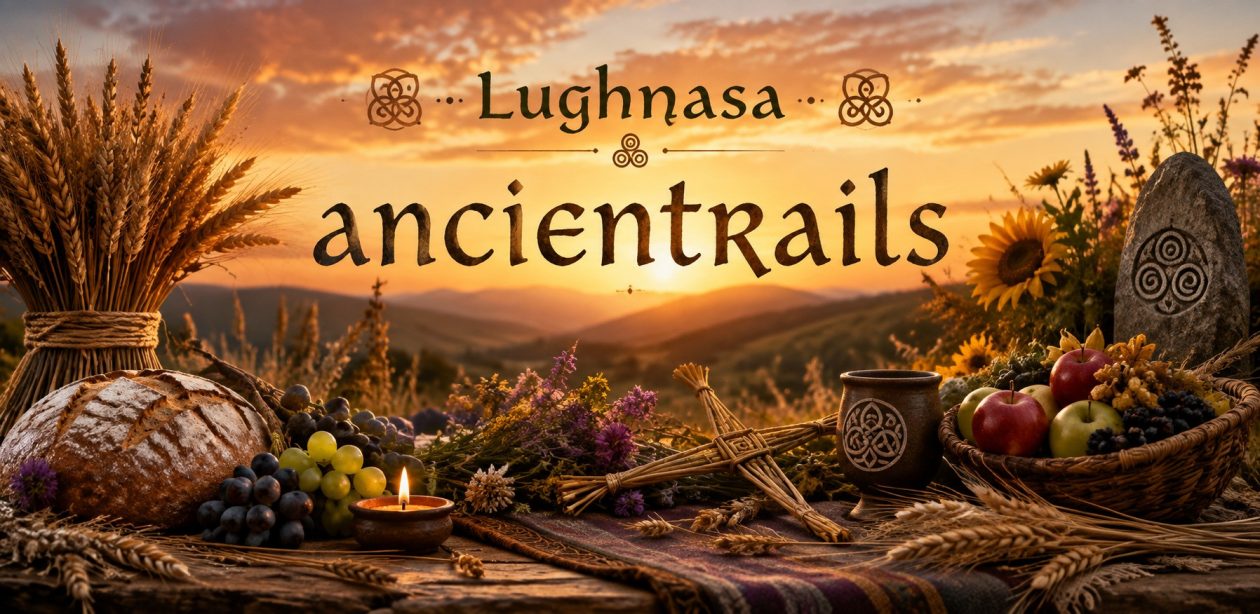
The Celtic triskele (see above) can serve as symbol for this tri-fold life that each of us now is heir to.  The bottom two spirals are the beginning pair:  student and worker/parent. The third life, the third phase, sits atop the first two, growing out of them, but beyond them.
 

Gee. That’s Interesting. Watch Out.

Spring                                                      Hare Moon

Denver.  Realized I never got back here on the big dream I had.  After working with it in a couple of different ways, here’s the nub of what I got:  In retreating, I advance.  The dream called me to consider the time just before my decision to re-enter the ministry with the UU’s.

It was, in many ways, a poor decision and, as I considered it over the retreat, probably caused me to lose almost a decade by turning my focus away from my real work:  writing, gardening, politics, home life.

It shared a characteristic with my original decision to go into the ministry, also a poor one.  My fascination with the sophisticated and intricate intellectual disciplines of first the Christian church (especially biblical study) and then the emerging movement of liberal religion in the United States entranced me.  I confused my very real intellectual excitement with vocation.  The ministry was not the vocation; the intellectual engagement was.

What this means is that I have to guard myself well when I get intellectually stimulated.  A tendency, no, my pattern, is to seek out institutions that utilize that discipline and try to join them.

Instead, when I retreat from institutional involvement, I advance because I do my own work, on my own time and in my own way. Thus, leaving the ministry let me begin this focus on writing.  Then, leaving Unity and giving up the UU ministry except for the occasional preaching assignment let me get started again on the writing.

But, I picked up the Sierra Club and the MIA. Why?  Because both areas fully engage my intellectual interest.  My passion for the Great Work on the one hand and beauty on the other pushed me into the institutional involvement.

Of course, I’m not saying these were wasted years.  Any of them.  I did real work, engaged difficult political, religious, organizational and educational challenges.  However, what I am saying is that following my intellect toward institutional engagement has been a mistake.  One I no longer have to continue.

Now, in the third phase, I have fully retreated to home and study, to self-directed work.  So, I have advanced at last.

This is why, in part at least, this retreat basically affirmed what I’m already doing.  It has taken me 40 plus years to learn this lesson.  About time, I’d say.

The third phase, then, will be the first period of my life when I will engage life fully as I am.  This retreat marked the end of a transition period that began roughly when Kate retired and which is now over.

Now we can live this new life, Kate as earth mother and quilter, me as, well, I don’t have the image yet, but I’m searching for it.

Mr. Ellis Regrets

Spring                                           Hare Moon

Just the last few things left in the room.  This “room” by the way has a kitchen and a small living room.  It’s a very comfortable way to live away from home.  I might try Residence Inns again sometime.  Not too expensive either, especially if you stack it up against a mid-priced hotel.

Been googling and looking at the EZY READ atlas Tom got me.  I don’t know why they say large print.  Doesn’t look large to me.  Chaco Canyon may, to my regret, be a road too far.  Gallup is 6 hours from here, not 4 as I figured for some reason.  That meant I could have gotten there by 9 pm MST with just 4 hours driving.  6 hours after a full workshop day is probably too much.

Haven’t decided what to do yet, but I can make Denver by Friday afternoon to surprise the birthday girl in two reasonably easy days if I skip Chaco Canyon.  I’ll still want to catch something, though I’m not sure what.  Not sure what route I’ll take either.  That will have an impact on what I can see, of course.

Anyhow as of this afternoon the trip turns north, back to the land of ice and snow.

Follow the Light

Spring                                                Hare Moon

We’re at the mid-point of the workshops, currently in the depth context focus.  This was the one that stimulated my desire to attend a journal workshop again.  My spiritual life, meditation in particular, but also working with images and dreams had gotten shoved aside as I cranked up the creative side of my life.

This was not a conscious act, just a gradual slipping away, until I had become unaware of its absence.  Odd to think of it that way, but it’s what happened.  Progoff has a method called process meditation and that’s the focus of the depth context workshop, learning how to engage dreams, imagery and other key sources of meaning in your life.

A mantra developed in my first journal workshop in 1981, I have used ever since.  That’s 33 years.  Process meditation works and more than met my needs when I engaged it regularly, but, like any discipline, it requires attention and I’ve let mine slip.

The workshop is both reinforcing and its own complete journey.  I’m working with an incredible experience I had while in college.  Some of you know about it.

I had just finished a class in metaphysics.  When I opened the door of the humanities building and began to step out into the quad, a visceral feeling gripped me and I became all interior.  My interior in turn became all light rushing out in all directions and receiving light in from all directions.  For a brief moment I had a physical experience of my relatedness to everything in the universe.

Then it was over and the sunny fall morning in Muncie, Indiana came back into focus, I stepped out onto the quad and walked away.

I can recall this event very well.  We’ll see where the workshop process takes it.  I’m interest in its connection to reimagining my faith.  This is the sense in which the workshop is its own complete journey.

But it has also reminded of the role and the way meditation and work with dreams and images can reenter my life.

Now

Spring                                             Hare Moon

The first of three workshops has finished.  This one, life context, positions you in the current period of your life.  It’s been, as always, a moving and insight producing time.  These workshops move below the surface and defy easy summary, but I have had one clear outcome from this one.  I’m in a golden moment.

I’m healthy, loved and loving.  Kate and I are in a great place and the kids are living their adult lives, not without challenges, but they’re facing those.  The dogs are love in a furry form.

The garden and the bees give Kate and me a joint work that is nourishing, enriching and sustainable. We’re doing it in a way that will make our land more healthy rather than less.

The creative projects I’ve got underway:  Ovid, Unmaking trilogy, reimagining faith, taking MOOCs, working with the Sierra Club, and my ongoing immersion in the world of art have juice.  Still.

I have the good fortune to have good friends in the Woollies and among the docent corps (former and current).  Deepening, intensifying, celebrating, enjoying.  That’s what’s called for right now.

Burned

Imbolc                                                             Hare Moon

Ross Douthat, a columnist for the New York Times, is a thoughtful conservative.  So is D.J. Tice, editorial writer for the Star-Tribune, though Tice often sets my kettle to boil.  Both had interesting pieces in their respective papers today, Douthat on individualism and the millennials, Tice on entitlement reform and the baby boom.

Tice writes as a baby boomer and asks us for another shot at society wide influence by seeking and seeing implemented reforms to both Social Security and Medicare.  I agree with him.  We need to solve this issue now, as the largest cohort to enter the python is only a fraction of the way in.  It is our responsibility to demand sensible changes and that our representatives in congress and the White House enact them.

What are they?  I don’t know the arguments right now well enough to recommend, but I know such arguments exist and I would stand with the fiscally responsible ones.  Tice and I agree this time.  I also appreciate his writing as a baby boomer and as one who calls for action.

Douthat read this Pew report on the millennials and concluded (though you have to read between his weasel words) that civilization as we know it is doomed.  This is a favorite conservative argument when societal trends point toward things they don’t like, in this instance, more individualism.

I don’t agree with Douthat.  Conservatives like to place individualism as an ethos over against communitarianism, the former eroding the latter until we’re all small, armed, loosely affiliated gangs.  The reality is much more complicated.  Individualism does not go over against communitarianism.

As an existentialist I believe we are each in this world alone, that our individuality is inescapable and incapable of being increased by any sort of belief or action.  Individualism is a definition of what it means to be human.  As an existentialist, I also know that we can recognize the remarkable affinity we share with others of our species.  And more, with a land ethic like Aldo Leopolds, we can recognize and act on the remarkable affinity we share with all of the natural world, animate and inanimate.  We are, after all, stardust.

Thus, the signal act of the aware universe (that is, you and me), is to bridge the abyss between the depths of one person and that of others, to acknowledge our solidarity as a creature aware of its own death.  We are all, as Camus said, in the river rushing toward our end, and we are in the river together.  It is this common bond we share that makes us compassionate toward the other and makes us want to ease their burdens in this one lifetime.

Now, here’s what’s really interesting in both of these columnist’s pieces today.  Both invoke a future disaster, one fiscal and the other communitarian, but both leave out the certain calamity that requires our action now, our action as a global community: mitigation and adaptation to climate change.  They both speak for the future, yet it is the heat and the storms and the floods and the rising oceans that reach from that future with the most destructive force.

Granted we have to multi-task, communities and nations can do that, though it’s very difficult for individuals.  But to bemoan the future without acknowledging the carbon in our atmosphere (so to speak) will only ensure a time in which individuals and poor old people will burn.

It’s About Time

Imbolc                                                               Hare Moon

A long time ago, during college, while majoring in philosophy and anthropology, I read an article about the maturation points in different academic disciplines.  Mathematicians on the very young end of the scale and philosophers at the other, older end.  At that time my interest was theory of the social sciences.  That is, theoretical anthropology, psychology, sociology.  What were the major philosophical questions that each discipline raised by the assumptions and research methodologies it employed.

This turned out to be an unfortunate focus because I got turned down at three graduate schools for fellowships because no money was on the table for people wanting to focus on theory. At the time I was not interested in changing my orientation, so I passed on graduate school.  A decision I have regretted off and on ever since.

Ending up in seminary actually allowed me to continue my interest in theory since theology is just that, a philosophical and theoretical approach to the questions raised by religion.  I loved it.  Of course, there was that vocation on the other end, ministry, but at first I ignored that and enjoyed the work. (and the politics.)

That process funneled me (somewhat by inertia) into getting ordained, working for the church.  Even then, though, I still wondered about the systems of the church, how congregations worked, how they grew and declined, how the various denominations grew and declined.  My Doctor of Ministry thesis was on the decline of the Presbyterian Church from a post-modern perspective.

Anyhow, after I pulled back from that 20 year immersion in the Christian world, I revisited that earlier question about maturation.  When I looked at that material during college, I’d concluded that I would mature late, probably very late since I was interested in theory, a sort of meta-perspective on politics, social science and religion.

And so, now, in my 67th year, I can report that I feel the maturation process beginning to congeal.  It’s not yet finished, probably never will be, but I’m beginning to see how my odd path through the world has led me to today and how I might use that path for the good of others.  In large part, I’ll do that by continuing to write, continuing to learn Latin, continuing to educate myself, continuing to grow things with Kate and continuing some level of political activity.

(Jacob Wrestling the Angel, Maurice Denis)

I do think you will see more from me over the next few years in the form of ideas and actions.  It’s exciting to me to see that possibility ahead.

24

Imbolc                                                                      Hare Moon

Nicollet Island Inn tonight for our 24th anniversary dinner.

Marriage is an interesting institution and not an obvious one.  There is certainly no need IMAG0331for marriage as a means of assuring reproduction.  There is ample evidence that monogamy grinds against some people all of the time and most people some of the time. The notion of finding someone in your twenties with whom you will be compatible in your sixties is almost laughably difficult.  Of course, that problem can be solved.  First, a divorce.  Second, capitulation.  Third, growing along with each other.

I’ve done the first, would find the second constitutionally impossible and now, thankfully, have ample evidence that the third is an option, too.  Even marrying in our forties, as Kate and I did, doesn’t necessarily augur well for life together in old age.  Why not?  Well, forty somethings getting married are still in their working years, burdened and shaped by the demands of occupation and vocation.

After the work life recedes, there’s no guarantee that the two will still want to see each other across the breakfast and lunch and dinner table.

Kate and I have made this transition over the last couple of years, integrating our lives in a IMAG0531more closely choreographed dance.  Now, when I work here in my study, her sewing machine whirs above me, her feet move across the floor from table to ironing board as she works on her current project.  When we look at travel opportunities, we can be much more flexible in our decisions.  As the growing season unfolds, so will another year of mutual garden work, growing food, caring for the bees.

We didn’t know we’d be good at this when we got married.  It wasn’t on our minds.  But that third option, the growing together one?  It’s marked every step along the pilgrimage of our life together, a pilgrimage far from finished.

Where Will the Dead-to-Work Live?

Imbolc                                                                  Hare Moon

Realized the other day that I’m going to be driving to Arizona in late March.  At 67 that makes me a cliche, the stereotypical white-haired escapee from the frozen lands of the north.  I worked for a while at Unity-Unitarian Church in St. Paul.  Roy Phillips, senior minister there for 23 years, always referred to Minnesota as the frozen tundra.  His last church was in Tucson.

(Sun City Florida ad image)

In 1960 developer Del Webb opened the first homes in what would become Sun City.  Sun City soon became a byword for retirement Valhalla, a place where the worthy dead-to-the-work-world could gather and each day play 18 holes.  After golf they could climb in the cart and drive home to a feast celebrating having crossed work’s finish line.

Sun City was nothing more than a name and a cultural symbol to me when I married Kate. Her parents, though, had retired there, so I had more than one opportunity to see it from the resident’s perspective.  The first time we visited the flat, uniform plats stood out, small single level homes interspersed with golf courses, tennis courts and services like churches, funeral homes and a recreational center.  The colors were muted, desert pastels and the streets eerily quiet.  The ubiquitous golf carts with their electric motors made little noise and there were few of those in sight. (Sun City Florida ad image)

The longer I was around Sun City the more aberrant it seemed to me.  With a minimum age of 55 there were no children.  No young families.  No teenagers.  This was seen as a blessing by many, maybe most who lived there, but it did something odd to the character of the place.

It meant your friends and neighbors were all old.  Dinner table conversation often turned to deaths and illness, frailty.  There was no future there.  Only death.  After that, the desert.  Sun City felt hermetically sealed off from the ongoing world, a sort of vestibule for the life hereafter; when it was meant to be, I think, the life hereafter work.

A rarely mentioned but frequently experienced dilemma occasioned by this flight to Arizona was absent family.  In this case it wasn’t the kids who had moved away from home, following work or a spouse, but the parents.  At first, I imagine, it was exhilarating, all the time with no kids, no grandkids.  No birthdays and holidays, no Thanksgiving.  Free at last.

But when the inevitable decline set in, then the anguished calls would go out.  And they went out to children in Minneapolis, in Boston, in New York.  Sons and daughters had to do long distance elder care while Mom and Dad suffered and sometimes died alone.

Whether those more carefree years of early retirement balanced out the difficulties of the latter years differs from person to person, of course.  But I know in the case of Kate’s parents, both of them, their final illnesses were difficult on all parties, a difficulty not only exacerbated by distance, but also created by it.

These early emigres to Sun City were experimenters, pioneers of the new model for healthy life after the end of work.  But the lessons that could have been learned, I’m afraid were not.

Just visit the Del Webb site for proof that this kind of elder dispersal continues to this day.

Communities need their older citizens, for memory, for continuity, for child rearing, for role modeling, for what has been learned.  Age graded communities deprive both the old and the young of necessary interaction.  Life with children is life with a future; life without them is a sterile desert.  Likewise for children life without older neighbors and grandparents is life without a living link to the past.

I feel this keenly because Kate and I are here in Minnesota with our children and grandchildren far away.  To magnify that our nuclear and extended families are also far away.  This is not a complaint, we’ve made our choices and they have made theirs, but the net effect is for us to be in our mini-Sun City, an aging exurban development with no children. Strange when I look at it that way, but it’s true.

Coming Up in March

Imbolc                                                                      Hare Moon

Looking down the month toward our 24th anniversary (Monday) and the date I’m wheels 1000Kate and Charlie in Edenon the road for Tucson (the 18th).  24 years with Kate and our relationship improves like fine wine, gaining more nuance and depth, more body with each passing year.  This year we return to the Nicollet Island Inn for dinner, the spot from which we launched our honeymoon.  As spring rolled forward in March of 1990 those three weeks in Europe were as good a beginning as the marriage itself. Next year we’ll celebrate our 25th anniversary at Mama’s Fish House on Maui.

The Tucson trip grows closer.  These rolling retreats, as I like to think of alone time behind the wheel, are really just road trips.  Road trips are part of the American way, peregrinatio updated for the age of the internal combustion engine.

This one of course has its focus self discovery, focus, personal deepening so it will have a more spiritual note, but it will also include my usual visits to spots of natural and historic interest.  Among the possibilities are Carlsbad Caverns, the Saguaro forests, a state park or two in Arizona, the Sonoran Desert Museum, Mt. Kitt, Chaco Canyon, Joshua Tree National Park (probably not, but it’s within reach) and a second visit to the Arbor Day lodge and farm in Nebraska City, Nebraska.