Category Archives: Third Phase

At The Limit

Ancientrails hit its size limit on my host, 1&1, and has to be moved to a larger venue.  Bill Schmidt is working on that right now.  It took a bit of time to realize what was wrong.  I’ll be back online as soon as possible.  Thanks


Soul

Lughnasa                                                                      State Fair Moon

The soul. As probably understood most of the time (in the West):  a non-material component of the body-mind-soul combination that makes up all human beings.  This third component floats free at death, off to any number of possible outcomes depending on your belief:  heaven, reincarnation, nirvana, Elysian Fields, Valhalla or hell.  Usually the soul’s journey after life is believed to have some correlation with adherence to one moral code or another.  Might be karma, might be sin, might be courage and bravery, might be heroic stature.

If your belief aligns with any of these understandings, then the third phase, as the one we know for certain ends with the terminal phase and the terminal moment, becomes critical, a blessed time when spirituality and spiritual attentiveness prepares you for the afterlife.  Not gonna say how you might do this because it entails too many variables but the menu certainly includes:  retreats, meditation, reading, prayer, perhaps engagement with a community of fellow travelers. It also includes attention to the past if you feel making amends or restitution or penance is part of your journey.

And if you’ve been so engaged prior to the third phase, congratulations.  Now this kind of personal work can become a key thread in your life.

The soul:  As I understand it at the moment.  Roughly equivalent to the Self, a holistic view of the you that is body-mind-soul.  Now.  In this understanding the third phase stands as a blessed time when you can become more of who you already are.  It can mean jettisoning the persona-pack you’ve carried in the world of work for a persona more consonant with the Self.  If you’re lucky enough to come into the third phase with a persona and Self in healthy dialogue, you’re in good shape.  This time can then be an extended exploration of the unique gift you are to this world.

Soul work:  These two perspectives, one tied if loosely to religious tradition, and the other tied closely to the humanist tradition in Western culture are not exclusive of each other.  That is, both ancientrails can overlap in any one individual.

Next time:  what then might we do?
The Afteroffice, or Retirement? Really…

Lughnasa                                                        State Fair Moon

Suppose tomorrow someone came to you and said, “From now on you no longer have to use the education, skills and experience you’ve accumulated over your lifetime.  Good luck.”  They might have added, “And here’s a gold watch to keep track of time until, well, you don’t need to anymore.”

Our received understanding of retirement remains that of a life period where the things you worked and sacrificed to learn all of a sudden become so much baggage better left at the station.  It’s what our financial counselor Ruth Hayden calls the finish line model of retirement.  “Whew.”  We wipe our brows.  “Glad that’s over.  Martha, my slippers.”

It’s no longer like that.  Hasn’t been for a long time.  Some people, many people, will have to work a lot longer.  Others don’t, but still shuttle into the afteroffice with no idea of what comes next.  Perhaps when life expectancy after retirement was shorter, it was typically 18 months among working class retirees in my hometown of Alexandria, Indiana, the no plan might work.  Some television.  Some fishing.  Some cards.  A few beers.  That trip to Las Vegas.  Then, that trip to Happy Hill Cemetery.   Even then I suspect there were many long nights and longer weeks, weeks of wondering what on earth I’m doing still on earth, for heaven’s sake.

Now, with healthspan increasing and lifespan reaching 20-25 years post-retirement, it definitely won’t be enough.  This next phase, call it the Afteroffice or the third phase, has as many years as the other two phases, roughly, and certainly enough years that it needs to have a plan, a what I’m up to now contract with yourself and those around you family, friends, community.

After a first phase which emphasized preparation and a second phase which underlined practice, what is the third phase or the Afteroffice theme?  There could be many answers and there will certainly be a vast diversity of paths, but it seems likely that the dominant motif will be soul work.

Define soul however you want.  Which is just what I’ll try to do in my next post in this series.

Can’t Get No Traction

Lughnasa                                                                          New (State Fair) Moon

Didn’t start my day outside yesterday and found myself feeling aimless after our meeting with Ruth.  Bounced around from this to that, never got traction until later in the day when I finished reading Rousseau’s On Inequality and watched the last two of the week’s lectures.

I don’t like feeling aimless.  It’s different from either relaxing or being focused, aimlessness occupies a nowhere land in terms of motivation, a sort of desert of intention where this happens, then that and then another thing.  It’s not the zen of the moment or being in the now, it’s not being in the now or the moment or anywhere else.  An uncomfortable feeling.

A large motivation for stopping the Sierra Club work and the MIA work was to allow a natural rhythm to surface and it has.  I work outside in the early morning, do some work on Missing until noon, nap, then take up Missing again.  When I tire of it, I work on the MOOC’s.  After that I either workout (MWF) or finish up and go upstairs to read or watch a movie or a some Netflix TV.

There are times though when that flow gets interrupted and I find it difficult to get back on track.  Yesterday was such a day.


Living the Dream

Lughnasa                                                                       New (State Fair) Moon

Life seems to run from one irony to another, offering a wry twist often when you least expect it.  This irony is not one of those.  It’s been building for about 19 years, but it has begun to peak.  The irony is this.  The U.S. like the rest of the world, continues to urbanize with central cities beginning to outstrip ‘burbs.  “In 2011, for the first time in nearly a hundred years, the rate of urban population growth outpaced suburban growth, reversing a trend that held steady for every decade since the invention of the automobile.”*

What’s the irony here?  Now I find myself willing to defend the suburban or, in my case, exurban experience.  Why is that ironic?  Because I spent 24 years living in Minneapolis and St. Paul deeply involved in all manner of urban politics, working as an urban minister and eventually in charge of urban ministry for the Presbytery of the Twin Cities Area.  Though raised in a small town, I made the transition to solidly urban guy.  It was my profession, the city.

Cities burst with energy, offer sophisticated amusements, diverse places to live, a variety of foods to eat and the sort of jostling with others that sparks creativity.  They also make obvious the divisions in our society that a drive from the Northside of Minneapolis to Kenwood, directly south of it, epitomizes.  Even that last creates a juicy political scene with lots of different actors.  Fun.

And I love it.  Note the present tense.  I love it.  I enjoy being in the city and I love the kind of people who make cities their home.

Even so.  I now live in an exurb of the Twin Cities.  Only a couple of miles north of our home there are cornfields.  Surrounding our development is a huge truck farm with tractors and warehouses and rows and rows of carefully planted vegetables.  This is where the metro proper ends.  The MUSA line, the Metropolitan Urban Services Area, runs less than a mile south of our home. (see map)

Over the years Kate and I have made a life here that would not have been possible in the city.  We have a woods, several garden beds for flowers and vegetables, an orchard and a fire pit.  Our house has about 3800 square feet with the finished basement and we could never afford that much space in the city.  This combination of a large, relatively inexpensive home and land enough to create our own footprint has given us a rich and full life.

We have the suburban dream, that is, country living close enough to the city to access museums, orchestras, restaurants and political activity.  In my first days here I felt isolated and unhappy, far away from the things that had made me who I was.  As time passed though, I began to find a new person emerging based on what we had here.

It is, in some important respects, a narrower life.  Kate and I spend most of our time either outside or inside our home, but on our property.  In this sense the community oriented life of the city does not have a domestic equivalent here, at least for us.

Here there is silence.  Here we can focus on our creative activities:  horticulture, writing, sewing/quilting.  Here our life concentrates at our home.  This is similar to the farm life of millions of Americans prior to WWII.  Yes, it has its privations, but it also has unique benefits.

It remains to be seen how third phase life can be lived here, especially the waning years of that time.  We may find the distances too great for us, the isolation dangerous.  I hope not because I have learned to love this exurban spot as much I love the city.


*Time Magazine article, The End of the Suburbs

Terminal Phase. Sabbath.

Lughnasa                                                                     Moon of the First Harvests

Some rough ideas, thrown out as thought provokers for now, on the third phase.  In September I’m going to do a presentation to Groveland UU on the third phase and want to start thinking out loud here, maybe draw in some comments from those of you who read Ancientrails.

1st phase:  learning [self, relationships, general skills and particular skills]

2nd phase: praxis [learning put into practice with career, family, personal growth]

3rd phase: soul work [work that only you can do.  inner work.  life review, summing up]

terminal phase:  dying [good-byes, cleaning up, finishing up, endings]

The terminal phase is a new addition to my third phase thinking and it’s based on being with Kona as she died and on the experiences some of you have had, notably Bill Schmidt and Scott Simpson, as loved ones died, but slowly.

NB: the word associated with the phase is that phase’s primary and guiding emphasis, where the inflection of life in our culture comes down.  Certainly we learn in each phase, put our learning into practice in each phase and do soul work in each phase.  It’s the dominant motif that concerns me as I think about phases.

3rd phase as life’s sabbath.  This idea just came to me today.  It segues somewhat with the traditional view of retirement as life’s last vacation, a sort of permanent weekend, but goes well beyond it.  If you agree with me that we might consider the third phase primary emphasis as soul work, then the third phase can be seen as a point when we move more and more often from ordinary time (a favorite Catholic liturgical idea) into extraordinary time, what I would call sacred time.

That means we may want to pay attention to rest, reflection, contemplation, retreats, doing work that more often integrates than fulfills needs.  In my case time in the garden helps.  Time not spent writing or reading, unless it’s poetry or some other reflective material.  Time sitting in the chair, eyes closed, thoughts wandering.  Meditating.  Being with friends.

These are just the nubs of ideas.  Interested in what you think.


The Land

Summer                                                              Moon of the First Harvests

One with the land.  A cliche perhaps, though little used today.  I hope it has again some of the powerful connotation it had long ago.

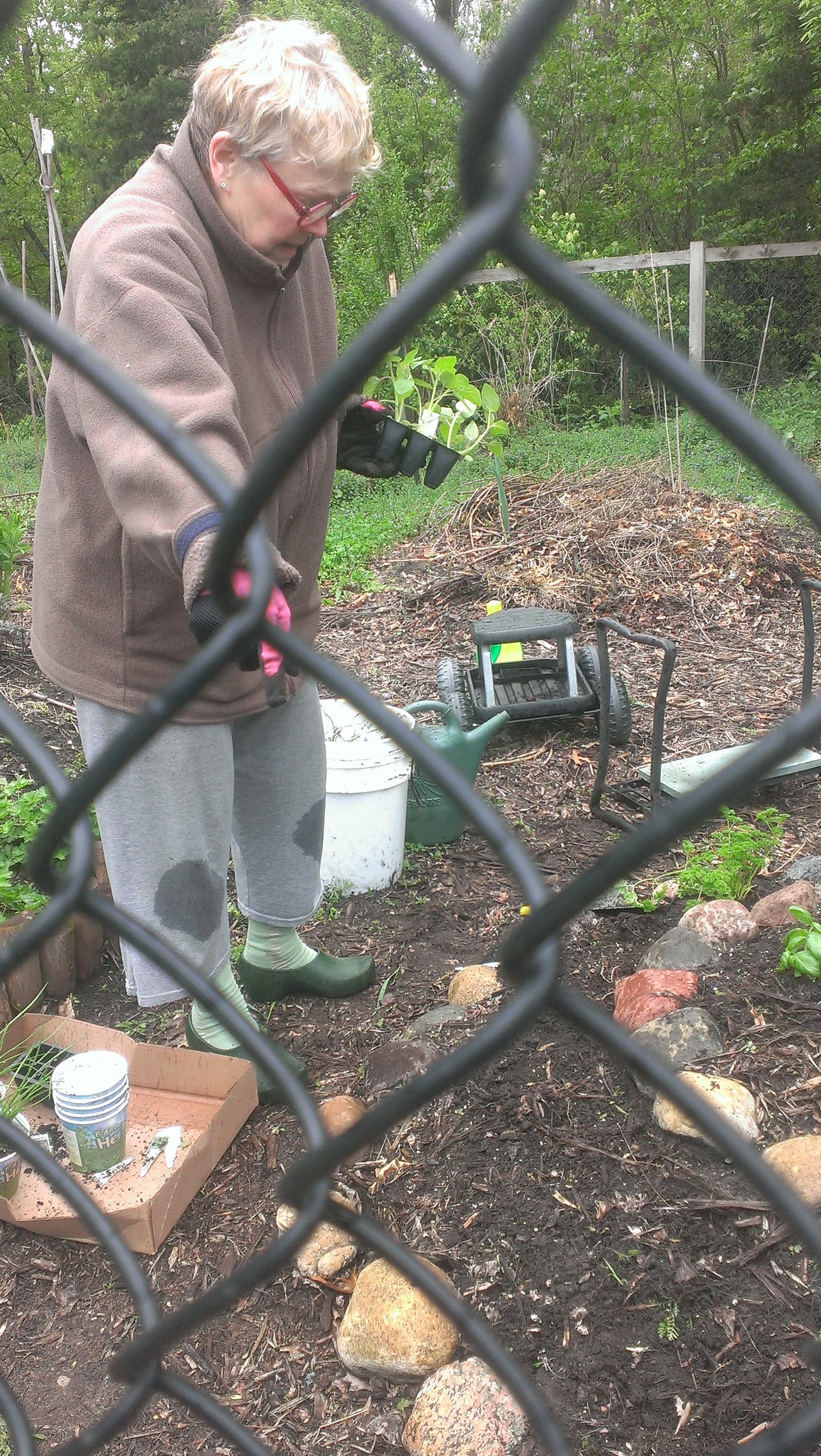
On a fine cool morning like this one, not even really cool, 68, to step outside with tools in hand, tools for working with plants, and feel the morning air surround you, to see the plants green and the flowers vibrant, to step into the vegetable garden and see tomato blossoms, fruit, eggplant fruit, cucumbers vining up the bamboo, the carrot’s feathery leaves, the brave leeks tall and proud and to know, know in the biblical sense, that is, to have direct sensory knowledge unmediated by book or story, but present and available, that you and those plants share the workload.  To know further that the bees buzzing and dipping into the flowers are likewise colleagues, not just insects, but partners.  Yes, I know it’s overwritten, sorry about that, but it hits the feeling tone I want to convey.  Over the top.  Not overwhelming, maybe, but certainly whelming.  Intimate.  Holistic.

It’s a feeling, come to think of it, or come to feel it might be better, that synchs up with the mystical moment I had back long ago in college.  I’ve written about it here before so just a synopsis.  After a philosophy class I experienced a sudden moment of integration with the whole, with everything, with the cosmic.  I was in it and of it, as it was in me and of me.  This feeling I have, this oneness with this land, this particular place, is a discrete yet parallel feeling.  I am in this land and of it, as it is in me and of me.

Third Phase Cinema

Summer                                                                  Moon of the First Harvests

As the third phase filter got added to my lens, certain books, art works and movies began to pop up, unbidden.  They had been there all along of course, but now I see certain works as pertaining to this new moment of my life.

To Wit.  Wit, the long decline and death of the professor of English literature starring Emma Thompson raises many quality of life issues for chronically or terminally ill people and couches them in the poetic context of the metaphysical poet John Donne.  Definitely worth seeing.

Last night Kate and I watched Buena Vista Social Club.  It’s a 1998 documentary so you’ve probably seen it, heard the album and moved on, but from a third phase perspective it’s worth another look.  Ry Cooder, American guitarist and champion of American roots music as well as traditional music from another the world, went to Cuba in 1997 to record Cuban music.  When he got there, the folks who had agreed to play either couldn’t come (West Africans) or couldn’t be found.  So he began asking around and found musicians, many associated with the Buena Vista Social Club which closed in 1944.

The musicians he found were legends of the Cuban music scene who had passed into obscurity.  The group, which called itself the Buena Vista Social Club, put out the best selling album of the same name and toured, playing the Netherlands and Carnegie Hall.  Here’s the third phase connection.  Many of these resurrected musicians were in their 80’s and 90’s.  They had, most of them, given up music for one reason or another, i.e. too little money, arthritis, boredom.

Brought together they reignited in each other the passion, love and craft they shared, making music.  It is a remarkable story of gifts found, nurtured and revived, just as it is a story of men and women found, nurtured and revived.  What can we do, I found myself asking, to retain the gifts, the passion, the loves we have so they vitalize and revitalize us as we grow into the further reaches of the third phase?

Being Human

Summer                                                             Moon of First Harvests

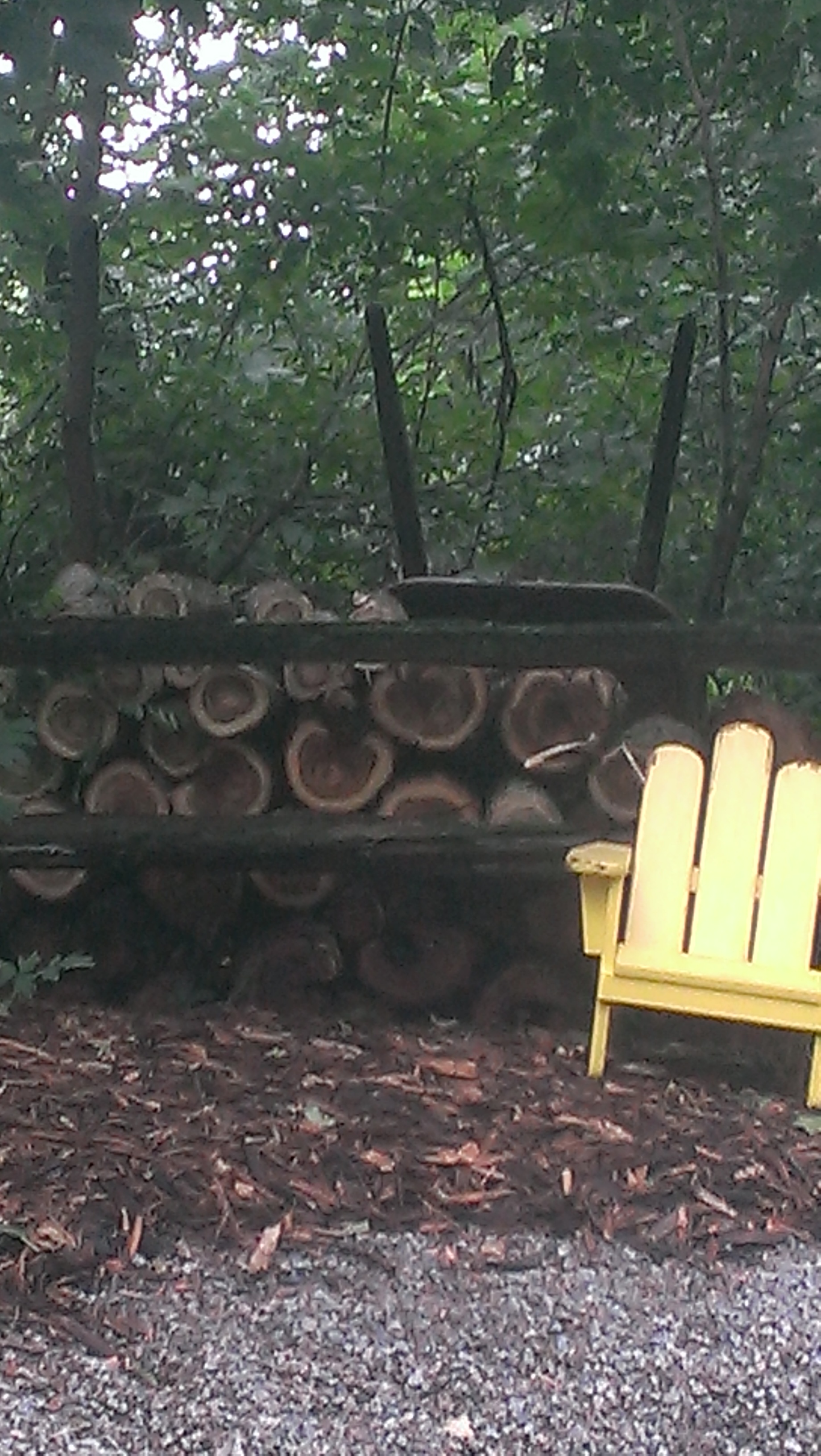
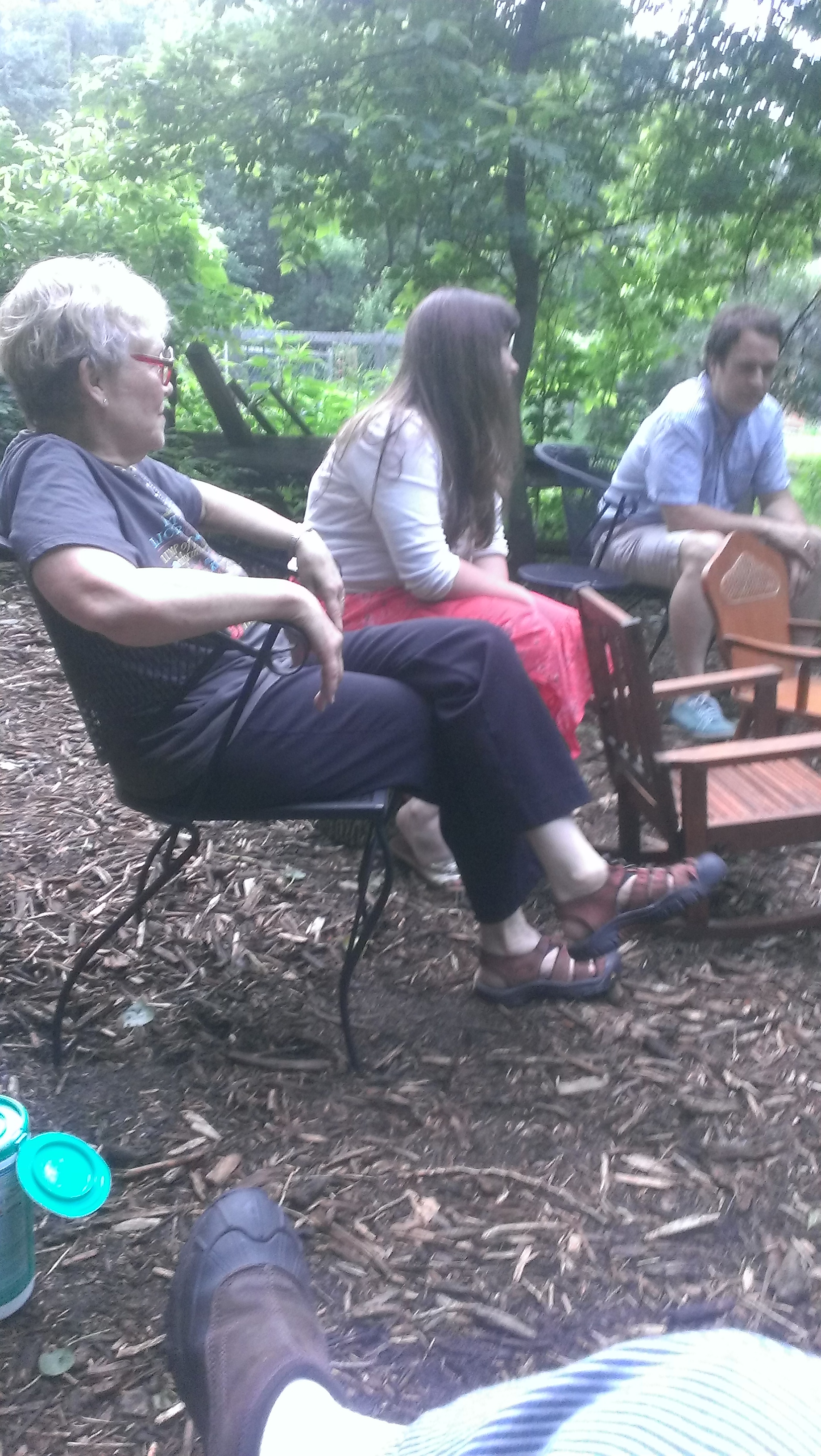
The morning after.  The Woolly feeling lingers here, a gentle mantle over the back, around the fire pit where we gathered.  A primary, perhaps the primary, purpose of the Woollies is to see and be seen.  No invisible men allowed.  We have bum knees, wonky shoulders, weak legs, poor eyes and sore backs.  These are acknowledged, not for sympathy, but for recognition that we are each the sore back, the poor eyes, the weak leg, the wonky shoulder, the bum knee.  And that we are none of us only or even mostly our ailments, more and mostly we are the ones who have spent this 25 year+ journey together, time that included wholeness, able-bodiedness and now includes physical decline.

We’re not exactly a support group.  We don’t try to fix each others problems (usually).  We do go in for empathy, but not too much because too much focuses the group on one while the whole has been and is the most important.  We’re not a group of friends, or, at least, not only a group of friends, rather we are fellow pilgrims, traveling our ancientrails in sight of each other, calling out from our journey and hearing the other call out from theirs.

Though our ancientrails intersected less in times past, as we move into third phase life they intersect more and more.  How to make this transition.  How to create a life anew when work is no longer the primary lodestar.  How to look death in the face, unafraid, even welcoming.  No, not suicidal welcoming, but unafraid of what is common, ordinary, part of the path.  We look at each others hearts, hear the pulse of each other’s blood.  This is what it means to be human.


The Woollies At Our Home

Summer                                                      Moon of First Harvests

The Woollies came.  Stefan, Tom, Scott, Bill, Charlie H., Warren, Frank, Mark and me.  We sat around the fire pit, ate Kate’s tasty and thoughtfully prepared food, told stories of our lives as we almost always do.  Relationship trouble.  A son’s successful, so far, focus on alcohol.  A journey to see children and grandchildren.  A good experience in home repair.  Painting, the fine art kind.  Plein air even.  A cousin who drunk himself to death.  A trip to the polar regions with walrus and polar bears and knowledge.  A sister-in-law with Alzheimer’s, early.  Consulting with a group, helping them become creative.

The woods were there as witness.  The sun set and the moon rose.  We talked about home, my question, wondering why we want to stay home rather than go to a nursing home, why we want to die at home.  What is this home idea that is so powerful that it can penetrate even the fog of Alzheimer’s?  How do we know home?  How do we make a home?  When does a house become a home?  We only got started, stories and poems and few notions, but there is so much more here.  And it will only become more and more important as we live further into the third phase.

A conversation not yet finished.

Home

Summer                                                       Moon of the First Harvests

Home.  Back in the early 90’s when we lived on Edgcumbe Road in St. Paul, I felt a sense of homecoming when I crossed Ford Parkway.  I had crossed into home turf.  It’s taken a long while for a similar feeling to take hold here in Andover, but now, as I turn off Highway 10 onto Round Lake Boulevard, that sense of homecoming greets me.

Yes, it’s marked by Baker’s Square, Wendy’s, Conoco, Burger King and a Holiday station, but, they’re our franchises, there for our use.  The feeling gets even stronger going up Round Lake and begins to thicken at Round Lake itself where the water is on the left and the peat bog fields of Field’s Truck Farms are on the right.  Those fields are the remains of an old lake, eutrophied completely, a process that has advanced a good ways in Round Lake.

As I turn onto 153rd Ave NW, our property shows up about 1,000 feet in and I see the 6 foot chain link fence we had installed because Celt, our earliest Irish Wolfhound, climbed the four-foot fences to go greet passers-by on the street.  This particular fence was put in place after a derecho felled a large poplar and destroyed the one we had originally extended from four feet to six.  There is, too, the truck gate, 10 feet wide that we had installed because we wanted to get trucks from nurseries and our own trucks back onto our property.

The trees have grown up, grapevines have covered them, the prairie grass has morphed over time but has a pleasing current configuration.  On the six foot fence itself, the border of the prairie grass, grows our wild grapes.  Wild grapes that we pick in the fall for jams and jellies.

The driveway, the sloped driveway that creates its own stories in the winter, goes up to the three car garage that makes our house look as if we live as an adjunct to the garages.  On the right going up is a rusted and unused basketball hoop, an emblem, as at so many homes, of a boy, now gone.  In the garage itself we have a unique five stall dog feeding set up that we used when our pack was at its peak and we had five Irish Wolfhounds at once.

Do you see what I mean?  Home has an accretion of memories, memories attached to physical things like lakes and peat bogs, fences and basketball hoops.  This is not somebody else’s memories but our memories, our family’s memories.  It is those memories, those thick layers of past embraced constantly in the present, that make a home.

Inside the house are the same layers of memories, of guests and friends and immediate family, of dogs and workmen, nights and days, meals and passion.  It is the thickness, the particularity of it all, that makes this our home and not someone elses.  After 20 years, we have laid down many layers of smiles, tears, hard work and love.  That’s why this is home.