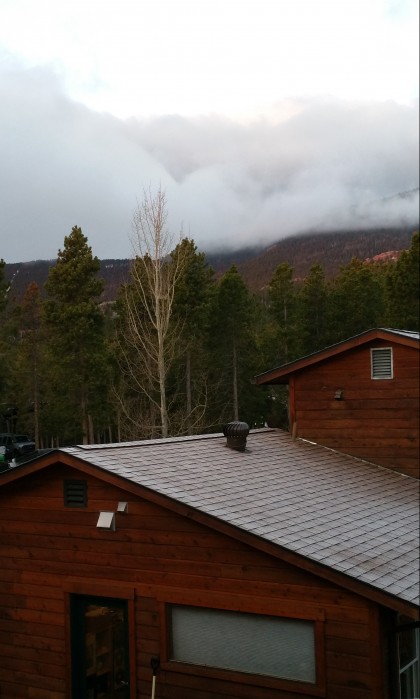
The last day of spring. Solar panels covered. Roof covered. Driveway plowed. 16-24 inches of new snow Friday night through yesterday. Delightful, but hardly springlike. In our spring fantasies, that is. The ones that have tulips and iris and crocus and lilacs and wisteria in them. For a mountain spring though, welcome and not unexpected.
Kate and I are still recovering from our three days of cooking and helping out at Beth Evergreen. Geez. Still, we have the time and the dogs have the patience. This pack anyhow. Vega would not have let us sleep in like Kep, Gertie and Rigel do. She had very clear ideas about when to go to sleep and when to wake up.
We spent most of yesterday admiring the falling snow. A snow globe day, refreshing and beautiful.
9 days ago
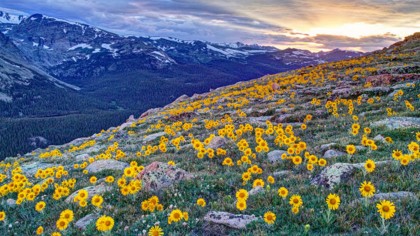
Still learning the mountains, how they change. Snow. Light. Rain. Fall. Flowers. Rapidly flowing streams. Clouds. Freeze and thaw. Fire. The animals they nurture move in and around and on them. Night and day. The stars and the moon. The sun as it arcs across the sky. All wonderful, all different.
In one of the sessions with Rabbi Jaffe a member of the board referred to the Beth Evergreen folk as mountain Jews. I liked that. I’m a mountain pagan, a mountain docent, an old man of the mountain. And a fellow traveler with the mountain Jews. Welcome to the journey.
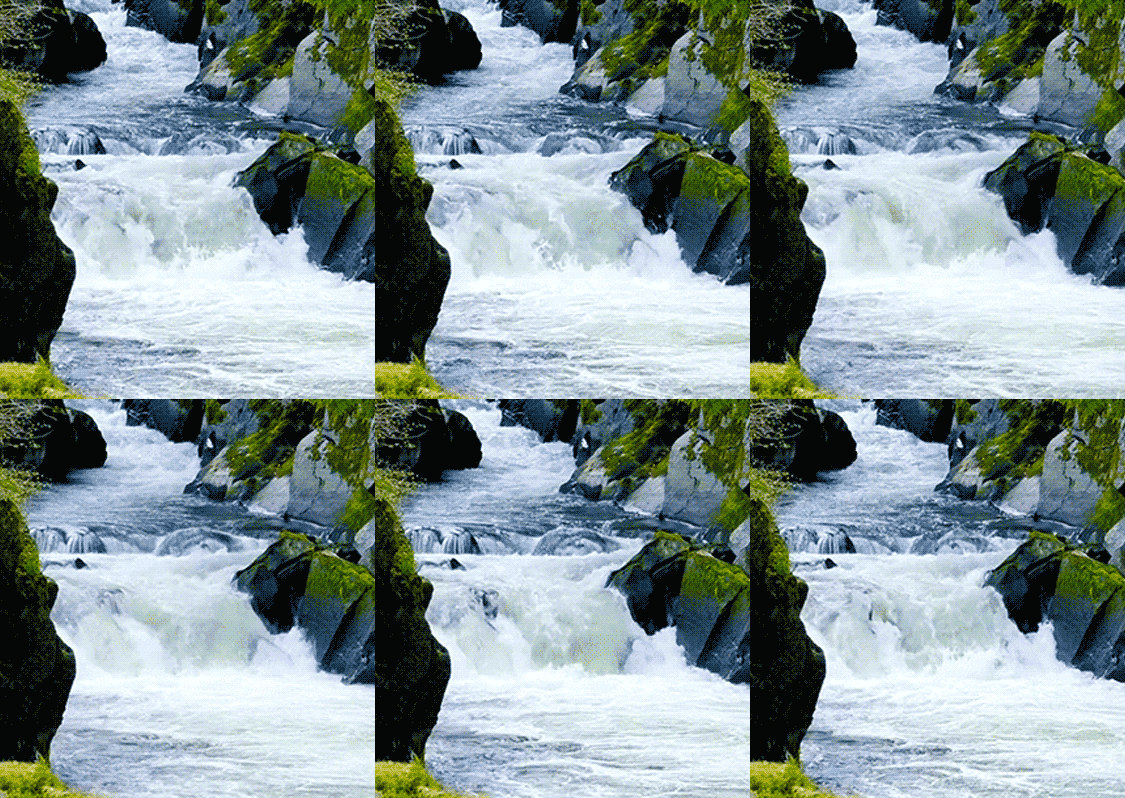
The mountain streams we see regularly: Shadow Brook, Maxwell Creek, Bear Creek, Cub Creek have begun, a bit early, I think, their post-ice plummet toward sea level. In May these streams are often boiling, filled with snow melt and pushing the limits of their banks. On any given day driving past them as they speed downhill, down the mountain, they look interesting, worth watching for the tumult; but, in fact, these racing streams are much more than merely interesting.
They are the levelers of mother earth. They take the mighty and strip them down to size, pebble by pebble, rock by rock, chunks of soil by chunks of soil. A defining characteristic of a mountain is its imposing size, its thereness. Mountains dominate their landscape, putting up barriers to human passage that often forced the pioneers of nineteenth century America to go around them rather than over them. They seem, in the moment, eternal.
When living in or visiting a relatively young mountain range like the Rockies, no reasonable person would ever expect them to look any different than they do right now. Colorado is proud of its fourteeners, those summits exceeding 14,000 feet. Mt. Evans, for example has a summit of 14,265 feet. That’s precise. And, would you add it to a website or book or road sign if you expected it to change? No.
Near Bailey, 2015
But it will. One only has to drive east toward the Atlantic to see what’s in store for even Mt. Evans. Look at the Appalachians. Their mountain building episode (orogeny) happened around 480 million years ago. When it was done, the Appalachians stood as tall as the contemporary Rockies. The Rocky Mountain orogeny was a quite recent, geologically speaking, 80 million years ago. They too will wear down.
In the spring we see this process at its most obvious as mountain streams from every summit in every range of the Rocky Mountains, including here in the Front Range, obey gravity and try to find the lowest points available to them. Of course, the streams are not the only process at work. Drive on Highway 285 out of Conifer, as we do often going down or returning from Denver, and you will see large steel mesh hanging over some cliffs. In other places there are bolts driven into the side of rock faces, giving them a slightly Frankensteinian look. In other spots massive retaining walls of concrete encase an especially troublesome chunk of mountain.
These CDOT efforts are not always successful, witness the many Watch for Falling Rocks signs sprinkled throughout Colorado. Freezing and thawing splits the rock faces and they come tumbling down, creating talus or road obstructions. Just this last year, near Glenwood Springs, a large boulder broke loose from its millions of years long position and crashed down on an SUV on I-70, killing the driver. Winds, too, often reaching high double digit speeds, also wear away the rock.
These forces are slow, miniscule in appearance, but massive in their results over long periods of time. When driving by a mountain stream in full force, remember the Appalachians. They’re coming, but not soon, to a Rocky Mountain range near me.
Today I’m making chicken noodle soup and Kate’s making Vietnamese pho. We’ll serve this at a Beth Evergreen leadership dinner for Rabbi David Jaffe, author of Changing the World from the Inside Out, a Jewish Approach to Social Change. Along with our friend Marilyn Saltzman, chair of the adult education committee, who is making a vegetarian squash soup, we’ll provide the soups for a soup and salad meal. I really like this low key involvement. It feels manageable.
Although. I am hoping that Rabbi Jaffe’s time here at Beth Evergreen, tomorrow through Saturday as a visiting scholar, will spur the creation of an activist group focused on some form of response to the Trump/oligarch era. In that instance I’m willing to move into a more upfront role, though I would prefer to remain a follower.
Then, there’s the Sierra Club. I wrote here about my excitement with Organizing for Action, Conifer. That was back in January, I think. Lots of people, lots of energy. Good analysis. I thought, wow. Here’s my group. Then, I never heard from them again, my e-mails went unanswered. Weird, but true. Weird and disqualifying for a group that’s organizing political work.
So I renewed my effort to connect with the Mt. Evans’ local group of the Rocky Mountain Chapter of the Sierra Club. Colorado seems to work more through these regional clusters than as a whole. There are nine of them, covering the entire state. The Mt. Evans’ group includes our part of Jefferson County, Clear Creek County and a northern portion of Park County. It’s titular feature, Mt. Evans, is a fourteener (over fourteen thousand feet high) which has the highest paved road in North America leading to its summit. According to locals here it’s also the weathermaker for our part of Conifer.
I finally made it to a meeting a couple of weeks ago. When I came back, Kate said, “You seem energized.” I did. And, I hadn’t noticed. Something about that small group plugged me back into my reigning political passion of the last six or seven years: climate change. Oh, yeah. With OFA I’d tried to head back toward economic justice, my long standing motivation for political work, dating back to the UAW influences I picked up as a teenager in Alexandria. Guess the universe understood me better than I understood myself. Not much of a surprise there.
My mind began ticking over, running through organizing scenarios, figuring out how we could (note the we) raise the visibility of the Mt. Evans group, gain more members, influence local policy. This is my brain on politics. I might be willing to play a more upfront role here, too, though I want to explore other ways of being helpful first.
Anyhow, between these two, I’m sure I’ll get my political mojo working in some way. And that feels good. Want some soup?
Spring, within 6 days of Beltane. Yesterday. Thunder snow. Took Gertie by surprise. Her eyes flicked from side to side, then she moved under my computer while I worked. And stayed there until we went downstairs. The solar panels have a fluffy white cover and some 16″ of new snow is predicted for the weekend. A poster on a local website said spring up here doesn’t come until Mother’s Day is past and the aspens have leafed out. Mid-to-late May. Seasonal definitions get a workout here in the mountains.
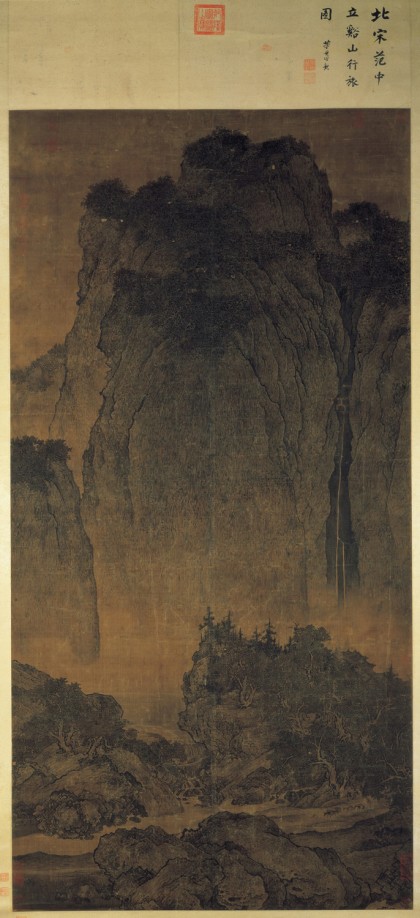
Fan Kuan, Travelers Among Mountains and Streams. Early 11th century, Song Dynasty
I may have found a way back into the art world, one I can sustain even from here on Shadow Mountain. A couple of weeks ago I decided to add links to several prominent museums to my bookmark bar: the MIA of course, the Chicago Art Institute, the Met, the Vatican Museum, the Uffizi, the Asian Art museum in San Francisco, the Getty Open Content site and the Google Cultural Institute. I’ll probably add more.
This started as an effort to collect places from which I could draw interesting images for Ancientrails. Many of these museums have made their collection’s images or significant portions of them available as open content. As far as I know, the Rijksmuseum in the Netherlands was the first to do this thoroughly. Every image on this museum’s website can be downloaded, used in any way. This even includes uses like those of Richard Prince, the well known appropriater of other folks’ work to create his own.
You may recall that I got myself in a bit of a twist over just this issue last year, so I’ve been eager to find image sources that won’t send me threatening letters from their lawyers. This growing movement among museums seemed like a solution. What better images could I find than great art?
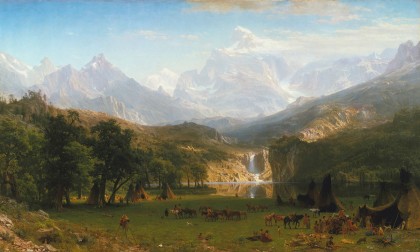
Albert Bierstadt, The Rocky Mountains, Landers Peak. 1863 Fogg Museum, Cambridge
Then, while poking around on these various websites, I clicked on the Google Cultural Institute. On its home page it has various teasers to get a viewer to go deeper. One of them up at the time I visited was a collection of works on mountains, some 4,000 +. Aha. Mountains. In art. I live in the mountains. There could be something here.
Yes, it occurred to me, I could investigate art focused on mountains. Hokusai’s “Views of Mt. Fuji.” Fan Kuan’s “Travelers Among Mountains and Streams.” Bierstadt’s views of the Rockies. And so many more. This could enrich my experience of my home terrain and provide a vein of exploration, a way to study art again with a purpose. Not to mention that I flirted briefly with the idea of becoming the Mountain Docent. This idea could add a double entendre to mountain docent.
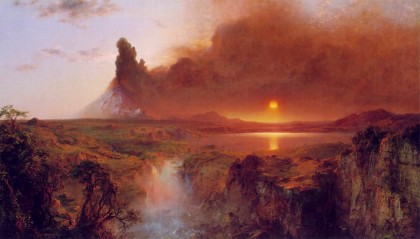
Cotopaxi, Frederic Church, 1862
We’ll see if the idea sticks, but right now I’m excited about it. It connects well with the notion of becoming native to this place, too, and could serve as a resource for reimagining faith.
As I turned the idea around in my mind, it struck me that I have an intimate knowledge of another form of landscape, too: agriculture and horticulture. So, I may expand this project to include images of farming, of fields, of gardens, of seasonal change, the experiences of which led me to immerse myself in the idea of the Great Wheel.
Not sure where this will take me, but right now I’m pretty excited about it.
Yesterday on my Lego store, IKEA, Dairy Queen outing-all in the interest of Ruth and Gabe-I saw an unusual and unusually striking sight. While waiting for the stoplight at Chester and Yosemite after visiting IKEA, a flash of mylar caught my eye. In a parking lot across Yosemite I saw a person struggling, or at least that’s what I thought it was, to put shiny objects into their vehicle. Since the same shapes moved in, then came back out a couple of times, I realized it wasn’t going well. Then, just as most of them disappeared inside, one broke loose and drifted up, up, up into the air.
It was a silvery colored mylar A. As it lifted out of reach, the person at the vehicle looked up. Turning once onto its side, it became a triangular aircraft, life a B2 bomber. Then some current of air turned it again and it faded away toward the north, a clear and flashy A, signaling itself as a familiar part of the alphabet on a journey all its own, freed from both words and the earth.
Under the full passover moon Kate and I drove over to Mt. Vernon Country Club for a community seder. There were about 60 people there, sitting in groups of 8 around circular tables. The dining room looked out to the south and east. As the sun set, the lights of Denver began to sparkle around Table Mesa in the distance.
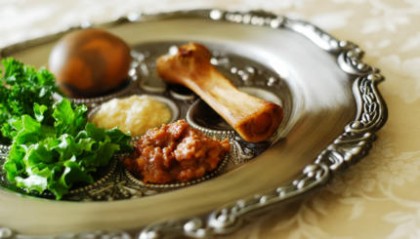
The tables had platters of oblong chunks of gefilte fish, a bowl of haroset (a sweet mixture that symbolizes the mortar used by Hebrew slaves in Egypt), a small bowl of pink grated horseradish, a stack of matzo covered in a linen napkin, and a seder plate with the traditional passover items: lamb shank, boiled egg seared over a flame, parsley, haroset and maror (horseradish). And an orange. The orange is a recent addition to the passover plate-at least for Reconstructionists-and it symbolizes the fruitfulness of women’s contributions in Jewish history and in the present.
The haggadah, the telling of the story, contains all the prayers, readings, songs and explanations for the evening. The seder (order) of the passover celebration has 15 steps, symbolizing the 15 steps that led up to the Temple in Jerusalem. The Temple passover celebration had two priest on each of the fifteen steps and they sang the passover ritual as worshippers brought up their lamb for sacrifice.
The evening followed this ancient ritual, commemorated in Christian churches as the last supper and ritualized among them as communion or the eucharist.
Dirk-Bouts-The-Feast-of-the-Passover
As Kate and I got out of the car at Mt Vernon, a young woman asked, “Is this the place for the seder?” It was, I said. Her name was Leah. We walked in together, past the slightly ridiculous pretension of the lobby, its fireplace and the sitting room with the observation deck like windows. Down a set of stairs was a lower level under the sitting room.
We chatted casually with Leah. The room was almost empty then, not many had come. We were early. I went out on the big deck that overlooked Table Mesa and Leah followed. She knew Rabbi Jamie in the synagogue he served previously in Buffalo, New York.
“I’m bi-polar and I went on a road trip, trying to find someplace new. I went to Florida, drove all over and came this way but decided I couldn’t cross the mountains in the winter, so I ended up working in Boulder.”
Oh. I have bipolar illness in my family. Two aunts hospitalized, one died in the state hospital, another came out, but under heavy medication. “Oh. That’s good. Well, I mean it’s not good that you have bipolar in the family, but it’s good you understand.”
And I do. It was as if this ancient ritual, one that gathers the tribe across the world to honor its release from bondage, had found a member of that tribe who also belonged to mine. Leah sat next to me and we dipped our little fingers in the wine, the parsley in the salty water, the tears of those in bondage, ate our matzo with haroset and made our Hillel sandwiches, haroset and maror between two slices of matzo.
The ways the universe conspires with us: it lets us paddle along the river of time for a bit, then puts us through some rapids, lets us drift into a clear pool, but always moves us forward through the Grand Canyon of our life, and sometimes helps us to land on shore for awhile, perhaps in a spot that looks familiar, yet is always new. At 70 the river which carries me is much closer to the Gulf of All Souls than it was in my twenties, but unlike then, I can see through the translucent canyon walls to the canoes of my friends, family and new acquaintances.
There are even moments, like an April passover meal in the Rocky Mountains, when we come together on the strand of our common journey, our lives and our rivers joined for a moment. We travel apart but we are not alone.
Well. The sun is out, the snow has melted on the roads and it’s a cheery day here on Shadow Mountain. The changes here are fast and often extreme.
Kate and I went to a cooking class for a passover meal last night and stayed out until 9:30. That’s late for us since we turn in between 7 and 8 pm. I remember back when I was young. I could stay up until, you know, 10 pm, 10:30 pm, no problem.
The cooking class featured chicken breasts, a very surprising quinoa cake, asparagus, crepes with a haroset like mixture of sauteed apples, pears, dates and nuts and a coconut chocolate confection for dessert. There were fifteen of us and we spent the time wandering from dish to dish, helping with this or that.
I helped set up. I’m really liking being in a religious community and not having a leadership role. Helping put out tables, arrange chairs, set out plates, glasses and silverware feels good.
We’ve seen lots of elk and mule deer this week, much more than in the month or two prior. Last night at the cooking class there were three female elk dining on the grass outside while we learned the secrets of egg whites and egg yolks inside. Just all us mammals getting what we need from our environment.
“It is easy to see the mountain in the distance. It is not so easy to see the mountain on which you stand.”
Masks. I’ve been using the kabbalistic notion of masks-personas, complexes, yes, but somehow mask makes thems easier to discover. For me. It’s simple, at least in concept. We wear a mask all the time, often perhaps usually unconsciously. The kabbalistic idea taught by Rabbi Jamie Arnold encourages us to recognize our masks and get to know them with the ultimate goal of being able to take off and put on masks at will.
Masks may have a pejorative connotation for you as concealers of the “true” person, but this understanding suggests that our pure soul, that part of us perfectly attentive to the universe, needs no mask. A Christian might call this pure soul the imago dei. Whatever it “really” is, it is the Self that nests within the necessary apparatus for connecting with the world. It cannot touch the world by itself. When it comes into contact with the world, a mask forms. This enables the Self to see partially rather than comprehensively. (I made up this last idea, but it makes sense to me as far as I understand the concept.)
As I said in a previous post, many masks are obvious: devoted husband, father, brother, scholar, timid business person, brash businessperson, prophet, lover, athlete, lawyer, plumber, mother, sister. Part of the discipline is to stop, to take a moment, and ask what mask am I wearing right now?
For instance, at the moment I’m wearing my Ancientrails mask, a writer, blogger, self-revealer, journaler. I’m also wearing my naturalist, photographer mask which gets called up as Black Mountain goes through its morning changes. My Ancientrail’s mask is introspective, yet also expressive. It does conceal much of my Self because it links to specific and partial aspects of who I am. But. It also reveals. It reveals in the quite literal sense of putting these words on the page, but it also reveals that certain part of who I am when I have it on.
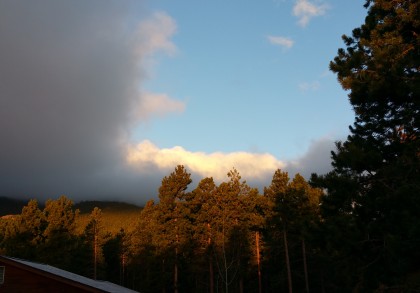
My naturalist, photographer mask came on me several times as I wrote this because Black Mountain’s changes this morning were strikingly beautiful. This mask took me out of Ancientrails, out of the inner world, and into the Front Range, into the world of mountains and light. I found myself gasping several times as the light changed this 10,000 foot peak’s face to the world, its mask.
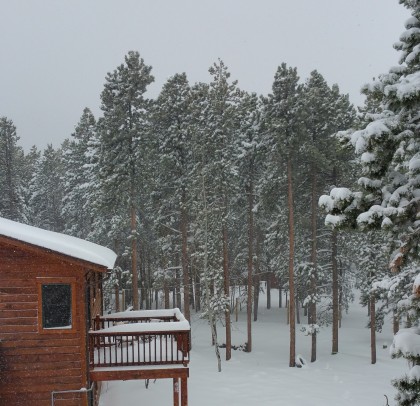 The last day of spring. Solar panels covered. Roof covered. Driveway plowed. 16-24 inches of new snow Friday night through yesterday. Delightful, but hardly springlike. In our spring fantasies, that is. The ones that have tulips and iris and crocus and lilacs and wisteria in them. For a mountain spring though, welcome and not unexpected.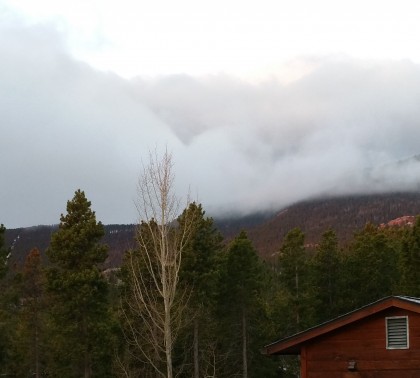


 Today I’m making chicken noodle soup and Kate’s making Vietnamese pho. We’ll serve this at a Beth Evergreen leadership dinner for
 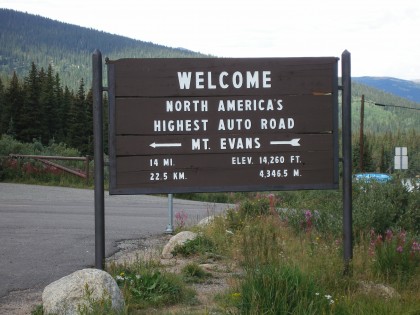 So I renewed my effort to connect with the Mt. Evans’ local group of the Rocky Mountain Chapter of the Sierra Club. Colorado seems to work more through these regional clusters than as a whole. There are nine of them, covering the entire state. The Mt. Evans’ group includes our part of Jefferson County, Clear Creek County and a northern portion of Park County. It’s titular feature, Mt. Evans, is a fourteener (over fourteen thousand feet high) which has the highest paved road in North America leading to its summit. According to locals here it’s also the weathermaker for our part of Conifer.



 Well. The sun is out, the snow has melted on the roads and it’s a cheery day here on Shadow Mountain. The changes here are fast and often extreme.

