Category Archives: Mountains

Close to Home

Imbolc                                                 Black Mountain Moon

This night, a heavy wet snow. Woke up to three inches of thick white covering the deck. As I do each time it snows, I clear the deck first thing, even before getting the dogs. This is important because the snow compacts in front of the door and the dogs  track in the snow from the deck. The stone floor can become slippery beyond our long entrance rug. Clearing the deck fixes most of that.

There was, this time, less snow on the driveway than on the deck. It doesn’t matter out there much at all since today will be 47, Saturday 57 and Sunday 65. The snow will be gone, probably by later today, certainly by Saturday.

I went for my first mountain hike yesterday, following the Upper Maxwell Falls trail into the Arapaho National Forest. Even though intuition told me I would need my Kahtoola spikes, the day was sunny, almost 50 so I put on my Keens, grabbed my backpack with water, compass, map and journal and drove the mile or so to the trailhead.

Where I promptly fell, slipping onto my butt. Sigh. Pay attention to yourself, I said. To myself. Hiking poles, which I had also considered, but left hanging in the garage right next to the truck, would have helped, too.

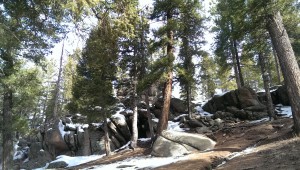
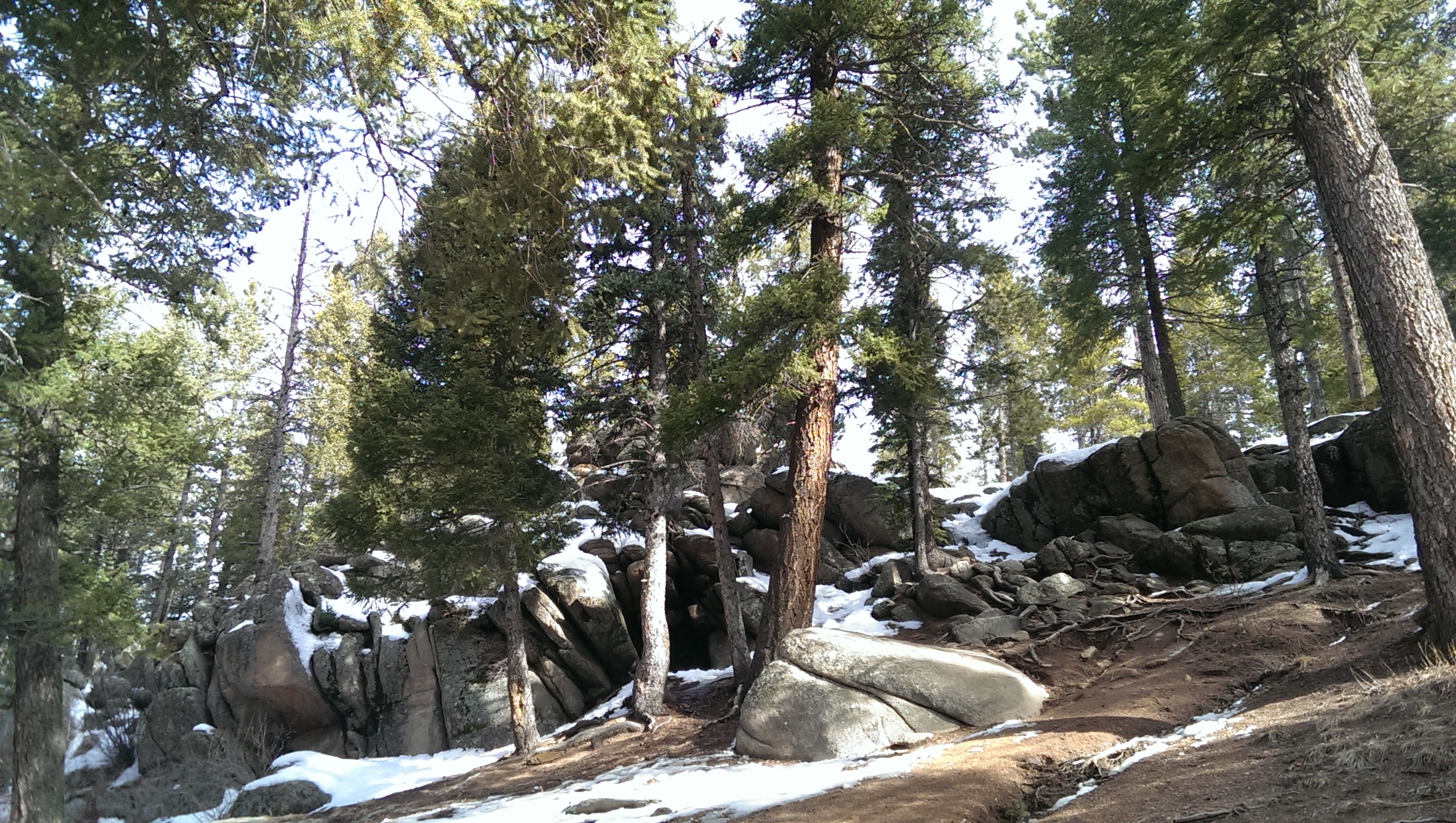
IMAG0977This is a popular trail and the love it had seen over the last few weeks had created stretches of the trail that were solid ice almost the width of the trail. Fortunately there was crunchy snow just off the trail so that walking on it I could make it some ways back into the woods. About 3/8’s of a mile in, though, the trail turned steeply up and narrowed. This section was not ice, but solidly packed snow that had melted then refrozen. May as well have been ice. In the gear I had for the day that was not passable, so I turned back.

Maxwell Creek burbled under its lacy ice and snow covering. There was an off trail path across the creek and up to a mostly snowless outcropping of rock, a small cliff and several lodge lodgepole pines (above). I wandered over there and began my nature journal sitting back against the large pine.

This is, I think, still on Shadow Mountain though my USGS topographical maps have not yet come in the mail.

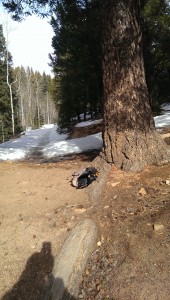
Also near the Upper Maxwell Falls trail

This was an exploratory hike, one to assess what I would need when I begin making this a regular habit and for that purpose it worked just fine. Lessons: snowshoes would have worked. To hike in these conditions spikes on the boots plus hiking poles make sense. I’ll need a good pair of winter hiking boots. Learn more about the compass and its use with maps. I need a better back pack and a small camera to take along would be good, too. The nature journal will be another pathway into becoming native to this place.

As I wrote the other day, the combination of spring weather, settling in to the house and acclimatization have made me eager to get out in the woods. And so I have started. This coming winter I’ll be out there with snowshoes and spikes, poles and pack. Now that spring and summer press against the remnants of winter it will be hiking boots, poles and pack. Couldn’t be happier. Like a long running vacation in the Rocky Mountains.


Living in the Mountains

Imbolc                                                 Black Mountain Moon

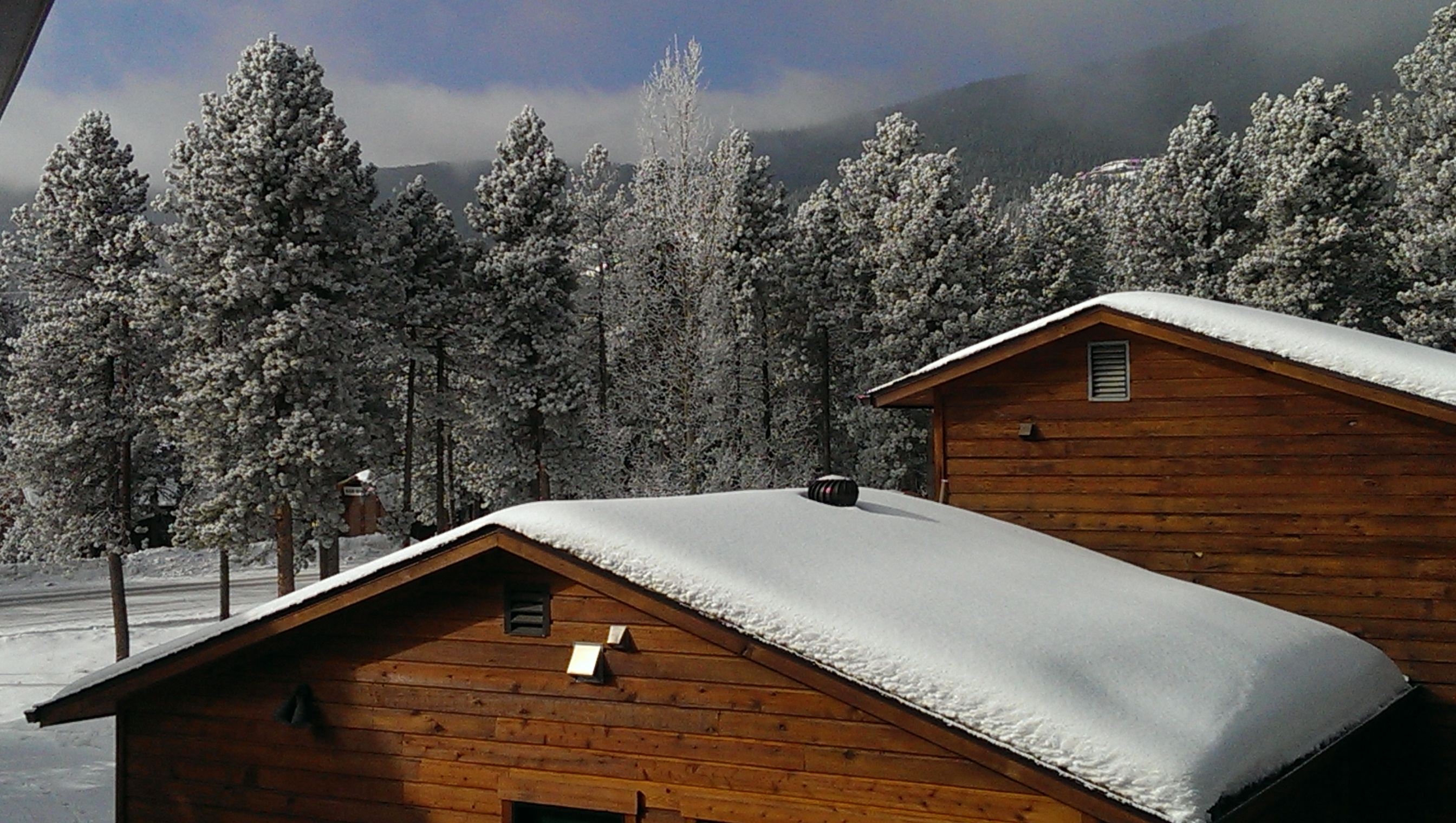
An early March Snow. Looking over our roof toward Black Mountain
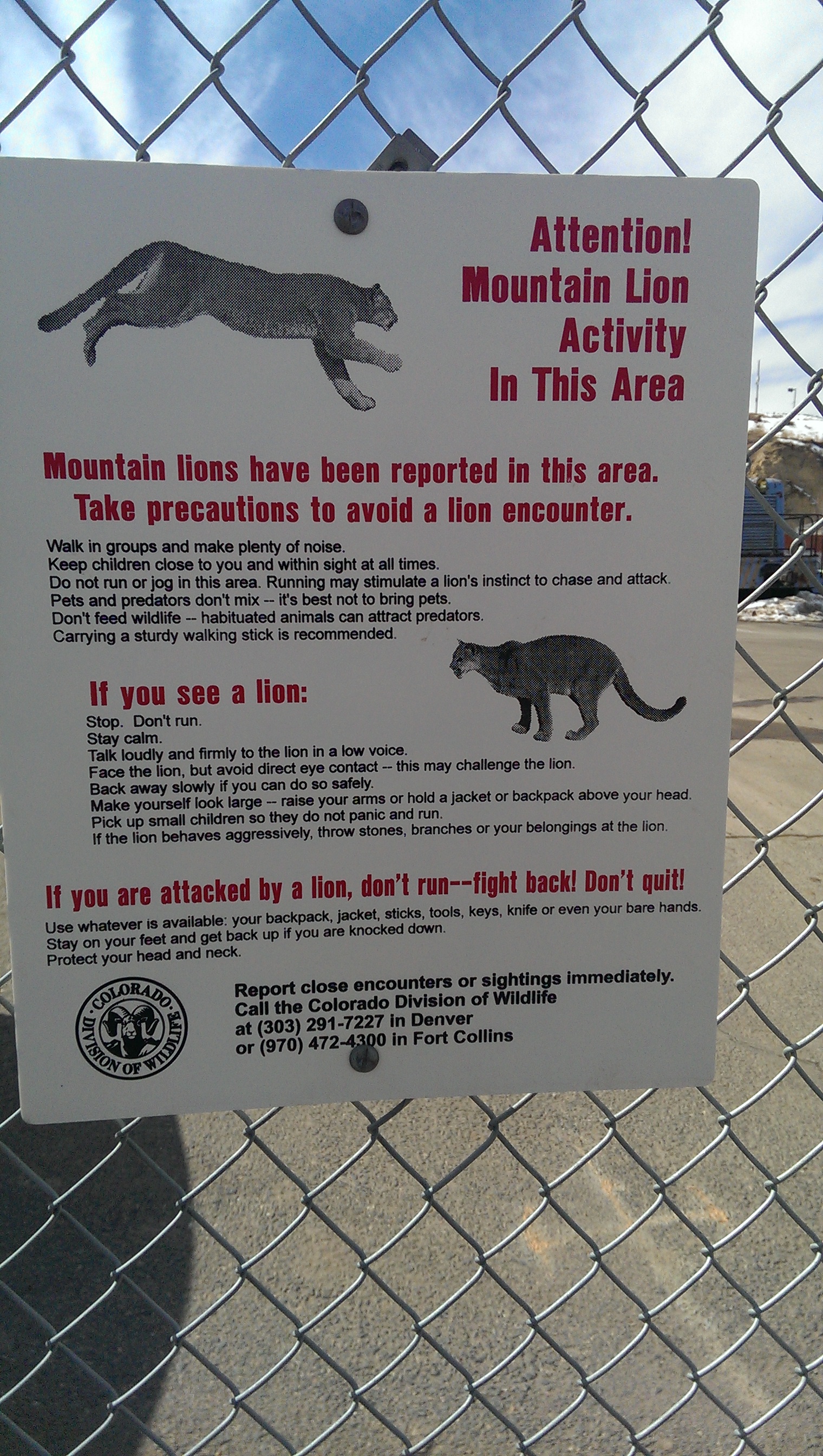
A warning at the Colorado School of Mines Museum parking lot
Off the Upper Maxwell Falls trail in the Arapaho National Forest a mile plus from our house
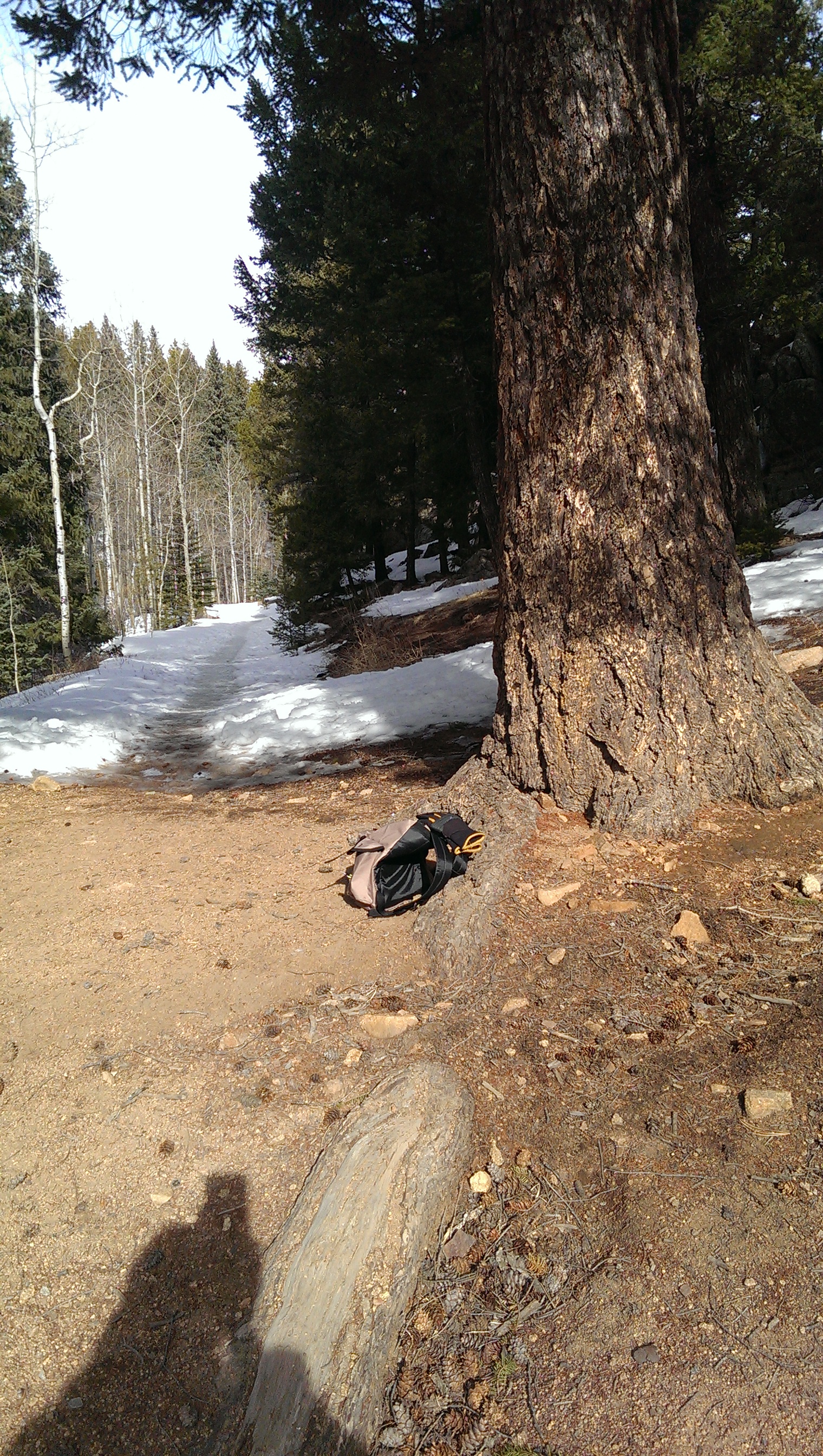
Also near the Upper Maxwell Falls trail


Custom Boots?

Imbolc                                                     Black Mountain Moon

OK. There are certain things, call them small trials, that come into everyone’s life. Today we’ll discuss getting hiking boots for the men’s size 7, wide foot. REI had “nothing in that size.” Just called Custom Foot in Englewood, an outfit that specializes in, well, custom fits and they said, “Well, we’d like to help you, but we can’t stock that size just waiting for you to call.” This was said in a sympathetic manner with a deprecating, sorry about that chuckle. End result. No boot.

So I’ve started looking at the world of custom made hiking boots. The advantage with these boots is they fit. And if there’s some problem, they’re fixed. Couple of disadvantages. Time to get them. Couple of months, maybe more. Price. They vary but they’re about twice to three times the regular boot. Of course, these will likely be my last hiking boots. Unless, of course, Vega eats them as she did my Timberland boots, but at these prices I’d be much more careful with them.

What’s happening is this. The cardboard has diminished. The moving in has slowed, acceptable for now, with another spurt to come once warmer weather sets in. The garage, for example. The acclimatization process seems to have peaked, not totally comfortable all the time, but close enough. Sunshine and warming temperatures have given me the itch to get out and start exploring the two National Forests that abut Conifer: Arapaho and Pike. But I need decent boots. Of course, I don’t need them to just get out and wander around a bit, but if I want to do any extended day hikes, I’ll want good quality boots.

So. Back to that small trial.

Becoming Native to This Place. More.

Imbolc                                         Black Mountain Drive

Four Native Plant Master classes educate new learners in Colorado’s fauna: one for the high plains, one for the foothills and one for the montane eco-system where we live. The fourth, plant sketching, will support the nature journal I’m starting this week.  The Friends of the Colorado Geology Museum offers lectures and field trips that focus on Colorado’s physical features. Geology Underfoot, an excellent geology primer on the Front Range, suggests 20 self-guided field trips to see instances of particular developments over geological time. Wild Food Girl presents opportunities to hunt food in the Rockies.

How to saturate myself with the Old West, the mining and ranching histories here, that’s a challenge that lies ahead though History Colorado provides opportunities.

It’s an exciting time, full of information. Lots to do.


A View From Shadow Mountain

Imbolc                                        Black Mountain Moon

The world has receded. The old battles have become less clear. Keystone seems far away. So even the fracking arguments common here in western Colorado and in Weld County. The civil rights focus at Selma, Ferguson, even in Denver, distant. Not sure whether this is an inevitable part of transitioning to a new place, a loss of focus on what used to be, or an age related pulling back, letting the young warriors have their time. It’s as if a fog, not dense, but real has crept up Shadow Mountain, or, maybe it’s just the Shadow itself, the mountain’s long shadow, but the events occurring far below on the plains are less visible, perhaps even less real.

Minnesota now lies at an impossible remove, once again that cold place holder in the central northern U.S. The house in Andover is an abstraction, an asset, a factor on our balance sheet. Like owning a mutual fund.

Here’s what is visible: Kate. Ruth, Gabe, Jon, Jen, Barb. Vega, Rigel, Gertie, Kepler.  The mountains and their geology, the plants native to Colorado. The West. A new novel, Ovid, Caesar, a thread now, a strong thread of wondering how all the information available could be organized. The house. Continued settling in. The grounds and a small potential garden, the bees next year. Near things, you could say, matters of the heart and matters of the immediate physical environment.

This feeling is new. But, permanent? Hard to know.

Oh, Yeah. Fox!

Imbolc                              Black Mountain Moon

We have fox here and some use Black Mountain Drive as a route from here to there. Late this afternoon Rigel was at the window, looking out toward the road when a fox ran by. Rigel, who is feral herself, gave a prey bark and the others responded. Soon the house filled with barking and yipping, running for the front door, the back door, anyway to get at the fox.

Rigel and Vega have coyote hound and wolf hound blood. This animal was in the prey category. Smack in it. And they felt the need. You could see it activating their attention, their ruffs, their dogness. This was the moment they were made for.

Much as I would have liked to let them run the fox down, or give it a try, the danger to them would have been too great. (cars, angry neighbors, getting lost) So they had to forgo the hunt.

Even a half an hour later though they were still smiling, prancing, looking 100% dog qua dog. Not pet. Not domesticated, just animals cued for what their life purpose is.


Learning Colorado

Imbolc                                         Black Mountain Moon

Signed up for 4 Colorado Native Plant Master programs: one in the foothills, one in the montane eco-system (ours) and one in the high plains. 3 of these are 3 session 8:30-12:30 classes. The fourth is a two session, 9-3, course on plant sketching. Don’t really want to qualify for the Native Plant Master program since it has requirements for volunteering that I don’t want to fulfill, but I want the content and the chance to meet some people involved in botany here.

All part of becoming native to this place. Starting this week I plan to keep a nature journal, hand-written, a record of our yard, hikes, these courses, geology lectures and field trips, meteorology notes. I’m not much of an artist, but I think with some practice I can draw plants and animals, maybe sketch geological features, at least well enough to call them to mind when I review the entries.

We drove into Evergreen for our business meeting at the Wildflower Cafe. It was good to see those folks again. Afterward we drove around Evergreen a bit, going out to the I-70 entrances and seeing in the distance snow covered peaks. Our mountains around here have snow, but are not snow covered.


Happy Purim!

Imbolc                                         Black Mountain Moon

A sunny, 55 degree Friday here on Shadow Mountain. It has knocked on that door behind which hides spring longing. One thing I look forward to is a mountain spring, but I know it will come when it comes. Still, these day make me imagine what our neighborhood, our drive, our mountain will look like without snow cover, with the aspens leafed out.

Today I went back into Ovid for the time in several months, delighted to see that my skill level has picked up considerably. I’m still far from facile, but I can see the plateau before it from where I stand now.

Then this afternoon I wrote another 1,500 words on Superior Wolf. This version, this is my fourth or fifth restart, going back to 2002, seems to have the push necessary to get to the end.

Kate’s gone into Denver to celebrate Purim* at Temple Micah. She made hamentashen, the triangular goodies associated with this holiday.


*The festival of Purim is celebrated every year on the 14th of the Hebrew month of Adar (late winter/early spring). It commemorates the salvation of the Jewish people in ancient Persia from Haman’s plot “to destroy, kill and annihilate all the Jews, young and old, infants and women, in a single day.”


The Rio Grande Rift

Imbolc                                                Black Mountain Moon

Into the Colorado School of Mines last night, its Museum of Colorado Geology, for a second lecture to the Friends of the Museum. This one: Whither the Rio Grande Rift?

The significance of the title escaped me until Vince Matthews, former Colorado State Geologist, explained that the rift was a spreading of the earth’s crust, a spreading that thins the mantle and increases volcanism and creates faults. Then it hit me. Oh, a rift. Like the Olduvai Gorge in the horn of Africa.

There are three faults within the Colorado portion of the Rio Grande Rift that made it onto the USGS hazards map, one believed capable of producing a 7.5 magnitude quake and another of producing a 7.0 quake. Logarithmic scale. Those would be powerful and they would come in the middle of Colorado, toward the New Mexico border.

He used two terms in this dense, finely argued lecture that were completely new to me: graben and lineament.

Graben: In geology, a graben is a depressed block of land bordered by parallel faults. Graben is German for ditch or trench.


Lineament: A lineament is a linear feature in a landscape which is an expression of an underlying geological structure such as a fault. Typically a lineament will comprise a fault-aligned valley, a series of fault or fold-aligned hills, a straight coastline or indeed a combination of these features.

The focus of his presentation was the true northern extent of the Rio Grande Rift. Here’s a map that shows its extension in the consensus view (more or less). In this map you can see the Rio Grande rising in southwestern Colorado, then flowing through the San Luis basin into New Mexico and then onto its more familiar location as a major boundary feature between the US and Mexico.

Vince said that current thinking took the Rio Grande Rift as far as Leadville.


Leadville in this map is the first black lettered city above the C in Colorado. I use this map to show you the San Luis Basin (the light tan opening to the left of Highway 25 and starting at the New Mexico border. The San Luis Basin is a major feature of the Rio Grande Rift as it comes north out of New Mexico.

Matthew’s argument extended the Rio Grande Rift considerably further north and then hypothesized a turn from its primarily north/south axis to an east/west one. This map of the Colorado Plateau can be used to illustrate his argument:


Matthews extended the boundary of the Colorado Plateau east to include the Rio Grande Rift, then proposed that the rift extended east/west toward the area here marked as the White River Plateau. He based his argument on indicators of a rift zone (which I won’t go into here) and on an experiment on a clay model of the Colorado Plateau.

In essence he argues that the Colorado Plateau is a tectonic feature that has been rotated clockwise. When asked how that could have happened, he said, “I don’t know.” But, if you imagine the Plateau as a piece of the earth’s crust that has physical integrity, then a motion pushing up on its southwestern edge would turn it clockwise. One of the other geologists in the room proposed the San Andreas Fault as it developed. (I got lost right here, but I followed the argument up to this point.)

Very interesting. These lectures are helping me orient myself to the unusual topography of Colorado and some of forces that shaped it.

BTW: I loved Matthew’s description of two cinder cones as “very young.” They were only 640,000 years old. Puts 68 in a very satisfying context.

Aurora

Imbolc                                                          Black Mountain Moon

At 6:00 a.m. now the sky has gone from black to a whitish blue, a few stars still visible. When I go to bed, usually around 9:00-9:30 p.m. these days, night has fallen sometime ago, but on the nights around the full moon, the land in our back is a wonder. The moon shine comes in from the south-south east and lights up the snow with its silver glow. It also creates dark, soft shadows around the lodgepole pines. If I follow the pines to the sky toward which they point, I see stars: Cassiopeia and others in her vicinity.

Now, in the morning, Black Mountain slowly emerges from indistinct mass to large, pine-covered height, 10,000+. Sometimes, like today, it has a streak of cloud behind it. Not often, but sometimes, too, it has a lenticular cloud giving it an atmospheric halo.

Shadow Mountain, where we live, only reaches 9,600 feet and we’re about 800 feet below that, so we look up to our taller neighbors. Beyond Black Mountain, but not too far, is Mt. Evans, a fourteener.

Mt. Bierstadt is another fourteener. Those of you interested in art may recognize it since it was named after the Hudson River School painter, Albert Bierstadt. He painted this of another Colorado fourteener, Long’s Peak.