Spring New (Rushing Waters) Moon
 Today I’m making chicken noodle soup and Kate’s making Vietnamese pho. We’ll serve this at a Beth Evergreen leadership dinner for Rabbi David Jaffe, author of Changing the World from the Inside Out, a Jewish Approach to Social Change. Along with our friend Marilyn Saltzman, chair of the adult education committee, who is making a vegetarian squash soup, we’ll provide the soups for a soup and salad meal. I really like this low key involvement. It feels manageable.
Although. I am hoping that Rabbi Jaffe’s time here at Beth Evergreen, tomorrow through Saturday as a visiting scholar, will spur the creation of an activist group focused on some form of response to the Trump/oligarch era. In that instance I’m willing to move into a more upfront role, though I would prefer to remain a follower.
Then, there’s the Sierra Club. I wrote here about my excitement with Organizing for Action, Conifer. That was back in January, I think. Lots of people, lots of energy. Good analysis. I thought, wow. Here’s my group. Then, I never heard from them again, my e-mails went unanswered. Weird, but true. Weird and disqualifying for a group that’s organizing political work.
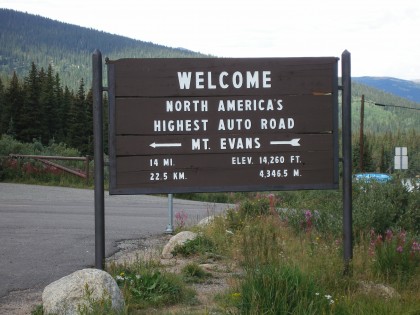 So I renewed my effort to connect with the Mt. Evans’ local group of the Rocky Mountain Chapter of the Sierra Club. Colorado seems to work more through these regional clusters than as a whole. There are nine of them, covering the entire state. The Mt. Evans’ group includes our part of Jefferson County, Clear Creek County and a northern portion of Park County. It’s titular feature, Mt. Evans, is a fourteener (over fourteen thousand feet high) which has the highest paved road in North America leading to its summit. According to locals here it’s also the weathermaker for our part of Conifer.
I finally made it to a meeting a couple of weeks ago. When I came back, Kate said, “You seem energized.” I did. And, I hadn’t noticed. Something about that small group plugged me back into my reigning political passion of the last six or seven years: climate change. Oh, yeah. With OFA I’d tried to head back toward economic justice, my long standing motivation for political work, dating back to the UAW influences I picked up as a teenager in Alexandria. Guess the universe understood me better than I understood myself. Not much of a surprise there.

My mind began ticking over, running through organizing scenarios, figuring out how we could (note the we) raise the visibility of the Mt. Evans group, gain more members, influence local policy. This is my brain on politics. I might be willing to play a more upfront role here, too, though I want to explore other ways of being helpful first.
Anyhow, between these two, I’m sure I’ll get my political mojo working in some way. And that feels good. Want some soup?

 My ratzon for political work, which I critiqued in a past post, needs sharpening, focus. Part of my problem with Fighting Trump, my previous title for articles I saved in Evernote, was, I realized, that being against something is a weak ratzon for me. I need to be for something and the Trump resistance tends to focus on opposing him. He demands opposition and resistance, no question about that, but I need to be working toward a just society, an equitable society, a sustainable society, a compassionate society, not only, not even primarily, saying NO.
 Modulating the call and response occasioned by Trump era politics in my own head has proved daunting. I’m not going on a “news cleanse” or planning to ostrich myself in the several inches of snow we just got. (though that last one sounds sort of good)
 Writing can lay bare something hidden, perhaps something that needed excavation or something attached to a thread, even a flimsy thread, by which it can be pulled from the inner world. Things get lost in there, pushed behind stacks of unused memories or stored with a faulty label. Sometimes ideas once full and vibrant get partially severed from their context, crucial links of thought go missing and the idea fades away.
 Which, speaking of ideas, then links to the idea of the third phase. That quote comes from recent thoughts on the third phase. A primary wondering for me, I think for all third phasers, is this: what am I about in this last phase of my life?
 Part duty. For whatever reason I came out of Alexandria with fully formed political ideas about justice, equality, fairness. They were strong, rooted in the powerful union movement among my friend’s parents who worked for General Motors, reinforced by the liberal politics of my Roosevelt Democrat parents and then pushed toward action in the turmoil of the 60’s.
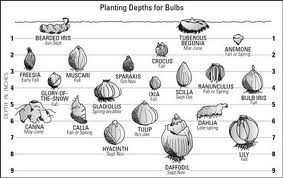 Yet it is not a true analog. Mother earth only seems to defy winter and the fallow time. It is not, in fact, death and resurrection, but a continuum of growth, slowed in the cold, yes, but not stopped forever, then magically restarted. Corms, bulbs, tubers and rhizomes all store energy from the previous growing season and wait only for the right temperature changes to release it. Seeds sown by wind and animal, by human hand are not dead either. They only await water and the right amount of light to send out roots and stalks.
 I prefer the actual analog in which human and other animals’ bodies, plant parts and the detritus of other kingdoms, all life, return their borrowed materials to the inanimate cache, allowing them to be reincarnated in plant and animal alike, ad infinitum. Does this deny some metaphysical change, some butterfly-like imaginal cell possibility for the human soul? No. It claims what can be claimed, while reserving judgment on those things that cannot.
 It is spring, I think, that gives us this hope, no matter how faint, that death might be only a phase change, a transition from this way of becoming to another. It’s possible.
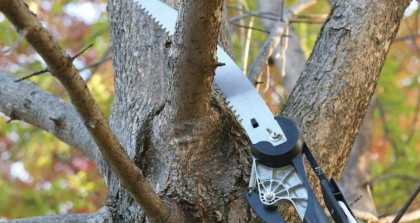 Went out yesterday with the pole saw and began the task of trimming branches on our lodgepole pines. OMG. Working that saw, always over my head, wore me out pretty fast though I did get several trees limbed. Splintered Forest rents power pole saws and I might rent one for the rest of the work.