Category Archives: Great Work

There’s No Reason to Worry, Dave

Winter                                                                     Cold Moon

Here’s an analysis in the January issue of Wired that caught my attention.  I don’t doubt that the numbers they use are right, though I haven’t confirmed them.

“It’s hard to believe you’d have an economy at all if you gave pink slips to more than half the labor force. But that—in slow motion—is what the industrial revolution did to the workforce of the early 19th century. Two hundred years ago, 70 percent of American workers lived on the farm. Today automation has eliminated all but 1 percent of their jobs, replacing them (and their work animals) with machines. But the displaced workers did not sit idle. Instead, automation created hundreds of millions of jobs in entirely new fields… Today, the vast majority of us are doing jobs that no farmer from the 1800s could have imagined.”  Wired January 2013

The argument here defines technological triumphalism, not only does technology solve all our ills, it always will.  And so it was good.

However.  Let’s go backwards to the time period before the industrial revolution when most folks still lived on farms.  I’m no romantic about subsistence agriculture having owned a farm, The (not so) Peaceable Kingdom, and engaged in intensive permaculture horticulture here at home.  It’s hard work and a bad year can literally kill you.

(Davos, World Economic Forum, A_Lunch_at_the_Belvedere)

Even so.  There’s a price to pay for salvation by the machine.  Think of it, machines take humans off the land and put them in service of making more and smarter machines.  That’s the essential argument this whole article makes.  Yes, it relieved the awful strains of serfdom, tenant farming, subsistence on increasingly smaller plots as inheritance ate up legacy lands.  But.  It created the hells of the looms, the coal age, the coal mine.  Child labor.  A cash economy where no cash spells doom faster even than failed crops.

Then there’s that relationship to the land.  We’ve removed so many people from the land, distanced them further and further to the sources of their own foods and we’ve done it via industrial processes now ruining those sources, those faraway yesterday sources.  That we cannot live without.

Technology has triumphed.  Along with its handmaiden, capitalism.  Neither of them care that they eat not their young, but yours.  Each of them assume an instrumentalist view of natural resources and human labor, seeing them both as infinite and replaceable when in fact they are neither.

I’m no luddite.  I love my computer and I look forward to a robot that can take over weeding our garden.  It’s that price.  Who tallies up the human and ecological cost of this capitalist, techno future?  Who thinks about how to reduce and when possible eliminate it?

Not the authors of articles for technology’s cheer leaders.

The Way of the Vegetative Powers

Winter                                                                  Cold Moon

Here’s an interesting story from our Singapore stringer, Dr. Mary Ellis.  She lives close by the Botanical Gardens where this tree is currently in bloom.

“The flowering Talipot Palms have been the focus of attention for the past few months at Singapore Botanic Gardens. It is a majestic sight and a lifetime treat to see the massive flowering structure.

In August 1920, Talipot seeds were introduced from the Calcutta Botanic Gardens, India. The seedlings were planted in the Palm Valley in 1925 and now after 79 years, two Talipot Palms (Corypha umbraculifera), flowered from October 2004 to January 2005.

This palm flowers only once in its lifetime, producing the biggest inflorescence in the flowering kingdom. The palm grows for 30 to 80 years, storing up energy and strength in its trunk to send out this massive inflorescence. After flowering and fruiting the plant will die. (read more)”

Living in Season

Winter                                                               Cold Moon

Winter is upon us.  Beginning to give more thought time to my Living in Season presentation for Groveland on the 27th.  The short version is this:  learning to adapt your life to the season, rather than the seasons to your life.  I mean this on at least two levels: the literal and the metaphorical.

(A seasonal round.  This is a new idea to me, but I like it a lot.)

The literal can include such things as caring for plants outside during the growing season.  Maybe in a container, a window box.  Maybe in a flower bed or a vegetable garden.  Could be an orchard or a woods.  Maybe a community garden.  Something to synch up at least part of your daily life with the emergence of plants from winter’s fallow time.

It can also include intentionally leaving time in your winter schedule for retreats, inside projects like crafts or writing or visiting friends.

Perhaps in all the seasons hiking might be part of your plan, a liturgical response similar in all seasons but changed by them in profound ways.  If you can’t hike, get someone to help you be outside some amount of time each week.  Yes, even in the dreaded middle weeks of January.

Metaphorical:  first, know which season of your life you are in.  Are you college age, in the still vigorous growth years?  Or, are you in the mature years, the years of the late growing season, the early harvest days?  Or, like me, are you in the days of the late harvest, headed toward the long, eternal fallow time?

Here, too, we can find analogical help from living in season.  When sun and rain and warm temperatures push a plant up, up, up, perhaps that time right around flowering, then it must attend as well to its roots, not forgetting the stabilizing and nutrient gathering powers of those underneath surface parts.  So, for example, when college and the world of work begins to beckon, as graduation nears and your own unique bloom begins to present itself to the universe at large, this may be a time to recall hometown, old friends, family.  Favorite hobbies and pets and places.  It may seem that these people and places hold you back, hold you down, are heavy anchors weighted to yesterday.  But, no.  Instead these are the anchors in the deep subsoil of your life that hold you up, feed those parts of you that remember the child you once were, remind you of the long strengths that balance the new, shiny ones obtained through education.

Anyhow, stuff like that.  More by the 27th.

A Sabbatical

Winter                                                                    Moon of the Winter Solstice

Winding down.  Last two days of tours.  A vast stretch of mornings between next Monday and July 1st.  I’m excited.  Rewriting.  Writing.  Marketing.  Lots to do.

One outdoor to do over the next few months.  Get out in Anoka county.  Hike.  Take pictures.  Make some phenological observation.  Maybe take a week plus somewhere, hiking from a cabin or perhaps, if I can find one, a trail going from inn to inn.  I’m feeling the need for some natural rejuvenation.  Not cities.  Not books.  Not movies.  Not art.

Mostly though I want to lean into the writing.  Make it as full time as I can.

Considering the Lilies of Our Fields

Winter                                                                  Moon of the Winter Solstice

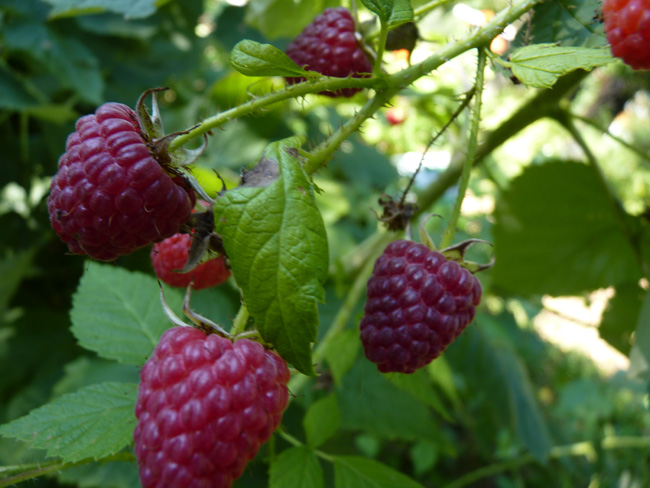
Greens.  Peppers, especially those sweet hot peppers.  Leeks.  Garlic.  Onions.  Shallots.  Beets.  Collard greens.  Tomatoes.  Carrots.  Herbs.  Then, we’ll have the apples, plums, cherries, pears, raspberries, strawberries, goose berries, currants, wild grapes.  And honey.  That’s our plan for next year.  Most of it anyhow.  We’ll probably sneak a few things in just to see what happens.

Three or four years ago we began a gradual winding down of the flower beds as annual events, turning them gradually toward perennials following one another, growing on their own.  We have to do some major work this spring along those lines, especially the garden bed on the house side of our front path.  That one I’ll dig out, amend the soil, and replant altogether.  Gonna take out the Viburnum.  It’s never done well.

We have pruning to do yet this winter.  And I still have more trees to fell.  Winter’s a good time for both.

There is, too, the fire pit and its immediate surround.  Mark helped us on the fire pit when he was here.  This year it will become functional.

Indulging the mid-winter sport of garden planning.  An indoor prelude to the outdoor music of the growing season.

The TLF Maintains Its Presence

Winter                                                             Moon of the Winter Solstice

On the way back from buying groceries I encountered the TLF again.  The TLF long time readers of this blog might recall is the Turkey Liberation Front.  I gave this rafter or gang (look it up) their name when I encountered their predecessor several years ago returning from the same store with additional butter for the Thanksgiving dinner then underway.  That first rafter was smaller, less than 10, but this one had perhaps 18-20, mostly adults, but a few young adults.  Their feathers were a rich dark brown, lustrous.

(Great Northern Sky)

Round Lake gathers enthusiasts of various sorts, some with more common sense than others.  The ice fishermen are staid, quiet types.  Ice houses or small tents covering their holes, they sit still, waiting for something to happen.

The snowmobiles you would expect though there’s been fewer of them than normal this year.

This year has drawn several ATV drivers and, to my surprise, one dirt biker.  The first I’ve seen though I know it’s done.  I heard the noise, the steady drone of a small engine, looked out over the lake expecting to see a snowmobile when what to my wondering eyes should appear but some kid on a motor bike riding in circles, defying the friction defeating ice with the occasional part sideways skid.  Nobody’s out there with their truck or car this year.  Wise.

(I picked this up from a national weather website.  But they’re using our DNR’s illustrations.)

Last week I read in the newspaper the following advice for the cold weather over New Years.  Keep your gas tank half full.  Pack winter boots and warm coats.  Call ahead and let people know when you plan to arrive.  That sort of thing.  We’ve also had the illustration showing what thickness of ice can bear what kind of weight.

Minnesotans take this kind of thing for granted, part of the season.  But imagine you were a visitor here.  Reading this stuff.  With a rental car.  No wonder people don’t move here in droves in spite of the great cultural and political life.


OMG

Samhain                                                                         Thanksgiving Moon

Through a service I get posts from the Bureau of Land Management (BLM).  This one came through and the irony just knocked my socks off.

“This month marks the 24th anniversary of the designation by Congress of the San Pedro Riparian National Conservation Area. The San Pedro River is one of the last free-flowing rivers in the southwestern United States. It runs through the Chihuahuan Desert and the Sonoran Desert in southeastern Arizona.”

An Important Message for a Season of Indulgence

Samhain                                                               Thanksgiving Moon

source

A professor stood before his philosophy class and had some items in front of him. When the class began, he wordlessly picked up a very large and empty mayonnaise jar and proceeded to fill it with golf balls. He then asked the students if the jar was full. They agreed that it was.

The professor then picked up a box of pebbles and poured them into the jar. He shook the jar lightly. The pebbles roll

ed into the open areas between the golf balls. He then asked the students again if the jar was full. They agreed it was.

The professor next picked up a box of sand and poured it into the jar. Of course, the sand filled up everything else. He asked once more if the jar was full.. The students responded with a unanimous ‘yes.’

The professor then produced two Beers from under the table and poured the entire contents into the jar effectively filling the empty space between the sand.The students laughed..

‘Now,’ said the professor as the laughter subsided, ‘I want you to recognize that this jar represents your life. The golf balls are the important things—-your family, your children, your health, your friends and your favorite passions—-and if everything else was lost and only they remained, your life would still be full. The pebbles are the other things that matter like your job, your house and your car.. The sand is everything else—-the small stuff.

‘If you put the sand into the jar first,’ he continued, ‘there is no room for the pebbles or the golf balls. The same goes for life.

If you spend all your time and energy on the small stuff you will never have room for the things that are important to you.

Pay attention to the things that are critical to your happiness.

Spend time with your children. Spend time with your parents. Visit with grandparents. Take your spouse out to dinner. Play another 18. There will always be time to clean the house and mow the lawn.

Take care of the golf balls first—-the things that really matter. Set your priorities. The rest is just sand.

One of the students raised her hand and inquired what the Beer represented. The professor smiled and said, ‘I’m glad you asked.’ The Beer just shows you that no matter how full your life may seem, there’s always room for a couple of Beers with a friend.

Off Mission

Fall                                                                  New (Fallowturn) Moon

Was gonna plant lilies and iris but got stuck on the computers, shifting stuff around, getting a new computer setup, then into writing my essay for the mythology class.  Discovered after creating a 500 word piece that I’d read the instructions wrong, 250-350 words.  Condensing is another matter.  Will take some time tomorrow.

Then I went into the Sierra Club for the Legislative Awards.  Each year we give awards to our champions, up to 4, in the last session.  This year we gave them to Frank Hornstein, Alice Hausman and Bill Hiltey. Hiltey, who retired this year, gave a downbeat assessment of our odds in the future unless “reasonable” people get elected.  He sighted corporate control of legislators and the anti-science attitudes as difficult barriers to advances in environmental legislation.  The environment is, he said, and I believe, too, collateral damage of the economic and political culture we now have.

Cutting the cable news:  right now Kate and I are watching the Poirot series on Netflix.  There are 55 episodes and we can go through them at our own pace.  Never regretted the decision to bounce Comcast TV.  Well, with one exception.  Sometimes the picture quality suffers because of non-HD transmissions.  That’s too bad when we have a good HD setup.

Fall                                                                   New (Fallowturn) Moon

Ordered my felling-axe.  A new form of aerobic exercise.  That plus my bike will give me variety in those workouts.  If we have some snow this winter, I can take up snowshoeing again.  Working out requires a change up every once in a while.  Your body gets used to the same exercises and the changes keep interest from flagging, too.

(source)