Exciting

Spring                                                                      Bloodroot Moon

Been reading through beta reader #5’s comments in preparation for a face to face on Saturday.  At the same time I’m well into the last third of my own read through of the manuscript.  I’ve taken many notes, lots of ideas, some drastic, many substantial, some cosmetic churning around in my head.

Reentering the fictive dream for Missing will not be hard.  It feels like the Tailte mythos (the world on which almost all of  Missing occurs) has only begun to breathe.  It stretches and spreads its presence out in my thoughts.  I imagine the gods playing more active roles, Asian deities and Middle Eastern, in another set of stories.  The gods will begin to take on more important roles in Loki’s Children and the Unmaking, the two other volumes in this trilogy.

I took a look at short story markets today.  I want to polish up some of mine and get them in circulation.  The energy in the writing and translating has increased markedly, not only over the last couple of years, but even over the last couple of months.  Something exciting is happening and in part I’m just along for the ride.
My Bags Are Packed

Spring                                                                     Bloodroot Moon

Conversation over lunch with a docent friend whose experience at the MIA has grown stale.  The reasons are numerous in both our cases, among them: resenting the time for preparing for tours, no longer finding tours as nourishing (if at all), inadequate continuing education, uninspired leadership from the museum, lack of appreciation, lingering bad feelings over Allison’s sudden banishment.

I realized in this conversation that my dis-ease with being a docent began to blossom when I returned more seriously to writing.  Then, I began to feel tour preparation, the drive into the museum, the time there itself all eating into my creative time.  This changed over time into resentment (maybe too strong a word, let’s say begrudging) of the intrusive nature of the prep, the whole time involved.  The payback no longer balanced the effort.

That has led me to a final decision, I’ve toured my last at the MIA, but I still want to hold up my resignation because there are a few loose ends.  First, perhaps discovering a way those of us out of the MIA might co-operate.  Second, securing some things, like exit interviews and continuing perks for honorary docents.

Like me my friend wants to retain the time commitment to art, just not have it eaten up by the MIA process.  How that might happen is part of the conversation I want to have before finalizing my change.

A Sheet of Light

Spring                                                         Bloodroot Moon

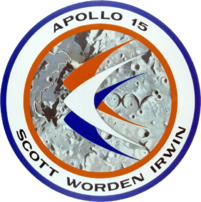
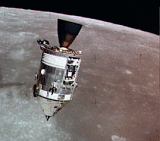
Here’s a clip from a fascinating interview with Al Worden, command module pilot for Apollo 15*.  The interviewer identifies 7 men, all command module pilots for Apollo missions, as holding (having held) the loneliest job in the world.  Of course, it wasn’t in or on the world, but quite far away from it.  When these men were orbiting the backside of the moon, not only were they over 2,000 miles from their crew members; they were also further away from earth than any other human has ever been.

His description of the stars from there.  That’s what got me.


“You were a quarter of a million miles away from home though.

Yes, you’re a long way away but the thing that most impressed me about being in lunar orbit – particularly the times when I was by myself – was that every time I came round the backside of the Moon, I got to a window where I could watch the Earthrise and that was phenomenal. And in addition to that, I got to look at the universe out there with a very different perspective and a very different way than anyone had before.

What I found was that the number of stars was just so immense. In fact I couldn’t pick up individual stars, it was like a sheet of light. I found that fascinating because it changed my ideas about how we think about the Universe.

There are billions of stars out there – the Milky Way galaxy that we’re in contains billions of stars, not just a few. And there are billions of galaxies out there. So what does that tell you about the Universe? That tells you we just don’t think big enough. To my mind that’s the whole purpose of the space programme, to figure out what that’s all about.”

* from NASA Apollo 15 site

Mission Overview

The primary objectives assigned to the Apollo mission were as follows:

  1. to perform selenological inspections, survey and sampling of materials and surface features in a preselected area of the Hadley-Appennius region;
  2. to emplace and activate surface experiments;
  3. to evaluate the capability of the Apollo equipment to provide extended lunar surface stay time; and
  4. to conduct inflight experiments and photographic tasks from lunar orbit.