Demos (people) Kratos (power, force)

Summer                                                       Most Heat Moon

This world is rapidly changin’. Dylan

Today Kate meets with the first of the Colorado realtors, tomorrow the second. She’s in full Kate mode which means intelligent, decisive, energized, sensitive. An excellent scout. She is our advance team, sent to reconnoiter while the main force of four canines and one human plus all our stuff remain behind. We will follow.

Her task, eventually, is to narrow the options in Colorado to three. Then the other human will travel with her, probably joined by the Denver Olsons as a consultancy. We will decide together. This may seem clumsy to many of you, but it is the way I have learned throughout a lifetime of politics and one I adhere to out of conviction.

No decision can be made independent of the effected parties and if I could include the dogs, I would. In their case we have to imagine their feelings and response to a particular place, then act accordingly. Yes, I suppose it is true, as many tyrants say, that people want only food, housing, security, that they really don’t want to be involved with the messy business of guiding their own lives in the larger frame.  Over that same lifetime in politics, however, I have acted with the precise opposite assumption.

That is, people need to guide their own lives in the larger frame. To do this they need to join each other, sometimes in unions, sometimes in political parties, sometimes in issue driven organizations, sometimes in neighborhood organizations or rural co-operatives, sometimes in businesses, but always with others who share their convictions and have similar life situations. This is democracy with a small d, one driven not by the constitution or by the greater idea of democracy as a political philosophy to organize nations, but democracy itself which means, in its original Greek etymology, people (demos) power or force (kratos).

This remains a radical understanding of how to organize the commonweal, but it is just such an understanding that many of us soaked in the culture of the late 1960’s came to embrace. Yes, it is at times unwieldy. Yes, it is often prone to lengthy decisions. Yes, it can be perverted by a determined minority or damaged by a narrow-minded majority, but it is the best way of turning aside the tyranny of oligarchy which is the bane of our late stage industrial capitalist society.

And so, even in the small decision of which home to buy, small in the grander scheme, but large in ours, there will be many voices, all significant. And Kate and I will listen to them.
Thanks

Summer                                                           Most Heat Moon

Dinner at Blue Point in Wayzata with Tom and Roxann Crane. A wonderful salmon from the Kenai River in Alaska. I saw bears competing with fisherfolk for the catch. It was on a bed of tomatoes and other vegetables, just right.

(Kenai River is on the Kenai Peninsula)

We had the organ recital with Tom’s thumb well on the mend, now castless, but still somewhat swollen. He says the surgery was a success though the docs say some healing is going on for up to a year. Knee surgery, back surgery, shoulder ailments, pulmonary hypertension and then we moved on to other things.

Tom and Roxann were in northern Georgia over the 4th of July with their grandkids, finding time to get to Lookout Mountain in Chattanooga. We talked about grandkids, too, how wonderful and loving they are. It is that time of life.

The Bluepoint, if you get to Wayzata, does seafood well. Thanks, Tom and Roxann.

Long Projects

Summer                                                      Most Heat Moon

In regard to work on a new food crop as a part of our move. I want to find a native plant, native to the eco-region of our new home, then work toward domesticating it with as much help as I can get from the academics. As I wrote this, I recalled that there is a Spitler apple, named after a great uncle who developed it. Maybe botany has a gene.

(a possibility, Creeping Thistle)

A pattern for translating the Metamorphoses is emerging. I will translate individual stories whole.  For example, the one I’m working on now, Daphne, is in Book I:452-566. The preceding story of the Python was Book I:416-451 and the next one, Io. Argus. Syrinx., Book I:567-745 and the story of Phaethon ends Book I, running from 746-778.

Here’s the method I see from how I’m working right now. I will continue translating a few verses (4-7) a day, hopefully increasing these numbers somewhat over time. While doing these translations, I will consult my usual resources: Perseus, the commentaries, grammars and occasionally the consensus Oxford text going to the english translations only when I’m confused and find myself unable to move forward.

Once I get a story done, I will set it aside for a day to a week while I continue translating into the next story. At some point before a week passes, I will pick up the story from the preceding week and using my notes, retranslate it without reference to the translation I created. If I believe I have as good a literal translation as I can make, I will then proceed to trying for a more lyrical prose translation, one using the best english I can muster. Again, I will proceed by using the resources mentioned above, but not check the english translations.

Only after I have created my best english translation, and then only after letting it sit for a couple of weeks, a month, will I then work with my translation in light of other english translations, resolving conflicts and improving my translation where I can.

I’ve not yet decided whether I want to try to make a commentary or not. It’s a big, big project, but much of the work will be done already and I’m still a naive learner, therefore able to see what another newcomer might most appreciate or need.

When I put together the classics and art history, I find myself where I belong.


Theogony

Summer                                                             Most Heat Moon

“Rage — Goddess, sing the rage of Peleus’ son Achilles,
murderous, doomed, that cost the Achaeans countless losses,
hurling down to the House of Death so many sturdy souls,
great fighters’ souls, but made their bodies carrion,
feasts for the dogs and birds,
and the will of Zeus was moving toward its end.”      Iliad opening lines, Fagles translation 1990

Let’s see. What I was trying to say in the post below was this: political life and our opinions, our proclivities do not have to be all one thing or another. We confuse ourselves and others if we pretend it is ever other.

We make a similar error with individuals (and with ourselves). We define people based on what we see of them, usually just a small slice, and that is true of even our closest friends. We imagine that the clues, the defining moments we know of, adhere in a package that makes some sort of sense.

No. People are not one thing or another. They are as Walt Whitman observed of himself, “multitudes.” To say it philosophically we are one, we are many. I’m not identifying a psychological pathology here, rather stating that even the most rule bound of us violate our own rules and sense of duty, probably daily. The least rule bound among us may stagger through life from one interest to another, one opinion or another, one activity to another. And all this is usual, normal.

Coherence is a naive tool for understanding. We have our reasons, yes, we do, but our reasons often contradict each other. We know this when we are honest with ourselves. And our emotions. Well, they come unbidden, sometimes riding us like storms, other times calming us in periods of upheaval. Notice, too, that we try to guide ourselves both by reason and by emotion, when in fact these two faculties are not two, but one, or if not exactly one, then inextricably woven together, woven so closely that we cannot without great effort separate one from the other.

It is no wonder, when we consider these complexities that there is the saying, African I believe, that when a person dies, so does a universe. What I take from all this is to be easy with myself, forgiving, since the universe that I am does contain multitudes and at times this version of the universe holds sway, at other times this one.

It may be, probably is, that such an observation reveals the origin of the gods. There are those within us, anger for example and its more intense cousin, rage, that can take control of us, organize our lives in ways surprising to ourselves and to others. (see the opening lines of the Iliad above.) Or, grief. Or, love. Or, fear. Or, vengeance. Or, delight. Or, abandon. Or, control. Or, poetry. Or, thought. To go against Hillman I would say not that we meet our gods in our pathologies, but in our inner selves.

(Banquet of the Gods, Frans Floris)

In Voudoun the practitioners talk of being ridden by the god, an enraptured state brought on by intoxication and dance and openness. I say we are ridden by gods and goddesses all the time. To our great joy and our great sorrow.

To paraphrase Whitman, “I contain within me many gods, I am a pantheon.”


Cooking

Summer                                                             Most Heat Moon

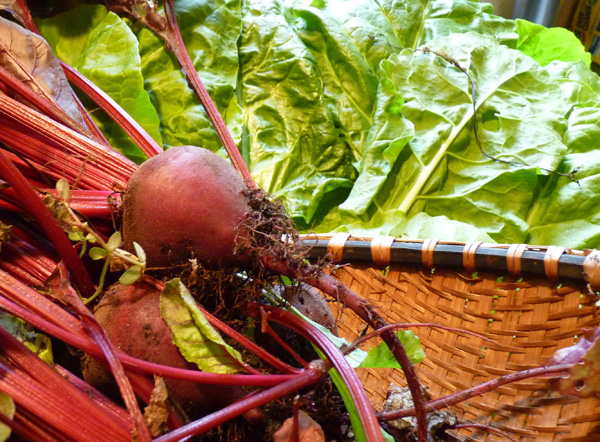
Picked up Chez Panisse on vegetables, one of my favorite cookbooks, right up there with beets chard 7 6 12R600Joy of Cooking and How the World Cooks Chicken. When I called Kate this morning, she was at Mt. Rushmore with Jon and Ruth. I only had one question. What do I do with the beets after I clean them? Oh. You don’t take the tops off first? Too late for that. Boil them for 15 minutes then slip them out of their skins? OK. I can do that. Go back to Borglum.

Cooking is something I really enjoy, but I’ve avoided it for a couple of years now. Kate’s home and my need to cook has diminished since she’s enjoyed getting back in the kitchen after a long absence from regular cooking. I don’t cook like Kate does. She’s a recipe gal and a damned good one. Just ask the Woollies who said her meal a couple of years ago was the best they’d had at a Woolly meeting.

Me, I’m a let’s look at the ingredients and see what we might make kind of cook. A bit more, no, a lot more, free form. That means I make wonderful surprises and the occasional ghastly surprise. I’ve gotten better over the years so the ratio has widened in favor of wonderful over ghastly, but I’ve not eliminated them.

So I’m trying to recreate the beet salads I like so much when I go out. First step, roast the beets. 400 degrees covered with foil. Large baking dish. But, again, I’m starting out behind because I’ve already boiled and peeled the beets. After removing their tops to begin with. I’m not expecting it to turn out perfect, there are a lot more beets where those came from. But it should be interesting over the next couple of days to see what I can produce from roasted, pre-boiled and prematurely topped beets.

Beets, Carrots, Green Beans and Lamb

Summer                                                      Most Heat Moon

Spent the morning first spraying, then in the garden weeding the vegetable beds and harvesting beets and carrots. After the first beet crop was out of the ground, I planted the third. The second is already growing in another bed and between open spaces created by earlier harvests.

The beets and the carrots all go into the hod, a metal mesh with two wooden ends and a curved wooden handle for carrying. The wire mesh is useful with roots crops because it allows the hose to get all sides, including the underside of just picked vegetables.

Inside I prepped the beets, boiled them, skinned them and they now await some other action, one I’ve not chosen. Or, perhaps more than one.

A few of the carrots and a handful of green beans, picked this morning, too, got heated up and eaten with the remaining lamb from the rack of lamb we had the last night Ruth and Jon were here. These were from last November when I got a good deal on a Byerly’s order, brought to me since I had no vehicle. I had rack of lamb for Thanksgiving while Kate had Thanksgivukkah with the Denver Olsons.


They Say It’s Your Birthday

Summer                                                                                     Most Heat Moon

“so I wait for you like a lonely house
till you will see me again and live in me.
Till then my windows ache.” 
― Pablo Neruda100 Love Sonnets

A good while back I sat down and wrote a list of my saints. These are writers, political activists, artists, naturalists, poets, film-makers, scientists, philosophers and others who have influenced my thinking, moved me toward various arenas of action. They are my mentors.

A bit later I sat down and began entering their birthdays onto my Google calendar so I could acknowledge them at least once a year. That’s why my calendar for today, July 12th, has three names on it: Julius Caesar, Henry David Thoreau and Pablo Neruda. What an odd threesome, a Roman general and the first emperor, a New England Renaissance naturalist and writer, a socialist Chilean poet.

Someday I plan a post that will feature most of my saints, a blog version of the Book of Saints, only these will be mine, an idiosyncratic list with very few outright religious folks on it.

Not Sure Which Direction To Take? Read the Sign.

Summer                                                             Most Heat Moon

So often the real world outstrips the imagination:

“Motorists on Shepard Road  in St. Paul got an obscene message from an electronic road side sign instead of the information that was supposed to warn them of a flood-related closure ahead.

Sometime on Tuesday night, a hacker changed the message on the board near Chestnut Street to read “Local Moms Need [a man’s body part].” The vulgar message generated several calls to the city, said Kari Spreeman, a public works department spokeswoman.”

full blog entry from the Star-Tribune’s Drive.

Toward the New

Summer                                                                Most Heat Moon

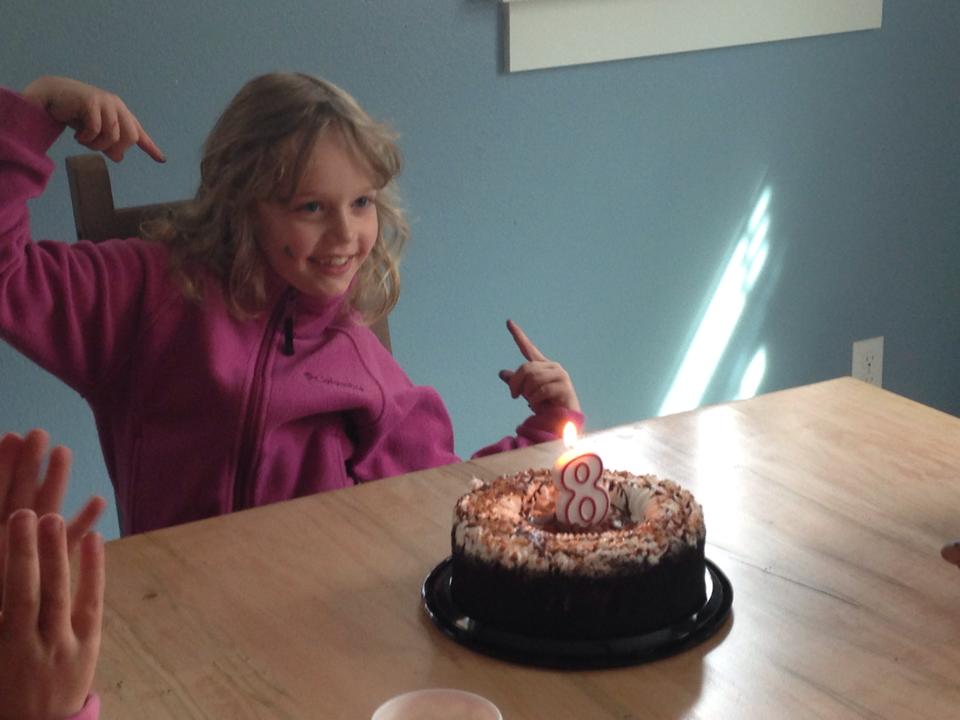
When asked last night if she wanted us to move to Colorado, Ruth nodded her blond head Ruth's 8thand said, “I want you to.” She may go with Grandma to look at property, give the grandchild’s view. We’ll give Ruth and Gabe a chance to have their say since they’ll be very important visitors (V.I.V.s), but Grandpop and Grandma will make the final choice, of course.

The standing in the drive-way, waving as the van pulls away ritual has happened. The three generation of Olson’s Sienna transport to Colorado has left the building.

As Colorado came rushing into the foreground of our lives this week, it’s made me consider what new things I might want to do out there. The first thing that came to mind? Learning to ride a horse. Something I’ve never done and what better place than the west. I don’t want to learn dressage or steeple chasing or barrel racing, but I would like to learn enough to ride on a mountain trail, maybe camp out.

A second thing came while reading an interesting article in this month’s Wired, “How We Can Tame Overlooked Wild Plants to Feed the World.” This article gives a broad brush presentation to how horticulture and agriculture will respond to climate change. It starts by referencing work being done in Ames, Iowa on domesticating new food crops.  The last creative work in domestication of new crop plants ended thousands of years ago.

Here’s the sentence that really jumped out at me: “Today, humans rely on fewer than 150 plants for nourishment, and just three cereal crops—wheat, rice, and corn—make up more than two-thirds of the world’s calories; along with barley, they own three-quarters of the global grain market.” op. cit.

The Land Institute outside Salina, Kansas has had my attention since I read founder Wes Jackson’s book, Becoming Native to This Place. This book along with the Great Work by Thomas Berry, The Sand County Almanac by Aldo Leopold and an excellent climate change conference Kate and I attended in Iowa City changed the direction of my political activism from economic and racial justice issues to environmental policy. They also affected my horticultural practices, turning me from perennial flowers to vegetables and fruit grown in a soil sensitive, heirloom-biased way.

So. When we finally settle down, I want to have a raised bed or two for kitchen vegetables, smaller than what we have here, but I also want to have at least one raised bed or plot devoted to advancing a new food crop. I’m not sure what this would entail, but if something useful can be done on a small plot in the Rocky Mountains, I want to devote the time necessary to it. Given the long time horizons on such projects, I may not hope to get too far; but, any distance toward a broader food palate and one capable of producing in hotter normal temperatures will be useful to my grandchildren and their children.


Nocturne

Summer                                                              Most Heat Moon

Tonight the quiet has a slight sadness, an emptying of the home awaits only sunrise, at Kate1000least an emptying of Jon, Ruth and Kate. The Left Behind, myself and the dogs, will have to go on after.  There is, yes, a freedom, but one only good if temporary and limited. I’ll take the time to plan, work in the garden, translate, send out Missing to more agents.

These times when Kate and I are apart, caused most often by our mutual love of dogs, underline the wonder in the often fragile institution of marriage: a bond between two creates a third thing, a more than the sum, a whole greater than the parts, a love which stands with them, a support, a consolation, a joy, a silent partner.

Said another way, I’ll miss her.