Wandering

Spring                                        Mountain Spring Moon

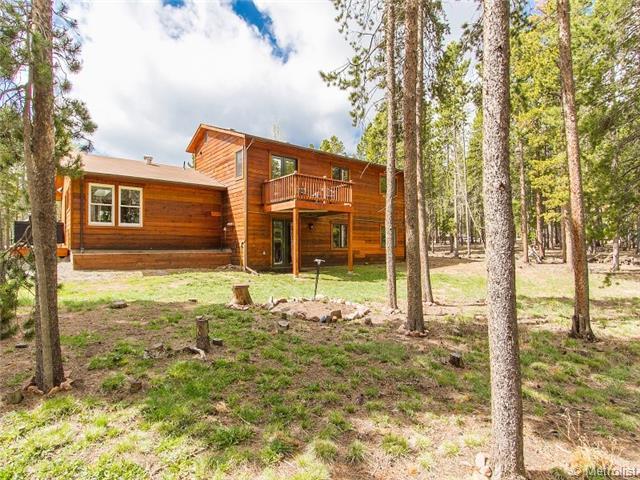
Back of Black Mountain DriveGot tired of reviewing my Latin so I got up and wandered around in our thawing yard. Lots of things to see. Lichen growing on moss and old stones. Mule deer scat. Lamb’s quarter beginning to emerge. Green showing its springy fingerprint on so much. Still just an accent color, but soon.

This acre, though smaller than our Andover hectare, has a more spacious feeling. There is no undergrowth, no weeds, shrubs, hedges, anything. The Ponderosa cluster, a few trees to a group, several clusters and some open space. The soil, or ground, is rocky and looks unforgiving from a horticultural perspective. Not a surprise.

It feels important to me to have enough land that I can walk around it, see it from different angles. After the place in Andover, this feels necessary though I know it’s not. But, I like it. Caring for land is in my blood and I want to figure out how to make this place the best it can be. At least for now.


Spring                                           Mountain Spring Moon

On Saturday I began going back through the material I translated, checking definitions, grammar, using Anderson, a commentary, as a guide. Now I’m trying to produce a translation that’s as good as I can do. That takes longer than just translating, at least for me, and for sure at my current level. At another point, not yet, I plan to revisit the idea of a commentary; this time though, at least at first, for only one book, not all 15.

Transforming. Again.

Spring                                  Mountain Spring Moon

Got several comments about the changes to Ancientrails. Font too small. Background made the text hard to read. No links for the title. So, I decided to try a version of the WordPress theme I’ve used before. I just wanted something fresh for Colorado. Please let me know if you find any problems here. I’ll try to fix them.

BTW: The new header is a frieze of Demeter, Persephone, Hades

My Buddy

Spring                              Mountain Spring Moon

My photo of Ovid's statue in Constanta, Romania, site of the originally Greek settled, Tomis
My photo of Ovid’s statue in Constanta, Romania, site of the originally Greek settled, Tomis

My friend Tom Crane pointed out that yesterday was my buddy Ovid’s birthday. Don’t know how I missed that, but thanks, Tom.

“Ovid was born on March 20, 43 BC. After holding brief judicial posts as a young man, Ovid turned to writing poetry. His work was well received, but for reasons that remain mysterious today, emperor Augustus banished him to Tomis in 8 BC. Ovid wrote two poetry collections while there, Tristia and Epistulae ex Ponto. He died at Tomis in 17 AD. His most famous works are Ars amatoria and Metamorphoses.”  biography.com

I’m debating devoting even more time to Ovid, his poetry, especially Metamorphoses, and his times, the Augustan era. It seems like I’ve finally reached a fulcrum point in my learning of Latin where I’m about to tip over from student to scholar. As an amateur classicist, I’ll need considerably more study to get ready to contribute in any meaningful way, but I believe I have the capacity and I know I have the desire.

A year from now, on Ovid’s next birthday, his 2058th, if I count correctly, I’ll let you know how far I’ve gotten. It did just occur to me that Ovid’s two millennia death anniversary is exactly 2 years away. Hmm.

Spring, 2015

Spring                                   Mountain Spring Moon

The sun hits the celestial equator today at 4:45 pm. It also rises due East and sets due West. This is the day the serpent crawls up Chichen Itza. Though meteorological spring, the three months between the coldest and warmest months, began on March 1st, today is the old holiday, one celebrated in cultures across many lands.

Here, for example, is an interesting paragraph about spring from the perspective of wu xing: “In Chinese thought, spring is associated with the color green, the sound of shouting, the wood element, the climate of wind, things sprouting, your eyes, your liver, your anger, patience and altruism– and a green dragon. Not surprisingly, spring is also associated with the direction east, the sunrise direction as Earth spins us toward the beginning of each new day.”  earth and sky

Spring sees the early evidence of winter’s end, celebrated at Imbolc, when the lambs are in the belly, brought forward. The lambs are born. The grass is plentiful so the ewes can give milk and nourish their babies. The gradual loosening of winter’s cold and snow and ice continues, accelerates until the days have warmth as their usual state.

The warmth and the sun climbing toward the north signal plants and animals both. Hibernation ends so the visible population of critters increases rapidly, coming out for the food the new season promises. Spring ephemerals burst out of the snow: snowdrops, crocus, aconites. Later, the daffodils will come, too. The strategy of the spring ephemerals is an interesting one. They emerge, bloom and die back before whatever is in the surrounding vicinity can leaf out, thus capturing all the available sunlight before shade covers their spot.

If Michaelmas is the springtime of the soul, then the vernal equinox is the springtime of the body, of the material and animate world. No surprise then that it serves as the proximate marker for the Christian easter, focused as it is on the resurrection, the new life of the body. Both Christmas and the Easter, the two key Christian holidays, one marking the incarnation and the other the death and regained life of Jesus, focus on the body and its possibilities. In the first instance the body is seen as a vessel for the divine and in the second the body is seen as no longer bound by the strict laws of the animal world. Death is no longer the end.

The Great Wheel suggests a similar, but profoundly different way of viewing these two most profound mysteries: birth and death. The Great Wheel focuses on the rhythms of the natural world and on their sequence, their repetitiveness. Taken most literally it adds nothing to these rhythms, nor does it subtract from them. Birth and death occur as the great wheel turns, as the earth revolves around the sun, source of the vital energy that maintains life between these antipodes.

This intricate interdependence between animals and plants in their life cycles, the sun and the earth’s orbit around it, is common, literally mundane. Profane, too, I suppose. Yet the miraculous is here, too and we need no sacred text to see it. Out of the stuff born in the birth of the stars themselves, stuff borne later on the solar wind and in the cataclysmic explosions at the deaths of these same stars, came the material that created our sun and our home, this planet, this earth.

Then, consider what happens next. That same stuff, now reordered and shaped into this planet, somehow reconfigured itself so that it could move, so that develop intention and instinct, so that it could replicate itself rather than having to wait for the violent processes more usual for the distribution of matter. And that that stuff, the same from the heart of the stars, so reconfigured, grew in complexity and capability until human babies began to born. Babies that could, probably for the first time here on earth, perhaps for the first time in the whole of the universe, see that which gave them the potential for life, the universe in its particularity here on earth and its dizzying universality in the cosmos.

The birth of the universe’s own eyes and ears and poets and composers and painters and dancers came and as miracles. And still do. In the same way the death of these same poets and artists does not end the births. No, the births keep coming and the deaths do not end them. In my mind this is the true resurrection, the actual reincarnation, the exact moment of rebirth. Death does not end us. We continue. And Spring is just the season to bless and hold this true miracle close to our hearts.

Mountain Weather

Imbolc                                                Mountain Spring Moon

5-8 inches of snow for elevations in the front range above 8000 feet. That’s us. One way they tailor weather forecasts out here is by elevation. Often we get a forecast for 6,000 to 9,000 feet. That’s basically foothills, but includes those of us who live further back and higher than most of the foothills. The forecasts then get further segmented by north, central and south. We’re in the central Front Range, and at 8,800 feet on a 9,000 plus mountain and in the company of others that are 10,000 plus we’re in the mountains.

Weather forecasting out here, especially when it concerns snow and other water related events, is a matter of tremendous moment. The weather impacts ski areas, a significant part of the state’s tourism budget, but more importantly it determines, in winter, the depth of the snowpack. Not only does the Colorado snowpack directly affect the state’s regional water availability, but it also decides the fate of the Colorado River which provides water to the thirsty southwest and southern California, especially L.A.

If we’re gonna get our 5-8 inches though it’s gonna have to scramble. The morning’s snow has already melted.


Hope

Imbolc                                             Mountain Spring Moon

There’s a nibble on the Andover house. Someone who liked our garden setup and the landscaping. They’re going back for a second look on Saturday. And, they’ve asked the city about having chickens. We’re hopeful. Sounds like the kind of buyer we’ve been seeking.


Ostara Eve

Imbolc                                             Mountain Spring Moon

Imbolc slides into its next year spot on the Great Wheel tomorrow, as the Spring equinox returns. Imbolc is the transition season between the harsh mid-winter and the wild weather that precedes the growing season.

This Imbolc was mainly a settling in time for Kate and me. It began on February 1st, following Winter, or Yule, which came the day we moved into Black Mountain Drive. We were still wrassling boxes as it began, though their numbers had begun to dwindle and the remaining ones were put away behind closed doors to await more clement weather.

We did have two parties here, one on February 14th, my 68th, and another last Sunday for Celtic pride. They were in keeping with the spirit of Imbolc, that period of a lamb-in-the-belly, when ewes freshen and Spring, 1896 by Denis, Maurice (1870-1943) begin to give milk. Like the lamb-in-the-belly those parties represent a still gestating immersion into the Shadow Mountain neighborhood and the changing, warming relationships with family. Both should begin to flourish in Spring and blossom in Beltane.

This Imbolc has also seen Kate back to her quilting, finishing the work on my quilt which now covers my side of the bed along with several other projects, and my return to Latin and to writing.

Following the fallow, cardboard dominated winter, Imbolc saw, as it can, the signs of new life and the continuation of parts of the old. Spring will see this all this quicken and brighten. I’m ready for it.

Sorry

Imbolc                                      Black Mountain Moon

BTW: I am aware that the links to the videos don’t work. I tried a new method of inserting video, that is, linking to the URL rather than embedding them with their own code. I did this because the video’s did not have, as Youtube and some others do, an easily obtained embed code.

Medea and Aeson (an excerpt)

Imbolc                                  Black Mountain Moon


I’ll stop saying this, but I am amazed at the facility I’m now enjoying with Latin. Of course, I’ve been working at it off and on for over 5 years, so there’s that. But the jump in ability is what fascinates me. How did that happen? Sometime soon I’m going to test it in other texts: Caesar, Lucretius, maybe Tacitus. Just to see.

(Medea and Aeson: Giovanni David, 1780)


I’m getting close to having Medea and Aeson finished. Here’s an excerpt:

Metamorphosis Book VII: (Medea’s Prayer)

180 After the fullest moon shone, and the whole moon beheld the earth through shadow
181 Having dressed she came forth, having ungirded her clothes under the roof,
182 With naked feet, exposed hair spread over her shoulders,
183 And unaccompanied
184 She takes a wandering pace through the deep silence
185 of the middle of the night. The quiet has set free
186 men, high flyers and wild beasts: when often (there is) nothing with a roar,
187 the undisturbed leafy branches are silent, the moist air is silent;
188 stars sparkle (over) the land. Her arms stretched out, turned
189 three times by themselves toward something, three times she sprinkled her head with water taken up by hand from the river,
190 and loosed her voice
191 with three ululations. On the hard earth she sank down on her knee,
192 “O night, most safe with secrets,” she says, ” whoever looks toward the stars with the golden moon
193 and by day toward the fiery sun,
194 and you, tri-form Hecate, who is aware of our undertaking,
195 and of incantation, of knowledge, of magics, she that helps, come,
196 whatever magical songs, whatever you, O Earth provide with powerful herbs,
197 and to the air and the winds and the mountains and the streams and the lakes
198 and all the gods of the forests, the gods of all the night-works, attend.
199 By whose help, when I wished, the streams turned back in their marveling banks
200 Into their sources themselves, I calmed the shaken streams,
201 Standing I aroused the seas to song, I banish the clouds and
202 I call them back, I drive away the winds, and I invoke them,
203 I destroy monsters with words and by invocation I force open their throats,
204 After I shattered the boulders themselves and the hard-wood trees, on the living earth
205 I move the forests, and command the mountains to quake
206 and to rumble alone, and spirits to go forth from the grave.