I like this frame for the work of the next four years. It’s important to remember that it’s the same work the Tea Party and the Trump have engaged. And they’re doing better right now than we are.
“…recent events, here and elsewhere, revive the worry, expressed by Plato, that populist democracy can readily pave the way to dictatorship. Resisting this threat (and this temptation) is the first duty of today’s patriots.
The Bill of Rights, sometimes taken as a definitive statement of what freedom means, was in fact a hasty appendix to the Constitution and provided only a rough starting point subject to further amendment and continuous interpretive disputes. Instead of a vision of freedom, the founders gave us a framework for an indefinite continuation of their revolutionary struggle over what freedom should mean to Americans.
My proposal is that this endless, rancorous struggle for the soul of America is precisely what we should love about this country. (my emphasis) Patriotism is not sharing with our fellow citizens some anemic idealization of what freedom means. It is a matter of engaging them — with everything short of physical violence, from compelling argument to deft political maneuvers — in the rough-and-tumble of political conflict over how we should understand freedom. This conflict remains our only way of working toward the “life, liberty and pursuit of happiness” our revolution sought. True patriotism now requires not reaching across the aisle; it demands mounting the political barricades.” Rethinking Our Patriotism, Gary Gutting, NYT
Just finished reading Strangers in their Own Land by Arlie Russell Hochschild. It’s subtitle is: Anger and Mourning on the American Right. I found the book by reading this article, Why We Need Empathy in the Age of Trump. Here’s an excerpt from near the end that points to part of the way forward, according to Hochschild’s research.*
After finishing the book, I’m not so sure there is a way forward for this particular work though I hope I’m wrong.
Here’s why. In my own analysis, shared by many on the left, we failed to address the economic situation of the working class over the last 40 years or so. As a result of that, it was easy for the right to cherry pick them by focusing on so-called “values politics.” Values here meant hot issues like abortion, gay marriage, affirmative action, climate change. By appealing to the baser elements, the fears and anger of the white working class, they were peeled off from their natural political home, the Democratic Party, and inserted, very clumsily, within the big tent of the Republican circus.
lewishine-nationalarchive
What this simplistic analysis (I’m calling myself out here.) misses is the genuine love of God, church and country that the white working class already had. When the Republicans convinced this constituency that they were the party of Christian (right-wing Christian) values and the only party consistently behind a flag-waving form of patriotism, many (most?) of this demographic switched allegiances, some as early as Nixon’s Moral Majority, some later first as Reagan Democrats, then transforming into Tea Party Republicans.
What I missed, and really shouldn’t have since I grew up in this exact milieux, was the sincerity, the authenticity of the religious and patriotic values of working class whites. These values are more important to them than economic self interest and Hochschild’s book makes this very clear. What happened in the late 20th century was a gradual shift away from economic self-interest voting to voting patterns based on cultural values as well.
The Christian right metaphysics mixed with flag/gun/anti-government passions, honestly held and sincerely believed, makes allying with secular globalists like myself and everyone else in the progressive movement seem most unlikely. I don’t like seeing it this way. It makes me sad and a bit fearful for the immediate future. Perhaps dialogue can help, but when what Hochschild calls the deep stories are so profoundly different, it means the assumptions with which we start the conversation may defeat the effort at its inception.
It still seems to me, however, that policies aimed at working class, high school education or less, Americans must be advanced. As we resist Trump and his gang of mediocres, we also have to stand for something. That something can be economic justice for those left behind by our educational system, by our economy, by big corporations and by automation. It’s important whether or not it convinces the working class white folks of Tea Party/Trump inclinations to shift allegiances. And I fear it won’t.
Still thinking about this, about what might come next. No real good ideas yet. You got any?
* “In fact, they are very friendly toward Bernie Sanders, these people on the far right. Bernie is standing back and asking some big questions. Now, they’ll say, “He’s a socialist. We’re Americans, we can’t be socialists.” But they sense him as a populist. There are possible connections we can make across class—and perhaps re-connect with people we have lost.
We are not looking at that loss. And we feel morally armed to not look at the reasons for that loss, because we are anti-racist, anti-sexist, and so on. Our moralism—our moral convictions—are getting in the way of really understanding people that are making the Democratic Party a shadow of its former self. I think we need to dig deep. That’s the hard thing. It doesn’t mean giving in to it. It’s just the opposite. It means looking at people who feel alien to you, and understanding how they think.
We have to reach out. We need school-to-school crossovers. We need church-to-church crossovers, union crossovers—people on different sides of the political divide learning to listen, and turning their own moral alarm system off, for a little while. They don’t need to turn into somebody else. It’s just listening, and getting smart about what you’ve learned.”
Charlie – The conversation turned towards reality, the nature of human experience, and the essential nature of life as Mystery. I finished this short Stephen King novel this weekend (The Colorado Kid) and really loved the unanswered questions left for the reader at the end of the story. The following is part of King’s afterword which comments on the nature of life and mystery:
“I don’t want to belabor the point, but before I leave you, I ask you to consider the fact that we live in a web of mystery, and have simply gotten so used to the fact that we have crossed out the word and replaced it with one we like better, that one being reality. Where do we come from? Where were we before we were here? Don’t know. Where are we going? Don’t know. A lot of churches have what they assure us are the answers, but most of us have a sneaking suspicion all that might be a con-job laid down to fill the collection plates. In the meantime, we’re in a kind of compulsory dodgeball game as we free-fall from Wherever to Ain’t Got A Clue. Sometimes bombs go off and sometimes the planes land okay and sometimes the blood tests come back clean and sometimes the biopsies come back positive. Most times the bad telephone call doesn’t come in the middle of the night but sometimes it does, and either way we know we’re going to drive pedal-to-the-metal into the mystery eventually.
“It’s crazy to be able to live with that and stay sane, but it’s also beautiful. I write to find out what I think, and what I found out writing The Colorado Kid was that maybe—I just say maybe—it’s the beauty of the mystery that allows us to live sane as we pilot our fragile bodies through this demolition-derby world. We always want to reach for the lights in the sky, and we always want to know where the Colorado Kid (the world is full of Colorado Kids) came from. Wanting might be better than knowing. I don’t say that for sure; I only suggest it. But if you tell me I fell down on the job and didn’t tell all of this story there was to tell, I say you’re all wrong.
This was a weekend without the grandkids, allowing Grandpop and Grandma to decompress, take in some jazz and a movie. We saw La La Land yesterday. I appreciated what it wanted to do, but somehow it came up short for me. The plot seemed thin, the dancing and singing a little flat. A musical about folks trying to make it in Hollywood is not quite a cliche, but very close. On the other hand I like Emma Stone and Ryan Gosling and their acting made the movie for me.
With Saturday night out at Dazzle and Thursday at Gabe’s 3rd grade concert it’s been a big week for us.
Our life has slowly begun to gain traction again after the knee disruption and the divorce. The house on Pontiac closes on February 20th or so and after that Jon will start hunting for a place to buy in Aurora. Final orders for the divorce were finished two months ago and the house is the major remaining marital entanglement. The divorce is on a downward slope now though it will take years to truly finish. Joint custody will ensure that.
The next big event here on Shadow Mountain is my birthday, hitting 70. I’m looking forward to it, feels like I’ve been getting ready for this birthday for a long time. Not sure why. Maybe it means the third phase is now finally and truly begun. No residuals from my early 60’s in this new decade.
Purnell Steen and Le Jazz Machine. Last night at Dazzle Jazz on Lincoln in Denver.
Purnell organized a playlist for the evening. It was all African-American composers in honor of Black History Month. Billy Strayhorn, Duke Ellington, Art Blakey, Eubie Blake and some I didn’t catch. Here’s one by Art Blakey, Soft Wind.
Dazzle Jazz is a supper club with seating for maybe 100, all at tables. It opens at 6:00 pm for dining, with the first evening show at 7:00 pm. The stage is against the southern wall.
The menu has a lot of variety, from mac and cheese to braised greens to New York strip. The drink menu last night featured a “Bowling Green Massacre.” You can tell why we like this place.
Kate and I met listening to chamber music at the St. Paul Chamber Orchestra. I realized last night that in the literal sense jazz is chamber music, too. It’s no surprise then that Kate and I have shifted our musical evenings to Denver’s jazz scene. And we get food.
Often on Facebook I see people taking time off, time away. An article on how to cope with the flood of news now available and clamoring for our attention suggested not reading any news online at all. Read a newspaper and when you finish it, throw it away. Of course, the idea of a vacation is not reserved for hypervigilant news consumers-like me, for instance-but has broad application in the workplace, too.
It’s an interesting notion, vacating something we either enjoy too much or have too much of, regardless of its valence for us. The theory is, of course, that we leave something behind for awhile, don’t interact with it. We distract ourselves by going on a cruise, hopping a plane to another state or another country. We “unplug”, an interesting metaphor, from the internet or from Facebook or Instagram or whatever time eater we’ve grown accustomed to using.
I’m a bit suspicious of our motivations. We may be solving the wrong problem. I love travel, seeing new places and becoming a stranger in someone else’s world. I love travel not as a distraction from work or home or the current political climate, but for itself, for the fact of being, literally, somewhere else. It seems to diminish travel, at least as I understand it, to use it as escape. Perhaps the differences here are prepositional. In my sense of travel, I travel to places. In the escapist sense we travel away from something.
When we feel a need to escape a cyber world, a work situation, a too familiar home setting, a relationship, is escape the best answer? I’d say no. The more important question is why do we feel the need to escape? What in the current situation seems so unresolvable that only leaving it behind can help?
Those of us who’ve spent any time in AA meetings know about the notion of geographical escape. Alcoholics often convince themselves that only if they were in a new place, a new job, a new relationship, then their troubles would melt away, vanish. The trouble with the geographical escape is the cliched, but true: Wherever you go, there you are. The you addicted to alcohol travels with you.
Addiction is an overused idea, so I’m not going to talk about Facebook addiction or any other, but the issue in all these instances seems the same as a yearning for geographical escape. Something is not working right now, so I need to go. The problem is, there you are.
In other words distractions like new places, new people, new things to do don’t change your inner life. The first question is, what in me needs to be away from this? Is it that this work just doesn’t fit me anymore? Is it that I’ve worked too hard and become exhausted? Have I read and read and read about other people’s lives while forgetting to be in my own? Have I somehow misused the opportunity that this job or this person or this cyberplace has to offer?
Answering these sort of questions before deciding to vacate makes a lot of sense to me. This is not an anti-vacation diatribe, however. Rather, it is a how you define is how you solve sort of diatribe. Identify the true issue and work on that first. Then, figure out someplace or something you can move towards, travel to the beach or the mountains or Korea or the ballgame, not away from wherever you are.
Don’t know why it took me so long, but I know how to make America great again. It will not require red baseball hats or xenophobic bluster. No, it only requires listening to the ideas of a Passionate priest, Thomas Berry. Berry wrote a small book, The Great Work. It influenced a turn in my political activity from economic justice to environmental concerns.
This 258 page book is a quick read and it introduces The Great Work. Civilizations, according to Berry, have a quintessential role that only they can perform. The one he identifies for our civilization is this: Creating a sustainable existence for humans on this earth. That is our Great Work. It is the way to make America Great again.
The phrase, the Great Work, comes from medieval alchemy. The primary, original material of the universe, the prima materia, in the alchemist’s lab can create the philosopher’s stone. The philosopher’s stone could turn base metals into gold or silver and extend the alchemist’s life.
We can take the prima materia of the U.S., its citizens and its land, put them in the alembic created by our need for survival and our need for economic justice, and turn up the heat until we have our philosopher’s stone. When we have it, we can use it to heal the earth and create good-paying jobs for all.
Then, then America will be great. Not only again, but still and not only still but into the future as well. May it be so.
I’m weary of politics, bet you are, too. A sports columnist compared Trump’s flurry of executive orders to a strategy in basketball where one team fouls the other so much in the first five minutes that referees are less careful the rest of the game. It turns, she said, into a very physical game after that. That’s why we need to stay angry, but stay cool. This is a long game and we need to stay in it.
It’s also why we need to point our anger at its source, not its symptom. The source is the cynical manipulation of fear and despair that Trump and his team of mediocres represent. The symptoms are those who feel fear and despair. Solutions to the current crisis, and it is one, lie in a two-pronged approach: 1. resistance to the actions of Trump and his team of mediocres and 2. finding policy solutions to those matters, principally economic, that drive the fear and despair he and his team exploit.
The resistance has begun. Organizing for Action-Conifer is a local example, but there are thousands, hundreds of thousands, millions participating. Again, and probably again, I will quote Rabbi Tarfon: “It is not your responsibility to complete the perfecting of the world, but you are not free to desist from it either.”
I do not see much evidence, yet, of people proposing policy solutions for the divide that seems most troublesome of all: the economic prospects of U.S. citizens with a high school education or less. Such policies exist, many of them are well known, but the ones that will not work are those that count on the free market. Rising tides do not lift all boats, especially those not seaworthy. Counting on the ocean that sank the smaller boats in the first place is not a plan, it’s a recipe for disaster.
Make no mistake. This time is the direct result of Democrats and liberals ignoring fundamental politics, the politics of financial well-being for those not in the 1%. The shift away from these fundamentals was done in a good cause, this change in focus away from the old union, working persons emphasis of the Democratic party of my youth. Here’s an excellent article that explains how the shift happened and why it’s been so problematic, while also accomplishing a lot of good things along the way: The Peculiar Populism of Donald Trump.
I know. The drumbeat of political war drums can rattle the best of us, make us want to hide until this is all over. I get it. I feel it. Why not just stay up here on Shadow Mountain and let the flood wash up against the foothills below us? Tempting. But not who I am and, I imagine, not who you are either.
One day you finally knew
what you had to do, and began,
though the voices around you
kept shouting
their bad advice —
though the whole house
began to tremble
and you felt the old tug
at your ankles.
“Mend my life!”
each voice cried.
But you didn’t stop.
You knew what you had to do,
though the wind pried
with its stiff fingers
at the very foundations,
though their melancholy
was terrible.
It was already late
enough, and a wild night,
and the road full of fallen
branches and stones.
But little by little,
as you left their voices behind,
the stars began to burn
through the sheets of clouds,
and there was a new voice
which you slowly
recognized as your own,
that kept you company
as you strode deeper and deeper
into the world,
determined to do
the only thing you could do —
determined to save
the only life you could save.

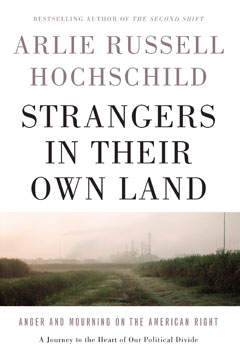 Just finished reading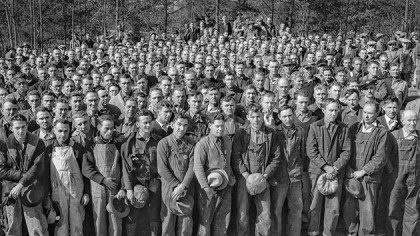
 The Christian right metaphysics mixed with flag/gun/anti-government passions, honestly held and sincerely believed, makes allying with secular globalists like myself and everyone else in the progressive movement seem most unlikely. I don’t like seeing it this way. It makes me sad and a bit fearful for the immediate future. Perhaps dialogue can help, but when what Hochschild calls the deep stories are so profoundly different, it means the assumptions with which we start the conversation may defeat the effort at its inception.

 Often on Facebook I see people taking time off, time away. An article on how to cope with the flood of news now available and clamoring for our attention suggested not reading any news online at all. Read a newspaper and when you finish it, throw it away. Of course, the idea of a vacation is not reserved for hypervigilant news consumers-like me, for instance-but has broad application in the workplace, too.
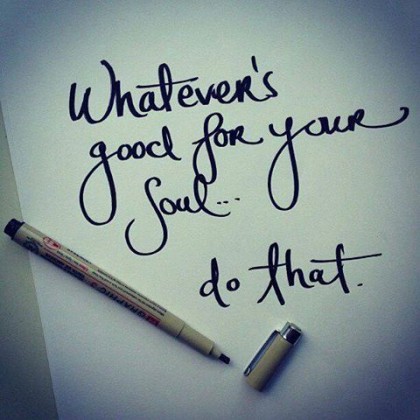 I’m a bit suspicious of our motivations. We may be solving the wrong problem. I love travel, seeing new places and becoming a stranger in someone else’s world. I love travel not as a distraction from work or home or the current political climate, but for itself, for the fact of being, literally, somewhere else. It seems to diminish travel, at least as I understand it, to use it as escape. Perhaps the differences here are prepositional. In my sense of travel, I travel to places. In the escapist sense we travel away from something.
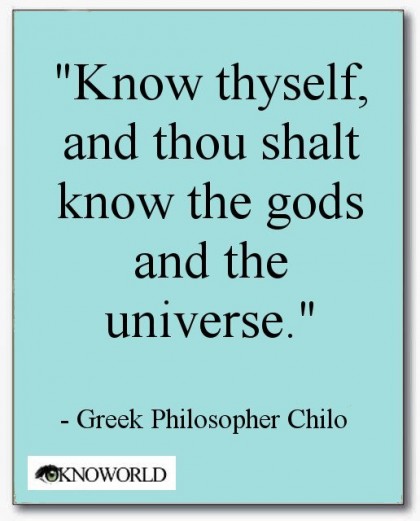 Addiction is an overused idea, so I’m not going to talk about Facebook addiction or any other, but the issue in all these instances seems the same as a yearning for geographical escape. Something is not working right now, so I need to go. The problem is, there you are.
 Don’t know why it took me so long, but I know how to make America great again. It will not require red baseball hats or xenophobic bluster. No, it only requires listening to the ideas of a Passionate priest, Thomas Berry. Berry wrote a small book,
  The phrase, the Great Work, comes from medieval alchemy. The primary, original material of the universe, the prima materia, in the alchemist’s lab can create the philosopher’s stone. The philosopher’s stone could turn base metals into gold or silver and extend the alchemist’s life.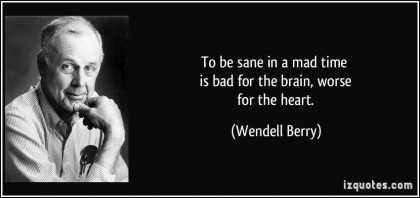
 Make no mistake. This time is the direct result of Democrats and liberals ignoring fundamental politics, the politics of financial well-being for those not in the 1%. The shift away from these fundamentals was done in a good cause, this change in focus away from the old union, working persons emphasis of the Democratic party of my youth. Here’s an excellent article that explains how the shift happened and why it’s been so problematic, while also accomplishing a lot of good things along the way: