Why Does Gardening Inspire Us?

65  bar steady  29.78  0mph E  dew-point 64  sunrise 6:11  sunset 8:24  Lughnasa

Waxing Gibbous Corn Moon  moonrise 1816  moonset  0130

Rain all night.  After a night of moisture the air is cool and the garden looks replenished.  The lily bubils I set out in their soil plugs yesterday got a good drenching.  Forgot to mention yesterday that I also planted a stem with the bubils on it, apparently this was the old method of regeneration.  It makes sense because it’s what the plant intends.  After die back the stem and its bubils would fall to the ground and sprout from there.

While looking at the tomatoes yesterday, I had a realization, one you’ve probably made already.  When the tomato fruits are not ripe, they blend in with the bushy plant and its leaves.  Once they are ripe, that is, ready for distribution by hungry critters, they turn red.  Then, they stand out against the green.  Mother nature reverses the human traffic light, for her green means stop and red means go.

When I set aside a book review to purchase the book The Brother Gardeners, it made me think about gardening from a different perspective.  That is, why does gardening inspire us, over and over again?  We do not write books of a philosophical bent about agriculture, at least not many.  I can’t recall any, but there must be some.  So why does gardening get so much ink; it is an act usually irrelevant to economic fortunes.

Here’s one answer.  Gardening is a unique experience for each one who engages it.  The topography of your land, its winter and summer extremes, annual rainfall, the microclimates, the amount of work you put in to the soil, your ability to match plants with all these variables, the time you can devote, all these factors plus many more make certain that even the person gardening next door has a different experience than you do.

Within that unique experience though, there is a universal moment, an archetypal moment.  Each time we provide support and care to a plant, any plant, we relive a defining event in all human history, the neo-lithic revolution.  Somewhere, around 10,000 years ago or so, somebody, probably a woman, noticed that plants grew from seeds.  Little by little this led to tending the first gardens, a bulwark against the vagaries of hunting and gathering.

This changed the world.

Gardening, too, remains the most common activity, perhaps after parenting, that gives us the sense of co-creation with the forces of life.  In each unique experience, from tending African Violets in a windowsill to tomato plants and corn outside, we have to live on plant time.  We wait for the seeds to sprout.  We wait for the leaves to grow.  We wait for the blooms.  We wait for the fruits to set.  We wait for the fruit to mature.  Though we can, and do, fiddle with these factors most of us allow the plant to lead us.

In this cycle, as old as plant life itself, older than the animals, is the paradigm for our own lives.  Thus, when we weed or harvest, prune or feed we know ourselves part of the vitality of mother earth.  That’s key, we know ourselves as part, not the whole, not the most important part, only a part.

Colma, California City of the Dead

69  bar falls 29.80 1mh SSE dew-point 53  sunrise 6:11 sunset 8:25  Lughnasa

Waxing Gibbous Corn Moon    moonrise 1816  moonset  0130

Finished Alive in Necropolis. A fascinating book, part ghost story, part coming of age story, part police procedural set in Colma, California.  Colma, California is not just anywhere; it is where San Francisco chose to bury its dead.  There are way more dead people in Colma’s 17 cemeteries, 1.5 million, than citizens, 1, 280.   This one I read almost straight through.  It kept what John Gardner calls the fictive dream alive.

Feels good to have read the last two nights rather than watch TV.  I might let it become a habit.  I love fiction, write fiction.  That’s not to say I don’t pick up non-fiction, in fact, I do.  Quite a bit.  Some folks I know rarely read fiction.  I rarely read non-fiction books through in the same way I do novels.  I tend to treat them as resources, reading them more in the manner of college reading.  I seek the big ideas, the general arc of the argument.  Sometimes, I’ll finish them, but rarely.

Kate is home, the night is pleasant.  The kids are healthy, the grandkids, too.  And the dogs.  The gardens productive and the flowers are beautiful.  A good now.

Bubil Plucking

74  bar falls 29.85  0mph NNW dew-point 56  sunrise 6:11  sunset 8:25  Lughnasa

Waxing Gibbous Corn Moon

The punk hairdos of our Country Gentlemen corn now resemble pubic hair, albiet a dark purple.  Sex and the country gentlemen.  Though I’ve seen corn grown all my life, I’ve never done it myself.  The simple, elegant sexuality of these green giants intrigues me.  The tassel pops out of the top, spreads its stamens.  The developing ears–seed pods–push out this delicate female part, the silk, to receive the pollen which falls down as wind rustles the tassel.  Each seed on the ear has a silk that runs straight to it.  A gravity based system.  One of the tiny miracles in a garden of major miracles.

There is nothing on the planet so miraculous as the photosynthetic driven production of carbohydrates.  Without this marvel the food chain has no beginning link.  No beginning link, no chain at all.  It would not be out of place to stop by a plant tonight or tomorrow, put your hands together, bow a bit and say Namaste.  A gracias, too, perhaps.

Kate’s home.  She had fun with the grandkids.  She’s really become a grandma and a good one.  A pleasure to see.  She cooked tonight.  Spaghetti squash, tomato cucumber and onion salad, fish.  All but the fish from our place.

This evening I plucked bubils from the leaf junctions of three of my lilium.  After dipping them in some root  hormone, I took a pair of pick-ups and slotted them into soil pellets.  The pellets went into small plastic six packs.  The whole went out to the garden to receive water and sun.  After they’ve grown a bit, I’ll transplant them to the second tier bed down by the patio.  I’ve never tried propagating lilies this way before, but it was common in the 19th century according to my lily culture book.

The Earth, a Sacred Place

79  bar falls 29.96  0mph NE  dew-point 56  sunrise 6:10 sunset 8:25  Lughnasa

Waxing Gibbous Corn Moon

I got this off the Permaculture listserv.

“(I find this is a good reminder to recite every morning.)
Diadra

A Prayer for Gaia by Rose Mary O’Malley

As I breathe in your air, eat your fruits and drink your water, let me be sustained and nourished so that I may serve.

As I use your resources for clothes, shelter and warmth, let me be strengthened so that I may give back more than I have taken.

As I drink in the beauty of your oceans, flowers, blue sky and stars, let me be so filled with beauty that I will bring only love and joy to your inhabitants.

As I am nourished, taught and loved by your inhabitants, let me so filled with love and knowledge that I joyfully work to assure a fair distribution of your treasures.”

It is an example what I believe to be true, that is, many many people consider the earth a sacred place and have the intention of reverence and worship toward her.  The whole neo-pagan movement with its mix and match invocation of Europe’s ancient pantheons and perhaps some Egyptian influence does not reflect the rootedness of this sentiment in American soil. (That is, the American manifestation of it.  I believe this is a global phenomenon.) It is also not the case that the Native American reverence for the earth is other than a salutary reminder since their experience is so different from that of us boat people.

We need a way of following the seasons that respects our American experience of this vast and wonderful land.  We need a way of honoring mother earth that borrows, yes, from other cultures, but does not presume to make their ways our ways.  We need, as Emerson said, a religion of revelation to us, not the history of theirs.   And that revelation comes from two sources:  our experience of the outer world–this land, its peoples and our experience of other peoples and other lands; and, our experience of our inner world and its own universe, added to our resonance with the outer world.

This is the pagan lovesong that I hear in the hearts of so many people, one that needs articulation and expansion.  This is like Brian Swimme’s work, too.

This faith, this reverence and worship of the earth, as in Ms. O’Malley’s prayer, is an ur-faith, or a proto-faith, a faith that comes prior to others,  a faith whose acceptance does not contradict the Mulism or the Buddhist, the Taoist or the Christian, but complements, supplements them.  For some, like me, it is an adequate faith, enough to sustain me on my journey and as I contemplate the life after this one, or others, it is not enough, but one that needs some salvation instrument or some philosophical cleanser.  That’s all right.

Remember The Sabbath Day And Keep It Holy

76  bar steady 29.97  0mph NEE dew-point 58  sunrise 6:10 sunset 8:25  Lughnasa

Waxing Gibbous Corn Moon    moonrise 1633 moonset 0040

Strange how I have to relearn, sometimes again and again, simple home truths.  A day of rest is good for the soul.  The Jews knew it.  The traditional Christian community knew it.  It may be a Western contribution to humanity.  I’ll have to check, but I don’t think the Asian communities have a similar notion.  Yes, they have festivals and holidays, that’s for sure shared, but the notion of a weekly day of rest?  I don’t know.  Those of you who read from Southeast Asia, what do you know?

Anyhow, I woke up today recharged and ready to go.  This in spite of my lingering doubts yesterday.  Remember the Sabbath Day and keep it holy.  Quite a while back I got interested in the idea of sacred time, my commitment to the Celtic calendar is an example.  I also observe a week long retreat at the end of each year thanks to the Mayan concept that the last five days of the year are best left alone in terms of work.

I took from the Spanish cultures, especially Colombia and Mexico, the siesta.  A nap a day continues to be a cornerstone of how I live daily.

The religious communities with whom I shared a vocation for a time convinced me of the value of regular retreats.  The retreats and the Sabbath day have been honored more in the breach than the observance, but I believe that is about to change.  Our body needs sleep, perchance to dream, and, it turns out, our mind does, too.  Recent research shows that the mind sifts, weighs, analyzes and interprets the days events while we sleep.  I suspect the same thing occurs when we take a regular caesura from the usual rhythms of our week and our year.

Please note I’m not talking about vacations here.  Those exist for a different reason, I believe.  Vacations allow us to vacate the norm and experience another world.  They are more for fun and for education seen as fun.

The holy rhythms of which I write here are different.  They focus on the spirit, the care and maintenance of our soul.  Our doubts about such a metaphysically evanescent idea may have contributed to our immersion in and the stickiness for us of the material, outer world.

Well, time to put this regathered energy to work.  See you on the flipside.

Scientists closer to developing invisibility cloak

OK.  I gave you a link to the jetpack last week.  We have robots on Mars.  Voyageur is in the Oort cloud, beyond the solar system.  We get most of our communication via satellite links.  The best telescope in the world is not on the world, but above it. My destktop computer is more powerful than the big, room-sized computers of yesteryear.  Cameras no longer require film.  Movies and music come on frisbees.  People carry their telephone with them and have their own numbers.  There are many cars on the road that no longer run exclusively on internal combustion engines.

Not to mention Booger and his mistress willing to ski down Everest nude with a carnation in her nose.

We’re living in the future.

WASHINGTON (AP) – Scientists say they are a step closer to developing materials that could render people and objects invisible.

Researchers have demonstrated for the first time they were able to cloak three-dimensional objects using artificially engineered materials that redirect light around the objects. Previously, they only have been able to cloak very thin two-dimensional objects.

The findings, by scientists at the University of California, Berkeley, led by Xiang Zhang, are to be released later this week in the journals Nature and Science.

The new work moves scientists a step closer to hiding people and objects from visible light, which could have broad applications, including military ones.

People can see objects because they scatter the light that strikes them, reflecting some of it back to the eye. Cloaking uses materials, known as metamaterials, to deflect radar, light or other waves around an object, like water flowing around a smooth rock in a stream.

Metamaterials are mixtures of metal and circuit board materials such as ceramic, Teflon or fiber composite. They are designed to bend visible light in a way that ordinary materials don’t. Scientists are trying to use them to bend light around objects so they don’t create reflections or shadows.

It differs from stealth technology, which does not make an aircraft invisible but reduces the cross-section available to radar, making it hard to track.

An Existential Chill

66  bar steady 30.06  1mph NE dew-point 48  sunrise 6:09 sunset 8:27  Lughnasa

First Quarter of the Corn Moon    moonrise 1533  moonset 2334

We will never be an advanced civilization as long as rain showers can delay the launching of a space rocket.  George Carlin, RIP

The drum tower in Beijing.  Anyone who’s gone on the one week quickie tour of Beijing and environs has at least had a chance to climb it.  As early as the Han dynasty (206bce to 220ace), these towers used drums and bells to mark dawn and dusk. Kate and I climbed the drum tower when we visited Beijing in 1999. (I think it was 1999.)  I recall it as a dusty place with open areas used for storage, like an old barn.  Three stories high it had a commanding view of a market and one of the old style Beijing neighborhoods.  We were there at the end of December and the drum tower was cold in the way only bare, featureless spaces can be cold.  A sort of existential chill.  Maybe Kate didn’t go up, I do not remember now.

The death of Todd Bachmann, CEO of the premier garden center corporation in the Twin Cities, shocked me.  Many of our plants started their life at Bachmann’s.  Long ago in another life I was in a year long class with a Bachmann who had chosen the Lutheran ministry.  Then, too, there is the somehow stronger link with the site itself.

So often when events happen abroad, they happen in a place that is at best abstract:  Darfur, say, or Baghdad, Ossetia, even Jerusalem.  Once you have been there, walked those streets, seen the heaped up spices and vegetables in the market near the drum tower, then what happened is no longer abstract or far-away because the context is available to your own sensorium.  My feet recall the climb in the cold December weather.  My eyes recall the sights of the market and the small shops.

A strange sense of lassitude has come over me today.  On Sunday I do not work out, so there is a feeling of expansiveness, but also relaxation, a similarity to the sabbath.  The weather is perfect, moderate, sunny, low dew-point.  A great day to work outside, but digging out the firepit seems to have used up that motor for right now.  Even so, I’ll probably pick up the spade and spading fork and begin removing day lilies to new locations.

This is a task that has a window, a window created by the ideal time to transplant iris, August.  In this way my time must conform to the garden.  It is a happy bondage, though, and one to which I willingly submit.

Home Alone

62  bar steep rise 29.98 3mph NEE dew-point 47  sunrise 6:08  sunset 8:28  Lughnasa

First Quarter of the Corn Moon  moonrise 1533  moonset 2334

Kate’s been gone since Thursday morning.  I miss her.   There’s always a certain frisson being home alone, for a bit, but it fades and then missing her kicks in.  We talk things out, watch each others backs, fill in each others life.  Happily married, I’m happy to say, 18+ years and counting.

Bumped the irrigation system up to 150%.  The rain has been scarce to none.  We’re in a severely dry period.  The grass has begun to turn brown, even with regular watering.  The crops need water now because many of them come to maturation in the month of August and early September.  Having our own well is a blessing when it comes to irrigation, it means we don’t have to worry about drawing down the city wells or abiding by their sprinkler rules.  Even so, I wonder about the water table and if our use of the sprinklers and our neighbors affects the city as a whole.  Don’t know enough about hydrology to know.

A few of the Olympic events were on TV, but women’s soccer, the early rounds, and volleyball do not draw me.  The sports I enjoy are the track and field events. Even there, the participants are, for the most part, unknown and will not become visible again until the next Olympics.  I suspect I’m not the only one who does not enjoy sports where the narrative line has no visibility most of the time.  One of the things I enjoy about football is the back story I know from years of paying attention.  Almost none with the Olympics.

Up too late. Again.

Dig In!

79  bar steady 29.88  3mph NNW  dew-point 56  sunrise  6:07 sunset 8:28  Lughnasa

First Quarter of the Corn Moon  moonrise 1432  moonset 2259

More empathy for the sandhogs and ditch diggers from the old sod who threw the new sod.  The pit is down as far as I need to take it.  Kate and I have to decide now how we want to trick it out.  Stone?  Metal?  What kind of seating?  Cooking? When she gets back, we’ll figure it out.  She’s the detail person, the finished carpenter to my laborer. 

The notion of standing stones in the yard still draws me, makes me want to find the right ones, ones that look like the standing stones in England, Ireland and Brittany.  I haven’t put a full court press into it, but I will here at some point. 

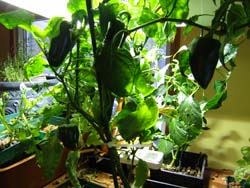
This afternoon after the nap I’m going to sterilize the hydroponics and set little cubes of various kinds growing in the nursery.  I plan to have salad material growing, probably all but tomatoes.  They will await another iteration of the hydroponics. 

An African object written up, then back to the novels.     

The Pre-Season

66  bar falls 29.87  0mph S dew-point 59  sunrise 6:07  sunset 8:30  Lughnasa

First Quarter of the Corn Moon  moonrise 1326 moonset 2226

The Vikings.  Tavaris Jackson looked improved, just as the pre-season hype has it.  The first string defense failed to impress, though Jaren Allen showed his quickness.  Pat Williams did not play tonight, so that made the run defense a lot weaker.  Berrian, Wade and Rice showed some promise as receivers and Maurice Hicks as a running back.  It’s true.  I can’t hide it.  I enjoy watching football.  There, I said it.

Talked to Kate.  She had Gabe and he cooed over the phone.  Ruthie was asleep.  Humphrey, as Ruth calls her, had a lump, had it biopsied and it came back cancerous.  That meant oncologists and surgeons today, so Kate got to watch Gabe and Ruth while the daycare lady went to the hospital.  Kate was ready.