1 trillion trees Tomorrow is Earth Day, Gabe’s 11th birthday. So let’s call it Plan Gabe. I wrote a piece about this process, a new word to me, afforestation. Let’s say you do nothing to advance the Great Work, creating a sustainable human presence on this earth. Let’s say you do nothing but plant yourself or pay to have planted 100 trees. If each family would take on the responsibility, say 100 trees per family member, or whatever could be afforded, we could create a foundation of the rich bastards profiting from mother earth’s feverish imbalance and plant the rest.
PLAN GABE. We need it now. Let it be the only commandment in the ur-faith I describe below. Plant trees. Plant as many trees as you can. Now. Throughout your lifetime. As Nike says, Just do it.
When I set out, long ago, on my forever not done task of reimagining faith, I didn’t want to reimagine Christianity. My goal was to focus on faith itself. Why and how. Was there a way to refocus at least part of that faith muscle in our psyche and point it toward Mother Earth? That was my impetus, Thomas Berry’s Great Work for our civilization, creating a sustainable human presence on this, our only planet, shared by and necessary to all.
In the process I discovered I was not a good systematic thinker. To my chagrin. Thought I was, or could be. Turns out I’m a creative thinker, but lack something to parse things out page after page. Not a bad thing at all, but not how I’d read myself.
The idea was to create, or better, evoke, an ur-faith, one that could slide under Christianity, Judaism, Islam, Hinduism, Buddhism, Jainism, even under atheism and take just a sliver of faith and focus it on loving and believing in and actively caring this miracle that sustains us. Still seems like a good idea.
Honeycrisp, Andover
What do you love about mother earth? The snow, perhaps. Or, the beach. The ocean. The mountains. Spring flowers. New leaves. That first onion or tomato in your garden. A puppy. A kitten. She gives them all to us. Each living thing began from one single-celled creature sparked into life somehow, a sacred moment for all of us who move, who draw our sustenance from the world.
This is Easter morning. Last night Kate and I went to the community seder for Beth Evergreen. When I think of barriers to a reimagined faith, a reconstructed element of our sense of wonder and hope, I think first of dogma and tradition. Yesterday Nicholas Kristof, an NYT columnist, had another in a continuing occasional series in which he asks Christian leaders if he’s a Christian though he doesn’t believe in the virgin birth, the resurrection, or the miracles of Jesus?
The Reverend Serene Jones, the first woman president of Union Seminary in New York City, doesn’t either, she says. She finds the virgin birth a bizarre claim that makes sense only if you consider a woman’s body sinful, only pure if untouched. She notes that the gospel of Mark has no resurrection story, ends with an empty tomb. The resurrection she says is a story of love triumphing over hate. The crucifixion is like a lynching in her view and the resurgence of Jesus’ followers after his death overcomes its power.
At first I got kind of excited about this way of understanding some of the core tenets of Christianity, reimagining the dogma. Then, I thought, wait. Why do I need a 2,000 year old story about a person who may or may not have existed to tell me that love triumphs over hate? That oppression and political executions are wrong? That the virgin birth involves projecting back into a significant individual’s life story something to explain his wonder.
by the firepit, Andover
Oh, yeah. Dogma. I don’t need to wrestle with it to know that the fields of the Midwest, of the Ukraine, of northern and western China, of Argentina give us food. Food that our bodies evolved over millions of years to find nourishing of life. I don’t need to redefine these encrusted barnacles of too much thought. Not when I can see Black Mountain in the sunrise every morning. Not when I can reach down and pet Kep, Rigel, Gertie and see them wag their tales. Not when I could go out in June in our Andover garden and pluck fresh garlic cloves from the soil. Later on Honeycrisp apples from the tree, honey from our partnership with colonies of bees. No, the crucifixion is not necessary. That’s all.
That doesn’t mean that the narrative of love conquering hate is unimportant, hardly. Nor does it mean that the Passover story of liberation from oppression is unimportant either. We need liberation and love in our human contexts where our cupidity grinds away at both of them. But, important as liberation and love are for humankind, animals, too, without a planet to sustain us they won’t matter. The energy we spend redefining and rethinking dogma and tradition is, like money and status and power, a diversion from the central, Great, work of our time, healing our grievous wounds to this planet. Talk about a crucifixion.
Gifts of our mother
In a supreme irony we must turn our attention to ourselves in order to ensure that our mother, this earth, can still be our home. We and our dogmas, our traditions, are the Romans, each of us a Pontius Pilate. We are the Egyptians who hold the Hebrews in slavery. We have already consigned our atmosphere, our oceans, our climate to a new balance, one they will be able to negotiate over time, though a renegotiation we may not survive as a species. Thousands of species have already gone extinct in the rebalancing phase under way right now.
On this great wakin’ up morning, after the night when the angel of death passed over the Hebrew first born, take what sustenance you can from these tales, but leave enough credulity over to consider the extinction level myth of a species that came to love its own sparkly things over the song of the robin, the bleating of a lamb, the crash of a waterfall, the sough of the wind through a grove of redwoods. Leave some of your faith over for our mother. If only you can.
Under the Healing Moon Kate recovered from her g.i. bleed. Under the Thanksgiving Moon we found the problem and are close to a procedure to provide her relief. The bleed was on September 28th, over two months ago. It does seem to have served the unintended but welcome purpose of ratcheting up the already extended process of diagnosing her problem.
Why this wasn’t found before? Here’s my take. All of her symptoms were gastro-intestinal with common g.i. problems that explained them. So the process was to look closely at her g.i. tract. This common sense approach kept its focus on the most likely source of the symptoms. When you hear hoof beats, think horses not zebras. In other words the looking was inside the gastro-intestinal tract with a side excursion looking at the gallbladder.
The difficulty? The cause was outside the g.i. tract in the arteries that supply blood to part of it. These last two imaging studies were a sort of last gasp, let’s check out the really unlikely since nothing else has shown up. Fortunately, Dr. Rhee decided to look outside the g.i. system. The literature on the problem says it is difficult to diagnose, one of those things that you have to look for explicitly. Further complicating it is the fact the ultrasound which does diagnose it is itself difficult and requires very competent technicians and an acute radiologist.
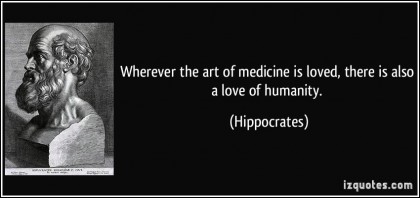
Medicine is much more art than science. Kate’s long journey toward a solution shows that. Imaging studies are not easy to interpret and no imaging study will find something if you’re looking in the wrong place to begin with. The body is exquisitely complicated with linkages between its various systems often tiny and in hard to see spots. Also, symptoms have multivalent possible origins. I find myself more forgiving of the medical world after all this. Why? Because I’ve observed first hand the struggle of competent people, working as best they can, to solve an intractable problem.
I’ve come to appreciate the incredible courage it takes to be a physician. People come looking for answers, for certainty. The questions can be matters of life and death, of a happy, fulfilling life versus one with chronic pain or weight loss or nervous system collapse. The stakes are so high, for the patient, for their families. The myth of the physician in our culture, the penumbra of authority and wisdom we impute to them, is just that, a myth. The arena in which they have to solve problems is, for the most part, closed off from direct view, accessible only through lab work, imaging, and the reporting of the patient. It’s often like asking a mechanic to diagnose a vehicle’s odd sounds without opening the hood and to solve the sound by putting tools through the car’s metal body. Really hard.
I think we’d appreciate the physician even more if we acknowledged the fraught world in which they work with imperfect tools. The work Kate did all those years ago was hard. But, also satisfying. Think if you could be the one who finally understands what makes a 74 year old woman experience nausea and abdominal pain when she eats, one who lost 30 pounds in less than a year. More. Think if you were the one who understood and steered her toward a solution. Wow.
Quick note. Bleeding continues. Failed attempt last night to stop the bleeding with an embolization procedure. So. Surgery this morning, a bowel resection. I’m heading in right now. 6:30 a.m. Went in last night, got back about 11:00.
This is what Kate wants. She does not want a repeat of Thursday night/Friday morning with the blood loss. She’s had 5 units of blood as of last night, so they do have to stop the bleeding.
The waning gibbous harvest moon hangs over Black Mountain this morning. A blue, blue sky contrasted by green and gold at the mountain’s peak. Night time temperatures have fallen below 40 so there’s a distinct chill in the air. Still little precipitation, signs pointing to high fire danger, very high on one nearby.
Stack of pallets in the back beckons before the snow begins to fly. Mike, who delivered them for us, threw in one he had lying around home. As I said before, Mike built our fence, a good one. He also carried my TV up to the loft. It was heavy and bulky. Strong guy. And a good one.
Third religious school class last night. Exhausting so far. Tara made table tents with the kid’s Hebrew names on them. Each child born into a Jewish home gets a Hebrew name at birth. Kate got one when she converted, Rachel. The kids sign in with their Hebrew name, too. All this to reinforce learning Hebrew, but it also gives a distinctive Jewish feel to the class right away. Religious school provides a place where these kids, usually in schools where there are few other Jews, can feel a bond with Jewish culture and each other.
Yesterday’s class was sweet. We asked them to bring in three objects that represented who they were and three that represented who they wanted to become. There was an atlas that represented a family’s adventuresome spirit, a Ferrari model removed from its box with a surgical glove covering a potentially sweaty hand, a picture of a Nike swoosh on an expensive athletic shoe, a ballet shoe, a homemade game constructed from cardboard boxes, a video game, Battlefront. Many more. That was who they are now.
A picture of an airplane wing told of a girl’s ambition to be an adventurer, to not lead a boring life filled with taxes and bills. A first place medal in a state gymnastics competition revealed an ambition to be an Olympic gymnast. A small scale model of the Eiffel Tower suggested a desire to learn all the human languages. And, with the same girl, a collage of Hollywood signaled her career ambition, “I’m going to be a music producer.” Very emphatic.
One boy took objects from a bag and said they were in 1,2,3 order. A logo for Le Mans, the 24 endurance race said, “I want to win Le Mans.” A second object was a small model fighter plane. “I want to fly fighters in the Israeli Air Force.” The third, a book on WW II, meant, “I want to be a historian of World War II.”
I guess, on reflection, that this was a pretty successful class. Even though it felt chaotic to me. I think I expect them to act like adults. My problem. Next up. Holiday calendars.
As the moon’s change, so does the Jewish calendar. We’re now in the month of Tishrei, its first day, Rosh Hashanah, the new year of the world. All over the world, throughout the diaspora and in Israel, Jews will be celebrating the new year, shana tovah. This is short for l’shana tova tikateyvu, “May you be written [in the Book of Life*] for a good year.”
This is not, as may be inferred from the paragraph below, primarily a message of judgment. Rather, it is a call for cheshbon nefesh, an accounting of the soul. That is, instead of judgment, the focus is on introspection about the last year, honestly acknowledging areas of life where we’ve missed the mark and then, developing a plan for a new year that includes both atonement and teshuvah, return to a path of holiness. This is an iterative process, it happens every year because there is no achievement of perfection; but there is, as one writer said, the opportunity in this life to become very good.
The soul curriculum of mussar, Jewish ethics which focus on incremental gains in character virtues, acknowledges both the strengths we have and the areas where we can improve our character. “My practice, for example, for this month, for the middot (character virtue) of curiosity, is to greet judgement with curiosity. That is, each time I feel a judgement about another come up, I’ll add to that feeling a willingness to become curious about what motivated the behavior I’m judging, what might be the broader context? Am I being reactive or am I seeing something that does concern me? Or, both? Does my judgement say more about me than what I’m judging?”
I thought about two boys of a man I know. I pictured them both, slovenly and overweight, and thought, what went wrong with them? I had added to those two judgments an assumption that they were lazy, had not fulfilled whatever potential their father, a successful and kind man, hoped for. Since I don’t know either of them, it’s obvious this reaction said more about me than about them.
Arthur Szyk (1894-1951). The Holiday Series, Rosh Hashanah (1948), New Canaan, CT
However, I woke up to the judgment and used it as a prod for curiosity. What are they really like? Why did I make those assumptions? What about my own fears did this judgment express? That I’m not in good shape, that I don’t always present my best self? That I had not fulfilled my own potential? Ah. Well, there we are. My judgment was not about them at all, but about me. Yes, I’m curious to know more about them, to learn about their lives because they’re the sons of a man I respect; but, that particular curiosity is not the one most useful here. In this case the curiosity needs to be turned back on my own soul.
So, curiosity is on my soul curriculum. When I’m incurious, I tend to be judgmental. When I’m curious, I learn new things, I can adjust my behavior. Also, when we’re incurious, we simply don’t learn. Because there is no need. That reinforces our judgments and makes us slaves to our biases and prejudices. Curiosity can be a sort of soul broom, sweeping away our assumptions to make room for new insights, new relationships.
It is this hopeful, supportive type of cheshbon nefesh that the metaphor of the book of life and the book of death encourages. We can have a sweet new year, one dipped in honey, if we are honest, acknowledge our strengths, and work to add to them.
*The language of our prayers imagines God as judge and king, sitting in the divine court on the divine throne of justice, reviewing our deeds. On a table before God lies a large book with many pages, as many pages as there are people in the world. Each of us has a page dedicated just to us. Written on that page, by our own hand, in our own writing, are all the things we have done during the past year. God considers those things, weighs the good against the bad, and then, as the prayers declare, decides “who shall live and who shall die.”
Tomorrow is erev Rosh Hashanah, the eve of the new year for humans, the day when humans were created and a celebration of the days of creation of the world.* It begins the ten days of awe which end on Yom Kippur. The month of Elul, which ends tomorrow, is an entire month dedicated to a soul inventory and amending of life. I didn’t do much with this this year, but I want to try it next year. Or, maybe next month. I like the idea of a month dedicated to an accounting of my soul and to ways of amending it, but also in the spirit of an earlier post, of reinforcing the positives. An annual physical for the spiritually important parts of our life.
Kate and I had a quiet day yesterday.
*(Judaism actually has four new years, one that starts the calendar year in the month of Nisan and celebrates the founding of Jewish people in the exodus, one that served as a date like April 15th for the collection of taxes and is no longer celebrated, and Tu B’Shvat, the new year of trees. This last is still celebrated and marked the birthday of trees since by Jewish law no fruit could be taken from a tree until it was three years old. Wish I’d known about this when I put in the orchard.)
Got to the point of the trip yesterday. At a rainy 10 am in St. Paul, on Summit Avenue across from Macalester. About 30 people gathered to celebrate Groveland’s acceptance as a covenanting community by the Unitarian-Universalist Association. Old friends Martha Anderson, Ceile Hartlieb, Larry Herbison, and Lois Hamilton were there.
The presentation I wrote out below got delivered extemporaneously, so a somewhat different version without the long Emerson quote. The other night at Jazz Central I told David Fortney about going around taking photographs of my various homes in the Twin Cities area. “Closure?” he asked. Made me go, huh? Then, by god, he’s right.
The Groveland moment was about closure, too. I was there, I was a part of that community. Just as I was part of the Stevens Square community, the Loring Park community, and, in a real and active sense, a part of the Twin Cities metro community. But, no longer. Now 900 miles separates me from these places I loved, cared about, in which, to paraphrase a theological idea, I moved and lived and had my being.
It’s different, being back here this time. I’m from away, this is my former home. This time I’m here as a guest, a welcomed guest, one filled with memories of people and moments, but no longer native to this place.
Often when I travel, at least in the past, I would go through a, I could live here phase, while in a new place. Strangely, I don’t feel that way about Minnesota any more. I have lived here. Minnesota is the past now in the same way Indiana is the past. No longer where I am, yet filled with the irreplaceable. No longer where I want to be.
The West and the mountains have me. I’ve changed regional allegiances; not casting aside the Midwest, but finding myself now part of something else. The change is invigorating, life affirming. Then, so is being back here temporarily, confirming memories, revisiting friends, seeing achievements.
I expect the air to be dry, elevations much higher, the buildings younger, the past filled with iconic stories about pioneers and ranchers and miners, cowboys and indians. Mountains now dominate my daily experience, not grain elevators and deciduous trees.
 1 trillion trees Tomorrow is Earth Day, Gabe’s 11th birthday. So let’s call it Plan Gabe. I wrote a piece about this process, a new word to me, afforestation. Let’s say you do nothing to advance the Great Work, creating a sustainable human presence on this earth. Let’s say you do nothing but plant yourself or pay to have planted 100 trees. If each family would take on the responsibility, say 100 trees per family member, or whatever could be afforded, we could create a foundation of the rich bastards profiting from mother earth’s feverish imbalance and plant the rest.


 Under the Healing Moon Kate recovered from her g.i. bleed. Under the Thanksgiving Moon we found the problem and are close to a procedure to provide her relief. The bleed was on September 28th, over two months ago. It does seem to have served the unintended but welcome purpose of ratcheting up the already extended process of diagnosing her problem.
 Medicine is much more art than science. Kate’s long journey toward a solution shows that. Imaging studies are not easy to interpret and no imaging study will find something if you’re looking in the wrong place to begin with. The body is exquisitely complicated with linkages between its various systems often tiny and in hard to see spots. Also, symptoms have multivalent possible origins. I find myself more forgiving of the medical world after all this. Why? Because I’ve observed first hand the struggle of competent people, working as best they can, to solve an intractable problem.
 As the moon’s change, so does the Jewish calendar. We’re now in the month of Tishrei, its first day, Rosh Hashanah, the new year of the world. All over the world, throughout the diaspora and in Israel, Jews will be celebrating the new year, shana tovah. This is short for l’shana tova tikateyvu, “May you be written [in the Book of Life*] for a good year.”
 I thought about two boys of a man I know. I pictured them both, slovenly and overweight, and thought, what went wrong with them? I had added to those two judgments an assumption that they were lazy, had not fulfilled whatever potential their father, a successful and kind man, hoped for. Since I don’t know either of them, it’s obvious this reaction said more about me than about them.