Category Archives: Politics

The Moral Arc

Beltane                                                                    Early Growth Moon

Gay marriage.  Yes.  That the vote to pass this measure in Minnesota might come two days after mother’s day.  Priceless.

In the long, long exile of a left perspective from the American political scene, beginning somewhere around Nixon and only now gradually beginning to lift and even now sporadically and with drone inflected interludes of neo-con thinking, it was Martin Luther King’s prescient rhetorical flourish that sustained me:  “The moral arc of the universe may be long, but it bends toward justice.”

And, I mean that.  When Reagan busted the air traffic controllers union, when he cut welfare programs and raised defense spending, when Bush I was elected and couldn’t recall what a grocery store scanner was for, when Clinton continued the dismantling of our welfare system and most dismally of all, when Bush II was elected by the Supreme Court, then reelected even after his fatal rhetorical flourishes, Axis of Evil and Mission Accomplished, even then I knew that history opens toward freedom and the breaking of tradition-forged chains and when that freedom comes and the chain’s links lie broken in the street, time does not revert.

Now, marriage will become, here in Minnesota at least, an expression of love between two people willing to commit to each other in a long-term, legally binding relationship.  There is not now and there never has been any problem with that.  But often the obvious and political reality don’t match.  Ask the atmosphere.  Rending the disjunction between justice and social reality was the focus of King’s life, Ghandi’s too; it is our focus as well, those who would end economic discrimination, further women’s full integration into life at all levels and make the world’s borders as open as possible.


Pruning. Good-Bye to the MIA

Beltane                                                                             Planting Moon

Pruning allows a shrub or tree to put its energy into productive growth whether it is a stronger trunk or better fruit.  It’s important to prune when a plant gets overgrown or has grown in ways that cut off the flow of air through the branches.  It’s also important to keep a tree, especially fruit trees, at productive sizes, ones where the tree puts its energy into apples, cherries, plums and where the fruit can be harvested easily.

This common garden activity, however, often confronts the gardener with a task for which they feel ill prepared and perhaps a bit nervous.  If I prune too much, will I kill the plant?  You can.  What do I take off?  Why?  It’s not unusual for home gardeners to skip this chore because it feels laden with risk while doing nothing seems to avoid harm.

The third phase requires pruning.  Leaving a job or a career is an act of pruning.  A move to a smaller home is an act of pruning.  Deciding which volunteer activities promote life and which encumber can proceed an act of pruning.

Last year I set aside my political work with the Sierra Club.  Today I have set aside my work at the Minneapolis Institute of Arts.  This is pruning, too, and the kind of pruning necessary at this point for me.

The branches that I want to grow strong are my writing and my translation of Ovid.  They both require regular, sustained hours on a week by week basis.  Both the Sierra Club and the MIA took me away from that concentration.

These were not decisions I made likely, nor are they decisions I made without a sense of loss. In the case of the Sierra Club I gave up my sense of political agency, long a hallmark of my life.  With the MIA I’m giving up a chance to be with kids and adults on tours and the regular stimulation of art in my life.  These are not trivial for me.

Yet.  In this last phase of life I want to focus my efforts in ways that give me a chance to succeed, instead of scattering them in the interest of multiple passions.


Pioneers

Spring                                                                        Planting Moon

Finally, my activities and the turning of the Great Wheel will synch up.  Gonna plant cold weather crops today.  The soil’s still cold though the air will warm this week, only to cool down again next.  It’s important to remember that our average last frost date is the beginning of the second week of May and we haven’t gotten there yet.  No transplants outside yet.

Except.  The leek and onion I got in the mail Thursday and Friday.

Kate and I will be a pair out there today, trying to figure out which of us should do what to lessen the likelihood of pain.

As the planting has approached, I’ve pondered, as I have often, the fate of pioneers* who wrenched a back, had disc problems, sprained an ankle, broke an arm at the wrong time of year.  Not that there’s a right time of year, but some times are worse than others.  Planting and harvesting would be terrible times to have a significant physical impairment.  Can you imagine?  Your life and perhaps your family’s depends on planting this year’s crop.

What is today a nuisance, a bother, something to wait out, could have been literally fatal, and not just for one.  I’m sure everybody pitched in, did what they could, but sexual dimorphism and physical development from child to adult would often mean some work simply couldn’t be done.

A bleak prospect.

I can load up on Ultram, lace up the backbrace and then, if necessary, go to the grocery store and buy my vegetables.  The options are better today.


*And, yes, I recognize the irony between the pioneers and the Native Americans, the latter  having developed their styles of living off the land in accordance with the way the land provided, at least for the most part.  The pioneers, most of them anyhow, were usually poor folks hunting for a place to live and raise a family.  This phenomenon of the poor spreading out to the places of least convenience continues in our day.

I no longer know how to easily understand the right and wrong of it all.  Yes, the Indian Wars were wrong.  Of course.  And the associated Indian schools and all of it.  Wrong.

The pioneers, though?  They don’t seem wrong to me, perhaps not right in a larger, probably undiscernible sense (for them), but not wrong.  At least not most.  Most were Okies.  Cox’s army.  Peasant class folks hungering for a chance.  For them, I have a lot of empathy.

The question today is not how to go back and redo the past. Rather, it is how to discern the lines that will allow us all to walk into the future together, as friends and allies.

The God of War

Spring                                                                         Planting Moon

Gun control derailed two days after the Boston bombing.  Say again?  So violence wins.  Ares is the god of our time, not Yahweh, although in a fight Yahweh never put away the slingshot.

The god of war has built temples in many places over the long centuries, here is one located in Fairfax, Virginia.  NRA HQ.

It features a headquarters range with the following offerings:

The 15-position NRA Range is open to the public and offers:

  • Shooting Events and Activities!
  • Shooting Distances up to 50 yards!
  • Automatic target retrieval system that allows the shooter to edge and face the target for time intervals programmed by the shooter!
  • Wheelchair Accessible!
  • All pistol calibers and rifle up to .460 Weatherby Magnum!
  • A professional staff of NRA Certified Range Safety Officers!

Where does the propensity for violence leave us?  It leaves us with domestic cooking utensils, producers of pot roasts and swiss steak by my mother for example, as weapons of cruel destruction, ripping body and bone apart rather than building it at the supper table.

It leaves us with the twisted irony of the United States Senate turning away minimalist gun control legislation with the taste of cordite still in the air, with shrapnel still in victim’s bodies.

Wish I could dial up Zeus and tell him to call off his boy.  Tell him to stand down.  Enough.


So Poor

Spring                                                                            New (Planting) Moon

I heard for as long as Kate worked at Allina about corporate culture taking over medicine.  The MIA is not alone among museums in taking a “dynamic, new approach”, DNA, which involves wringing more dollars out of the visitor’s “museum experience.”  Major league sports underwent their corporate take-overs years ago.  When I worked for the church, business oriented members would often explain how it needed to be run more like a business.

A general economic malaise, largely created by two strangely related forces, the anti-tax intransigency of Republicans and the illegal manipulations of debt-related securities, has formed an environment in which non-profit institutions have become starved for cash.  Though a non-profit does not, by definition, have making money as its first or even second or third reason for being, all non-profits do have to balance the books somehow.

It is this need that makes them vulnerable to the inroads of corporate cultures for which making money is not only the bottom line, it’s the only line.  This leads to medical clinics defined as revenue centers, sports departments milked for their ticket income and docent lead tours to become big ticket items for museum special exhibitions.

The need for a non-profit to have enough income to offset expenditures is nothing new.  What’s new is those who make this need the primary objective of a medical group, or a university campus* or a museum department.  It’s at this point that the health needs of patients or the educational needs of students or museum goers get shoved down the list of reasons for a doctor or a professor or a teacher or a curator or a docent to do what they do.

You could argue, as many urging corporate style make overs of our most important cultural institutions do, that this is merely correcting an aberration, that these kind of institutions should always have had a sharper pencil, more attention to the time honored counting of beans.

It is not.  What this emphasis on corporate objectives does is negate, yes, I would go that far, negates, the long held belief in this country that some communal matters are too important to put at risk of creative destruction:  education, performing arts, art museums, science museums, medical care and spiritual welfare chief among them.

This prop 13 mentality has successfully challenged much of the fabric of our communal life, turning us toward the libertarian ideal of one for one and all for none.  This is individualism and liberty used not as instruments of freedom, but as wrecking balls.

This is not the country in which I want to live, nor is it the country in which I want my children or grand-children to live.  My oldest son and his wife are teachers.  My wife is a physician.  My youngest son is a captain in the Air Force.  All of them dedicated to the welfare of the communal whole.  All of them putting their own time and chance of capitalist success aside for a purpose, a reason for being that has nothing to do with the profitability of the school, the clinic or the military.

You could argue, I suppose, that what I’m saying here is special pleading and I would agree.   It’s a special pleading on the part of those who believe communal needs come before private ones.  I am one such person.


*  The University Will Not Be Sold (Chronicle of Higher Education for April 9, 2013)

“Public universities are not corporations. They are not sports franchises.

…The corporate vision of Rutgers’s president, Robert L. Barchi, and his associates centralizes sports branding as an income-generating strategy, clearly at the expense of our student athletes and potentially at the expense of academic excellence…

His administration’s embrace of a corporate vision has led President Barchi to behave like a corporate raider against his own university: He has treated Newark’s campus like a thriving company subjected to a hostile corporate takeover. His administration attempted to underfinance Newark and milk its profits (tuition). Next it plans to strip it of its assets (most-profitable graduate programs). We know how these hostile takeovers usually end—the raided “company” ends up on the junk heap.”


Art and Praxis

Spring                                                                            Bloodroot Moon

Here’s an interesting couple of paragraphs from a NYT article:  My Dinner With Dr. King.

“After dinner Dr. King asked Wanda if he could use the telephone again. When he came back, he settled onto the sofa next to me. I tried to think of something clever to say, but before I could speak, he asked why I was studying for a Ph.D. in art history. He asked what I thought art could accomplish that other forms of communication could not. I remember that he said that he’d rarely discussed art, or even thought much about it. As I stammered an answer I cannot recall, he listened with the concentration of someone who genuinely wanted to understand. Never before, and rarely since, had I witnessed such authentic humility. It was so simple, so powerful a form of energy that for a few moments it freed me from bondage to myself.

A conversation that cannot have lasted more than 10 minutes ended up changing the way I thought about my life. When I got back to New York, my viewpoint toward earning a doctorate shifted. The determination to use my education to become a famous scholar gradually made room for a half-baked resolution to become a useful art historian. I began to consider the moral or religious content of Renaissance art; and once I got a job teaching art history at an institution whose values encouraged me to develop that ambition, teaching became a means for me to help students identify and examine their own values. That remains my goal. The short conversation I had with Dr. King had a lasting effect.”

This touched me in two ways.  First, the power of unclouded attention.  It’s so rare, especially in the age of the always-on.  Consider how this conversation might have gone with I-pod buds in the ear.  Or, checking the smart phone for messages furtively.  Unclouded attention is something we can all offer to each other, the only price is our inner voice that wants to interject, comment, offer an opinion.

Second, it opens yet another perspective on art.  Or, rather, it emphasizes a perspective I search for too little, a particular work’s moral or religious content, and I would add, its political.  One example was the post I made in response to Roberta Smith’s snarky review of the pre-Raphaelite Brotherhood show at the National Gallery (March 31).  This line of inquiry, a mode of praxis analysis, can locate a work in time and space and in so doing also place it in a longer line of argument, comment, ideas.

(Dreaming of St. Adorno, Siah Armajani)

Since the art historical point of view so rarely focuses on praxis, “…the action and reflection of men and women upon their world in order to transform it,” (Paolo Freire), there is little danger to a work’s aesthetic relevance.

This lack of praxis analysis can be easily explained by the peculiar position of the art world when it comes to class structure.  Art is usually made by persons who are poor and who operate on the margins of a society.  Yes, by the time a work hits a museum, the artist may have become at least famous, perhaps rich, too, but the bulk of art comes from people of modest means.  Yet, art in its art historical moment too often has become a captive of the art market, a tiny, a minuscule portion of the global population and a very wealthy one.

Thus when art comes into the lens of history and makes it onto gallery walls it most often gets there as an expression of someone’s power, only after that does it get noticed as art.  Consider how most museums build their collections.  Donors.  Rich donors who often give whole their own collections.  This produces a trickle up, a siphoning of art through a long tube whose vacuum comes from the amount of money at one end.  Hardly the context for consideration of a work’s praxis.


Another Country

Spring                                                               Bloodroot Moon

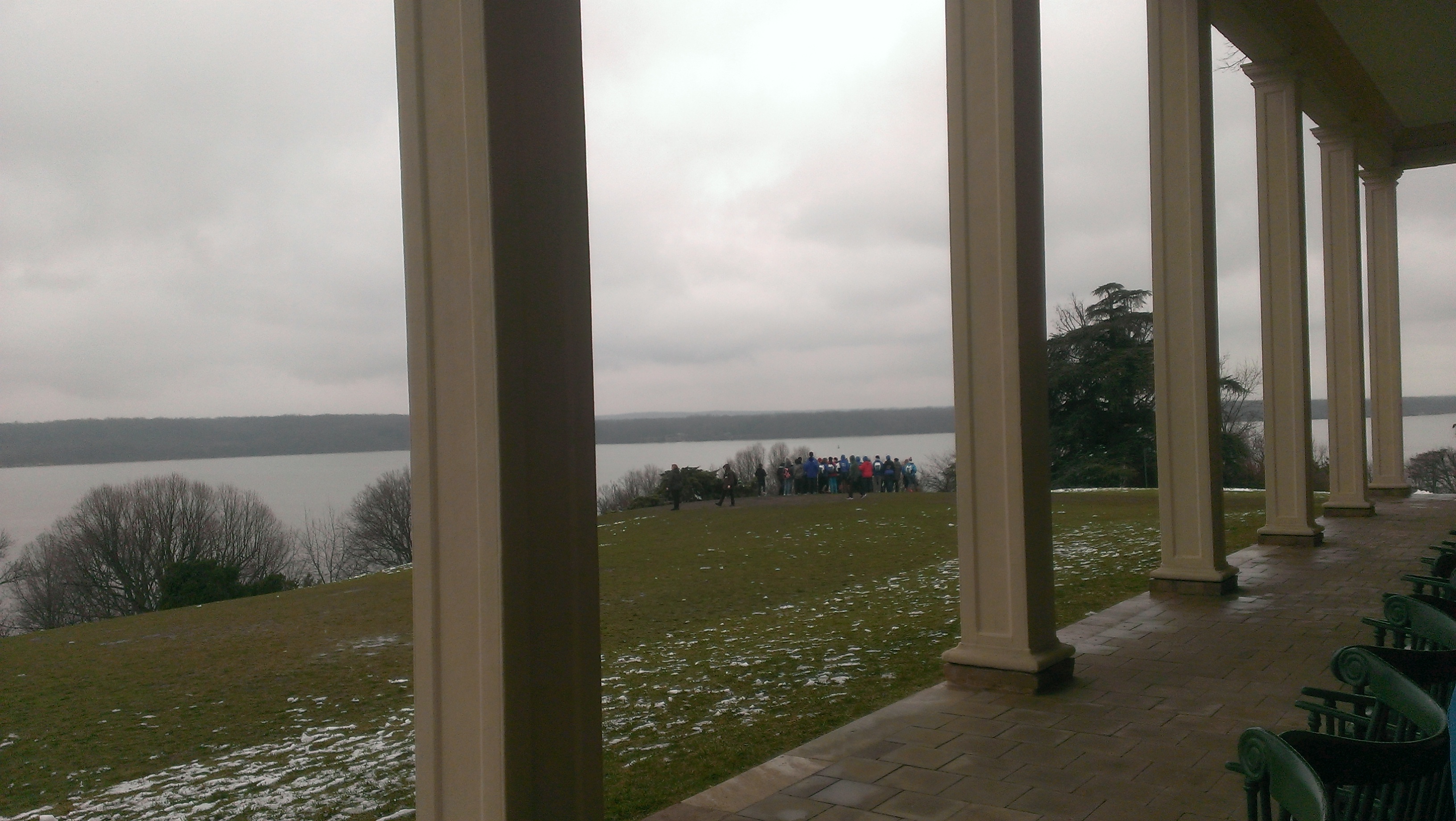
A few pictures from my trip to Mt. Vernon.

Before the pictures though.  Here in Washington and at Mt. Vernon the early history of our nation has a presence on the street, among the documents, in the traditions, and by shaping the forms of architecture from government buildings to residential homes: the brick homes, the limestone greco-roman revival government buildings and monuments and the cobblestone street in Alexandria, Virginia.  The constitution and the declaration of independence lie entombed in the Archives not far from where I write this.

Each place you go some element of our history peeks around the corner, waves. Says, “Psst, want to see some history, kid?”  I remember the same sense when I was on the Capitol, the sleeper train that runs between Chicago and Washington.  Once we got into central Pennsylvania the architecture changed.  We passed places I knew mostly from history books.

Here’s the thing.  I’m a Midwestern guy born, raised and never left.  A heartlander.  This does not feel like my country here on the east coast.  When I think of Minnesota from here, it feels far away, up north and filled with pine trees and lakes.  Which, of course, as most of you know who read this, it is.  Pine trees and lakes are in a large part of the state and they do define our identity as Minnesotans.

This feels like the old world, Europe to our heartland new world.  A place so built up and fought over and crusted up with money and power that it has a different tone entirely from the one at home.

Sure, we’re all subject to the same government and fly the same flag, speak the same language and send our kids off to the same military.  True.  But the east coast, like the south, the West and the Left Coast are different enough to be different countries in Europe or Southeast Asia or Africa.  You know this, I’m sure, but I’m experiencing it right now and it unsettles me in some way.

Here are the pictures.

All in a Morning’s Jaunt

Spring                                                      Bloodroot Moon

Today is the much nicer day of the next three.  Tomorrow the high will be 46 and windy, Monday 41 with ice and snow. Today it is 53 and sunny. I chose walking over museums today.

Before leaving I ate my first and last breakfast at the hotel.  Their main breakfast is a buffet, served for the  many students staying here.  The coffee was weak and served in tired blue plastic mugs.  Jack Reacher would have scored the coffee very low.  A group of 18 students from Germany didn’t seem to mind the coffee though.

Outside the wind was mild, though the temperature in the morning was in the high 30’s.  I saw people in shirt sleeves but I stuck with my hat, Chilean fjord special muffler and my Ecuadorian coat.  There were a number of people out enjoying the sunshine when I passed the Willard Hotel.

(apparently my Android takes self-portraits.  This one showed up in my pics today.)

Those of you who watched House of Cards would recognize the Willard from the scene where Clean Water held its fund-raiser on the steps, then crossed the streets with trays of food for the striking teachers.  Up close it looks like money and power compressed into architecture.

About a block from the Willard and right next to the Whitehouse–how did I not remember this?–is the department of the Treasury.  Keep the nation’s finances right close by the Oval Office, I guess.

Michelle’s garden is on the south lawn and visible from the fence where we all gathered, gobsmacked by the presence of this icon of politics and American might.  The Whitehouse has been the home of all U.S. presidents except for George Washington though Truman vacated for four years while it got a top to bottom rebuilding.

Onward to the Mall, entering the green west of the still not open Washington Monument.  It’s having repairs and rejiggering of its foundations due to a 2011 5.8 earthquake whose epicenter was in Virginia.

Walking along the reflecting pool on my way to the Lincoln Monument I saw a very large Irish Wolfhound, gray and stately, walking its people, unfortunately too far away to meet.

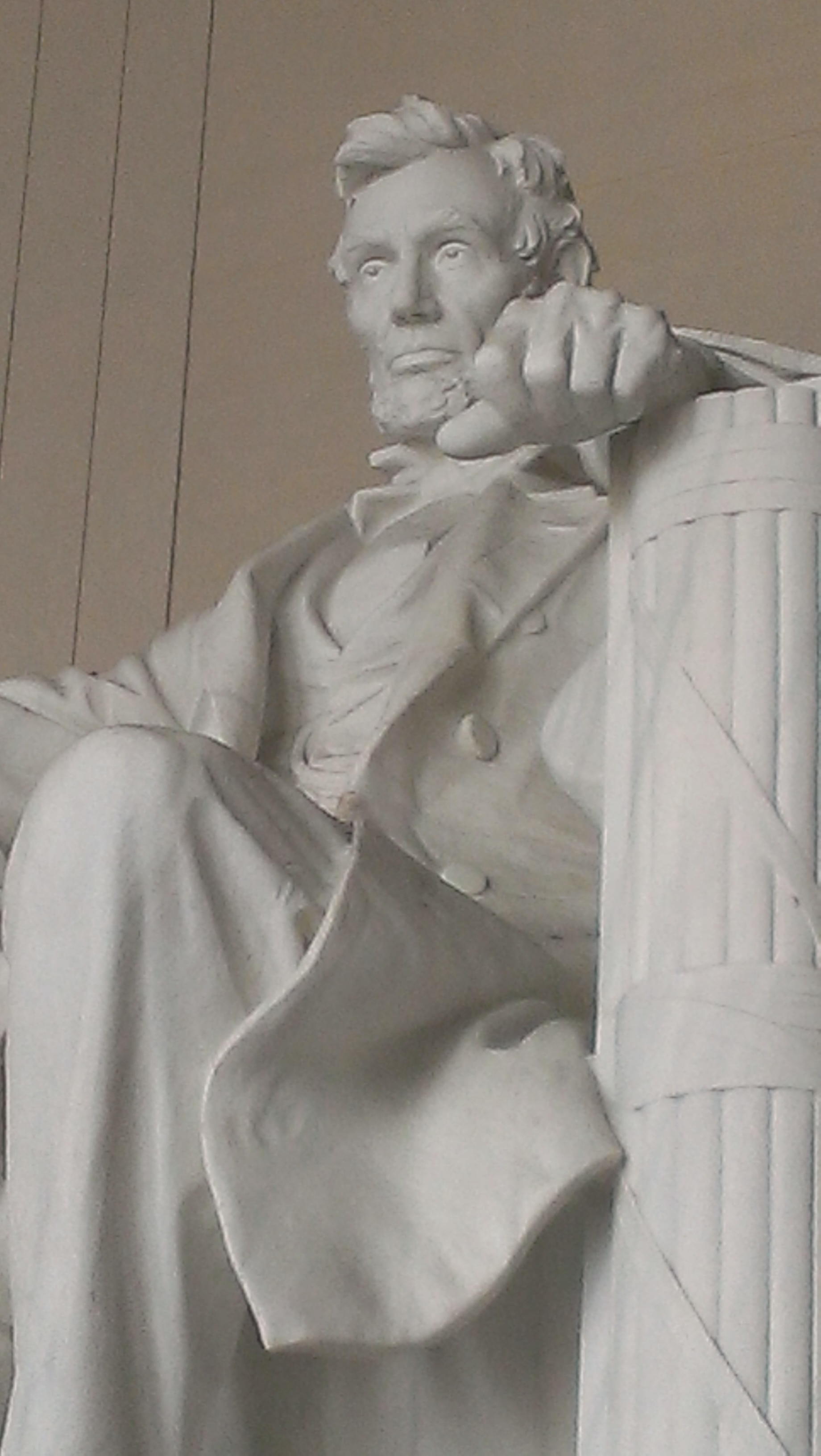
At the monument there were a lot of people though not the crush I’ve  experienced at other times.  This is a moving place as I’m sure you already know.  It is, as it says right over Lincoln’s head, a temple.  Immersed as I am right now in Greek and Roman mythology it’s easy to see the architect and sculptor’s reach back to those ancient worlds for adequate ceremonial features.  He was and is a giant in our history and this haunting building makes that place clear.

A brief thought passed through my head that this was a monument for the ages, then Ozymandias came in its wake and I realized I was a citizen of Rome at Rome’s peak.  London at the height of the British Empire.  Xi’an during the T’ang empire.  Edo during the Tokugawa era.  And the glory of those cities now lies in the past, a memory, not a present fact.  So it will be with Lincoln and Washington, D.C. itself.

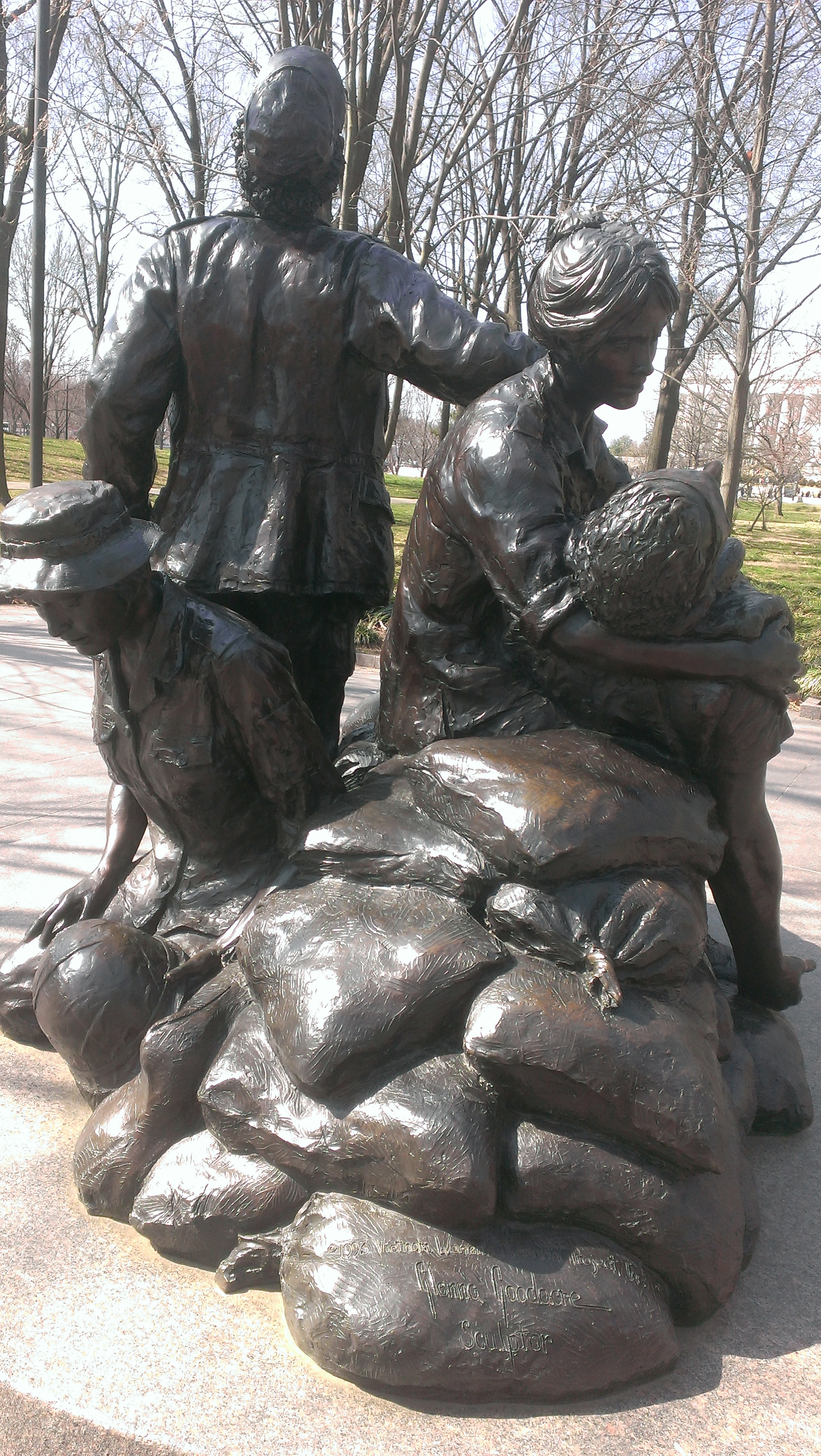
After the Lincoln Monument I went by the additions to the Vietnam Memorial, two statuary groups, one three men, the other three women, and wandered on to come upon what must be the most jingoistic of all our monuments and one built under the reign of George II, George W. Bush.  Nothing against the vets of WWII, among them were both my parents and an uncle, but this monument reeks of American exceptionalism and the projection of US power.  With George W.’s name on it it will forever be linked, as I’m sure he intended, with his misguided efforts in Iraq.

This is an example of the unintended consequences of the use of power.  No one can or should compare the US WWII effort, the last ‘good’ war’, with the ill-advised and deceitfully sold war against the Iraqi people.  This monument will itself stand as stone and metal irony on just this point.

In case, though, all these monumental treatments of liberty and freedom seem ill-advised, I found this on the back of a truck parked on the corner of Constitution and 15th, just two blocks from the Whitehouse.  There is always someone who would take freedoms away.

By the time I trudged my way back–I figure 4 to 5 miles round trip–this guy had exhausted himself.  A lunch at the Elephant and Castle then a long nap.  Woke up refreshed and ready to go back to the PRB show tomorrow.

Imagining the Future

Imbolc                                                                   Bloodroot Moon

A friend last night said we don’t spend enough time thinking about the future.  I believe he also meant imagining it, then trying to press ourselves toward it.  He may be right, I don’t know.

I know in my youth, say from 13 or so until the waning years of my forties, I had clear images of the future and put my back into seeing them come to be.  When junior boys couldn’t go to the senior prom, for example, I decided we needed to have junior prom.  And we did.  Seniors had always bought their rings from Jostens.  I thought we needed bids.  We chose Herff-Jones.

In college it was eliminating in loco parentis, the war in vietnam, racism.  We manged the first, raised hell about the second and, well, the last one.  Not so much.  Later feminism, affordable housing, normalization for the developmentally disabled, neighborhood based economic development, a jobs response to unemployment.  We made good progress on all of these.  Examples.  There were others, many others.

However.  Today we fight in Afghanistan, just finished up in Iraq.  The class inequality in the US and its attendant ills:  homelessness, joblessness, foodlessness are as high as ever.  Those neighborhoods in which the affordable housing got built and the businesses started as owner co-operatives worker managed.  Mostly out of business.  I imagine the senior class at Alexandria High is back to Jostens by now.  And no more junior proms.

Thankfully women are no longer locked in their dorms after ten on college campuses.  I’m not saying there hasn’t been progress.  Actually, I believe there has been.  And in difficult areas like racism, feminism, gay rights.  All to the good.  Not far enough, no, not by any means, but some progress, yes.

Yet the deep painful trench that separates the 99% from the 1% has gotten only wider.  Our new gilded age had some of its gold-plating knocked off, revealing a lot of brass, some tin and lots of lead, but the plating is mostly back now.

My point is this.  Imagining the future is one thing.  Not a bad thing to do I suppose, though it might be, but working for change is quite another.  It’s messy, painful and often fails.  Imagining can be a diversion from working now, for what’s possible, in incremental ways.  And in that sense we may imagine the future far too much.

This Clement World

Imbolc                                                                        Valentine Moon

This Clement World.  Not sure why I decided I wanted to see this.  In part the content of course.  Climate change.  In part a chance to get back into some kind of rhythm with Kate, going out, away from home.  She wants that and she’s right.  It’s a different dynamic than the domestic scene and important to the health of our relationship.

Still.  When I attend a performance in an art center, I expect the aesthetic dimension to pre-dominate.  In that sense I want a unity, a coherence and, perhaps most important for me, an emotional punch, a dragging of this often too cerebral guy into his heart and soul, piecing the three into an ensemble, at least for an hour or even 5 minutes.  Didn’t find that tonight.

Cynthia Hopkin’s journey, from personal melodrama to global catastrophe had the potential for merging the political and the aesthetic, rolling them into an engagement beyond the impending doom.  And I’m sure that’s what she wanted.  It’s what I wanted ,too.  It was there at moments.  When she channeled the German physicist studying carbon in sea ice and he spoke of being stuck without food in a bay during an arctic winter.  He became, he said, a predator, too.  He killed a seal, cut off its head, cleared out its guts and ate.  On occasion her beautiful voice touched me, but too often the cacophony in the background, singers and band, drowned out her song.  At least for me.

I know this about art and politics.  They don’t mix well or easily.  What especially doesn’t mix well is message art.  When the performer has a political point of view and uses an artistic medium as vehicle for sharing it.  Tough.  This is very different from a movie or play or poem or song about political issues.  That’s commentary, critique, a venture to find the universal through the story of Hamlet or All the King’s Men or House of Cards or Twelve Angry Men.  It’s different when the art has a perspective it believes in and tries to pitch it.

What I’m talking about here is a play against domestic abuse, a performance to change your mind about climate change (tonight), a play to advance gay rights.  Where the art work is the equivalent of political speech, persuasive political speech.  Then the narrative and flow of the art can easily get bent in service of the message, rather than following the emotional and creative arc.  It’s not impossible; it’s just damn hard and this one, for me, didn’t reach that spot.

Glad she tried, though.