Category Archives: Our Land and Home

Changes Are Coming

Fall                                                                     Samhain Moon

With Modern/Post Modern in its last week and Modpo with only three weeks to go, I feel like the end of the quarter or semester is in sight.  Since it will roughly co-ordinate with Samhain, this means a distinct change in my daily life.  The garden is almost put to bed and will be by the end of this week as well.  The bees, too, will get their cardboard outer sleeve, the moisture absorbing top board and corks in the lower two entrances, plus the entrance reducer.

This year part of that outdoor energy will get focused in the garage which can use a major cleaning, rearranging.  It’s gotten cluttered and we could use it for more if we eliminate a few things like the five stall dog crate and feeding platform.

Writing Loki’s Children and keeping up with the Latin will occupy the bulk of the time.  I’ll huddle downstairs with the green gas stove burning, my Zojirushi kicking out tea temperature water and visions of old Rome and Ragnarok.

Splitting Wood

Fall                                                               Samhain Moon

Each day has its lessons.  Today the Latin was harder than yesterday or the day before and I had to spend time in the grammar book reminding myself about supines and gerundives. On top of that I still couldn’t wrestle a sentence out of the two verses that troubled me.

When I’d run my brain as far as I could down the old Latin way, it was a good time to go IMAG1084outside and split wood for the Samhain bonfire.  Boy, it had been awhile since I split wood.

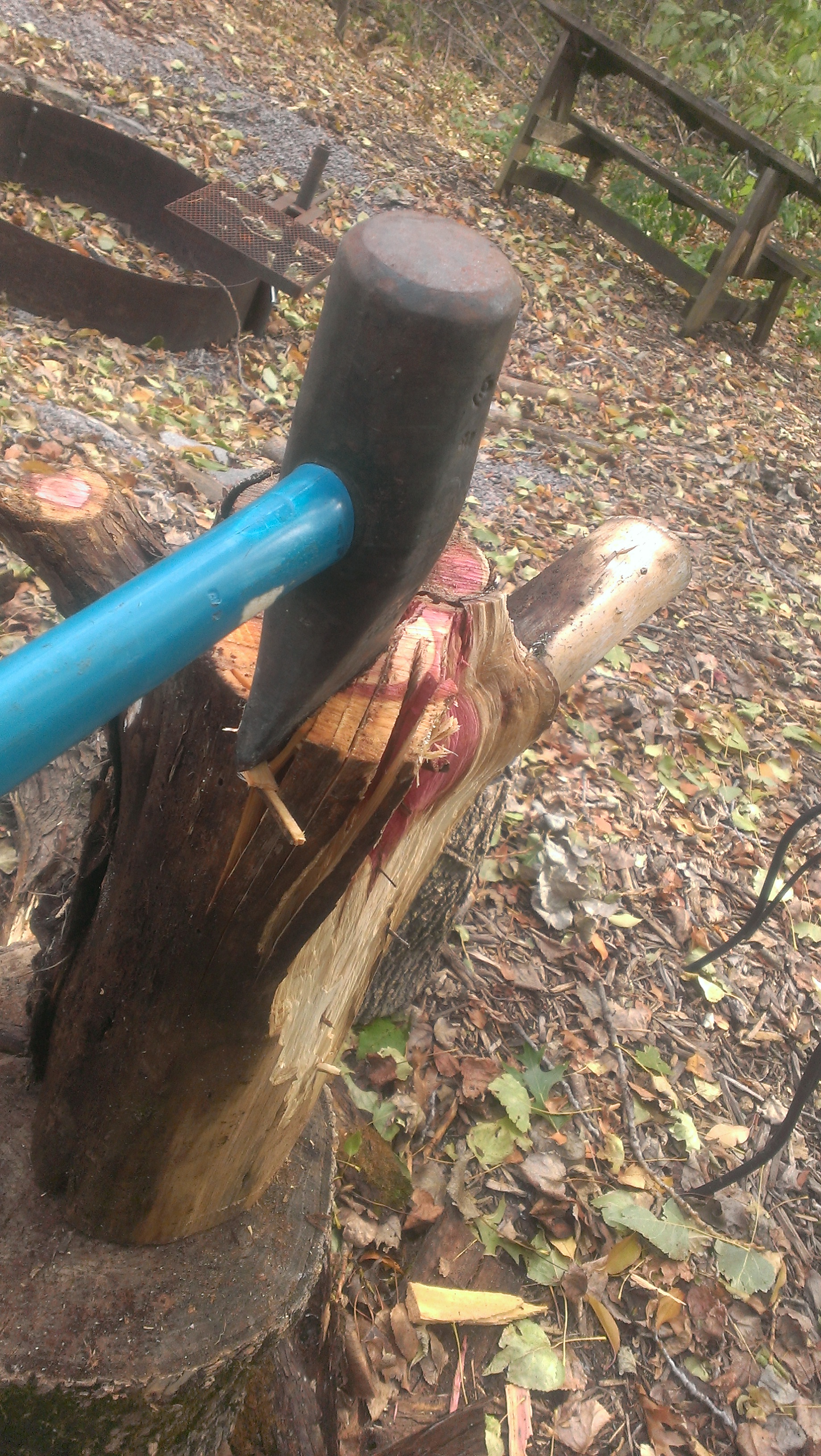
The splitting maul combines a dull axe and a sledge hammer. When you’re splitting wood you want to force the fibers apart, not cut them, as a sharpened felling or limbing ax will do.  That results in ax blades sunk deep into the log.

Besides, as often happens, the splitting maul wedges itself in the wood, allowing for a secondary maneuver which involves lifting maul and with it the log into the air, then bringing both down on whatever solid surface you’re working with, in this case a chunk of the elm formerly in the vegetable garden.  The more slender handle of a felling ax is not designed for the force generated by this action.  The splitting maul, however, has a plastic handle that absorbs the blow and keeps right on working.

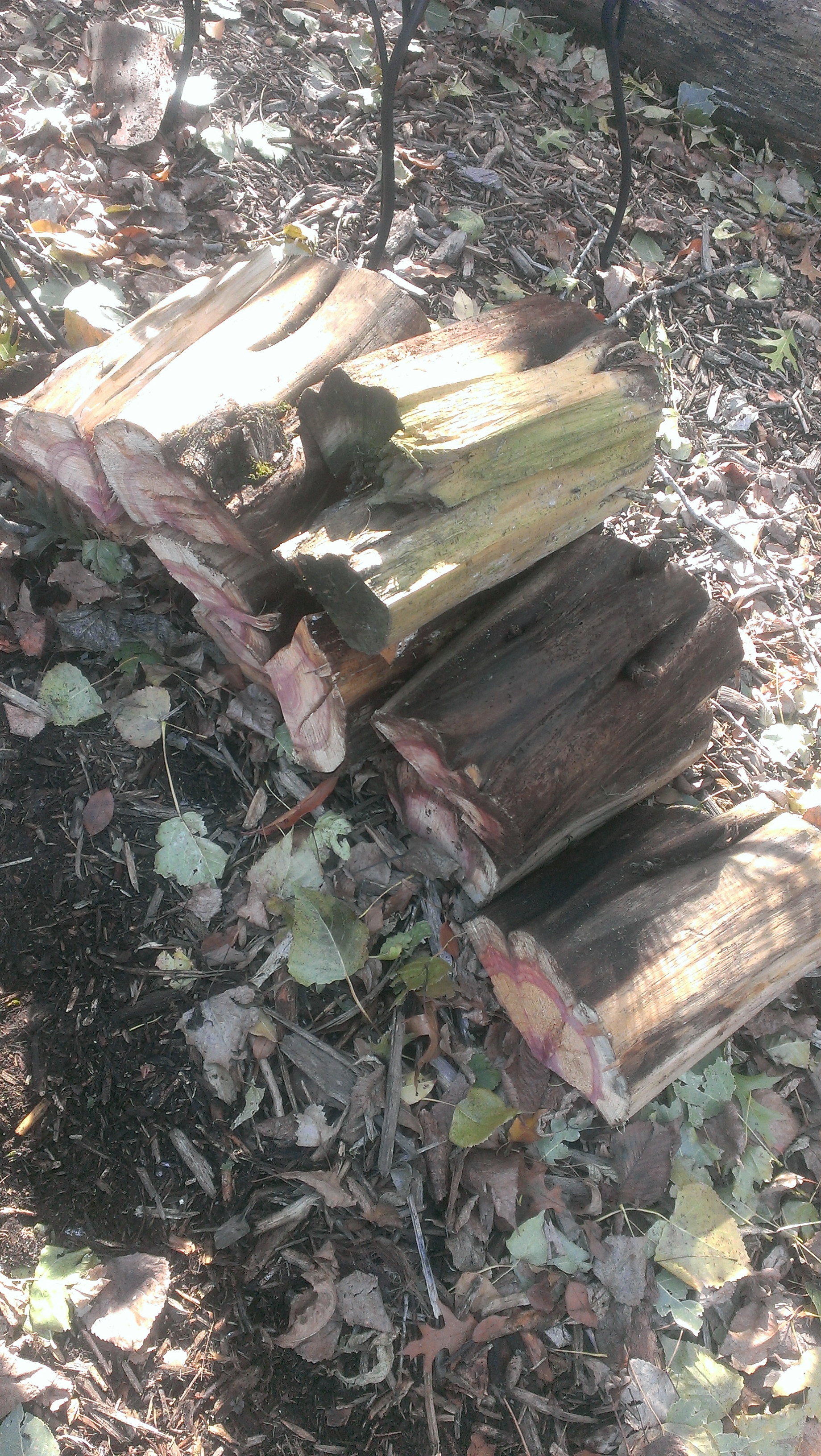
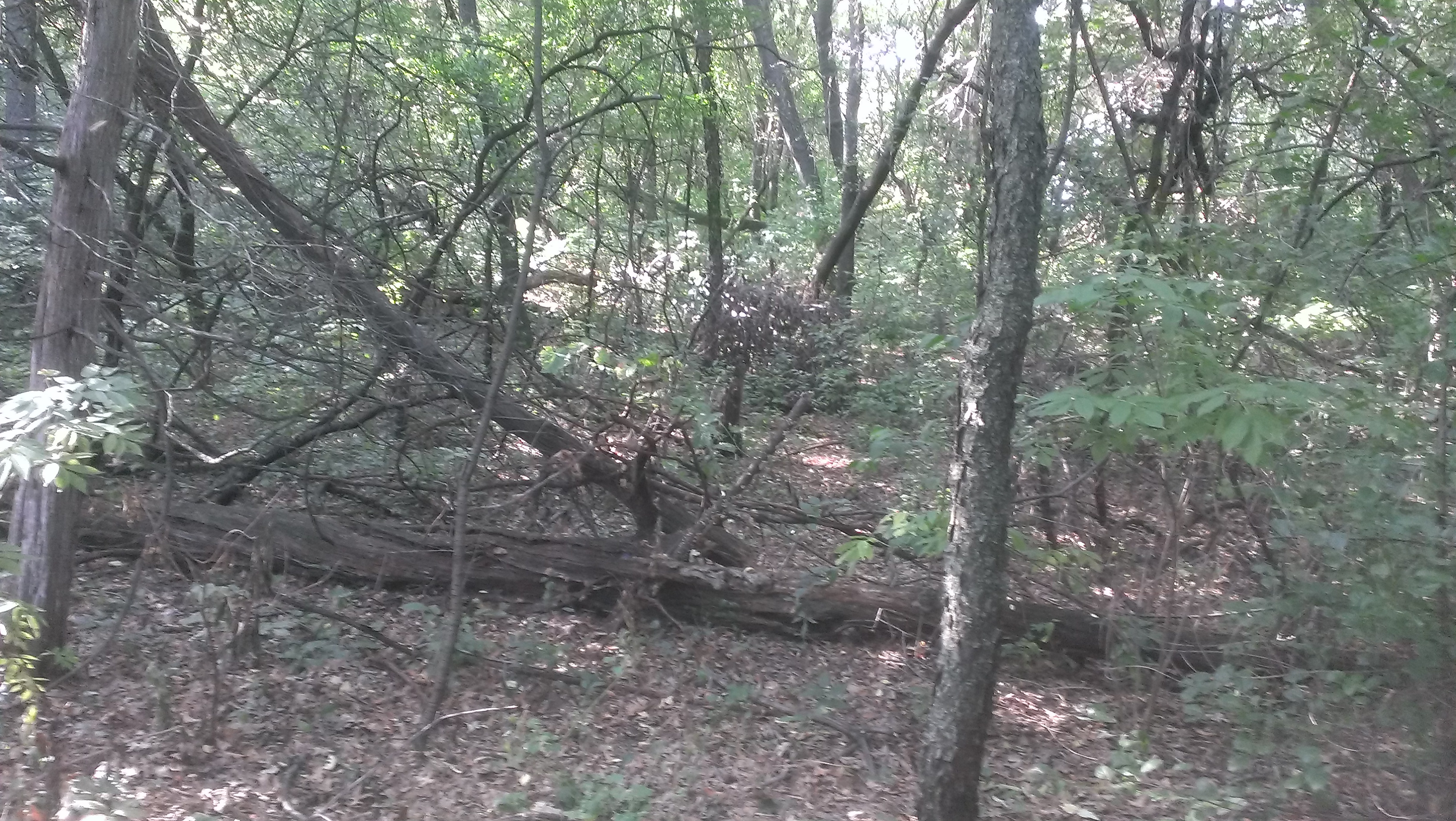
Here’s the completed work, which consists of two cedar trees blown over by a windstorm aIMAG1081 couple of years ago.  They used to be beyond our deck, between us and the vegetable garden.  I still miss them.  Well, this is actually about half of it, but you get the point of what splitting accomplishes.  It creates a surface that more easily catches fire; and, if it were an issue, which it isn’t, makes them easier to put in a fireplace or stove.

Anyhow, after lifting the maul and the occasional log in the air and slamming them back down on the elm, I was glad I do regular resistance work.

Looking Backwards

Fall                                                                            Samhain Moon

After a good morning with Ovid, I went out to humble myself with my chain saw.  As I’ve written here before, I’ve used chain saws since 1974, 39 years.  Long enough, you’d think, to learn not to put the chain on backwards, but I did just that this morning. When a chain saw blade is on backwards, it burns the wood, rather than cut it.  Took me a second try to figure this out.  Back to the bench.

Sure enough, the little pointy sharp things were away from the cut rather than toward it. This seems pretty basic, doesn’t it?  Well, it is.  After solving the puzzle, I turned the chain around, retensioned it and went back out.  Ah, like a knife through butter.

Cutting wood for our Samhain bonfire next Thursday.  This will officially end the growing season and as things look right now, we’ll have finished the remaining tasks in the garden by then.  We have flower bulbs to plant, garlic to plant and leeks to harvest.  With minor exceptions that’s the end of it until next spring.  Which, if the climate keeps on warming, may come soon after my birthday on Valentine’s day.  Or, as it did this year, sometime in June.  Hard to tell up here.

Folks I Trust

Fall                                                                     Samhain Moon

Got a new bar for my chain saw a couple of days ago and in the process discovered Lehman’s Power Equipment.  The driveway for it slopes steeply down off East River Road, hiding the building from view as you drive in toward Anoka from Mercy Hospital.  When you get down to the bottom, Lehman’s Power Tools turns out to have a large bait wing, too, including a self-service bait shack open 24 hours.

The outside looks like an up north mechanic’s shop, the kind that has hubcaps and old Marathon and Sinclair signs tacked to the wall.  Maybe a rack of moose antlers, too. Inside the shop has chain saws, snow blowers, lawnmowers, lots of orange and red.  Most important to me this is a Jonsered dealer, so they stock parts for my 20 year old chain saw.

A dog gets up a bit creakily from its tan rug to greet us.  I make some comment about the dog and the guy behind the high counter says, “Yeah, been here the whole time.  Gettin’ old, though.”  I reply, “Yeah, me too.”  The counter guy smiles.  “Yep.”

Another, younger version of counter guy brings out two different bars, one more expensive than the other. “What do I get for my extra $19?”  “Well, this one’s reinforced and milled.  It’ll last longer than that one.”  Last longer always sells me, so I pick up the new green bar, Kate gives him the family credit card (I lost mine somewhere in the house.) and we settle up.

Outside we pick up a couple of used pallets from a pile with a free wood sign.  The sign goes on, “Don’t take sign.”  We’ll use this wood in our Samhain bonfire.  Gonna celebrate the end of the growing season with a big fire.

When we pulled away, I remarked to Kate, “I feel better having found that place.  Folks I can trust.”

Changes

Fall                                                                          Samhain Moon

Buddy Mark Odegard has found a new style in poster-like art about the Northshore.  Good

We’ve had snow and we’ve had rain, who knows when I’ll be back this way again.  I do.  Next season around the same time.  Loving the change of seasons.  The transitions may be later and milder, but they’re still coming and I still love le difference.

Found out my chain saw needs a new bar as well as a new chain, so I’ll have to visit the hardware store tomorrow:  new glasses, dental visit and a chain saw bar.  These are the kind of things that take me into the really retail and away from cyber-purchase.  Hands on matters where time counts.  Otherwise, I’d rather get it in the mail.  No schlepping and it saves on gas.

What?  I heard that.  Yes, it does save on gas.  Shopping on the internet aggregates deliveries among many people allowing for a much more efficient route and far fewer trips per item.

Samhain for the Vegetable Garden

Fall                                                                                Samhain Moon

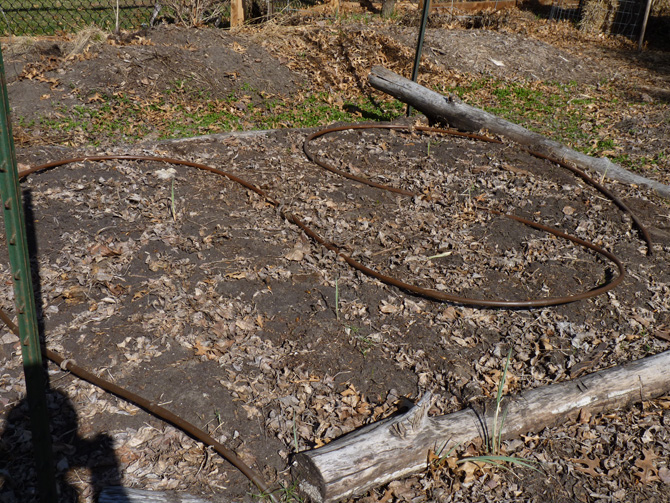
While picking raspberries this afternoon, I looked at the garden beds we cleared this week.potatopatch670 There is the suntrap where we had all those tiny tomatoes and the two plants of huge heirloom Brandywines and Cherokee Purples.  The asparagus bed, the little mound still tufted with the green of asparagus stalks, got over taken this year by the exuberant ground cherries that grew and grew and grew and would still be growing if we hadn’t decided enough and pulled them.
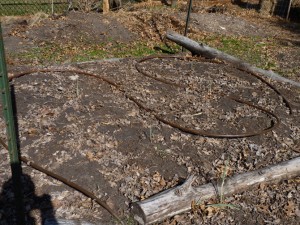
South of the suntrap is the first bed in the vegetable garden, one made of logs, made long enough ago by Jon that I’ve had to replace the logs around it already at least once.  This year it had sugar snap peas, cucumbers, egg plants, broccoli, and hot peppers.  It’s had many crops over the 16 or so years its been in place.

Next to it is a bed that we’d given over to dicentra and bugbane because of the wonderful ash tree we allowed to grow large in the garden.  They’re shade lovers.  This year, with the emerald ash borer coming and a long standing desire to open up more sun in the garden, we had the ash taken down and planted this bed with its first vegetable crop in years:  yellow tomatoes and yellow peppers.  They thrived.

When Jon originally built the raised beds, I asked him to be creative, mix up the shapes and the materials.  The first one he tried was made of tin roofing.  It worked ok, but he preferred working with 2×4’s after that.  Now it’s half daisy.  The other half this year had a productive small tomato plant and couple of so-so pepper plants.  I made one obvious mistake.  I planted a pepper to the west of the tomato plant and it never thrived.

The long bed, the extra large bed, this year had beets and carrots, a couple of crops.  It also has a persistent asian lily crop that comes from the short time I used the beds as cutting gardens.  After treating the lilies as weeds (a plant out of place), they have become confined (mostly) to the extreme south end of the bed.

To the east of the extra large bed are two similar sized beds.  The north one this year hadIMAG0955cropped1000 onions and garlic and the southern bed had beets (didn’t do well) and greens (which did).  The leeks are in the long mound west of the extra large bed, doing well, still growing.
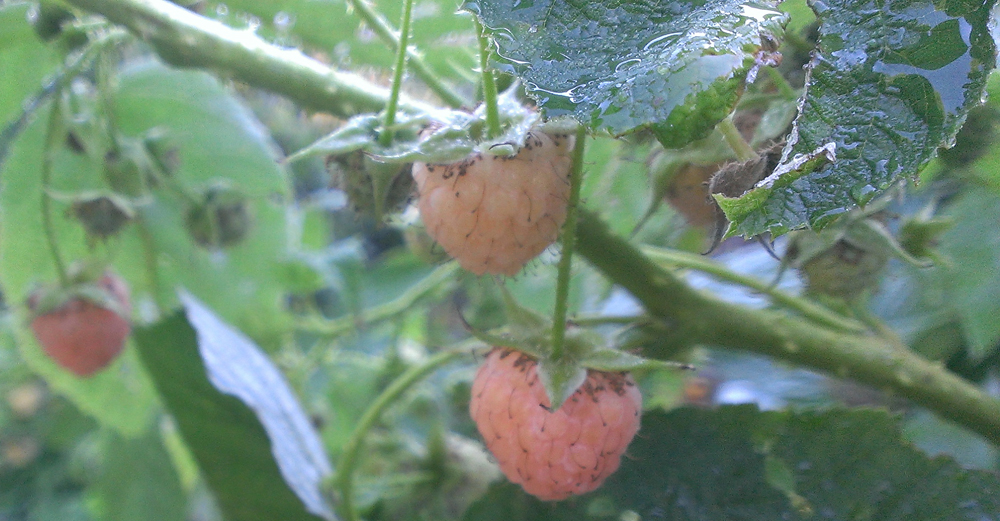
Our raspberry patch is up against the fence and behind the wisteria.  Its growth has shaded out a small bed that this year had only a crop of asian lilies.  North of it is the strawberry bed and north of that the herb spiral.

The beds we cleared are the ones on which I broadcast fertilizer last week and they’re now mulched, extra large and two similar sized ones, or awaiting mulch from this year’s leaf fall.  These beds are brown, bare of plant material for the first time since May.  They look bereft, but they’re not.  In the top six inches of soil small colonies of microbes, bacteria, fungi, worms and insects are busy, working together to create a fertile spot for next year’s garden.  It’ll be the best one ever.

Yet Another Late Learning

Fall                                                                        Harvest Moon

Another late lesson.  Or, perhaps better, a lesson only incompletely grasped, now more fully understood.

Learning, difficult learning, excites me and keeps me motivated.  But.  The brain only has so much patience for stuffing new things in before it tires, eyes glaze over and a slight headache develops.  At least for me.

(Peasants harvesting crops, by Flemish artist Pieter Brueghel)

Over this growing season I’ve discovered that taking a work outside break, a work with my hands or my back break, releases the tension and I can come back to my work refreshed.  I have also found that I enjoy the work outside much more when I understand its value in the total rhythm of my day.  So there’s a virtuous circle here.  Work hard at the desk, then get up and accomplish something manual garden work or changing light bulbs or organizing the garage.


I Like Getting Old. Patti Smith

Fall                                                                     Harvest Moon

Something’s happening here.  What it is is not exactly clear.  At the end of this gardening year I feel like I’ve finally gotten it.  That is, I believe I now understand how to grow fruits and vegetables in quantity and of high food value. As Kate said, moving her hand in a low but upward swoop,  “Sometimes the learning curve is long.”  And it has been.  Over 20+ years.  Today though I feel good about my gardening skill.

On the writing front I’ve rounded up several agents to query when Missing comes back from its beta readers and has gone through the copy editing process.  I’m deep in the research phase for Loki’s Children, focused right now on the text, Loki in Scandinavian Mythology.  No matter how all this turns out in the matter of publication, I’ve let the inner and outer censors go.  I don’t know how or why, but I freed them and they left.  So now the process is all good.  Research.  Critique.  Feedback.  Submission.  Writing.  All good.

The MOOC’s have retaught me a valuable lesson.  When I’m engaged in scholarship, I’m happy, in my element.  I hit flow most often while learning.  That means the work with Ovid, which begins again on October 4th, is another chunk of the same.  Happiness is a warm book.

Last night I had a dream in which a person ridiculed me for not being spontaneous, being disciplined to a fault.  It bothered me as I slowly rose to consciousness this morning.  Am I so focused on a few things that I’m missing life?  Has my willingness to change directions, chart a new path receded?  Been suppressed by all this?

No.  I don’t think so.  But I’m open to other perspectives.  To me my life is full, rich.  There are friends and family whom I see or communicate with regularly.  There is a creative life partnership with Kate here.  The dogs alone provide many spontaneous moments because dogs live only in the now.  In the past I have initiated change in the world through political action.  Now the action is more at home and in the family.  Seems just right for the third phase.


Herbicides

Lughnasa                                                                     Harvest Moon

I use herbicides sparingly, for problems I can’t eliminate by hand.  Those problems include an invasion of rhizomatous creeping charlie, poison ivy and the stumps of felled trees.  The creeping charlie (no relation) was a mistake on my part.  I didn’t recognize it and advised Kate not to pull it when it could have been controlled.  Somehow it got over a large section of ground.  I sprayed it this morning.

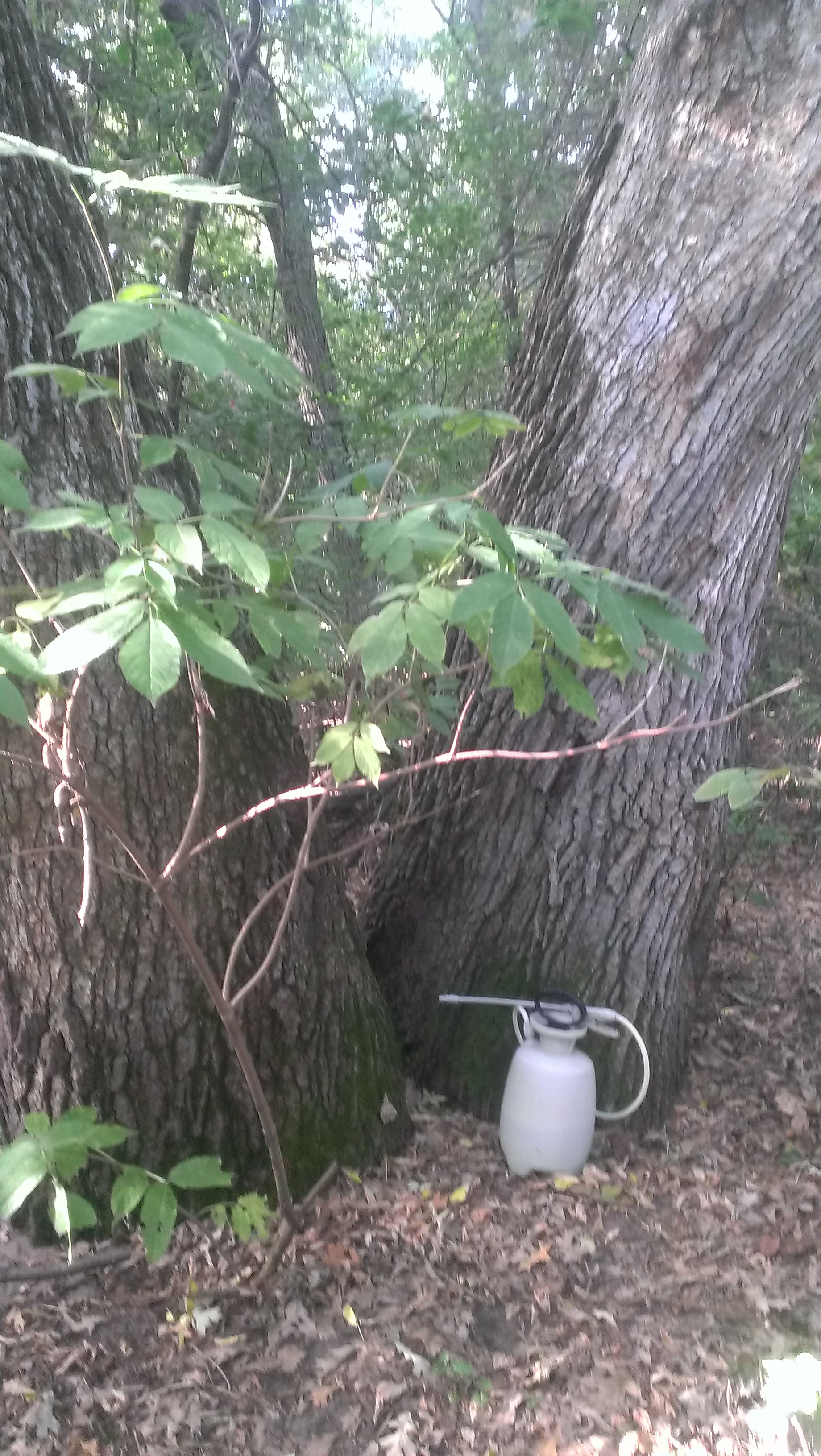
Poison ivy.   My earliest adventures with industrial strength herbicides (triclopyr) began soon after IMAG0944our purchase of this property.   Doing research I discovered Rhus radicans likes the ground around oaks.  We have lots of oaks in our woods.

My first efforts with roundup (glyphosate) had no effect.  Ha, ha.  Like rain water to me.

The first time I used triclopyr, as brush-be-gone, a dilute solution sold for ornery shrubs and could-be-tried as adult weeds, failed, too.  Back to the research.  Ah.  The best time to spray them is in the fall when the plant stores energy in its roots for the coming winter season.

(Gog and Magog)

Today (it’s fall, you may notice) I sprayed the creeping charlie because of this information.  I also went hunting poison ivy. I’ve been after it off and on for 15 years.  This year I had trouble finding any.  A good sign.  The ones I did find I coated leaves and stems.  The word on triclopyr is that it vanishes after three months in the soil.  You don’t want to use it around things you want because it’s effective.

Last I’ll use it on stumps.  The problem with stumps, especially ash and black locust is IMAG0949that the tree immediately sends up new treelets to replace the missing one.  Unless you grind the stumps, which I no longer do, you’ll have a clump of new trees instead of an eliminated old one.  I don’t cut down many trees, but when I do it means I have a specific purpose in mind:  more sun for a growing area, more space for the bees, an area for our fire pit.  New trees are not part of the plan.  Using a paint brush to coat the stumps with triclopyr, a less dilute version than brush-be-gone, solves the problem.

(in our woods near the big oaks, Gog and Magog)

In all cases I use integrated pest management to reduce and/or eliminate the need for pesticides.  I use hand removal, physical barriers like landscape cloth and careful selection of plants to reduce the need for herbicides.  I don’t like using them, but in some cases I’ve not been able to come up with other solutions.

Soil Test

Lughnasa                                                                     Harvest Moon

Soil tests create the information base for deciding on what products and what amount of soil testthem to use next year.  Fall is the best time to do them since the broadcast fertilizer can be laid down before winter.

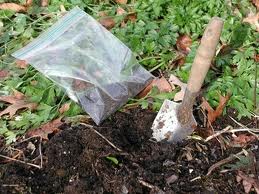
I used a clean trowel, a plastic bucket and my knees.  To do a soil sample involves a clean cut into the soil of six inches, then a small slice of that cut, top to bottom, into the bucket. This process repeats several times in different areas, then you blend the soil and take 1.5 cups of it and put it in a plastic bag.  I did this twice, once for the vegetable garden and once for the orchard.

A soil test sheet, provided by International Ag Labs, takes down garden size and what kind of testing you want done.  That all gets mailed to lab in Farmington and a while later, a recommendation comes back with very specific amounts and products.

My dealer, Luke Lemmer in Plato, Minnesota, will compile the broadcast according to the labs recommendations and will also supply the other products.  The soil test goes in today.