Category Archives: Our Land and Home

Home Olympics

Summer                                                        Moon of the First Harvests

Noticed as I did my second round of foliar spray today, vegetative and reproductive plants separately, that we have tomatillos, eggplant, many tomatoes and green peppers.  None ready for harvest, but they’re on the way and it’s only mid-July.

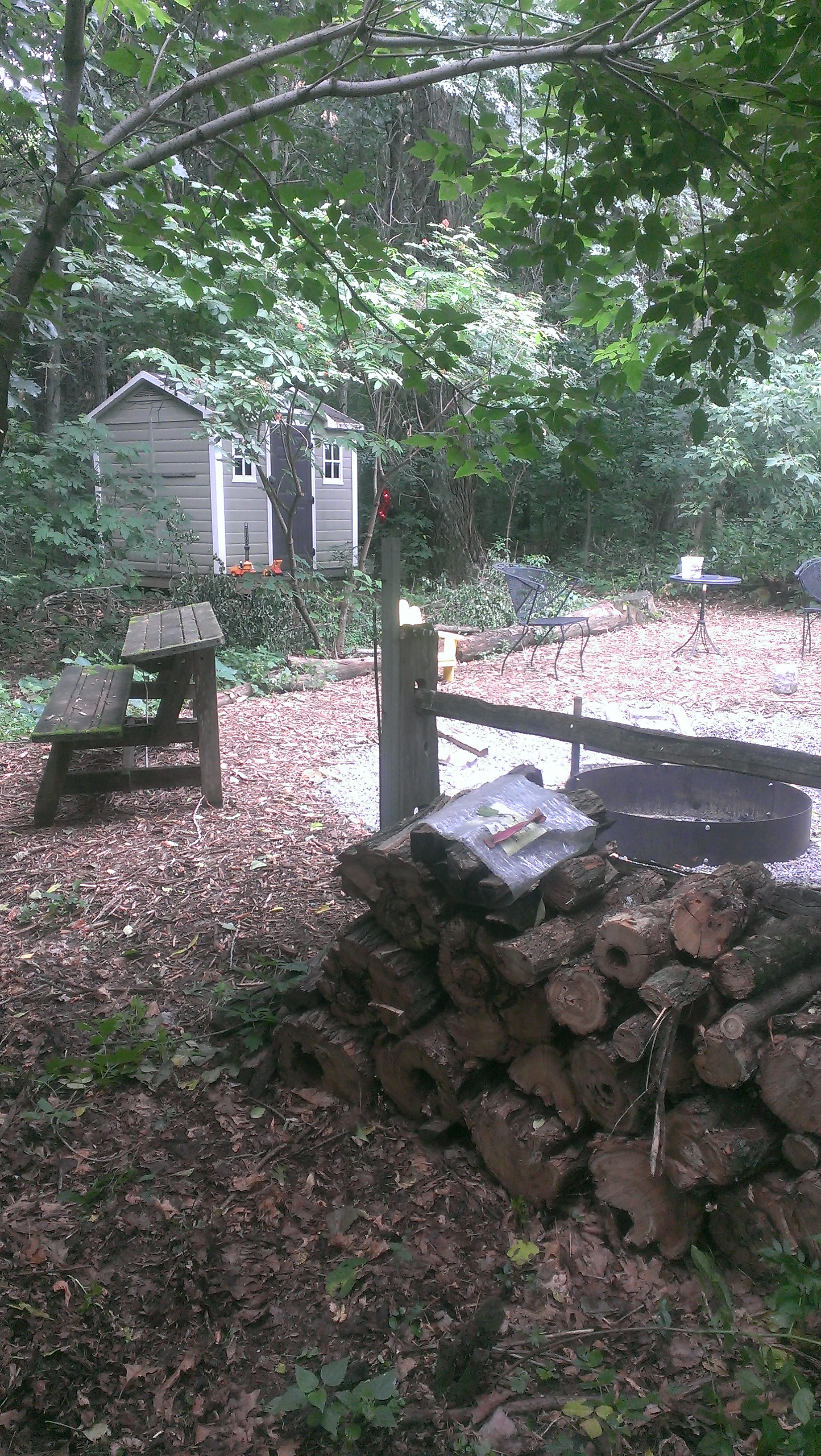
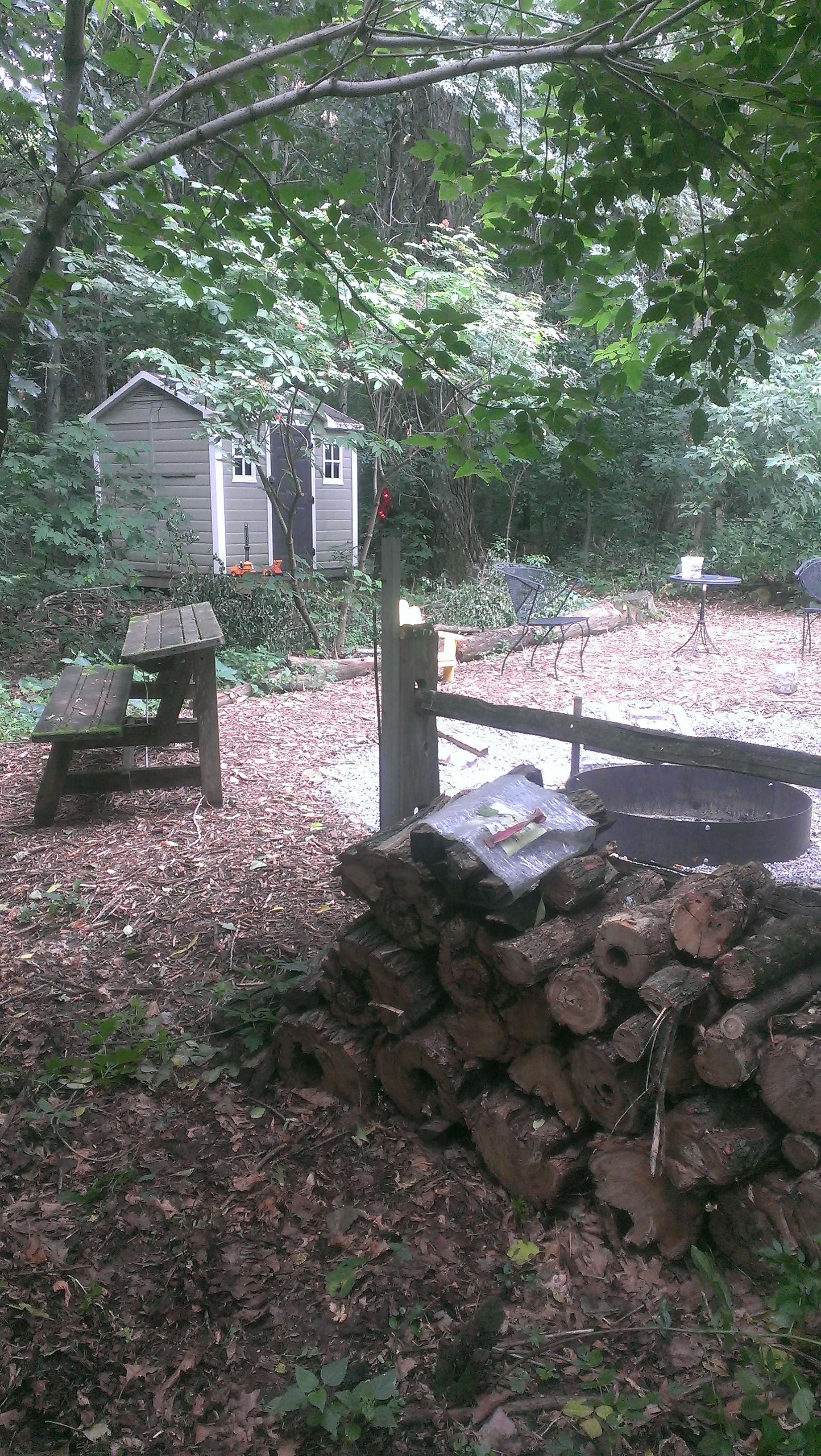
A few last minute things for the Woollies.  Have to move more ash sections to serve as seats and go over the fire pit area one more time.  Kate began prepping for today over two weeks ago.  Between the Woollies and the kids plus Mark in June, we’ve done a lot of spiffing up and getting things ready, things that will last past the events that triggered them.

Sort of the home equivalent of the Olympics.  No bird’s nest auditorium, no fancy velodrome or natatorium, but the fire pit and the cleaned up orchard (which didn’t get scheduled until after the Woollies, but we planned it before), the hung chandelier, Kate’s familiarity with certain recipes and her finely-tuned entertainment acumen, the cut firewood, the lights in the fire pit, not to mention all the reflections on home I anticipate and the memories from June and tonight will vibrate here long after everyone goes to their home while we remain behind, here, in our own.


Waiting for Woollies

Summer                                                      Moon of the First Harvests

Picked cherries this morning, then went out to assist Kate in stringing lights.  She ran the lights along the old cedar fence.  I helped string across the gate well above head level.  Wire, that all purpose garden tool.  Handy stuff.

While she put the lights in place, I moved tree limbs, uprooted buckthorns and smaller wood clearing debris from an area near the kid’s playhouse, which, by the way, now has a wonderful crystal chandelier.  It will be lit in the background.

Then the rain began to fall.

Home

Summer                                                       Moon of the First Harvests

Home.  Back in the early 90’s when we lived on Edgcumbe Road in St. Paul, I felt a sense of homecoming when I crossed Ford Parkway.  I had crossed into home turf.  It’s taken a long while for a similar feeling to take hold here in Andover, but now, as I turn off Highway 10 onto Round Lake Boulevard, that sense of homecoming greets me.

Yes, it’s marked by Baker’s Square, Wendy’s, Conoco, Burger King and a Holiday station, but, they’re our franchises, there for our use.  The feeling gets even stronger going up Round Lake and begins to thicken at Round Lake itself where the water is on the left and the peat bog fields of Field’s Truck Farms are on the right.  Those fields are the remains of an old lake, eutrophied completely, a process that has advanced a good ways in Round Lake.

As I turn onto 153rd Ave NW, our property shows up about 1,000 feet in and I see the 6 foot chain link fence we had installed because Celt, our earliest Irish Wolfhound, climbed the four-foot fences to go greet passers-by on the street.  This particular fence was put in place after a derecho felled a large poplar and destroyed the one we had originally extended from four feet to six.  There is, too, the truck gate, 10 feet wide that we had installed because we wanted to get trucks from nurseries and our own trucks back onto our property.

The trees have grown up, grapevines have covered them, the prairie grass has morphed over time but has a pleasing current configuration.  On the six foot fence itself, the border of the prairie grass, grows our wild grapes.  Wild grapes that we pick in the fall for jams and jellies.

The driveway, the sloped driveway that creates its own stories in the winter, goes up to the three car garage that makes our house look as if we live as an adjunct to the garages.  On the right going up is a rusted and unused basketball hoop, an emblem, as at so many homes, of a boy, now gone.  In the garage itself we have a unique five stall dog feeding set up that we used when our pack was at its peak and we had five Irish Wolfhounds at once.

Do you see what I mean?  Home has an accretion of memories, memories attached to physical things like lakes and peat bogs, fences and basketball hoops.  This is not somebody else’s memories but our memories, our family’s memories.  It is those memories, those thick layers of past embraced constantly in the present, that make a home.

Inside the house are the same layers of memories, of guests and friends and immediate family, of dogs and workmen, nights and days, meals and passion.  It is the thickness, the particularity of it all, that makes this our home and not someone elses.  After 20 years, we have laid down many layers of smiles, tears, hard work and love.  That’s why this is home.

Harvests Continue

Summer                                                                First Harvest Moon

Thinned carrots, harvested beets, Bull’s Blood and Early Blood, the golden beets need more time.  I also pulled onions and laid them on top of the garden beds for their three days of drying out before they go in the shed on the screen for two weeks.  A few garlic plants had three leaves brown today so I harvested those, still more in the ground.

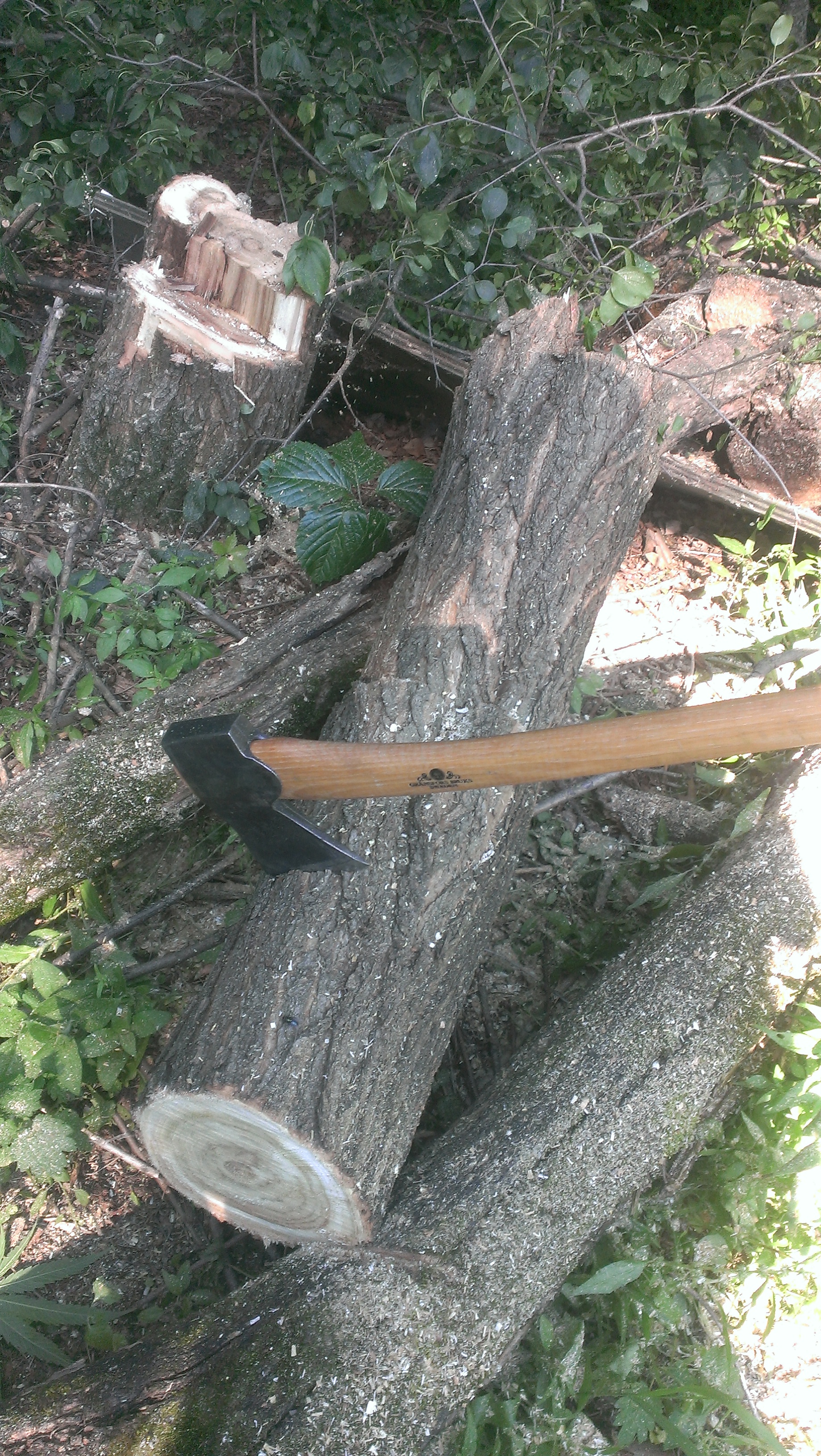
Finished cutting firewood and moving it to the firewood pile near the fire pit.  Less chainsaw work today, but more lifting and hauling.  Left me pleasantly worn out.

Kate’s at work right now trying to remember how to hang all the crystals on the chandelier that used to hang over our piano, but which we moved to the grandkids playhouse when we redid the lighting in the living room.  Later today or tomorrow we’re going to string lights for the fire pit area.  We’re very close to just needing friends to make it complete.

Lilies, Leeks and Lumber

Summer                                                       First Harvest Moon

Today, again, harvesting trees.  This time black locust, a thorny tree that grows fast and germinates easily.  In olden days fence posts, foundation posts, anything requiring a sturdy rot-resistant wood were common uses of the black locust.  This tree will get used as firewood for the great Woolly ingathering here on Monday.

Other hardwood trees like oak, in particular, but ash and maple and others as well, require a year or two of drying to get their moisture content below 20%.  Black locust is a low moisture wood even when it’s alive.

In felling this tree my directional cut was at a slight angle and the tree came down on our vegetable garden fence.  But.  Fortuna was with me.  The main branch that hit the fence landed right on top of a fence post, square cedar. It didn’t mind at all.  May have sunk a bit lower in the earth. A slight dent in the gate where a smaller top branch made impact, otherwise, the fence came through fine.  Whew.  Felling trees is art as well as science and I mishandled this one.

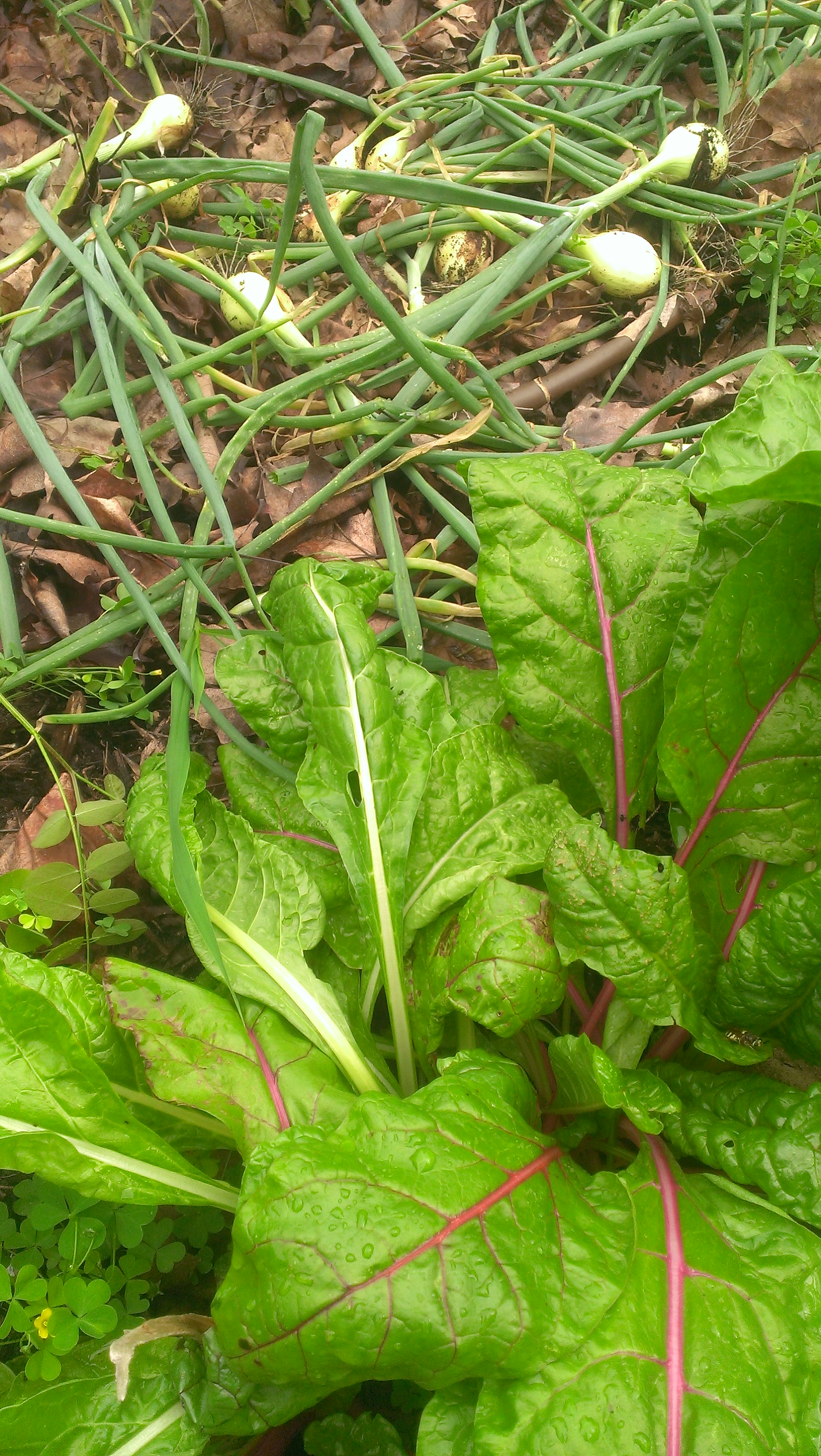
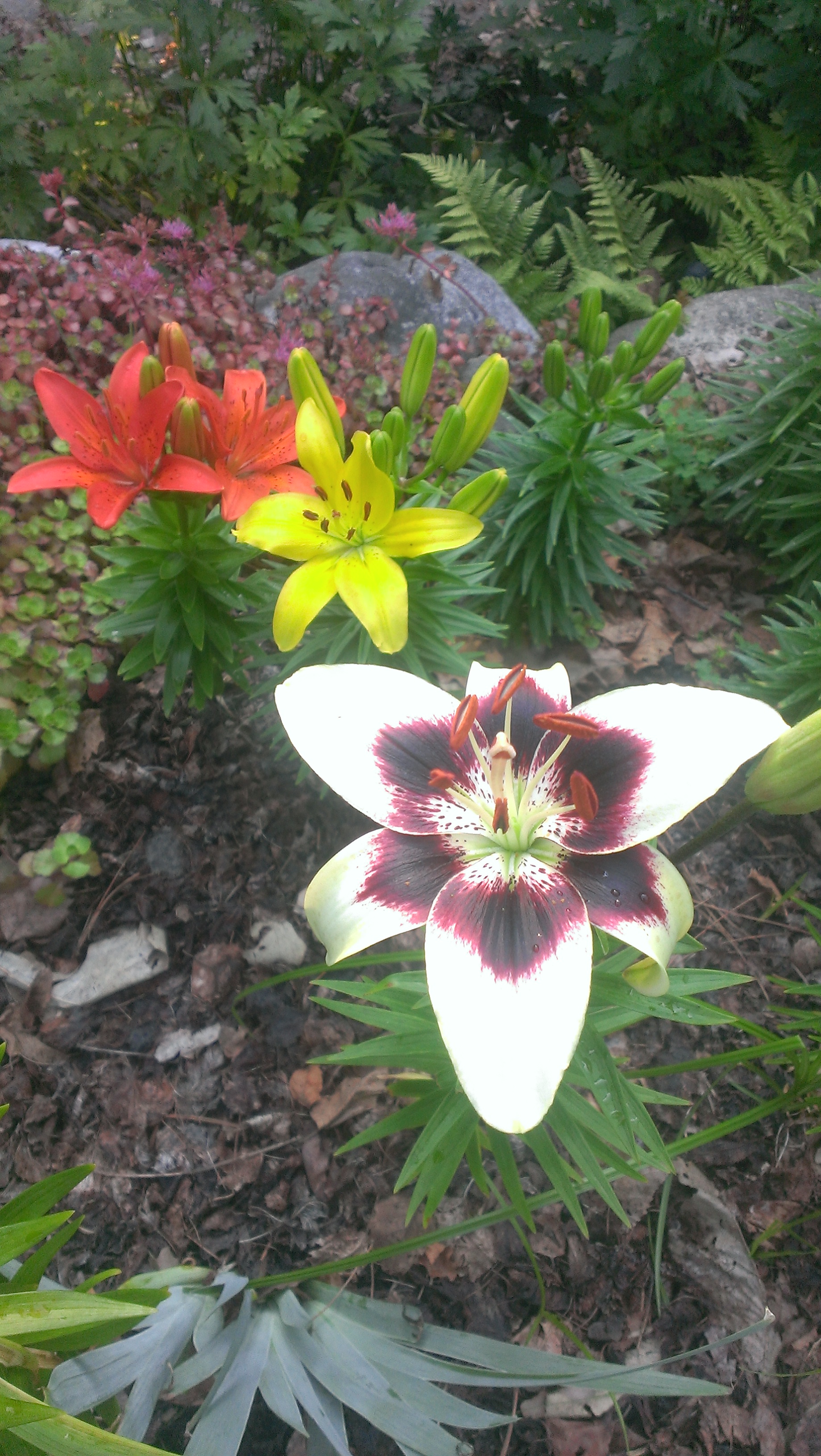
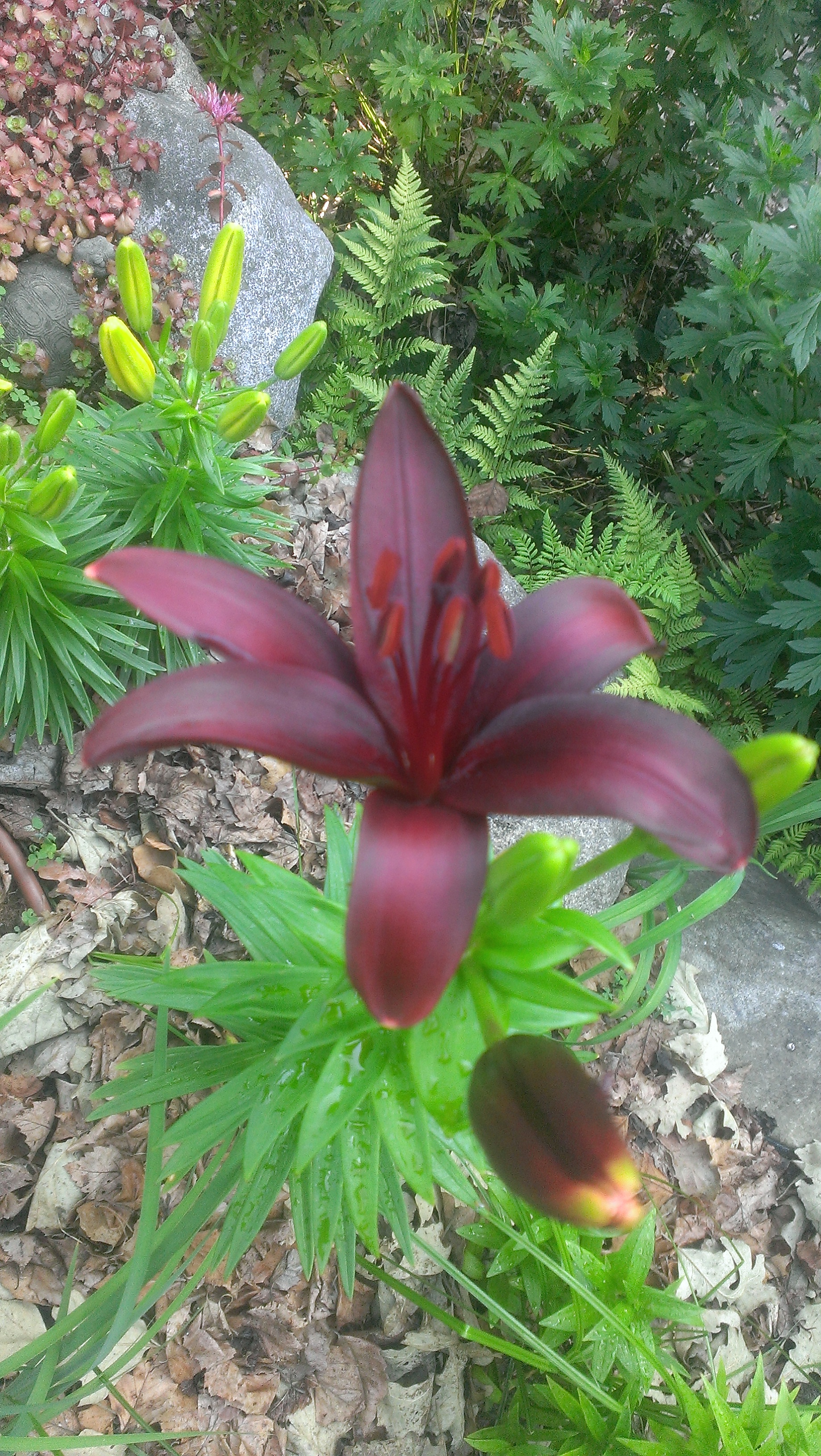
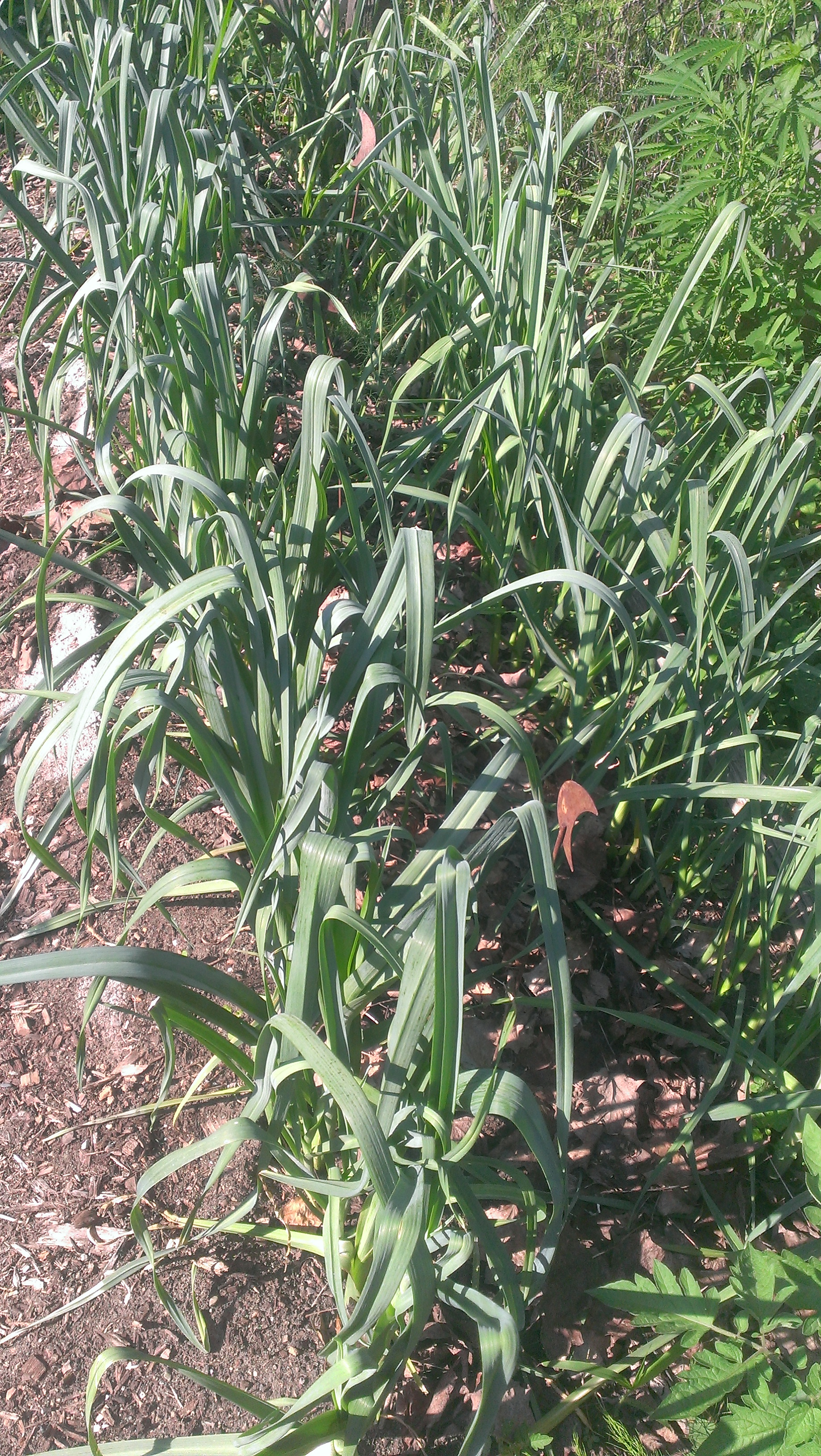
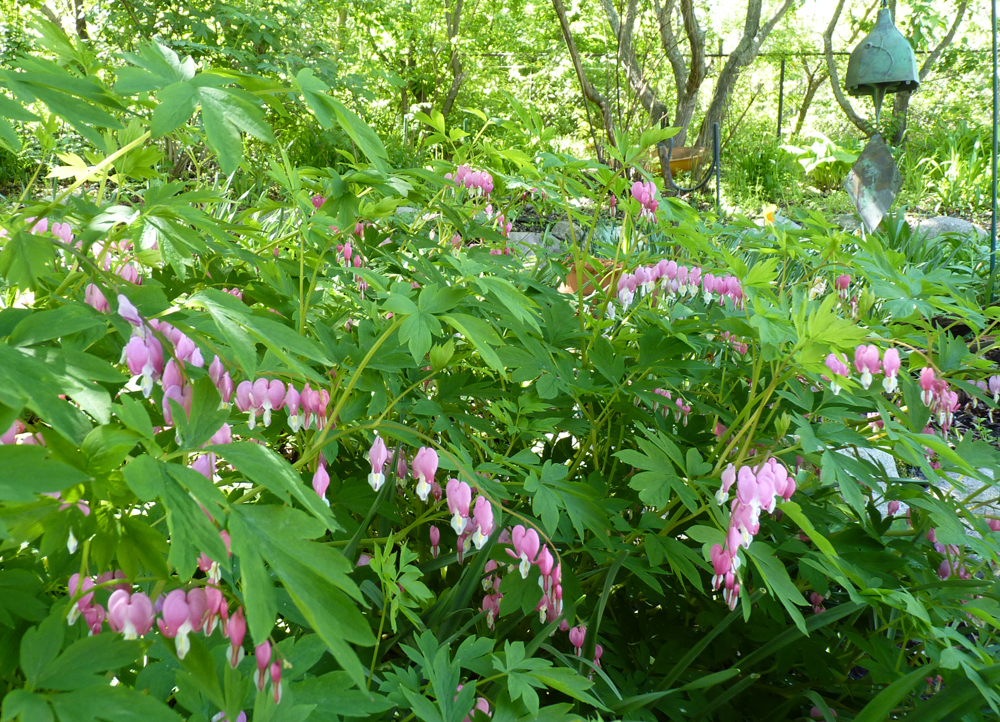
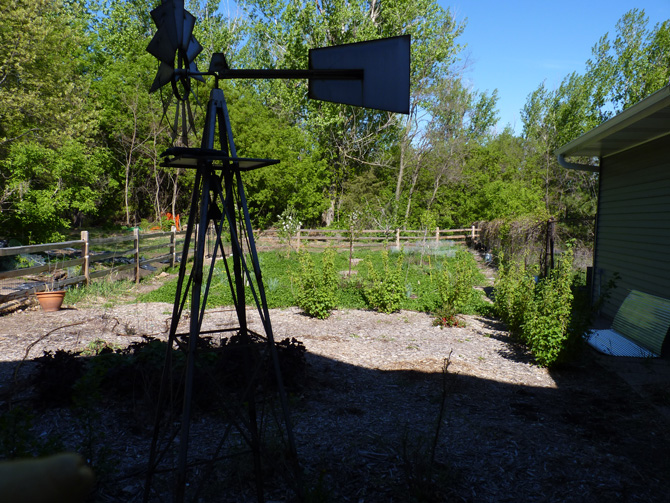
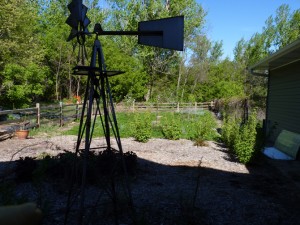
Early this morning I sprayed Enthuse, a product to generally spiff plants, give them an energy boost.  That was over all the vegetables and the blooming lilies.  The lilies are my favorite flowers by far and almost all of the varieties that I have I purchased at the North Star lily sale last spring.  These are lilies grown here, hardy for our winters.  Here are pictures of the current state of the gardens and preparations for the Woolly homecoming.

Pruning the Woods

Summer                                                              First Harvest Moon

Felled an oak today, about 8 inches thick.  It was too close to other oaks, competing with them.  As I build up our firewood supply, I also think about pruning the forest, trying to put into practice advice given to me years ago by a member of the DNR’s forestry team.  It has taken about 18 years to get started; I don’t like to rush into things.

Every time I use a chainsaw it takes me back to the not-so Peaceable Kingdom.  That was my first and most all-in back to the land moment.  I gave up urban life, a good job and seminary to move onto the 80 acre farm Judy and I bought.  You know the story, she leaves for good shortly after I get there.

That left with me a woodburning stove for heating and one for cooking, so I had to have firewood.  On our 80 there was a small forest, larger than the one out here with plenty of firewood ready for harvest.  I’d put my Jonsered in the bed of my green International Harvester pick-up, drive into the woods, cut down a tree or two, cut them up, toss them in  the truck, then head back to the house.

I stacked the wood there, unless it was dry already.  If it was dry, I’d start splitting it for use right away.  The stuff that wasn’t dry waited until deep winter when the cold would do some of the work.

The wood cutting and using the wood stoves were highlights of that time, a modest form of self-sufficiency, off the grid as far as fuel oil went.

The muscle memory lingers and pops into play every time I yank the starter cord.  Good memories.

Chainsaw

Summer                                                                           First Harvest Moon

Tomorrow is chainsaw time.  Gotta get firewood cut for the big Woolly fire on Monday.  Weather says thunderstorms possible, but I’m going to proceed as if they were not.  Can’t hurt to have too much firewood.  There’s always Samain.

Got word from brother Mark that he is in Indianapolis, getting more and more work done on his visa.  Physicals, FBI check, that sort of thing.  He plans a trip to Alexandria (our hometown) soon.  It will be his first time back in a very long time.

Kate’s set aside the pots and pans today to work with needles and thread.  She finished one quilt for Sarah, our housecleaner’s daughter and has begun one for Margaret Levin, both of whom have due dates in the near future.  Margaret is the executive director of the Northstar Sierra Club.


Garden Diary: Beginning of the Soil Drenches and Foliar Sprays

Summer                                                            New (First Harvest) Moon

When we installed the landscaping, we asked for low maintenance.  I still remember the skeptical look on Merle’s face.  “Well, I can make it lower maintenance, but there’s no such thing as no maintenance.”  In those first years I deadheaded, sprayed Miracle Gro, pruned the roses and planted a few bulbs.
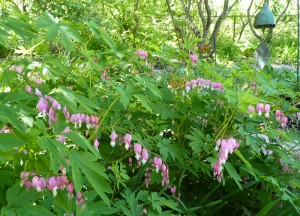
Gradually, the land drew me in and I got more interested in perennials of all kinds bulbs, corms, tubers and root stock.  Fall became (and remains) a ritual of planting perennials, most often bulbs.  Fall finds me on a kneeler, making my prayer not to the Virgin Mary but to the decidedly unvirgin earth.  Receive these my gifts and nourish them.  And yes, I agree to help raise them.

Kate always planted a few vegetables but at some point we merged interests and expanded our vegetable garden.  That was when organic gardening, permaculture and now biodynamics began to interest us.  We futz around using some organic ideas like compost and integrated pest management, some permaculture design with plant guilds and productive spaces closest to the building that supports them and now some biodynamics (or whatever the right term is).
As I understand it, biodynamics works to produce the highest nutrient value in food by moving the soil towards sustainable fertility. This requires applications of various kinds of chemicals, yes, but in such a way as to increase the soil’s capacity to grow healthy, nutritious food and to do that in a way that maintains the soil’s fertility from year to year.

This is very different from modern ag which has a take it out and put it back approach to soil nutrients.  In that approach modern ag focuses on nutrients that produce crops good for harvest and the farmer and food company’s economics, not the end consumer’s dietary needs.  Biodynamics works at a subtler level, looking at the whole package of rare earths and other minerals necessary for healthy plants and the kind of soil conditions that optimize the plants capacity to access them.

Today I did a nutrient drench called Perk-Up.  A nutrient drench goes onto the soil and encourages optimal soil conditions, a large proportion is liquified fish oil and protein.  I also sprayed on the leaves and stalks of all the reproductively focused vegetables a product called brix blaster which encourages the plants to focus their energy on producing flowers and fruit.
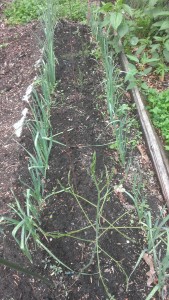
The whole vegetable garden got Perk-up.  The reproductive vegetables in our garden are:  tomatillos, tomatoes, eggplant, peppers, sugar snap peas, cucumbers and, for some reason, carrots plus all the fruits.  I only sprayed the vegetables since the strawberries have just finished bearing and I haven’t decided whether or not to spray the orchard this year.  Since I made up more than I needed, I also sprayed all the lilies which are heading into their prime blooming weeks just now, plus a few other miscellaneous flowers blooming or about to bloom.

Tomorrow I will spray another product that encourages vegetative growth on the appropriate vegetables:  kale, onions, chard, beets, garlic and leeks.

This year my overall goal has been to jump up a level in the production of vegetables, increasing both quantity and quality without increasing the area planted.  Next year I’ll continue what I already think is a successful program for them and expand to the fruits and, maybe, at least some of the flowers.

As I’ve said elsewhere, horticulture is a language and it takes time to learn.  The plants and the soil speak to me all the time.  I’ve had to immerse myself in a lot of different disciplines to learn their language.  I’m not a native speaker, nor am I completely fluent but I’m well past the beginner stage.


Among the Buckthorn

Summer                                            Solstice Moon

Cleared buckthorn, again, from the area around the grandkid’s playhouse and the fire pit, leaving in serviceberry and small ash trees. Rejuvenating the understory is difficult to impossible with buckthorn present since it chokes out most things shrub size and below.  In certain areas of our woods it’s a remediable problem, those areas not on the boundaries with the neighbors.

Sitting outside now in the evening, watching the fire, has me more tuned up to work in the woods, since up to this point the woods have been an amenity, but not a place where we spent much time or energy.  This kind of work is hard labor, perfect as an alternative to the computer, the mind, the writing.

A local guy, biologist Mark Davis of Macalester College, has a different take on invasive species like buckthorn:

“Davis…believes it’s time to raise the white flag against non-native species. Most non-native species, he said, are harmless—or even helpful.

In a letter published in the journal Nature this past June, Davis and 18 other ecologists argued that these destructive invasive species—or those non-native species that cause ecological or economic harm—are only a tiny subset of non-native species, and that this tiny fraction has basically given all new arrivals a bad name.”

As may be.  As may be.  But I still don’t like the way buckthorn crowds out the serviceberry, ninebark, dogwood, columbine, trillium and jack-in-the-pulpit.  Somehow it doesn’t seem to deter the poison ivy.  If it did, well…

GFI!

Summer                                                                  Solstice Moon

We are in the realm of the sun.  Heat and light.  Green and growing things.  Long days and short nights.  Glad to be here and glad it’s a short time.  Heat oppresses me much more than cold, which goes a long way to explaining why I continue to live here.

Captured energy from the sun comes in many forms:  sugars, carbohydrates, meat, gasoline, heating oil, wind, hydrological.  Among humans a favorite form of storing and dispersing the sun’s energy is the generation and distribution of electricity.

Even in the heat and light though access to electricity can vanish.  Be cut off.  Just ask the folks in Minneapolis after last weekend’s storm.  We rely on regular electricity for our air conditioner, refrigerator, freezer, computers, kindles, televisions and various other small appliances and lights.  It’s an important part of our life.  I couldn’t write and distribute this blog without it.

And it works well nearly all of the time.  But when it doesn’t.  Uh-oh.  That’s why we wentto the expense sometime ago of installing a natural gas powered generator connected to the gas line feeding our home.  We would have no water. (We have our own well.) No A.C.  No lights.

The electricity was not flowing along the circuits necessary for our irrigation clock and out to the machine shed aka honey house and the kid’s playhouse a ways beyond it.  Had to be fixed, especially the irrigation clock.  The white haired guy who ran electricity to the playhouse and installed some lights for us came out.  We wandered around, guy time you know.  Hmmm.  Head scratching.

In both cases thank god it was g.i.f. related, that is, ground fault interrupters had tripped.  I didn’t know there was one in the garage; it’s hidden under shelving.  One fix.

The sheds. I know about the g.i.f.s.  There are two, one in the garage and one in the shed.  I had reset both of them and still couldn’t get power to either shed.

“It’s confusing,” he said.  Each building has to have its own cutoff switch, a switch that turns off power to the whole building.  The switch in the honey house has only that function, but you can turn the light off in there by either the pull chain or the switch.  However, once the switch is thrown all power is off the honey house.  So, if you use the pull chain, the light won’t light.  And, if you turn the bulb off with the pull chain, even restoring electricity to the shed with the switch won’t turn it on.

And.  The playhouse gets its power through the same line as the honeyhouse.  So, shut the switch off in the honeyhouse and no power to the playhouse.  Plus.  The playhouse, as a separate building, has to have a main power switch.  Which it does, sitting right next to the light switch and looking identical to it.  Can you see the confusion here?

So.  I went out to both sheds and put blue masking tape over  each of the main power switches.  This will reduce the likelihood of anyone using them as light switches.  Which starts the whole cascade over again.

And all this just to distribute what the sun offers free to us all.  Strange, isn’t it?