Category Archives: Faith and Spirituality

No Hurries

Lughnasa                                                              Labor Day Moon

The Labor Day moon has been full the last couple of nights. From our north facing bedroom window we see its light amongst the lodgepole pines, soft on the intermittently grassy and rocky surface that is our backyard. In Andover our south facing bedroom found the full moon shining, lighting up our bed and the room itself. This mountain experience is more subtle, we see the moon by moonshine only while the moon itself floats across the southern sky toward Black Mountain.

My mood has not lifted. I feel my Self as I see the moon shine. The Self, though hidden for now in my psychic south, still sends out rays of thought and feeling. Its presence is known only by these hints. An inclination toward horror fiction. A surge of interest in images from Rome. Imagining my books spread out on my art cart or me sitting in the now covered with books chair, reading. Looking through notes written on art works remembered. Feeling my way through the mountain, into the mountain. Wandering the trails, climbing on the rocks of Shadow Mountain.

After what I wrote yesterday, I realized this is not an unusual transition for me, though it’s not one I’ve made in a while. Something, perhaps the Self’s phases as it passes through the sky of a new place, perhaps the false winter of the cancer season, perhaps the ongoing adjustment to family and the absence of friends, something, probably a mix of all these, has put my Self in the southern sky, out of my range of vision for now.

The ancientrail through this place must be walked slowly. I’ve been trying to push, to run, to shorten the journey with speed. My inner ear becomes deaf as I hurry. My mind narrows to the dangers of the trail, watching for roots and projecting rocks. Imagination has no role. Yet, on this ancientrail of Self re-discovery listening, imagining, expanding the mind are what is necessary.

Waiting now to see the moonrise.

Lughnasa                                                                 Labor Day Moon


Been trying to feel the mountain. Beneath our house Shadow Mountain extends at least 8,800 feet to sea level and just where a mountain begins and ends after sea level is a mystery to me. That’s a mile and 2/3rds of rock. A lot of rock.

14 years ago I came out to Colorado and camped above Georgetown in the National Forest. Right next to me was a sugarloaf mountain. As darkness fell, the mountain disappeared into the gloom. All that massiveness just disappeared. But I could feel it looming over me. Since then I’ve wondered what the mountain equivalent is to the Shedd Aquarium’s freshwater exhibition tag: The essence of a stream is to flow. What is the essence of a mountain?

Mass seems to be the answer. It is the distinctive feature that draws our eyes when we come in on Interstate 76 from the plains of Nebraska. Suddenly, the plains stop. The essence of the plains is flatness? No more flatness, verticality created by mass intervenes with sight lines. The volume of rock pressed upwards by colliding tectonic plates changes the topography.

So these last couple of mornings, before I got out of bed, I’ve been trying to feel the mass of Shadow Mountain. Trying to extend my Self into the mountain, to feel the mountain as it lies there. Not so successful so far. It occurred to me this morning that this is the opposite of conquering the mountain, of summiting, of climbing. This is diving, deepening, merging. Part of the difficulty is the claustrophobic feeling of having the mountain all round me even in my imagination.

This is not all. I noticed the other day in the east, just above the lodgepoles on our property, Orion. In Minnesota I was a late riser so I don’t know where Orion was at 5 am in August, but his presence here surprised me. I have, until now, counted Orion as a winter companion, first becoming visible in November. He may have risen much earlier even in Minnesota, but I missed him. Orion is a special friend, a constellation with which I’ve had a long relationship and one I view as a companion in the night.

Then, there are the bucks. Mule deer bucks. On Sunday as we drove to Evergreen there were four mule deer bucks with still velveted antlers quietly munching grass along the side of the road. They looked at us; we looked at them. The velvet has a prospective nature, auguring the rut when not yet released. On this morning they were friends, not competitors for breeding rights. And they were in harmony.

Then, yesterday, Kate said, “Look at that!” I turned and over my left shoulder looked down into the grassy valley that extends between Shadow Mountain and Conifer Mountain. In the field of mown alfalfa stood a huge bull elk. His rack was enormous and already cleared of its velvet. It arced out away from his head on both sides, tines extending its reach even further. This was a bull of legend. Seeing him took us into the wild, the world that goes on alongside us here on Shadow Mountain, the lives of our fellow inhabitants of this mountain.

All of this, the essence of the mountain, Orion rising, velveted mule deer, the bull elk, hiking on the Upper Maxwell Falls trail, all of this accelerates becoming native to this place. The Rockies. Our home.

Having a Moment

Lughnasa                                                            Labor Day Moon

I’m having a moment. It’s immediate stimulus has been reading How Forests Think, by Eduardo Kohn. Kohn is an anthropologist who has done significant field work in el Oriente, the east of Ecuador where the Andes go down into the tropical rain forests of the Amazon drainage. But this book is something else. Though it draws on his field work with the Runa, its focus is the nature of anthropology as a discipline and, more broadly, how humans fit into the larger world of plants and animals.

Thomas Berry’s little book, The Great Work, influenced a change in my political work from economic justice to environmental politics. Berry said that the great work for our time is creating a sustainable human presence on the earth. In 2008 I began working on the political committee of the Sierra Club with an intent to do my part in an arena I know well. I continued at the Sierra Club until January of 2014 until I resigned, mostly to avoid winter driving into the Twin Cities.

Since then, I’ve been struggling with how I can contribute to the great work. Our garden and the bees were effective, furthering the idea of becoming native to this place. The move to Colorado though has xed them out.

Kohn’s book has helped me see a different contribution I can make. Political work is mostly tactical, dealing in change in the here and now or the near future. In the instance of climate change, tactical work is critical for not only the near future but for the distant future as well. I’ve kept my head down and feet moving forward on the tactical front for a long, long time.

There are though other elements to creating a sustainable human presence on the earth. A key one is imagining what that human presence might be like. Not imagining a world of Teslas and Volts, renewable energy, local farming, water conservation, reduced carbon emissions, though all those are important tactical steps toward that presence; but, reimagining what it means to be human in a sustainable relationship with the earth.

Kohn is reimagining what being human is. His reimagining is a brilliant attempt to reframe who thinks, how they think and how all sentience fits together. He’s not the only one attempting to do this. The movement is loosely called post-humanist, removing humans from the center of the conceptual universe.  A posthuman world would be analogous to the solar system after Galileo and Copernicus removed the earth from the center. Humans, like the earth, would still exist, but their location within the larger order will have shifted significantly.

This fits in so well with my reimagining faith project. It also fits with some economic reimagining I’ve been reading about focused on eudaimonia, human flourishing. It also reminds me of a moment I’ve recounted before, the Iroquois medicine man, a man in a 700 year lineage of medicine men, speaking at the end of a conference on liberation theology. The time was 1974. He prayed over the planting of a small pine tree, a symbol of peace among the tribes of the Iroquois confederacy because those tribes put their weapons in a hole, then planted a pine tree over them.

His prayer was first to the winged ones, then the four-leggeds and those who swim and those who go on water and land, the prayer went on asking for the health and well-being of every living thing. Except the two-leggeds. I noticed this and went up to him after the ceremony and asked him why he hadn’t mention the two-leggeds. “Because,” he said, “we two-leggeds are so fragile. Our lives depend on the health of all the others, so we pray for them. If the rest are healthy, then we will be, too.”

Reimagine faith in a manner consistent with that vision. Reimagine faith in a post-humanist world. Reimagine faith from within and among rather than without and above. This is work I can do. Work my library is already fitted to do. Work I’ve felt in my gut since an evening on Lake Huron, long ago, when the sun set so magnificently that I felt pulled into the world around me, became part of it for a moment. Work that moment I’ve mentioned before when I felt aligned with everything in the universe, that mystical moment, has prepared me for. Yes, work I can do. Here on Shadow Mountain.


Feel the Rain On Our Face

Lughnasa                                                                    Recovery Moon

There are many ways of becoming native to this place. The one that worked for me involved a combination of following an ancient liturgical calendar based on seasonal changes in temperate latitudes: the Great Wheel and gardening. There are many other paths. Chado: the Way of Tea integrates the tea ceremony with a finely divided sensibility to Japanese seasons, some only two weeks long. Hunter/gatherers have to be native to the place where they are or they will not survive. Followers of the Tao, the way, lean into the rhythms of the natural world rather than away from them, flowing through the world as water does in a stream. Hiking and camping and canoeing. Forestry with an emphasis on forest health. Conservation biology.

Oddly though practitioners of modern agriculture are often as estranged from their place as residents of vast urban enclaves. And I recently read, in Foreign Policy magazine’s July/August edition, an intriguing explanation as to what lead current, often corporate, agriculture astray. When the population explosion gained prominence in the mid-1960’s, think Paul Ehrlich’s “The Population Bomb,” a concentrated focus on methods of improving agricultural productivity resulted. And it worked. More acres went under the plow, more chemicals went into the soil and onto crops, antibiotics filled food animals, food production became more sophisticated though not more nutritious, fast cheap restaurants bought and sold fast cheap food. There are real dangers in letting ourselves become strangers to our home world.

Becoming native to this place is analogous to being born again, revivified for the act of belonging to, being part of this planet. Second naiveté, Paul Ricoeur’s wonderful notion, can follow a state of critical distance:

“According to Ricoeur, the rational forces brought to our civilization through modernity have made it difficult to accept religion or scripture in the “first naïveté” sense. Once subjected to rational inspection, the literal meanings of religion really do not hold up…”  exploring spiritual development

Modernity has put the fruits of enlightenment reason and modern technology forward as more significant, more important than the growth of a tomato, than the beauty of a wilderness lake. It has substituted the grace of a soaring condor with the stiff, hard brilliance of an airplane. That tomato, grown soft and juicy on the plant, got replaced by a hard-skinned, pre-ripe picked fruit designed for machine harvesting and long distance transport. Distances that used to require human feet and legs, or the same of horses, now demand only that we sit and wait.

Before you resist this. This is not a screed against airplanes, cars, computers, telephones or grocery stores. It is a recognition of the rupture, the critical distance, modernity has created between our lives and the world that sustains them. Food comes from soil and plants and the animals that eat the plants. Oxygen from the plants at work. Water used to be purified by the very wetlands we fill in or drain to build subdivisions or to plant more acreage of chemically injected crops.

Life, in other words, exists in a delicate balance with the inanimate; that balance is literally billions of years old and one we cannot afford to ignore. Yet we do. And so we must make an effort to again become native to this place, this place which in its wonder gave life a chance.

Following the seasons as they change and following within those changes emergence, growth, life and death became easier for me when I overlaid on spring/summer/fall/winter the four big solar events of equinoxes and solstices, then put between those the cross-quarter holidays of my Celtic ancestors:  Samhain (summer’s end), Imbolc (in the belly), Beltane (the beginning of the growing season) and Lughnasa (the first harvest holiday). When I write the season at the top of this blog, I remember, for example, that we are now in the season of first harvests. And sure enough Kate brought home some wonderful heirloom tomatoes today.

The extensive gardens, both flower and vegetable, plus the orchard that Kate and I installed and nurtured in Andover reinforced the lessons of the Great Wheel. At Halloween, Samhain’s paler descendant, our garden would be finished, the beds covered, foods in jars in the basement, garlic hanging from rafters, onions and apples spread out. We were part of the turning wheel and the turning wheel shaped what we could and could not do. We lived then with the rhythms of the temperate latitudes, in some harmony with them.

Now we are in a new place, a more arid, less fertile place and the way of becoming native to it is still in process. But it will come.

We cannot all go back to the land. Cities dominate the living patterns for most of the world. But we must find ways, whether through community supported agriculture or urban hydroponics or organized trips to the countryside, to help us all feel the rain on our face. We all need to wonder at the slender green shoots that brave their way through the late snows of winter. Or, at the tropical lushness of equatorial jungles. Or the marvel of lives lived fully in the world ocean. Our lives and the lives of our grandchildren depend on our becoming, again, native to this place. To know our spot with a second naiveté so that we will care for, love this rocky, watery wonderful earth.


Becoming Native to This Place

Lughnasa                                                                Recovery Moon

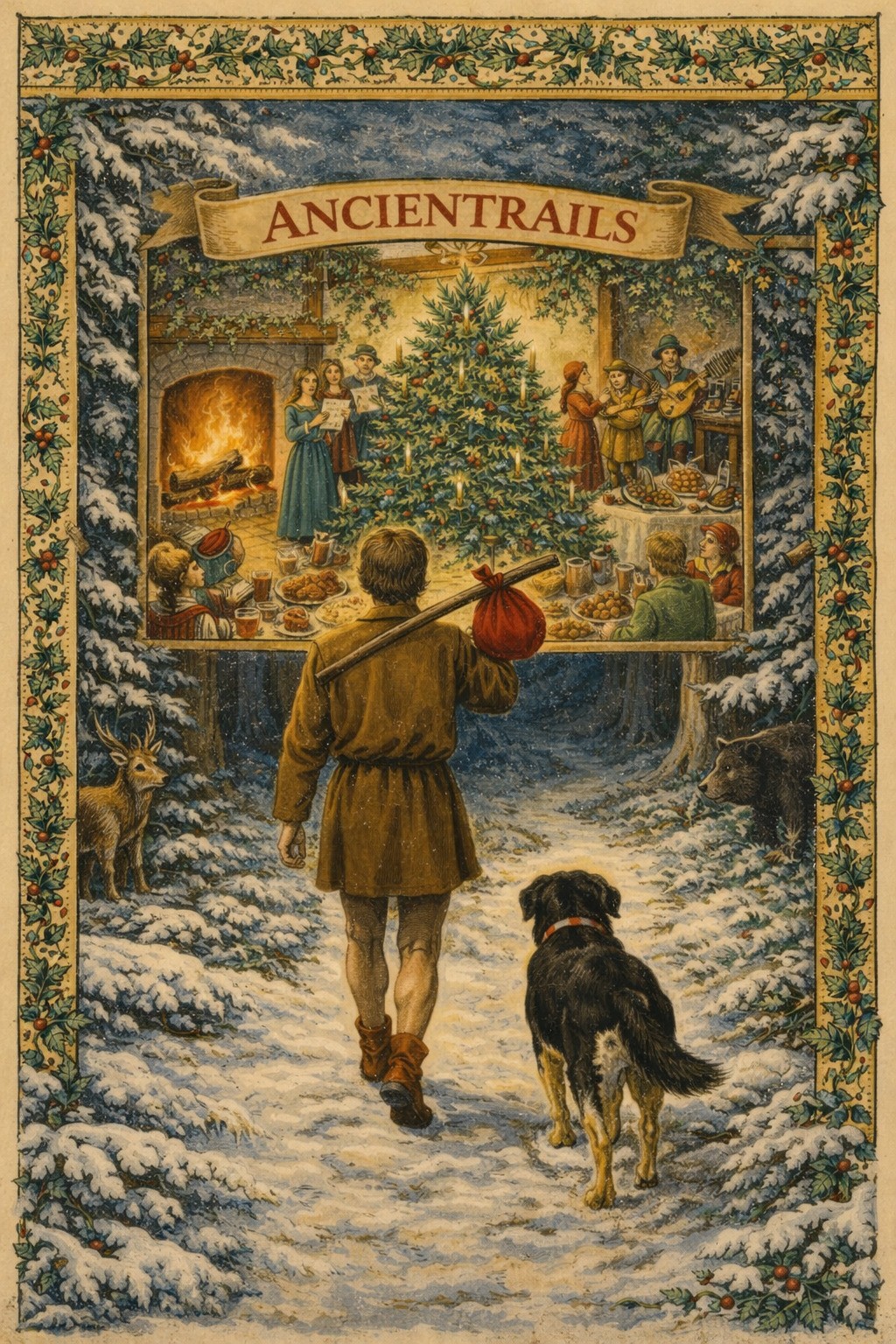
The most ancientrail of all is becoming native to this place.

But, why must we become native to mother Earth? Aren’t we native simply because we are thrown onto the planet’s surface at birth? Yes and no. Yes, in that we are an organism designed to live in this gravity, breathe this concentration of oxygen, use plant matter and other animals as food. No, in that those of us thrown into a complex industrial/technology culture are native not to the planet itself, but to adaptations made over centuries by economies and governments. This includes the U.S., Europe, most of Asia, the Middle East and Latin America, as well as residents of urban areas on every continent.

In the U.S.A. we are native to electricity as Kate and I learned just this Monday.  Our typical life ground to a halt along with 4600 others when the power went out. We are native to a night lit not by fire, but by bulbs. We are native to warm houses in winter, cool ones in summer. Our hunting and gathering takes place at King Sooper, Safeway, Lunds, Byerlys. We are native to antibiotics, surgery, dental care.

When we climb the additional 3,600 feet in altitude from Denver to our home on Black Mountain Drive, we sit comfortably in a moving chair powered by the ancient remains of dinosaurs and forests. We are native to telephones, computers, text messages. We are native to machines and carpenters and plumbers. We are, in short, native to almost anything but this planet where we live.

You could reasonably ask whether this matters. Our future lies in the stars anyhow, doesn’t it? Maybe so. Especially if we render the earth uninhabitable for humans. Which, with climate changing drivers still dominant in our world economies, we’re working hard to accomplish.

I believe it matters. Why? The short answer is that becoming native to this planet, again, is our best hope for throttling back those climate change drivers. We can escape to the stars while having a beautiful homeworld as our base of exploration.

The longer answer has to do with the nature of our humanity. Technological and industrial estrangement from the rhythms of the natural world is almost a canard, a cliche. We expect tomatoes in winter. We expect access to any part of the planet within hours. Even the colors of our sunrises and sunsets often have chemical pollutants to thank for their vibrancy.

We need to awaken ourselves to the essential, everyday miracles: photosynthetic conversion of sunlight into food, the transpiration of that same process, oxygen, being a gas we need to survive. And this consciousness that we have. How about that. Or the intricate and interdependent web of living things. The changing of seasons in the temperate zones. Water’s strange characteristics.

In the next post I’ll suggest one way of becoming native to this place.

Summer                                                                    Recovery Moon

As I walk into the loft now, I get a surge of energy. The bookshelves are nearing completion. The iron shelving for the bankers boxes will go up after that. Since December, walking in here has been half joy, half feeling a weight of work yet to be done. This surge of work has put that feeling behind me. Now I see completion ahead. As I said, my goal is before Labor Day.

The nights have been too warm the last few days, but the trend to cooler night time temps begins soon. The long slow change headed toward the Winter Solstice.

Medea and Aeson. Medea agrees to heal Jason’s (Golden Fleece, Argonaut’s Jason) father of old age. She takes to her spells and incantations, gathers ingredients from all over the peninsula and revivifies the old man. The unseen corrupter healed by unseen knives managed from afar fails to shorten a third phase. Magical. Alchemical. Marvelous. Awe-some. We live in the world of ancient greece though we pretend to sophistication, to advanced wisdom. The same troubles face us still and we turn, like Jason and Aeson, to those who control the magic of our time.

Again, Gratitude

Summer                                                                      Recovery Moon

It no longer feels like I’m walking into a stiff headwind, head down and seeing only my feet. Now the sky is sunny, a gentle breeze blows at my back. Again, gratitude to all who held my hand during the last three months. I needed that.

Wow. And to Jon, who put together four more bookshelf units, connected three to the others already installed. I’ve got some shelving to do. We also ordered the last three units, one with shelves and doors for tea and coffee making. On Monday Jon and I will go to Paxton Lumber and pick out some exotic wood for the top to my work table and to use for making the short bookshelves tops wider.

After the final bookshelves are put together and connected, Jon will assemble the wire shelving. That will eliminate the pony wall of bankers boxes currently separating my workout space from the rest of the loft. When that’s done, the only major tasks left will be utilizing the art crates as functional island dividers, buying a small refrigerator and reconfiguring the workout space with the pull-up bar over the rubber mats.


The Lure of Yesterday

Summer                                                                   Recovery Moon

NYT had a video and an article, 36 hours in Siem Reap. This type of article is a regular feature and one that gives a wonderful, quick entré to a particular locale. My visit in 2004 is now 11 years ago and the Siem Reap of this video has many upscale tourist options that didn’t exist when I was there. The Siem Reap of 2004 was a sleepy village though studded with many smaller hotels and one big one, the Hotel D’Angkor. Hostels were as evident as tourist hotels. But the building boom had already begun and the Siem Reap of 2015 had its roots in 2004.

As such articles do, it featured a wide array of things to do from shadow puppetry performed in front of a fire and screen to dining in upscale restaurants, tours on tuk-tuks and shops featuring Cambodian village crafts. I suppose the article does its job as a teaser, a what if I were there, even briefly fantasy, but it glossed over, very lightly, the primary reason Siem Reap has become an international destination. Quite a feat, really, in a country ravaged by years of the Khmer Rouge and corrupt politicians.

Angkor. Angkor is a site containing over 70 temples, each built by a different ruler of the Khmer, and extending over many square miles. It is much more than Angkor wat, the supposedly eponymous temple. In reality Angkor wat just means Angkor temple. That direct translation does not differentiate the best preserved and fascinating temple closest to Siem Reap from all the others. Ta Prohm. Bayon. Banteay Serai. And many, many others.

Angkor is a built space that has carried the Hindu culture of the  Khmer deva-rajas, god-kings, who ruled between 802 a.d. and 1351 a.d., into our time and will carry it far into the future. The intricate bas reliefs, the monumental four-faced sculptures with the classical Bayon smile, the elephants carved in stone, the florid decor of Banteay Serai require time and reading to appreciate. Ta Prohm, an often photographed temple, has been left as the forest has reclaimed it, with kapok trees growing through doorways and over roof tops.

Outside many of the temples small bands of Cambodian musicians play traditional music. My first reaction was oh how wonderful, authentic music played among the temples of this ancient culture. Then I began to look closely at the band. Most were missing a foot or an arm or a leg or carried other scars from the many landmines that continue to plague the Cambodian people.


One of my most memorable travel evenings was spent on the outer stone wall of Bayon, watching the living temple across the way as monks clad in saffron and maroon hit gongs, lit incense Bayon and prayed along with passers by who came to worship. The sun set and the shadows changed the expressions of the four-faced sculptures said to be the likeness of Jayavarman VII, the last deva-raja, who converted to Buddhism. The monkeys howled, insects chirped and the deep bass of the temple gong reverberated. Incense scented the air.

Week II Post-Surgery

Summer                                                                   Recovery Moon

Week II post surgery. My energy improves daily though I’m not back to full stamina. The surgical stigmata, six wounds where the robot’s arms pierced my skin, are healing nicely. It no longer hurts to lie down on them. An unpleasant, but anticipated side effect of the surgery, temporary incontinence, seems to be clearing up much more rapidly than I’d imagined it would. And, most importantly, I’m presumptively cancer free, the only question being possible microscopic metastases. I test for that in early September.

The tomorrow wall has crumbled. I can now see into the future again. Yesterday I made Amtrak reservations for my 50th high school reunion in September. The overnight California Zephyr runs from Denver to Chicago and then a short ride on the Cardinal to Lafayette, Indiana where I’ll pick up a rental car and drive the rest of the way. I do it this way because the Cardinal gets into Indianapolis after midnight and this allows me a good night’s sleep, plus I can gradually re-enter Hoosier space driving familiar highways back to Alexandria.

camp chesterfield2
The Trail of Religion

Again this time, as I did for the 45th, I plan to stay at Camp Chesterfield, a Christian Spiritualist center. It’s a quirky, old, interesting place. And, it’s cheap.

The loft is ready for its second round of construction, more shelves, then more shelving. I’ve abandoned my attempt to get the books properly organized as I shelve them because I need to clear space for more shelves. I can sort and organize as much as I want come fall.

My psyche has not caught up to my body’s healing pace. Though the tomorrow wall has fallen, I still find my days somewhat chaotic, not sure what to do, then what to do next. We’ve had a continuing drip, drip, drip of other matters: cracked tooth, dying boiler, Kate’s very painful back that contribute. All those seem to be moving toward resolution. I’ve even found a plumber for the generator install, a niggling thing still hanging on.

I’ll find my psyche back to its usual eagerness over the next week or two. I look forward to it.

Again, gratitude to all of you who sent notes over the cancer season. It matters.


Oh, You Were Lucky

Summer                                                                        Recovery Moon

Been thinking about luck and fortune. The meanings are slippery and often adjust themselves to rationalization. For instance. I was lucky to find my cancer early enough for successful treatment. Well, yes. But. I was unlucky to find cancer at all. It was my good fortune to find, with Kate’s help, competent and caring medical professionals in Colorado. Again, sure. But. It was my bad fortune to need as much of their competence and caring as I did.

Over the last few days since the catheter came out I’ve had this thought, “Boy, was I lucky. I had cancer, but it was treatable. And, I found it and treated it quickly.” The facts are true. I had cancer. It was treatable. It was found and treated quickly. But lucky seems askew. Lucky would have been to have never had cancer at all. Lucky described my state prior to diagnosis, not after. After, it was data, decisions, actions.

I write this because I’ve been tempted to another line of thought, too. I was lucky; I had prostate cancer, not lung cancer, pancreatic cancer, any cancer that most often defies treatment. There is a tendency to diminish the severity of our own situation and compare it to the dire circumstances of others. This helps psychologically, but it changes neither the fact of my situation nor theirs.

Each situation is as it is. Cancer is bad, no matter what type, no matter its response or lack of response to treatments. This disease is not one, but many; it is polymorphous and diverse. I’ve had friends with terrible cancers that eventually caused death. I’ve heard the stories of many men who’ve had the same arc with prostate cancer that I have. And others who have died.

Lucky and fortune play no part, save as soothing conceptual anodynes. Facts. They are what matter. Love and friendship can give aid in real time and I’ve experienced it. But that was not luck. That was kindness, compassion.